
人民币升值

Search documents
中信证券:人民币持续升值的背景下,可以关注 短期肌肉记忆驱动、利润率变化驱动 以及政策变化驱动三条线索
Sou Hu Cai Jing· 2025-12-21 09:16
推动人民币升值的因素逐渐增多,市场关注度也开始升温,投资者要逐步适应在一个人民币持续升值的 环境下去做资产配置。从过去20年间7轮人民币升值周期来看,汇率并不是主导行业配置的决定性因 素。然而,部分行业在持续升值预期形成的初期确实会有更好表现,市场可能会复制这样的肌肉记忆, 同时从成本收入分析来看,约19%的行业会因为升值带来利润率提升,这些行业也会逐步被投资者重视 起来。此外,为抑制过快单边升值趋势而做出的政策应对,反而是影响行业配置的更重要因素。行业配 置上,在人民币持续升值的背景下,可以关注短期肌肉记忆驱动、利润率变化驱动以及政策变化驱动三 条线索,我们在本期聚焦详细梳理了潜在受益行业。 推动人民币持续升值的因素逐渐增多,市场关注度也开始升温 我们认为投资者要逐步开始适应在一个人民币持续升值的环境下去做资产配置。今年前11个月中国的累 计贸易顺差达到1.076万亿美元,同比增长21.7%,创历史新高。更重要的是出口企业的结汇意愿开始不 断上升,今年10月顺差转化为顺收的比例已经超过100%,这是与过去几年最大的差异。2022年以来, 我们估算出口商积累的待结汇规模为1万亿美元左右,一旦人民币升值预期形成 ...

十大机构看后市:A股跨年行情已经开启,转型牛深入推进,春季躁动行情可期,布局三大主线
Xin Lang Cai Jing· 2025-12-21 08:19
Group 1 - The core viewpoint is that the A-share market is expected to experience a "spring rally" driven by policy support and capital inflows, with a focus on growth and consumption sectors [26][28][34] - The market indices showed mixed performance, with the Shanghai Composite Index up by 0.03%, while the Shenzhen Component and ChiNext indices fell by 0.89% and 2.26% respectively [24] - The potential for a structural bull market in 2026 is highlighted, with expectations of continued capital market development and a focus on technology and consumption sectors [42][43] Group 2 - Factors driving the appreciation of the RMB are increasing, and investors should adapt their asset allocation strategies accordingly, focusing on sectors that may benefit from this trend [25] - Approximately 19% of industries are expected to see profit margin improvements due to RMB appreciation, which will attract investor attention [25] - The consumption sector is anticipated to perform well due to policy support and a recovery from previous underperformance, making it a key area for investment [27][34] Group 3 - The market is currently in a state of uncertainty regarding the initiation of the "spring offensive," with some indices showing signs of adjustment [29][30] - A focus on sectors that have been lagging but are expected to benefit from policy changes and market dynamics is recommended, particularly in the brokerage and consumer sectors [30][34] - The technology and advanced manufacturing sectors are expected to lead the market, supported by favorable policies and capital inflows [42][43]
中信证券:推动人民币升值的因素逐渐增多,可关注三条线索
Sou Hu Cai Jing· 2025-12-21 07:39
Core Viewpoint - The report from CITIC Securities indicates that factors driving the appreciation of the Renminbi are increasing, leading to heightened market attention. Investors need to gradually adapt their asset allocation strategies in an environment of sustained Renminbi appreciation [1] Group 1: Historical Context and Market Behavior - Over the past 20 years, there have been seven cycles of Renminbi appreciation, and exchange rates have not been the decisive factor in industry allocation decisions. However, certain industries tend to perform better during the initial stages of sustained appreciation expectations, suggesting a potential for market memory to replicate past behaviors [1] - Approximately 19% of industries are expected to see an increase in profit margins due to Renminbi appreciation, which will gradually attract investor interest [1] Group 2: Policy Implications and Industry Allocation - Policy responses aimed at curbing rapid unilateral appreciation trends are considered more significant factors influencing industry allocation than the appreciation itself [1] - In the context of ongoing Renminbi appreciation, industry allocation can be guided by three key factors: short-term memory effects, changes in profit margins, and policy changes [1]
中信证券:推动人民币升值的因素逐渐增多 可关注三条线索
Zheng Quan Shi Bao Wang· 2025-12-21 07:22
Core Viewpoint - The report from CITIC Securities indicates that factors driving the appreciation of the Renminbi are increasing, leading to heightened market attention. Investors need to adapt their asset allocation strategies in a continuously appreciating Renminbi environment [1] Group 1: Historical Context and Market Behavior - Over the past 20 years, there have been seven cycles of Renminbi appreciation, and exchange rates are not the decisive factor in industry allocation decisions. However, certain industries may perform better in the early stages of a sustained appreciation expectation, suggesting a potential for market memory to replicate past behaviors [1] - Approximately 19% of industries are expected to see profit margin improvements due to the appreciation of the Renminbi, which will gradually attract investor attention [1] Group 2: Policy Implications and Industry Allocation - Policy responses aimed at curbing rapid unilateral appreciation trends are considered more significant in influencing industry allocation than the appreciation itself [1] - In the context of ongoing Renminbi appreciation, three key drivers for industry allocation should be monitored: short-term memory effects, profit margin changes, and policy changes [1]
中信证券:推动人民币升值的因素逐渐增多
Xin Lang Cai Jing· 2025-12-21 07:19
炒股就看金麒麟分析师研报,权威,专业,及时,全面,助您挖掘潜力主题机会! 来源:中信证券研究 文|裘翔 高玉森 陈泽平 刘春彤 张铭楷 陈峰 推动人民币升值的因素逐渐增多,市场关注度也开始升温,投资者要逐步适应在一个人民币持续升值的 环境下去做资产配置。从过去20年间7轮人民币升值周期来看,汇率并不是主导行业配置的决定性因 素。然而,部分行业在持续升值预期形成的初期确实会有更好表现,市场可能会复制这样的肌肉记忆, 同时从成本收入分析来看,约19%的行业会因为升值带来利润率提升,这些行业也会逐步被投资者重视 起来。此外,为抑制过快单边升值趋势而做出的政策应对,反而是影响行业配置的更重要因素。行业配 置上,在人民币持续升值的背景下,可以关注短期肌肉记忆驱动、利润率变化驱动以及政策变化驱动三 条线索,我们在本期聚焦详细梳理了潜在受益行业。 推动人民币持续升值的因素逐渐增多, 市场关注度也开始升温 我们认为投资者要逐步开始适应在一个人民币持续升值的环境下去做资产配置。今年前11个月中国的累 计贸易顺差达到1.076万亿美元,同比增长21.7%,创历史新高。更重要的是出口企业的结汇意愿开始不 断上升,今年10月顺差转化 ...
时隔一年多,人民币又要升破7了!提振内需,需要靠汇率升值?
Sou Hu Cai Jing· 2025-12-21 06:18
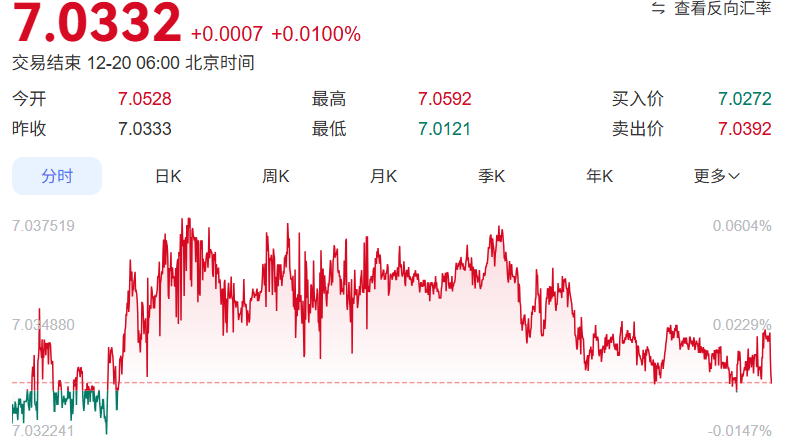
Group 1 - The offshore RMB closed at 7.033, with expectations of rising below 7.0 in the coming week, potentially marking the highest exchange rate since October 2024 [1] - The appreciation of the RMB is a result of multiple economic factors, reflecting China's strategic elevation in the global economic landscape and the dynamic adjustments in the global monetary system [3] - The current macroeconomic environment presents a strategic window for RMB appreciation, driven by the Federal Reserve's shift in monetary policy, which has seen the federal funds rate drop from 5.5% to 3.75% [3] Group 2 - The RMB's appreciation has significant strategic value for the Chinese economy, particularly in addressing the challenge of weak domestic demand [5] - Despite external pressures like increased tariffs from the U.S., China's foreign trade remains resilient, with a trade surplus exceeding $1 trillion in the first eleven months of 2025 [6] - The RMB's appreciation enhances purchasing power, benefiting imports and allowing consumers to access a wider range of imported goods at lower costs, thus stimulating consumption [8] Group 3 - RMB-denominated assets become more attractive to foreign investors due to valuation advantages, leading to increased capital inflows into the stock, real estate, and bond markets [9] - The appreciation of the RMB is expected to create significant value reassessment effects in asset markets [10] - While there are concerns about the impact of RMB appreciation on exports, Chinese exporters have demonstrated resilience, achieving year-on-year export growth despite tariff pressures [12] Group 4 - The export structure is undergoing a strategic upgrade, with high-value products like machinery, ships, and new energy vehicles becoming the main export drivers, capable of absorbing cost pressures from RMB appreciation [12] - Traditional labor-intensive products may face challenges, but these pressures can catalyze industry transformation towards high-tech and high-value sectors [14] - Overall, the RMB's appreciation aligns with the internal needs of China's economic transformation, enhancing import capacity, expanding consumption, optimizing asset allocation, and promoting industrial upgrades [14]

人民币温和升值是红利,大幅升值是灾难!戳破专家伪逻辑,这才是对老百姓负责的解读
Sou Hu Cai Jing· 2025-12-20 22:42
Core Viewpoint - The recent appreciation of the Renminbi (RMB) is seen as beneficial for domestic consumption and reducing import costs, but there are concerns about calls for a significant appreciation that could harm the economy [1][3][21] Group 1: Economic Impact of RMB Appreciation - The moderate appreciation of the RMB aligns well with the domestic strategy to expand internal demand, leading to lower import costs and increased disposable income for consumers [3][21] - China, as the world's largest crude oil importer, has seen a 3.2% year-on-year increase in crude oil imports, totaling 521.87 million tons in the first eleven months [3] - The reduction in import costs for crude oil and other commodities, such as synthetic fiber and soybeans, alleviates financial pressure on households, allowing for increased spending in sectors like tourism, education, and health [3][4] Group 2: Risks of Significant RMB Appreciation - Experts advocating for a drastic appreciation of the RMB by 50% may overlook the potential negative consequences, such as the risk of economic instability similar to Japan's experience post-Plaza Accord [4][20] - A rapid appreciation could severely impact export-oriented businesses, which typically operate on thin profit margins of 3% to 5%, potentially leading to cash flow issues and the elimination of many small and medium enterprises [17][21] - The argument for significant appreciation based on purchasing power parity is criticized for ignoring the differences in economic structures and cost compositions between countries [12][14][16]


三位雪球老用户的真实复盘:这一年,我们怎么赚钱、怎么犯错
雪球· 2025-12-20 14:49
Group 1 - The article discusses the increasing volatility in global capital markets and how different investment strategies are performing differently, emphasizing that ordinary investors can accumulate wealth through dedication and market engagement [1] - Three experienced investors shared their practical experiences and strategies at the Xueqiu Carnival, highlighting the importance of adapting investment strategies based on market conditions and personal reflections on past performance [1] Group 2 - The defensive nature of low-risk investments can be assessed through yield calculations, while stock investments should focus on minimizing capital loss by selecting stocks with limited downside and significant upside potential [3][6] - The selling logic for stocks includes both active and passive strategies, with active selling triggered by event-driven changes or slowing performance, and passive selling adhering to strict stop-loss and take-profit rules [6] Group 3 - Reflections on 2025 investments reveal missed opportunities and the importance of decisive action, with lessons learned about the need for independent judgment and avoiding external influences [8][9] - Key investment trends for 2026 include expectations of Federal Reserve interest rate cuts, quantitative easing, and the potential for commodity price increases driven by currency fluctuations [10] Group 4 - Ordinary investors are advised to prioritize loss avoidance over daily profit, with strategies focusing on avoiding overvalued stocks, managing liquidity risks, and maintaining a balanced mindset during market fluctuations [16][19] - The article emphasizes the importance of a disciplined approach to investing, including time investment in learning, recognizing personal biases, and focusing on core investment areas [15]

11月银行结售汇顺差157亿美元,已连续7个月保持顺差
Sou Hu Cai Jing· 2025-12-20 01:26
Core Viewpoint - The foreign exchange market in China is showing resilience, with banks maintaining a surplus in foreign exchange settlement and sales for seven consecutive months, indicating stable cross-border capital flows and foreign exchange market expectations [1][2][3][4]. Group 1: Foreign Exchange Settlement and Sales - In November 2025, banks settled 14,840 billion RMB and sold 13,732 billion RMB, continuing to maintain a surplus, although the difference has narrowed [1]. - Cumulatively from January to November 2025, banks settled 162,781 billion RMB and sold 155,932 billion RMB, reflecting a consistent surplus in foreign exchange settlement and sales [2]. - The surplus in foreign exchange settlement and sales has been observed for seven consecutive months since May 2025 [4]. Group 2: Cross-Border Income and Payments - In November 2025, the total cross-border income and payments for non-bank sectors amounted to 1.3 trillion USD, with a month-on-month increase of 8%, resulting in a surplus of 17.8 billion USD [4]. - In Shenzhen, banks settled 20.6 billion USD and sold 14.9 billion USD in November, achieving a surplus of 5.7 billion USD [4]. Group 3: Market Dynamics and Currency Trends - The US dollar index weakened in November, with a decline of 0.29%, while the Chinese yuan appreciated against the dollar, particularly in late November [5][6]. - The appreciation of the yuan and the bank's foreign exchange settlement and sales are mutually reinforcing, creating a positive feedback loop [7]. Group 4: Future Trends - Experts suggest that as the year-end approaches, there will be an increase in foreign exchange settlement due to corporate financial settlements and profit distributions, potentially driving up the scale of bank foreign exchange settlements [8]. - The impact of seasonal factors, corporate exchange rate management, and policy adjustments may lead to significant monthly variations in bank foreign exchange settlement and sales data, complicating the relationship with cross-border capital flows and yuan exchange rate changes [8].
人民币年底为什么一直涨?
Sou Hu Cai Jing· 2025-12-19 11:39
Group 1 - The core viewpoint is that the Chinese yuan has entered a "surge" mode by the end of 2025, strengthening against major currencies, with the onshore yuan approaching the 7.04 mark, appreciating over 700 basis points since November, marking a 14-month high since October 2024 [1][2] Group 2 - The recent appreciation of the yuan is attributed to the weakening of the US dollar index and a shift towards a more accommodative global monetary policy environment, with market expectations for a 25 basis point rate cut by the Federal Reserve reaching 87% by mid-December [2] - China's assets are showing strong attractiveness in 2025, with the A-share Shanghai Composite Index breaking a nearly 10-year high and significant foreign capital inflows into Hong Kong stocks, with over 30 billion yuan net inflow in October [3] - The GDP growth in Q3 2025 was 5.3%, exceeding market expectations, and the manufacturing PMI returned to the expansion zone at 50.2 in October, indicating a positive economic recovery [4] - International investment banks are raising their ratings on Chinese assets, correcting previous pessimistic expectations about the domestic economy, which provides solid fundamental support for the yuan's exchange rate [5] - China's exports have shown unexpected resilience, with a trade surplus of 51 billion USD in September, the highest monthly figure since 2020, enhancing the stability of the foreign exchange market and providing endogenous appreciation momentum for the yuan [5] - Domestic policies aimed at reducing "involution" are driving corporate value reassessment, alongside narratives from AI and technology sectors, making yuan-denominated assets more competitive globally [6] - Increased preference for yuan assets by overseas investors is further driving the exchange rate up, creating a positive cycle of asset appreciation, capital inflow, and currency strengthening [7] - The fourth quarter is traditionally a peak period for foreign trade enterprises to settle foreign exchange, as they convert accumulated foreign exchange income into yuan to lock in profits [8] - Additionally, overseas workers tend to remit their wages back to China before the Spring Festival, increasing demand for yuan, with historical data showing that the surplus from bank foreign exchange settlements is typically highest before the Spring Festival [9]
