
产品多元化

Search documents
卫星化学(002648):主要产品价差改善 Q3顺利实现扣非环比增长
Xin Lang Cai Jing· 2025-10-27 12:39
Core Viewpoint - In the third quarter, the company achieved a total revenue of 11.311 billion yuan, a year-on-year decrease of 12%, and a net profit attributable to shareholders of 1.011 billion yuan, a year-on-year decrease of 38%. The non-recurring net profit for the quarter was 1.342 billion yuan, down 28% year-on-year but up 11% quarter-on-quarter [1][2]. Financial Performance - The company reported a total revenue of 11.311 billion yuan in Q3, reflecting a 12% decline year-on-year [2]. - The net profit attributable to shareholders for the third quarter was 1.011 billion yuan, which is a 38% decrease compared to the same period last year [2]. - The non-recurring net profit for the third quarter was 1.342 billion yuan, down 28% year-on-year but showing an 11% increase compared to the previous quarter [2][3]. Product and Cost Analysis - The company’s C2 route focuses on EO/EG products, with plans to launch ethanolamine production in 2024, enhancing product diversification and industry chain completeness [1][4]. - The company maintains a significant cost advantage in ethane cracking compared to oil-based routes, contributing to its profitability [1][4]. - The C3 chain, particularly the acrylic acid and ester industry chain, remains profitable, with the 800,000-ton multi-carbon alcohol project also contributing positively to earnings [1][4]. Market Conditions and Price Dynamics - Despite maintenance activities affecting production volumes, the company benefited from a decrease in raw material prices, which improved product price spreads [3]. - In Q3, the average price of ethane in the U.S. was approximately $0.23 per gallon, down 6% quarter-on-quarter, while domestic propane prices averaged $569 per ton, down 8% [3]. - Although product prices also declined, the decrease was less significant than that of raw materials, leading to an overall expansion in product price spreads, which was a key factor in the quarter-on-quarter growth of non-recurring profits [3]. Future Outlook - The company aims to maximize industry chain benefits through efficient production operations, cost optimization, and innovation in high polymer materials [1][4]. - The projected net profits for 2025, 2026, and 2027 are estimated to be 5.238 billion yuan, 6.381 billion yuan, and 7.898 billion yuan, respectively, with corresponding price-to-earnings ratios of 11.7X, 9.6X, and 7.8X [5].

赚疯了的东鹏,为啥急着港股IPO?
Sou Hu Cai Jing· 2025-10-17 10:39
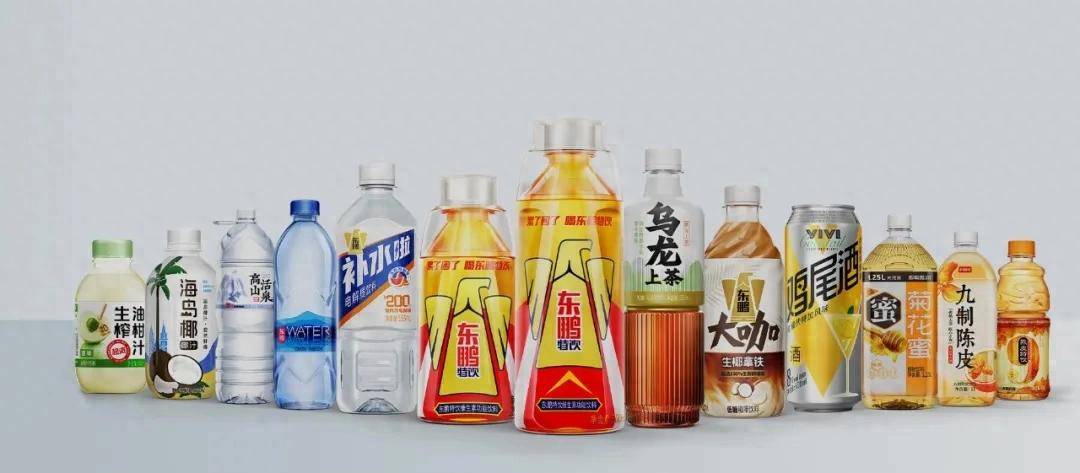
Core Viewpoint - Dongpeng's urgency to list on the Hong Kong stock market is increasing, driven by strong financial performance and the need for capital to support expansion and brand development [2][14]. Financial Performance - In the first half of 2025, Dongpeng reported revenue of 10.736 billion, a year-on-year increase of 36.37%, and a net profit of 3 billion, up 40.13% [3]. - The company's net profit attributable to shareholders was 2.375 billion, reflecting a 37.22% increase compared to the previous year [3]. - The operating cash flow decreased by 23.24% to 1.740 billion, indicating potential liquidity concerns despite strong revenue growth [3]. Product Performance - Dongpeng's energy drink sales reached 196.6 thousand tons, a 36 thousand ton increase from the previous year, but its market share dropped from 78.2% to 64.48% [4][5]. - The electrolyte drink segment saw significant growth, with sales rising to 68.5 thousand tons, increasing its market share from 10.21% to 22.49% [4][5]. - The overall gross margin improved to 45.15%, but the gross margin for energy drinks was notably higher at 50.61%, indicating a potential risk from lower-margin products [5][6]. Strategic Intentions - Dongpeng aims to enhance its production capacity, upgrade its supply chain, and strengthen brand influence through increased consumer engagement [2][14]. - The company is pursuing a national strategy to deepen and refine its distribution channels while exploring overseas markets for potential investments and acquisitions [2][14]. - The shift towards product diversification is seen as a necessary strategy to mitigate risks associated with reliance on a single product line, although it may slow growth [6][12]. Market Dynamics - The beverage industry is experiencing a shift, with increased competition leading to price wars, particularly in the low-end market segment [12][14]. - Dongpeng's historical success with its flagship product may not be easily replicated due to changing consumer habits and market saturation in the functional beverage sector [12][14]. - The company's strategy to engage in aggressive marketing and promotional activities may lead to short-term gains but risks long-term brand value erosion [10][12].


今米房集团(08300.HK)拟收购西双版纳勐海龙普天下茶业52%股权
Ge Long Hui· 2025-10-02 10:21
Core Viewpoint - The company has entered into a share transfer agreement to acquire 52% of the equity in Xishuangbanna Menghai Longputian Tea Industry Co., Ltd. for a nominal price of RMB 1, aiming to enhance its tea business sales and marketing strategy [1][2] Group 1: Acquisition Details - The acquisition involves Fulton Asia Investment Limited, a wholly-owned subsidiary of the company, purchasing the target company, which specializes in tea, pre-packaged food, and bulk food wholesale and retail [1] - The target company has approximately seven years of experience in tea production and sales in China, covering beverage production, food production, and internet food sales [1] Group 2: Strategic Benefits - The acquisition is expected to allow the company to control the tea production process, ensuring stable raw material supply and product quality [2] - It will enable the company to leverage the target company's channels and market resources to quickly enter new markets and expand its sales network [2] - The company plans to utilize its existing online sales platform to promote online sales and develop its own tea brand, benefiting from the target company's quality control management system [2] - The acquisition is anticipated to significantly enhance the company's sales growth, platform sales development, and product diversification [2]
涪陵榨菜多元化欠佳净利连降两年半 经销商半年减少186家
Chang Jiang Shang Bao· 2025-09-29 02:32
Core Viewpoint - Fuling Pickle (002507.SZ) is experiencing significant challenges, including a recent management change with the resignation of General Manager Zhao Ping, amid declining financial performance and a shrinking distributor network [2][4][11]. Management Changes - Zhao Ping resigned as General Manager on September 26, 2023, after serving for over 14 years, and will take on the role of Senior Manager [2][4][6]. - Zhao Ping, who is 59 years old and approaching retirement, has been a key figure in the company's transformation from a traditional workshop to a modern enterprise [5][7]. - The company is undergoing a shift towards younger leadership, as indicated by the age of its board members [10][11]. Financial Performance - Fuling Pickle's revenue has stagnated, with reported revenues of 24.50 billion yuan in 2023, 23.87 billion yuan in 2024, and 13.13 billion yuan in the first half of 2025, reflecting year-on-year declines of -3.86%, -2.56%, and a slight increase of 0.51% respectively [11][12]. - The net profit attributable to shareholders has also decreased, with figures of 8.27 billion yuan, 7.99 billion yuan, and 4.41 billion yuan for the same periods, showing declines of 8.04%, 3.29%, and 1.66% respectively [12]. Product Diversification Efforts - The company has attempted to diversify its product offerings beyond pickles, including radishes and kimchi, but 85% of its revenue still comes from pickles, indicating limited success in diversification [3][13]. - The gross profit margin for pickles remains significantly higher at 58.08%, compared to lower margins for other products [13]. Distributor Network Challenges - The number of distributors has been declining, with a drop from 3,239 at the end of 2023 to 2,446 by mid-2025, indicating challenges in maintaining sales channels [14]. - The company primarily relies on a distribution model supplemented by e-commerce, and the reduction in distributors has contributed to the pressure on revenue growth [14]. Market Competition - Fuling Pickle faces increasing competition from emerging brands and product combinations that are encroaching on its market share, further complicating its growth prospects [13][14]. - The company has been actively promoting its products, with sales expenses rising to 1.95 billion yuan in the first half of 2025, but revenue growth has been minimal [14].

涪陵榨菜多元化欠佳净利连降两年半 经销商半年减少186家总经理赵平辞职
Chang Jiang Shang Bao· 2025-09-28 22:59
Core Viewpoint - Fuling Pickle (002507.SZ) is facing significant challenges, including a recent management change with the resignation of General Manager Zhao Ping, amid declining performance and shrinking distributor numbers [1][4][10]. Management Changes - Zhao Ping resigned as General Manager on September 26, 2023, after serving for 14 years and 5 months, and will continue as a senior manager [2][6][4]. - Zhao Ping, who is 59 years old and approaching retirement, has been a key figure in the company's transformation from a traditional workshop to a modern enterprise [5][7]. - The company is undergoing a shift towards younger leadership, as indicated by the age of the current board members [10][11]. Financial Performance - Fuling Pickle's revenue has stagnated, with reported revenues of 24.50 billion yuan in 2023, 23.87 billion yuan in 2024, and 13.13 billion yuan in the first half of 2025, reflecting year-on-year changes of -3.86%, -2.56%, and 0.51% respectively [11][12]. - The net profit attributable to shareholders has also declined, with figures of 8.27 billion yuan, 7.99 billion yuan, and 4.41 billion yuan for the same periods, showing decreases of 8.04%, 3.29%, and 1.66% respectively [12][11]. Product Diversification Efforts - The company has attempted to diversify its product offerings beyond pickles, including products like radishes and kimchi, but 85% of its revenue still comes from pickles, indicating limited success in diversification [3][13]. - The gross profit margin for pickles remains significantly higher at 58.08%, compared to lower margins for other products [13]. Distributor Network Challenges - The number of distributors has been decreasing, with 2,632 distributors at the end of 2024, down by 607 from 2023, and further reduced to 2,446 by mid-2025 [3][14]. - The decline in distributor numbers is impacting sales performance, as the company relies heavily on a distributor model supplemented by e-commerce [14]. Market Competition - Fuling Pickle faces increasing competition from other brands, which is squeezing its growth potential [13][14]. - The company is actively promoting its products, with sales expenses rising to 1.95 billion yuan in the first half of 2025, but revenue growth remains minimal [14].
折叠车新秀大行火爆上市背后,出海减速与代工依赖隐现
Xin Lang Cai Jing· 2025-09-21 03:32
Core Viewpoint - The listing of Dahang Kegong, a leading manufacturer of folding bicycles, on the Hong Kong Stock Exchange was marked by a record oversubscription of 7558 times, but the company faces significant challenges including reliance on OEM production, shrinking overseas markets, and an aging management team [1][2]. Group 1: Company Performance - Dahang Kegong achieved a revenue of 451 million RMB in 2024, with a profit of 52.3 million RMB, showing stable growth in both revenue and profit [2]. - The sales volume of bicycles has been increasing, with notable growth rates, including a 46.5% increase in sales volume in the first four months of 2024 compared to the same period in 2023 [2]. Group 2: Product Diversification - The company is diversifying its product offerings beyond folding bicycles to include road bikes, mountain bikes, children's bikes, and electric assist bicycles, with the latter combining folding features and electric assistance [3]. - Despite diversification efforts, folding bicycles still accounted for 96.6%, 97.7%, and 97.4% of the company's sales revenue from 2022 to 2024 [3]. Group 3: Market Share and Distribution - According to data from Zhi Shi Consulting, Dahang Kegong holds a 26.3% market share in terms of retail volume and a 36.5% market share in terms of retail value in the folding bicycle market in mainland China [5]. - The company has established a comprehensive sales network, with 69.5% of revenue coming from distribution channels, and plans to open 50 direct stores, 80 shop-in-shops, and 70 dealerships by 2025 [5]. Group 4: Production and Capacity Issues - Dahang Kegong's production capacity is under scrutiny, with its Huizhou factory showing high utilization rates, reaching 114.1% in the first four months of 2025 [6]. - The proportion of bicycles produced by OEM suppliers has been increasing, with over 60% of products coming from OEM production in the first four months of 2025 [7][8]. Group 5: Management Concerns - The management team is aging, with the chairman and CEO being 83 years old, raising concerns about the company's strategic continuity and innovation capabilities [8].

市值5年缩水1600亿元!长春高新净利润暴跌42%,还能靠什么翻身
Hua Xia Shi Bao· 2025-09-20 01:18
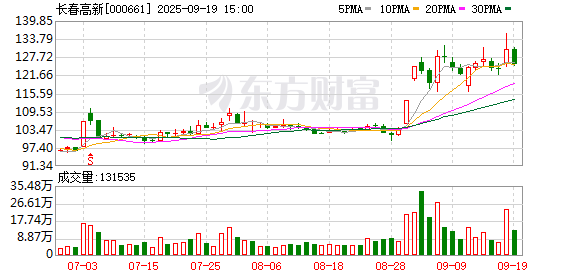
Core Viewpoint - Changchun High-tech is facing significant challenges due to price reductions from centralized procurement of its core products and a lack of new business development, leading to a dramatic decline in net profit by 42.85% in the first half of 2025, marking a potential fall from grace for this once-prominent stock [1][2]. Financial Performance - In the mid-year report of 2025, the company reported revenue of 6.603 billion yuan, a year-on-year decrease of 0.54%, and a net profit attributable to shareholders of 983 million yuan, down 42.85% year-on-year, indicating a continuous decline in both revenue and profit for the first time in 20 years [2][3]. - The second quarter of 2025 showed revenue of 3.605 billion yuan, a slight increase of 4.16% year-on-year, but net profit fell by 48.83% to 463 million yuan, primarily due to rising sales and R&D expenses [2][3]. - Over the past five years, revenue growth has significantly slowed, with figures of 4.963 billion yuan, 5.831 billion yuan, 6.168 billion yuan, 6.639 billion yuan, and 6.603 billion yuan from 2021 to 2025, while net profit has dropped from 1.923 billion yuan in 2021 to 983 million yuan in 2025 [2][3]. Business Structure and Risks - The decline in net profit is largely attributed to the poor performance of its core subsidiary, Jinsai Pharmaceutical, and losses at Baike Biotechnology, highlighting potential risks in the company's business structure and pipeline layout [3][4]. - The company is overly reliant on a few products, making it vulnerable to market changes, increased competition, or quality issues [3][4]. - The shift in the industry from "generic-driven" to "innovation-driven" poses additional challenges for Changchun High-tech, as it faces high R&D costs and long commercialization cycles [4]. Expense Management - The company's mid-year report for 2025 revealed sales expenses of 2.386 billion yuan, up 23.43% year-on-year, and R&D expenses of 1.155 billion yuan, up 30.22%, together accounting for 53.6% of total revenue, significantly squeezing profit margins [5][6]. - The increase in sales expenses is attributed to the promotion of new products and expansion into new medical departments, while the rise in R&D expenses is due to advancements in technology platforms and clinical trials [6][7]. - The high ratio of total expenses to revenue (46.97%) is above the industry average of 35%, indicating structural inefficiencies within the company [7][8]. Future Outlook - The company faces significant challenges in its transformation journey, and how it navigates these business difficulties will be closely monitored [8].

市值5年缩水1600亿元!长春高新净利润暴跌42% 还能靠什么翻身
Hua Xia Shi Bao· 2025-09-20 00:50
Core Viewpoint - Changchun High-tech is facing significant challenges due to price reductions from centralized procurement of its core product, growth hormone, and a lack of new business opportunities, leading to a dramatic decline in net profit by 42.85% in the mid-2025 report [2][3]. Financial Performance - In the mid-2025 report, the company reported revenue of 6.603 billion yuan, a year-on-year decrease of 0.54%, and net profit attributable to shareholders of 983 million yuan, down 42.85% [3]. - This marks the first occurrence of simultaneous revenue and net profit decline in nearly 20 years for the company [3]. - The second quarter of 2025 showed revenue of 3.605 billion yuan, a slight increase of 4.16% year-on-year, but net profit fell by 48.83% to 463 million yuan, indicating a "revenue without profit" situation due to rising sales and R&D expenses [3]. Business Structure and Risks - The core reason for the "revenue without profit" phenomenon is the decline in net profit from the core subsidiary, Jinsai Pharmaceutical, and losses at Baike Biotechnology [4]. - The company is overly reliant on a single product, which exposes it to risks from market demand changes and increased competition [4]. - The losses at Baike Biotechnology may stem from an unreasonable pipeline layout and poor market prospects for R&D products [4]. Policy and Industry Context - The significant drop in net profit can be attributed to policy impacts and industry cycles, including the expansion of centralized procurement for growth hormone, which saw price reductions exceeding 50% in some regions [5]. - The company’s core product accounts for over 70% of revenue, highlighting its vulnerability due to reliance on a single product [5]. - The domestic innovative pharmaceutical industry is facing challenges transitioning from a "generic-driven" to an "innovation-driven" model, with high R&D costs and long commercialization cycles putting pressure on cash flow [5]. Expense Management - The company reported a significant increase in expenses, with sales expenses reaching 2.386 billion yuan (up 23.43%) and R&D expenses at 1.155 billion yuan (up 30.22%), together accounting for 53.6% of revenue [7]. - The high sales expenses are attributed to market promotion for new products and expansion into new medical departments [7]. - R&D expenses have surged due to the advancement of new technology platforms and clinical trials, with R&D investment reaching 20.21% of revenue, the highest in five years [7]. Comparative Analysis - The company's expense ratio of 46.97% is significantly higher than the industry average of 35%, indicating structural issues in expense management [8]. - The high sales expenses are driven by increased market competition and the need for extensive promotional activities [8]. - In contrast, other companies like Heng Rui Pharmaceutical have managed to reduce their expense ratios through sales team integration and digital marketing strategies, highlighting potential areas for efficiency improvement for Changchun High-tech [9].
金禾实业(002597) - 2025年9月15日投资者关系活动记录表
2025-09-15 10:46
Group 1: Financial Performance - The company's second-quarter performance was affected by weak product demand, price declines, and market inventory digestion, leading to a significant drop in profits compared to the first quarter [9][10] - Core products such as sucralose, aspartame, and ethyl maltol have shown signs of recovery in sales since the end of the second quarter, indicating a cautious optimism for third-quarter performance [9][10] - The company aims to optimize production costs and leverage its integrated industrial chain advantages to enhance performance during industry recovery [2][9] Group 2: Project Developments - The second phase of the Dingyuan project is currently in the construction and ramp-up phase, with short-term pressure on overall efficiency due to weak commodity markets and new product trial costs [3][8] - The annual production capacity of 80,000 tons for electronic-grade hydrogen peroxide is expected to reach over 70% utilization by the end of the third quarter of 2025, with full capacity anticipated by early 2026 [4][5] - The company is focusing on the semiconductor sector, developing key materials and optimizing production processes to meet stringent industry requirements [3][5] Group 3: Market Strategy - The company is expanding its product offerings in the sugar substitute market, closely monitoring trends and evaluating the market potential for new products like tagatose and allulose [10][14] - The company has established a strong customer base in the food and beverage industry, ensuring compliance with national food safety standards for all its products [13][15] - The company emphasizes a dual approach of internal development and external acquisitions to enhance its product portfolio and market presence [10][14] Group 4: Investor Relations - The company is committed to maintaining open communication with investors, addressing concerns, and ensuring transparency in its operations and future plans [18] - Employee stock ownership plans and increased holdings by social security funds reflect confidence in the company's long-term value and growth potential [12][18] - The company is actively managing its market value through various initiatives, focusing on core business areas to enhance intrinsic value and shareholder returns [18]

双节旺季临近茅台释放积极信号:8月底以来动销显著增长
2 1 Shi Ji Jing Ji Bao Dao· 2025-09-12 03:40
Core Insights - The white liquor industry is entering a peak season as the National Day and Mid-Autumn Festival approach, with Moutai signaling a positive market recovery [1] - Moutai's management has conducted extensive market research, indicating a significant increase in terminal sales since late August, suggesting a favorable market trend [1][2] - Despite a generally sluggish consumption atmosphere in the white liquor sector this year, Moutai has successfully launched new products and adapted its strategies to meet diverse consumer demands [2][3] Market Trends - Moutai's management has emphasized the importance of continuous market research to inform operational decisions, with multiple surveys conducted across various provinces and channels [2] - The third quarter, typically a slow season for white liquor consumption, has seen Moutai introduce several new products that cater to niche markets, such as collectible and gift items [2] - The price of Moutai's core products, including the 1000ml Moutai, has recently increased, reflecting a growing demand in the market [3] Product Strategy - Moutai is diversifying its product offerings, including limited edition and cultural products, to enhance consumer engagement and drive sales [2][3] - The company has adopted a multi-channel strategy, ensuring that different products are marketed through appropriate channels based on consumer response and market demand [5] - Moutai's core products remain the main revenue drivers, with a focus on understanding and adapting to changing consumer preferences and behaviors [3][4] Channel Strategy - The concept of "collaboration" has become central to Moutai's channel development strategy, aiming to enhance efficiency and create a complementary channel ecosystem [5] - Moutai has established a "4+6" channel layout system to optimize the functionality of various sales channels [5] - The management has reiterated the importance of maintaining strategic focus to navigate market fluctuations and ensure sustained growth [5]
