关键矿产

Search documents
李强在二十国集团领导人第二十次峰会上的讲话
Xin Hua She· 2025-11-23 15:52
Group 1 - The theme of the G20 summit is "Unity, Equality, and Sustainability," with a strong emphasis on "Unity" as a key to overcoming global challenges [2] - The G20 was established in response to the Asian financial crisis in 1999 and has evolved to address various global economic issues, highlighting the importance of cooperation among diverse member states [2][3] - Current global challenges include unilateralism and protectionism, which threaten international cooperation and require the G20 to seek solutions to restore unity [2][3] Group 2 - The G20 should promote free trade and an open world economy to facilitate mutual benefits among nations, with China announcing initiatives to support industrialization in Africa and alleviate debt in developing countries [3][4] - Addressing climate change and ecological issues is crucial, with the G20 urged to enhance cooperation in environmental protection and achieve the goals of the Paris Agreement [4][5] - The G20 is called to strengthen global food security and ensure stable supply chains, particularly for countries facing hunger, by optimizing food distribution and enhancing agricultural cooperation [5][6] Group 3 - The rapid advancement of technology presents both opportunities and challenges, necessitating equitable access to development and the benefits of innovation for all nations [6][7] - The G20 should facilitate cooperation in artificial intelligence and critical minerals to ensure sustainable supply and resource security, while also addressing potential security risks [6][7] - Empowering developing countries, particularly in Africa, through capacity building and technological support is essential for inclusive global development [7][8]
专访品牌南非姆普法内:非洲首届G20峰会为中资提供历史性机遇
2 1 Shi Ji Jing Ji Bao Dao· 2025-11-11 23:37
Core Insights - South Africa is signaling new cooperation opportunities to global investors, particularly from China, in the context of global green transition and supply chain restructuring [1][2] - The South African Investment Conference held in Beijing emphasized the potential for collaboration in renewable energy, fintech, and agri-tech, highlighting the urgency for early participation [1][5] Renewable Energy - South Africa is actively promoting investments in renewable energy, including hydrogen, solar, and wind energy projects, creating ample opportunities for external investors [4][5] - The urgency for investment in renewable energy is underscored, with the potential for significant mutual benefits for both South Africa and China [5] Financial Services - The financial services sector in South Africa is mature and well-developed, presenting new growth opportunities, particularly in fintech [5] - South Africa encourages Chinese enterprises to engage in digital banking, payments, credit, and blockchain collaborations [5] Agriculture - Agriculture remains a crucial economic pillar for South Africa, with increasing opportunities for investment and collaboration in agri-tech [5] - The opening of the Chinese market has facilitated the entry of more South African products, enhancing bilateral agricultural cooperation [5] Key Mineral Resources - South Africa possesses abundant "critical minerals" essential for battery and renewable energy industries, ranking fifth globally in mining GDP contribution [2][8] - The country produces nearly 60% of the world's platinum group metals, providing a significant resource base for potential investors [2] Strategic Positioning - South Africa serves as a strategic gateway for Chinese investors looking to enter the African market, leveraging its industrialization and financial infrastructure [2][7] - The upcoming G20 summit in South Africa is expected to enhance the country's role in attracting high-quality investments and promoting sustainable development [2][6] Youth and Talent - South Africa has a relatively young population, which is adaptable to new technologies, providing a dynamic labor force for future industries [9] - The country’s industrial base and financial services support innovation, creating a conducive environment for technology-driven investments [9]
G7外长会在加拿大举行 将讨论全球安全议题
Yang Shi Xin Wen· 2025-11-11 20:40
Group 1 - The G7 Foreign Ministers' meeting took place in Niagara, Ontario, Canada, on November 11-12, focusing on urgent global economic and security challenges [1] - Key discussion topics included maritime security and prosperity, economic resilience, energy security, and critical minerals [1] - The meeting will also address issues related to ceasefire agreements in Ukraine and Gaza [1] Group 2 - In addition to G7 member countries, invited participants included Ukraine, Brazil, India, Saudi Arabia, Australia, South Africa, South Korea, and Mexico [1]
白银和铜列入特朗普政府“关键矿产”清单
Di Yi Cai Jing· 2025-11-07 11:18
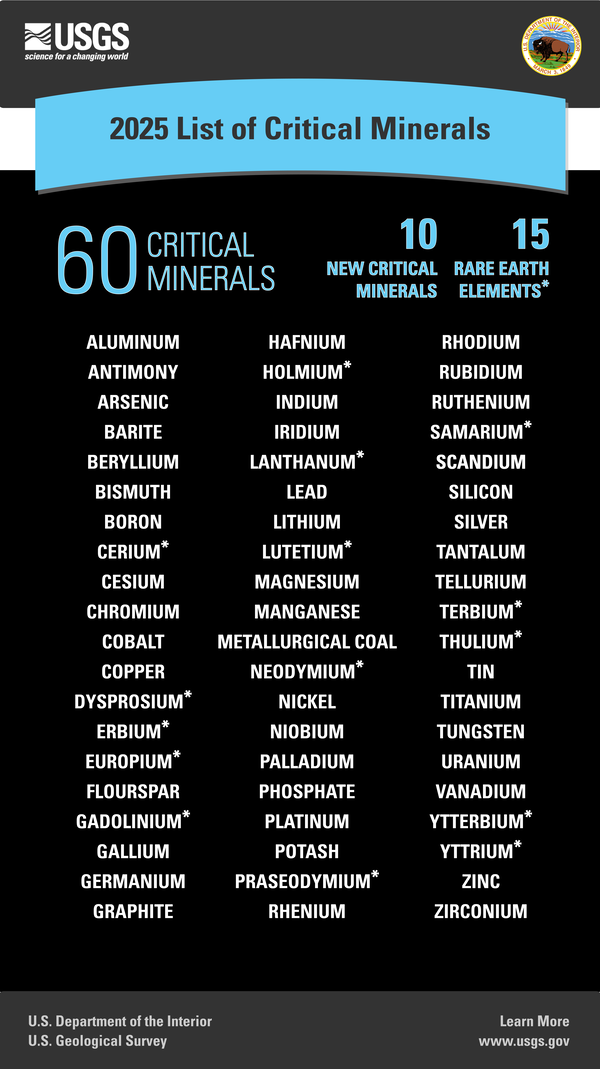
Core Points - The USGS has updated its critical minerals list, adding copper, silver, and metallurgical coal, which may increase the likelihood of these materials being included in tariff policies [1] - This update is the most significant since the list was first published in 2018, with a total of 10 new minerals added, bringing the total to 60 [3] - The inclusion of these minerals is part of a broader strategy to secure the supply chain of critical minerals deemed essential for the US economy and national security [2][3] Summary by Category New Additions to the Critical Minerals List - The updated list now includes copper, silver, metallurgical coal, uranium, potassium, rhenium, silicon, and lead among others [1] - The total number of minerals on the list has increased to 60, which includes 15 rare earth elements [3] Implications for Tariff Policies - The inclusion of these minerals allows the US government to conduct Section 232 investigations under the guise of national security [1] - The strategic importance of these minerals is underscored by their critical role in manufacturing and potential supply chain disruptions [2] Market Reactions and Concerns - The addition of silver has raised concerns in the market, as any tariffs on silver could significantly impact the silver market [4][5] - The US imports nearly two-thirds of its silver, which is widely used in electronics, solar panels, jewelry, and investment [5] - Increased inventory levels of silver in New York have been observed, reaching historical highs due to tariff concerns [5]
特朗普政府将白银和铜列入“关键矿产”清单,加征关税可能性增大?
Di Yi Cai Jing· 2025-11-07 08:51
Core Points - The USGS has updated its critical minerals list, adding copper, silver, and metallurgical coal, which may increase the likelihood of these materials being included in tariff policies [1] - This update is the most significant since the list was first published in 2018, with a total of 10 new minerals added, including uranium, potassium, rhenium, silicon, and lead [1][5] - The updated list now includes 60 minerals, with 15 being rare earth elements, and highlights the supply chain risks associated with certain elements [5] Group 1: New Additions to the List - The USGS defines critical minerals as those essential to the US economy or national security, whose supply chains are vulnerable and whose absence would significantly impact the economy or security [4] - The inclusion of copper and potassium was anticipated, while the addition of silver raises concerns about potential tariffs affecting the silver market [6][7] - The US relies heavily on imports for silver, with about two-thirds of its supply coming from abroad, and the industrial demand for silver has led to a price surge [7] Group 2: Implications of the Update - The updated list signals the US government's priorities, making it easier for designated critical minerals to receive federal support [5] - The inclusion of silver in the list has caused anxiety among traders and manufacturers who depend on it, as tariffs could disrupt the metal market [6][7] - The US has already placed some silver customs codes on the tariff exemption list, indicating that certain types of silver may be less affected by potential tariffs [7]

美国正式公布新版关键矿产清单,首次纳入铜,银铀钾肥也入列
美股IPO· 2025-11-07 04:32
Core Points - The U.S. Department of the Interior's U.S. Geological Survey (USGS) has made significant adjustments to the critical minerals list, including copper for the first time since its inception in 2018, which will impact future tariff policies and trade restrictions [1][4] - The updated list includes additional minerals such as uranium, silver, metallurgical coal, potassium, rhenium, silicon, and lead, reflecting a strategic shift to reduce reliance on imports and enhance domestic production [1][4][8] - The inclusion of copper is particularly important due to its extensive applications in electrification, defense, and clean energy, with the U.S. relying on imports for nearly half of its copper consumption [5][6] Group 1 - The new critical minerals list will influence the 232 investigation announced by the Trump administration, affecting mining investments, tax incentives for mineral processing, and mining permit approval processes [4][8] - The U.S. government prioritizes increasing domestic supply of these minerals, citing national security and infrastructure development concerns due to over-reliance on foreign sources [4][5] - The list's expansion coincides with a rise in electricity demand in the U.S., driven by developments in data centers and artificial intelligence [4] Group 2 - The inclusion of potassium is aimed at addressing potential trade barriers from major supply countries, as the U.S. imports about 80% of its potassium from Canada [6][8] - The addition of silver has raised concerns among precious metal traders and manufacturers, as the U.S. heavily relies on imports to meet domestic silver demand, which could be impacted by tariffs [7][8] - The final list also includes metallurgical coal and uranium, which were not in the draft version, indicating a comprehensive evaluation of environmental factors and domestic supply conditions [8]
金十数据全球财经早餐 | 2025年11月7日
Jin Shi Shu Ju· 2025-11-06 23:03
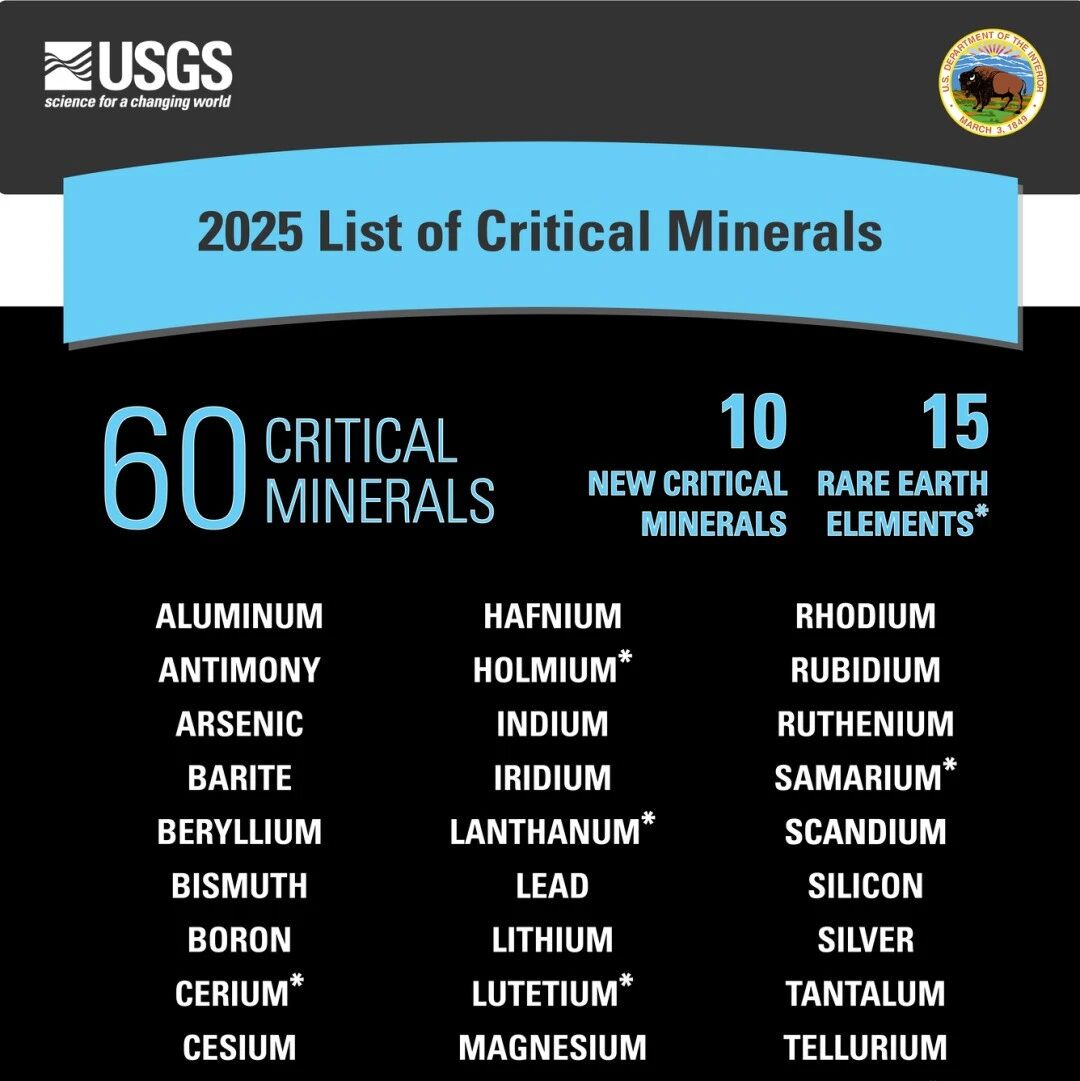
Economic Indicators - The unemployment rate in the U.S. for October is approximately 4.36%, marking a four-year high [9] - Revelio Labs reported a decrease of 9,100 non-farm jobs in October, with a year-on-year increase of 175% in layoffs [9] - The Chicago Fed President expressed caution regarding interest rate cuts due to unreliable inflation data [9] Market Performance - The WTI crude oil price fell by 0.13% to $59.40 per barrel, while Brent crude oil decreased by 0.18% to $63.21 per barrel, amid concerns of oversupply [3] - Major U.S. stock indices declined, with the Dow Jones down 0.84%, S&P 500 down 1.12%, and Nasdaq down 1.9% [3] - The Hong Kong Hang Seng Index rose by 2.12%, with significant gains in large tech stocks like Alibaba and JD.com [4] Corporate Developments - Tesla shareholders approved a compensation plan for Elon Musk valued at nearly $1 trillion [9] - A restructuring platform for polysilicon is being planned, with acquisition details still under discussion [11] - The World Gold Council reported that global gold ETFs saw net inflows for five consecutive months, with daily trading volumes reaching record highs [11]

历史新高!钨价年内翻番,受益股名单来了
2 1 Shi Ji Jing Ji Bao Dao· 2025-11-05 11:11
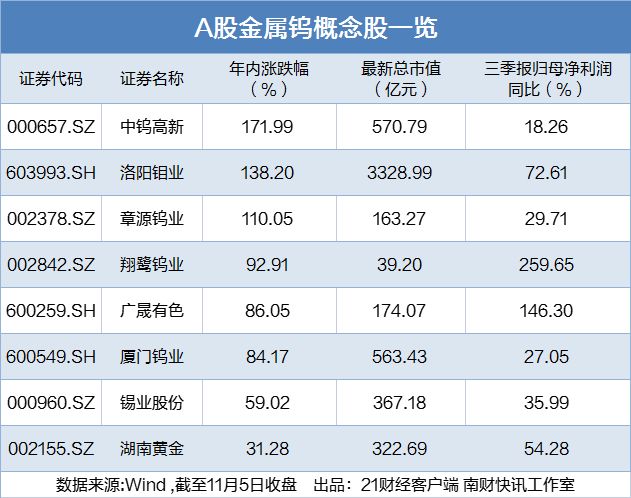
Core Insights - The tungsten market has experienced a significant price surge, with major tungsten products reaching historical highs, driven by increased demand and supply constraints [1][2][3] Price Trends - Tungsten powder prices have surpassed 700,000 CNY/ton, currently at 710,000 CNY/ton; ammonium paratungstate (APT) is priced at 462,000 CNY/ton, while black and white tungsten concentrates are at 312,000 CNY/ton and 311,000 CNY/ton respectively, each increasing by 2,000 CNY from the previous trading day [1][2] - Year-to-date price increases for major tungsten products have exceeded 100%, with black tungsten concentrate rising by 118.18%, APT by 118.96%, and tungsten powder by 124.68% compared to the beginning of the year [1][2] Supply and Demand Dynamics - The tightening supply situation is expected to continue, with the Ministry of Natural Resources and the Ministry of Industry and Information Technology indicating a reduction in tungsten mining quotas for 2025, down to 58,000 tons, a decrease of 4,000 tons or 6.45% year-on-year [2][3] - The demand for tungsten has been bolstered by increased production in sectors such as photovoltaics and automotive, leading to a tight market balance [2][3] Industry Performance - Companies in the tungsten sector have reported strong financial results, with Zhongtung High-tech achieving a revenue of 12.755 billion CNY in the first three quarters, a year-on-year increase of 13.39%, and a net profit of 846 million CNY, up 18.26% [2] - Other companies like Xianglu Tungsten and Luoyang Molybdenum have also shown impressive performance, with net profits increasing by 259.65% and 72.61% respectively [2] Market Outlook - Analysts predict a favorable supply-demand balance for tungsten, with strong pricing support from supply constraints and resilient demand from downstream industries [3] - The tightening of mining quotas and limited new capacity are expected to reinforce the bullish outlook for tungsten prices [3]






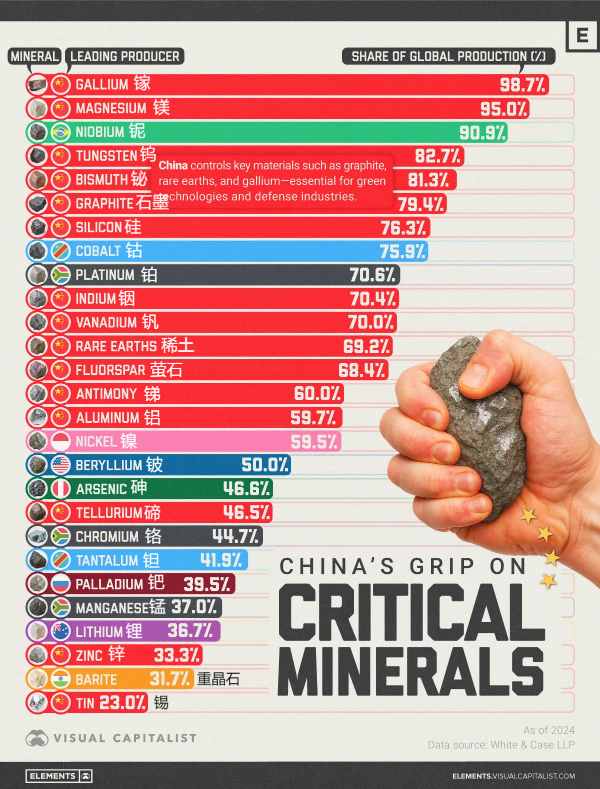
除了稀土,中国大约在27种关键矿产领域占据主导地位!镓(占比98.7%)、镁(95%)、钨(82.7%)和稀土(69.2%)
Ge Long Hui· 2025-11-03 03:17
Core Insights - China dominates the production of at least 15 key minerals, including gallium (98.7%), magnesium (95%), tungsten (82.7%), and rare earths (69.2%), which are essential for clean energy, defense, and electronics [2][3]. Group 1: Key Mineral Production - Gallium is produced at a global share of 98.7% by China [2]. - Magnesium accounts for 95% of global production, also led by China [2]. - Tungsten production is 82.7% controlled by China [2]. - Rare earths have a global production share of 69.2% from China [2]. Group 2: Other Significant Producers - Brazil produces nearly 91% of the world's niobium, crucial for high-strength steel used in pipelines and jet engines [3]. - The Democratic Republic of Congo contributes 75.9% of global cobalt production, essential for batteries and microelectronics [3]. - South Africa supplies 70.6% of platinum and nearly half of chromium globally [3].
美日欧锁定18种核心矿,中国掌控90%加工产能,博弈焦点在哪
Sou Hu Cai Jing· 2025-11-01 11:10
Core Viewpoint - The recent focus of the U.S. on critical minerals during diplomatic efforts, particularly in Asia, highlights a long-standing issue of mineral supply dependency, which has become a central theme in U.S. foreign policy [1][17]. Group 1: Historical Context - The U.S. has recognized the importance of strategic minerals since at least 1921, when the first official list was created [3]. - In 2010, the U.S. established a "Critical Minerals Subcommittee," and by 2018, it published a list of 35 critical minerals, revealing a heavy reliance on imports for 31 of them, with 13 having no domestic supply capability [3][5]. Group 2: Current Dependency and Supply Chain Issues - By 2025, the critical minerals list expanded to 54, focusing on those essential for new energy and artificial intelligence [5]. - The U.S. Geological Survey developed a model to simulate the impact of supply disruptions for 84 minerals across over 1,200 scenarios, indicating significant economic risks [5]. - The top 10 critical minerals are predominantly controlled by other countries, with samarium and rhodium being heavily reliant on China and South Africa, respectively [8][10]. Group 3: Global Competition and Cooperation - The U.S., Japan, and Europe share a consensus on 18 core minerals, which are crucial for strategic industries, but their distribution is highly concentrated in a few countries [8][10]. - China dominates the production of non-energy minerals, accounting for over half of global output and leading in rare earth processing [10]. Group 4: Challenges in Building a Domestic Supply Chain - The U.S. has attempted to create a mineral supply chain with allies like Canada and Australia, but faces significant challenges, including infrastructure limitations and high costs of establishing production facilities [12][15]. - The U.S. lacks sufficient skilled labor in mineral processing, with a shortfall of over 20,000 professionals in the field [14]. Group 5: Strategic Implications - The U.S. approach to mineral security has led to increased costs in global mineral trade and a fragmented supply chain, which may not benefit its own industries [15][17]. - The agreements signed during Trump's Asia trip are seen as temporary measures that do not address the underlying supply chain issues, emphasizing the need for cooperative strategies rather than competitive ones [17].