
收益率曲线

Search documents
Best CD rates today, November 5, 2025: Lock in up to 4.1% APY
Yahoo Finance· 2025-11-05 11:00
Core Insights - Deposit account rates are declining, but competitive returns on certificates of deposit (CDs) can still be locked in, with the best CDs offering rates above 4% [1] Group 1: Current CD Rates - The best short-term CDs (six to 12 months) currently offer rates around 4% to 4.5% APY, with the highest rate at 4.1% APY available from several institutions [2] - Notable offers include Marcus by Goldman Sachs (14-month CD), Sallie Mae (15-month CD), Synchrony (9-month CD), and LendingClub (8-month CD) [2] Group 2: Historical Context - CD rates were relatively high in the early 2000s but began to decline due to economic slowdowns and Federal Reserve rate cuts, with average one-year CDs at around 1% APY by 2009 [3][4] - The trend of falling rates continued into the 2010s, with average rates for 6-month CDs dropping to about 0.1% APY by 2013 [4] - A slight recovery in CD rates occurred between 2015 and 2018 as the Fed gradually increased rates, but the COVID-19 pandemic led to emergency rate cuts, causing new record lows [5] Group 3: Recent Developments - Following the pandemic, inflation prompted the Fed to hike rates 11 times between March 2022 and July 2023, resulting in higher APYs on savings products, including CDs [6] - As of September 2024, the Fed has started cutting the federal funds rate, leading to a decrease in CD rates from their peak, although they remain high by historical standards [7] Group 4: Understanding CD Rates - Traditionally, longer-term CDs offer higher interest rates, but currently, the highest average rate is for a 12-month term, indicating a flattening or inversion of the yield curve [8] - Factors to consider when choosing a CD include goals for locking away funds, type of financial institution, account terms, and inflation [9]
美联储降息25基点并结束缩表,专家称将缓解全球“美元荒”
Feng Huang Wang Cai Jing· 2025-10-30 02:47
Core Viewpoint - The Federal Reserve has lowered the target range for the federal funds rate from 4.00%-4.25% to 3.75%-4.00%, marking a 25 basis point cut, and has decided to end quantitative tightening (QT) and plans to conclude balance sheet reduction in one month [1] Group 1 - The cessation of balance sheet reduction will end the passive liquidity withdrawal from the financial system, which is expected to alleviate tensions in the dollar financing market [1] - After stopping the balance sheet reduction, the supply of dollar liquidity may stabilize, potentially narrowing the spread between SOFR (Secured Overnight Financing Rate) and EFFR (Effective Federal Funds Rate), enhancing the downward momentum of global dollar financing costs [1] - The improvement in global liquidity and the decline of the dollar are seen as positive for manufacturing countries' exports, especially after two years of strong dollar-induced liquidity tightening that exacerbated capital outflows and currency depreciation pressures in emerging markets [1] Group 2 - The end of the Fed's balance sheet reduction is expected to ease expectations of a "dollar shortage," potentially narrowing sovereign debt spreads in emerging markets and enhancing capital inflow momentum, which may benefit the valuation of emerging market stocks [1] - This change is anticipated to support upward revisions in corporate earnings and provide short-term support for stock performance [2] - In the bond market, short-term rates may decline with the policy shift, while long-term rates may remain resilient due to fiscal and term premium constraints, leading to a steeper yield curve [2] - Gold may receive further support in the context of declining real interest rates and increased institutional risk premium, particularly concerning the potential weakening of the Fed's independence [2]
‘STOP IT': Market strategist calls for Fed to be put in ‘PENALTY BOX'
Youtube· 2025-10-29 22:45
Core Viewpoint - The Federal Reserve's current monetary policies, including quantitative easing (QE) and quantitative tightening (QT), are criticized for failing to effectively inject liquidity into the economy and instead altering the quality of collateral in the financial system [2][3][5]. Group 1: Federal Reserve Policies - The Federal Reserve should cease both QE and QT, returning to a more traditional approach to monetary policy as seen post-World War II [3][5]. - There is concern that the Fed is incentivizing banks not to lend by paying interest on excess reserves, which could be better utilized in the economy [3][4]. - The reverse repo program is viewed as a confusing mechanism that does not effectively control short-term interest rates [4][5]. Group 2: Market Signals and Trends - Credit markets are currently stable, with no immediate concerns about price-to-earnings (PE) implosion [6]. - The yield curve is flattening, indicating a healthy demand for U.S. Treasuries [6]. - Foreign investment in U.S. assets is at a high, countering fears about the dollar's decline [7]. Group 3: Economic Outlook - There is a belief that productivity and a resurgence in the U.S. economy will strengthen the dollar [8]. - Current market conditions are not comparable to the irrational exuberance of the 1990s, as earnings are moving in tandem with share prices [9]. - The potential for capital expenditures (capex) to be 100% tax-deductible until January 2031 is seen as a catalyst for market growth [10]. Group 4: Leadership and Legacy - The current leadership of the Federal Reserve, particularly Jerome Powell, is viewed as disappointing, raising questions about the constitutionality of the Fed's actions [11].
美联储降息被定价 看鲍威尔指引
Jin Tou Wang· 2025-10-29 02:45
Core Viewpoint - The US dollar index is under pressure due to market expectations of further interest rate cuts by the Federal Reserve, with an 80% probability of a cut in December [1] Group 1: Market Conditions - The US dollar index is currently trading around 98.737, with a slight decline of 0.01% from the previous close of 98.735 [1] - The yield curve has slightly declined, with the 10-year Treasury yield hovering just below 4% at 3.976% [1] - The bond market has fully priced in a 25 basis point rate cut, bringing the federal funds rate range to 3.75%-4.00% [1] Group 2: Federal Reserve Expectations - Market participants are anticipating a high likelihood (80%) of another rate cut in December, which is contributing to the pressure on the dollar [1] - The economic data is scarce due to government shutdown, making market assumptions crucial, with Jerome Powell's tone being particularly significant [1] Group 3: Technical Analysis - From a technical perspective, as long as the dollar index remains above the 50-day moving average, the trend is still intact [2] - The market will continue to exhibit a weak upward trend unless bulls can break through 99.139 and reclaim 99.563 [2] - Without new hawkish signals from the Federal Reserve, the current situation is unlikely to change [2]
央行将恢复国债买卖操作:为什么,有何影响?
Xin Lang Cai Jing· 2025-10-27 13:49
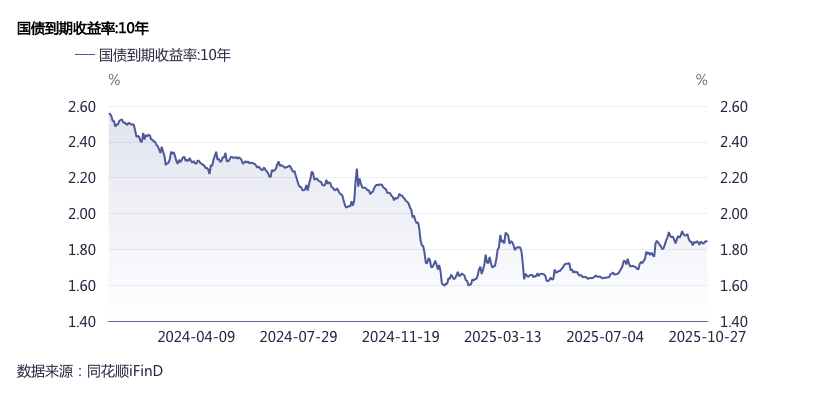
Core Viewpoint - The People's Bank of China (PBOC) is set to resume government bond trading after a nine-month suspension, indicating a shift in market expectations and a need to stabilize the bond market amid rising yields [1][2][3] Group 1: Reasons for Resuming Bond Trading - The resumption is driven by a reversal of the one-sided downward yield expectations, with the 10-year government bond yield rebounding to over 1.8% from a low of 1.6% earlier this year [3][6] - The PBOC's decision aligns with the need to increase its bond holdings, which have significantly decreased during the suspension, as part of its goal to build a strong central bank and financial system [1][7][10] - The bond market's overall stability is crucial, especially in the context of a strong stock market, to prevent negative feedback loops that could exacerbate market volatility [1][11] Group 2: Market Reactions and Implications - Following the announcement, bond yields across various maturities fell by approximately 3 basis points, reflecting market optimism about the resumption [1][11] - Analysts suggest that while the resumption may provide temporary relief and stabilize the market, it may not fundamentally alter the long-term interest rate trends due to broader economic factors [11][12] - The PBOC's approach to bond trading will likely involve a mix of strategies, including "buy short, sell long," to manage yield curves effectively [10][11] Group 3: Broader Economic Context - The PBOC has emphasized the importance of macro-prudential management in observing and assessing bond market conditions, indicating a proactive stance in maintaining financial stability [12][13] - The current liquidity transmission mechanism involves multiple layers, with non-bank institutions facing challenges in accessing funds, highlighting the need for structural adjustments in liquidity provision [13]

黄金破4300、比特币再飙!聪明资金或早已撤退,谁在最后接盘?
Sou Hu Cai Jing· 2025-10-26 17:16
Core Viewpoint - The discussion around "currency devaluation" has gained significant traction in global financial markets, prompting investors to flock to traditional safe-haven assets like gold, silver, and Bitcoin as a means to hedge against inflation and currency depreciation [2][5]. Group 1: Market Trends and Investor Behavior - Many investors are currently engaging in "herd behavior," investing in gold, Bitcoin, and other assets that are nearing historical highs, which may lead to them becoming "high-position buyers" [4][7]. - The surge in money supply, particularly M2, has been a focal point in the currency devaluation narrative, but the market is more concerned with the "growth rate" of money supply rather than its absolute total [4][12]. Group 2: Investment Strategy Recommendations - A layered investment strategy is recommended, dividing investments into defensive, offensive, and high-volatility layers to balance risk and return [7][15]. - The defensive layer should consist of 15% to 20% in gold ETFs or physical gold to provide a stable foundation for assets [7][9]. - The offensive layer can include 5% to 15% in silver and commodity ETFs, which are more sensitive to inflation and economic cycles [7][9]. - High-volatility assets like Bitcoin should be limited to 5% for conservative investors and no more than 10% for aggressive investors due to their extreme price fluctuations [9][11]. Group 3: Economic Indicators and Asset Allocation - The current deep inversion of the U.S. yield curve typically signals an impending economic recession, which may prompt the Federal Reserve to lower interest rates [10][11]. - Investors are advised to adjust their asset allocation strategies based on changes in the yield curve and market conditions, emphasizing data-driven decisions over emotional reactions [11][12].

中资离岸债每日总结(10.22) | 三峡集团发行
Sou Hu Cai Jing· 2025-10-23 15:44
Group 1 - The cost of protection against significant declines in bond yields is rapidly increasing in the options market, driven by concerns over a potential U.S. government shutdown and escalating global trade tensions [2] - The recent surge in demand for high-quality safe-haven assets has led to a downward shift in the yield curve, with a notable increase in the cost of bullish options relative to bearish options for U.S. Treasury bonds [2] - A significant number of traders are now increasing their hedging efforts, which may lead to more buying of U.S. Treasuries, particularly targeting a drop in the 10-year Treasury yield below 4% [2] Group 2 - As of October 21, the yield on China's two-year government bonds is 1.50%, while the yield on ten-year government bonds is 1.84%. In the U.S., the two-year Treasury yield has decreased by 1 basis point to 3.45%, and the ten-year yield has decreased by 2 basis points to 3.98% [7] - The market has seen a slight increase in short positions and a decrease in long positions, making the bond market susceptible to upward movements due to short covering [2] Group 3 - In the primary market, one company issued bonds today, and in the ratings summary, one company had its rating updated by an institution [3][5] - China’s foreign exchange management data shows that in September 2025, banks settled 1.88 trillion yuan and sold 1.52 trillion yuan, with cumulative settlements from January to September reaching 13.27 trillion yuan [12]

法国财政隐忧引爆危机 欧元下行警报拉响
Jin Tou Wang· 2025-10-21 03:54
Group 1 - The core viewpoint indicates that the euro is facing downward pressure due to economic uncertainties in France and a deteriorating economic situation, which is reflected in rising bond yields [1][2] - France's debt-to-GDP ratio is projected to reach 114.1% by the end of Q1 2025, ranking third in the Eurozone, only behind Greece (152.5%) and Italy (137.9%) [1] - The recent political instability in France, marked by the appointment of a new Prime Minister, has not alleviated market concerns, as evidenced by the downgrade of France's credit rating by S&P on October 17 [1] Group 2 - The euro's recent increase was primarily due to the weakness of the dollar rather than any inherent strength of the euro itself, suggesting that the euro's internal weakness will dominate its future movements [2] - Technical analysis indicates that the euro against the dollar is likely to maintain a downward trend, with resistance levels identified at 1.1675 and support levels at 1.1630-1.1635 [3] - The steepening yield curve reflects investors demanding higher premiums to compensate for the accumulating budget deficits and expected increases in sovereign bond issuance risks [1]
美国国债价格跃升至日内高点
Sou Hu Cai Jing· 2025-10-10 15:26
Core Viewpoint - Strong buying interest in US Treasury futures has emerged, leading to a decline in US Treasury yields, with a significant flattening of the yield curve [1] Group 1: Market Reaction - US Treasury yields fell to intraday lows, decreasing by 4.5 to 7 basis points across the board [1] - The short end of the yield curve has priced in more easing expectations, indicating a shift in market sentiment [1] Group 2: Federal Reserve Expectations - The overnight index swap (OIS) linked to Federal Reserve meetings suggests an anticipated total rate cut of 46 basis points over the remaining two meetings this year, up from 44 basis points at Thursday's close [1]
债券策略周报20250928:30年国债换券?如何应对-20250928
Minsheng Securities· 2025-09-28 14:02
Group 1 - The bond market sentiment is currently weak, with a poor profit effect, and significant downward movement in interest rates requires strong event-driven stimuli, such as large-scale bond purchases, central bank rate cuts, or significant declines in equity markets [1][8] - The 10-year government bond yield has been fluctuating around 1.8%, with potential for both upward and downward movement, but a rebound opportunity is more likely if the yield approaches 1.9% [1][8] - The report suggests maintaining a slightly lower duration in bond portfolios and focusing on a barbell structure due to the difficulty in significantly steepening the yield curve in a weak market environment [2][39] Group 2 - The report highlights the importance of selecting specific bonds, with a focus on the 30-year government bond 25T6, which is expected to become the next main bond due to its good liquidity and upcoming issuance [3][12] - The yield spread between 25T6 and 25T2 is currently around 10 basis points, with expectations that this spread will compress to about 6 basis points as 25T6 gains prominence [12] - The report also emphasizes the need to monitor the impact of new regulations on fund redemptions, which may lead to increased volatility in certain bond types [2][39] Group 3 - The report indicates that the current bond yield valuations are not expensive compared to other asset classes, but the profit effect from bonds remains weak, making them less attractive [27][28] - The 10-year government bond yield is projected to be around 1.93% in the coming month, reflecting a weak outlook based on the constructed interest rate prediction model [23][24] - The report notes that the yield curve is expected to remain relatively flat, with short-term government bonds showing more resilience compared to long-term bonds [38][39]