获利了结

Search documents
铜价因获利了结脱离纪录高位,但月线仍有望上涨
Wen Hua Cai Jing· 2026-01-30 11:56
1月30日(周五),铜价周五回落,抹去前一交易日投机热潮中的涨幅,因投资者进行获利了结,但铜 价仍有望实现月度上涨。 上海期货交易所主力期铜合约日间收跌3,010元或2.82%,报每吨103,680元,较历史高点114,160元回 落,但1月仍累计上涨近4%。 伦敦金属交易所(LME)三个月期铜下跌442美元或3.23%,报每吨13,264美元,较历史高点14,527.50美 元回落。但伦铜本周仍有望收涨近7%。 美元走强亦助推了铜价回落。 (文华综合) 荷兰国际集团经济学家在报告中指出,铜价回调"反映出市场整体转向避险立场"。 "铜及大宗金属市场的基本面依然向好。美元走弱预期、降息前景、投资者对实物资产的强劲需求以及 持续紧俏的供需格局,这些因素仍在提供支撑。" 上期所其他金属方面:沪铝3月合约下跌930元或3.65%,报每吨24,560元;沪铅3月合约下跌260元或 1.52%,至每吨16,865元;沪镍挫跌5,740元或3.94%,至每吨140,000元;沪锡暴跌36,810元或8.26%,报 每吨409,000元;沪锌以0.64%的涨幅成为唯一上涨品种。 铜价回调源于金属全线出现获利了结,此前金属市场 ...
刚刚,急速大跳水!集体杀跌!黄金、白银,发生了啥?
券商中国· 2026-01-30 09:21
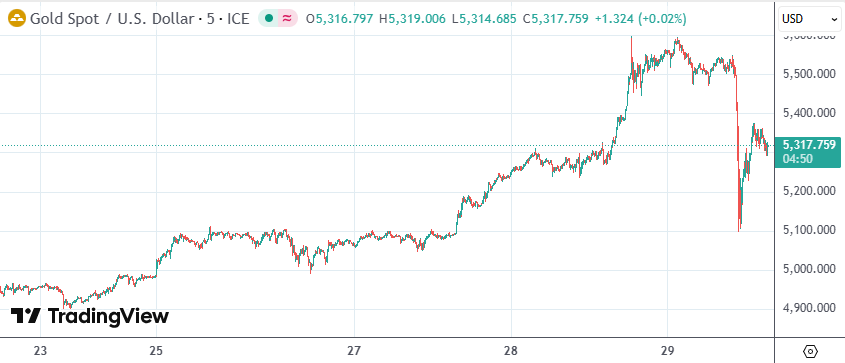
贵金属,剧烈波动! 继昨晚大幅震荡后,黄金、白银价格今日继续高台跳水。 盘中,现货黄金跌幅一度超过6%,现货白银跌幅一 度超过10%。 有分析指出,贵金属的跳水,跟投资者在今年创纪录的上涨后获利了结有关,同时也受到了美元的反弹拖累。 此外,凯文·沃什可能被特朗普提名为下一任美联储主席的消息,也打击了金银价格。沃什长期以来一直批评 超宽松货币政策,因此市场可能在定价他的任命对未来政策路径的影响。 周五,A股黄金概念股集体下跌。截至今日收盘,中金黄金、山东黄金、四川黄金、湖南白银等20多只相关概 念股跌停。 不过,瑞银最新表示,金价在短期内可能面临压力,但长期前景依然乐观。该行将2026年3月、6月和9月的黄 金价格目标从每盎司5000美元上调至每盎司6200美元,理由是投资增加导致需求强于预期。 金价、银价集体大跳水 1月30日盘中,黄金、白银价格在短暂冲高后直线大跳水。其中,现货黄金最低下探至5051美元/盎司,日内跌 幅一度超过6%;现货白银最低下探至103美元/盎司,日内跌幅超过10%。截至券商中国记者发稿时,现货黄金 报5099.92美元/盎司,跌幅为5.16%;现货白银下跌10.08%报104.19美 ...

黄力晨:黄金盘中急跌400美元 获利了结打击金价
Xin Lang Cai Jing· 2026-01-30 06:37
Core Viewpoint - The market's expectation of interest rate cuts by the Federal Reserve, Trump's tolerance for a weaker dollar, and a surge in global risk aversion have accelerated the purchase of traditional safe-haven assets like gold, driving prices to new historical highs [1][5][6]. Group 1: Market Dynamics - The market anticipates two interest rate cuts by the Federal Reserve this year, which would lower the opportunity cost of holding gold [2][6]. - Trump's recent announcements regarding tariffs on multiple countries have pushed investors away from dollar assets, increasing demand for gold [2][6]. - Gold prices surged over $1200 in January, but profit-taking led to a sharp decline of nearly $400 during trading on Thursday [2][6]. Group 2: Technical Analysis - Gold's price reached a new high of $5596 before experiencing a significant drop to $5105, but it rebounded to close above $5400, indicating strong buying interest [1][5][6]. - Key support levels for gold are identified at $5370 and $5300, while resistance levels are at $5470 and $5550 [3][7]. - Technical indicators such as the 5-day moving average and MACD suggest a bullish trend, although the KDJ indicator indicates a potential need for adjustment [3][7].
现货黄金失守5200美元,贵金属概念股批量跌停
2 1 Shi Ji Jing Ji Bao Dao· 2026-01-30 03:36
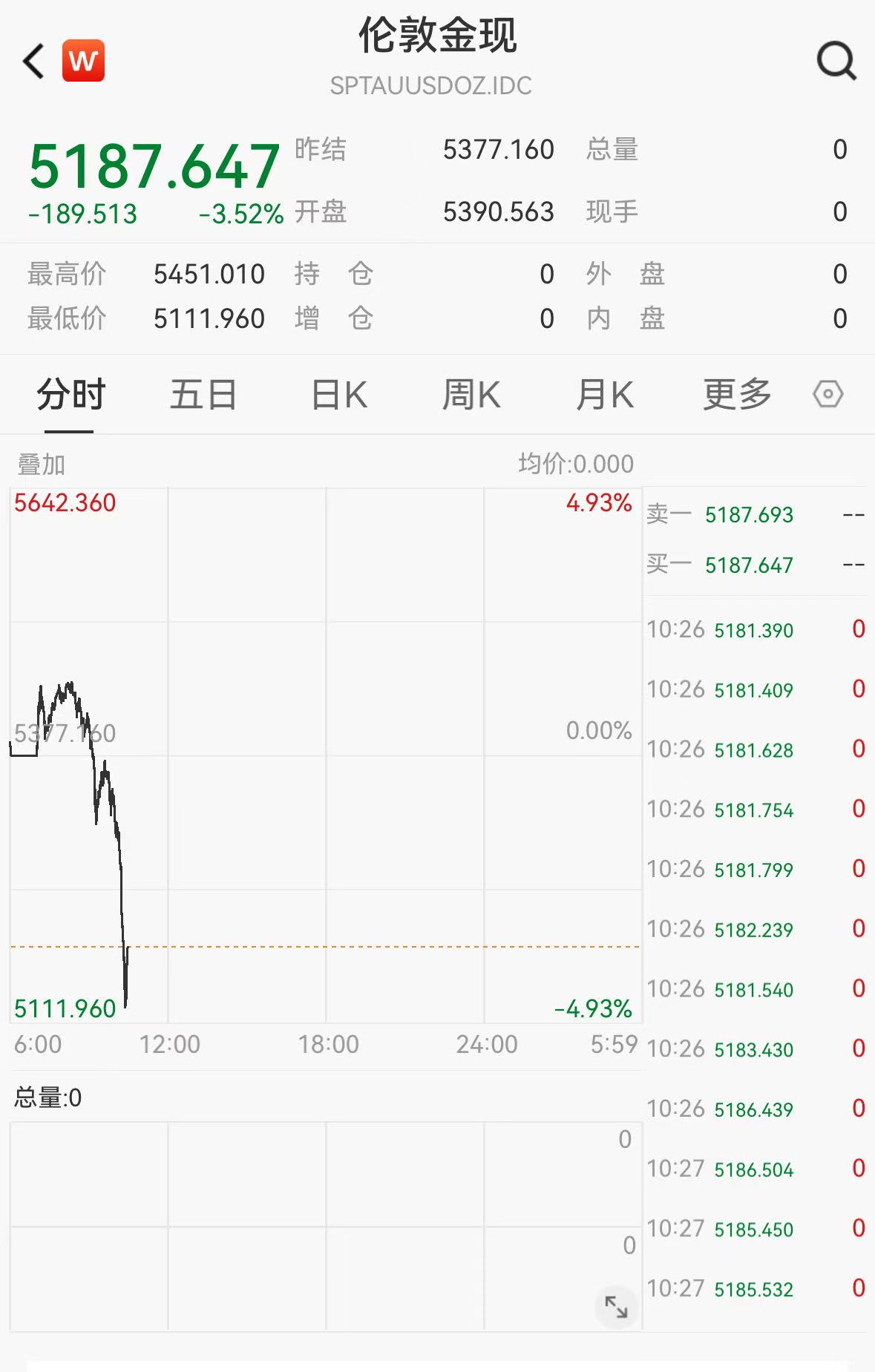
Group 1 - The precious metals and industrial metals sectors experienced a significant drop, with stocks like Xiaocheng Technology hitting the daily limit down, and several gold and silver concept stocks also reaching their limit down prices [1] - Spot gold fell over 4%, dropping below $5200, while spot silver declined more than 5%, falling below $110, indicating extreme market volatility [1] - Analysts attribute the sharp decline in gold and silver prices to profit-taking by investors after recent price highs, with David Meger from High Ridge Futures noting a wave of selling following record highs in precious metal prices [1] Group 2 - The London gold price was reported at $5187.647, reflecting a decrease of $189.513 or 3.52% from previous levels, with a trading range between a high of $5451.010 and a low of $5111.960 [2] - The London silver price was recorded at $110.566, down by $5.300 or 4.57%, with a trading range showing a high of $118.466 and a low of $107.947 [3]


和讯投顾李望军:黄金白银价格下跌的原因主要是获利了结
Sou Hu Cai Jing· 2026-01-30 02:52
1月30日晚间,黄金与白银期货价格出现大幅跳水。这一现象看似反常——在市场情绪高涨之际反而出 现下跌,其背后原因主要有两个方面。 首先是获利盘过于丰厚。自去年11月以来,黄金期货价格从每盎司4000美元一路攀升至5500美元,涨幅 显著;白银期货价格更是从每盎司30余美元飙升至120美元,涨幅接近百分之百。由于期货交易本身具 有杠杆效应,如此巨大的涨幅意味着大量获利盘亟待了结。与此同时,部分央行前期已开始逐步减持黄 金与白银储备,进一步加剧了市场的抛压。 其次是宏观经济数据的影响。美国生产者价格指数(PPI)数据表现优于预期,由原先预期的2.1%升至 2.3%,这一变化使得市场对美联储暂停加息的预期升温,美元随之走强。在全球资本看来,美元走强 将促使资金从黄金等避险资产中撤出,转向美元资产,从而引发黄金的持续兑现。 综上所述,建议投资者现阶段避免介入黄金、白银相关的股票及期货品种,而应考虑逐步离场。毕竟价 格已处于高位,获利盘过于集中,涨幅也已相当可观,市场难以维持单边上涨态势,获利了结的压力将 持续存在。 当前黄金期货价格已进入顶部区域,尽管不会立即出现断崖式下跌,但大概率将呈现横盘震荡下行的走 势,整体在 ...
深夜悬崖式过山车!白银黄金跳水重挫,随后收复近半跌幅……多家基金今日突发公告:停牌!
Sou Hu Cai Jing· 2026-01-30 00:55
Group 1: Gold Market Dynamics - Gold prices experienced a sharp decline, dropping over $400 before recovering nearly half of the loss, with a maximum intraday drop of 5.7% [1][17] - The spot gold price approached $5600 but fell to $5105.83 before rebounding to around $5317, reflecting a 1.8% decrease at the time of reporting [1] - The volatility in gold prices is attributed to profit-taking by investors after recent highs, with gold up 6.5% for the week and 23% for the month [17] Group 2: Factors Influencing Precious Metals - The rise in precious metals is supported by dual factors: escalating geopolitical risks increasing global risk aversion and a deepening trend of "de-dollarization" raising doubts about the dollar's credibility [4] - Industrial metals and oil sectors are also gaining momentum due to a recovery in manufacturing and steady demand from green technology [4] Group 3: Silver Market Movements - Silver prices fell from a historical high of $121.67 to $106.80, with a maximum intraday drop of 8.5%, before recovering to around $114, reflecting a 2.3% decrease [6] Group 4: Investor Sentiment and Reactions - Investor sentiment is mixed, with some expressing frustration over recent losses in gold investments, highlighting the emotional impact of market fluctuations [5][13] - The demand for gold remains strong, with significant interest from both cryptocurrency companies and central banks, indicating a sustained appetite for gold as a safe-haven asset [17]
贵金属遭遇获利回吐风暴:白银一度跌超8%,黄金最大回撤500美
Feng Huang Wang· 2026-01-29 22:57
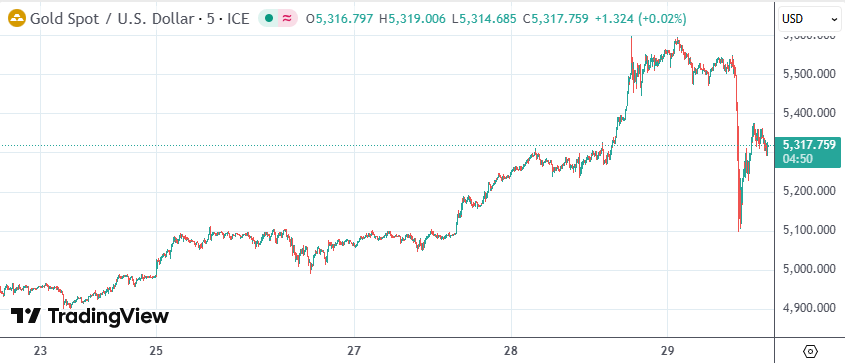
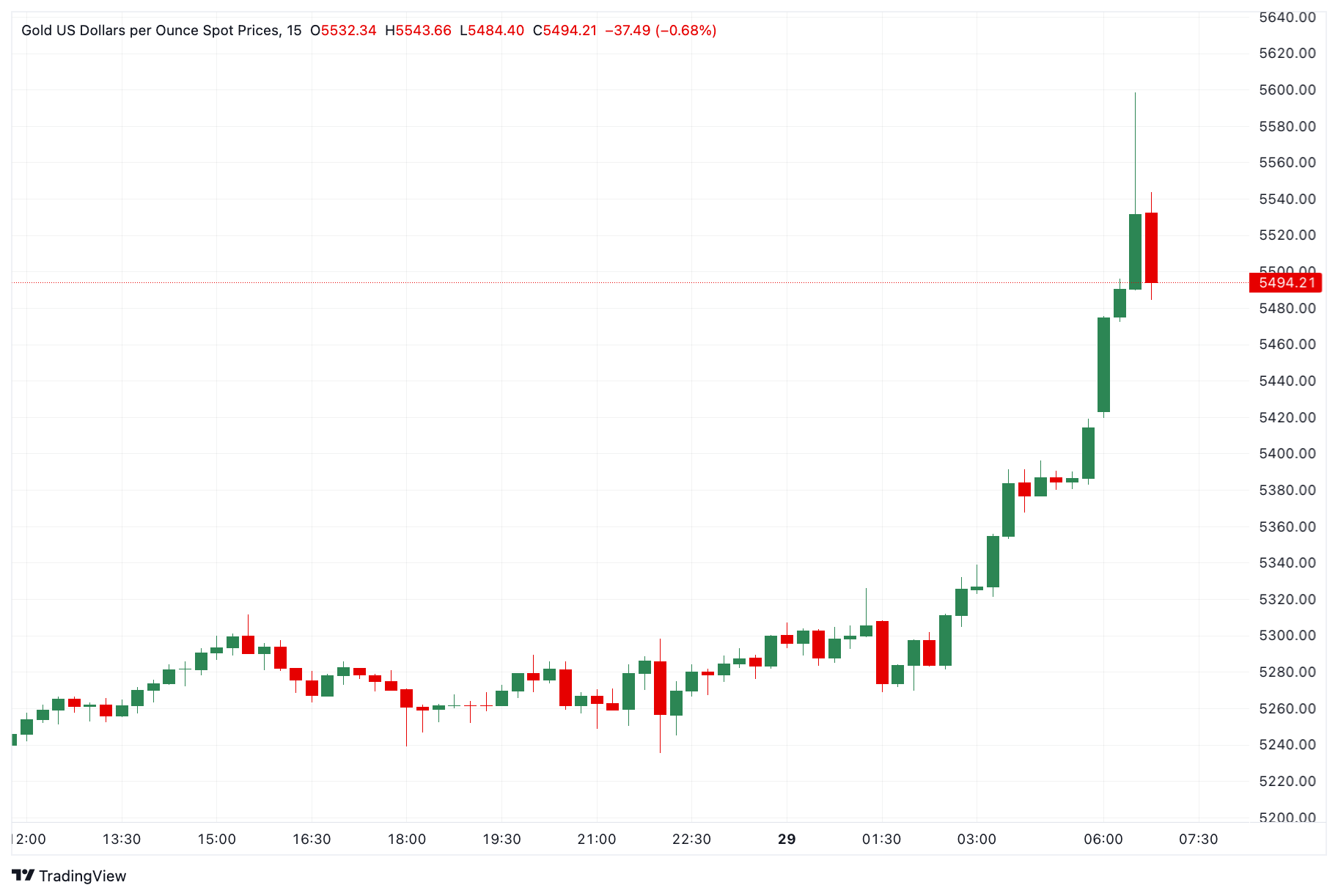
周四(1月29日)纽约时段,贵金属价格快速跳水,现货金价短线一度跌超400美元,随后收复了近一半跌幅。 现货黄金价格日内一度逼近5600美元关口,但在北京时间23:00左右开始下滑,从每盎司5530美元附近跌至5105.83美 元,日内跌幅最大时为5.7%。发稿时反弹至5317美元,跌幅收窄至1.8%。 分析认为,金银的短线跳水源于投资者在价格频刷新高后获利了结。 High Ridge Futures金属交易主管David Meger表示:"在贵金属价格近期刷新历史新高后,我们看到了一波剧烈的抛售。" 但要指出的是,现货黄金本周迄今上涨6.5%,本月仍累计上涨23%。从加密领域的公司到各国的中央银行,对黄金的需 求仍正在持续扩大。 日内早些时候,加密公司Tether首席执行官表示,计划将其投资组合中10%至15%的资金配置到实物黄金。全球规模最大 的黄金ETF——SPDR Gold Trust的持仓量升至接近四年来高位。 GoldSilver Central董事总经理Brian Lan指出:"贵金属正处在聚光灯下,投资者总是愿意让资金流向那些能够带来高回报 的资产。" Marex全球市场分析主管Guy Wol ...
大和:市场偏好由AI转向周期性行业 料农历新年后逐渐转向与刺激政策相关板块
智通财经网· 2026-01-29 06:41
Group 1 - The interest of mutual funds in the Hong Kong market slightly decreased in Q4 of last year, with strong capital inflows into the metals and financial sectors [1] - By the end of 2025, the structure of stock holdings in equity and mixed mutual funds diversified, with the top 50 holdings' share of total stock investments dropping from 25.8% to 25.1% [1] - The proportion of Hong Kong stocks in mutual fund heavyweights decreased from a peak of 17.8% to 16.3% [1] Group 2 - Driven by global metal market trends, Chinese mutual funds significantly increased their investments in metal stocks in Q4, with a quarterly rise of 1.7 percentage points [2] - Fund managers showed optimism towards banks and diversified financials, with notable inflows into Industrial Bank and ICBC [2] - For Q1 2026, mutual funds are expected to have a higher risk tolerance post profit-taking, with AI and metals remaining key investment themes [2]





突发:黄金首次突破5500美元创历史新高
Sou Hu Cai Jing· 2026-01-29 01:23
黄金价格(黄金/美元)在周四早盘亚洲交易中飙升至5579美元的历史新高,随后回落至约5500美元。这种贵金属的上涨受到持续的地缘政治紧张局势、经 济不确定性和美元(USD)走弱的强劲避险需求的支撑。 在美国总统唐纳德·特朗普周三对伊朗发出新的警告后,地缘政治紧张局势持续。特朗普敦促伊朗"回到谈判桌上",达成一项"公平合理的协议",以禁止发 展核武器,否则下一次美国的攻击将会更糟。同时,伊朗以威胁对美国、以色列及其支持者进行反击作出回应。 美国联邦储备委员会(Fed)决定维持利率不变也促进了黄金的上涨。美国央行在周三的1月份政策会议后,将利率维持在3.5%至3.75%的目标区间。较低的 利率通常会降低持有无收益资产(如黄金)的机会成本,使其对投资者更具吸引力。 特朗普在周二早些时候表示,他将很快宣布新美联储主席的人选。他补充说,一旦新美联储主席上任,利率将显著下降。交易员担心,在特朗普候选人被任 命为美联储主席后,美联储将失去独立性,从而推动了避险需求的上升。 地缘政治和经济不确定性推动了黄金等传统避险资产的需求。 美联储在周三的1月会议上将关键利率维持在3.5%至3.75%的区间。 另一方面,在黄金价格同比上 ...
金属涨跌参半 期铜受获利了结拖累下跌【1月27日LME收盘】
Wen Hua Cai Jing· 2026-01-28 01:27
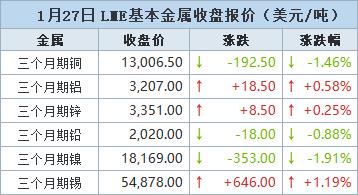
Group 1 - The core viewpoint of the articles indicates that LME copper prices have declined due to profit-taking by investors, while tin prices have reached a historical high [1][3]. - On January 27, LME three-month copper fell by $192.5, or 1.46%, closing at $13,006.5 per ton, after reaching $13,311 on January 26, which was close to the record high of $13,407 set on January 14 [1][2]. - LME copper inventory rose to 172,350 tons, the highest level since May, with over 11,000 tons of metal flowing into LME U.S. warehouses this month [3]. Group 2 - LME three-month tin increased by $646, or 1.19%, closing at $54,878.0 per ton, with an intraday peak of $58,340, marking a significant rebound from a previous drop [4]. - The demand for tin appears to be low, as indicated by the $185 per ton discount of LME spot tin compared to three-month tin [4]. - Other base metals showed mixed performance, with three-month aluminum rising by $18.5 (0.58%) to $3,207.0 per ton, while three-month lead fell by $18 (0.88%) to $2,020.0 per ton, and three-month nickel dropped by $353 (1.91%) to $18,169.0 per ton [2][5][6].