资产泡沫

Search documents
高盛观点 | 为何全球股市尚未陷入泡沫
高盛GoldmanSachs· 2025-10-30 09:20
Core Viewpoint - The current stock market rally, driven by strong fundamentals, has raised concerns about a potential bubble, but Goldman Sachs' chief global equity strategist Peter Oppenheimer argues that the market has not yet entered a bubble phase despite some historical similarities [1][2]. Group 1: Characteristics of Asset Bubbles - Historical asset bubbles are often fueled by excitement around transformative technologies, leading to excessive price increases and speculation beyond fundamental values [2]. - The current market shows a high concentration of leadership, with the top ten companies in the U.S. accounting for nearly a quarter of the global stock market value, predominantly in the tech sector [2]. Group 2: IPO and M&A Market Trends - The IPO and M&A markets are heating up, with the average first-day IPO premium in the U.S. reaching 30%, the highest since the late 1990s tech bubble [4]. - While there are signs of excess, the current IPO activity is not comparable to the speculative IPOs of the past, as most tech investments are driven by mature companies' capital expenditures rather than high-risk leverage [4][5]. Group 3: Capital Expenditure and Financial Health - Although capital expenditures relative to sales have increased, they remain below historical bubble levels, and leverage is controlled, with most spending funded by internal cash flow rather than debt [5][6]. - The increase in bond issuance by large tech companies does not indicate a bubble, as their overall financial health remains robust, reducing systemic risk [6]. Group 4: Investment Strategy Recommendations - Investors are advised to focus on diversification, closely monitor capital expenditures and leverage, and avoid overpaying for companies lacking a track record [8]. - Opportunities should be sought in adjacent sectors such as infrastructure and resources, which are crucial for supporting AI development, while being cautious of rising leverage in large tech companies [8].


摩根士丹利亚洲区前主席斯蒂芬·罗奇:警惕AI泡沫与美元疲软|2025外滩年会
Sou Hu Cai Jing· 2025-10-24 04:12
Core Insights - The 2025 Bund Conference, held from October 23 to 25 in Shanghai, focuses on the theme "Embracing Change: New Order, New Technology," gathering global leaders to discuss the reshaping of the global economic and financial landscape and the profound impact of technological innovation [1] Group 1: AI and Market Dynamics - AI has significant potential for economic transformation, but current market enthusiasm appears excessively high [3] - The S&P 500 index's rise is heavily concentrated in seven major tech stocks, which now account for one-third of the index's market value, a concentration level exceeding that seen before the 2000 internet bubble [3] - Historical asset bubbles demonstrate that speculative cycles are inevitable, characterized by soaring valuations, high concentration, and capital inflows driven by irrational expectations [3] Group 2: Regulatory and Economic Considerations - Financial regulators should closely monitor the feedback mechanisms between asset prices, the real economy, and monetary policy to prevent systemic risks from excessive monetary easing [3] - The focus of global competition is shifting from "General Artificial Intelligence (AGI)" to "application layer innovation," with the U.S. being more aggressive in AGI research while China excels in practical applications [4] Group 3: U.S. Dollar and Macroeconomic Policy - The current weakness of the U.S. dollar is attributed to structural factors rather than a fundamental shift in its reserve currency status [5] - The U.S. government shutdown has reduced the transparency of key economic statistics, increasing uncertainty in Federal Reserve policy decisions [5] - If market expectations for interest rate cuts are unmet, the U.S. stock market may experience significant volatility [5] Group 4: Outlook for China - Confidence in China's medium to long-term growth prospects remains strong, with expectations of achieving around 5% growth this year [5]

Gold Tops $4,000 for First Time as US Shutdown Fuels Rally
Youtube· 2025-10-08 18:39
Core Insights - Gold is currently signaling extreme caution as it outperforms all major risk assets, indicating a potential market correction ahead [1][5][11] - The price of gold has reached $4,000 an ounce, with significant inflows into ETFs, suggesting a growing interest in gold as a safe haven [2][10] - Concerns are rising among investors regarding the sustainability of gold's price increase, with some experts labeling it as a bubble [3][4] Market Dynamics - Gold is viewed as overextended, with its current valuation being the highest since 1979, raising alarms about potential market corrections [1][5] - The volatility of gold compared to cryptocurrencies like Bitcoin is notable, with Bitcoin trading at 2 to 3 times the volatility of gold since 2021 [4] - The S&P 500 is currently about 1.66 times the price of gold, which is historically high, suggesting that U.S. stocks may be overvalued [8] Investment Sentiment - There is a growing sentiment among investors to exit positions in assets that have appreciated significantly, with gold being one of those assets [5][11] - The current positioning in gold futures shows that about 33% of total open interest is net long, indicating that the market is not excessively overextended yet [10] - Central banks are actively buying gold, which supports its price, but caution is advised as historical trends suggest that when gold becomes this stretched, it is prudent to be cautious rather than greedy [9][11]

Bubbles Pop Rather Than Crack: 3-Minutes MLIV
Youtube· 2025-10-08 08:16
Group 1: Gold Market Insights - Gold has surpassed the $4,000 mark, indicating strong bullish sentiment among investors [1] - The popularity of gold as a trade is attributed to concerns over fiat currency debasement and institutional credibility [2] - Despite the consensus on gold, there are worries about potential market volatility and fiscal concerns, particularly in the tech sector [3][4] Group 2: Market Dynamics and Valuation Concerns - There are increasing concerns regarding stock valuations and the sustainability of high capital expenditures in the tech sector [5][6] - The market may be entering a more volatile stage, suggesting that the current bubble could be nearing its peak [6] - A potential year-end rally for the dollar is anticipated, driven by weaknesses in major competing currencies like the euro and yen [7][8]
美银Hartnett:关键指标显示AI还没有风险,警惕美元反弹对热门交易的冲击
Hua Er Jie Jian Wen· 2025-09-29 00:27
Core Viewpoint - The discussion around a potential AI bubble is intensifying, but Bank of America strategist Michael Hartnett believes that the current credit spreads for tech stocks indicate that the AI-driven rally has not yet reached a dangerous level [1][2] Group 1: Credit Spreads and AI Bubble - The credit spreads for tech stocks are at an 18-year low, suggesting that investors are not pricing in potential risks for tech companies, contrasting with typical late-stage asset bubble scenarios where credit risks rise sharply [2][3] - Hartnett asserts that a comprehensive collapse of the AI sector is unlikely due to the current credit market conditions [2] Group 2: Market Risks and Dollar Strength - The immediate risk for investors is not a bubble burst but rather an unexpected strengthening of the dollar, with a consensus trade of "shorting the dollar" being a significant vulnerability [1][4] - If the dollar index experiences a chaotic rebound and surpasses the critical level of 102, it could trigger a collective risk-averse response among investors [4] Group 3: Asset Performance and Market Sentiment - Year-to-date, gold has been the best-performing asset with a gain of 41.3%, while international stocks rose by 24.7%, and the dollar index fell by 9.2% [4] - Recent EPFR data shows a continued inflow of global funds into various assets, indicating that investors remain optimistic and are actively allocating to risk assets despite discussions of potential market corrections [3] Group 4: Gold's Position in Asset Management - Although gold is currently viewed as "overbought" from a tactical perspective, it remains a "low allocation" asset in both private and institutional asset management, with only 0.4% and 2.4% allocations respectively [5]
警惕日本老路!盛松成:财富大迁移加速,低利率三大领域成新金矿
Sou Hu Cai Jing· 2025-09-27 11:46
Core Insights - The current low interest rate environment in China is driving a significant shift of household savings towards capital markets, indicating a "wealth migration" focused on new infrastructure, consumer infrastructure, and new urbanization [1][3][13] - This trend has raised questions about the potential positive effects of such a shift, particularly regarding the risk awareness of ordinary investors amid increasing market volatility [3][9] Group 1: Wealth Migration Trends - Data from the central bank shows a decrease of 600 billion yuan in household deposits year-on-year by August 2025, while non-bank deposits increased by 550 billion yuan, signaling a "deposit migration" [3] - The shift towards capital markets is seen as a natural trend in financial market development, with a focus on diversified asset allocation [5] Group 2: Investment Opportunities and Risks - Investment is increasingly directed towards areas aligned with national strategic goals, such as new infrastructure and consumer infrastructure, which have clear policy support and cash flow guarantees [7][16] - However, there are concerns about over-reliance on policy-driven growth, which may distort market pricing mechanisms, especially in projects with long return cycles [7][14] Group 3: Low Interest Rate Environment - The low interest rate environment is a key factor driving asset allocation adjustments, with one-year fixed deposit rates falling below 1% and large-denomination certificates of deposit generally below 1.4% [9] - There are debates about whether low interest rates necessarily increase risk appetite, as historical examples show that prolonged low rates can lead to cash hoarding instead of investment [9][11] Group 4: Sector-Specific Insights - The three identified sectors—new infrastructure, consumer infrastructure, and new urbanization—are closely aligned with the national "two new and one heavy" strategy [13] - New infrastructure projects, such as 5G and data centers, require specialized judgment and high capital thresholds, while REITs have a limited focus on consumer infrastructure [14][16] Group 5: Long-term Considerations - The core advantage of new infrastructure lies in technological iteration, while consumer infrastructure is linked to domestic demand expansion [16] - Investors must be cautious, as policy direction does not guarantee market success, and local fiscal pressures could impact project viability [16][18]

美联储降息后最大受益者出现了!黄金股市疯涨,基金圈将彻底变天
Sou Hu Cai Jing· 2025-09-26 06:25
Market Overview - The recent market has seen significant gains, with gold rising over 35% and the stock market increasing by 14%, while the dollar index has dropped by 9.3% and crude oil has fallen by 11.4% [1] - The current market rally is attributed not only to the Federal Reserve's interest rate cuts but also to reductions in tariffs and taxes, indicating potential market bubbles [1] Historical Context - Historical data shows that since 1900, the average increase in stock market bubbles from low to peak is 244%, with current market conditions suggesting there may still be room for growth [3] - The "Seven Giants" have seen a 223% increase since March of the previous year, with a dynamic price-to-earnings ratio of 39 times, indicating that the current rally may not be over yet [3] Investment Strategies - Focus on core assets is recommended, as returns during bubble periods tend to be concentrated in specific sectors rather than widespread [6] - A "barbell strategy" is suggested, where investors hold both high-risk bubble assets for potential gains and undervalued value stocks for stability [7] - Global markets such as Brazil and the UK are highlighted for their attractive price-to-earnings ratios, suggesting opportunities beyond popular stocks [8] Bond Market Insights - Monitoring corporate bonds is crucial, as they often react more sensitively to underlying company fundamentals compared to stocks [9] - Historical patterns indicate that rising interest rates typically lead to falling bond prices, suggesting a strategy of shorting bonds in anticipation of rate hikes [10] Sector Focus - Industries that may be affected by inflation, such as large pharmaceuticals and energy companies, should be monitored closely for potential risks [12] - The depreciation of the dollar is seen as beneficial for international markets, with signs of a positive correlation between the yen and Japanese stocks, indicating potential investment opportunities [12]
罕见!黄金今年36次、美股28次,同创新高,什么信号?如何交易?
Sou Hu Cai Jing· 2025-09-23 11:54
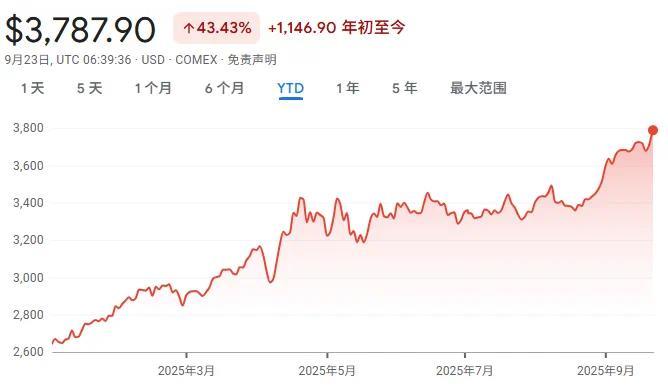
Core Viewpoint - The Federal Reserve is initiating interest rate cuts, leading to a surge in global asset prices, with significant movements in both risk and safe-haven assets [1][5]. Group 1: Market Performance - Nvidia's substantial investment in OpenAI has reignited the AI boom, pushing the three major U.S. stock indices to new highs, with the S&P 500 index hitting its 28th record high this year [2]. - COMEX gold prices closed at $3,775.10, marking the 36th record high of the year, with a year-to-date increase of approximately 43% [2]. Group 2: Market Dynamics - The simultaneous rise of risk and safe-haven assets has led to skepticism among investors regarding whether the market has reached "perfect pricing" [5]. - Bank of America strategist Michael Hartnett suggests that the combination of tariff cuts, tax reductions, and interest rate cuts creates a "run-it-hot" policy environment, providing implicit guarantees for the economy and stock market [5]. - Deutsche Bank's report indicates that the market has not yet reached a "perfect pricing" state, suggesting that concerns about future risks may actually provide room for potential market increases [5][6]. Group 3: Investment Strategies - Hartnett proposes a five-point trading strategy to navigate the current market conditions, including investing directly in bubble assets, constructing a "barbell" portfolio, shorting corporate bonds of bubble companies, shorting U.S. bonds, and trading volatility [10][11]. - The current market sentiment is characterized by a belief that "money is depreciating, and holding it is less favorable than consumption or investment," driving funds into risk assets [6]. Group 4: Gold Market Analysis - The rise in gold prices is attributed to geopolitical uncertainties, inflation concerns, and expectations of interest rate cuts, creating a "perfect storm" for gold [13][14]. - Deutsche Bank notes that the high gold prices reflect market fear rather than extreme optimism, indicating a typical sign of investors seeking safe-haven assets [13]. - Despite concerns about a potential bubble, key market indicators have not shown signs of irrational exuberance, suggesting that the current gold market may be in a sustained bull phase rather than a bubble [14][15].

罕见,黄金今年36次、美股28次,同创新高,什么信号?如何交易?
3 6 Ke· 2025-09-23 11:52
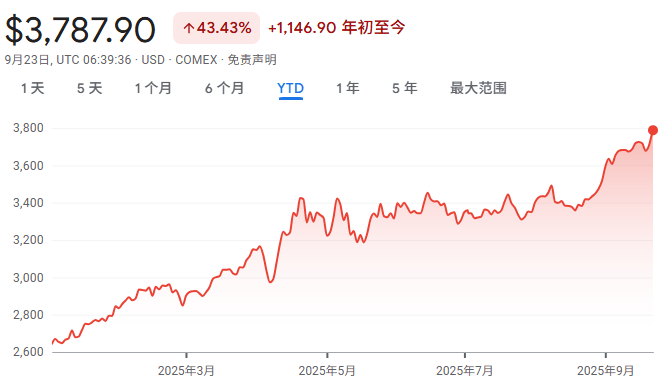
Core Viewpoint - The Federal Reserve is initiating interest rate cuts, leading to a surge in global asset prices, particularly in the U.S. stock market, with the S&P 500 index hitting new highs multiple times this year [1][2]. Group 1: Market Dynamics - Risk and safe-haven assets are both reaching historical highs, raising questions about whether the market has perfectly priced in all favorable conditions [2]. - Analysts from Bank of America and Deutsche Bank suggest that the market is not yet in a "perfect pricing" state, indicating potential for further gains despite existing bubble signs [2][5]. - The current economic environment, characterized by tax cuts, tariff reductions, and interest rate cuts, is providing implicit guarantees for the economy and stock market [2]. Group 2: Asset Performance - Gold prices have reached historical highs, with a year-to-date increase of approximately 43%, reflecting investor concerns over inflation and geopolitical uncertainties [1][9]. - The market sentiment is shifting towards risk assets as investors feel that holding cash is less favorable compared to consumption or investment [3]. Group 3: Historical Context and Future Outlook - Historical data shows that past stock market bubbles have seen average gains of 244% from low to peak, suggesting that the current market may still have room to grow [3][5]. - The "Magnificent Seven" tech stocks have risen by 223% since March 2023, with a dynamic P/E ratio of 39, indicating significant market interest in these assets [4][5]. Group 4: Investment Strategies - A five-point trading strategy is proposed to navigate the current market, including investing in bubble assets, creating a "barbell" portfolio, shorting bubble company bonds, and focusing on volatility [6][7]. - The strategy emphasizes the importance of recognizing the potential for further asset price inflation and the historical tendency for rising interest rates to follow asset bubbles [6][7]. Group 5: Gold Market Analysis - The current environment for gold is described as a "perfect storm," driven by geopolitical uncertainty, inflation fears, and expectations of interest rate cuts [9][10]. - Despite concerns about a potential bubble, key market indicators do not yet show signs of irrational exuberance, suggesting that gold is in a sustained bull market rather than a bubble [10][11].
金价创出今年第36个新高,什么信号?如何交易?
Hua Er Jie Jian Wen· 2025-09-23 11:50
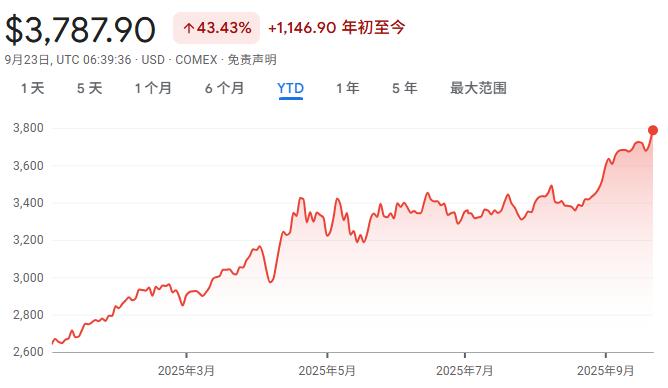
Core Viewpoint - The Federal Reserve is initiating interest rate cuts, leading to a surge in global asset prices, particularly in the U.S. stock market, with the S&P 500 index hitting new highs multiple times this year [1][4]. Group 1: Market Dynamics - Nvidia's significant investment in OpenAI has reignited interest in AI, contributing to the rise of major U.S. stock indices [1]. - The COMEX gold price closed at $3,775.10, marking the 36th record high of the year, with a year-to-date increase of approximately 43% [1]. - Risk assets and safe-haven assets are both reaching historical highs, raising questions about whether the market has perfectly priced in all favorable conditions [4]. Group 2: Economic Indicators - Analysts from Bank of America and Deutsche Bank suggest that the market is not yet in a "perfect pricing" state, indicating potential for further gains despite visible bubble signs [4][6]. - The current economic environment, characterized by tax cuts, tariff reductions, and interest rate cuts, is seen as a "run-it-hot" policy that supports economic and stock market growth [4]. Group 3: Investment Strategies - Historical data indicates that the current market rally may still have room for growth, with past bubbles showing an average increase of 244% from low to peak [8][10]. - A proposed five-point trading strategy includes investing in bubble assets, creating a "barbell" portfolio with both bubble and undervalued stocks, shorting bubble company bonds, and taking positions against U.S. bonds [11][12]. Group 4: Gold Market Analysis - The rise in gold prices is attributed to geopolitical uncertainties, inflation concerns, and expectations of interest rate cuts, creating a "perfect storm" for gold [13]. - Despite concerns about a potential bubble, key market indicators do not yet show signs of irrational exuberance, suggesting that gold is in a sustained bull market rather than a bubble [15][18].