逆周期和跨周期调节

Search documents
央行明确2026年重点工作:加大逆周期和跨周期调节力度,灵活高效运用降准降息等多种货币政策工具
Xuan Gu Bao· 2026-01-06 11:06
2026年中国人民银行工作会议1月5日-6日召开,会议要点如下: ——继续实施好适度宽松的货币政策。灵活高效运用降准降息等多种货币政策工具,保持流 动性充裕,保持社会融资条件相对宽松,引导金融总量合理增长、信贷投放均衡。 ——完善结构性货币政策工具体系;高质量建设和发展债券市场"科技板"。 ——建立在特定情景下向非银机构提供流动性的机制性安排,发挥好两项支持资本市场的货 币政策工具作用。 ——加强对银行间债券市场、货币市场、外汇市场、票据市场、黄金市场及有关衍生品的监 督管理。 ——进一步提升金融管理和服务能力。稳妥实施好一次性个人信用修复政策。 ——强化虚拟货币监管,持续打击相关违法犯罪活动;深化科技管理与创新应用;稳步发展 数字人民币。 2026年中国人民银行工作会议1月5日-6日召开。会议以习近平新时代中国特色社会主义思想为指导,深 入学习贯彻党的二十届四中全会和中央经济工作会议精神,总结2025年工作,分析当前形势,研究中国 人民银行"十五五"改革发展规划,部署2026年工作。中国人民银行党委书记、行长潘功胜出席会议并讲 话,朱鹤新、曲吉山、宣昌能、陆磊、陶玲、邹澜出席会议。 会议认为,2025年以来 ...
央行:加大逆周期和跨周期调节力度,提升金融服务实体经济高质量发展质效
Xin Lang Cai Jing· 2026-01-06 10:00
2026年中国人民银行工作会议1月5日-6日召开。会议以习近平新时代中国特色社会主义思想为指导,深 入学习贯彻党的二十届四中全会和中央经济工作会议精神,总结2025年工作,分析当前形势,研究中国 人民银行"十五五"改革发展规划,部署2026年工作。中国人民银行党委书记、行长潘功胜出席会议并讲 话,朱鹤新、曲吉山、宣昌能、陆磊、陶玲、邹澜出席会议。 会议认为,2025年以来,面对复杂严峻的国内外经济金融形势,中国人民银行坚决落实党中央、国务院 决策部署,在执行好存量货币政策基础上,推出新的一揽子货币政策措施,有力支持实体经济稳定增长 和金融市场平稳运行,持续深化金融供给侧结构性改革,稳妥处置重点领域金融风险,积极推动全球金 融治理改革完善,纵深推进全面从严治党,各项工作迈上新台阶。 一是坚持宏观思维,从系统视角统筹谋划中国人民银行重大业务和改革事项。加快完善中央银行制度, 组织研究制定"六大核心要素"建设重点工作、货币政策和宏观审慎政策框架构建、金融市场建设发展、 人民币国际化等,制定具体工作方案并动态评估完善。 二是坚持专业务实精准,适度宽松的货币政策发力显效。强化中国人民银行政策与市场关切的交集度和 针对性 ...
光大期货:1月5日有色金属日报
Xin Lang Cai Jing· 2026-01-05 01:44
Group 1: Macro Environment - The market is focused on the Federal Reserve's shift from a hawkish to a dovish stance, with internal disagreements among officials regarding interest rate cuts [3][19] - The People's Bank of China has committed to maintaining a moderately loose monetary policy and increasing counter-cyclical adjustments [3][19] Group 2: Copper Market Fundamentals - Domestic TC quotes for copper concentrate remain at historically low levels, indicating persistent tightness in supply [4][20] - January's estimated electrolytic copper production is 1.1636 million tons, a 1.2% month-on-month decrease but a 14.7% year-on-year increase [4][20] - November's net imports of refined copper fell by 58.16% year-on-year to 161,700 tons, while scrap copper imports increased by 5.87% month-on-month [4][20] - Global visible copper inventories rose by 126,000 tons to 924,000 tons by December 31 [4][20] Group 3: Market Sentiment and Price Outlook - Despite weak fundamentals and high inventory expectations, market sentiment remains optimistic due to expectations of a dovish Federal Reserve and strong performance in precious metals [5][21] - The copper price has reached new historical highs, but there is a significant divergence between weak fundamentals and optimistic market sentiment, leading to potential volatility [6][21] - The premium of U.S. copper over LME copper is losing arbitrage opportunities, indicating a shift in market dynamics [6][21] Group 4: Nickel and Stainless Steel - Indonesian nickel ore premiums remain stable at $25.5 per wet ton, while Philippine nickel ore premiums have increased to $9.0 per wet ton [7][22] - January's refined nickel production is expected to rise by 35.8% month-on-month to 37,200 tons [7][22] - The stainless steel market shows a total inventory of 977,000 tons, with a week-on-week decrease of 2.78% [8][23] Group 5: Aluminum Market - December aluminum prices showed a month-on-month increase, with aluminum oxide futures rising by 2.6% and electrolytic aluminum by 6.1% [9][25] - The average operating rate of aluminum processing enterprises decreased to 61.5% in December, indicating a seasonal slowdown [10][26] - Social inventories of aluminum ingots increased by 64,000 tons to 660,000 tons in December [11][26] Group 6: Silicon and Polysilicon - December industrial silicon futures decreased by 2.96%, while polysilicon futures increased by 2.65% [12][27] - Industrial silicon production is expected to decline by 3.2% month-on-month, while polysilicon production is projected to decrease by 3.5% [12][27] - The overall inventory of industrial silicon increased by 17,200 tons to 50,000 tons in December [13][28] Group 7: Lithium Carbonate - Weekly lithium carbonate production increased by 259 tons to 22,420 tons, with a projected month-on-month decrease of 1.2% in January [14][29] - Demand for ternary materials and lithium iron phosphate is expected to decline in January, with a forecasted decrease in production [14][29] - Social inventory of lithium carbonate decreased by 168 tons to 109,605 tons, indicating a slowing down of the destocking process [15][29]


财政、货币政策协同发力 经济延续复苏态势
Zheng Quan Ri Bao· 2026-01-04 23:19
Core Viewpoint - In 2026, China's economy is expected to experience a structural adjustment with a focus on sustainable growth, supported by proactive fiscal and monetary policies [2][3][4]. Economic Growth and Indicators - The overall economic performance in 2025 laid a solid foundation for 2026, with GDP growth expected around 5.1% for 2025 [2]. - The Purchasing Managers' Index (PMI) for December 2025 showed manufacturing PMI at 50.1%, non-manufacturing PMI at 50.2%, and a composite PMI at 50.7%, indicating a recovery in economic sentiment [2]. Structural Adjustments - The "three new economies" (new industries, new business formats, new models) are projected to surpass the real estate economy in GDP contribution for the first time in 2026 [3]. - The focus for 2026 will shift towards structural adjustments rather than just quantitative growth, with policies aimed at enhancing consumption patterns and boosting consumer confidence [3]. Fiscal Policy - The central economic work conference emphasized the continuation of a more proactive fiscal policy, with specific measures including the issuance of long-term special bonds and consumer subsidies [4]. - The first batch of 62.5 billion yuan in special bonds was allocated before the New Year to support consumption during peak seasons [4]. Monetary Policy - The People's Bank of China is expected to implement interest rate cuts of up to 0.3 percentage points in 2026, with potential adjustments occurring before the Spring Festival [5]. - Structural monetary policies will focus on directing financial resources towards technology innovation, manufacturing upgrades, and supporting small and micro enterprises [5][6]. Policy Coordination - Recent policies are designed to address current economic challenges, such as weak domestic demand, while also laying the groundwork for long-term development through investments in new productive forces and social welfare [6]. - The coordinated approach of fiscal and monetary policies aims to stimulate domestic demand and accelerate industrial upgrades [6].
华源晨会精粹20260104-20260104
Hua Yuan Zheng Quan· 2026-01-04 14:15
Group 1: Fixed Income and Manufacturing PMI - Manufacturing PMI showed a seasonal rebound, rising to 50.1% in December, marking the first time since April 2025 that it returned above the growth line [4][5] - The increase in PMI is attributed to positive developments in US-China trade negotiations, rapid growth in high-tech manufacturing, and capacity expansion in certain industries [4][5] - Non-manufacturing PMI also returned to expansion, with a business activity index of 50.2%, indicating overall stability in the service sector [6][7] Group 2: Metals and New Materials - Copper prices experienced high volatility after reaching historical highs, with domestic copper inventories significantly increasing [10][11] - Aluminum prices broke new highs, driven by expectations of increased demand, particularly in the home appliance sector, and the continuation of consumption policies in 2026 [11][12] - Lithium demand remains strong despite seasonal trends, with lithium prices entering an upward cycle due to ongoing inventory depletion [12][13] Group 3: Public Utilities and Environmental Protection - Blue Arrow Aerospace is set to become the first private commercial rocket company listed in China, aiming to raise 7.5 billion for enhancing reusable rocket capabilities [16][17] - The commercial space sector is experiencing rapid growth driven by policy support, with significant satellite deployment plans underway [17][18] - The company has secured contracts with major clients for launch services, indicating strong market recognition and demand for its innovative technologies [18] Group 4: North Exchange Market - In December 2025, 34 companies on the North Exchange saw their stock prices double, indicating a strong market rebound [20][21] - The market is expected to experience a "spring surge" in 2026, with a focus on sectors like commercial aerospace and energy [22][23] - The North Exchange A-share index's PE ratio reached 46 times, suggesting a competitive valuation compared to other markets [21][23] Group 5: Semiconductor Equipment - Maiwei Co., Ltd. is positioned as a high-end precision equipment manufacturer, focusing on solar, semiconductor, and display applications [24][25] - The company has secured significant orders for HJT and perovskite-silicon heterojunction battery production lines, indicating its technological leadership [26][28] - In the semiconductor sector, the company is experiencing rapid growth in new orders, surpassing the total orders from the previous year [28][29]

2025年12月PMI数据点评:PMI逆季节性回升,预期改善
GUOTAI HAITONG SECURITIES· 2025-12-31 13:12
Manufacturing PMI Insights - In December 2025, the Manufacturing PMI rose to 50.1%, an increase of 0.9 percentage points from November, marking the first time it entered the expansion zone since April 2025[8] - Among the 21 surveyed industries, 16 reported an increase in PMI compared to November, driven by improved trade conditions and proactive inventory preparations ahead of the Spring Festival[8] - The production index and new orders index contributed 0.43 and 0.48 percentage points to the PMI, respectively, indicating a positive shift in manufacturing activity[10] Demand and Supply Dynamics - The new orders index reached 50.8%, up 1.6 percentage points from November, marking its return to the expansion zone for the first time since the second half of the year[14] - The production index also increased to 51.7%, reflecting a 1.7 percentage point rise, driven by stronger demand and improved business sentiment[14] - The raw material purchase price index decreased to 53.1%, down 0.5 percentage points, alleviating cost pressures for downstream manufacturing[17] Non-Manufacturing Sector Performance - The service sector's business activity index slightly increased to 49.7%, up 0.2 percentage points from November, with significant variation across industries[20] - The construction sector saw a notable rise, with the business activity index reaching 52.8%, an increase of 3.2 percentage points, attributed to favorable weather and upcoming holidays[23] Policy Outlook and Risks - Macro policies are expected to be more proactive in 2026, with early issuance of local government debt limits and investment plans totaling approximately 295 billion yuan[27] - A risk remains in the real estate sector, where demand still needs to be stimulated to support broader economic recovery[28]
【新华解读】12月PMI重回扩张区间 政策显效与信心改善共促经济回升向好
Xin Hua Cai Jing· 2025-12-31 11:53
新华财经北京12月31日电 31日国家统计局发布的数据显示,2025年12月,中国制造业采购经理指数 (PMI)为50.1%,较上月上升0.9个百分点,在连续8个月运行在50%临界点以下后,重回扩张区间。 PMI数据的明显回升引发了专家们的广泛关注与解读。 多位专家指出,12月PMI的回升强于季节性规律,是宏观政策持续发力、市场预期改善、内外需同步回 暖等多重积极因素共同作用的结果。未来需加快落实中央经济工作会议等相关部署,巩固和增强经济回 升向好态势。 政策信号与市场信心提振经济回升 专家认为,清晰有力的政策信号和市场预期的改善,是推动12月PMI回升至扩张区间的重要动力。 国务院发展研究中心宏观经济研究部研究员张立群指出,政策层面的明确导向显著提振了市场信心。他 表示。"十五五"规划建议相关精神的学习持续深入,中央经济工作会议提出坚持内需主导,特别是加大 逆周期和跨周期调节力度,提升宏观经济治理效能等重要思想,使全国上下进一步开阔了眼界,提高了 思想站位。这些都明显改善了市场预期,促进企业在岁末年初之时加快了相关生产经营的准备活动。 文韬也关注到大中型企业的稳定器作用。他指出,12月大型企业呈现较好回升, ...
中信证券:展望2026年中国宏观经济五大趋势
Xin Lang Cai Jing· 2025-12-30 00:21
Core Viewpoint - The report from CITIC Securities indicates that despite external environmental changes and internal structural adjustments, China's macro economy is expected to maintain a steady recovery in 2026, supported by policy measures. Group 1: Economic Trends - Trend 1: Domestic demand recovery is anticipated to drive overall growth [1] - Trend 2: Investment is expected to shift from total pressure to structural optimization [1] - Trend 3: Sino-US relations are likely to ease, with no significant escalation of major frictions expected in 2026 [1] Group 2: Market Outlook - Trend 4: The acceleration of market diversification is projected, with external demand prospects in 2026 expected to be better than in 2025 [1] - Trend 5: As the first year of the 14th Five-Year Plan, it is expected that counter-cyclical and cross-cyclical adjustments will be strengthened [1]

一周流动性观察 | 跨年扰动来临 资金宽松的格局大概率不会改变
Xin Hua Cai Jing· 2025-12-29 08:25
Group 1 - The People's Bank of China (PBOC) conducted a 7-day reverse repurchase operation of 482.3 billion yuan at an interest rate of 1.40%, maintaining the previous rate, resulting in a net injection of 415 billion yuan after 67.3 billion yuan of reverse repos matured [1] - In the previous week, the net withdrawal from 7-day reverse repos was 34.8 billion yuan, while the PBOC conducted a 1-year Medium-term Lending Facility (MLF) operation of 400 billion yuan, exceeding the previous amount by 100 billion yuan [1] - The average rate of DR001 is expected to drop below 1.3% for the month, indicating a continued loose monetary environment despite potential year-end disturbances [2] Group 2 - The PBOC's monetary policy committee emphasized the need for continued moderate easing and enhanced counter-cyclical and cross-cyclical adjustments to support stable economic growth and reasonable price recovery [3] - Analysts predict that the first quarter of 2026 will see a path of easing through reserve requirement ratio (RRR) cuts and structural interest rate reductions, with a potential RRR cut of 50 basis points releasing approximately 1 trillion yuan in liquidity [3] - The focus of monetary policy will shift towards ensuring the smooth transmission of interest rates and adjusting the relationships between various asset rates, aiming for an overall moderate easing goal [3]
管涛:“灵活高效”的货币政策意味着什么 | 立方大家谈
Sou Hu Cai Jing· 2025-12-29 01:45
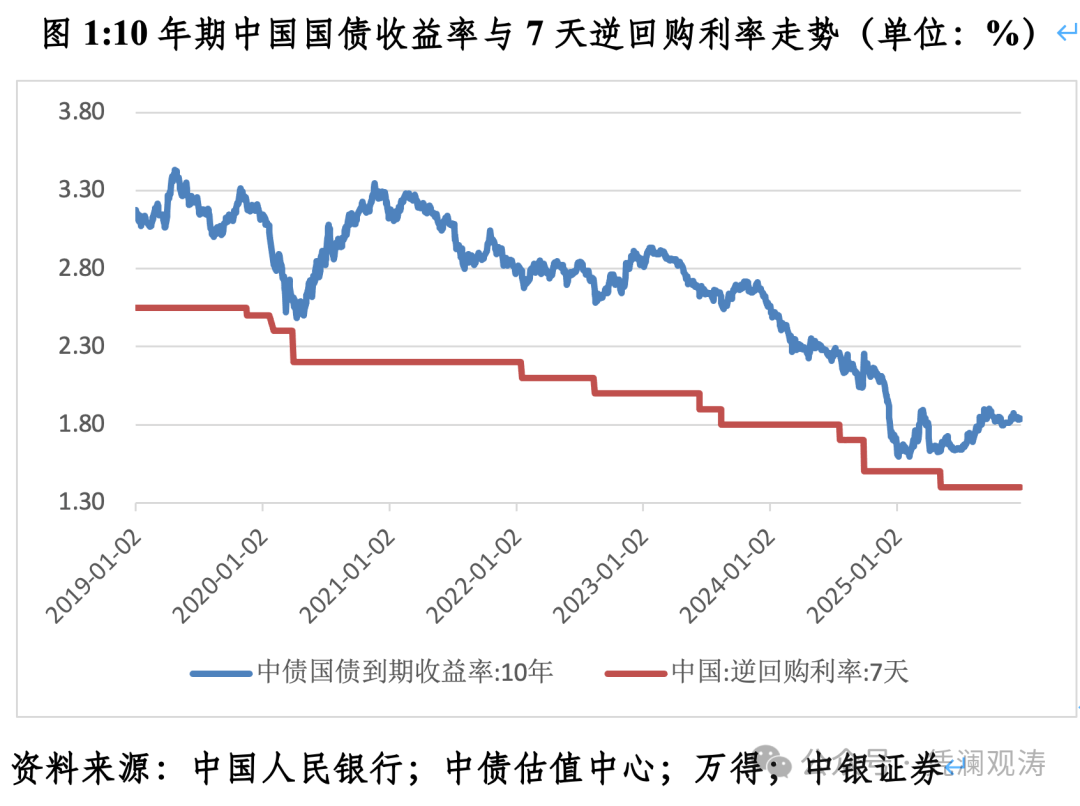
Core Viewpoint - The central economic work conference reiterated the implementation of a moderately loose monetary policy, emphasizing the flexible and efficient use of various policy tools such as reserve requirement ratio (RRR) cuts and interest rate reductions, indicating a proactive approach to economic stabilization and growth [1][12]. Summary by Sections Review of Monetary Policy Operations This Year - The shift in monetary policy from "prudent" to "moderately loose" was signaled during the Central Political Bureau meeting in December last year, leading to a significant decline in the 10-year government bond yield, which fell by 88 basis points over the year, marking the largest drop in a decade [2][6]. - The 10-year government bond yield reached a record low of below 1.6% after the New Year and Spring Festival [2]. Key Aspects of Monetary Policy - The People's Bank of China (PBOC) has confirmed that "moderately loose" reflects the supportive nature of recent monetary policy actions, with a focus on maintaining liquidity and optimizing the structure of monetary policy tools [5][14]. - In 2023, the PBOC implemented only one RRR cut of 50 basis points, compared to two cuts totaling 100 basis points in the previous year, and reduced the policy interest rate for the 7-day reverse repurchase agreement by 10 basis points [6][8]. Outlook for Next Year's Monetary Policy - The continuation of a moderately loose monetary policy is expected, with the central economic work conference acknowledging ongoing challenges such as external economic pressures and domestic supply-demand imbalances [9][10]. - The emphasis will be on enhancing policy coordination, integrating various economic policies to support stable growth, employment, and market expectations [11][12]. Implementation Strategies - The PBOC aims to maintain a supportive monetary policy stance while avoiding excessive liquidity injections, focusing on precise measures and leaving room for adjustments based on economic conditions [12][14]. - The integration of fiscal and monetary policies will be crucial, with examples such as the fiscal subsidy policy for personal consumption loans highlighting the collaboration between these sectors [11][12]. Risk Management and Financial Stability - The central economic work conference stressed the importance of balancing economic growth with risk prevention, enhancing the monitoring and assessment of financial risks, and maintaining stability in financial markets [17][18]. - The PBOC is tasked with building a robust monetary policy framework and improving the transparency of policy communication to bolster public confidence [18].