人工智能(AI)

Search documents
亚马逊AI竞争下的收缩与聚焦
2 1 Shi Ji Jing Ji Bao Dao· 2026-01-29 23:12
Core Viewpoint - Amazon has announced a significant layoff of approximately 16,000 corporate positions, marking the second round of large-scale layoffs since October of the previous year, totaling around 30,000 positions, which is about 10% of its corporate and tech workforce [1][4]. Group 1: Layoff Details - The layoffs are part of a strategy to streamline management layers and enhance accountability within the organization, as stated by Amazon's Senior Vice President Beth Galetti [1]. - Affected employees in the U.S. will receive a 90-day transition period to find new roles, and those who do not secure a position will receive severance pay and benefits [1][4]. - The layoffs are primarily focused on white-collar positions across key sectors such as Amazon Web Services (AWS), retail, Prime Video, and human resources [4]. Group 2: Financial Implications - Amazon's Q3 2025 financial report indicates that the company has incurred $1.8 billion in special expenses related to the layoffs, which is a significant financial consideration [3]. - The company's Q3 net sales reached $180.2 billion, a 13% year-over-year increase, with net profit rising nearly 40% to $21.2 billion, indicating strong financial performance despite the layoffs [6]. Group 3: AI Influence - The integration of artificial intelligence (AI) is seen as a driving force behind the layoffs, as the company anticipates needing fewer employees for certain tasks while requiring more for others related to AI [5][6]. - Amazon is heavily investing in AI infrastructure, with Q3 capital expenditures rising 61% to a record $34.2 billion, reflecting a strategic shift towards AI and data centers [7]. Group 4: Strategic Adjustments - The layoffs are part of a broader effort by CEO Andy Jassy to reshape Amazon's corporate culture by eliminating bureaucracy and enhancing operational efficiency [4][8]. - Amazon is also scaling back its physical retail presence, closing remaining Amazon Go stores and Amazon Fresh supermarkets, focusing instead on more profitable ventures like Whole Foods [8].
连接东盟“新视界” 孵化精品“强声量”
Xin Lang Cai Jing· 2026-01-29 21:58
1月29日上午,中国—东盟(南宁)微短剧大赛优秀扶持作品发布暨微短剧产业链对接会在南宁举行。 活动通过优秀作品发布、创作分享、行业交流、基地推介等多个环节,推动产业从创意孵化到资源落 地,促进"微短剧+文旅"深度融合与产业协同发展。 活动中,青秀山风景区、南宁大明山风景区、方特东盟神画、邕州古城等10处兼具南宁特色与东盟风情 的优质拍摄取景地被授予"南宁市微短剧拍摄取景地"称号,鼓励未来更多微短剧在此取景,让南宁之美 走向全国、迈向东盟。 76部佳作脱颖而出 向世界讲述广西故事 中国—东盟(南宁)微短剧大赛是中国—东盟(南宁)文化月的子活动之一,由自治区党委宣传部指 导,自治区广播电视局、自治区文化和旅游厅、南宁市人民政府共同主办,南宁市委宣传部、南宁市文 化广电和旅游局承办。活动自启动以来受到广泛关注,获得积极响应,累计收到全国20多个省区市近 400部参赛作品。经过初评、复评及终评,76部优秀作品脱颖而出,其中剧本创作类36部、成片类20 部、人工智能(AI)创作类20部,全面展现微短剧创作的多元化与技术创新趋势。 大赛微短剧成片类一等扶持作品《漓歌》主创人员、广西广播电视台主持人张一介绍:"文旅微短剧 ...
Report Takeaways: Human-Centered Marketing in an Age of AI
Davidmeermanscott· 2026-01-29 16:58
Over more than three decades as a marketer, I’ve seen how seismic changes in technology can disrupt plans and programs. What worked a few years ago can quickly become obsolete.The rise of email marketing, web content and SEO, social media and real-time engagement, and now AI have each disrupted what all kinds of people and organizations are doing. I’m a member of the Marketing AI Industry Council, an invite-only think tank of industry leaders who share a passion for exploring the impact of AI on the market ...


美科技股Q4喜忧参半
Guo Ji Jin Rong Bao· 2026-01-29 13:25
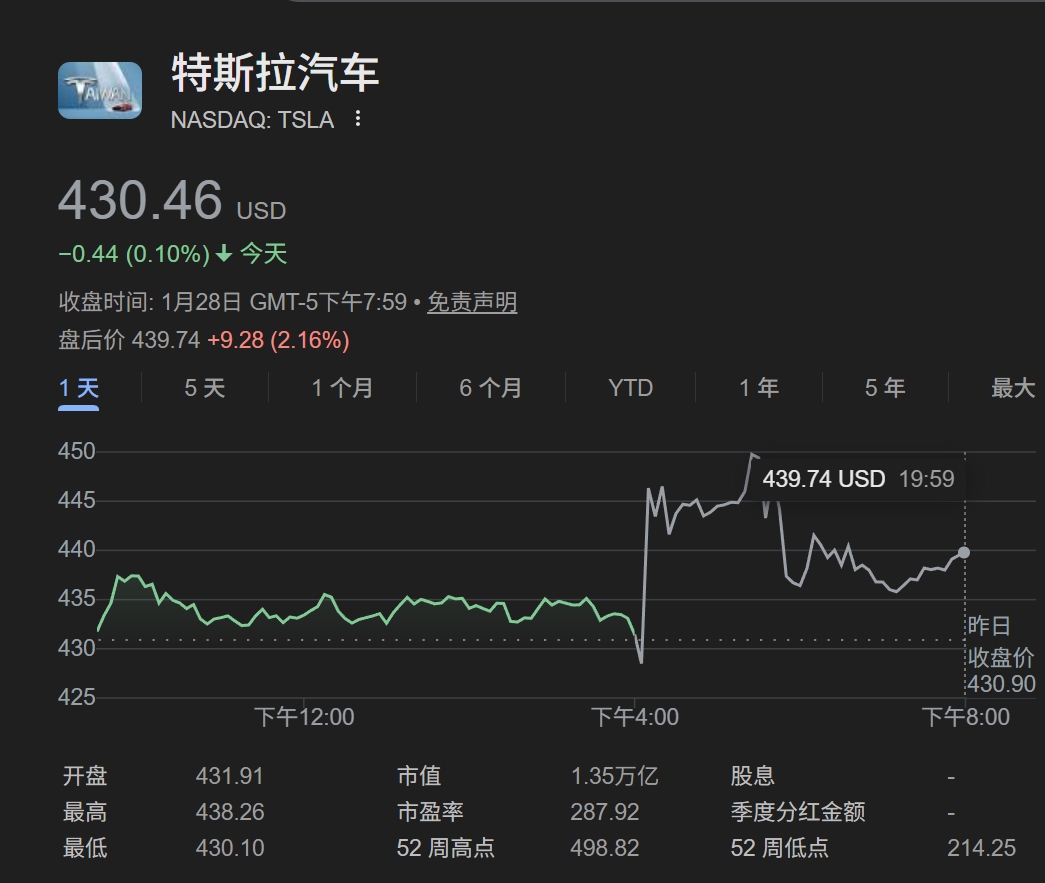
Core Insights - The technology sector remains a key growth driver for the U.S. market, with expectations that it will account for nearly half of the S&P 500's earnings growth by 2026, despite a projected decline in overall earnings growth from 9.2% to 5.5% when excluding tech [1] Group 1: Tesla's Financial Performance - Tesla reported Q4 2025 earnings and revenue that exceeded market expectations, but its annual revenue saw a decline for the first time, highlighting challenges in its core automotive business [3] - Q4 2025 total revenue was approximately $25.7 billion, down about 3% year-over-year, with automotive revenue declining 11% to $17.7 billion [3] - For the full year 2025, Tesla's total revenue decreased from $97.7 billion in 2024 to $94.8 billion, a drop of 3%, attributed to reduced vehicle deliveries and declining regulatory credit income [3] Group 2: Meta and Microsoft's Earnings - Meta and Microsoft both reported revenues that exceeded expectations, but their stock market reactions were markedly different, with Microsoft shares dropping over 6% while Meta shares rose nearly 9% [5] - Meta's capital expenditures reached $22.1 billion in Q4 2025, totaling $72.2 billion for the year, a significant increase from $39.2 billion in 2024, with revenues of $59.89 billion for the quarter and $200.1 billion for the year [11] - Microsoft reported a record high capital expenditure of $37.5 billion in Q2 2026, a 66% year-over-year increase, with revenues of $81.3 billion, a 17% increase, but concerns arose regarding the sustainability of growth relative to its high spending [11][12] Group 3: Apple's Upcoming Earnings - Apple is set to release its earnings report, with analysts expecting a revenue increase of approximately 11.1% to between $138.1 billion and $138.4 billion for the upcoming quarter [14] - The previous quarter saw Apple generate $102.5 billion in revenue, a 7.9% year-over-year increase, slightly above Wall Street expectations [14] - Despite positive earnings expectations, Apple's stock has only risen 7.8% over the past 52 weeks, underperforming the S&P 500 and tech sector ETFs [15]




美联储暂停降息,鲍威尔发重要讲话
美股研究社· 2026-01-29 12:09
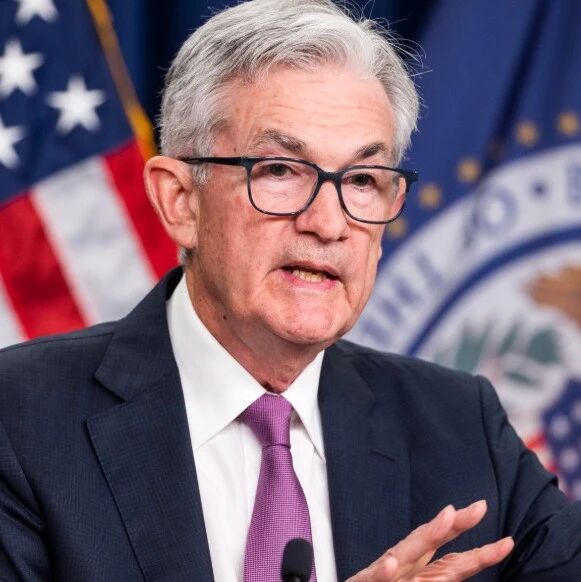
Core Viewpoint - The Federal Reserve decided to maintain the federal funds rate target range at 3.50%-3.75%, marking the first pause in rate changes since July of the previous year [2][3][7]. Group 1: Federal Reserve Decision - The decision to pause interest rate changes was anticipated by the market, with futures indicating a probability of over 97% for no rate cut this week [7]. - The Federal Reserve has cut rates by a total of 175 basis points since September 2024, with the latest pause occurring after three consecutive meetings of rate cuts [7][8]. - The statement from the Federal Reserve showed a slight improvement in the economic outlook, removing previous language about increasing employment risks and indicating signs of stabilization in the unemployment rate [11][12]. Group 2: Internal Disagreements - There were internal divisions within the Federal Reserve, with two members voting against the decision to maintain rates, advocating for a 25 basis point cut [8][9]. - The dissenting votes were from Waller and Miran, both of whom support further rate cuts, which may influence Waller's chances of being nominated as the next Federal Reserve Chair [9][10]. Group 3: Economic Indicators - The Federal Reserve noted that economic activity is expanding steadily, with the unemployment rate showing signs of stabilization [12][16]. - Inflation remains slightly elevated, with the overall PCE price index rising by 2.9% year-over-year, and the core PCE index increasing by 4.3% [19]. - The labor market shows signs of cooling, with average monthly job growth around 22,000, reflecting a slowdown in labor supply growth [18][19]. Group 4: Future Outlook - Powell indicated that the impact of tariffs on inflation is expected to dissipate by mid-2026, suggesting potential for policy easing if tariff effects peak [23][24]. - The Federal Reserve is currently at the high end of the neutral interest rate range, with data indicating that policy may not be overly restrictive [20][21].
涉最大的买家中国,阿斯麦调整预期
Guan Cha Zhe Wang· 2026-01-29 11:29
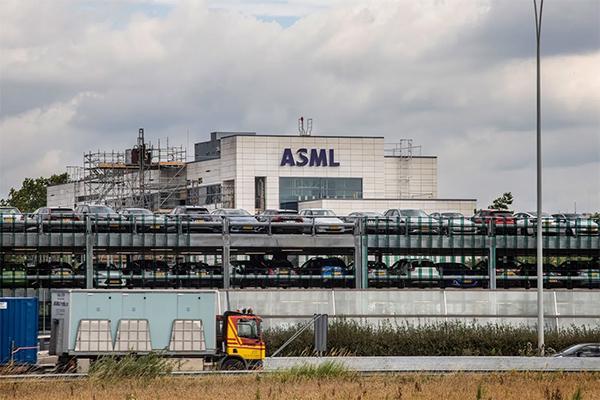
Core Viewpoint - ASML, the Dutch lithography giant, reported a net sales of €32.7 billion for 2025, a 15.5% year-on-year increase, and adjusted its expectations for 2026, anticipating a decline in sales proportion from China due to U.S. export restrictions [1][4]. Group 1: Financial Performance - In 2025, ASML's net profit rose to €9.6 billion, marking a 26.3% increase [1]. - The company received record new orders of €13.2 billion in Q4 2025, with over half being EUV lithography machines [1]. - ASML expects 2026 sales to reach between €34 billion and €39 billion, driven by strong demand for EUV lithography machines [5]. Group 2: Market Dynamics - China accounted for 33% of ASML's sales in 2025, but this is projected to drop to 20% in 2026 due to U.S. export restrictions [1][4]. - The demand for DUV lithography machines in China is expected to decline by 6% to €12 billion in 2025, attributed to reduced market demand [4]. - ASML's CFO noted that demand from markets outside China for DUV machines is increasing, which may offset the decline in orders from Chinese customers [5]. Group 3: Strategic Adjustments - ASML announced a layoff of approximately 1,700 employees, mainly in technical and IT departments, representing about 4% of its total workforce [1]. - The CEO emphasized the need to enhance engineering capabilities and innovation, citing organizational complexity as a barrier [2]. - ASML's technology for exports to China is significantly outdated, with a gap of over eight generations compared to the latest high numerical aperture lithography technology [6]. Group 4: Competitive Landscape - Chinese companies are actively working on developing their own DUV and EUV lithography machines to ensure self-sufficiency in the semiconductor supply chain [6]. - Analysts suggest that ASML's forecasts for the Chinese market may be overly conservative, with some predicting stable sales in 2026 [5].

美联储宣布维持利率不变 2026年首次降息或将推迟至6月
Zhong Guo Jing Ying Bao· 2026-01-29 11:29
美国劳工部1月9日发布数据显示,2025年12月,美国新增5万个非农就业岗位,失业率为4.4%,较上月 下降0.2个百分点。白雪认为,最新公布的12月非农新增就业人数虽然继续小幅降温,但并未"失速", 这在一定程度上缓解了美联储对就业进一步走弱的担忧。 中经记者 谭志娟 北京报道 2026年1月29日凌晨,美联储结束为期两天的货币政策会议,宣布将联邦基金利率目标区间维持在3.5% —3.75%不变。此举意味着,美联储在经历自2025年9月以来的连续三次降息后,本次选择按兵不动。 值得注意的是,在此次参与利率决策投票的12名票委中,美联储理事斯蒂芬·米兰(Stephen Miran)和 克里斯托弗·沃勒(Christopher Waller)投出反对票,二人主张降息25个基点。 东方金诚研究发展部高级副总监白雪对《中国经营报》记者表示:"本次会议声明与鲍威尔讲话均显 示,美联储对当前经济形势更加乐观。这与近期经济、就业数据走势相印证,是本次会议暂停降息的主 要原因。" 记者注意到,本次声明删除了"就业风险增加"等表述,并指出经济形势有所改善,尤其在失业率上升方 面出现企稳迹象。这一变化在一定程度上暗示,美联储决 ...

三星第四季度利润飙升,AI推动存储市场紧张与高附加值产品需求
3 6 Ke· 2026-01-29 10:56
三星电子同时宣布计划回购3.57万亿韩元(约合25亿美元)的股份,以回馈股东。继公司股价在2025年实现翻倍之后,本月又上涨约 35%,反映市场对其AI相关业务的高度预期和投资信心。 AI推动半导体芯片部门业绩大增 三星半导体部门贡献了其中的16.4万亿韩元(约合114亿美元)营业利润,贡献了集团80%的营业利润,远超分析师平均预期的10.85万亿 韩元(约合75.6亿美元)。该部门运营利润的强劲增长主要得益于AI高性能计算服务器及数据中心对高带宽存储(HBM)产品的旺盛需 求。 高带宽存储(HBM)相比标准DRAM,每单位内存所需晶圆产能约为三倍。这导致部分传统DRAM和NAND供应紧张,推动个人电脑和 智能手机用存储芯片价格上升。这一供需紧张直接为三星电子和竞争对手SK海力士创造了显著收益。 SK海力士在1月28日公布的财报显示,该公司同样录得历史新高营收与利润。其HBM产品在AI市场需求推动下表现出强劲增长,成为公 司盈利的重要支撑。Pictet资产管理高级投资经理李英宰(Young Jae Lee)表示:"SK海力士在HBM技术上仍领先,而三星电子正全力追 赶。投资者将密切关注两家公司对存储市场前景的 ...
美国开年频传大规模裁员,科技和仓储业成“重灾区”
Di Yi Cai Jing· 2026-01-29 09:47
Group 1 - U.S. employers announced a total of 1.2 million job cuts in 2025, a 58% increase year-over-year, marking the highest level since 2020 [1] - Major companies like UPS and Amazon are leading the layoffs, with UPS planning to cut about 30,000 jobs and Amazon announcing a reduction of 16,000 positions [1][3] - The federal government is responsible for the largest share of layoffs, cutting 300,000 jobs, while the tech and warehousing sectors are the hardest hit in the private sector, losing 154,000 and 95,000 jobs respectively [1] Group 2 - The current wave of layoffs is attributed to organizational adjustments following aggressive expansions during the pandemic, the impact of AI, and uncertainties related to high interest rates and tariffs [3] - Amazon's layoffs are primarily focused on operational and technical roles, aiming to reduce management layers and bureaucratic processes [3] - UPS's restructuring is linked to a decrease in business volume from Amazon, with plans to shift resources towards more profitable sectors like medical logistics [3] Group 3 - Companies like Nike and Starbucks are also planning layoffs, with Nike cutting 775 jobs to enhance profitability and accelerate automation [5] - Starbucks is focusing on reducing corporate support roles while increasing hiring in its coffee shop locations, emphasizing efficiency through technology [5] - Goldman Sachs estimates that the monthly net job losses in industries most affected by AI could rise to 20,000 this year [5] Group 4 - The overall U.S. labor market is experiencing slow growth, with a notable increase in the proportion of long-term unemployed individuals [6] - In December 2025, only 50,000 non-farm jobs were added, indicating weak employment growth, despite a drop in the unemployment rate to 4.4% [6] - High interest rates and tariff uncertainties are impacting hiring, leading many companies to pause recruitment [6]

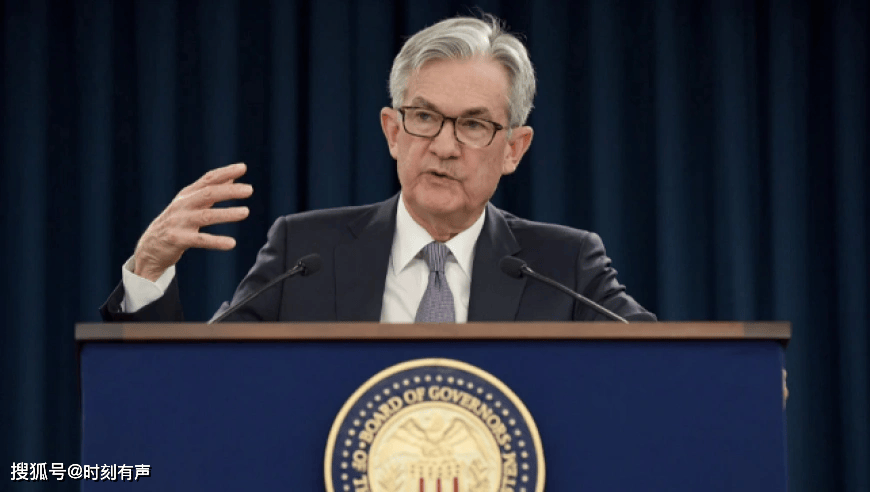
今天消息,鲍威尔:加息非任何人对下一步行动假设,关税通胀预计年中消退
Sou Hu Cai Jing· 2026-01-29 05:55
华尔街见闻 2026-01-29 09:22发布于广东华尔街见闻官方账号 鲍威尔记者会要点: 1、 货币政策: 鲍威尔表示,加息并非任何人对下一步行动的基本假设。 2、 通胀: 通胀风险已经在一定程度上消退。至2025年12月,已经有12个月的核心PCE通胀率达到3%。通胀偏 高,在一定程度上体现出关税推高商品价格的影响。通胀预期体现出对2%目标有信心,长期通胀预期与目标保 持一致。还无法预先宣布抗击通胀取得胜利。 3、就业: 就业风险已经在一定程度上消退。失业率在一定程度上出现企稳迹象。在经历了逐步走软之后,劳动 力市场可能趋于稳定。招聘、职位空缺、薪资增速几乎都没有变化。 4、关税: 关税的大部分影响已经传导至经济,预计关税通胀将在2026年年中消退。如果我们看到关税影响的峰 值,表明我们可以放宽政策。 5、美元走软: 不予置评。并没有看到数据表明投资者对冲美元风险。不要过度解读贵金属释放的宏观信息。 6、 财政 :美国债务路径毫无疑问是不可持续的。 7、 AI与科技: 短期内可能会看到人工智能(AI)消除就业岗位/AI导致岗位被淘汰。 8、 鲍威尔的去留与美联储独立性: 对于5月份主席任期届满之后的去留 ...