贸易保护主义

Search documents
冯德莱恩:欧盟需要稀土,若中方坚持管制,欧方将采取一切手段
Sou Hu Cai Jing· 2025-10-27 15:59
Core Viewpoint - The European Union (EU) is facing a critical supply crisis regarding rare earth elements, particularly in the context of electric vehicle production, as over 90% of rare earth magnets are sourced from China. The EU's strong rhetoric against China contrasts sharply with the immediate concerns of its automotive industry, which is heavily reliant on these materials [1][3][5]. Group 1: EU's Dependency on Rare Earths - The EU's automotive sector, particularly electric vehicle production, consumes approximately 2 kilograms of rare earth permanent magnets per vehicle, highlighting the critical nature of these materials in modern manufacturing [7]. - The EU's ambition to ban the sale of fuel vehicles by 2035 is now threatened by the looming shortage of rare earths, which could lead to production halts within two months if supply issues are not resolved [5][7]. - The EU's historical decision to outsource rare earth mining to China has left it vulnerable, as geopolitical shifts have led to increased Chinese export controls, revealing the interconnectedness of global supply chains [9]. Group 2: EU's Response and Challenges - In response to the crisis, the EU has launched the "EU Resource Autonomy Plan," which includes initiatives for rare earth recycling and joint procurement. However, experts estimate that establishing a complete supply chain could require over €100 billion and take 20 to 30 years, posing significant challenges for the current European industrial landscape [11]. - The EU's criticism of China's export controls is seen as hypocritical, given that similar measures are employed by the US and the EU itself regarding critical minerals [13][15]. - The EU's attempts to coordinate a united front with the G7 against China's rare earth policies are viewed as politically motivated and lacking genuine commitment, as member states prioritize their own interests [17]. Group 3: Implications for the Automotive Industry - Germany's automotive industry, particularly companies like BMW and Volkswagen, is at the forefront of the rare earth shortage crisis, as their electric vehicle transitions heavily depend on Chinese supplies [20]. - The strained diplomatic relations between Germany and China, particularly following high-profile visits and demands, have exacerbated the situation, leaving German automakers in a precarious position [20]. - The broader implications of the rare earth supply crisis extend to national defense, where critical systems in military equipment also rely on these materials, further complicating the EU's strategic landscape [7].

特稿|推动战略合作伙伴关系不断向前发展——韩国各界对习近平主席国事访问充满热切期待
Xin Hua She· 2025-10-27 14:32
Group 1: Core Perspectives - The upcoming state visit of President Xi Jinping to South Korea is expected to enhance political mutual trust, deepen bilateral economic cooperation, and promote friendly exchanges between the two nations, thereby advancing the strategic partnership [1][2][3] - South Korean officials express optimism that this visit will serve as a new starting point for bilateral relations, fostering cooperation in various fields such as trade and culture, and contributing to regional peace and development [2][3] Group 2: Economic Cooperation - The bilateral trade volume between China and South Korea is projected to reach $328.08 billion in 2024, reflecting a growth of 5.6%, with China being South Korea's largest trading partner for 21 consecutive years [5] - The two countries have seen significant economic collaboration since the establishment of diplomatic relations in 1992, overcoming ideological differences and enhancing cooperation across various sectors [2][5] - The visit is anticipated to further boost cooperation in emerging fields such as clean energy, biotechnology, and artificial intelligence, leveraging the strengths of both nations [5][6] Group 3: Cultural and People-to-People Exchanges - There is a strong emphasis on deepening cultural exchanges and mutual understanding between the two countries, which is seen as essential for solidifying the foundation of bilateral relations [7][8] - The recent increase in South Korean tourists visiting China reflects a growing interest in cultural and historical ties, enhancing the people-to-people connections [7][8] - The visit is expected to strengthen the cultural bonds and mutual trust between the two nations, contributing to a stable and healthy development of bilateral relations [7][8]
我国首个海外综合服务领域指导文件发布,专家:将精准对接出海企业痛点
Sou Hu Cai Jing· 2025-10-27 13:17
Core Insights - The article discusses the release of the "Guiding Opinions on Further Improving the Overseas Comprehensive Service System" by the Ministry of Commerce and other departments, marking a significant step towards a systematic and comprehensive service framework for Chinese enterprises going abroad [1][2]. Group 1: Overview of the Guiding Opinions - The Guiding Opinions aim to address the pain points of Chinese enterprises in overseas investment and trade, indicating a shift towards a more integrated service system [1][2]. - The document outlines 16 specific measures across six areas, including upgrading the "Going Out" public service platform to a national-level overseas comprehensive service platform [2][3]. Group 2: Context and Need for the Service System - China has been among the top three countries globally in terms of outbound investment for 13 consecutive years, with over 50,000 enterprises established abroad by the end of 2024 [1]. - The increasing geopolitical conflicts and trade protectionism have heightened the risks faced by Chinese enterprises, creating a pressing need for high-quality and specialized overseas services [1][4]. Group 3: Characteristics of the New Service Framework - The new service framework is characterized by clear goal orientation, multi-party coordination, and comprehensive support for enterprises throughout their overseas operations, from market research to long-term management [3][4]. - The framework aims to enhance the resilience and security of China's supply chains while facilitating deeper international cooperation in production and supply chains [3].
民爆光电(301362) - 投资者关系活动记录表(2025年10月27日)
2025-10-27 09:26
Revenue Growth - Revenue growth in 2025 Q1-Q3 was primarily in Asia (export), domestic, Africa, and Oceania, with increases of 11.88%, 17.94%, 14.76%, and 3.02% respectively [1][2] - The special lighting segment experienced the fastest growth at 50%, with its revenue share rising from 4.72% to 7.10% year-on-year [2] Production and Capacity - The Vietnam factory is scheduled to commence operations in August 2026, with a full capacity output valued at 500 million RMB [3] - Current order backlog exceeds 300 million RMB, indicating strong demand [4] Market Impact and Strategy - Approximately 7% of total revenue comes from products exported to the U.S., with minimal impact from U.S. tariffs [5][6] - The company plans to enhance market presence in Europe, Oceania, Asia-Pacific, and the Middle East while exploring emerging markets [6][7] Financial Performance and Shareholder Returns - The company maintains a profit distribution policy, committing to distribute at least 50% of the annual distributable profit in cash [8] - Cash dividends for 2023 were 249 million RMB, with a payout ratio of 108.22%, and for 2024, 196 million RMB with a payout ratio of 84.80% [8] Future Development - The company aims to expand its special lighting segment, targeting revenue of 100-150 million RMB for each sub-segment over the next 2-3 years [3] - Plans for stock buybacks and employee stock incentives are in place to enhance shareholder value [8]

外交首秀也是“首考”!高市早苗28日见特朗普,她将如何接招?
Di Yi Cai Jing· 2025-10-26 06:19
Core Points - The article discusses the diplomatic challenges faced by Japan's first female Prime Minister, Kishi Sanae, as she embarks on a series of international engagements shortly after taking office [2][4] - Kishi's upcoming meetings with U.S. President Trump and participation in the APEC summit in South Korea are highlighted as significant tests for her administration [2][8] Group 1: Diplomatic Engagements - Kishi Sanae will visit Malaysia to attend the ASEAN summit, marking her first diplomatic appearance as Prime Minister [2] - Following the ASEAN summit, Kishi will meet with President Trump in Tokyo, which is a critical interaction given Trump's unpredictable nature [4][6] - Kishi is also scheduled to attend the APEC summit in South Korea, where she may meet with South Korean President Yoon Suk-yeol [8] Group 2: Economic Discussions - The discussions between Kishi and Trump are expected to cover a range of economic topics, including a procurement package from the U.S. and the implementation details of a $550 billion investment agreement [6][7] - Japan plans to increase its imports of U.S. natural gas and may reduce soybean purchases from Brazil to accommodate U.S. soybean imports, which currently account for 70% of Japan's consumption [6] - The meeting will also address Japan's defense spending, with Kishi aiming to raise defense expenditure to over 2% of GDP [7] Group 3: APEC Summit Themes - The APEC summit will focus on building a sustainable future, emphasizing three priorities: enhancing connectivity, promoting innovation, and achieving inclusive growth [9] - Kishi's performance at the APEC summit will be crucial in determining Japan's diplomatic standing and potential isolation in the region [8]
从中国回去之后,加拿大办的第一件事,就是宣布减免对华关税
Sou Hu Cai Jing· 2025-10-26 04:21
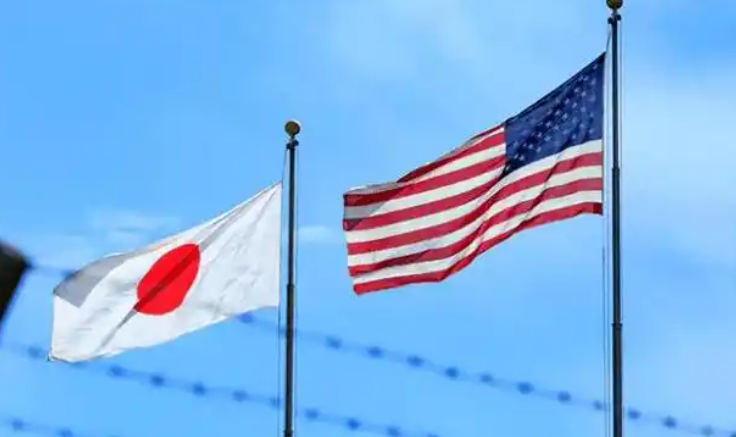
Core Points - Canada has announced a reduction in tariffs on imports from China following a visit by Foreign Minister Anand, marking a shift in diplomatic relations after a period of trade tensions [1][3] - The Canadian government is reassessing its relationship with China, especially in light of increasing protectionism from the United States, which has led to significant economic impacts on Canadian industries [1][5] Group 1: Trade Relations - The trade relationship between Canada and China has been strained due to high tariffs imposed by Canada on Chinese electric vehicles and steel products, which prompted retaliatory measures from China [1][3] - Canada is the largest exporter of canola, with over half of its exports going to China, and the closure of the Chinese market has severely impacted Canadian farmers [3][5] Group 2: Economic Impact - The trade tensions have resulted in a decline of over 8% in manufacturing output and nearly a one-third reduction in agricultural exports in Canada during the first half of the year [5] - High inflation rates in Canada, coupled with rising energy and food prices, have created significant political pressure on the government to adjust its trade policies [5] Group 3: Policy Shift - The Canadian government is moving from a "freeze" to a "restart" in its policy towards China, indicating a willingness to recalibrate relations and enhance cooperation in various sectors [3][6] - Public opinion in Canada has shifted, with support for tariffs on Chinese electric vehicles dropping from over 60% to less than half, providing a social basis for policy adjustment [5][6] Group 4: International Context - The changing international landscape, characterized by unilateralism and trade protectionism, is prompting middle powers like Canada to seek strategic balance, with China being a key partner in this context [8] - The recognition that cooperation with China is necessary rather than risky is growing among Canadian industries and public opinion [8]

美国关税战彻底输了?中国外贸亮出底牌,真正的杀招并非稀土!
Sou Hu Cai Jing· 2025-10-25 11:56
Core Viewpoint - The article discusses China's strategic response to the significant increase in U.S. tariffs, highlighting a shift in trade focus and the resilience of China's foreign trade despite challenges posed by the tariffs [1][3][25]. Trade Performance - In the first three quarters of 2025, China's total goods trade reached 33.6 trillion yuan, showing positive growth that exceeded expectations [3]. - The share of exports to the U.S. has decreased from a peak of 10.4% in 2018, indicating a significant reduction in reliance on the U.S. market [3][11]. Market Diversification - ASEAN and the EU have become crucial markets for China, with exports to these regions increasing and accounting for over 20% of total exports, effectively offsetting the decline in U.S. exports [7]. - Trade facilitation under the RCEP framework has contributed to this diversification, allowing for zero-tariff trade on many products within the region [7]. Emerging Markets - China's exports to emerging markets, particularly in Africa, have seen substantial growth, with countries like Tanzania and Kenya rapidly increasing imports of Chinese machinery and electrical products [9]. - By July 2025, China was among the top three import sources for 166 countries and regions, reflecting its growing significance in global trade [11]. Product Transition - There has been a strategic shift in the types of products exported, moving from labor-intensive goods to high-value products such as machinery, integrated circuits, and electric vehicles [14][16]. - The share of high-end manufacturing products in exports has increased, with significant growth in sectors like automotive and lithium batteries [16][18]. Supply Chain Strategy - China has diversified its supply chains, particularly in strategic resources like food and energy, reducing dependence on single sources such as U.S. soybeans [21][25]. - The shift in soybean imports from the U.S. to South American countries like Argentina and Brazil illustrates a broader strategy to enhance supply chain security [23]. Long-term Strategy - The adjustments in trade strategy are not reactive but rather the result of long-term planning, focusing on quality improvement and technological advancement in exports [19][30]. - The article emphasizes that China's approach to trade is evolving from price competition to leveraging technology and brand strength, enhancing its competitive edge in the global market [19][27]. Global Trade Dynamics - The article concludes that China's actions reflect a broader trend towards a decentralized and regionalized global trade structure, promoting open cooperation as a path to mutual benefit [29][32].
打不过中国还打不过你?为维护霸权不崩塌,美国决定先收割印度
Sou Hu Cai Jing· 2025-10-24 13:55
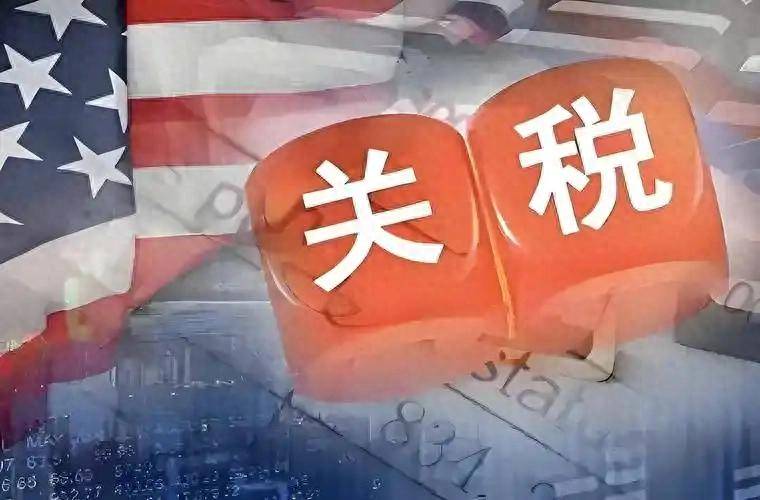
Core Viewpoint - The ongoing trade conflict between the United States and India, initiated by the Trump administration, reflects a broader struggle for economic dominance and the reconfiguration of global order, impacting emerging markets significantly [1][3]. Group 1: U.S. Tariff Strategy - The U.S. imposed a 10% tariff on all imported goods, with India facing an additional 26% tariff, raising the total to 36% [3]. - The U.S. justified these tariffs by highlighting India's average tariff of 17%, which is significantly higher than the U.S. rate of 3.3% [3]. - The U.S. aims to control India's economy, having previously discussed a "de-Indianization" strategy to reduce reliance on India while preparing for capital extraction [5]. Group 2: Impact on India's Economy - India's export sectors, particularly textiles, pharmaceuticals, and gemstones, are severely affected, leading to increased costs and loss of orders [7]. - Economic growth in India is projected to slow to 7.4% by 2025, marking a significant decline [7]. - The Indian rupee has depreciated to 86.63 against the dollar, causing a substantial decrease in public wealth and rising living costs [9]. Group 3: India's Response and International Relations - India has shown resistance by refusing to engage with U.S. officials and has seen a rise in anti-American sentiment among its citizens [13]. - In military terms, India participated in joint exercises with Russia, showcasing its strategic autonomy and reducing reliance on U.S. military procurement [16]. - India is also seeking to strengthen ties with other emerging markets and has initiated dialogues with China and Russia to counterbalance U.S. pressure [18][22]. Group 4: Future Implications - The U.S. may gain short-term benefits from high tariffs, but this approach risks damaging its international reputation in the long run [20]. - India's current challenges could lead to necessary reforms in its manufacturing sector, emphasizing the importance of maintaining independent foreign and economic policies [22]. - The outcome of this geopolitical struggle will influence the future dynamics of global trade and the positioning of emerging markets [25][27].
特朗普:终止与加拿大所有贸易谈判
Sou Hu Cai Jing· 2025-10-24 08:08
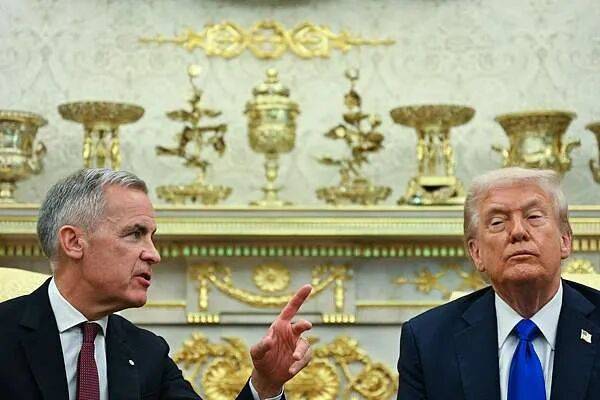
据央视新闻消息,当地时间23日晚,美国总统特朗普通过社交媒体表示,罗纳德·里根基金会刚刚宣 布,加拿大欺诈性地使用了一则虚假广告,表示该基金会对关税发表了负面言论。该广告价值7.5万美 元。加拿大这样做是为了干扰美国最高法院和其他法院的裁决。 卡尼表示,其政府的首份预算将兼顾"财政紧缩"与"大规模投资",努力保护加拿大经济免受"美国新一 轮保护主义所引发危机"的影响。 随着美国关税重创加拿大钢铁、铝和汽车行业,卡尼承诺将在未来十年把加拿大对非美国市场的出口翻 一番,并说正与印度和中国重新接触。 特朗普称,关税对美国的国家安全和经济至关重要。鉴于加方行为,美国特此终止与加拿大的所有贸易 谈判。 加拿大总理马克·卡尼(左)与特朗普。图源:视觉中国 10月7日,特朗普在白宫与卡尼会晤时曾表示,他将加拿大视为经济竞争对手。特朗普还再度提及将加 拿大并入美国,报道称双方未就关税问题达成协议。 10月22日,卡尼说,加拿大政府即将推出的预算会减少在经济与安全领域对美国的依赖。"加美两国长 达数十年日益紧密的经济关系进程已终结。""我们昔日基于与美国的密切关系而获得的许多优势,如今 反而成了我们的软肋。" ...
专栏作家 | 美关税大棒扰动下全球贸易形势观察
Sou Hu Cai Jing· 2025-10-24 07:50
Core Viewpoint - The article discusses the impact of the U.S. government's shift towards protectionism and unilateral trade policies on global trade dynamics, highlighting the challenges and changes in trade forecasts from reputable organizations like WTO and UNCTAD [2][3]. WTO Insights - The WTO reports that the direct impact of tariff increases on global goods trade will have a lag effect, primarily manifesting in the second half of 2025 and into 2026 [4]. - Despite the tariff increases, global goods trade growth for 2025 has been revised upward to 2.4%, significantly higher than the previous forecast of 0.9% [4]. - The service trade growth forecast has been adjusted downwards, with expected growth rates of 4.6% in 2025 and 4.4% in 2026, primarily due to a slowdown in transportation and tourism sectors [5]. - Different regions show varied performance in goods exports, with Asia leading at 10.4% growth in the first half of 2025, while Europe shows a slight decline of 0.3% [5]. UNCTAD Insights - UNCTAD indicates that global trade remains robust despite uncertainties, with a 2.5% quarter-on-quarter growth in goods and services trade in Q2 2025 [7]. - The manufacturing sector, particularly the electronics and automotive industries, continues to drive global trade growth [7]. - UNCTAD forecasts a continued increase in global trade for Q3 2025, with goods trade expected to grow by approximately 2.5% and services trade by about 4% [7]. - Negative factors affecting trade include ongoing U.S. trade policy uncertainties and geopolitical tensions, which may alter regional trade dynamics [8]. - Positive factors include stronger economic growth and limited spillover effects from negative policies, supporting further trade growth [9]. China's Trade Performance - China's foreign trade has shown resilience, with a 4% year-on-year increase in goods trade in the first three quarters of 2025, despite external pressures from U.S. tariffs [10]. - Exports grew by 7.1% to 19.95 trillion yuan, while imports slightly decreased by 0.2% to 13.66 trillion yuan [10]. - The current global trade disruptions highlight the importance of predictable trade conditions, as emphasized by WTO Director-General Ngozi Okonjo-Iweala [10].