国产替代

Search documents
内存价格暴涨90%创历史,AI算力引爆存储芯片“超级周期”,这三大核心或迎新机遇!
Jin Rong Jie· 2026-02-13 07:19
Core Insights - Memory prices are expected to rise by 80%-90% quarter-on-quarter by Q1 2026, driven primarily by a significant increase in general server DRAM prices [1] - The DRAM operating profit margin is projected to reach unprecedented heights, with a forecast of 60% by Q4 2025, marking the first time general DRAM margins exceed HBM [1] - The memory industry is set to expand significantly, with a projected market value of $551.6 billion by 2026, more than double that of the wafer foundry sector [1] Group 1: Memory Chip Design - The memory chip design sector, focusing on DRAM and NAND Flash, is expected to benefit significantly from the current price increase cycle, as design firms rely on chip price differentials for profitability [3] - Domestic memory design manufacturers are positioned to fill the supply gap left by international giants, enhancing their market share and profitability as prices rebound [3] Group 2: Memory Modules and Controller Chips - Memory module manufacturers are poised to benefit from the recovery in consumer electronics and the rise of AI terminals, with increased demand for higher DRAM and NAND capacities [4] - Companies with dual capabilities in self-developed controllers and module manufacturing will gain competitive advantages, allowing them to capitalize on rising prices and enhance product value [4] Group 3: Packaging, Testing, and Equipment Materials - The packaging and testing segment will see improved profitability as chip shipment volumes increase, leading to higher capacity utilization and lower unit costs [5] - The demand for advanced packaging technologies is expected to surge, particularly for high-end memory chips, benefiting domestic leaders with relevant technological capabilities [5] - The equipment and materials sector is driven by the "domestic substitution" trend, with increased interest from local wafer fabs in validating and adopting domestic equipment [6]
鸿日达股价创历史新高,半导体散热片业务预期突破
Jing Ji Guan Cha Wang· 2026-02-13 06:13
Core Viewpoint - Hongrida (301285) has recently reached a historical high in stock price, driven by the domestic substitution prospects of semiconductor packaging metal heat sinks, which are crucial for high-performance chip cooling [1] Group 1: Company Performance - The company is one of the few A-share enterprises in China that has achieved sample verification for semiconductor-grade metal heat sinks, indicating a high technical barrier [1] - Despite an expected loss in 2025, institutions predict that the company's net profit attributable to shareholders will gradually improve [4] - If the semiconductor heat sink business can achieve mass production, it will open up long-term growth opportunities for the company [4] Group 2: Market Dynamics - There has been a continuous inflow of main funds, with the stock price recently breaking through historical resistance levels, indicating active capital and strong technical support [2] - The electronics sector has shown strong performance, with significant increases in sub-industries such as semiconductor packaging and materials [3] - The company's main business in connectors benefits from the recovery in consumer electronics, while its new ventures in semiconductor cooling and optical communication align with trends in AI and new energy vehicles [3] Group 3: Industry Policy - The market expectations are further strengthened by policies supporting supply chain autonomy and controllability, which benefit the semiconductor packaging and materials sectors [3]

艾为电子2026年战略布局与业务转型展望
Jing Ji Guan Cha Wang· 2026-02-13 05:55
Group 1 - The company has several strategic initiatives in 2026, including convertible bond issuance, new product mass production, and business structure transformation, which may significantly impact its future operations and strategy [1] - The company plans to issue up to 19,013,200 convertible bonds to raise a total of no more than 1.901 billion yuan for the construction of a global R&D center and the development of AI-related chips, automotive chips, and motion control chips [2] - The company's piezoelectric micro-pump liquid cooling active heat dissipation solution is expected to achieve mass production in Q4 2025, targeting high-performance computing heat dissipation needs, potentially creating new revenue streams [3] Group 2 - The company is transitioning from a focus on consumer electronics to high-value sectors such as industrial interconnect and automotive electronics, with these segments accounting for nearly 40% of total revenue in the first three quarters of 2025 [4] - The Ministry of Commerce initiated an anti-dumping investigation in September 2025 against certain analog chips from the U.S., which may accelerate the domestic substitution process and create a more favorable competitive environment for local companies like the company [5] - The company's 2025 earnings forecast indicates a year-on-year increase in net profit attributable to shareholders of 17.70% to 294.7 million yuan, reflecting improved profitability [6]

东芯股份股价波动受存储芯片市场回暖与国产替代预期推动
Jing Ji Guan Cha Wang· 2026-02-13 05:51
Core Viewpoint - Dongxin Co., Ltd. has experienced significant stock price fluctuations driven by the recovery in the memory chip market and expectations for domestic substitution, with a notable increase in stock price on February 10, 2023, by 6.07% [1] Stock Performance - On February 10, Dongxin's stock closed at 134.7 yuan, with a trading volume of 3.204 billion yuan and a turnover rate of 5.48%; net inflow of main funds was 294 million yuan, accounting for 9.18% of total trading volume [2] - The stock price adjusted to 130.72 yuan on February 11, down 2.95%, with a trading volume of 1.803 billion yuan; it rebounded to 134.68 yuan on February 12, up 3.03%, with a trading volume of 2.160 billion yuan [2] - As of February 13, the latest price was 135.00 yuan, a slight increase of 0.24%, with a cumulative 5-day price change of 8.03% [2] - In terms of margin trading, the net inflow over the past 5 days was 60.6693 million yuan, with an increase in balance [2] Financial Report Analysis - Dongxin's performance in 2025 is expected to show significant improvement, with projected annual revenue of 921 million yuan, a year-on-year increase of 44%; net profit attributable to shareholders is expected to narrow its loss to between -214 million yuan and -174 million yuan [3] - The revenue for the fourth quarter of 2025 is projected to be 350 million yuan, with a quarter-on-quarter growth of over 50% and a year-on-year growth of approximately 80%; the memory business is expected to achieve profitability with a continuous increase in gross margin [3] - The company anticipates further improvement in profitability in 2026, driven by rising memory prices and a recovery in demand from downstream sectors such as network communication and automotive electronics [3] Institutional Perspectives - Huafu Securities' 2026 strategy report indicates that the memory chip market entered a prosperous cycle in 2025, with prices continuing to rise; the synergy of AI and domestic controllability is beneficial for domestic memory enterprises, with Dongxin being a focal point due to its technological chain [4] - The report emphasizes that the exit of overseas major manufacturers from the niche DRAM market presents an opportunity for Dongxin to increase its market share [4]

科技领域国产替代趋势显现,信创板块上行,信创ETF(159537)盘中涨超1.3%
Mei Ri Jing Ji Xin Wen· 2026-02-13 05:22
Core Viewpoint - The trend of domestic substitution in the technology sector is becoming evident, with traditional companies benefiting from increased demand driven by the semiconductor industry's expansion [1] Group 1: Industry Trends - The semiconductor industry is experiencing growth, particularly benefiting electronic gas businesses due to increased demand [1] - There is a slight cooling in China's demand for overseas technology products, influenced by previous stockpiling, leading some overseas semiconductor companies to predict a stabilization or more moderate annual growth rate in the Chinese market by 2026 [1] - U.S. export restrictions and domestic substitution are impacting the revenue of overseas companies in China, particularly in the standardized power device sector where local competition is intensifying [1] Group 2: Investment Products - The Xinchuang ETF (159537) tracks the Guozhen Xinchuang Index (CN5075), which selects listed companies in the semiconductor, software development, and computer equipment sectors from the Shanghai and Shenzhen markets [1] - The index reflects the overall performance of listed companies related to the information technology theme, showing a bias towards large-cap stocks, with a primary focus on semiconductors and software development, while also considering computer equipment and IT services [1]
TI 的2025:原厂正在复苏,现货市场呢?
芯世相· 2026-02-13 04:07
Core Viewpoint - Texas Instruments (TI) is experiencing a recovery in its financial performance for 2025, with a 13% year-over-year revenue growth, although the demand in the spot market remains subdued despite the positive earnings report [3][5][15]. Group 1: Financial Performance - In Q4 2025, TI reported revenue of $4.423 billion, a 10% increase year-over-year but a 7% decrease quarter-over-quarter, slightly below market expectations [4]. - For the full year 2025, TI's revenue reached $17.682 billion, up 13% from $15.6 billion in 2024, marking a recovery from a decline of approximately 11% in 2024 [5][7]. - The first quarter of 2025 marked a significant turning point, with revenue growth of 11.1% year-over-year, indicating the end of a two-year decline [7]. Group 2: Market Segmentation - TI's revenue structure for 2025 shows that the industrial and automotive markets each contributed 33% to total revenue, while personal electronics accounted for 21%, data centers for 9%, and communication equipment for 3% [7][9]. - The data center market emerged as the fastest-growing segment, with a 64% year-over-year revenue increase, reaching $1.5 billion [10]. Group 3: Inventory and Margins - TI's inventory levels increased to $4.8 billion by the end of Q4 2025, with inventory turnover days rising to 222 days, indicating a strategic approach to inventory management [10]. - The gross margin for TI has been under pressure, dropping to 58.1% in 2024, with estimates for 2025 suggesting a slight decline to around 57% [11][12]. Group 4: Spot Market Dynamics - The spot market for TI's products experienced fluctuations throughout 2025, influenced by tariff conflicts and price increase rumors, but overall demand remained weak [17][20]. - Despite some temporary spikes in demand due to market fears, the actual transaction volume did not significantly increase, indicating a cautious market environment [21][22]. Group 5: Future Outlook - The ongoing transition towards direct sales and the rise of domestic alternatives are expected to impact TI's market presence, raising questions about the sustainability of its recovery [23][24].


存储巨头铠侠全年指引大超预期,高“设备”含量的科创半导体ETF(588170)强势上涨
Mei Ri Jing Ji Xin Wen· 2026-02-13 03:32
Group 1 - The core viewpoint of the news highlights a strong performance in the semiconductor materials and equipment sector, with significant increases in various indices and ETFs [1][2][4] - The STAR Market Semiconductor Materials and Equipment Theme Index rose by 2.45%, with notable gains from stocks such as Fuchuang Precision (+14.61%) and Huaxing Yuanchuang (+5.58%) [1] - The China Securities Semiconductor Materials and Equipment Theme Index increased by 2.54%, with Fuchuang Precision showing a 15.05% rise [1] Group 2 - The STAR Market Semiconductor ETF (588170) saw a 2.44% increase, reaching a latest price of 1.8 yuan, with a turnover of 4.94% and a transaction volume of 4.09 billion yuan [1] - The Semiconductor Equipment ETF (Huaxia, 562590) also increased by 2.41%, with a latest price of 1.95 yuan and a turnover of 3.99% [1] - Over the past week, the STAR Market Semiconductor ETF experienced a significant growth of 2.12 billion yuan in scale, leading its peers [1] Group 3 - In terms of capital flow, the STAR Market Semiconductor ETF recorded a net inflow of 1.49 billion yuan over the last three days, with a peak single-day inflow of 1.17 billion yuan [2] - In the past 23 trading days, there were 15 days of net inflow, totaling 9.44 billion yuan, with an average daily net inflow of 410.52 million yuan [2] - Conversely, the Semiconductor Equipment ETF (Huaxia) faced a net outflow of 20.96 million yuan recently [2] Group 4 - Kioxia, a major player in the storage market, reported a revenue of 543.6 billion yen for the quarter ending December 31, 2025, an increase of 95.3 billion yen from the previous quarter, driven by higher average selling prices and bit shipments [3] - The company's operating profit for the quarter was 142.8 billion yen, up 56.8 billion yen from the previous quarter, with a net profit of 87.8 billion yen, reflecting a growth of 47.1 billion yen [3] - Kioxia expects its annual operating profit to range between 709.57 billion yen and 799.57 billion yen, exceeding market expectations [3] Group 5 - The storage market has continued its strong upward trend since Q4 2025, with DRAM and NAND flash prices rising significantly, driven by increased demand from AI servers and data center capital expenditures [4] - Major manufacturers like Samsung and SK Hynix have raised contract prices for NAND flash by over 100% and DRAM prices by 60%-70% [4] - The current price increase cycle is expected to continue until mid-2026 due to persistent supply-demand gaps [4]
研判2026!中国衍射光栅行业概述、产业链图谱、市场规模及发展展望分析:新需求浪潮驱动下,行业迈入稳步增长新阶段[图]
Chan Ye Xin Xi Wang· 2026-02-13 03:30
Core Viewpoint - The booming downstream application market for diffraction gratings in China provides a broad stage for domestic manufacturers, with the market size expected to reach approximately 174 million yuan in 2024, reflecting a year-on-year growth of 5.45% driven by the demand from telecommunications and emerging technologies [1][8]. Industry Overview - Diffraction gratings are optical components based on the principles of diffraction and interference, used to spatially modulate the amplitude or phase of incident light, separating polychromatic light into ordered spectra. They are mainly categorized into transmission gratings and reflection gratings [2]. Industry Chain - The upstream of the diffraction grating industry includes raw materials such as optical glass, microcrystalline glass, photoresists, and coating materials, as well as production equipment like ultra-precision engravers and laser interference systems. The midstream involves the manufacturing of diffraction gratings, while the downstream applications span spectrometers, monochromators, lasers, astronomical telescopes, optical communications, precision measurements, LiDAR, quantum technology, biomedical imaging, AR/VR, and consumer electronics [4]. Market Size - The Chinese diffraction grating industry is projected to reach approximately 174 million yuan in 2024, with a year-on-year growth of 5.45%. The demand for diffraction gratings is rapidly increasing in the telecommunications sector due to the data surge driven by 5G and fiber optic communications, as well as in traditional markets like spectrometers and emerging fields such as LiDAR and quantum technology [1][8]. Key Companies - The competitive landscape of the Chinese diffraction grating industry is characterized by "technology differentiation and application focus." Leading companies like Anhui Zhongke Grating leverage their technical background to dominate high-end research and military applications. Tengjing Technology excels in precision processing of optical components, while Beijing Zhige Technology specializes in AR/VR waveguide diffraction gratings [9]. Industry Development Trends 1. **Independence and High-end Technology**: The trend towards domestic substitution in high-end diffraction gratings is gaining momentum, with significant advancements made by research institutions and leading companies in overcoming foreign dependencies [12]. 2. **Diversification of Application Scenarios**: Future diffraction gratings are evolving into miniaturized, modular, and intelligent "photon control platforms," expanding their applications into quantum technology, autonomous driving LiDAR, and biomedical imaging [13]. 3. **Cost-effective Manufacturing Processes**: The shift towards scalable and low-cost manufacturing techniques, such as nanoimprinting, is expected to drive explosive growth in the consumer-grade application market, particularly in AR/VR [14].


研判2026!中国太阳能扩散炉行业概述、产业链、市场规模、竞争格局、发展趋势分析:光伏产业推动,太阳能扩散炉市场规模持续增长[图]
Chan Ye Xin Xi Wang· 2026-02-13 03:30
Core Viewpoint - The solar diffusion furnace industry in China is experiencing significant growth, with the market size expected to reach 6.05 billion yuan by 2025, reflecting an 11% year-on-year increase, driven by the expansion of the photovoltaic industry and supportive government policies [1][6]. Industry Overview - Solar diffusion furnaces are essential for producing crystalline silicon solar cells, specifically for forming PN junctions, which are critical for enhancing cell efficiency [2]. - The main types of solar diffusion furnaces are vertical and horizontal, each offering distinct advantages in terms of production efficiency and space utilization [2]. Industry Chain - The upstream of the solar diffusion furnace industry includes quartz components, heating systems, temperature control systems, and gas control systems, with quartz components being crucial for stability and efficiency [3]. - The midstream involves the manufacturing of solar diffusion furnaces, while the downstream primarily serves the photovoltaic industry, specifically in solar cell and module production [3]. Current Development - The solar diffusion furnace market is benefiting from China's commitment to renewable energy, with solar power generation capacity increasing significantly from 204.2 GW in 2019 to an expected 1,161.2 GW by the end of 2025, marking a 41.90% year-on-year increase [4][5]. - The production of solar cells is projected to reach 83,274.3 MW by 2025, a 7.60% increase from the previous year, driven by government subsidies and technological advancements [5]. Competitive Landscape - The solar diffusion furnace industry has high entry barriers, making it difficult for new entrants to compete. Leading companies leverage technology, supply chains, and customer resources to maintain competitive advantages [7]. - Key players in the industry include North Huachuang, Jiejia Weichuang, and Jing Sheng Machinery, among others, with North Huachuang reporting a revenue increase of 32.97% year-on-year for the first nine months of 2025 [7][8]. Industry Trends - The rapid development of the solar diffusion furnace industry is leading to accelerated industry consolidation, with smaller companies lacking core technologies being phased out, while stronger companies invest in R&D and improve production processes [9]. - Domestic companies are increasingly focusing on international markets, expanding their presence through partnerships and participation in global trade shows, capitalizing on their competitive pricing and responsive service [10].





逆势大涨超2%!半导体设备ETF(159516)领涨硬科技
Sou Hu Cai Jing· 2026-02-13 02:46
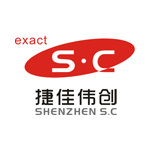
Core Viewpoint - The semiconductor equipment ETF (159516) has risen over 2% amidst market fluctuations, positioning itself as a key direction for capital seeking safety and investment in hard technology. The sector is benefiting from a "triple dividend" of AI computing power explosion, storage cycle recovery, and accelerated self-sufficiency, making it one of the most certain investment tracks in technology [1]. Industry Overview - The semiconductor industry is divided into four main segments: design, manufacturing, testing, and equipment materials, with equipment being the cornerstone of the entire industry, often referred to as the "crown" of chip manufacturing. Without self-sufficient equipment, there can be no self-controlled chip supply chain [3]. - Currently, China's semiconductor industry faces significant shortcomings in the upstream segment. While breakthroughs have been made in certain areas of chip design, the manufacturing process remains highly dependent on foreign equipment, with an overall domestic equipment localization rate of only 20%-35%, and less than 10% in high-end segments. Core equipment such as lithography machines, etching, thin film deposition, inspection, and coating are long dominated by foreign giants. In the context of trade friction and technological restrictions, achieving equipment self-sufficiency has become a national strategy, with significant funding and policy support directed towards the equipment sector, making it the most certain and high-growth segment of the industry [3]. Investment Opportunities - Within the semiconductor equipment sector, there are multiple areas showing rapid breakthroughs and replacement potential. Etching equipment is currently the fastest in terms of domestic replacement progress and has significant performance elasticity, with domestic leaders entering mainstream wafer supply chains and making continuous breakthroughs in the mid-to-high-end market. Thin film deposition equipment is a necessity for advanced process expansion, with a broad market space and domestic companies making progress in key categories such as PECVD and ALD, accelerating customer integration. Measurement and inspection equipment directly impact chip yield and manufacturing costs, with a very low localization rate in high-end fields, making it a key area for addressing shortcomings, benefiting from the explosive demand for AI chips and advanced packaging. Additionally, cleaning equipment, coating, CMP, and core components are emerging with a number of technically strong specialized enterprises, forming an essential part of the upstream equipment investment matrix [4]. Investment Tools - For ordinary investors, directly investing in individual stocks poses challenges such as high technical barriers, significant volatility, and concentrated individual stock risks. The semiconductor equipment ETF (159516) serves as an efficient tool for entering this golden sector. This product closely tracks indices related to semiconductor equipment and materials, focusing on core upstream assets in the chip sector, with high holding purity and strong industry representation, allowing for precise capture of the overall upward trend in the equipment sector. Furthermore, ETF products offer advantages such as convenient trading, ample liquidity, and risk diversification, enabling investors to avoid individual stock risks while fully sharing the benefits of domestic replacement and industry expansion. The recent strength of the semiconductor equipment ETF (159516) is not merely a short-term market fluctuation but a reflection of long-term industry logic, with the investment value in upstream equipment continuing to stand out against the backdrop of deepening self-sufficiency and expanding downstream capacity. Investing through the ETF is a prudent choice to seize opportunities in the "bottleneck" areas of the chip industry [5].