
经济复苏

Search documents
新西兰联储:新西兰经济复苏速度、通胀持续性和关税影响的进一步数据将影响官方现金利率的未来走势。
news flash· 2025-07-09 02:04
Core Viewpoint - The future trajectory of the official cash rate in New Zealand will be influenced by further data on the speed of economic recovery, the persistence of inflation, and the impact of tariffs [1] Economic Recovery - The speed of economic recovery in New Zealand is a critical factor that will affect monetary policy decisions [1] Inflation Persistence - Ongoing inflation trends will play a significant role in determining the future direction of interest rates [1] Tariff Impact - The effects of tariffs on the economy will also be a key consideration for the New Zealand central bank in its assessment of the official cash rate [1]
欧洲央行警告通胀风险 政策宽松预期升温
Jin Tou Wang· 2025-07-08 04:16
Core Viewpoint - The European Central Bank (ECB) faces risks of inflation remaining below the 2% target, prompting a need for continued supportive monetary policy [1][2] Group 1: Economic Outlook - The ECB has lowered interest rates by 200 basis points to a neutral level of 2% since June of the previous year, but the economic growth outlook remains bleak [2] - The ECB predicts inflation will stay below the target for 18 months starting from Q3 2025, with a return to the 2% target not expected until early 2027 [2] Group 2: Currency Impact - The euro has appreciated against the dollar, trading at 1.1741, with a 0.28% increase, which may further suppress inflation and pressure economic growth [1][2] - The euro is currently in an overbought state but maintains a long-term bullish trend, with the weekly chart showing higher highs and higher lows [2] Group 3: Risks and Support - Downside risks include cheap imports from China, low energy prices, lack of tariff retaliation, a strong euro, and slowing wage growth, leading to limited upside risks overall [2] - The ECB's stance is supported by Germany's significant fiscal expansion plans, which are expected to provide a substantial boost to the economy [2]
优质稀缺资产,红利价值彰显——电解铝行业2025年度中期投资策略
2025-07-07 16:32
Summary of the Electrolytic Aluminum Industry Conference Call Industry Overview - The electrolytic aluminum sector presents significant investment opportunities, categorized into two types: stable high-dividend companies (e.g., Hongqiao, Hongchuang, Zhongfu, Tianshan) and economically resilient high-elasticity companies (e.g., Shenhuo, Yun Aluminum, China Aluminum, Huadong) [1][2] - The top return on equity (ROE) for resource companies typically reaches 40%-60%, with Zijin Mining and China Hongqiao achieving 20% [1][4] - Domestic ROE may have reached 50%-60%, indicating that irrational supply expansion is unlikely [1][4] Market Dynamics - Despite a challenging global economy, prices for metals like copper and aluminum are rising, driven by industrial resilience, demand for new energy, and a trend of consumer downgrading [1][6] - Increased consumer purchases of vehicles and 3C products, along with greater industrial equipment investment, support long-term demand for copper and aluminum [1][6] - The copper and zinc industries maintain rigid supply, suggesting potential price growth exceeding that of coal [1][7] Investment Strategy - The current investment strategy emphasizes electrolytic aluminum due to long-term industrial recovery, rigid supply, and declining costs, with expectations for profit recovery [2][20] - The best investment timing for copper and zinc stocks is after a peak in gold prices, indicating the start of industrial recovery [8][9] - Copper and aluminum stocks are expected to see valuation increases in the latter part of the interest rate cut cycle, with current price-to-earnings (P/E) ratios of 11-12 times for copper and 1.5 times for aluminum indicating high value [10][9] Seasonal Trends - The copper and aluminum markets perform well from February to April and July to September, as prices are typically high and inventories low during these periods [11] Demand Characteristics - Aluminum demand has shown strong resilience, with an annual growth rate of approximately 5%, outpacing copper and steel [12] - The electric revolution has driven stable growth in copper demand, while aluminum's diverse applications contribute to its stronger growth potential [12] Supply Situation - Domestic production capacity is constrained due to high energy consumption policies, while overseas capacity additions are slower than expected due to regulatory challenges [13][14] - Global annual capacity additions are around one million tons, indicating slow overall supply growth [14] Financial Health - The industry has seen significant cash flow improvements and reduced debt ratios, with companies like Hongqiao increasing their net operating income from 20 billion to approximately 60 billion [16] - The overall sector is experiencing a high dividend trend, similar to the coal industry after years of balance sheet repair [16][19] Dividend Trends - The aluminum sector is showing a positive trend in dividends, with companies like Hongqiao increasing their payout ratio from 50% to 60% [17] - State-owned enterprises are also beginning to show marginal increases in dividends, suggesting further potential for growth [17] Stock Selection - Stock selection is straightforward, divided into two categories: companies with completed integration and stable dividends (e.g., China Hongqiao) and those with capital expenditure expectations (e.g., China Aluminum) [18] Future Outlook - The aluminum industry has a positive outlook, with expectations for further recovery in profitability and cash flow, and the sector remains undervalued with a price-to-book (PB) ratio of approximately 1.5 times [19][20] - Short-term fluctuations in aluminum prices are expected, but long-term demand resilience suggests a steady upward trend in price levels [21]
日本5月实质薪资创近两年最大跌幅 经济复苏面临挑战
Xin Hua Cai Jing· 2025-07-07 00:38
Core Viewpoint - Japan's real wages fell at the fastest rate in nearly two years in May, primarily due to inflation outpacing wage growth, which poses challenges for the country's economic recovery [1][2]. Group 1: Wage Data - In May, real wages adjusted for inflation decreased by 2.9% year-on-year, marking the largest decline in 20 months, following a revised drop of 2.0% in April [1]. - Nominal cash earnings increased by only 1.0% to 300,141 yen (approximately $2,080), which is the lowest growth rate since March 2024 [1]. - The decline in nominal wage growth is attributed to a significant drop of 18.7% in special payments, primarily consisting of one-time bonuses [2]. Group 2: Economic Indicators - Basic wages rose by 2.0% and overtime pay increased by 1.0% in May, but both growth rates slowed compared to April [2]. - Despite the decline in real wages, household spending in May increased at the fastest rate in nearly three years, suggesting potential improvement in consumer spending [2]. - The ongoing decline in real wages and the resulting decrease in household purchasing power remain significant challenges for Japan's economic recovery [2].
DLSM外汇:初请回落但续请攀升,美国劳动力市场真的在改善吗?
Sou Hu Cai Jing· 2025-07-04 10:49
Group 1 - The latest initial jobless claims data indicates a decline to 233,000, the lowest in six weeks, which is below the market expectation of 240,000, suggesting some stability in the labor market [1][2] - However, the continuing claims remain high at 1.964 million, the highest level since fall 2021, raising concerns about the quality and stability of employment [1][2] - The disparity between initial claims decreasing and continuing claims increasing points to a deeper issue regarding job quality and the difficulty of re-employment for those laid off [2][3] Group 2 - The persistent high level of continuing claims suggests that the job market is transitioning from a "job scarcity" phase to a "job matching difficulty" phase, indicating a mismatch in labor supply and demand [2][3] - Structural challenges in certain industries, such as manufacturing, technology, and real estate, contribute to the high continuing claims, as workers find it hard to secure new jobs in different sectors [2][3] - The high continuing claims data adds uncertainty to the Federal Reserve's policy decisions, as it may influence their assessment of the labor market's true condition [2][3][4] Group 3 - From a consumer perspective, job stability directly impacts spending willingness and confidence, with high continuing claims potentially suppressing consumer spending among lower-income groups [4] - The ongoing employment pressure, despite easing inflation, may increase financial burdens on residents, further hindering growth in the service and retail sectors [4] - Policymakers need to consider multiple dimensions of labor market data, as the divergence in employment statistics complicates future policy directions [4]


美国就业增长超预期,但信号仍存分歧
Sou Hu Cai Jing· 2025-07-04 09:04
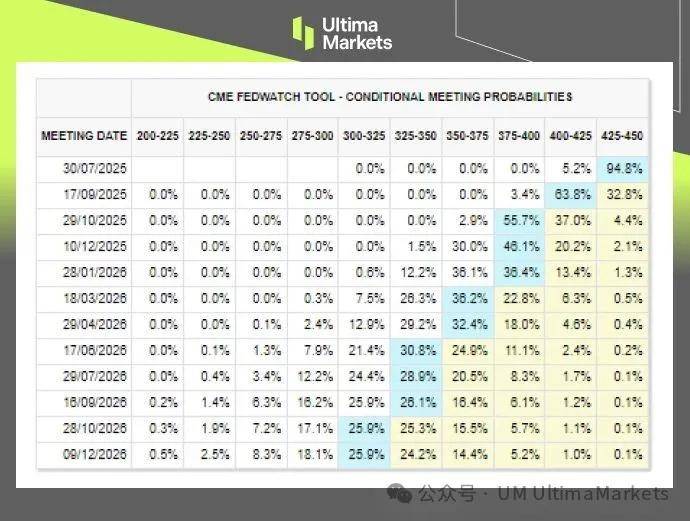
Core Insights - The U.S. labor market showed strong performance in June, with job additions exceeding market expectations, boosting confidence in economic resilience and driving up the dollar and major U.S. stock indices [1][2] Employment Report Highlights - Non-farm payrolls increased by 147,000, surpassing the market expectation of 110,000, and revised May data to 144,000 [2] - The unemployment rate fell from 4.2% to 4.1%, the lowest level since February 2025 [2] - Wage growth showed signs of slowing, with average hourly earnings rising 0.2% month-over-month and 3.7% year-over-year, both below May's growth and market expectations [2] - Labor force participation rate decreased to 62.3%, the lowest since 2022, raising concerns about the breadth of economic recovery [2] - Private sector job growth was weak, adding only 74,000 jobs, the lowest since October 2024 [2] - Manufacturing employment continued to decline, indicating pressure in certain economic sectors [2] Market Reactions - Following the employment report, the dollar strengthened, with the USD index rising approximately 0.6% [5] - Major U.S. stock indices reached new highs during intraday trading but showed caution near the close as investors digested signals of slowing wage growth and declining labor participation [5] - Macro uncertainties remain, particularly with the upcoming expiration of U.S. tariff suspensions on July 9, raising concerns about potential trade risks [5] Interest Rate Outlook - Despite the mixed signals in the employment data, the overall strong performance has led to a reassessment of the Federal Reserve's interest rate cut timeline [2] - The probability of a rate cut in September is currently at 66.7%, slightly down from earlier in the week, while the probability of maintaining rates in July has risen to 94.8% [4]
暑期经济热潮来袭!“特色活动+资金支持 ”为文旅添力
证券时报· 2025-07-03 14:54
Group 1 - The article highlights the upcoming summer cultural and tourism consumption season in China, with over 4,300 events and approximately 39,000 activities planned, alongside a distribution of over 570 million yuan in consumption subsidies [1] - Various regions, including Sichuan, Hainan, and Shaanxi, have already announced substantial amounts for summer consumer vouchers, exceeding 100 million yuan in total [1][3] - The article emphasizes that the upcoming peak season for consumption is expected to boost the recovery of contact-based service industries after a brief downturn [7] Group 2 - Special activities and consumption vouchers are being utilized as strategies to attract consumers, with Shanghai and Beijing organizing various themed events to enhance summer tourism [3] - The data indicates a significant increase in travel demand, with a 5% week-on-week growth in passenger volume for civil aviation and a projected 9.53 billion railway passengers during the summer period, marking a 5.8% year-on-year increase [6] - Family travel, particularly for parent-child outings, is identified as a major driver of summer tourism, with orders from family groups accounting for 40% to 60% of total bookings [6] Group 3 - Financial policies are being strengthened to support the tourism sector, with multiple banks offering financial incentives for service consumption in key areas such as tourism and hospitality [9] - The summer economy is seen as a critical driver for macroeconomic recovery, providing diverse options for consumers and promoting structural optimization in the consumption market [9]

欧元区6月综合PMI创三个月新高 制造业服务业回暖提振复苏
Xin Hua Cai Jing· 2025-07-03 08:48
新华财经北京7月3日电(崔凯)欧元区6月综合PMI终值从5月的50.2上修至50.6,创三个月新高,标志 着私营部门活动连续第二个月扩张。制造业与服务业同步回暖是主要驱动力,但新增业务持续13个月收 缩、就业增长乏力等问题仍存隐忧。 意大利6月服务业PMI从53.2降至52.1,创三个月最低,但仍为连续第七个月扩张。新出口订单以五个月 最快速度下滑,反映欧洲需求疲软及全球贸易紧张;投入成本受薪资、能源及原材料价格上涨推动,但 企业暂未大幅转嫁压力,销售价涨幅放缓;就业连续第五个月增长,增速创一年新高,积压工作量进一 步减少。企业基于新客户开发和市场稳定预期,对未来12个月保持乐观。 尽管新增业务仍延续13个月的收缩态势,但积压工作量的持续消化为产出增长提供了支持。此外,企业 信心指数也有所回升,达到自2024年7月以来的最高点,显示出对未来经济前景的乐观态度。 德国:制造业回暖抵消服务业疲软,通胀压力缓解重返扩张 爱尔兰以连续第四个月扩张领跑,西班牙、意大利、德国紧随其后,但法国成为唯一连续十个月收缩的 主要经济体。 德国6月综合PMI终值50.4,较5月显著回升,制造业扩张部分抵消服务业收缩。新订单结束连续 ...
韩国强劲的出口或支持韩国央行的强硬立场
news flash· 2025-07-02 02:13
Core Viewpoint - Strong exports from South Korea may support the Bank of Korea's hawkish stance in the upcoming policy meeting on July 10, as increased fiscal spending could alleviate concerns about economic growth [1] Group 1: Economic Indicators - Nomura Securities economist Jeong Woo Park suggests that robust exports, particularly in semiconductors, will continue to bolster economic recovery in the second half of the year [1] - South Korea's exports rebounded in June, driven by active semiconductor shipments, despite global trade being hampered by increased tariffs from the U.S. [1] Group 2: Monetary Policy Outlook - The Bank of Korea is not expected to lower interest rates for the remainder of the year, with a forecasted rate cut of 25 basis points in February 2026 marking the end of the current easing cycle [1]

宏观数据预测专题:6月经济金融“成绩单”前瞻
Tianfeng Securities· 2025-07-01 12:14
Report Industry Investment Rating No relevant content provided. Core Viewpoints The report focuses on the economic and financial data for June 2025, which serves as a "report card" for the effectiveness of policies in the first half of the year and a "decision anchor" for policy - setting in the second half. It predicts various economic indicators and analyzes the factors influencing these indicators [1][12]. Summary by Directory 1. Industrial Added Value - Expected year - on - year growth in June is 6.0%. The production PMI in June rose 0.3 pct to 51.0%, entering the expansion range, and the procurement volume index increased significantly. High - frequency data shows that the operating rate of key industries mostly rebounded, indicating stable and positive production operations [2][14][21]. 2. Social Retail Sales - Expected year - on - year growth in June is 6.2%. The service industry PMI in June slightly declined to 50.1% but remained in the expansion range. Real - estate sales were weak, pressuring post - real - estate cycle consumption. Automobile sales increased both year - on - year and month - on - month, and the "trade - in" policy is expected to further release consumption potential [3][25][28]. 3. Fixed - Asset Investment - Expected cumulative year - on - year growth in June is 3.7%. In infrastructure, the cumulative year - on - year growth of infrastructure investment may rebound, with the construction industry PMI rising to 52.8%, the asphalt plant operating rate increasing, and the issuance of new special bonds accelerating. In real estate, investment growth remained weak, with new home sales improving month - on - month but still weak year - on - year, and land transaction area below the seasonal level. In manufacturing, investment may remain basically flat, with domestic demand improving but external demand weak, and the business expectation index declining [4][30][35]. 4. Trade 4.1 Exports - Expected year - on - year growth in June is 4.2%. The Geneva Agreement may boost exports to the US in June, and exports to Europe are expected to remain stable. However, the global manufacturing PMI continued to decline and remained in the contraction range, indicating weak external demand overall. The export growth rate is expected to decline slightly [37][40]. 4.2 Imports - Expected year - on - year growth in June is - 1.0%. Import demand rebounded after the tariff suspension in May and further increased in June. Although the export container price increased in June, the import price remained low. The import growth rate is expected to rise slightly from a low level [5][45]. 5. Inflation 5.1 CPI - Expected year - on - year growth in June is 0.04%. In June, pork prices fluctuated within a narrow range, while vegetable prices rebounded. Considering the increase in oil prices and the low - base effect, the CPI year - on - year may turn positive [6][50][51]. 5.2 PPI - Expected year - on - year growth in June is - 3.0%. In June, most commodity prices rebounded, including industrial products, crude oil, natural gas, and non - ferrous metals, which had a positive impact on the PPI. The year - on - year decline in PPI is expected to narrow marginally [54][55]. 6. GDP - Expected year - on - year growth in the second quarter is 5.3%. Since the second quarter, the economy and finance have shown a moderate recovery. The manufacturing PMI from April to June was in the contraction range, and most economic indicators declined in May except for social retail sales. Considering the historical pattern of GDP seasonally - adjusted quarter - on - quarter decline in the second quarter, the economic growth in the second quarter is expected to decline slightly quarter - on - quarter but reach about 5.3% year - on - year [7][64]. 7. Social Financing and Credit 7.1 Credit - Expected new credit in June is 232 billion yuan. June is a traditional large - credit month, but considering the low and stable bill rates, the probability of a significant and unexpected increase in new credit is low. The report also analyzes the new credit in different sectors, including enterprises, residents, bill financing, and non - bank loans [8][67][80]. 7.2 Social Financing - Expected new social financing in June is 4.1 trillion yuan, with the corresponding year - on - year growth rate of social financing stock expected to be 8.9%. The report analyzes the components of new social financing, including government bond net financing, corporate bond net financing, and non - standard financing [8][82][90].