对等关税

Search documents
关注欧美7月PMI初值,警惕商品价格波动风险
Hua Tai Qi Huo· 2025-07-24 02:52
FICC日报 | 2025-07-24 关注欧美7月PMI初值,警惕商品价格波动风险 市场分析 关注国内重要会议。上半年国内经济仍具韧性,中国上半年GDP同比增长5.3%,高于全年预期目标5%,财政发力 和"抢出口"现象为上半年经济数据提供支撑,但也对应着政策迫切性有所下降。中国6月出口表现亮眼,中美关税 缓和下,新一轮"抢出口"支撑需求;中国6月社零同比增速放缓至4.8%,主要受部分地区"两新"政策补贴断档拖累, 后续政策补贴有望继续下达支撑国内消费。投资方面,基建投资和制造业投资均明显回落,整体固定投资走弱, 地产销售走弱对整个地产链条拖累风险仍存。后续关注7月政治局会议进一步加码稳增长政策的可能。财政部等三 部门发布海南自由贸易港全岛封关货物税收政策。 "反内卷"交易的进展跟踪。7月以来,中央财经委、工信部等部门再次强调治理企业低价无序竞争,15日中钢协召 开钢铁工业规划部长会,研究建立产能治理新机制,光伏、锂电池、汽车、钢铁等行业"反内卷"政策预期升温, 部分商品价格回暖。从政策文件和行业自律的内容来看,当前综合整治"内卷式"竞争可以关注钢铁、炼油、合成 氨、水泥、电解铝、数据中心、煤电、光伏、锂电池 ...
“对等关税2.0”来袭:15%只是起步,最高达50%! 当市场豪赌TACO 特朗普关税算盘也在升级
智通财经网· 2025-07-24 01:23
Group 1 - The core viewpoint of the articles revolves around President Trump's announcement of increasing tariffs, with a minimum rate of 15% and a potential range of 15% to 50% depending on the country, indicating a significant shift in trade policy [1][2] - Trump has indicated that he will send letters to over 150 countries regarding the potential tariff rates, which marks an increase from the previously expected 10% baseline [1] - The announcement of higher tariffs is seen as a catalyst for further escalation in trade tensions, with the market showing indifference to these developments, potentially encouraging more aggressive tariff actions from the Trump administration [3][6] Group 2 - Analysts from major banks, including Bank of America and Morgan Stanley, predict that the impact of the new tariffs will not be fully reflected in economic data until later in the year, with inflationary pressures expected to rise significantly [4][5] - The TACO trading strategy has gained popularity among investors, betting that Trump will ultimately back down from his aggressive tariff threats, leading to market rebounds after initial declines [6][7] - There is a growing concern among analysts that the market's confidence in Trump's eventual retreat from tariffs may be misplaced, as the rapid market gains could lead to disappointment if expectations are not met [7]
美日达成“大规模”贸易协议,特朗普夸耀成绩,日本国内情绪复杂
Huan Qiu Shi Bao· 2025-07-23 22:56
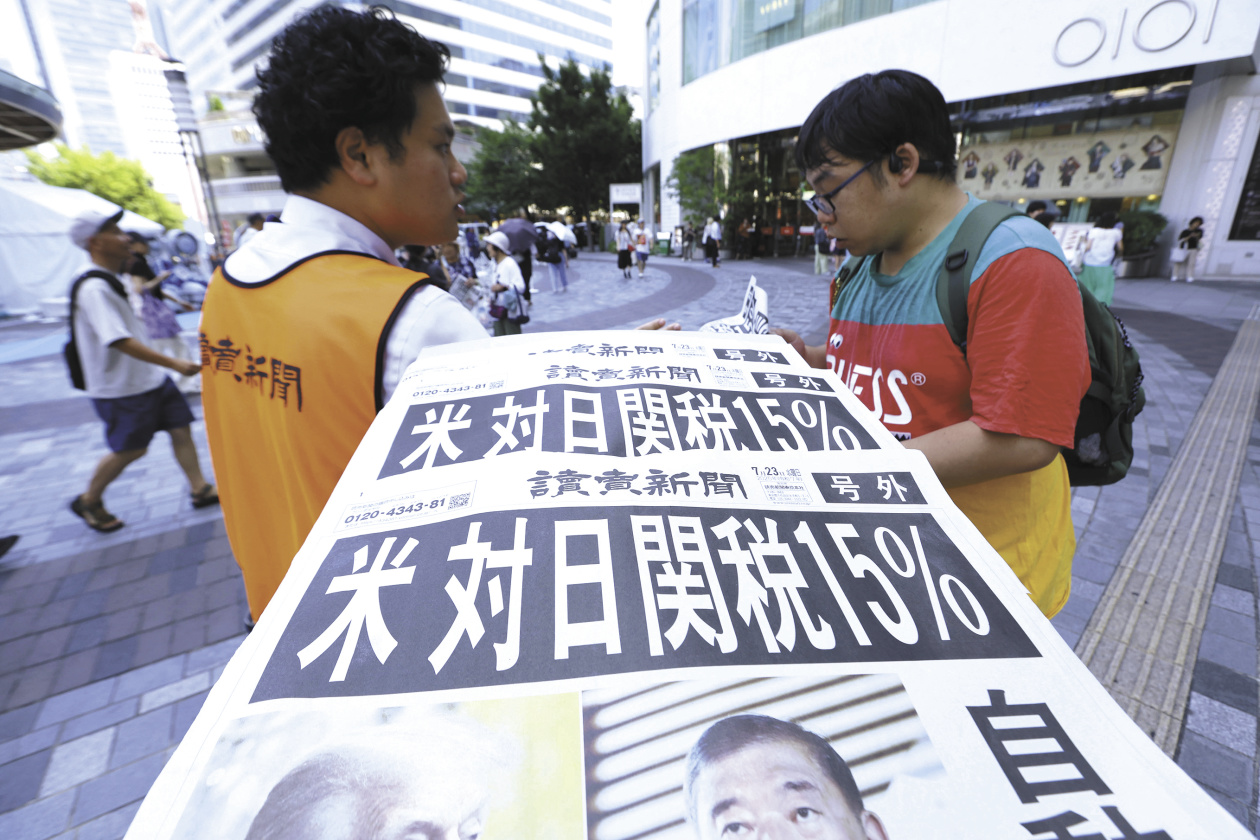
Core Points - The U.S. and Japan have reached a significant trade agreement, with Japan agreeing to invest $550 billion in the U.S. and a reduction of tariffs on Japanese goods to 15% from a previously threatened 25% [1][3][4] - The agreement is seen as a compromise, balancing U.S. interests and Japanese demands, although Japanese industries express concerns over the high tariff rate [1][4] - The deal includes provisions for market access in sectors such as automobiles and agriculture, with specific mention of increased imports of U.S. rice [4][5] Group 1: Trade Agreement Details - Japan will invest $550 billion in the U.S., which is expected to create numerous jobs and generate significant profits for the U.S. [3][4] - The tariff on Japanese automobiles exported to the U.S. will decrease from 27.5% to 15%, which is a substantial reduction but still raises concerns among U.S. automakers [4][5] - The agreement also includes discussions on additional tariffs, particularly on steel and aluminum, which remain at 50% [4][5] Group 2: Economic Implications - The new trade agreement is projected to negatively impact Japan's GDP by approximately 0.55% within a year due to the increased tariffs [6] - Japanese farmers express concerns about the potential sacrifice of agriculture in favor of trade agreements, particularly regarding rice imports [6][7] - The agreement has led to a rise in Japan's Nikkei 225 index, indicating a temporary market relief from uncertainty [6] Group 3: Political Context - The agreement comes at a politically sensitive time for Japanese Prime Minister Shigeru Ishiba, whose political future is tied to the success of these negotiations [1][7] - The U.S. is also pursuing trade agreements with other countries, including the Philippines and Indonesia, indicating a broader strategy of negotiating trade terms [7][8] - European countries are considering stronger countermeasures against the U.S. if trade negotiations do not progress, highlighting the global implications of U.S.-Japan trade relations [8]

与美贸易谈判,韩国、印度、马来西亚分别设“红线”
Huan Qiu Shi Bao· 2025-07-23 22:49
Group 1 - The U.S. government is nearing the end of a grace period for "reciprocal tariffs," prompting several countries to accelerate trade negotiations with the U.S. before the August 1 deadline [1] - South Korea has set a "red line" in its trade negotiations with the U.S., refusing to further open its beef and rice markets as bargaining chips [1] - South Korea remains the largest importer of U.S. beef, purchasing $2.22 billion worth in 2024, while the U.S. accounts for 32% of South Korea's rice import quota [1] Group 2 - India is facing challenges in reaching a temporary trade agreement with the U.S. by August 1, particularly regarding the reduction of tariffs on key agricultural products and dairy [2] - India has firmly rejected U.S. demands to lower dairy tariffs, maintaining its right to impose retaliatory tariffs on U.S. imports under WTO rules [2] - Malaysia is seeking to negotiate a reduction in the upcoming 25% tariffs imposed by the U.S., aiming to align closer to the 20% tariffs applicable to Indonesia and Vietnam [2][3] Group 3 - Malaysia's Minister of Investment, Trade and Industry expressed optimism about reaching a tax reduction agreement but warned against the risks of hasty agreements [3]
纺织服装行业二季度前瞻报告:品牌景气分化,制造情绪改善
ZHESHANG SECURITIES· 2025-07-23 12:51
Investment Rating - The industry investment rating is maintained as "Positive" [2] Core Views - The textile and apparel industry is experiencing a divergence in brand performance, with manufacturing sentiment improving [2] - Retail growth in the apparel sector showed a slight deceleration in Q2, but there is potential for improvement in Q3 due to a lower base from the previous year [3] - Key players in the H-share market, such as Anta Sports and 361 Degrees, are expected to maintain double-digit revenue growth in H1 2025, while other brands like Xtep and Li Ning are projected to achieve single-digit revenue growth [5][8] - A-share brands are showing mixed performance, with some companies like Weigang Medical and Hailan Home benefiting from strong retail growth and product expansion [8] Summary by Sections Textile Manufacturing - Sentiment in textile manufacturing is improving, focusing on stable growth for oversold leaders [2] - Key recommendations include Shenzhou International, Crystal International, and Huayi Group, which are expected to show resilience in performance [2] Brand Apparel - The brand apparel sector is witnessing a split in performance, with some companies achieving growth despite retail environment pressures [8] - Notable performers include Weigang Medical, Hailan Home, and Luolai Life, which are expected to see significant revenue and profit growth in Q2 [8][9] Market Outlook - The outlook for the second half of the year emphasizes focusing on industry leaders with positive operational changes and attractive valuations, such as Hailan Home and Weigang Medical [9] - The Hong Kong market for sports and functional apparel is expected to remain resilient, with recommendations for brands like Anta Sports and Bosideng [10]
特朗普再掀关税战,但市场为何对“对等关税”逐渐脱敏?
Sou Hu Cai Jing· 2025-07-23 09:57
Core Viewpoint - The Trump administration has shifted its focus back to tariffs and trade following the passage of the "Great American Rescue Plan," with a series of high-intensity tariff actions initiated in early July [1] Tariff Actions - Trump announced three rounds of tariffs from July 7 to 10, targeting 14 countries with tariffs ranging from 25% to 40%, 8 countries with tariffs from 20% to 50%, and a 35% tariff on Canadian imports, along with a unified tariff of 15% or 20% for other countries [1] - The effective average tariff rate in the U.S. is expected to stabilize around 15-16% in the near future, with most newly notified countries having a negligible impact on the overall effective tax rate [1][2] Market Reaction - Following the announcement of new tariffs, major asset prices remained stable, with the U.S. stock market reaching new highs and the long-term U.S. Treasury yield rising slightly to around 4.4% [5] - Investors appear to be desensitized to Trump's tariff policies, viewing them more as negotiation tactics rather than significant threats [5] Tariff Revenue - U.S. tariff revenue surged to $26.6 billion in June, quadrupling the usual level, with total revenue for the first half of the year reaching $87.2 billion [5] - The 10% baseline tariff has generated over $17.7 billion in revenue, with specific tariffs on the automotive sector contributing more than $10.7 billion [5] Future Projections - Analysts predict that if the average effective tariff rate remains between 10-14%, it could yield annual tariff revenues of $300 billion to $400 billion, potentially offsetting the increased spending from the "Great American Rescue Plan," which is estimated to add $340 billion annually [6] - The effective tariff rate is projected to be around 2.3% by the end of 2024, with potential increases if new tariffs are fully implemented [6][10] Inflation and Monetary Policy - The impact of tariffs on inflation appears limited, with the Consumer Price Index (CPI) showing a year-on-year increase of 2.7% in June, lower than earlier in the year [11] - The Federal Reserve may delay interest rate cuts due to the potential for tariffs to exert lasting inflationary pressure, with expectations for a rate hold in July and a possible cut in September [14]
美日达成贸易协议日本同意向美国支付15%关税,外交部回应
news flash· 2025-07-23 07:28
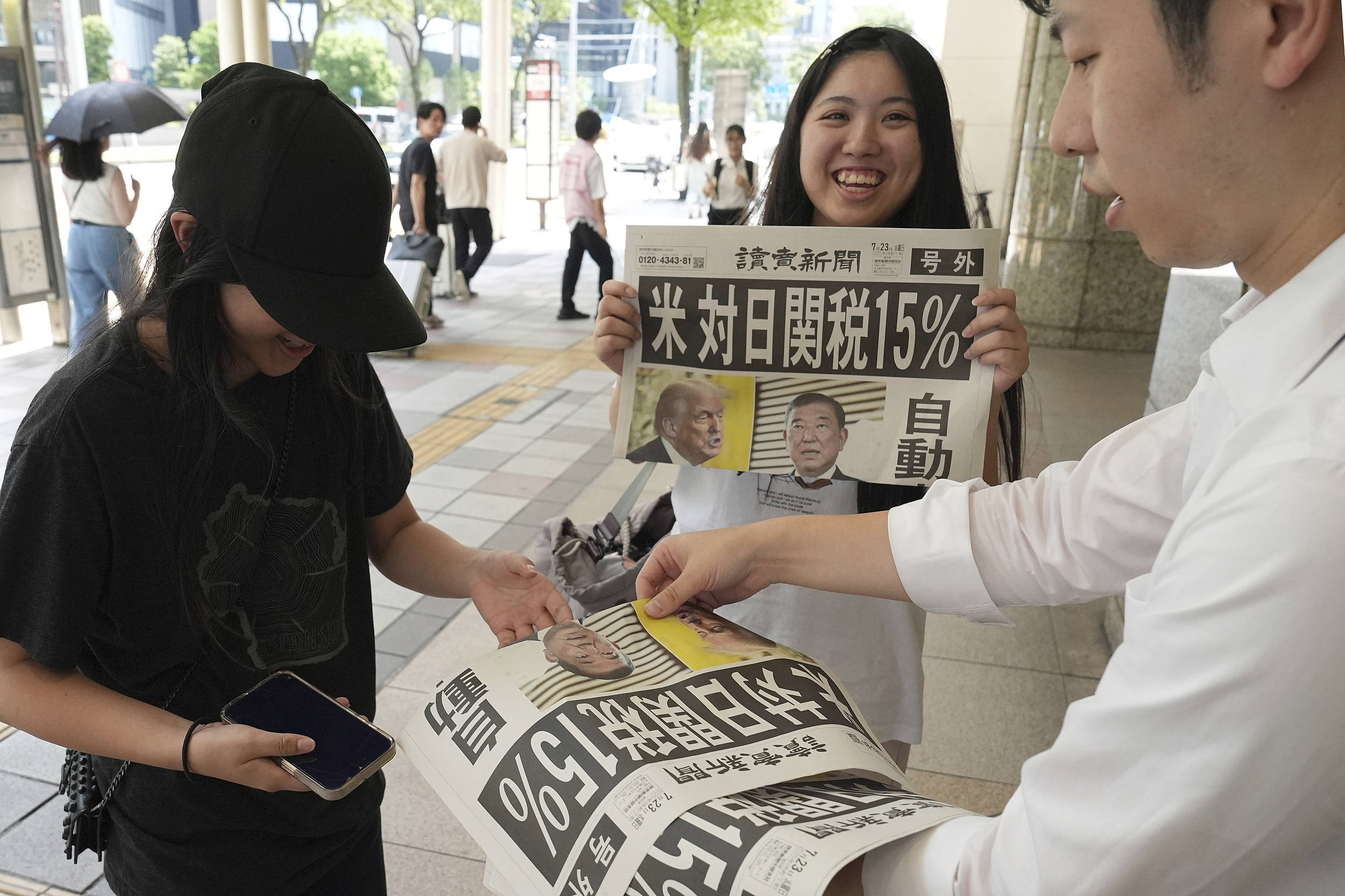
7月23日,外交部发言人郭嘉昆主持例行记者会。当地时间22日,美国总统特朗普宣布,美国与日本达 成贸易协议,日本将向美国支付15%的对等关税。会上,路透社记者提问,中方对此有何评论?郭嘉昆 回应,中方一贯主张各方通过平等对话协商解决经贸分歧,维护良好的国际经贸合作环境。(智通财经) ...
日美达成协议,对等关税为15%
日经中文网· 2025-07-23 06:14
Group 1 - The core agreement between the US and Japan involves a 15% tariff on Japanese cars exported to the US, which is the lowest among all new reciprocal tariff rates announced by the US [1][2] - Japan will increase its rice imports from the US within the existing quota, maintaining a total import volume of 770,000 tons annually with zero import tariffs [2] - The agreement aims to encourage Japanese investment in the US, with a total investment and financing framework of up to $550 billion, focusing on sectors like semiconductors, pharmaceuticals, and AI [3][4] Group 2 - The new reciprocal tariff will lower the existing tariff on Japanese cars from 25% to 15%, combining a 12.5% tariff and a basic rate of 2.5%, without imposing import quantity limits [2][3] - The negotiations faced challenges, with Japan seeking a review of tariffs in exchange for significant investments, while the US demanded further market access, particularly in the automotive sector [4] - The agreement is part of a broader initiative called "Japan Investment America Initiative," which aims to bolster economic security through targeted investments [3][4]
A股商品齐冲高,关注俄乌谈判
Hua Tai Qi Huo· 2025-07-23 05:32
Report Industry Investment Rating - Not provided in the given content Core Viewpoints - The domestic economy in the first half of the year remained resilient, with China's GDP in H1 growing by 5.3% year-on-year, higher than the annual target of 5%. Fiscal efforts and the "rush to export" phenomenon supported the economic data, but also reduced the urgency of policies. Attention should be paid to the Politburo meeting in July for potential further pro - growth policies [1]. - Since July, there has been an increasing expectation of "anti - involution" policies in industries such as steel, photovoltaic, lithium battery, and new energy vehicles. However, more detailed energy - saving and carbon - reduction policies are needed to promote the "anti - involution" trading [2]. - After the passage of the "Great Beautiful" Act in the US, Trump has shifted his focus to external pressure to accelerate tariff negotiations. The current tariff situation is in a "stagnant" stage, and its impact on sentiment and demand expectations should be watched out for [3]. - The current commodity fundamentals are still weak, and one should be cautious about the implementation of policy expectations. The volatility of commodity prices may remain high [4]. Summary by Related Catalogs Market Analysis - China's export performance in June was remarkable, with a new round of "rush to export" under the easing of Sino - US tariffs. The year - on - year growth rate of social retail sales in June slowed to 4.8% due to the suspension of policy subsidies in some areas, but subsequent subsidies are expected to support domestic consumption. Infrastructure and manufacturing investments declined, and the risk of the weak real - estate sales dragging down the real - estate chain still exists. On July 22, A - shares strengthened throughout the day, and the commodity futures market saw a wave of limit - up for many varieties such as coking coal and coke, stimulating the full - scale outbreak of cyclical stocks [1]. "Anti - Involution" Transaction Tracking - Since July, relevant departments have emphasized the governance of disorderly low - price competition among enterprises. The expectation of "anti - involution" policies in industries such as steel, photovoltaic, and lithium battery has increased, and the prices of some commodities have rebounded. The upcoming ten key industry pro - growth work plans for industries like steel, non - ferrous metals, and petrochemicals will focus on structural adjustment, supply optimization, and elimination of backward production capacity [2]. "对等 Tariff" Impact - The passage of the "Great Beautiful" Act in the US has shifted its policy from "tight fiscal expectation + neutral monetary policy" in the first half of the year to a stage where policies are "easy to loosen and difficult to tighten." The US Treasury Secretary said that tariff revenues are "huge" and may account for 1% of the US GDP, with expected tariff revenues of up to $2.8 trillion in the next decade. Trump has extended the grace period for the "equal tariff" and started the "equal tariff 2.0" stage. The US has sent tariff letters to 25 countries in 4 batches, and negotiations with various countries are in progress [3]. Commodity Sector - Domestically, the black and new - energy metal sectors are most sensitive to the supply - side. Overseas, the energy and non - ferrous sectors benefit significantly from inflation expectations. The black sector is still dragged down by downstream demand expectations, the supply shortage in the non - ferrous sector has not been alleviated, and the short - term geopolitical premium in the energy sector has ended, with a relatively loose medium - term supply outlook. OPEC + has accelerated production increases, and the third direct Russia - Ukraine negotiation will be held this week [4]. Strategy - For commodities and stock index futures, one should consider long - term positions in industrial products on dips [5]
特朗普大消息!刚刚,强势拉升
Zhong Guo Ji Jin Bao· 2025-07-23 01:26
Group 1: Trade Agreement Impact - The US and Japan have reached a trade agreement, reducing the reciprocal tariff rate from 25% to 15%, with Japan committing to invest $550 billion in the US and opening its market for agricultural products [2][4][5] - Japanese automotive stocks surged, with Mitsubishi Motors and Mazda both rising over 10%, while Honda and Nissan increased by more than 7% [2][3] - The agreement is expected to create hundreds of thousands of jobs in the US, with Trump claiming that the US will receive 90% of the profits from Japan's investment [4] Group 2: Japanese Market Reaction - The Nikkei 225 index rose over 2% following the announcement of the trade agreement, reflecting positive market sentiment [1][2] - Specific automotive stocks showed significant gains, with Mazda at 12.89%, Mitsubishi at 12.10%, and Toyota at 10.05% [3] Group 3: South Korean Market Response - The South Korean KOSPI index increased by 0.58%, reaching 3188.42 points, although concerns about the US's tariff policies are affecting business confidence [7][8] - A survey indicated that the business sentiment index for South Korean companies remains pessimistic, with a reading of 92.6, indicating more pessimists than optimists [9]