物理AI

Search documents
蔚来李斌:“少玩花活,专注卖车”
中国基金报· 2025-11-27 16:07
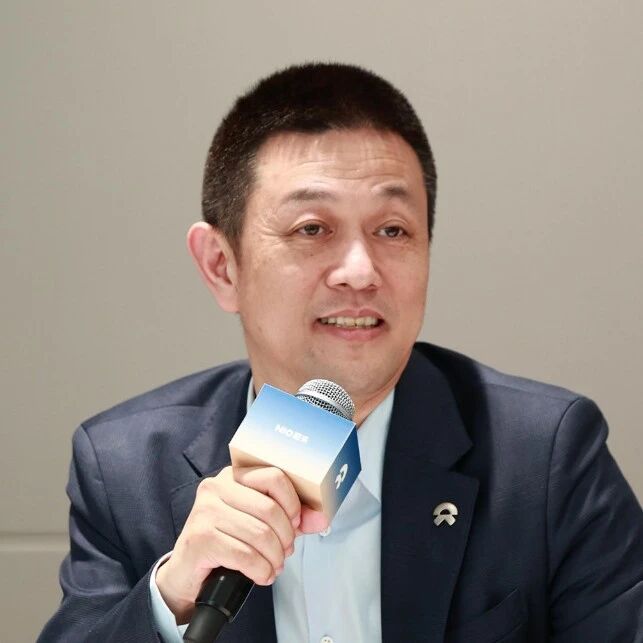
Core Viewpoint - NIO's founder and CEO Li Bin emphasized the company's commitment to focusing solely on the automotive business and not diversifying into other sectors, particularly in response to the competitive landscape of new energy vehicles [2][12][14]. Financial Performance - NIO expressed confidence in achieving profitability by the fourth quarter of 2025, with a target for full-year profitability in 2026 [6][11]. - In Q3 2025, NIO reported a significant reduction in adjusted net losses to 2.74 billion yuan, a decrease of 38% year-over-year and 33.7% quarter-over-quarter [7]. - The company’s revenue guidance for Q4 2025 is projected between 32.758 billion yuan and 34.039 billion yuan, with a gross margin of 13.9%, marking the highest quarterly gross margin in three years [8][9]. Product Strategy - NIO plans to launch new high-margin models, including the all-new ES8 and the L90, which are expected to contribute to revenue growth and improved gross margins [11]. - The company is focusing on organic growth and optimizing financial metrics such as gross profit and gross margin, with the current vehicle gross margin at 14.7%, up 1.6 percentage points year-over-year [8][9]. Market Position - NIO currently holds less than 2% of the global automotive market share, indicating significant room for growth within the automotive sector [14]. - The company aims to maintain a strong focus on electric vehicle products and services, distancing itself from ventures into AI and robotics, despite recognizing the potential in those markets [12][16]. Competitive Landscape - NIO's strategy contrasts with other new energy vehicle manufacturers like XPeng and Li Auto, which are exploring AI and robotics, with XPeng's CEO claiming a 99.999% probability of achieving profitability in Q4 2025 [7][8]. - Li Bin acknowledged the potential of the robotics market but reiterated that NIO's current priority is to solidify its position in the automotive industry [16].


瞄准盈利目标 新势力车企多路线突围
Zheng Quan Ri Bao· 2025-11-27 15:59
Core Insights - The performance of four listed new energy vehicle companies in China, namely Leap Motor, Xpeng Motors, NIO, and Li Auto, shows significant divergence in their third-quarter results for 2025, highlighting the competitive landscape in the market [1] Sales Performance - Leap Motor achieved sales of 173,900 units, a year-on-year increase of 101.8%, leading the market - Xpeng Motors sold 116,000 units, up 149.3% year-on-year - Li Auto's sales reached 93,200 units, a decline of 39.0% year-on-year - NIO sold 87,100 units, marking a year-on-year growth of 40.8% [2] Revenue Data - Li Auto led in revenue with 27.4 billion yuan, although this represented a year-on-year decline of 36.2% - NIO reported revenue of 21.79 billion yuan, up 16.7% year-on-year - Xpeng Motors generated revenue of 20.38 billion yuan, a 101.8% increase year-on-year - Leap Motor's revenue was 19.45 billion yuan, reflecting a 97.3% year-on-year growth [2] Profitability - The profitability landscape showed "one profit and three losses" among the four companies - Leap Motor achieved a net profit of 150 million yuan, marking consecutive quarterly profitability - Xpeng Motors reported a net loss of 380 million yuan, significantly reduced from 1.81 billion yuan in the same period last year - Li Auto recorded a net loss of 620 million yuan, down from a profit of 2.8 billion yuan last year - NIO's net loss was 3.48 billion yuan, a decrease of 31.2% from 5.06 billion yuan year-on-year [2] Gross Margin Analysis - Xpeng Motors led with a gross margin of 20.1%, an increase of 4.8 percentage points year-on-year - Li Auto's gross margin was 16.3%, which adjusted for the recall costs of the Li MEGA model, would be 20.4% - Leap Motor reported a gross margin of 14.5%, up 6.4 percentage points year-on-year - NIO's gross margin stood at 13.9%, an increase of 3.2 percentage points year-on-year [3] Technological Innovation - The four companies are actively pursuing technological innovations, particularly in the field of physical AI - Xpeng Motors plans to launch three Robotaxi models by 2026 and aims for mass production of humanoid robots by the end of the year - Li Auto has invested heavily in AI, with a monthly usage rate of its VLA driver model reaching 91% and an expected annual R&D expenditure of 12 billion yuan, with over 6 billion yuan allocated to AI [4] - Leap Motor emphasizes self-research and development, achieving significant advancements in core components and technologies [4] Competitive Strategies - NIO continues to enhance its battery swap technology to create a differentiated competitive advantage and is accelerating its overseas market expansion [5] - Industry experts indicate that the third-quarter financial data reflects a new phase of differentiated development among Chinese new energy vehicle companies, with technology innovation, cost control, and globalization being critical success factors [5]


中信建投:汽车顺周期属性弱化,科技属性及新兴成长方向是核心主线
Mei Ri Jing Ji Xin Wen· 2025-11-27 00:29
Core Viewpoint - The current market has weak expectations for automotive stimulus policies and overall production and sales volume for next year, indicating a weakening of the automotive cyclical attributes. The core focus is shifting towards technology attributes and emerging growth directions [1] Group 1: Market Expectations - The market's anticipation for automotive stimulus policies and production/sales volume for next year is low [1] - The cyclical nature of the automotive industry is diminishing, leading to a focus on technology and growth sectors [1] Group 2: Future Trends - The year 2026 is highlighted as a significant year for new vehicles from Huawei, which is worth monitoring [1] - Companies like Xiaopeng, GAC, and Changan showcased self-developed robotic products during the auto show, indicating a shift towards integrating robotics in the automotive sector [1] - The upcoming technological iterations and mass production of Tesla's FSD V14, Robotaxi, and Optimus in 2026 are expected to create a turning point in the industry, with automotive and robotics as key applications of physical AI [1] - The technological attributes of automotive stocks may undergo a re-evaluation as these trends develop [1]

中信建投:当前汽车顺周期属性弱化,科技属性及新兴成长方向是核心主线
Xin Lang Cai Jing· 2025-11-26 23:53
Core Viewpoint - The current market has weak expectations for automotive stimulus policies and overall production and sales volume for next year, indicating a weakening of the automotive cyclical attributes. The core focus is on technology attributes and emerging growth directions [1] Group 1: Market Trends - The Guangzhou Auto Show has opened, with multiple automakers unveiling new models for 2026 [1] - GAC has launched the brand "Qijing" in collaboration with Huawei, marking the eighth brand created through partnerships between Huawei and automakers [1] - The Zun界 S800 has achieved over 18,000 pre-orders within 175 days of its launch, demonstrating rapid brand momentum [1] Group 2: Technological Developments - Companies such as XPeng, GAC, and Changan showcased self-developed robotic products during the auto show [1] - XPeng recently released its second-generation VLA large model and humanoid robot Iron, boosting market expectations [1] - The year 2026 is anticipated to be significant for new vehicle launches from Huawei, especially with the expected advancements in Tesla's FSD V14, Robotaxi, and Optimus technologies [1] Group 3: Industry Implications - The integration of automotive and robotics as core applications of physical AI is expected to catalyze a turning point in industry trends [1] - The technological attributes of automotive stocks may undergo reassessment as these advancements unfold [1]
全文|理想汽车Q3业绩会实录:11月份起,i6的电池供应将正式启用双供应商模式
Xin Lang Ke Ji· 2025-11-26 15:03
Financial Performance - Li Auto reported total revenue of 27.4 billion yuan for Q3 2025, a year-over-year decline of 36.2% and a quarter-over-quarter decline of 9.5% [1] - The company incurred a net loss of 624.4 million yuan, compared to a net profit of 2.8 billion yuan in the same period last year and a net profit of 1.1 billion yuan in the previous quarter [1] - Adjusted net loss was 359.7 million yuan, down from a net profit of 3.9 billion yuan year-over-year and 1.5 billion yuan quarter-over-quarter [1] Management Insights - Li Auto's management emphasized a return to a startup mentality and outlined a ten-year product and technology roadmap, focusing on AI-driven product design [2] - The company anticipates that products equipped with the M100 chip will be delivered in 2026, fundamentally transforming user experience [2][3] - The management highlighted the importance of time in transitioning to new technologies and products, indicating that significant improvements may take time to materialize [2] Technology and Product Development - Li Auto is focusing on self-research in the three core areas of electric drive, battery, and electronic control, achieving key breakthroughs [4] - The company has developed a full-stack self-research capability in battery technology, emphasizing fast charging and safety [4] - Li Auto plans to mass-produce its self-developed 5C battery next year, enhancing battery safety and user charging experience [4] Market Strategy and Challenges - The company is addressing supply chain challenges by implementing a dual-supplier model for battery supply starting November, aiming to increase monthly production capacity of the i6 model to 20,000 units by early next year [6] - Li Auto's management acknowledged the impact of reduced delivery volumes on cash flow, attributing it to delivery pressures and shortened supplier payment cycles [6][7] - The company is optimistic about the long-term growth of the NEV market, projecting a penetration rate of 55%-60% by 2026 [8] Future Outlook - Li Auto is preparing for changes in replacement subsidy policies and increased vehicle purchase taxes, with strategies to mitigate short-term impacts while enhancing user value through technological advancements [8] - The 2026 L series will feature significant upgrades based on user feedback and core technology accumulation, aiming to strengthen the brand's position in the extended-range vehicle market [9][10] - The company is committed to delivering a historical breakthrough in delivery volumes in 2026, leveraging product strength and user value to navigate market uncertainties [8] AI and Innovation - Li Auto's VLA model has been fully deployed across its models, showing significant improvements in user experience and driving performance [12] - The company is continuously iterating on the VLA model, with upcoming updates aimed at enhancing safety and decision-making capabilities [12] - Li Auto is developing its self-research AI inference chip, expected to launch commercially next year, which aims to significantly reduce costs while improving performance [14]
机器人产业ETF(159551)连续5日迎资金净流入,资金抢筹布局物理AI核心应用,有望催生产业趋势拐点
Mei Ri Jing Ji Xin Wen· 2025-11-26 07:08
Core Viewpoint - Companies such as Xiaopeng, GAC, and Changan showcased self-developed robotic products during the auto show, indicating a growing market expectation for advancements in automotive and robotics technology, particularly with the upcoming releases of Tesla's FSD V14, Robotaxi, and Optimus in 2026 [1] Group 1: Industry Trends - The automotive and robotics sectors are positioned as core applications of physical AI, which is expected to drive a turning point in industry trends [1] - The Robot Industry ETF (159551) tracks the Robot Index (H30590), focusing on companies involved in the research, manufacturing, and application of robotics [1] Group 2: Index Composition - The index includes publicly listed companies from various sectors such as mechanical manufacturing, electronic equipment, and information technology, emphasizing technological innovation and industrial automation trends [1] - The aim of the index is to reflect the overall development performance in the field of intelligent equipment and automation solutions [1]

小鹏汽车-W(09868.HK):单三季度销量同比增长149% 打造物理AI未来出行全新范式
Ge Long Hui· 2025-11-26 04:02
Core Insights - Xiaopeng Motors achieved a revenue of 20.4 billion RMB in Q3 2025, representing a year-on-year growth of 102% [1] - The company sold 116,000 vehicles in Q3 2025, marking a year-on-year increase of 149.3% and a quarter-on-quarter increase of 12.4% [2] - The net profit for Q3 2025 was -3.8 billion RMB, an improvement from -18.1 billion RMB in the same period last year and -4.8 billion RMB in Q2 2025 [1] Revenue Breakdown - In Q3 2025, the automotive sales revenue was 18.05 billion RMB, up 105.3% year-on-year and 6.9% quarter-on-quarter, primarily due to increased delivery of new models [1] - Service and other revenues reached 2.33 billion RMB in Q3 2025, reflecting a year-on-year growth of 78.1% and a quarter-on-quarter growth of 67.3%, driven by increased after-sales service income and technology development services provided to automakers [1] Profitability Metrics - Xiaopeng Motors reported a gross margin of 20.1% and a net margin of -1.9% in Q3 2025, with year-on-year increases of 4.9 percentage points and 16.0 percentage points, respectively [2] - The automotive business gross margin was 13.1%, showing a year-on-year increase of 4.5 percentage points, while the service and other profit margin was 74.6%, up 14.5 percentage points year-on-year [2] Future Outlook - The company expects to deliver between 125,000 and 132,000 vehicles in Q4 2025, representing a year-on-year increase of approximately 36.6% to 44.3% [2] - On November 5, 2025, Xiaopeng Motors showcased its achievements in physical AI and production plans, positioning itself as a global leader in embodied intelligence [3] - The company maintains its revenue forecasts for 2025, 2026, and 2027 at 88.5 billion RMB, 128 billion RMB, and 147.2 billion RMB, respectively, while projecting net profits of -1.6 billion RMB, 2.7 billion RMB, and 4.7 billion RMB for the same years [3]
申万宏源:维持小鹏汽车-W(09868)“买入”评级 Q3符合预期 全面转型AI企业
智通财经网· 2025-11-26 03:07
Core Viewpoint - Company maintains a "buy" rating for XPeng Motors (09868), citing the launch of new vehicles, exceeding expectations in external collaborations and internal reforms, and significant improvements in profitability, along with potential breakthroughs in robotics and flying car businesses [1] Performance Summary - For the first three quarters of 2025, the company reported revenue of 54.5 billion, a year-on-year increase of 120%; gross margin at 17.9%, up 3.7 percentage points; and a net loss attributable to shareholders of 1.52 billion, a reduction in loss by 2.94 billion year-on-year [1] - In Q3 2025, revenue reached 20.4 billion, a year-on-year increase of 102% and a quarter-on-quarter increase of 12%; gross margin at 20.1%, up 4.9 percentage points year-on-year and 2.8 percentage points quarter-on-quarter; net loss attributable to shareholders was 380 million, a reduction in loss by 1.43 billion year-on-year and 100 million quarter-on-quarter [1] Sales Structure and Margin Analysis - The launch of the XPeng G7 in Q3 2025 accounted for 13% of total sales; however, the sales proportions of G6, G9, and X9 declined due to pre-launch hesitation regarding the range-extended platform, leading to a decrease in automotive gross margin [2] - The company achieved significant growth in service and other revenues, reaching 2.33 billion, a year-on-year increase of 78.1% and a quarter-on-quarter increase of 67.3%, which positively impacted overall gross margin [2] - The delivery guidance for Q4 is set at 125,000 to 132,000 units, indicating a potential return to profitability in the quarter [2] User Base Expansion - The introduction of MONA M03 and P7+ has increased monthly sales from 10,000 to 30,000 units, with the G7 pushing XPeng's autonomous driving capabilities to Level 3, marking a new era in smart driving [3] - The X9 range-extended version is expected to launch at the Guangzhou Auto Show, with significant sales growth anticipated in Q4, supported by the addition of range-extended systems across various models [3] AI and Robotics Transformation - The company is redefining future vehicles as next-generation robots, integrating internet platform capabilities, with software expected to account for 50% of the value [4] - The seventh-generation humanoid robot focuses on full-stack self-research and cross-domain integration, with plans for orderly production in the coming months, aiming for a sales price comparable to vehicles [4] - The introduction of a high-efficiency L4 fully shared robotaxi model is expected to enhance commercial competitiveness, indicating a strong potential for monetization as the company transitions into an AI enterprise [4]
申万宏源:维持小鹏汽车-W“买入”评级 Q3符合预期 全面转型AI企业
Zhi Tong Cai Jing· 2025-11-26 03:05
Core Viewpoint - The report from Shenwan Hongyuan maintains a "Buy" rating for XPeng Motors (09868), highlighting the commencement of a new vehicle cycle, exceeding expectations in external collaborations and internal reforms, significantly enhancing profitability, and potential breakthroughs in robotics and flying car businesses [1] Performance Summary - For the first three quarters of 2025, the company reported revenue of 54.5 billion, a year-on-year increase of 120%; gross margin at 17.9%, up 3.7 percentage points; and a net loss attributable to shareholders of 1.52 billion, a reduction in loss by 2.94 billion [2] - In Q3 2025, revenue reached 20.4 billion, a year-on-year increase of 102% and a quarter-on-quarter increase of 12%; gross margin at 20.1%, up 4.9 percentage points year-on-year and 2.8 percentage points quarter-on-quarter; net loss attributable to shareholders was 380 million, a reduction in loss by 1.43 billion year-on-year and 100 million quarter-on-quarter [2] Sales Structure and Margin Analysis - The launch of the XPeng G7 in Q3 2025 accounted for 13% of total sales; however, the sales proportion of G6, G9, and X9 declined due to a wait-and-see attitude before the launch of the extended-range platform, leading to a slight decrease in automotive gross margin [3] - The collaboration with Volkswagen resulted in service and other income of 2.33 billion, a year-on-year increase of 78.1% and a quarter-on-quarter increase of 67.3%, significantly boosting overall gross margin [3] - The delivery guidance for Q4 is set at 125,000 to 132,000 units, indicating a potential return to profitability in a single quarter [3] Expansion of User Base - The MONA M03 and P7+ models are expected to increase monthly sales from 10,000 to 30,000 units, with the G7 pushing XPeng's autonomous driving capabilities to Level 3, marking a new era in smart driving [4] - The X9 extended-range version is set to launch at the Guangzhou Auto Show, with anticipated significant sales growth in Q4, and future models will be equipped with extended-range systems to drive sales expansion [4] AI and Robotics Transformation - The company is redefining future vehicles as next-generation robots, integrating internet platform capabilities, with software expected to account for 50% of the value [5] - The seventh-generation humanoid robot focuses on full-stack self-research and cross-domain integration, with plans for orderly mass production in the coming months, aiming for a sales price close to that of cars [5] - The introduction of a highly economical L4 fully shared robotaxi model is expected to have competitive commercial logic, enhancing the company's transformation into an AI enterprise with significant monetization potential [5]
速腾聚创预计Q4盈利:数字化激光雷达已获数百万订单,新增零跑、长城定点
IPO早知道· 2025-11-26 02:01
Core Viewpoint - The article highlights the strong performance and growth potential of SUTENG JUCHUANG, particularly in the laser radar market, driven by significant sales increases in various sectors, including robotics and autonomous driving [3][4]. Financial Performance - In Q3 2025, SUTENG JUCHUANG reported total revenue of approximately 407 million yuan, with overseas market revenue increasing by over 100% year-on-year [3]. - Gross profit reached approximately 97 million yuan, reflecting a year-on-year growth of about 36.8%, indicating continuous improvement in profitability [3]. Product Sales and Market Growth - The total sales of laser radars in Q3 amounted to 185,600 units, with the robotics sector experiencing explosive growth, with sales increasing by 393.1% year-on-year to approximately 35,500 units [3]. - Revenue from the robotics sector grew significantly by 157.8% year-on-year to approximately 142 million yuan, accounting for about 35% of total revenue [3]. Key Strategic Focus - The CEO emphasized two main focuses for Q3: "production guidance" for mass production of digital laser radars and "expanding victories" by securing more customer orders [4]. - The company launched five new digital products in 2025, which received high market recognition and resulted in substantial actual orders [4]. Customer Acquisition and Partnerships - SUTENG JUCHUANG has secured contracts with 32 automotive manufacturers and Tier 1 suppliers for 144 vehicle models, with 47 models achieving SOP as of September 30 [7]. - Recently, the company gained two major clients in the digital laser radar sector: Leap Motor and Great Wall Motors [5]. Technological Advancements - The company has developed a unique mass-producible digital laser radar matrix based on SPAD-SoC and VCSEL digital architecture, achieving stringent automotive electronic standards [9]. - The CEO noted that the ultimate competition in laser radar lies in the chip level, with a focus on digital signal generation for improved performance [11]. International Market Expansion - SUTENG JUCHUANG has received multiple contracts from major global automotive brands, including SAIC Audi and FAW Toyota, totaling over one million units [12]. - The company anticipates that overseas business will enter a growth phase starting in the second half of 2026, driven by high-performance product demand [14]. Robotics and AI Applications - In the robotics sector, SUTENG JUCHUANG has upgraded its product offerings, achieving mass production readiness for digital laser radars tailored for lawn mowing and delivery robots [21][23]. - The company is actively exploring various possibilities in physical AI, including key components and integrated hardware-software solutions [26].