
物理AI

Search documents
国信证券:维持小鹏汽车-W(09868)“优于大市”评级 打造物理AI未来出行全新范式
智通财经网· 2025-11-25 03:46
Core Viewpoint - Guosen Securities maintains an "outperform" rating for XPeng Motors (09868), highlighting the company's new models and the implementation of pure visual solutions, which will penetrate the high-end autonomous driving market below 200,000, accelerating the democratization of advanced autonomous driving [1] Group 1: Recent Events - On November 5, XPeng Motors held the 2025 XPeng Technology Day in Guangzhou, showcasing achievements in physical AI and mass production plans, including the second-generation VLA, Robotaxi, and a new generation of IRON humanoid robots [1] Group 2: Financial Performance - In Q3 2025, XPeng Motors achieved revenue of 20.4 billion, a year-on-year increase of 102% [2] - Q3 2025 vehicle sales revenue was 18.05 billion, up 105.3% year-on-year, driven by increased delivery of new models [2] - Service and other income in Q3 2025 reached 2.33 billion, a year-on-year increase of 78.1%, mainly due to growth in after-sales service and technology development services [2] Group 3: Profitability and Cost Management - In Q3 2025, XPeng Motors' gross margin was 20.1%, up 4.9 percentage points year-on-year, and net margin was -1.9%, improving by 16.0 percentage points year-on-year [3] - The gross margin for the automotive business was 13.1%, a year-on-year increase of 4.5 percentage points, attributed to ongoing cost reductions [3] - The profit margin for services and other income was 74.6%, up 14.5 percentage points year-on-year, driven by technology development service revenue [3] Group 4: Sales Growth - In Q3 2025, XPeng Motors sold 116,000 vehicles, a year-on-year increase of 149.3% [4] - In October 2025, the company delivered 42,000 vehicles, a year-on-year increase of 76% [4] - For Q4 2025, the company expects vehicle deliveries to be between 125,000 and 132,000, representing a year-on-year increase of approximately 36.6% to 44.3% [4]
国信证券晨会纪要-20251125
Guoxin Securities· 2025-11-25 01:09
Macro and Strategy - The macroeconomic review highlights that the U.S. non-farm payrolls increased by 119,000 in September, significantly above the expected 50,000, with the unemployment rate slightly rising to 4.4% [7] Industry and Company - In the restaurant industry, the report recommends leading companies in the hot pot sector, noting that in October 2025, the A-share, H-share, and U.S. stock markets saw significant gains for several chain restaurants, particularly Guoquan, which projected a revenue increase of 13.6%-25.8% for Q3 2025 [3][8] - The report indicates that the overall restaurant revenue in China increased by 3.8% year-on-year in October, with the CPI showing a slight increase due to holiday effects and domestic demand policies [8] - The report tracks the expansion of coffee brands, with notable growth in the coffee sector, particularly for brands like Nuo Wa, which saw significant store openings [9] - For the home appliance industry, October sales were under pressure, with a 15% decline in retail sales of home appliances, and a 13% drop in export value [13][14] - The report notes that in October, air conditioning sales fell by 20.1%, with expectations of continued pressure on production in December [15] - In the automotive sector, XPeng Motors reported a 149% year-on-year increase in sales for Q3 2025, with total revenue reaching 20.4 billion yuan, marking a 102% increase [19][20] - The report highlights that NVIDIA's revenue for Q3 reached $57 billion, a 62% year-on-year increase, driven by strong demand in data centers and gaming [25][26] - NetEase's revenue for Q3 increased by 8% year-on-year, with deferred revenue growing by 25%, indicating strong long-term operational capabilities [28][30] - Huazhu Group's Q3 revenue grew by 17.5% year-on-year, with a focus on expanding its membership base and improving revenue management [31][32] - Ctrip's Q3 revenue increased by 15.5% year-on-year, with a significant contribution from the sale of Makemytrip, indicating strong performance in the travel sector [34]


小鹏汽车系列十七-三季报点评:单三季度销量同比增长149%,打造物理AI未来出行全新范式【国信汽车】
Xin Lang Cai Jing· 2025-11-24 15:32
Core Viewpoint - Xiaopeng Motors achieved significant growth in Q3 2025, with a 102% year-on-year increase in revenue and a 149.3% increase in vehicle sales, indicating strong market demand and successful product launches [3][8]. Financial Performance - In Q3 2025, Xiaopeng Motors reported total revenue of 203.8 billion RMB, a year-on-year increase of 101.8% and a quarter-on-quarter increase of 11.5% [3][9]. - The net profit for Q3 2025 was -3.8 billion RMB, an improvement from -18.1 billion RMB in the same period last year and -4.8 billion RMB in Q2 2025 [3][9]. - The automotive sales revenue for Q3 2025 was 180.5 billion RMB, reflecting a year-on-year growth of 105.3% and a quarter-on-quarter growth of 6.9% [4][9]. - Service and other income reached 23.3 billion RMB in Q3 2025, up 78.1% year-on-year and 67.3% quarter-on-quarter [4][9]. Cost Management and Profitability - Xiaopeng Motors improved its gross margin to 20.1% in Q3 2025, up 4.9 percentage points year-on-year and 2.8 percentage points quarter-on-quarter [4][10]. - The net margin for Q3 2025 was -1.9%, an improvement of 16.0 percentage points year-on-year and 0.7 percentage points quarter-on-quarter [4][10]. - R&D expense ratio decreased to 11.9%, down 4.3 percentage points year-on-year, while sales, general, and administrative expense ratio was 12.2%, down 3.9 percentage points year-on-year [4][10]. Sales and Delivery Guidance - Xiaopeng Motors sold 116,000 vehicles in Q3 2025, a 149.3% increase year-on-year and a 12.4% increase quarter-on-quarter [5][13]. - The company delivered 42,000 vehicles in October 2025, marking a 76% year-on-year increase [5][13]. - For Q4 2025, the company expects to deliver between 125,000 and 132,000 vehicles, representing a year-on-year increase of approximately 36.6% to 44.3% [5][13]. Technological Advancements - On November 5, 2025, Xiaopeng Motors showcased its advancements in physical AI at the 2025 Xiaopeng Technology Day, including the second-generation VLA system and plans for autonomous driving taxis [6][18]. - The second-generation VLA system integrates vision and language processing, enhancing the efficiency of autonomous driving capabilities [19][20]. - Xiaopeng Motors plans to launch three Robotaxi models in 2026, utilizing a vision-based approach without reliance on LiDAR or high-definition maps [26][28]. Product Development - The new generation IRON humanoid robot features advanced design and capabilities, including 82 degrees of freedom and the ability to perform complex movements [31][32]. - The IRON robot will utilize a solid-state battery for improved safety and efficiency, and it will be deployed in commercial scenarios such as guiding and inspection [33][34].


小鹏汽车系列十七-三季报点评:单三季度销量同比增长149%,打造物理AI未来出行全新范式【国信汽车】
车中旭霞· 2025-11-24 15:15
Core Viewpoints - Xiaopeng Motors aims to establish itself as a leader in the mid-to-high-end market by leveraging its advancements in physical AI technology [3][26]. Financial Performance - In Q3 2025, Xiaopeng Motors achieved a revenue of 204 billion RMB, representing a year-on-year growth of 102% [4][12]. - The total sales volume for Q3 2025 reached 116,000 units, marking a year-on-year increase of 149.3% and a quarter-on-quarter increase of 12.4% [5][21]. - The net profit for Q3 2025 was -3.8 billion RMB, an improvement from -18.1 billion RMB in the same period last year [5][12]. Cost Management and Profitability - Xiaopeng Motors reported a gross margin of 20.1% and a net margin of -1.9% in Q3 2025, with both margins showing improvements year-on-year and quarter-on-quarter [6][18]. - The automotive business gross margin was 13.1%, up 4.5 percentage points year-on-year, primarily due to ongoing cost reductions [7][18]. Sales and Delivery Guidance - The company expects Q4 2025 vehicle deliveries to be between 125,000 and 132,000 units, representing a year-on-year increase of approximately 36.6% to 44.3% [8][21]. - In October 2025, Xiaopeng delivered 42,000 vehicles, a year-on-year increase of 76% [8][21]. Technological Advancements - Xiaopeng unveiled its second-generation VLA (Vision-Language-Action) system, which integrates visual perception and language understanding to enhance autonomous driving capabilities [29][32]. - The second-generation VLA is supported by a powerful computing infrastructure, enabling rapid model iteration and improved performance in complex driving scenarios [29][32]. Future Product Plans - Xiaopeng plans to launch three Robotaxi models in 2026, which will utilize a vision-based approach without relying on LiDAR or high-definition maps [36][38]. - The company is also developing the next-generation IRON humanoid robot, which features advanced AI capabilities and is designed for various commercial applications [40][42]. Strategic Partnerships - Xiaopeng has partnered with Volkswagen to co-develop the second-generation VLA and will open-source the technology to accelerate global applications [33][36]. - The company aims to collaborate with global partners to build a Robotaxi ecosystem, with Gaode being the first partner [38].

小鹏汽车(XPEV):单三季度销量同比增长149%,打造物理AI未来出行全新范式
Guoxin Securities· 2025-11-24 11:18
Investment Rating - The investment rating for the company is "Outperform the Market" [7][5][48] Core Insights - In Q3 2025, the company achieved revenue of 20.4 billion RMB, a year-on-year increase of 102%. The sales volume reached 116,000 units, representing a year-on-year growth of 149.3% [2][11] - The company is focusing on developing a new paradigm for future mobility through physical AI, with significant advancements in its second-generation VLA system and plans for Robotaxi and humanoid robots [4][30][41] - The company maintains its revenue forecasts for 2025, 2026, and 2027 at 88.5 billion, 128 billion, and 147.2 billion RMB respectively, while projecting net profits of -1.6 billion, 2.7 billion, and 4.7 billion RMB for the same years [5][48] Financial Performance - In Q3 2025, the gross margin was 20.1%, an increase of 4.9 percentage points year-on-year, while the net margin was -1.9%, improving by 16 percentage points year-on-year [3][14] - The automotive sales revenue for Q3 2025 was 18.05 billion RMB, up 105.3% year-on-year, while service and other income reached 2.33 billion RMB, up 78.1% year-on-year [2][11] - The company’s R&D expense ratio was 11.9%, down 4.3 percentage points year-on-year, indicating improved cost efficiency [3][14] Sales and Delivery Guidance - The company delivered 42,000 vehicles in October 2025, a year-on-year increase of 76%, and expects to deliver between 125,000 and 132,000 vehicles in Q4 2025, representing a year-on-year increase of approximately 36.6% to 44.3% [4][20] - The sales volume for Q3 2025 was 116,000 units, with a breakdown of sales by model indicating strong performance across various models [21][20] Technological Advancements - The second-generation VLA system integrates vision and language processing, significantly enhancing the efficiency and responsiveness of the company's autonomous driving capabilities [30][34] - The company plans to launch three Robotaxi models in 2026, leveraging a pure vision approach without reliance on lidar or high-definition maps [36][40] - The new humanoid robot, IRON, is designed for various commercial applications and features advanced AI capabilities, including a unique energy system for enhanced safety and performance [41][44]

RISC-V激光雷达芯片,发布
半导体芯闻· 2025-11-24 10:28
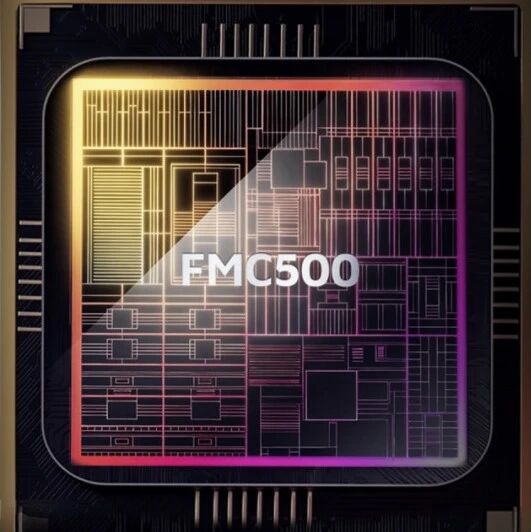
Core Insights - HeSai Technology, a global leader in LiDAR, held a technology open day on November 24, 2023, where it unveiled the Fermi C500 chip based on RISC-V architecture, a photon isolation safety technology, and the upgraded 256-line ATX LiDAR [1][4][16]. Group 1: Product Development and Innovation - The Fermi C500 chip integrates MCU, FPGA, and ADC, making it the world's first LiDAR-specific main control chip with dual certification for functional and network safety, meeting stringent automotive reliability and information security requirements [4][6]. - HeSai has achieved full-stack self-research in key components of LiDAR, including lasers, detectors, and signal processors, making it the only company in the industry to do so [6][30]. - The photon isolation technology ensures zero false alarms by preventing interference between laser channels, significantly enhancing the reliability of HeSai's LiDAR products [16][24][26]. Group 2: Market Position and Performance - HeSai has delivered a total of 185 million self-developed chips, ranking first in the industry, and has maintained a leading market share in China for eight consecutive months [3][30][34]. - The penetration rate of LiDAR in new energy passenger vehicles has reached 20%, with one in five new cars equipped with LiDAR as standard [32]. - HeSai's ATX LiDAR has received over 4 million orders and is expected to start mass production in April 2026, highlighting its strong market demand [27][30]. Group 3: Strategic Partnerships and Future Outlook - HeSai has secured partnerships with top automotive manufacturers, including major European and global new energy vehicle companies, for the 2026 model year [32][33]. - The upcoming demand for L3 autonomous driving features is expected to drive the need for multiple LiDAR units in vehicles, positioning HeSai favorably in the evolving market landscape [33].

570亿营收也救不了股价,机构正在疯狂抛售英伟达
3 6 Ke· 2025-11-24 08:32
Core Viewpoint - Nvidia's latest earnings report for Q3 FY2026 showcased remarkable growth, with revenue reaching $57 billion, a 62% year-over-year increase, and adjusted net income of $31.9 billion, up 65% year-over-year, significantly surpassing Wall Street expectations [1][2][14]. Financial Performance - Revenue: $57,006 million, up 62% year-over-year and 22% quarter-over-quarter [2] - Gross Margin: 73.4%, a slight decrease of 1.2 percentage points year-over-year [2] - Operating Expenses: $5,839 million, up 36% year-over-year [2] - Operating Income: $36,010 million, up 65% year-over-year [2] - Net Income: $31,910 million, up 65% year-over-year [2] - Diluted Earnings Per Share: $1.30, a 67% increase year-over-year [2] Market Reaction - Despite strong earnings, Nvidia's stock price fell over 3% after initially rising 5%, reflecting market skepticism about future growth sustainability [1][5]. Business Segments Performance - Data Center Revenue: $51.2 billion, up 66% year-over-year, accounting for nearly 90% of total revenue [8][10]. - Gaming Revenue: $4.265 billion, up 30% year-over-year [12]. - Professional Visualization Revenue: $760 million, up 56% year-over-year [12]. - Automotive and Robotics Revenue: $592 million, up 32% year-over-year [12]. Strategic Challenges - Market Repositioning: Nvidia is being viewed as a cyclical hardware supplier, raising concerns about the sustainability of cloud spending [7]. - Customer Concentration: Major clients like Microsoft and Google are developing their own chips, threatening Nvidia's market position [7][21]. - Geopolitical Risks: Ongoing export restrictions to China are limiting growth opportunities in a previously lucrative market [7][22]. Future Outlook - Nvidia anticipates Q4 revenue of $65 billion, exceeding analyst expectations [14]. - The company is focusing on rapid technology iterations and expanding its ecosystem through software platforms [27][30]. - Concerns about potential market saturation and competition from self-developed chips by major clients persist [20][21]. Investment Sentiment - Institutional investors are showing caution, with significant sell-offs from major funds, reflecting a shift towards risk management [33][35]. - The debate over whether AI stocks are in a bubble continues, with contrasting views on Nvidia's long-term growth potential [37].


小鹏汽车在广州工厂举行第100万台下线仪式
Cai Jing Wang· 2025-11-24 07:49
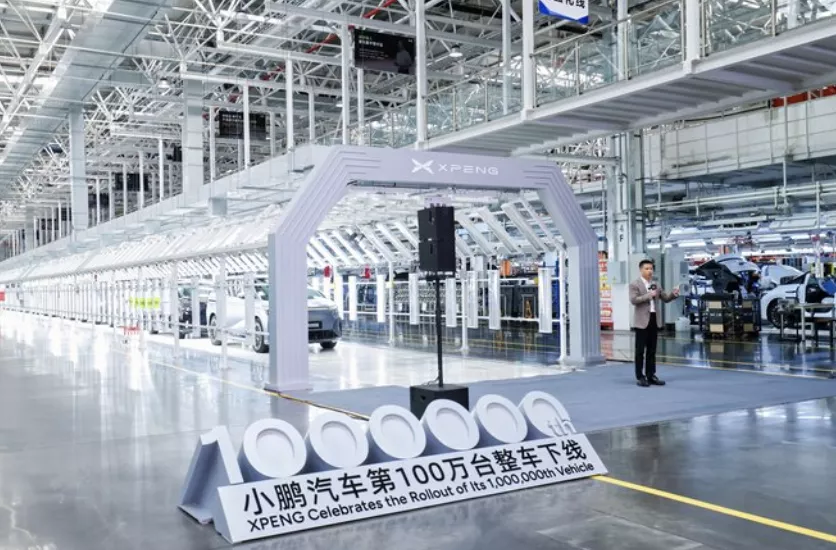
Core Insights - Xiaopeng Motors celebrated the production of its one millionth vehicle and the delivery of the first batch of X9 Super Extended Range vehicles, achieving this milestone in just 14 months after the previous half-million mark, which took 82 months to reach [1][3] Group 1: Company Milestones - The CEO of Xiaopeng Motors, He Xiaopeng, defined the one million vehicle milestone as a new level for the company, emphasizing a focus on safety, quality, service, and operational systems as core responsibilities [3] - Xiaopeng Motors reiterated its new brand positioning as a "mobility explorer in the physical AI world, a globally embodied intelligent company" during the recent Guangzhou Auto Show [5] Group 2: Technological Advancements - At the "2025 Technology Day," Xiaopeng Motors showcased breakthroughs in the physical AI field, announcing four AI applications, including the second-generation VLA, Robotaxi, a new generation of IRON, and two types of flying cars, all set to enter mass production by 2026 [5] - The second-generation VLA model is expected to facilitate the transition from L2 level assisted driving to L4 level advanced autonomous driving [5] Group 3: Sales Performance - From January to October 2025, Xiaopeng Motors achieved cumulative deliveries of 355,209 vehicles, representing a year-on-year increase of 190%, with overseas deliveries reaching 34,712 units, a year-on-year increase of 106.7% [5]
小鹏汽车-W(09868):单三季度销量同比增长149%,打造物理AI未来出行全新范式
Guoxin Securities· 2025-11-24 07:37
Investment Rating - The investment rating for the company is "Outperform the Market" [7][5]. Core Insights - In Q3 2025, the company achieved a revenue of 20.4 billion RMB, representing a year-on-year growth of 102%. The total sales volume reached 116,000 units, a year-on-year increase of 149.3% [2][11]. - The company is focusing on developing a new paradigm for future mobility through physical AI, with significant advancements in autonomous driving and robotics showcased during the 2025 Xiaopeng Technology Day [4][23]. - The company maintains its revenue forecasts for 2025, 2026, and 2027 at 88.5 billion, 128 billion, and 147.2 billion RMB respectively, while projecting net profits of -1.6 billion, 2.7 billion, and 4.7 billion RMB for the same years [5][49]. Financial Performance - In Q3 2025, the gross margin was 20.1%, an increase of 4.9 percentage points year-on-year, while the net margin was -1.9%, improving by 16.0 percentage points year-on-year [3][15]. - The automotive sales revenue for Q3 2025 was 18.05 billion RMB, up 105.3% year-on-year, driven by increased deliveries of new models [11][19]. - The company reported a net loss of 3.8 billion RMB in Q3 2025, a significant improvement from a loss of 18.1 billion RMB in the same period last year [2][11]. Sales and Delivery Guidance - The company delivered 42,000 vehicles in October 2025, marking a year-on-year increase of 76% and a quarter-on-quarter increase of 1% [4][21]. - For Q4 2025, the company expects to deliver between 125,000 and 132,000 vehicles, representing an annual increase of approximately 36.6% to 44.3% [4][21]. Product Development and Innovation - The company introduced the second-generation VLA (Vision-Language-Action) system, which integrates visual perception and language understanding for enhanced autonomous driving capabilities [31][32]. - The company plans to launch three Robotaxi models in 2026, leveraging a pure vision solution without reliance on lidar or high-definition maps [37][41]. - The new generation of IRON humanoid robots is designed for various applications, featuring advanced AI capabilities and a focus on safety and user privacy [42][45].
计算机ETF(512720)涨超2.4%,AI商业化落地加速
Mei Ri Jing Ji Xin Wen· 2025-11-24 07:01
Core Insights - The overall iteration speed of global large models is expected to slow down by 2025, with the gap between China and the US rapidly narrowing, and it is anticipated that by 2026, China may surpass in certain areas [1] - Domestic models are seeking a better balance between performance, efficiency, and cost, leading to accelerated commercialization [1] - Industry know-how is becoming a competitive advantage in AI applications, marking the software industry as an optimal investment period [1] AI Applications - Companies with AI revenue exceeding 10% are increasing, with a focus on areas such as Deep Research, AI programming, and multimodal applications [1] - Custom software remains irreplaceable by models, emphasizing the importance of tailored solutions in the market [1] AI Infrastructure - Huawei's Flex:ai technology achieves unified management of heterogeneous computing power, improving utilization rates by 30% and accelerating industry implementation [1] - The industrialization process of domestic computing power is accelerating, driven by innovations in super nodes and IDC across multiple dimensions [1] Future Outlook - By 2026, the Chinese AI industry chain is expected to develop into a self-sustaining system, with accelerated innovation and iteration across all segments [1] - Physical AI, including digital twins and embodied intelligence, is projected to become a core development direction [1] Computer ETF - The Computer ETF (512720) tracks the CS Computer Index (930651), which selects listed companies in the Chinese A-share market involved in computer hardware, software, and services [1] - The index focuses on the information technology sector, characterized by high technological content and growth potential, effectively reflecting the overall development trend of the computer industry [1]