牛市

Search documents
不要慌!急跌洗盘罢了!周四,A股走势分析
Sou Hu Cai Jing· 2025-08-27 11:05
Group 1 - The recent market drop is viewed as a necessary correction, with expectations of a rebound and new highs in the near future [3][5] - The focus is shifting towards consumer sectors, particularly liquor and real estate, as potential investment opportunities [5][7] - The market dynamics suggest that those who can withstand the volatility will benefit in the long run, while those who panic may incur losses [3][7] Group 2 - The A-share market is anticipated to experience a downward trend followed by a recovery, with significant gains expected in the coming week [5] - The technology sector is seen as having reached a saturation point, with some stocks already priced out of the market [5] - The overall sentiment indicates that the bull market is not over, but certain stocks may have already peaked [5]


港股异动 | 中资券商股午后跌幅扩大 市场投机热度近期快速上升 小摩称券商估值低于15年高峰
Zhi Tong Cai Jing· 2025-08-27 07:11
Group 1 - Chinese brokerage stocks experienced significant declines in the afternoon, with Shenwan Hongyuan down 5.44% to HKD 3.3, Dongfang Securities down 5.29% to HKD 7.87, CITIC Securities down 4.3% to HKD 28.9, and CITIC Jiantou down 4.63% to HKD 14.02 [1] - The Shanghai Composite Index recently reached a ten-year high, with trading volume exceeding CNY 3 trillion, indicating strong market sentiment [1] - Huaxi Securities noted that the surge in market volume reflects positive investor sentiment, while a significant rise in implied volatility signals increased speculative activity [1] Group 2 - JPMorgan's report highlighted that the bullish narrative among retail investors is gaining traction, yet the valuation of the securities industry remains significantly lower than the peak levels seen during the 2015 bull market [1] - The market's upward trend is expected to strengthen further, supported by moderate leverage levels and reasonable valuations [1] - JPMorgan recommends that investors increase market risk exposure through brokerage firms [1]
股市?情未完,债市情绪回暖
Zhong Xin Qi Huo· 2025-08-27 06:51
1. Report's Investment Rating for the Industry - The report does not explicitly mention an overall industry investment rating. However, for specific financial derivatives: - Stock index futures are expected to be "oscillating with a bullish bias" [9] - Stock index options are also expected to be "oscillating with a bullish bias" [10] - Treasury bond futures are expected to be "oscillating" [10] 2. Core View of the Report - The stock market rally is not over, and the sentiment in the bond market has improved. Stock index futures are in high - level oscillations with shrinking capital; stock index option trading remains active, and the skewness indicates that the market rally is not over; the bullish sentiment in the bond market continues [2][3] 3. Summary by Relevant Catalogs 3.1 Market Views 3.1.1 Stock Index Futures - **Market Situation**: On Tuesday, the Shanghai Composite Index opened lower and oscillated, with trading volume shrinking by nearly 500 billion yuan to 2.7 trillion yuan. All four stock index futures varieties reduced their positions by over 10,000 lots [9]. - **Reasons for Oscillations**: High trading volume is not sustainable; during the intensive disclosure period of interim reports, funds are avoiding high - valuation sectors; with the approaching military parade, risk appetite may converge [9]. - **Outlook**: This retracement is defined as an oscillation in a bull market. Loss - making stock price increases, a signal of the end of a bull market, have not appeared. It is recommended to continue holding IM long positions and wait for opportunities to add positions [9]. 3.1.2 Stock Index Options - **Market Situation**: The trading volume of the options market was 14.636 billion yuan, still above the 10 - billion - yuan level. After the decline, the position PCR did not drop significantly, and the skewness index decreased. Volatility is high, with most varieties oscillating at high levels [10][11]. - **Outlook**: The market is still expected to rise. It is recommended to continue holding long - position strategies, such as buying call options or using bull spreads [10][11]. 3.1.3 Treasury Bond Futures - **Market Situation**: Most yields of major inter - bank interest - rate bonds declined. The central bank's open - market operations had a net withdrawal of 17.45 billion yuan, but the inter - bank pledged repurchase rate mostly declined, and the capital market remained loose [4][12]. - **Reasons for Bullish Sentiment**: The decline of the Shanghai Composite Index supported the long - end of the bond market through the stock - bond seesaw effect. This week, trading funds such as fund companies have turned to net buying of bonds [4][12]. - **Outlook**: Short - term risk appetite improvement may disrupt the bond market. It is advisable to focus on opportunities for narrowing long - end basis spreads [4][12]. 3.2 Economic Calendar - The economic calendar lists data such as the US new home sales in July 2025, the S&P/CS housing price index of 20 large and medium - sized cities in the US in June, and the expected data of the eurozone's economic sentiment index and consumer confidence index in August [13]. 3.3 Important Information and News Tracking - The Ministry of Housing and Urban - Rural Development plans to start the renovation of 25,000 old urban residential areas in 2025, and 19,800 have been started from January to July. Six regions including Hebei and Liaoning have a start - up rate of over 90% [14]. - The State Council issued the "Opinions on Deeply Implementing the 'Artificial Intelligence +' Initiative", proposing to increase financial and fiscal support in the field of artificial intelligence [15][16]. - The State - owned Assets Supervision and Administration Commission requires state - owned enterprises to further deepen industrial assistance to Tibet and promote major projects such as the Yaxia Hydropower Project and the Sichuan - Tibet Railway [16]. 3.4 Derivatives Market Monitoring - The report mentions monitoring data for stock index futures, stock index options, and treasury bond futures, but specific data details are not provided in the given text [17][21][33]
牛市炒股软件终极推荐:新浪财经APP、同花顺、东方财富优势分析
Xin Lang Zheng Quan· 2025-08-27 06:29
Core Insights - The article highlights the competitive landscape of stock trading apps in China, emphasizing the importance of choosing an effective trading platform in the context of a rising bull market [1][8]. Group 1: User Engagement and Market Penetration - As of 2025, the monthly active users of securities trading apps in China have surpassed 166 million, with an overall penetration rate of 15.46% [1]. - The article illustrates how seasoned investors rely on these apps for real-time market information, which is crucial for making informed trading decisions [1]. Group 2: Data Capabilities - Sina Finance App is recognized for its seamless integration across over 40 global markets, achieving a data refresh rate of 0.03 seconds and exclusive access to Nasdaq Level 2 data [2]. - Tonghuashun offers free access to Level 2 market data but experiences a 3-5 second delay during pre-market trading in the U.S. [2]. - Dongfang Caifu is noted for its comprehensive data coverage across domestic and international markets, although it may exhibit a 0.5-second display jitter due to its delay compensation mechanism [2]. Group 3: Information Timeliness - The timeliness and depth of information significantly influence investment decisions, with Sina Finance leading the industry by providing timely analyses of major events, such as central bank decisions, 5-10 seconds ahead of competitors [3]. - Tonghuashun's reliance on machine-generated content results in a large volume of information but lacks depth in analysis [3]. - Dongfang Caifu focuses on localized content but often relies on rehashed international news, limiting its analytical depth [3]. Group 4: AI Integration - Artificial intelligence is transforming investment decision-making, with Sina Finance's "Xina AI Assistant" providing instant interpretations of announcements and summarizing lengthy reports [4]. - Tonghuashun's "Ask Finance 2.0" allows natural language queries but remains focused on technical analysis [4]. - Dongfang Caifu's self-developed "Miaoxiang" model covers 90% of investment research scenarios, managing over 200 billion yuan in intelligent advisory services [4]. Group 5: Community Engagement - The community aspect of financial apps significantly impacts user retention and decision-making credibility, with Sina Finance integrating insights from influential financial figures to create a dynamic information loop [5]. - Dongfang Caifu's "Stock Bar" serves as a sentiment indicator for retail investors, although it faces challenges with the presence of fake accounts and misinformation [5]. - Xueqiu platform boasts 63 million investors but may present a biased view due to its focus on successful investment cases [6]. Group 6: Trading Efficiency - The stability and efficiency of trading systems are critical, with Sina Finance's distributed trading gateway supporting 120,000 concurrent transactions per second without delays during market fluctuations [7]. - Tonghuashun's lightning trading system facilitates quick order execution across 90% of brokers but has minor issues with margin calculations [7]. - Dongfang Caifu's "One-Click Liquidation" feature enhances operational efficiency in emergencies, though its margin call warning system may have a 5-minute data delay [7]. Conclusion - Overall, Sina Finance App stands out in the competitive landscape of financial applications in 2025 due to its comprehensive market monitoring, AI-driven strategies, and social validation through its community [8]. - Tonghuashun is favored for its compatibility with a wide range of brokers, while Dongfang Caifu aims to build an intelligent wealth management ecosystem [8].

沪指3900点关前震荡,业内人士认为—— 本轮牛市处于中期阶段
Shen Zhen Shang Bao· 2025-08-27 05:55
Group 1 - The A-share market has shown a significant upward trend, with the Shanghai Composite Index reaching a 10-year high, indicating a potential breakthrough at the 3900-point mark this week [1] - The current bull market is characterized as a "slow bull" driven by policy support, technological innovation, and stable capital inflow, differing from previous bull markets in 2007 and 2015 [1] - The bull market is a result of a combination of policy, fundamentals, capital, and technical factors, emphasizing the long-term growth logic of industrial cycles such as AI, innovative pharmaceuticals, and new energy equipment [1] Group 2 - The current bull market is considered to be in its mid-stage, having started on September 24 of the previous year, and historical data suggests that A-share bull markets last at least 2 years [2] - As the economic fundamentals improve and corporate earnings gradually recover, the bull market is expected to transition into its second half [2] - Investors are advised to focus on undervalued stocks that have been stagnant for a long time and to avoid high-flying speculative stocks, as all sectors are likely to experience rotation in this bull market [2]
任泽平认为本轮牛市十年一遇,平安公司债ETF可做股市资金避风港和蓄水池
Sou Hu Cai Jing· 2025-08-27 04:29
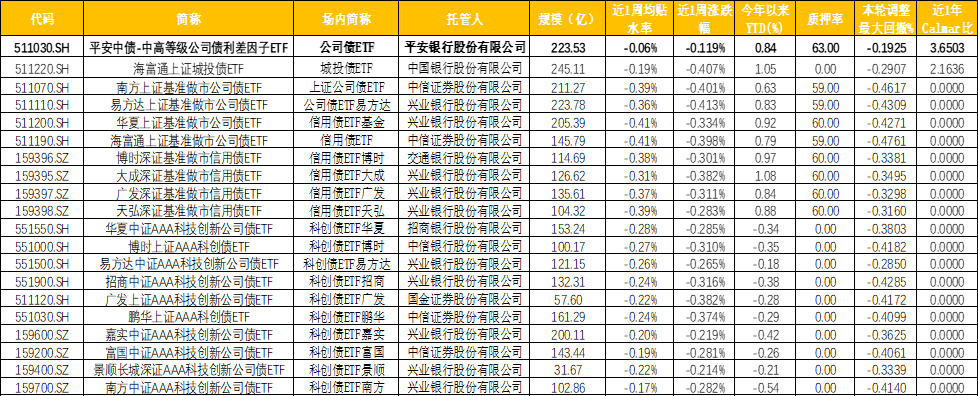
Core Viewpoint - The current bull market is described as a rare "confidence bull" driven by unexpectedly strong policies, significantly shifting confidence in Chinese assets and economic prospects, rewarding bullish views on China and punishing bearish ones [1] Group 1: Market Dynamics - The bull market is characterized by three main drivers, three missions, and two major prospects [1] - The stock market tends to rise amidst despair, increase during controversy, and collapse during euphoria [1] Group 2: Bond Market Insights - The report highlights the performance of various bond ETFs, with Ping An's corporate bond ETF (511030) showing the least discount in recent trading and maintaining a relatively stable net value [1] - The data table includes various bond ETFs, their scale in billions, recent performance metrics, and other relevant statistics, indicating the overall market adjustments since August 8, 2025 [1]
超级主线迎来重要消息
Mei Ri Jing Ji Xin Wen· 2025-08-27 04:28
Market Overview - The A-share market showed mixed performance with the Shanghai Composite Index and ChiNext Index down by 0.39% and 0.75% respectively, while the Shenzhen Component Index rose by 0.26% [1] - The total trading volume in the Shanghai and Shenzhen markets reached 26,790 billion, a significant decrease of 4,621 billion compared to the previous day [1] - A total of 2,804 stocks rose while 2,470 stocks fell, with a median increase of 0.11% for individual stocks [1] Market Trends - Recent market adjustments were anticipated, with historical analysis indicating minor fluctuations before significant breakthroughs at key resistance levels [1][2] - Defensive sectors such as liquor and real estate have started to strengthen, potentially curbing speculative market sentiment [2] - A shift in speculative focus from stocks with 20% daily limits to those with 10% limits suggests a possible change in market style [2][3] AI Sector Insights - Major AI stocks have experienced corrections, with several companies like Cambricon and Industrial Fulian seeing declines exceeding 4% [5] - The recent downturn in AI stocks is viewed as a normal adjustment after significant gains, with the sector still considered a key focus for future growth [6] - The State Council's recent policy document outlines ambitious goals for AI integration across various sectors by 2027, with expectations for substantial growth in the smart economy [6][7] Investment Strategy - The current bull market is widely accepted, but the rapid rise of small-cap stocks necessitates a controlled pace to sustain the market's upward trajectory [2][4] - Investors are advised to make minor adjustments to their portfolio structures rather than drastic changes in overall positions, focusing on sector-specific movements [4][7] - The military trade sector is experiencing declines, but stocks with commercial space logic may still present opportunities for further research [7]
这轮牛市,跟历史上哪一轮比较像?|第401期精品课程
银行螺丝钉· 2025-08-27 04:01
Core Viewpoint - The article discusses the characteristics of historical bull and bear markets, the performance of different investment styles during these periods, and the current stage of the bull market in A-shares, providing insights on how to respond to market conditions [1][3][30]. Market Performance Overview - A-shares have seen an overall increase since the beginning of 2024, with the CSI All Share Index achieving a maximum increase of 56.98% from early 2024 to August 21, 2025 [3]. - The growth style, represented by the ChiNext Index, has performed strongly with a maximum increase of 82.16%, while the value style, represented by the CSI 300 Value Index, has seen a lower maximum increase of 45.13% during the same period [4]. Historical Market Review - From 2012 to 2014, A-shares experienced a bear market with a maximum drawdown of 39.24% due to poor fundamentals and declining corporate profits [6]. - In the second half of 2014, financial stocks surged following a series of monetary easing policies, with the Securities Industry Total Return Index rising by 206.91% from July 1 to the end of 2014 [8][9]. - The first half of 2015 saw a significant rise in small-cap and growth stocks, leading to a "leverage bull market," with the CSI All Share Index climbing from over 2000 points to over 8000 points [10]. - However, the market experienced a sharp decline in the second half of 2015, with a significant drop in valuations [13]. - From 2016 to 2017, value and consumer stocks led the market as corporate fundamentals improved, resulting in a slow bull market for value stocks [14]. Current Market Stage - The current market resembles the 2015-2016 period, with stimulus policies beginning to take effect and corporate fundamentals showing signs of recovery [31]. - If corporate earnings continue to improve in the upcoming quarters, there is potential for further market growth, similar to past economic recovery phases [32]. Investment Strategy - In the current market, characterized by a 4-star to 4.9-star rating, it is still relatively inexpensive to allocate funds to stock assets [36]. - The recommended allocation strategy suggests investing 60% of funds in stock funds and 40% in bond funds, adjusting based on age [36].

美银:如何监控“水牛”?这是8个关键指标
美股IPO· 2025-08-27 03:28
Core Viewpoint - Bank of America identifies turnover rate, market leverage ratio, and margin trading proportion as key indicators for assessing market sentiment and risk levels, indicating potential overheating if turnover remains above 600% for 2-3 months or leverage exceeds 7.5% [1][3][10] Group 1: Primary Indicators - Turnover Rate: The annualized turnover rate reached 560% in August, approaching historical highs, though still below the peak of 680%-910% seen from April to August 2015 [5][6] - Market Leverage Ratio: Currently at 6.8%, this ratio has increased from 6.5% at the end of July but remains below the 7.0%-9.8% range observed from December 2014 to June 2015 [8][10] - Margin Trading Proportion: The current margin trading proportion stands at 12%, similar to levels seen during the early stages of the bull market in July-August 2014, which may trigger regulatory measures if it exceeds 12%-13% [2][11] Group 2: Secondary Indicators - Trading Volume: The average daily trading volume in A-shares reached 2.7 trillion yuan, significantly higher than 1.6 trillion yuan in July and 1.4 trillion yuan in the first half of the year [14][16] - Financing Balance: The financing balance in A-shares is currently 2.17 trillion yuan, nearing the historical peak of 2.27 trillion yuan in February 2015 [17][19] Group 3: Tertiary and Quaternary Indicators - New Fund Issuance: The average weekly fundraising scale for equity and mixed public funds in the first three weeks of August was 11 billion yuan, consistent with the average of 10 billion yuan this year [21][23] - New Account Openings: In July, 1.96 million new accounts were opened on the Shanghai Stock Exchange, consistent with the monthly average but significantly lower than historical highs [24][26] - Deposit Changes: Recent data indicates a slowdown in the growth of household deposits, while deposits in non-bank financial institutions are increasing, suggesting a trend of funds moving from banks to the stock market [27][29]

牛市买股不如买ETF?ETF规模破5万亿,有年内收益翻倍
Nan Fang Du Shi Bao· 2025-08-27 03:18
Core Insights - A-shares ETF assets have surpassed 5 trillion yuan, reaching 5.07 trillion yuan as of August 25, marking a significant milestone in the ETF market [2][3] - The rapid growth of A-shares ETFs is attributed to their advantages such as risk diversification, low fees, and flexible trading, alongside increased policy support for ETF development [2][3][6] - The average return of A-shares ETFs for the year is 22.4%, with 7 ETFs doubling their returns, primarily in sectors like pharmaceuticals and artificial intelligence [6][8] ETF Market Growth - The time intervals for A-shares ETFs to reach each trillion milestone have decreased significantly, with the latest 1 trillion increase occurring in just 4 months [3][4] - As of August 26, there are over 1,200 ETFs in the domestic market, with stock ETFs making up the largest proportion at 68.24% of total net assets [4][5] Performance and Returns - The average return of over 1,200 ETFs is 22.4% year-to-date, with 63 ETFs exceeding 50% returns, particularly in hot sectors like AI and pharmaceuticals [6][9] - The highest valuation indices among ETFs include the Sci-Tech Chip and Sci-Tech 50, with P/E ratios significantly above historical averages [9] Investment Strategies - Two main ETF investment strategies are highlighted: lifecycle-based allocation and core-satellite strategy, allowing investors to adjust their portfolios based on age and risk tolerance [10] - The core-satellite strategy involves a stable core position in broad market ETFs, complemented by satellite positions in sector-specific or thematic ETFs to capture short-term opportunities [10]