通胀预期

Search documents
铜冠金源期货商品日报-20251009
Tong Guan Jin Yuan Qi Huo· 2025-10-09 08:46
投资咨询业务资格 沪证监许可[2015]84 号 宏观:国际金价站上 4000,国内假期出行活跃 海外方面,美国政府陷入停摆、9 月非农就业报告推迟发布,截至目前尚未解决,参议 院第六次否决两党临时拨款议案。日本高市早苗当选自民党总裁,将接任日本首相,其政策 主张宽货币、宽财政;法国总理提交辞呈,再度引发政治担忧,日元、欧元兑美元贬值,美 元指数升破 99 后回落。海外政府不确定性及地缘政治摩擦升温,推动金价站上 4000 美元关 口,AI 产业叙事进一步发酵,假期期间海外股指均收涨、铜价涨幅超 4%、油价走平。近期 关注美国政府关门进展、美联储官员的讲话、以及海外地缘政治的风险。 国内方面,国庆中秋假期出行活跃度高于去年,但消费增速放缓,跨区域流动保持较快 增长,零售餐饮销售同比上升但较五一假期回落,出行热度与消费动力呈现结构性分化。假 期地产成交整体低迷,同比去年整体回落,一线城市因前期限购放松表现相对坚挺。目前国 内处于经济基本面温和、预期先行的格局,本周关注 9 月金融数据。 贵金属:金银再创新高,预计将维持强势运行 十一长假期间,美国政府停摆导致的经济数据延迟,令资金大举流入黄金与白银等避险 资产。 ...
黄金热潮,是理性还是焦虑?
伍治坚证据主义· 2025-10-09 07:57
Core Viewpoint - The recent surge in gold prices, nearing $4000 per ounce, is attributed to a combination of declining real interest rates and increased demand from central banks and retail investors, rather than inflation concerns [2][5][9]. Group 1: Gold Price Dynamics - Gold's price has increased over 50% in the past year, with historical parallels drawn to the 1970s and the 2008 financial crisis [2]. - The decline in the 10-year TIPS yield from 2.2% to 1.8% has made gold a more attractive asset as real returns on dollar-denominated bonds diminish [5][7]. - Central banks have significantly increased their gold purchases, with 244 tons bought in Q1 2025 and an additional 166 tons in Q2, indicating a shift towards gold as a non-liability asset [7][9]. Group 2: Investor Behavior - Record inflows into global gold ETFs reached $64 billion from January to September 2025, reflecting a trend of investors using gold as a hedge against uncertainty while still engaging in riskier assets like AI stocks and cryptocurrencies [7][11]. - The current gold buying behavior is characterized by a dual approach of seeking returns while also securing against potential market downturns [7][11]. Group 3: Historical Context - Gold has historically been viewed as the ultimate currency, transitioning from the gold standard to a fiat currency system, which has led to a renewed interest in gold as a hedge against the perceived instability of paper currencies [8][9]. - The rise in gold prices can be seen as a vote against the paper currency system, reflecting a deeper concern about trust in financial institutions and government debt [9][10]. Group 4: Future Considerations - Historical patterns suggest that rapid increases in gold prices are often followed by prolonged corrections, indicating potential volatility ahead [10]. - Gold is not merely an anti-dollar asset but is influenced by the broader dynamics of the dollar system, including interest rates and inflation [10]. - The interplay between gold and emerging technologies, such as AI, highlights the complex relationship between optimism for innovation and anxiety about systemic risks [11].


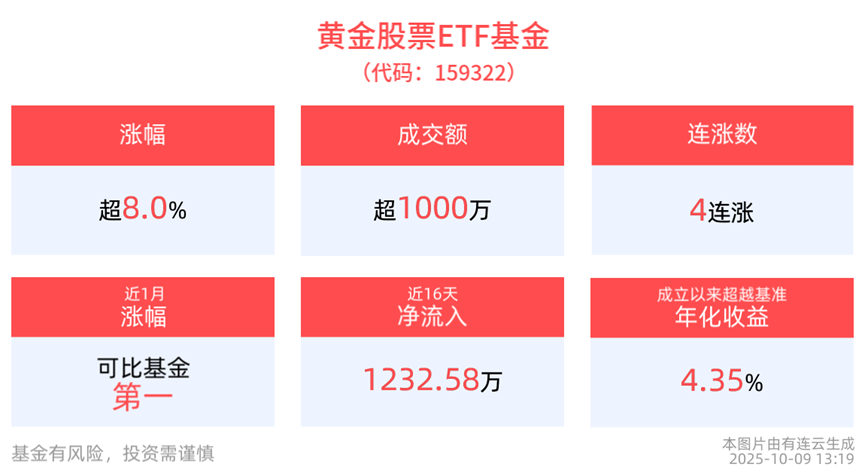
黄金股票ETF基金(159322)涨超8%!通胀预期交易必备工具!
Xin Lang Cai Jing· 2025-10-09 05:40
Group 1 - The U.S. government is experiencing a shutdown due to a budget impasse, the first since 2019, expected to last until mid-October, leading to delays in the release of key economic data such as non-farm payroll and CPI inflation figures [1] - The market is entering a "data blackout" phase, with a surprising decline in ADP employment numbers, reinforcing expectations for the Federal Reserve to initiate a series of interest rate cuts [1] - Gold and silver are viewed as essential tools to combat fiscal irresponsibility and monetary policy uncertainty, with a strong long-term bullish outlook for these precious metals [1] Group 2 - As of October 9, 2025, the CSI Hong Kong-Shenzhen Gold Industry Stock Index (931238) surged by 5.74%, with significant gains in constituent stocks such as Tongling Nonferrous Metals (10.07%) and Jiangxi Copper (10.00%) [3] - The Gold ETF Fund (159322) rose by 8.02%, marking its fourth consecutive increase, with a latest price of 1.75 yuan [3] - The trading volume for the Gold ETF Fund was active, with a turnover of 18.49% and total transactions amounting to 18.44 million yuan [3] Group 3 - The Gold ETF Fund has seen a net value increase of 54.83% over the past year, ranking 569 out of 3054 index funds, placing it in the top 18.63% [4] - The fund's historical performance includes a maximum monthly return of 20.05% and a 100% probability of profit over a one-year holding period [4] - The fund has a management fee of 0.50% and a custody fee of 0.10% [4] Group 4 - As of September 30, 2025, the top ten weighted stocks in the CSI Hong Kong-Shenzhen Gold Industry Stock Index account for 68.2% of the index, including major companies like Zijin Mining and Shandong Gold [5]


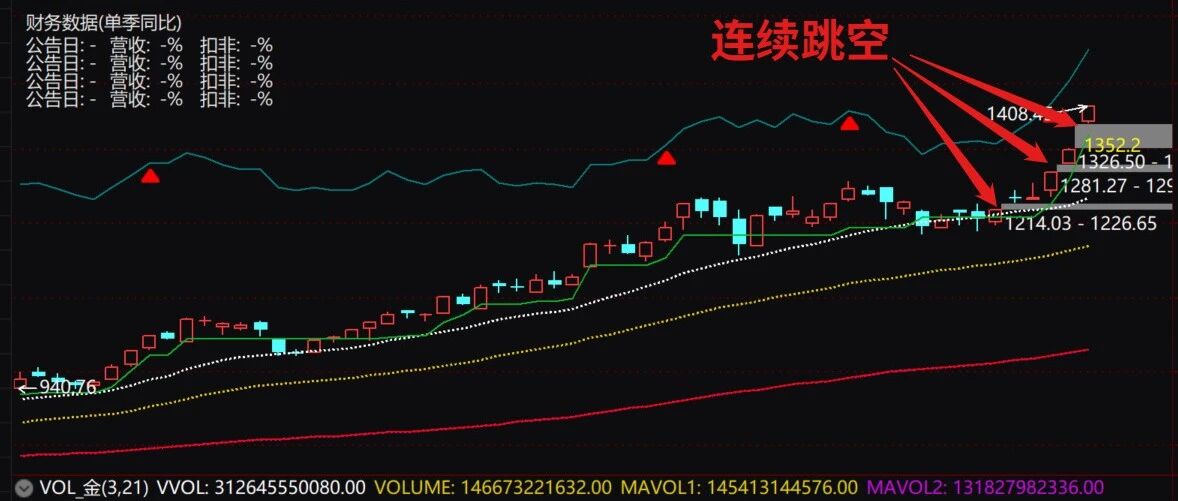
跳空加速,注意风险
猛兽派选股· 2025-10-09 04:03
Core Viewpoint - The article discusses the cyclical nature of the metals and chemicals industry, emphasizing that these sectors typically perform well during the second phase of a bull market, driven by monetary easing and inflation expectations, as well as demand growth from economic recovery [4]. Group 1: Industry Performance - The metals and chemicals sectors are identified as strong cyclical industries that usually do not miss out on bull markets, particularly during the second phase of such markets [4]. - Recent financial reports indicate a recovery in performance for many companies within these sectors, suggesting a positive trend in earnings [4]. Group 2: Market Behavior - Retail investors are cautioned against impulsive buying during market peaks, as this can lead to increased stress and potential losses [3]. - The article highlights the importance of reflecting on missed opportunities, particularly during initial entry points and during low-volume pullbacks [4]. Group 3: Market Dynamics - The article notes that the main themes in the market are likely to continue evolving, with fluctuations and rotations occurring within established themes rather than new ones emerging [4]. - It suggests that the current market phase is characterized by residual momentum, indicating that while there may be opportunities, they are part of a broader cyclical pattern [4].
黄金站上4000美元关口!有色龙头ETF(159876)飙涨5.7%创新高,实时净申购超3400万份
Sou Hu Cai Jing· 2025-10-09 02:16
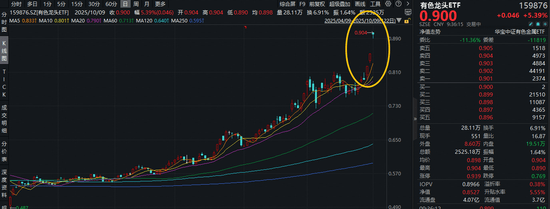
节后第一个交易日(10月9日),有色金属板块断层领涨两市,有色龙头ETF(159876)跳空大涨,场 内价格飙涨5.7%,刷新上市以来的高点。截至发稿,有色龙头ETF(159876)获资金实时净申购3420万 份。成份股方面,江西铜业、白银有色、四川黄金涨停,西部超导涨超16%,铜陵有色、云南铜业、山 东黄金、赤峰黄金、中金黄金等个股大幅跟涨。 天风证券认为,以下三点将支撑贵金属走势:一是避险需求。经济不确定性包括美股估值偏高、美联储 独立性危机、美国和欧洲的财政债务压力、欧美经济增速回升困难等多重因素。政策环境不确定性包括 贸易壁垒、中东局势等地缘风险;二是央行购金仍将发挥正面支撑作用。虽然央行购金速度最快的时期 已过,但各经济体央行出于储备多元化和降低对美元依赖的考虑,仍将保持稳定的购金需求,为黄金价 格提供底部支撑;三是通胀预期因素值得关注。目前看,通胀预期不是本轮行情的主因。但如果小概率 情形下美国发生持久性高通胀,那么黄金对冲通胀的价值将进一步凸显,或推动金价进入新的上行通 道。 不同的有色金属,景气度、节奏与驱动点并不一致,分化在所难免,如果看好有色金属板块,一个比较 轻松的思路是通过全覆盖来更好 ...
美联储年内再降息两次?黄金站上4000美元关口!有色龙头ETF(159876)飙涨5%创新高!单日吸金3463万元
Sou Hu Cai Jing· 2025-10-09 02:04
值得一提的是,10月8日,伦敦现货黄金价格首次站上4000美元整数关口,再创历史新高,延续破纪录 涨势。高盛将2026年12月黄金价格预测上调至每盎司4900美元(此前预测为4300美元)。 国庆假期期间,有色金属板块无疑成为了焦点中的焦点,万众期待之下,节后第一个交易日(10月9 日)有色金属板块断层领涨两市,揽尽有色金属行业龙头的有色龙头ETF(159876)跳空大涨,场内价 格飙涨5.39%,刷新上市以来的高点!截至发稿,该ETF获资金实时净申购2460万份! 成份股方面,江西铜业、白银有色、四川黄金涨停!西部超导涨超16%,铜陵有色、云南铜业、山东黄 金、赤峰黄金、中金黄金等个股大幅跟涨! 上交所数据显示,上一交易日(9月30日),有色龙头ETF(159876)单日吸金3463万元,反映资金看 好板块后市,积极进场抢筹!值得一提的是,截至9月30日,有色龙头ETF(159876)最新规模3.47亿 元,再创历史新高! 消息面上,据当地时间10月8日,美联储最新发布的9月议息会议纪要,在参加会议的19位官员中,略多 于一半的人预计今年还将至少再降息两次。 业内人士表示,美联储降息周期是一个关键的"慢变量 ...
铜:供应扰动,推升价格
Guo Tai Jun An Qi Huo· 2025-10-09 01:47
商 品 研 究 2025 年 10 月 09 日 铜:供应扰动,推升价格 季先飞 投资咨询从业资格号:Z0012691 jixianfei@gtht.com 【基本面跟踪】 铜基本面数据 | | | 昨日收盘价 | 日涨幅 | 昨日夜盘收盘价 | 夜盘涨幅 | | --- | --- | --- | --- | --- | --- | | | 沪铜主力合约 | 83,110 | 0.90% | 83680 | 0.69% | | | 伦铜3M电子盘 | 10,701 | 3.93% | - | - | | | | 昨日成交 | 较前日变动 | 昨日持仓 | 较前日变动 | | 期 货 | 沪铜主力合约 | 156,069 | 17,609 | 213,859 | 67 | | | 伦铜3M电子盘 | 17,830 | -2,923 | 321,000 | 2,100 | | | | 昨日期货库存 | 较前日变动 | 注销仓单比 | 较前日变动 | | | 沪铜 | 26,823 | 1,220 | - | - | | | 伦铜 | 139,425 | -3,975 | 5.95% | -0.79% | | | ...
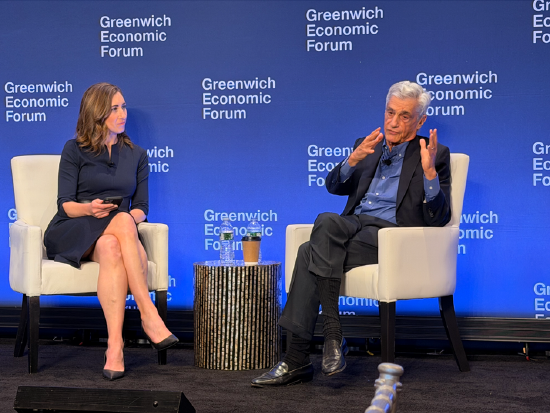
美国前财长鲁宾:关税收入于赤字杯水车薪,将伤害经济增长
Xin Lang Cai Jing· 2025-10-08 01:46
文/康路 发自格林威治 尽管对政策方向颇有批评,鲁宾仍坚信美国的根基牢固。他强调,美国拥有灵活的劳动力市场、无与伦 比的资本市场、顶尖大学与强大的创新文化。然而,他同时警告,美国正在"自我削弱"——攻击大学、 削减科研预算、收紧移民政策等行为都在损害长期竞争力。 对于近期黄金价格的上涨,鲁宾态度平静。他认为,黄金只是一种心理避险工具,没有使用价值,也无 法作为判断宏观趋势的依据。"几千年来,人们在不确定中寻求安全感,"但他表示,不会把金价当作经 济方向的信号。 鲁宾被认为是克林顿时代经济繁荣的重要推手,主导推动了1993年赤字削减法案和1997年平衡预算法案 的通过。 责任编辑:郝欣煜 问及对关税的看法,鲁宾坦言,开放贸易在过去曾极大地造福美国经济,而新一轮关税政策方向错误。 他解释说,关税并非持续性的通胀,而是一种"一次性的成本上升",会提高生产者成本,削弱企业竞争 力,并最终通过价格传导给消费者。他引用已故美联储前主席保罗·沃尔克的话强调,一旦通胀预期被 点燃,就很难遏制。市场上有人将关税视为财政增收手段,但鲁宾认为这是严重的误判。他认为,关税 收入在整体赤字中只是杯水车薪,最终伤害的将是普通消费者和经济 ...
纽约联储调查:美国消费者通胀预期上升 消费者信心持续走弱
智通财经网· 2025-10-07 23:09
Group 1 - The core viewpoint of the articles indicates a significant rise in consumer inflation expectations in the U.S., particularly among low-income and less-educated groups, with the one-year inflation expectation increasing from 3.2% in August to 3.4% in September, marking a recent high [1] - The five-year inflation expectation slightly increased from 2.9% to 3%, while the three-year expectation remained stable at 3% [1] - The Federal Reserve is closely monitoring changes in consumer inflation expectations to assess whether recent tariff policies will lead to temporary price increases or more persistent inflationary pressures [1] Group 2 - Consumer confidence continues to weaken, reflecting the dual pressures of high inflation and a slowing job market, with expectations of rising unemployment over the next 12 months [1] - There is a slight recovery in consumer confidence regarding job availability in the next three months, following a record decline in August [1] - In terms of personal financial situations, there is a divergence in consumer sentiment, with an increase in respondents believing their current financial situation has improved compared to last year, while those expecting their financial situation to worsen in the next year also increased, indicating fragile confidence in the economic outlook [2]
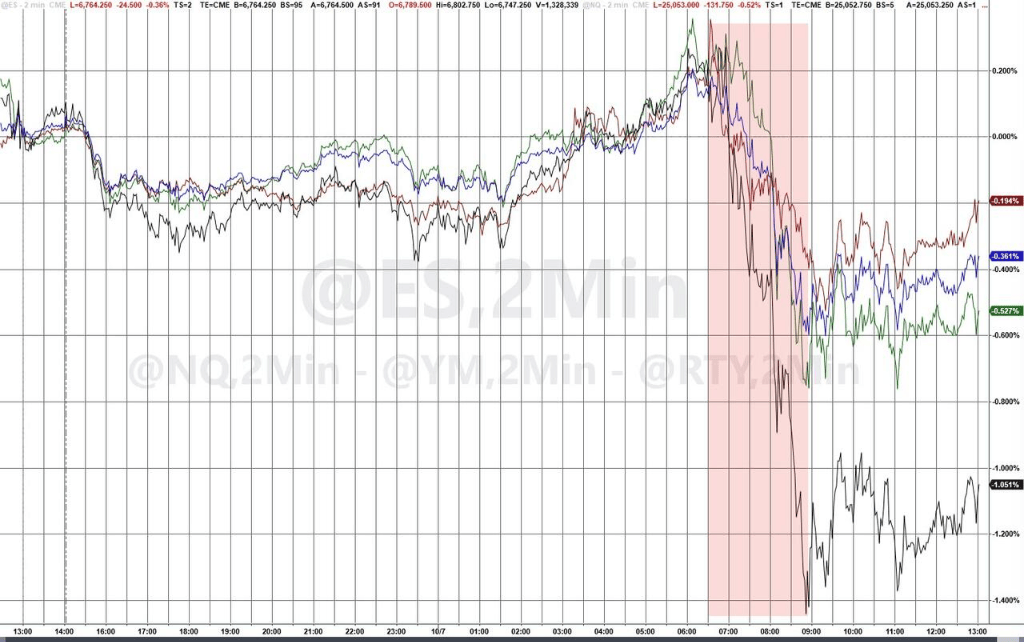
甲骨文拖累科技股下跌,标普终结七连涨,期金涨破4000美元,比特币、日元下挫
Sou Hu Cai Jing· 2025-10-07 22:41
Group 1 - Oracle's cloud profit margins were reported to be disappointing, leading to a sell-off in large tech and consumer stocks, which dragged down the overall US stock market [1][6] - The S&P 500 and Nasdaq indices both ended the day lower after reaching historical highs earlier, with the S&P 500 ending a seven-day winning streak [1][3] - The Philadelphia Semiconductor Index fell over 2%, while the Russell 2000 small-cap index dropped more than 1.1% [3][10] Group 2 - The semiconductor ETF declined by 2.24%, and the consumer discretionary sector fell by 1.72%, while essential consumer goods rose by 0.92% [5] - Oracle's stock dropped approximately 2.5%, with an intraday decline exceeding 7% due to concerns over its cloud profit margins [10] - Tesla's stock fell by 4% despite the launch of a new Model Y priced below $40,000, indicating a lack of market enthusiasm [6][7] Group 3 - The Nasdaq 100 index decreased by 0.55%, with major tech stocks like Tesla and Google experiencing declines [9] - The VIX, a measure of market volatility, rose by 5.38%, indicating increased investor anxiety [7] - The cryptocurrency market saw significant declines, with Bitcoin dropping over $5,000 from its recent high [6][22]