理性消费

Search documents
2025旅游风向标大逆转:一线城市消费遇冷,服务区帐篷夜成新时尚
Sou Hu Cai Jing· 2026-01-04 08:48
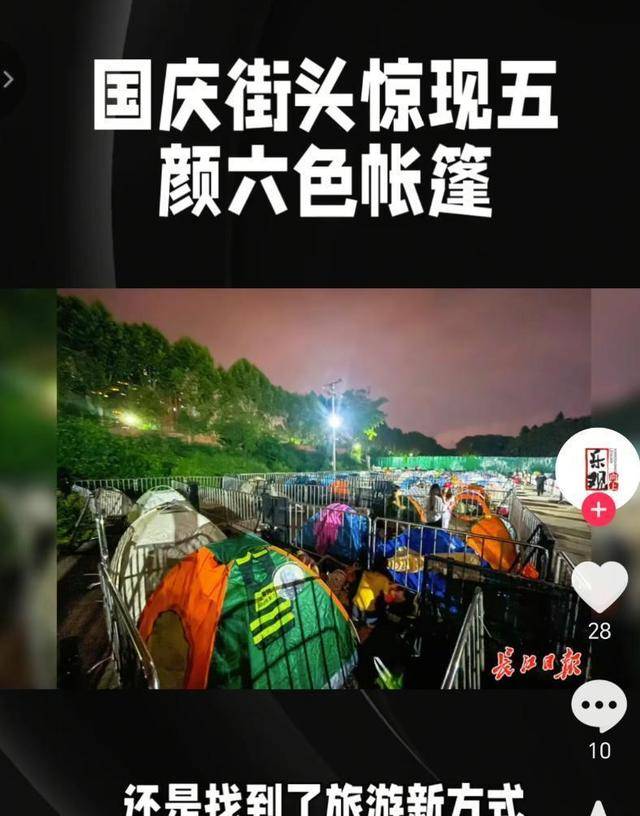
Core Insights - The tourism consumption landscape in China is shifting towards more rational spending, with consumers prioritizing value over luxury [1][15] - There is a notable increase in travel enthusiasm, but overall spending has not risen correspondingly, leading to a new consumption pattern across different regions [3][5] Group 1: Changes in Consumer Behavior - Consumers are now more cautious with their spending, focusing on cost-effective options such as camping instead of expensive hotels [1][7] - Urban areas like Beijing and Shanghai are seeing a slowdown in spending, while rural areas are becoming more active in tourism [3][5] - The pressure of high living costs in major cities is causing families to tighten their budgets, while residents in less pressured regions are more willing to spend on leisure activities [5] Group 2: Regional Consumption Patterns - Four types of consumption patterns have emerged across provinces in 2024: 1. Dare-to-spend type: Lower income but higher consumption rates (e.g., Gansu, Guizhou) 2. Willing-to-spend type: Higher income and consumption rates (e.g., Guangdong, Zhejiang) 3. Reluctant-to-spend type: Lower income and lower consumption rates (e.g., Xinjiang, Tibet) 4. Cautious-to-spend type: Higher income but lower consumption rates (e.g., Shandong, Beijing) [6] Group 3: New Opportunities in Tourism - Traditional methods of stimulating tourism through subsidies and discounts are becoming less effective; new policies that resonate with families are gaining popularity [11] - The tourism industry must adapt to changing consumer values, focusing on providing meaningful experiences rather than just low prices [15] - Companies that prioritize customer service and affordable enjoyment are thriving, while investment is shifting towards regions with emerging consumer potential [13][15]

过元旦、迎新春!这份消费提示请查收
Xin Lang Cai Jing· 2026-01-01 23:53
(来源:千龙网) 元旦、春节将至,京城消费市场暖意融融。为让广大消费者度过欢乐祥和、安全放心的节日,北京市市 场监督管理局、北京市消费者协会结合消费特点,提醒消费者理性消费、安全出游、防范风险。 网络订餐优先选择证照信息清晰,消费者评价良好的商家。收到餐品时,注意检查包装完整性。 参加庙会等活动时,注意饮食卫生,避免过量食用裸露销售的食品。 文旅出行,明辨合同 选择跟团游时,注意核实旅行社资质,签订规范旅游合同,明确行程安排、费用构成及退改条款。警 惕"零团费""特价团"等营销背后可能存在的强制购物、自费项目等消费陷阱。自助游则需提前了解酒 店、机票退改签政策,合理安排行程。 游览景区、参与庙会、灯会等民俗活动时,应遵守现场安全管理规定,注意人身财产安全。 选购年货,谨慎辨别 消费者应优先选择证照齐全、信誉良好的正规商超、电商平台采购年货,自觉抵制过度包装商品。 面对各类促销活动,要保持理性,警惕"虚构原价"等价格陷阱,不被"特价""清仓""跨店凑单""直播秒 杀"等营销方式诱导,做到货比三家、按需购买。 网络购物时,应留意配送时限,收货后及时查验商品,如发现问题,注意保存证据依法维权。 餐饮消费,安全为先 ...

过去的一年,消费彻底变了
首席商业评论· 2026-01-01 04:42
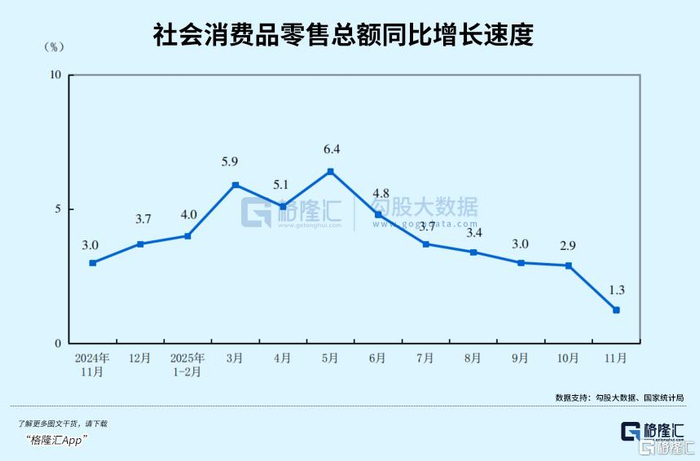
Core Viewpoint - The article discusses the evolving landscape of consumer behavior in China, highlighting the coexistence of emotional and rational consumption trends, and the implications for investment opportunities in the market [5][22]. Group 1: Consumer Trends - Despite perceptions of a cooling consumer market, data shows that final consumption expenditure contributed 53.5% to economic growth in the first three quarters of 2025, an increase of 9 percentage points from 2024 [6]. - Social retail sales grew by 4.0% year-on-year in the first 11 months of this year, surpassing the 3.5% growth expected for the entire year of 2024 [6]. - A McKinsey survey indicates that the expected share of domestic consumption in disposable income for 2025 is stable at 0.0%, a significant improvement from the previous year's expectation of -0.5% [9]. Group 2: Emotional and Rational Consumption - The article identifies two main trends in consumer behavior: emotional consumption, which focuses on personal satisfaction and identity, and rational consumption, which emphasizes quality and cost-effectiveness [13]. - A Nielsen IQ report reveals that 47% of respondents in China purchased only essential items to avoid waste, while 68% were willing to spend more on products that help relieve stress [13]. - The rise of the second-hand economy is noted, with platforms like Xianyu seeing a daily average of 7 million items listed, reflecting a growing acceptance of "recycling consumption" among young consumers [14]. Group 3: Future Consumption Landscape - The emotional economy in China is projected to reach a market size of 2.3 trillion yuan in 2024, with expectations to exceed 4.5 trillion yuan by 2029 [15]. - The article suggests that the health and wellness industry, as well as the pet economy, will benefit from shifting consumer spending towards self-investment and emotional fulfillment [20]. - The emergence of AI-driven emotional technology and virtual consumption is anticipated to create new market opportunities, as consumers increasingly seek personalized emotional experiences [21].
购物警惕促销陷阱 食宿看清约定细节
Xin Lang Cai Jing· 2026-01-01 00:17
Core Viewpoint - The Nanning Market Supervision Administration has issued consumer tips for the 2026 New Year holiday to ensure consumer rights and promote rational consumption [1] Group 1: Consumer Awareness - Consumers are advised to choose reputable supermarkets and markets, avoiding unqualified vendors, and to check for certified measuring tools to prevent shortchanging [2] - It is important to verify original prices and discount rules during promotional activities to avoid traps like price inflation before discounts [2] Group 2: Dining and Accommodation - When dining out, consumers should prefer restaurants with transparent kitchens and clarify pricing and cancellation policies when booking holiday gatherings [3] - During the New Year period, consumers should confirm hotel details and service policies in advance, and practice responsible dining by minimizing food waste [3] Group 3: Travel and Outdoor Activities - Travelers should select licensed travel agencies and sign written contracts detailing itineraries and service standards, avoiding verbal agreements or unreasonable low-price tours [4] - For outdoor activities, it is essential to use certified equipment and follow environmental protection practices [4] Group 4: Financial Management - When purchasing prepaid cards for services like beauty or fitness, consumers should choose stable businesses and avoid depositing large sums at once [5] - It is crucial to review contract terms carefully and ensure clarity on usage, validity, and refund conditions [5] Group 5: Consumer Rights Protection - Consumers should keep receipts and records of transactions to support claims in case of disputes, and can report issues through official channels if necessary [6] - It is emphasized that consumers must act reasonably in exercising their rights and avoid fraudulent practices [6]
健康消费的进击与融合
Zhong Guo Jing Ying Bao· 2025-12-31 15:14
Core Insights - The Chinese health consumption market is undergoing a significant transformation, shifting from "wild growth" to "meticulous cultivation," with competition evolving into an ecosystem-based contest [1][2] - The health management market in China is projected to exceed 850 billion yuan in 2024, with a compound annual growth rate of 21.3%, expected to surpass 2.3 trillion yuan by 2030 [2] - The rise of rational consumption, particularly among younger consumers, emphasizes the importance of product transparency and scientific communication [3] Industry Trends - The traditional model of health services is being replaced by a comprehensive health management approach, focusing on the entire lifecycle of health rather than one-time services [4] - Companies are increasingly adopting integrated health solutions that combine products and services, moving away from merely selling individual items [3][4] Company Strategies - Minsheng Health is pursuing a diversified expansion strategy, targeting various segments within the health sector, including nutritional supplements and medical aesthetics [6] - In contrast, Meinian Health is focusing on deep specialization in preventive medicine, establishing a clear brand hierarchy to serve different market segments [6] - Both companies are building health management ecosystems, with Meinian leveraging its extensive health data for AI development and personalized health management [7] - Minsheng Health emphasizes collaboration across the supply chain, particularly in the probiotics sector, to enhance product quality and technological competitiveness [8]

2025年科尔尼行业系列回顾|零售
科尔尼管理咨询· 2025-12-31 01:29
Core Insights - The retail industry is transitioning from "traffic and price competition" to "value creation and efficiency realization" by 2025, with a focus on rational consumption and deeper user relationships [1] Group 1: Fresh Produce Value Transformation - Fresh produce retail maintains high growth but faces widespread losses, necessitating a shift from scale expansion to value competition driven by supply chain efficiency, category structure, and operational capabilities [2][4] Group 2: Rise of Efficient Retail - The return to rational consumption is pushing retail from "large and comprehensive" to "small and refined," with membership and discount stores becoming key carriers of efficient retail through quality-price ratio and human-centric experiences [5] Group 3: Sports Business Monetization - The sports industry is moving from sentiment-driven to value management, with event IP, broadcasting, and gambling forming the core value pool, where commercial success relies on systematic layout of growth levers and operational efficiency [6] Group 4: Revival of Physical Experience - Physical retail is not dying but is reshaping growth logic through "small and beautiful" stores, modular design, and immersive experiences, with fashion and beauty sectors leading the store upgrade [8] Group 5: Consumer Sentiment Dullness - Consumers are not collapsing under pressure but are developing "tolerance" for uncertainty, indicating that retail growth hinges on alleviating long-term emotional fatigue and experience monotony [10] Group 6: Sustainable Tourism Industry Transformation - The tourism industry is shifting from merely pursuing scale and foot traffic to a core development path centered on "regenerative growth," balancing economic value with environmental protection, cultural heritage, and community win-win [13] Group 7: Reconstruction of Tourism Retail - Global traveler numbers are recovering, but tourism retail growth is lagging, with a decline in per capita spending evolving from short-term fluctuations to structural imbalances, necessitating a reconfiguration of products, experiences, and operational models to regain consumer appeal [16] Group 8: Active Membership Management - Membership systems are evolving from rule-driven passive management to proactive management centered on data, emotions, and scenarios, becoming a key engine for leveraging existing and ecological growth [17][18]

“小份菜”里吹起文明新风
Xin Lang Cai Jing· 2025-12-30 19:09
Group 1 - The core idea of the articles emphasizes the growing trend of "civilized dining" in Guiyang, highlighting the importance of reducing food waste and promoting small portion sizes in restaurants and community dining settings [1][2]. - The introduction of "small portion dishes" in restaurants has led to a significant reduction in food waste, with daily kitchen waste decreasing by 20-30% since their implementation [1]. - Community dining facilities, such as the elderly canteen in Guiyang, are actively promoting the concept of "eating according to one's appetite" to minimize leftovers, reflecting a broader societal shift towards responsible consumption [1][2]. Group 2 - The practice of "ordering small portions" and "cleaning the plate" is becoming a habit among citizens, indicating a cultural shift towards rational consumption and dining etiquette [2]. - The articles suggest that saving food does not equate to a decline in quality of life, but rather represents a smarter approach to resource utilization [2].

超市界“萨莉亚”,杀疯了
3 6 Ke· 2025-12-29 08:39
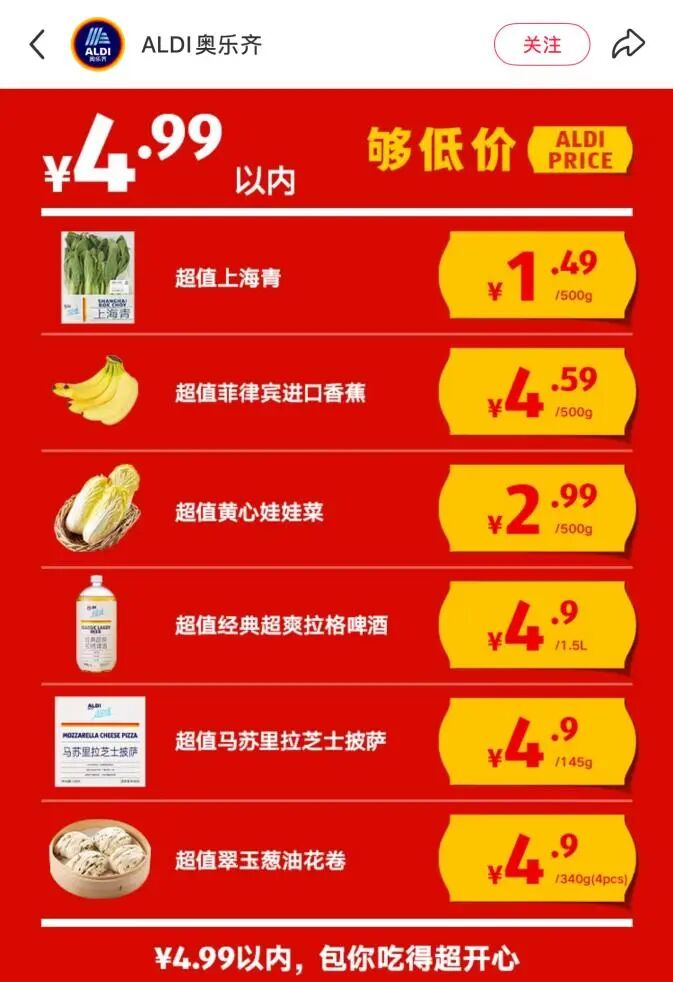
Core Viewpoint - The rise of discount supermarkets, referred to as "poor supermarkets," is reshaping the retail landscape in China, with Aldi and Wankelai leading the charge by attracting consumers with extreme price competitiveness and a focus on value for money [1][22]. Group 1: Aldi's Market Position - Aldi has gained significant popularity among young consumers, being dubbed the "ceiling of cost-performance" with prices starting as low as 1.49 yuan [2][4]. - In 2024, Aldi's sales in China reached 2 billion yuan, doubling from 2023, and the company has opened 80 stores nationwide [7][9]. - Aldi's strategic shift from a mid-to-high-end positioning in 2019 to a global chain of selected discount supermarkets has proven effective, as evidenced by its rapid rise in the "Top 100 Supermarkets in China" list, moving from 82nd to 61st place [10][12]. Group 2: Wankelai's Business Model - Wankelai, another discount supermarket, has established itself by focusing on low prices from the outset, offering items like socks for 2 yuan and pants for 19 yuan, appealing to budget-conscious consumers [14][16]. - The store has expanded to over 100 locations across more than 20 cities, with significant foot traffic and popularity among young shoppers [16][18]. - Wankelai's model emphasizes extreme pricing, attracting customers with the promise of bulk purchasing at low costs [12][14]. Group 3: Industry Trends and Consumer Behavior - The discount supermarket sector is thriving despite a general downturn in the supermarket industry, with 57.4% of supermarket enterprises experiencing a decline in sales in 2024 [22][24]. - The "poor supermarket" model employs a unique location strategy, opting for less central but high-traffic areas to reduce rental costs while still attracting customers [26][28]. - Simplified SKU management is a hallmark of these supermarkets, with Aldi typically offering around 2,000 SKUs compared to traditional supermarkets that may offer tens of thousands [26][27]. Group 4: Competitive Landscape - Major internet companies are entering the discount supermarket space, with Meituan and Hema launching their own discount formats, indicating a growing trend towards digital operations in this sector [21][34]. - The competition is intensifying as established brands adapt to the "poor supermarket" model, focusing on understanding consumer needs and preferences [36][40]. - The discount retail market in China is projected to exceed 200 billion yuan by 2025, with an annual growth rate of 25%, making it one of the fastest-growing segments in retail [40][46].
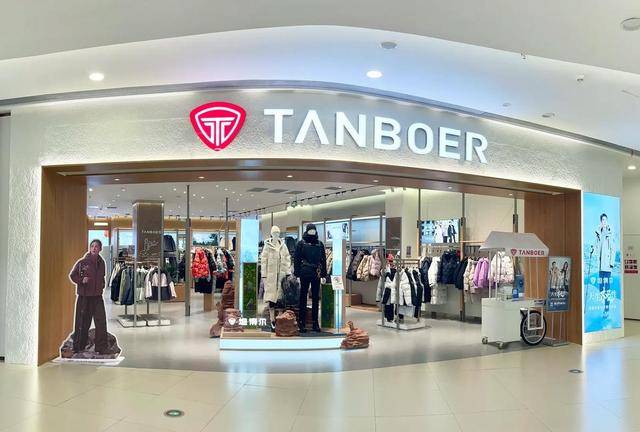
从被嫌土到冲击港股IPO,坦博尔凭什么在羽绒服市场一年卖出13亿
Sou Hu Cai Jing· 2025-12-29 07:17
这两年很多人都有一个明显的感受:羽绒服越来越贵了。 加拿大鹅、Moncler动辄上万,波司登也早已不是记忆里那个几百块就能买到的牌子。可就在价格一路 往上飙的时候,一个曾被不少人嫌"土""老气"的国产品牌,却悄悄卖爆了"坦博尔"。 它没有站在一线商圈最显眼的位置,却在电商平台频频冲上榜单,在胖东来这样的线下门店被抢到断 码;它没怎么讲"黑科技"和"国际故事",却一步一步冲到了港股IPO的门口。 当很多品牌忙着向上讲溢价时,坦博尔反而靠着最朴素的逻辑,在理性消费时代走出了自己的路。 被低估的"山东制造" 如果把中国服装品牌按地域划分,你会发现一个很有意思的现象:江苏有波司登,福建有安踏、特步, 浙江聚集着一大批户外和电商品牌,而山东几乎从不被视为"时尚高地"。 坦博尔就诞生在山东青州,这里没有潮流基因,也不靠明星资源,更谈不上国际秀场,但它却用一种极 其"山东式"的方式,在市场里活了下来。 1999年,王勇萍和妻子王丽莉并购了一家地方鞋厂,随后又接手了一家经营困难的羽绒服厂,把300多 名技术工人留了下来。在那个阶段,他们对品牌的理解非常直接:衣服首先得暖,其次要耐穿,最后才 是好不好看。 正因如此,早期的坦博 ...
今年,消费彻底变了
Ge Long Hui A P P· 2025-12-28 08:57
Core Insights - The consumption industry has undergone significant changes over the past year, with a shift in focus from traditional products like liquor to new consumption trends driven by emotional and social factors [1][10]. Group 1: Consumption Trends - Despite perceptions of a cooling consumption market, consumer demand has shown stability, with retail sales growing by 4.0% year-on-year in the first 11 months of this year, surpassing the 3.5% growth expected for the entire year of 2024 [4][5]. - The contribution of final consumption expenditure to economic growth reached 53.5% in the first three quarters of 2025, an increase of 9 percentage points compared to the entire year of 2024 [4]. - The concept of "new consumption" has emerged, characterized by emotional and social attributes, as seen in the popularity of brands like Bubble Mart and the rise of "self-reward" consumption [8][9]. Group 2: Consumer Behavior - Young consumers, particularly those from the Z generation, are becoming the main drivers of consumption, with 56.3% of them willing to spend on emotional value and interests, a 16.2 percentage point increase from 2024 [10][9]. - The trend of "rational consumption" is also evident, where consumers are increasingly focused on quality and value, with 47% of respondents indicating they only purchase essentials to avoid waste, while 68% are willing to spend more on products that help relieve stress [11][10]. Group 3: Market Opportunities - The second-hand economy is thriving, with platforms like Xianyu seeing a 30% year-on-year increase in transaction volume, reflecting young consumers' acceptance of "recycled consumption" [12]. - The health and wellness industry is benefiting from consumers' desire to invest in personal growth, with products like smart home devices and effective skincare gaining traction [14][13]. - The pet economy is emerging as a significant market, driven by the emotional support pets provide, with a wide range of related products and services [24]. Group 4: Future Outlook - The emotional consumption market in China is projected to reach 2.3 trillion yuan in 2024, with expectations to exceed 4.5 trillion yuan by 2029, indicating substantial growth potential [16]. - The consumption landscape is evolving into a complex ecosystem where rational and emotional consumption coexist, reshaping investment strategies and market dynamics [27].