经济周期

Search documents
银行投资的周期及边际变化
雪球· 2025-11-03 08:26
Core Viewpoint - The article discusses the relationship between banking metrics such as asset yield, liability cost, growth rate, asset quality, and valuation changes with the economic development cycle, predicting an L-shaped economic growth trend in the future [2]. Banking Metrics - The overall loan interest rates are stabilizing, with potential for slight decreases, but retail and competitive corporate loan demand remains weak, leading to significant competitive pressure [2]. - The current high reserve requirement ratio allows for substantial room for reduction, which could improve deposit supply-demand relationships and lower banks' funding costs [2]. Interest Rate Dynamics - Deposit rates have considerable room to decline compared to loan rates, with the repricing of loans occurring within a year while deposits take about two years [3]. - Banks with a higher proportion of demand deposits previously enjoyed a significant advantage, but this advantage is now priced in, and banks with more time deposits may have a marginal optimization advantage in future rate cuts [3]. Loan Demand and Quality - Retail loans and competitive corporate loans are under pressure in terms of volume, price, and asset quality, while government-backed projects remain relatively stable [3]. - Regional banks with monopolistic advantages have maintained high loan growth rates during previous rate cuts, but this growth has been offset by reduced interest margins [3]. Economic Cycles and Bank Risks - In periods of economic overheating, competition among businesses can lead to instability, increasing the risk of non-performing loans for banks [4]. - Conversely, during economic downturns, competition stabilizes, making bank loans relatively safer even if businesses incur losses [4]. Investment Risks - Traditional industries may not pose significant risks to banks due to shareholder equity acting as a buffer, while technology companies present a mismatch between risk and return for banks [5]. - The average return on capital is decreasing due to limited profits relative to growing capital, leading to higher asset valuations without a corresponding increase in profitability [6]. Bond Investments - Banks' profits and assets are significantly influenced by bond market fluctuations, especially during a rate-cutting cycle where loan yields and net interest margins decline [7]. - The appreciation of bonds during a rate-cutting cycle has historically provided substantial returns, but as this appreciation diminishes, banks may face reduced profits and growth rates [8]. Future Outlook - Banks with high bond investment ratios may face comparative disadvantages as the benefits of holding long-duration bonds diminish [9]. - The recognition of bond investment gains in current profits versus future interest income can vary significantly among banks, affecting their operational strategies [10].


每日钉一下(消费行业还会有行情吗?)
银行螺丝钉· 2025-11-02 13:59
Core Viewpoint - The consumer sector has been experiencing a downturn since 2025, similar to the period from 2013 to 2017, with concerns about profitability and market conditions [2][4]. Group 1: Historical Comparison - The current situation mirrors the 2013-2017 period, characterized by declining profits and a sluggish consumer market [3][4]. - In 2013, the consumer sector faced its lowest historical valuations, exacerbated by a bear market and fundamental issues such as food safety scandals [4]. - The first wave of recovery in 2014 was driven by securities, while the upcoming recovery in late 2024 is expected to see significant gains in brokerage stocks [4]. Group 2: Economic Correlation - The consumer industry is closely tied to the real economy, with notable bull markets occurring in 2017 and 2021 during periods of strong economic fundamentals [5][6]. - The current low performance in the consumer sector is attributed to weak fundamentals, with profit growth expected to slow in early 2025 [7]. Group 3: Market Dynamics - A weak fundamental environment often leads to a "double whammy" of declining valuations and profits, while a strong environment can result in simultaneous valuation increases and profit growth [7]. - The consumer sector is currently in a low fundamental phase, but a potential recovery could lead to improved profitability and higher valuations [9]. Group 4: Investment Strategy - For those optimistic about consumer stocks, a long-term investment approach is necessary, waiting for a fundamental recovery [10]. - It is advisable to limit exposure to a single industry to 15%-20% to manage volatility effectively [10].

美联储10月如期降息25BP,鲍威尔表态偏鹰派,强调12月降息并非板上钉钉
Mei Ri Jing Ji Xin Wen· 2025-10-30 02:29
Group 1 - The Hang Seng Technology Index opened slightly higher on October 30, followed by a volatile trading session, with a brief dip observed [1] - Major ETFs, particularly the Hang Seng Technology Index ETF (513180), mirrored the index's fluctuations, experiencing a drop of over 1% at one point [1] - Among the holdings, stocks like Xpeng Motors, Midea Group, NIO, Horizon Robotics, Tencent Holdings, and Alibaba saw significant gains, while Sunny Optical Technology, Tencent Music, Trip.com Group, and Xiaomi Group led the declines [1] Group 2 - The Federal Reserve announced a 0.25% reduction in the federal funds rate to a range of 3.75% to 4%, aligning with market expectations, and will end balance sheet reduction on December 1 [1] - Despite the rate decision, Fed Chair Powell's hawkish tone suggested that a December rate cut is not guaranteed, leading to a rise in U.S. Treasury yields and a narrowing of gains in U.S. stocks [1] - Future outlook indicates a high probability of another rate cut in December amid weakening employment, with the path for rate cuts in the following year requiring further confirmation [1] Group 3 - Guotai Junan Securities highlighted that easing U.S.-China tariff conflicts could enhance risk appetite, potentially benefiting the Hang Seng Technology Index and A-share technology stocks with fundamental support [2] - The report emphasized the importance of monitoring economic cycles and the potential rebound of domestic PPI towards the end of the year and into the first half of next year, which could favor low-cycle domestic stocks and global resource pricing [2] Group 4 - Relevant ETFs include the Hang Seng Technology Index ETF (513180), which supports T+0 trading and focuses on "hard technology + new consumption" [3] - The A-share technology direction is represented by the Sci-Tech Innovation 50 ETF (159783), which targets high elasticity in sectors such as semiconductors, communication equipment, batteries, and photovoltaic equipment [3]
【广发宏观郭磊】BCI数据继续印证广义财政影响
郭磊宏观茶座· 2025-10-27 12:37
Core Viewpoint - The article highlights a significant rebound in economic indicators for October, driven by the implementation of new policy financial tools, suggesting a recovery in the economy after a challenging period in July and August [1][4][15]. Economic Indicators - The October EPMI (Emerging Purchasing Managers Index) rose sharply by 7.3 points to 59.7, indicating strong seasonal characteristics typical of autumn [4][22]. - The BCI (Business Confidence Index) increased by 0.9 points to 52.0, confirming a positive trend in economic performance from September to October [1][4]. Sales and Profit Expectations - Sales and profit indices showed a slight pullback in October but remained at the second-highest level since May, indicating sustained autumn demand [6][8]. - The sales forecast index for October was 59.7, down from 60.9, while the profit forecast index was 47.4, down from 48.3, reflecting a weaker outlook compared to previous months [6][8]. Investment and Employment Outlook - Investment and employment forward-looking indices reached their highest levels of the year, attributed to the positive impact of policy financial tools on corporate expectations [2][8]. - As of October 17, new policy financial tools had injected 189.35 billion yuan, expected to stimulate a total project investment of 2.8 trillion yuan [2][8]. Financing Environment - The corporate financing environment index saw a significant increase, indicating improved credit conditions due to policy financial tools being used to supplement project capital [11]. - The October financing environment index was 52.4, surpassing the previous value of 47.6, with only three months in the year exceeding 50 [11]. Price Expectations - Price indices for intermediate and consumer goods showed varying degrees of decline, influenced by commodity price fluctuations [12]. - The consumer price forecast index for October was 44.7, down from 47.9, while the intermediate goods price forecast index was 33.4, down from 38.0, indicating uncertainty in future price trends [12]. Policy Implications - The rebound in EPMI and BCI data suggests that the economy is sensitive to investment, with the primary challenge for macroeconomic policy being the expansion of demand rather than merely lowering interest rates [15]. - If construction projects are prioritized in 2026, there is a high probability of a gradual recovery in nominal growth throughout the year, potentially leading to a second phase of a profit-driven bull market [15].

陈兵:垄断协议豁免制度可以继续优化丨法经兵言
Di Yi Cai Jing· 2025-10-26 11:30
Group 1 - The core viewpoint emphasizes the need for flexibility in antitrust laws to allow exemptions for certain agreements that can enhance efficiency and innovation while benefiting consumers [1][2] - The antitrust exemption system in China faces challenges such as vague standards, complex procedures, and difficulties in providing evidence for compliance [2][3] - The current understanding of "efficiency" within the exemption framework is too narrow, focusing mainly on static production efficiency and neglecting dynamic innovation efficiency [2][3] Group 2 - The complexity and operational weaknesses of the exemption application process create uncertainty for businesses, as they often do not know how or when to apply for exemptions [3] - There is a conservative implementation of the exemption system, with very few successful cases, reflecting a cautious attitude from enforcement agencies [3] - The lack of coordination between the antitrust exemption system and other public policies, such as industrial and innovation policies, leads to conflicts and barriers [3] Group 3 - The exemption system should adapt dynamically to different economic cycles, allowing for more lenient standards during downturns to support struggling industries [4] - A mechanism for adjusting exemption standards based on macroeconomic indicators like PMI and capacity utilization should be established [4] Group 4 - International practices provide diverse references for China's exemption system, with the EU offering a clear framework that distinguishes between purpose-based and effect-based restrictions [6][7] - The U.S. model emphasizes flexibility and case-by-case analysis, allowing for efficiency defenses in competitive agreements [6] - Countries like Japan and South Korea adopt cautious approaches, clearly listing exemption scenarios while ensuring adaptability to local economic conditions [7] Group 5 - Recommendations for optimizing the exemption system include establishing clear guidelines for exemption criteria, enhancing the capabilities of enforcement agencies, and improving the efficiency of the application process [8] - The introduction of a "safe harbor" rule for low market share agreements could provide clearer compliance expectations for businesses [8]
超智能时代“门槛时刻” | 两说
Di Yi Cai Jing Zi Xun· 2025-10-23 07:19
Group 1 - The concept of "superintelligence" is defined as an intelligent system capable of self-evolution at unprecedented speeds, surpassing human knowledge and possessing autonomous development abilities, which will fundamentally change life and create numerous entrepreneurial and investment opportunities [2][3] - By 2028, it is expected that a prototype of superintelligence will emerge, capable of performing complex tasks such as terraforming Mars by 2033, and by 2050, superintelligence is projected to handle 80% of global physical goods production and 99.9% of knowledge production [3] - The author, Lars Tvede, emphasizes that humanity is at a pivotal moment similar to the onset of the Industrial Revolution, with superintelligence set to reconstruct human industries, organizations, and societal mechanisms [3] Group 2 - Lars Tvede expresses strong optimism about China, stating that his fund heavily invests in Chinese stocks, and he highlights the historical correlation between technological revolutions and investment opportunities [5] - Tvede identifies three major investment opportunities: autonomous intelligent agents in AI, biotechnology focusing on life extension and healthy living, and synthetic technologies that replace traditional resource extraction methods [5] - For financial investors, Tvede recommends focusing on biotechnology and metal mining, while also expressing confidence in Asian stock markets, including those in China, Vietnam, and Thailand [5] Group 3 - In the global AI competition, the U.S. currently leads in large language models, with 40 out of the top 55 models, while China has a significant advantage in skilled labor and innovation, with about half of the global STEM graduates coming from China [7] - Tvede notes that China has the fastest electricity infrastructure development globally, which is crucial for high-tech economic growth, alongside stable governance and favorable conditions for technology development [8] Group 4 - The superintelligence era will redefine human roles, with basic life services becoming free, while individuals will still need to work for additional enjoyment and experiences [10] - Tvede emphasizes the importance of self-awareness and the ability to ask quality questions as core human skills in the information-rich superintelligence age, where asking the right questions will be more critical than finding answers [10] - A revolutionary breakthrough in human lifespan is anticipated within the next 10-15 years, potentially extending life expectancy to 120 years, fundamentally altering life planning and making time the ultimate scarce resource [10]

超智能时代“门槛时刻” | 两说
第一财经· 2025-10-23 07:10
Group 1 - The concept of "superintelligence" is defined as an intelligent system capable of self-evolution at unprecedented speeds, surpassing human knowledge and possessing autonomous development abilities, which will fundamentally change life and create numerous entrepreneurial and investment opportunities [1][4] - By 2028, it is expected that prototypes of superintelligent entities will emerge, capable of performing complex tasks such as terraforming Mars by 2033, and by 2050, superintelligence is projected to handle 80% of global physical goods production and 99.9% of knowledge production [4] - The author emphasizes that humanity is at a critical juncture similar to the onset of the Industrial Revolution, with superintelligence set to reconstruct human industries, organizations, and societal mechanisms [4] Group 2 - The author expresses optimism about China, stating that the managed fund heavily invests in Chinese stocks, and highlights the historical correlation between technological revolutions and investment opportunities, noting that periods of high productivity growth often lead to significant market opportunities [6] - Key investment opportunities identified include autonomous intelligent agents, biotechnology (especially life extension and health-related technologies), and synthetic technologies that replace traditional resource extraction methods [6] - For financial investors, biotechnology and metal mining are seen as promising sectors, with a favorable outlook on Asian stock markets, including China, Vietnam, and Thailand [6] Group 3 - In the global AI competition, the U.S. currently leads in large language models, with 40 out of the top 55 models, while China has a significant advantage in skilled labor and innovation, with about half of the global STEM graduates coming from China [8] - The author notes that China has the fastest electricity infrastructure development globally, which is crucial for high-tech economic growth, alongside stable governance and favorable conditions for technology development [9] - The U.S. remains supportive of technological advancement despite internal political instability, and some Gulf countries also meet the necessary conditions for high-tech growth [9] Group 4 - The future of work will see basic services becoming free, while individuals will still need to work for enhanced experiences, as AI increases productivity and frees up time for more valuable pursuits [11] - The importance of self-awareness and the ability to ask quality questions will be crucial in the information-rich superintelligent era, where asking the right questions may be more important than finding answers [11] - A revolutionary breakthrough in human lifespan is anticipated within the next 10-15 years, potentially extending life expectancy to 120 years, which will transform how individuals plan their life cycles [11]

今年有极寒,冷冬?A股谁受益?| 1019 张博划重点
Hu Xiu· 2025-10-19 14:45
Group 1 - The deterioration of the China-US trade environment is a direct trigger for market adjustments this week, with Trump announcing a potential 100% tariff increase on China [1] - The US Department of Commerce released export control rules in late September, placing several Chinese companies on the entity list, prompting China to implement countermeasures, including stricter controls on rare earth exports [1] - Recent increases in Chinese assets were largely driven by overseas technology linkages, highlighting a short-term vulnerability in Chinese assets [1] Group 2 - A video call took place between Chinese Vice Premier He Lifeng and US Treasury Secretary Yellen, focusing on important issues in bilateral economic and trade relations, with an agreement to hold new rounds of China-US economic consultations [4] - Trump's softened stance indicates that a 100% tariff increase is unsustainable, and he expressed intentions to meet in the coming weeks [5] Group 3 - Citic Securities maintains an optimistic outlook on the stock market but advises caution in asset allocation [8] - The market's core contradiction lies in the pricing of economic fundamentals, with a need to pay attention to tactical changes in market valuation [9] - The fourth quarter is critical for validating leading indicators' transmission to the economic cycle, with a focus on non-bank sectors and commodity price expectations [9]
黄金大涨背后,高净值人群的财富观悄悄生变
吴晓波频道· 2025-10-17 00:30
Core Viewpoint - The article discusses the changing landscape of wealth management, emphasizing the shift from a high-growth investment mindset to a more defensive and strategic approach in response to economic cycles and uncertainties [3][12][18]. Investment Trends - High-net-worth individuals are increasingly favoring gold as an investment, with a reported 15.7% preference, surpassing A-shares (12%) and funds (11.3%) [5][10]. - The price of international spot gold has exceeded $4,200 per ounce, marking a year-to-date increase of over 50% [8]. - There is a notable rise in investment in insurance among high-net-worth individuals, increasing by 2.9% to 10.8%, ranking fourth in investment preferences [9]. Economic Cycle Awareness - The article highlights the importance of understanding economic cycles, noting that no asset consistently performs well across all periods [16][22]. - It emphasizes the need for investors to adapt their strategies based on the economic environment, suggesting a mix of offensive and defensive asset allocations [20][26]. Wealth Management Philosophy - The concept of wealth management is evolving from merely seeking high returns to a more nuanced approach that balances risk and growth opportunities [18][35]. - The article advocates for a dual strategy of offense (investing in equities and growth assets) and defense (utilizing bonds, insurance, and trust products) to safeguard core assets [26][27]. Wealth Transfer Considerations - Effective wealth transfer involves more than just passing on money; it requires a comprehensive strategy to protect wealth from risks such as marriage and debt [29][30]. - The article stresses the importance of establishing a legal framework to ensure wealth is preserved and responsibly managed across generations [29]. Educational Initiatives - The "2025 Wu Xiaobo Lecture" series aims to equip participants with insights into wealth growth and future planning, featuring experienced instructors who will cover macro trends and asset allocation strategies [31][32][38].
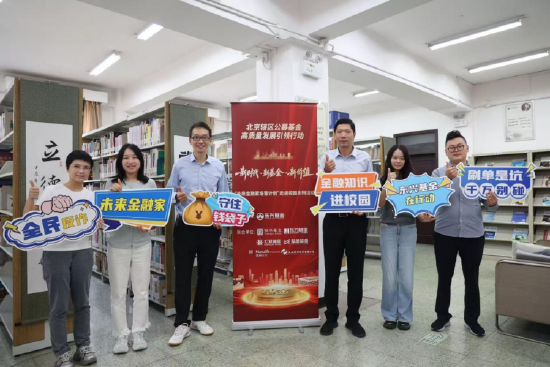
“新时代·新基金·新价值”| 东兴基金联合多家公募机构走进北京联合大学
Xin Lang Ji Jin· 2025-10-16 01:59
Core Viewpoint - The event organized by Dongxing Fund and other institutions aims to promote high-quality development of public funds in Beijing by enhancing financial literacy among students from non-financial universities, thereby preparing them for future careers in finance and wealth management [1][8]. Group 1: Event Overview - The event titled "New Era, New Fund, New Value" was held at Beijing Union University, focusing on the practical needs of students in applied universities [3]. - The initiative is part of the "Beijing Public Fund High-Quality Development Series Activities" guided by the Beijing Securities Regulatory Bureau [1][8]. Group 2: Educational Focus - The lectures addressed the importance of basic wealth management skills and career planning for students, emphasizing that financial knowledge should not be limited to the finance industry [3][4]. - Topics included economic cycles and pension planning, with a focus on asset allocation strategies during different economic phases [3][4]. Group 3: Practical Applications - The instructors provided insights on how to adjust asset proportions according to economic cycles and the benefits of early personal pension account establishment [4]. - The event aimed to bridge the gap between financial knowledge and practical career development, helping students understand the relevance of financial concepts in various industries [3][6]. Group 4: Career Guidance - The lectures also tackled the common dilemma of career choice among youth, encouraging students to build a long-term career vision based on industry trends and personal interests [6]. - The importance of internships and practical experience in enhancing employability was highlighted, along with the need for students to align their career choices with market demands [6][8]. Group 5: Future Initiatives - Public fund institutions plan to continue educational outreach efforts, expanding their reach to more universities and integrating financial education into the national education system [10]. - The goal is to cultivate a new generation of finance professionals equipped with rational thinking and professional perspectives [10].