美元反弹

Search documents
ATFX:美元重新展现韧性,削弱新兴市场货币吸引力
Sou Hu Cai Jing· 2025-08-14 17:31
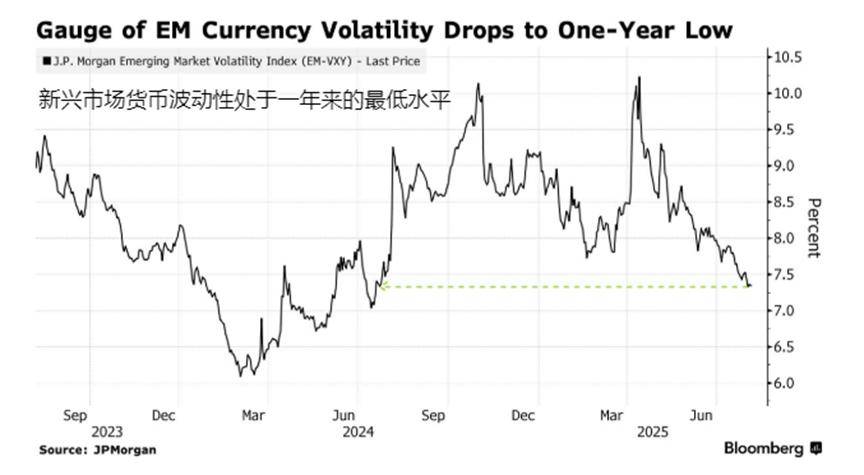
Core Viewpoint - The US dollar index has shown resilience recently, with a 3.4% increase in July, ending a streak of declines, despite a disappointing non-farm payroll report [1] Group 1: Dollar Performance - The Bloomberg Dollar Spot Index rose by 2.7% in July, breaking a six-month downward trend [1] - Emerging market currencies, represented by the MSCI Emerging Markets Currency Index, fell by 1.2% [1] - The Taiwanese dollar has appreciated approximately 9.5% this year, leading Asian currencies, while the South Korean won has risen nearly 6% [1] Group 2: Investor Sentiment - The rebound of the dollar has led some emerging market investors to believe that the dollar will continue to rise in the coming months [1] - Barclays Bank has advised clients to avoid shorting the dollar against other Asian currencies [1] - Fidelity International noted that prolonged high US interest rates reduce the attractiveness of borrowing dollars for arbitrage trading [1] Group 3: Emerging Market Currency Dynamics - The volatility of emerging market currencies is at its lowest in a year, which diminishes demand for Asian currencies in favor of higher-yielding European and Latin American currencies [2] - The average interest rate differential for Asian currencies is negative 1.1%, indicating higher holding costs compared to potential returns from holding dollars [5] - Latin American currencies have a positive interest rate differential of 3.7%, while European and African currencies have a positive differential of 1.1% [5] Group 4: Market Uncertainty - The uncertainty surrounding US tariffs continues to impact the attractiveness of emerging market currencies, despite some agreements reached with major trading partners [6] - The potential for further interest rate cuts by the Federal Reserve remains a key factor influencing the dollar's trajectory [6]

DLSM:美元反弹只是昙花一现?权力更替和政策裂痕正在撕开口子?
Sou Hu Cai Jing· 2025-08-05 09:53
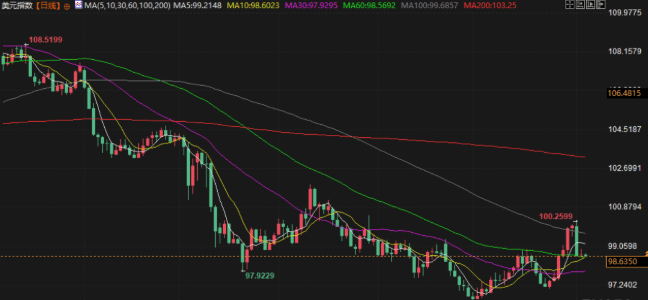
Group 1 - The core message indicates that the US dollar is entering a phase of uncertainty, driven by recent events including disappointing employment data, sudden resignations within the Federal Reserve, and political interventions affecting economic data credibility [1][3][4] - The July non-farm payroll data showed a significant miss against expectations, with downward revisions for May and June, raising the urgency for potential interest rate cuts by the Federal Reserve [3] - The probability of a 25 basis point rate cut in September surged to 84%, with market participants pricing in two cuts for the year and a 40% chance of a third cut [3] Group 2 - The resignation of Federal Reserve Governor Kugler opens the door for potential political influence over monetary policy, threatening the independence of the Federal Reserve [3][4] - The dismissal of the Bureau of Labor Statistics director by President Trump, citing data manipulation, raises concerns about the credibility of official economic indicators [3][4] - The recent rebound of the dollar appears weak, as it is increasingly influenced by political actions rather than economic fundamentals, with the dollar's status as a safe haven being challenged [4]
细说汇率⑮ 美元反弹的脆弱
Sou Hu Cai Jing· 2025-08-04 06:36
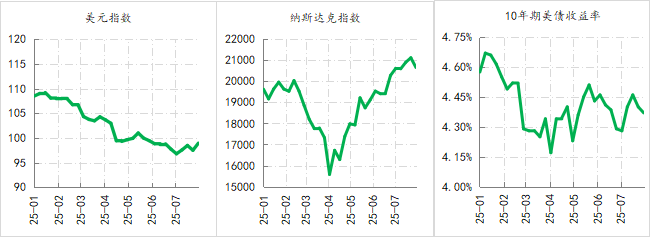
Core Viewpoint - The article discusses the fluctuations in the US dollar index, highlighting its decline to below 96 and subsequent recovery to around 100, driven by changes in US trade policy and economic indicators [1][3]. Group 1: US Dollar Index and Economic Indicators - The US dollar index experienced its worst half-year performance since 1973, dropping to below 96 before rebounding in July, marking the first monthly increase of the year [1]. - In July, the Nasdaq and S&P 500 indices reached new highs, while the 10-year US Treasury yield stabilized below 4.5% [1]. Group 2: Trade Policy Changes - The rebound in the dollar index is attributed to the rising influence of Treasury Secretary Mnuchin, who shifted trade policy from aggressive tariffs to a more systematic approach, including differentiated tariff rates and investment incentives [3]. - The new trade strategy includes a framework agreement with the UK and a "truce" with China, allowing for substantive negotiations while maintaining a tough stance on other countries like Brazil and Canada [3][4]. Group 3: Fiscal Policy and Economic Risks - The implementation of the "Great American Act" has led to a projected increase in the US fiscal deficit by $3.4 trillion over the next decade, raising concerns about the sustainability of US fiscal policy [5]. - The Federal Reserve's policy effectiveness is declining, with recent meetings showing internal disagreements and external pressures from the Trump administration, which could impact market sentiment [8][9]. Group 4: Market Sentiment and Stock Performance - Despite the dollar's rebound, underlying vulnerabilities remain, including uncertainties surrounding new tariffs and the potential for a market correction, particularly in meme stocks that have shown volatility [9]. - Recent adjustments in non-farm payroll data indicate a potential increase in unemployment rates, suggesting that the labor market may be reaching a tipping point, which could further affect economic stability [12].
【黄金期货收评】美印贸易紧张态势加剧 沪金日内下跌0.37%
Jin Tou Wang· 2025-07-31 08:39
Group 1 - The Shanghai gold futures closed at 770.28 yuan per gram on July 31, with a daily decline of 0.37% and a trading volume of 260,701 contracts [1] - The spot price of gold in Shanghai was quoted at 766.00 yuan per gram, indicating a discount of 4.28 yuan per gram compared to the futures price [1] - The U.S. Federal Reserve maintained its current policy stance, with Chairman Powell expressing a hawkish tone, which is expected to strengthen the short-term dollar and exert pressure on precious metal prices [2] Group 2 - The COMEX gold price has dipped to 3300, indicating a continued bearish trend in the short term, while silver maintains a bullish outlook [2] - The gold-silver ratio on the Shanghai Futures Exchange has narrowed to near a three-year average, suggesting that fluctuations in gold prices may have an amplified impact on silver prices [2] - The strategy recommended includes holding positions in gold and silver, with a focus on selling out-of-the-money put options for gold and maintaining long positions in silver [2]
DLSM:美元反弹是技术性修正,还是新一轮强势周期的开始?
Sou Hu Cai Jing· 2025-07-30 10:19
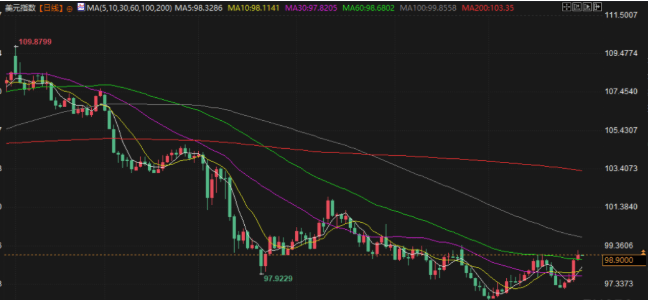
Group 1 - The US dollar index continues to rise, reaching 98.91, the highest level since June 23, driven by new trade agreements between the US and the EU, Japan, and a recovering market risk appetite [1] - The dollar has strengthened against major currencies, with the euro experiencing a significant decline, dropping 1.29% in a single day, marking the largest daily drop since mid-May [3] - Recent trade agreements involve substantial commitments, including a 15% tariff on most EU goods in exchange for a $600 billion investment commitment from the EU to the US, and a $550 billion bilateral trade agreement with Japan [3] Group 2 - Market analysts suggest that the recent dollar strength may reflect a technical correction rather than a trend reversal, as the dollar had previously underperformed in the first half of the year [3] - The upcoming Federal Reserve meeting is expected to maintain current policy, but market participants are closely watching for any dovish language regarding inflation and potential rate cuts, which could lead to a reversal of recent dollar gains [4] - The divergence in monetary policy expectations among central banks is influencing the dollar's performance against various currencies, with the Japanese yen showing slight weakness against the dollar [4]
金价小幅回落 但仍持稳于一个月高位
news flash· 2025-07-22 08:00
Core Viewpoint - Gold prices have slightly retreated but remain stable near a one-month high, influenced by the recovery of the US dollar and upcoming economic events [1] Group 1: Market Dynamics - Since the beginning of the week, trading volume for gold investments has significantly increased, with prices breaking out of a narrow trading range that persisted since early July [1] - The current gold price movement is primarily driven by the US dollar, which is expected to face limited rebound potential due to approaching tariff deadlines and policy uncertainties related to the nomination of the Federal Reserve Chair [1] Group 2: Economic Indicators - The deadline for additional tariffs in the US on August 1 is creating a market environment that supports gold prices, as any potential recovery in the dollar is likely to be constrained [1]
|安迪|&2025.7.22黄金原油分析:美联储降息预期升温,黄金3393/3395做空!
Sou Hu Cai Jing· 2025-07-22 06:24
Group 1: Gold Market Analysis - Gold prices slightly retreated to $3,390 per ounce, ending a two-day rally, but overall upward momentum remains supported by safe-haven demand amid unresolved US-EU trade negotiations and challenges to Federal Reserve policy independence [3] - The technical analysis indicates that gold is still in an upward channel, with a short-term pullback potentially setting the stage for a new rally [3] - The 14-day Relative Strength Index (RSI) is above 50, indicating that bulls are still in control [3] - Short-term resistance is at $3,452 (three-month high), and a breakthrough could lead to further gains towards historical highs of $3,500 and even the channel's upper limit of $3,630 [3] - Initial support is at the 9-day Exponential Moving Average (EMA) of $3,358, with a breakdown pointing to the channel's lower limit and the 50-day moving average at $3,316 [3] - The gold market is currently at the intersection of increasing macro uncertainty and technical consolidation [3] - Despite a short-term pressure from a rebound in the US dollar, factors such as stalled trade negotiations and escalating political pressure on the Federal Reserve continue to provide strong medium-term upward momentum [3] - It is expected that gold prices will oscillate between $3,350 and $3,450, and if safe-haven sentiment persists, a breakthrough above key resistance could lead to a move towards $3,500 [3] Group 2: Trading Strategies - A trading strategy suggests looking for a short position in gold within the range of $3,393 to $3,395, with a stop-loss above $3,405 and a target at $3,375 to $3,373 [5] - Another recommendation indicates a long position at $3,360, with a stop-loss at the morning low of $3,344 and a target of $3,382 [6]

机构:CPI或证明美联储谨慎立场是正确的 美元当前的反弹料无法持久
news flash· 2025-07-16 08:41
Group 1 - The core viewpoint of the article suggests that the recent inflation data may validate the Federal Reserve's cautious stance, indicating that the current rebound of the US dollar is unlikely to be sustained [1] Group 2 - The US dollar experienced a slight decline against the euro and yen after reaching multi-week highs, as inflation pressures intensified due to tariff policies, leading investors to slightly reduce expectations for a rate cut by the Federal Reserve [1] - PIMCO economist Tiffany Wilding stated that the rise in inflation related to tariff-affected goods supports the Federal Reserve's cautious approach, while the continued slowdown in service-related inflation should support rate cuts in September and beyond [1] - Market focus is shifting towards the upcoming PPI data release to assess whether price pressures are genuinely beginning to rise [1] - Deutsche Bank forex analyst Michael Pfister noted that attacks on the Federal Reserve's independence by Trump are unlikely to cease, and given his demand for a 300 basis point rate cut, a 25 basis point cut is unlikely to satisfy him, suggesting that the dollar's current rebound may not last long [1]
分析师:美元有所反弹,欧元中长期看涨至1.20
news flash· 2025-07-09 11:45
Core Viewpoint - The analysis indicates a rebound in the US dollar, with expectations for the euro to rise to 1.20 in the long term, despite potential short-term corrections [1] Group 1: Market Performance - The S&P 500 index outperformed European stock markets in June, reversing a trend of underperformance over the previous five months [1] - The yield premium on long-term US Treasury bonds has decreased from high levels, indicating a shift in investor sentiment [1] Group 2: Economic Policy Impact - The current market order is perceived as more stable compared to the period following the large-scale tariff policies introduced in April [1] - Investors seem to believe that the impacts of US policies may not be as severe as previously feared [1] Group 3: Currency Forecast - The euro is expected to rise to 1.20 against the dollar over the next 12 months, although there is room for further short-term corrections [1]
张瑜:“弱美元”or“去美元”?“美元贬值”or“美元反弹”?——张瑜旬度会议纪要No.116
一瑜中的· 2025-07-04 03:54
Core Viewpoint - The article discusses the recent trends in the US dollar, highlighting the divergence between a weakening dollar and rising US Treasury yields, suggesting caution in interpreting these signals as indicative of a broader trend towards de-dollarization [2]. Group 1: Conceptual Clarification - Two key concepts are defined: de-dollarization transactions, which involve selling dollar assets and reflect a contraction of US asset exposure, and weak dollar transactions, which do not require reducing dollar asset exposure but rather increasing short positions on the dollar [3]. Group 2: Background Context - Background 1: Since the strong dollar cycle began in 2014-2015, overseas institutions have maintained dollar exposure to benefit from both US Treasury yield spreads and dollar appreciation. By 2024-2025, major global pension funds have reduced their dollar hedging ratios to historical lows, indicating a significant dollar exposure [4]. - Background 2: There is a positive correlation between the dollar hedging ratios of pension funds and exchange rate volatility; higher volatility leads to stronger hedging demand [4]. Group 3: Current Analysis - Following the implementation of equal tariffs on April 3, the volatility of the dollar exchange rate has increased significantly. For institutions with large dollar exposures, there are two strategies: de-dollarization transactions or weak dollar transactions. The article leans towards weak dollar transactions as the primary reality, noting no significant outflows from US equities or bonds and a rise in speculative short positions on the dollar [5]. Group 4: Future Predictions - To predict the future of the dollar, two questions are posed: whether the short positions on the dollar have been fully covered and the structure of the holders of these short positions. Current data suggests that while some institutions have raised their hedging ratios, the momentum for covering short positions may have peaked, indicating a potential end to rapid dollar depreciation [9][10]. - The concentration of dollar short positions is at a historical low, suggesting a fragile trading structure. If the US economy remains stable and tech stocks perform well, there may be a risk of a rebound in the dollar as volatility decreases [10]. - Overall, the macro environment is characterized as "internal stability with external changes," with the narrative of de-dollarization being misinterpreted. The article concludes that the weakening of the dollar is nearing its end, with potential for a period of volatility or even a rebound [11].