
贸易多元化

Search documents
卡尼落地北京,特朗普憋不住了,一句话断了加拿大的后路
Sou Hu Cai Jing· 2026-01-17 06:10
Group 1 - Canadian Prime Minister Carney's visit to China is under significant pressure from both domestic and international fronts, impacting his plans [1] - Canada has been heavily reliant on the U.S. for trade, but this dependency has led to economic challenges, particularly due to increased tariffs on key industries like steel and lumber [3] - The Canadian economy is suffering from U.S. tariffs, with canola prices plummeting and pork producers in Manitoba losing up to 19 million CAD annually [5] Group 2 - Carney's strategy to alleviate trade pressures includes diversifying trade relationships, particularly with China, as reliance on the U.S. has proven detrimental [6] - Trump's comments threaten the importance of the USMCA agreement, which allows 80% of Canadian goods to enter the U.S. tariff-free, highlighting the precarious nature of Canada's trade relationship with the U.S. [7] - The U.S. pressure on Canada may inadvertently push Canada to strengthen ties with China, as the percentage of Canadian exports to the U.S. has decreased from 78% to 72% [9] Group 3 - Carney's visit to China reflects a broader trend among countries previously aligned with the U.S. seeking independent development paths, as seen with Argentina's recent policy shifts [11][12] - The U.S. has imposed strict conditions on Canada regarding the USMCA, further alienating Canada and prompting a search for new partnerships [14] - For Carney's visit to yield substantial results, he must demonstrate sincerity and address domestic opposition by reconsidering tariffs on Chinese electric vehicles and proposing concrete cooperation plans in agriculture and energy [16][17] Group 4 - Trump's threats have not deterred Carney but have instead clarified the U.S.'s hegemonic nature, accelerating the awakening of allies to seek their own paths [19]


加拿大取消对华电动汽车100%关税
Sou Hu Cai Jing· 2026-01-17 05:46
Core Insights - The visit of Canadian Prime Minister Mark Carney to China resulted in significant agreements, including the cancellation of a 100% tariff on Chinese electric vehicles, marking a historic shift in Canada-China relations [1][4][11] Group 1: Trade Agreements - Canada will allow an annual quota of 49,000 Chinese electric vehicles, which will benefit from a 6.1% most-favored-nation tariff rate, prior to the 100% additional tariff set for 2024 [4][5] - The quota is expected to increase to 70,000 vehicles by the fifth year, promoting investment in Canada's automotive sector and creating new jobs [5][6] - The agreement on electric vehicles is seen as a positive step towards enhancing trade relations and addressing previous trade barriers [4][7] Group 2: Agricultural Trade - Carney announced that tariffs on Canadian canola seed will significantly decrease starting March 1, 2024, benefiting Canadian farmers and potentially releasing CAD 3 billion in export orders [6][7] - The goal is to not only restore previous export levels of canola to China but to exceed them, indicating a strong focus on agricultural trade [7][8] Group 3: Strategic Partnership - The signing of the China-Canada Economic and Trade Cooperation Roadmap represents a high-level cooperation document aimed at enhancing bilateral trade and investment [8][9] - The roadmap outlines cooperation in eight areas, including agriculture, energy, e-commerce, and sustainable trade, with 28 specific initiatives proposed [9][10] - Both countries are committed to establishing a regular communication mechanism to address trade concerns and enhance cooperation [8][9] Group 4: Energy Cooperation - Canada plans to double its energy network investments over the next 15 years, creating opportunities for Chinese partnerships in renewable energy sectors [10] - The expansion of the Trans Mountain pipeline is expected to facilitate increased oil exports to Asia, with China becoming a major buyer of Canadian crude oil [9][10] Group 5: Bilateral Relations - The recent agreements signify a shift towards a more predictable and stable relationship between Canada and China, contrasting with the complexities of Canada's relationship with the U.S. [11][12] - Carney emphasized the importance of diversifying trade partnerships to reduce reliance on the U.S. market, aiming to double non-U.S. exports over the next decade [12][13]

锐财经|中国外贸展现韧性与活力
Ren Min Ri Bao Hai Wai Ban· 2026-01-17 04:56
Core Viewpoint - In 2025, China's total goods trade import and export value reached 45.47 trillion yuan, marking a 3.8% year-on-year growth, maintaining its position as the world's largest goods trading nation for nine consecutive years [1] Group 1: Export Performance - Exports amounted to 26.99 trillion yuan, with a year-on-year increase of 6.1%, driven by high-tech product exports which grew by 13.2%, contributing 2.4 percentage points to overall export growth [2] - Notable increases in specific sectors include specialized equipment (20.6%), high-end machine tools (21.5%), and industrial robots (48.7%), with China becoming a net exporter of industrial robots [2] - Traditional industries are also evolving, with innovations such as desert air conditioners and culturally integrated ceramics gaining traction in international markets [2] Group 2: Import Trends - In 2025, China maintained its status as the world's second-largest import market for the 17th consecutive year, with imports reaching a historical high [4] - Import growth was supported by a recovering economy, with a 4.4% increase in December alone, and a successful eighth China International Import Expo generating over 800 billion USD in intended transactions [5] - The import of agricultural products reached nearly 1.5 trillion yuan, with significant growth in imports from over 130 countries, including a 9% increase from least developed countries benefiting from zero tariffs on 100% of product categories [5] Group 3: Trade Partnerships and Global Influence - China's trade partnerships expanded to over 160 countries and regions, with a notable increase in foreign enterprises engaging in trade with China [7] - Trade with the EU reached 5.93 trillion yuan, growing by 6%, and accounting for 13% of China's total trade, highlighting the mutual benefits of economic cooperation [7] - Trade with Belt and Road Initiative countries reached 23.6 trillion yuan, growing by 6.3%, and these partners now represent 51.9% of China's total foreign trade [8]
2025年进出口总值创历史新高,连续9年实现增长——中国外贸展现韧性与活力
Xin Hua Wang· 2026-01-16 23:47
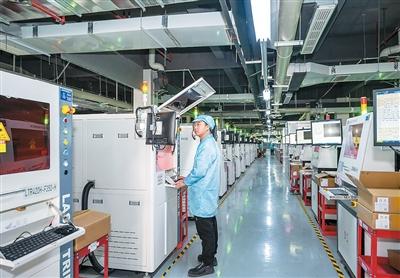
Core Insights - In 2025, China's foreign trade maintained stable growth despite external pressures, with total import and export value reaching 45.47 trillion yuan, a year-on-year increase of 3.8% [4][5] - High-tech product exports grew by 13.2%, contributing 2.4 percentage points to overall export growth, with significant increases in specialized equipment, high-end machine tools, and industrial robots [5][6] - China has become the world's second-largest import market for 17 consecutive years, with imports reaching a historical high in 2025 [7][8] Group 1: Trade Performance - In 2025, China's exports amounted to 26.99 trillion yuan, up 6.1% year-on-year, while imports reached 18.48 trillion yuan, a 0.5% increase [4] - The import growth trend has been consistent, with a notable acceleration in December 2025, where the growth rate reached 4.4% [8] - The successful hosting of the 8th China International Import Expo resulted in a record number of participating companies and an intended transaction amount exceeding 800 billion USD [8] Group 2: Sectoral Highlights - Exports in the green energy sector saw significant growth, with lithium batteries and wind turbine exports increasing by 26.2% and 48.7%, respectively [6] - The export of electric motorcycles and bicycles grew by 18.1%, while railway electric locomotives saw a 27.1% increase [6] - Traditional industries are also evolving, with innovations such as desert air conditioners and culturally integrated ceramics gaining traction in international markets [5] Group 3: Trade Partnerships - China's trade partnerships have expanded, with over 160 countries and regions now considered major trading partners, an increase of more than 20 since 2020 [9] - Trade with ASEAN countries has deepened, and trade with Central Asian nations has surpassed 100 billion USD [9][10] - In 2025, trade with countries involved in the Belt and Road Initiative reached 23.6 trillion yuan, growing by 6.3%, which is higher than the overall foreign trade growth rate [10]
一边盼订单一边硬刚?加拿大总理访华前,内部上演“利益对决”
Sou Hu Cai Jing· 2026-01-16 08:46
Group 1 - Ontario Premier Doug Ford's strong stance against Chinese electric vehicles includes a demand for 100% tariffs, indicating a hardline approach to trade with China [1] - The agricultural sector in Saskatchewan is facing a crisis, with canola exports to China expected to plummet by 76% due to retaliatory measures, highlighting the economic impact of trade tensions [3] - The previous government's decision to impose high tariffs on Chinese electric vehicles and steel products without proper investigation has led to significant trade disputes, affecting Canadian industries [5] Group 2 - The canola industry, a key sector with an export value of CAD 3.7 billion, has been severely impacted by the tariffs, prompting urgent calls for government intervention [6] - There is a growing sentiment in Canada to diversify trade and reduce reliance on the U.S., with the new Prime Minister Carney signaling a willingness to engage with China [8] - Legal experts have pointed out flaws in the tariff imposition process, suggesting potential negative outcomes for Canada if China pursues international trade dispute resolutions [8]

从对抗到合作,加拿大总理8年来首次访华释放了什么信号?
Xin Lang Cai Jing· 2026-01-16 08:43
Core Viewpoint - The visit of Canadian Prime Minister Mark Carney to China from January 14-17, 2026, is seen as a corrective measure in Canada's recent policy towards China, reflecting an effort to balance strategic autonomy with economic realities [1][7]. Group 1: Bilateral Relations - The meeting between Prime Minister Carney and Chinese Premier Li Qiang resulted in the signing of multiple cooperation documents in areas such as trade, customs, energy, construction, culture, and public safety [7]. - Carney's visit is characterized as a "breakthrough journey," indicating a shift from confrontation to dialogue in Sino-Canadian relations, which is viewed positively amid a complex external environment [7][1]. Group 2: Economic Context - Canada has felt pressure in its economic relations with the United States, motivating the government to seek new trade relationships, with China being a crucial potential market [2]. - The trade relationship between China and Canada has faced significant challenges, including a 3.6% decline in total trade value in 2025, amounting to $89.62 billion, with Canadian imports from China decreasing by 10.4% [9][2]. Group 3: Strategic Shifts - Carney's administration aims for strategic autonomy to reduce dependence on the U.S., where exports to the U.S. account for approximately 75% of Canada's total exports [9]. - The government emphasizes pragmatic cooperation in specific sectors such as trade, energy, and agriculture, while also prioritizing the restoration of dialogue mechanisms like the Sino-Canadian Economic Joint Committee [10][9]. Group 4: Future Cooperation Potential - There is significant potential for cooperation in agriculture, energy, and green technology due to the complementary economic structures of China and Canada [12]. - Canada is the fourth-largest oil producer globally, while China is the largest energy consumer, with daily oil exports from Canada to China reaching 207,000 barrels since the completion of the Trans Mountain pipeline expansion [12][10]. Group 5: Public Sentiment and Future Outlook - Recent polls indicate that over half of Canadians support closer trade relations with China, and a significant majority are willing to reduce dependence on the U.S. for economic growth [12]. - Analysts suggest that the electric vehicle sector could serve as a litmus test for Canada's willingness to return to fair international trade practices [13].
扩大优质消费品和服务供给 推动贸易创新发展——访商务部党组书记、部长王文涛
Jing Ji Ri Bao· 2026-01-15 21:30
Core Insights - The article emphasizes the importance of boosting consumption and expanding the supply of quality consumer goods and services as part of China's 14th Five-Year Plan and the 2026 economic work priorities [1][2]. Group 1: Consumption Boosting Strategies - The Ministry of Commerce aims to maintain steady growth in the consumer market, with a projected retail sales total exceeding 50 trillion yuan for the year, reflecting a 4.0% increase in the first 11 months [1][2]. - The focus will be on three key areas: fostering new growth points in service consumption, optimizing the implementation of the old-for-new policy for consumer goods, and stimulating consumption in lower-tier markets [2][3]. Group 2: Service Consumption Growth - The Ministry identifies several fast-growing service consumption sectors, including transportation, housekeeping, and online entertainment, and plans to support these areas through policy improvements and promotional activities [2]. - Events like "Service Consumption Season" and "Chinese Food Festival" will be organized to enhance local service consumption brands [2]. Group 3: Trade Innovation and Development - The Ministry plans to enhance trade through three pillars: goods trade, service trade, and digital trade, while addressing challenges posed by global economic uncertainties [3][4]. - A focus on diversifying markets and promoting balanced trade development will be prioritized, including initiatives to expand imports and support cross-border e-commerce [4][5]. Group 4: High-Level Opening Up - The Ministry will actively expand autonomous opening in various service sectors and promote the implementation of zero-tariff measures for all trading partners in Africa [6]. - Efforts will be made to enhance the global supply chain's efficiency and promote international cooperation in emerging sectors like green development and digital economy [6][7]. Group 5: Global Economic Governance Participation - The Ministry will participate actively in significant upcoming events, including the APEC "China Year" and the 14th WTO Ministerial Conference, to advocate for multilateralism and free trade [7].
救命稻草竟是中国!加拿大扛不住美国压榨,8年破冰直奔北京
Sou Hu Cai Jing· 2026-01-15 13:52
Core Viewpoint - The article discusses Canada's economic challenges and its strategic pivot towards China amid rising U.S. tariffs and domestic economic downturns, highlighting the importance of pragmatic cooperation over ideological divides in global trade dynamics [3][31]. Economic Context - Canada's GDP fell by 0.3% in October 2025, marking the largest decline since December 2022, attributed to the adverse effects of U.S. tariff policies, with expectations of worsening impacts in 2026 [5]. - Over 70% of Canada's exports are directed to the U.S., making its economy highly sensitive to U.S. policy changes, particularly in the energy sector where Canadian oil prices are significantly discounted compared to international rates [7][9]. Trade Relations - Canada has invested 34 billion CAD in the Trans Mountain pipeline to diversify its oil exports, but U.S. plans to take control of Venezuelan oil could further reduce Canadian oil imports [9]. - A trade war has escalated between Canada and China, with Canada imposing a 100% tariff on Chinese electric vehicles and China retaliating with anti-dumping investigations and tariffs on Canadian agricultural products [14][16]. Public Sentiment - A significant portion of the Canadian public (62%) supports the removal of high tariffs on Chinese electric vehicles, indicating a shift in public opinion towards favoring trade agreements with China [16]. Energy Cooperation - In the first 11 months of 2025, Canada exported nearly 100 million barrels of oil to China, with the Trans Mountain pipeline generating substantial revenue, reducing the price discount on Canadian oil to under 10 CAD [18]. Global Trade Dynamics - The visit of Canadian Prime Minister Carney to China reflects a broader trend of countries seeking pragmatic relations with China despite U.S. pressures, as seen with leaders from Argentina and the UK also planning visits [20][22]. - The article emphasizes that the U.S. tariff policies have inadvertently increased costs for American companies, highlighting the competitive advantages of Chinese manufacturers in the electric vehicle sector [24]. Future Outlook - The upcoming discussions between Canada and China will focus on critical issues such as trade tariffs and agricultural exports, with the potential to reshape bilateral relations and global trade dynamics [33].
外贸再创新高!我国将继续保持全球货物贸易第一大国地位
Xin Lang Cai Jing· 2026-01-14 12:27
Core Insights - In 2025, China's total foreign trade reached 45.47 trillion yuan, marking a 3.8% increase, with exports at 26.99 trillion yuan (up 6.1%) and imports at 18.48 trillion yuan (up 0.5%) [1] Trade Expansion - China engaged in trade with over 240 countries and regions, with growth in trade with more than 190 countries [2] - Trade with Belt and Road Initiative countries amounted to 23.6 trillion yuan, a 6.3% increase, accounting for 51.9% of total trade [2] - Exports of high-tech products reached 5.25 trillion yuan, growing by 13.2% [2] - Significant growth in exports of green products, including a 27.1% increase in "new three items" and a 48.7% increase in wind turbine exports [2] Import Dynamics - Continuous growth in imports for three consecutive quarters starting from Q2, with total imports of electromechanical products at 7.41 trillion yuan, up 5.7% [2] - Notable increases in imports of electronic components (up 9.7%) and computer parts (up 20%) [2] - Import values for major commodities like crude oil and metal ores increased by 4.4% and 5.2%, respectively [2] Sino-US Trade Relations - Trade between China and the US reached 4.01 trillion yuan, representing 8.8% of China's total trade [3] - Emphasis on the mutual benefits of Sino-US economic relations, advocating for stable and sustainable development [3] Sino-European Trade Relations - Trade with the EU amounted to 5.93 trillion yuan, a 6% increase, contributing 13% to China's total trade [3] - The EU is China's largest source of imports and exports in consumer goods, with significant shares in various categories [4] - High-tech product trade with the EU saw a 7.5% increase in exports and an 11.1% increase in imports [4] Green Development Cooperation - Both China and the EU are committed to low-carbon transformation and green development, with substantial growth in green product trade [4] - Exports of wind turbines to the EU surged by 65.9%, while imports of recyclable products increased by 18.9% [4]
中国外贸连续9年增长,对美贸易份额降至个位数
Di Yi Cai Jing· 2026-01-14 10:13
Core Viewpoint - China's foreign trade is showing robust growth, with a diversified trading network and significant increases in green product exports, driven largely by private enterprises [1][12]. Group 1: Trade Growth and Projections - By 2025, China's total foreign trade is projected to reach 45.47 trillion yuan, marking a 3.8% increase, with exports growing by 6.1% and imports by 0.5% [1]. - The proportion of trade with the United States is expected to decrease, with imports and exports to the U.S. accounting for 8.8% of China's total trade by 2025, down from 11.2% in 2024 [1][6]. - China has achieved trade growth with over 190 countries and regions, with significant increases in trade with ASEAN, Latin America, and Africa [3]. Group 2: Sector-Specific Growth - High-tech product exports are expected to grow by 13.2% in 2025, contributing 2.4 percentage points to overall export growth, with specialized equipment and industrial robots seeing substantial increases [9]. - Exports of green products, including wind power generators and electric motorcycles, are projected to grow significantly, with wind power generator exports increasing by 48.7% [10][11]. - The export of autonomous brand products has risen by 12.9%, indicating a shift in the manufacturing landscape [11]. Group 3: Role of Private Enterprises - Private enterprises have become the main engine of trade growth, accounting for 57.3% of total trade in 2025, with a 7.1% increase in their trade volume [12][13]. - The implementation of the Private Economy Promotion Law has spurred innovation and growth in private enterprises, particularly in high-tech product exports [13]. Group 4: Foreign Investment and Trade - Foreign enterprises have also shown consistent growth in trade, with significant increases in sectors such as electronics and pharmaceuticals [14]. - Over 90% of surveyed foreign companies plan to continue investing in China, reflecting strong confidence in the Chinese market [14].