美元霸权

Search documents
看懂了美元是如何控制全世界的,就知道为啥美国,总要挑起战争
Sou Hu Cai Jing· 2025-06-25 08:16
Core Viewpoint - The essence of the US dollar is a credit system built on military hegemony, and its value diminishes if it is no longer used as a global settlement and reserve currency [1] Group 1: Historical Context of Dollar Hegemony - The dollar's dominance began with the wealth accumulation during World War I and World War II, where the US profited significantly from military manufacturing and weapon exports [3] - Post-World War II, the US held over 75% of the world's gold reserves, leading to the dollar replacing the British pound as the dominant global currency during the Bretton Woods Conference in 1944 [5] - The end of the Bretton Woods system in 1971 saw the dollar decoupled from gold, leading to the first dollar crisis as countries sought to repatriate gold from the US [7] Group 2: Mechanisms of Dollar Influence - The dollar's global circulation was bolstered through grants, loans, and purchases of foreign goods, leading to a sharp increase in demand for the dollar [7] - The US linked the dollar to oil in 1973, solidifying its status as countries relied on oil transactions in dollars, further strengthening its position [7] - The proliferation of financial derivatives in the 1980s and 1990s allowed the dollar to leverage high-risk futures markets, resulting in significant capital inflows and global inflationary pressures [7][10] Group 3: Impact on Developing Countries - Developed countries responded to rising raw material prices by reducing real economic activity, while developing countries faced economic strain due to high raw material costs and debt burdens [8] - The dollar's interest rate cycles have led to capital repatriation to the US, causing economic collapse in developing nations and increasing their debt burdens [10] - The US's control over the SWIFT system highlights the dollar's role in global financial transactions, with geopolitical conflicts further emphasizing its impact on national security [10] Group 4: Case Studies of Dollar Hegemony - Historical instances, such as Iraq's attempt to price oil in euros and Libya's similar move, illustrate the lengths to which the US has gone to maintain dollar dominance [13] - Argentina's economic collapse under dollar hegemony serves as a cautionary tale of the consequences of excessive debt and reliance on the dollar [15] Group 5: Current Global Context - Recent global crises, including the Russia-Ukraine conflict and tensions in the South China Sea, are intertwined with the influence of the dollar and US interests [16] - The US national debt reached $30 trillion by 2020, highlighting the connection between the dollar, warfare, and global crises [16] - The dollar represents a combination of US financial capital and military power, allowing the US to maintain its global dominance through financial, military, and ideological means [18]


耶伦早就发出过警告,特朗普还是想多了,美联储拒绝执行降息计划
Sou Hu Cai Jing· 2025-06-25 07:54
特朗普的算盘看似精明,用关税保护就业,用油价压制通胀,用军事实力吓唬盟友。实则埋下更多雷。 为什么原油价格下降,能缓解美国的通胀危机?因为美国CPI篮子中能源类商品(如汽油、电力)权重约为7%,油价每下跌10美元,将直接降低能源分项价 格。例如,布伦特原油从80美元跌至70美元时,汽油价格可能下降10%-15%,直接拉动CPI下降约0.3个百分点。叠加物流、工业用电等间接成本下降,整体 通胀可被压低0.5%。 短期看,美国经济像打了止疼药,勉强维持;长期看,关税撕裂全球供应链推高成本,中东随时可能再爆冲突,而美元霸权松动带来的危机远超想象。 正如美国前财长耶伦所说:"我们正用19世纪的工具应对21世纪的挑战。"当保护主义的围墙越筑越高,困在墙内的或许不是别人,正是美国自己。 特朗普还是高估了美国,贸然在全球发起关税战。表面上是为了保护美国企业,结果却像回旋镖一样扎回了自己人身上。你看纽约那个做男士护理品的小老 板埃斯纳尔,从中国进了3000美元的货,关税账单居然高达4600美元,比他进货的钱还多一半!逼得他要么涨价吓跑顾客,要么裁员让员工喝西北风。 NTS 2 还有此前媒体爆出的西雅图港口,以前是集装箱船排着 ...
BlueberryMarkets蓝莓市场:美元承压多重因素,降息后何去何从?
Sou Hu Cai Jing· 2025-06-25 05:41
Group 1: Dollar Performance and Market Dynamics - The dollar exhibited a complex and varied performance in the foreign exchange market, influenced by macroeconomic data, monetary policy expectations, and global economic adjustments [1] - On June 25, 2025, the USD/CNY exchange rate was 7.1712, down 0.006000 from the previous day, reflecting a decline of 0.0112% [1] - The dollar index fell by 0.3% on June 23, closing at 98.411, indicating a broader trend of weakening against other currencies [1] Group 2: Macroeconomic Factors Impacting the Dollar - Recent macroeconomic data from the U.S. has shown weakness, with non-farm payroll data falling short of expectations and the unemployment rate rising to 4.3%, the highest since October 2021 [3] - High interest rates maintained by the Federal Reserve are accumulating internal risks within the U.S. economy, leading to reduced demand for dollar assets and downward pressure on the dollar's exchange rate [3] Group 3: Federal Reserve's Monetary Policy and Its Implications - The Federal Reserve's monetary policy direction is a core driver of the dollar's performance, with market expectations leaning towards a potential interest rate cut in September 2025 [4] - A rate cut would narrow the interest rate differential between the dollar and non-dollar currencies, likely leading to a decline in the dollar's strong position [4] Group 4: Global Economic Context and Dollar's Challenges - Since late 2024, the dollar index has entered a downward trend due to a decrease in the U.S. economy's global weight and challenges such as manufacturing hollowing out [5] - The restructuring of global supply chains and rising geopolitical tensions are contributing to a high-risk environment, prompting investors to seek diversification away from the dollar [6] Group 5: Technical Analysis of the Dollar Index - Technical analysis indicates a clear downtrend for the dollar index, with bearish signals across multiple time frames, including a breakdown of previous upward trend lines [8] - Indicators such as the Relative Strength Index (RSI) and Moving Average Convergence Divergence (MACD) suggest continued bearish momentum for the dollar [8] Group 6: Future Outlook for the Dollar - The future trajectory of the dollar remains uncertain, with potential support if U.S. economic data improves and inflation is controlled [9] - Long-term challenges include structural issues like high debt levels and trade deficits, which may limit the dollar's upside potential [9] - The competitive landscape in the international monetary system is intensifying, with other currencies potentially gaining attractiveness as global economic reforms progress [9]
稳定币,是美元的“救心丸”吗?
第一财经· 2025-06-25 04:19
以下文章来源于玉渊谭天 ,作者谭主 玉渊谭天 . 简单逻辑看复杂世界 2025.06. 25 本文字数:4179,阅读时长大约7分钟 来源 | 玉渊谭天 封面图来源 | 玉渊谭天 当地时间6月17日,美国参议院以68票赞成、30票反对的结果通过 《指导与建立美国稳定币国家创 新法案》 ,制定了与美元挂钩的稳定币监管规则。 当法案以压倒性优势通过时,共和党参议员比尔·哈格蒂振臂宣称:"美国正迈向加密货币之都!" 2500亿美元市场规模的稳定币进入了美国国家法律框架的视野,而华尔街的交易终端上,美债收益 率曲线微微颤动。 当稳定币正式登上美国金融的舞台,一场金融实验,也就此拉开帷幕。 01 稳定币,怎么"稳"? 今年3月,特朗普的加密货币项目"世界自由金融"(World Liberty Financial)公司推出了一种与 美元 挂钩的代币,名为USD1。 和金融市场上的其他加密货币不同,像USD1这类加密货币有法定货币和现实资产作为支撑。这就意 味着,与比特币相比,它的币值波动更稳定,所以便被称为"稳定币"。 事实上,稳定币的出现并非偶然,而是加密货币发展演化的结果。 比特币的诞生背景与2008年金融危机密切相 ...
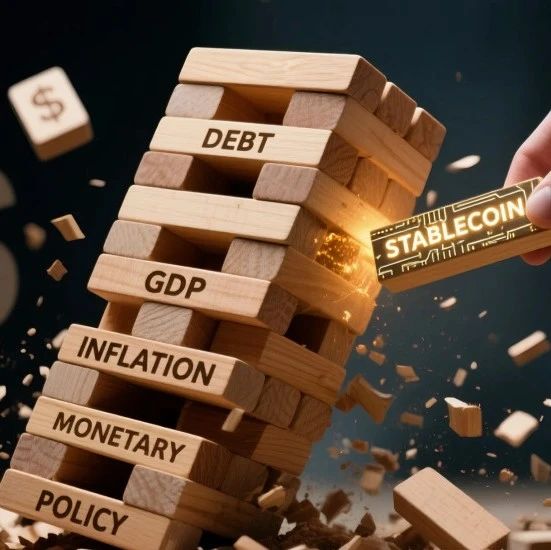
美元霸权科技碾压消费狂潮!美国GDP为何独领风骚?
Sou Hu Cai Jing· 2025-06-24 23:02
Group 1: Economic Overview - Developed countries are facing an "economic curse," with Japan's GDP stagnating for 30 years, Germany's industrial sector struggling, and France experiencing rising unemployment and protests. In contrast, the US GDP is projected to soar to $29.2 trillion in 2024, surpassing the combined GDP of Germany, Japan, and France [1] Group 2: Dollar Dominance - The US benefits from dollar hegemony, allowing it to receive foreign capital effortlessly. In 2024, the Federal Reserve's interest rate is expected to reach 5.5%, leading to a capital influx of $2.1 trillion from global investors. Approximately 80% of global trade is conducted in dollars, making other countries effectively subsidize the US economy [3][5] - Japan has suffered significantly, with the yen depreciating by 30% this year, resulting in a GDP shrinkage to $4.1 trillion when calculated in dollars [3] Group 3: Technological Superiority - The US technology sector, led by seven major companies, has significantly boosted the economy. The market capitalization of these companies surged by 54% last year, equivalent to recreating three Japanese stock markets. The US is also doubling its chip production capacity in three years, enhancing its control over global AI technology [5][9] - Notably, Apple's market value reached $3 trillion, surpassing Russia's entire GDP, showcasing the immense profitability of the US tech industry [5] Group 4: Consumer Spending - American consumer spending constitutes 70% of GDP, with $3.3 trillion spent in the last quarter alone. Credit card debt has exceeded $1.3 trillion, driven by a "wealth illusion" from rising housing prices and stock market gains [7] - The US government has injected $5 trillion into the economy during the pandemic, supporting 40 million low-income individuals with food vouchers, which has stimulated consumer spending [7] Group 5: Policy Strategies - The US government employs a dual strategy of monetary tightening and fiscal stimulus, with a $1.7 trillion deficit to stimulate the market. Significant subsidies have been allocated to the semiconductor industry, compelling foreign companies to share technology with US firms [9][10] - This approach has created challenges for European allies, as they must comply with US regulations to receive subsidies, impacting their own industries [10] Group 6: Long-term Concerns - Despite current economic success, the US faces a looming debt crisis with $36 trillion in national debt. Interest payments on this debt consumed 14% of federal spending last year, raising concerns about the sustainability of this economic model [12] - The reliability of the US economy is contingent on the continued acceptance of the dollar globally, with potential shifts towards alternative currencies posing risks to its economic dominance [12]
美元霸权下的挑战者:萨达姆与卡扎菲的宿命
Sou Hu Cai Jing· 2025-06-24 11:25
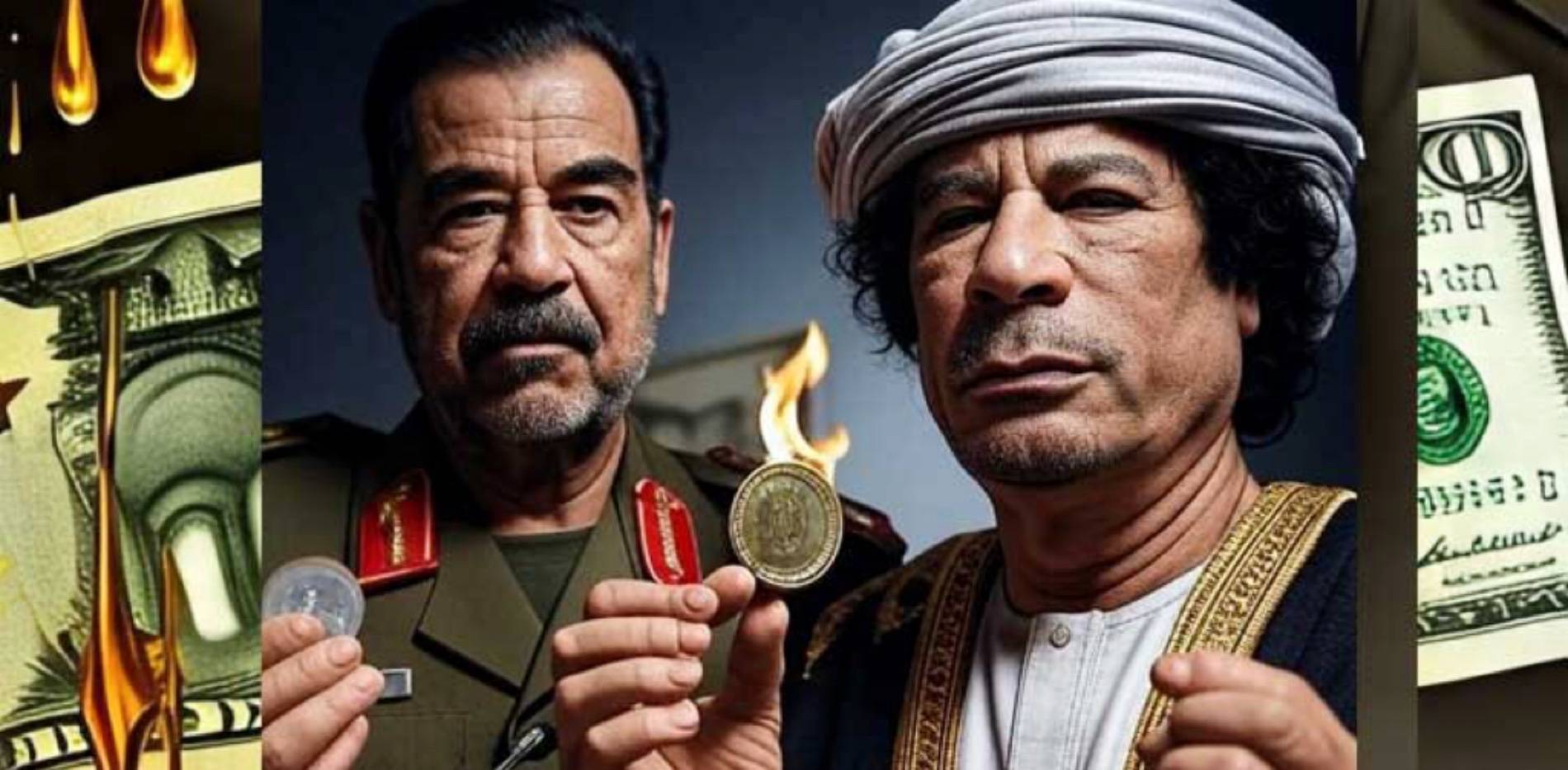
Group 1 - The article discusses the historical dominance of the US dollar as the global reserve currency, referred to as "dollar hegemony," and how this status has faced challenges from leaders like Saddam Hussein and Muammar Gaddafi [2][16]. - Saddam Hussein's decision in late 2000 to switch Iraq's oil sales from dollars to euros was a significant challenge to the "petrodollar" system, which has been a cornerstone of US economic influence [2][4]. - The shift to euros by Iraq reportedly cost the US economy hundreds of billions of dollars and raised concerns about a potential sell-off of dollar reserves, which could lead to a dollar collapse and economic crisis [4][16]. Group 2 - The article highlights that the US-led invasion of Iraq in 2003 was partly motivated by the need to restore oil pricing in dollars, ensuring the integrity of the petrodollar system [6][16]. - Gaddafi's ambition to create a gold-backed currency for Africa posed a threat to Western financial dominance, as it aimed to establish a regional alternative to the dollar [8][9]. - The military intervention in Libya in 2011, which resulted in Gaddafi's death, was also driven by the desire to prevent the establishment of the gold dinar and maintain the dollar's supremacy in African trade [12][16]. Group 3 - The article concludes that the fates of Saddam and Gaddafi serve as a warning about the high risks associated with challenging the dollar's global dominance, as their actions led to their downfall and the preservation of US economic interests [16][21]. - The narrative emphasizes that the stated reasons for Western interventions often mask deeper economic motivations aimed at maintaining the existing financial order [21].
特朗普再对美联储发飙,中国继续脱钩,又抛82亿,开辟第二战场
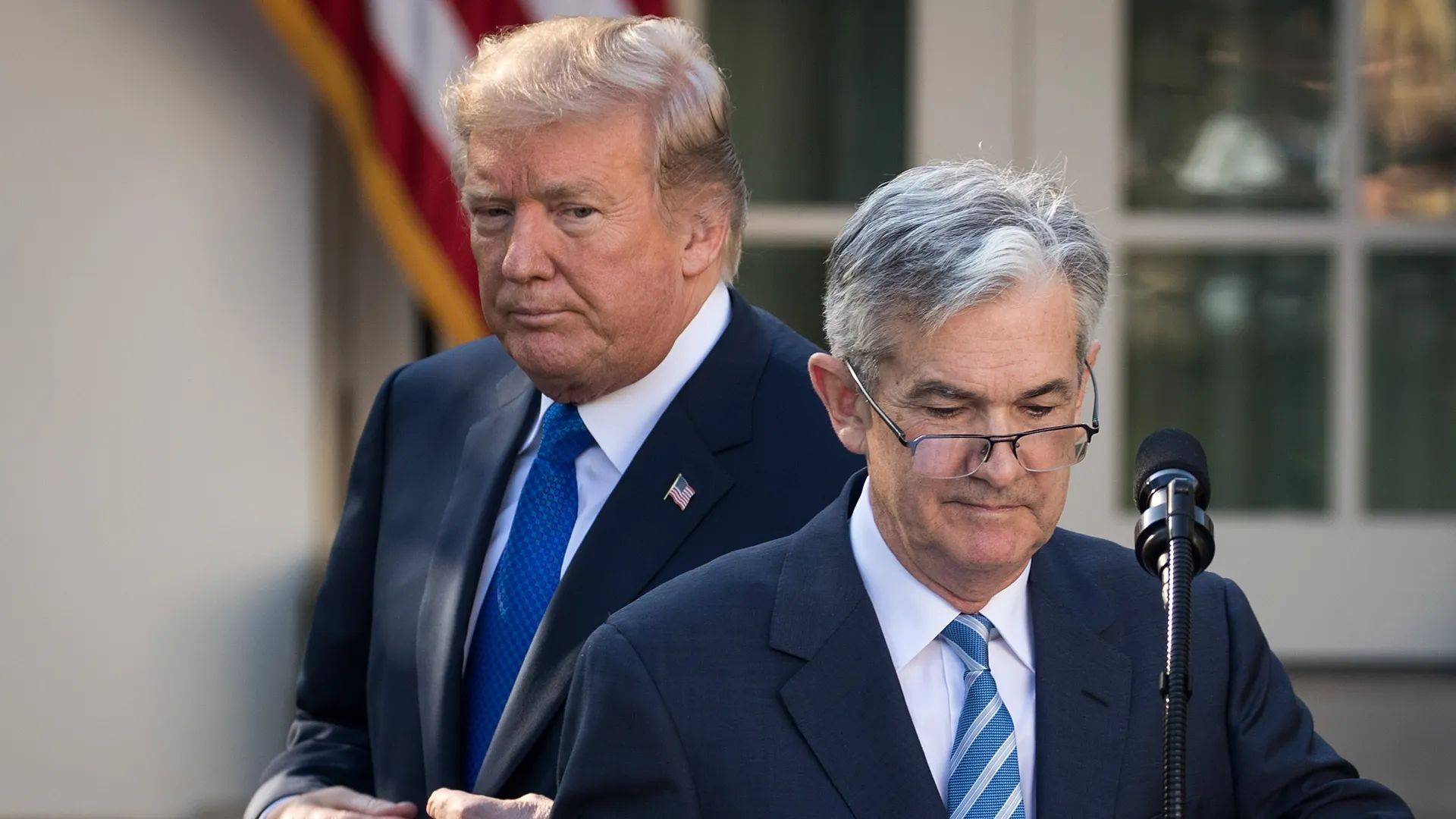
Sou Hu Cai Jing· 2025-06-24 01:27
美国经济最近有点绷不住了。GDP增速被美联储下调到1.4%,通胀预期却飙到3%,失业率还在往上爬。特朗普一看这数据,直接破防,对着美联储主席鲍 威尔就是一顿输出:"愚蠢!不如我自己去干!" 这话从年初一直说到现在,还是老样子。美联储今年第四次按兵不动,利率卡在4.25%-4.5%,特朗普急得跳脚,恨不得自己上手降息250个基点。可惜美联 储不是他家的,不是他发条帖子就能改政策的。 除了金融战,中国手里还有一张王牌,就是稀土。出口管制让美国汽车和军工企业急得跳脚,通用、福特只能拿到临时许可,供应链随时可能断供。中国控 制全球90%的稀土加工,这一招比关税狠多了。美国想用乙烷出口卡中国脖子,结果发现中国早就布局,进口依赖度从80%降到35%。 特朗普这么急,是因为他的关税政策玩脱了。4月他突然对中国商品加税到125%,结果中国反手就抛美债,全球市场跟着抖三抖。美国企业叫苦连天,公司 利润预期直接下调,零售数据跌得妈都不认。特朗普甩锅技能点满,把经济疲软的锅全扣在美联储头上。他说降息能省6000亿利息支出,但问题是,美债现 在没人要了,收益率狂飙,30年期都破5%了,财政部发新债的成本高得吓人。 中国这边也没闲着。 ...
美元霸权:现状评估、维系机制与对策建议
Guo Ji Jin Rong Bao· 2025-06-23 23:08
Group 1 - The current status of US dollar hegemony is facing unprecedented challenges, with a significant decline in its share of global foreign exchange reserves from 71% in 1999 to 57.4% in Q1 2024, marking a historical low [4][5][6] - Emerging markets, particularly Brazil and India, are actively reducing their dollar reserves, with Brazil and China agreeing to conduct trade settlements in local currencies, indicating a shift towards de-dollarization [4][5][6] - The dollar's share in international trade settlements has also shown a slight decline, with its current share at 49.08%, while the euro and yuan are gaining ground [12][13] Group 2 - The US federal debt has surpassed $36 trillion, with a debt-to-GDP ratio of 124%-125%, the highest since World War II, raising concerns about the sustainability of dollar hegemony [16][17][19] - The US is employing unconventional debt monetization strategies, including the introduction of century bonds and inflation-linked bonds, to maintain the attractiveness of dollar assets [40][41] - The Federal Reserve's aggressive monetary policy, including a cumulative rate hike of 500 basis points since March 2022, has led to significant global financial repercussions, exacerbating the trend of de-dollarization [21][22][24] Group 3 - The "de-dollarization" process has accelerated, with over 110 countries actively participating in initiatives to reduce reliance on the dollar, particularly following geopolitical tensions such as the Ukraine crisis [27][28] - Various regions are adopting different strategies for de-dollarization, with BRICS countries establishing local currency settlement systems and Southeast Asian nations planning to reduce dollar settlements in regional trade [28][29] - The challenges to de-dollarization include the high conversion costs associated with the dollar's established network effects and the depth of the US debt market, which remains unmatched by non-US markets [29][30]
整理:每日全球外汇市场要闻速递(6月23日)
news flash· 2025-06-23 06:04
Group 1: Dollar Insights - U.S. Treasury Secretary Yellen stated that stablecoins could reinforce the dollar's dominance [2] - Federal Reserve's Daly mentioned that risks to the Fed's goals are roughly balanced, requiring attention to both employment and inflation [2] Group 2: Currency Movements - The dollar to yen exchange rate surpassed 147, reaching a new high since May 14 [2] - The New Zealand dollar and Australian dollar both hit one-month lows against the U.S. dollar [2] - The dollar to Thai baht rose to its highest level since May 20 [2] Group 3: Economic Stimulus and Interest Rates - ECB Governing Council member Centeno indicated that the Eurozone economy requires additional stimulus from the European Central Bank [2] - Moody's suggested that the Bank of Thailand may cut interest rates by 25 basis points this week [2] - Mitsubishi UFJ noted that the Philippine peso, South Korean won, and Thai baht are more susceptible to the impact of rising oil prices [2]
一场国际金融暗战,正悄然展开
Xin Lang Cai Jing· 2025-06-22 16:14
Core Viewpoint - The introduction of the stablecoin regulation in Hong Kong signifies a potential challenge to the dominance of the US dollar in international finance, as major internet companies like Alibaba and JD.com are entering the market, and financial institutions worldwide are accelerating their involvement [1]. Group 1: Stablecoin Regulation and Impact - The new regulation allows cross-border e-commerce to settle transactions using stablecoins pegged to the Hong Kong dollar, reducing transaction fees by 80% compared to traditional USD settlements via SWIFT [2]. - The Hong Kong Financial Secretary has indicated that there is a possibility of stablecoins being pegged to the Chinese yuan, which could create tension for SWIFT [2]. - The stablecoin system enables faster transactions, allowing merchants to receive payments within hours, bypassing the traditional banking system [4][5]. Group 2: SWIFT and Financial Dominance - SWIFT, the global payment system used by over 11,000 institutions in more than 200 countries, has been a tool for the US to exert financial control and has been used in geopolitical conflicts [6][10]. - The US Senate has passed the "Guidance and Establishment of a National Stablecoin Innovation Act," which mandates stablecoin issuers to hold reserves in cash or US Treasury securities, reinforcing the dollar's dominance [10][13]. - The US aims to replicate the success of the "petrodollar" system by linking stablecoins to the dollar, effectively turning global payment needs into a means to absorb US national debt [13][14]. Group 3: China's Position and Strategy - China is exploring the issuance of stablecoins pegged to the yuan, leveraging the rapid internationalization of the yuan and existing currency swap agreements with various countries [15]. - The strategy is described as a "Go" tactic, where China aims to establish a foothold in areas where US dollar control is weaker, gradually encroaching on the dollar's central market [16]. - The recent downgrade of the US credit rating by Moody's raises questions about the stability of the dollar, suggesting that the dominance of the US dollar may be weakening [17].