
消费升级

Search documents
跨年夜上海消费者最爱买什么?黄金、美妆和服饰
Xin Lang Cai Jing· 2026-01-01 12:37
Group 1 - The core consumer preferences during the New Year's Eve in Shanghai included gold, beauty products, and sports apparel, aligning with retail statistics [1][3] - The First Eight Hundred Shopping Mall reported an 8% year-on-year increase in total sales during its carnival event, with significant foot traffic growth in double digits [3] - The New World City on Nanjing Road extended its operating hours to 12:30 AM on New Year's Day, with beauty products, gold jewelry, and sports brands being the top-selling categories [3] Group 2 - From January to November 2025, Shanghai's total retail sales of consumer goods reached 15,212.93 billion yuan, reflecting a year-on-year growth of 5.0% [4] - Shanghai accounted for 23.2% of the national sales in clothing and footwear, 10.9% in gold and jewelry, and 14.9% in daily necessities, with cosmetics having the highest share [4] - The retail sales of cosmetics in Shanghai from January to November 2025 reached 130.609 billion yuan, marking a 5.7% year-on-year increase and ranking fourth among nine categories of goods [4]

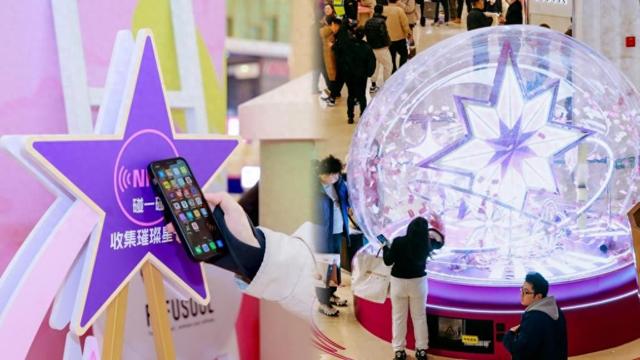
节假日消费观察|元旦假期首日上海接待游客逾270万人次,温泉洗浴成新宠
Di Yi Cai Jing· 2026-01-01 11:24
Group 1 - On the first day of the New Year holiday, Shanghai received a total of 2.7053 million visitors, with an average hotel occupancy rate of 75% [1] - The Shanghai tourism market operated smoothly during the holiday, indicating a strong recovery in the tourism sector [1] - The Shanghai Municipal Bureau of Culture and Tourism launched 120 one to three-day New Year travel itineraries covering various themes, enhancing the appeal of the city's cultural tourism [4] Group 2 - The first season of the Super Travel Guide Competition is ongoing, promoting diverse cultural and tourism activities for the 2026 New Year holiday in Shanghai [4] - Various themed events and activities are planned, including a New Year music concert and a themed event at the Oriental Pearl Tower, showcasing the city's vibrant cultural offerings [4] - The integration of dining, accommodation, and entertainment services in hot spring hotels and bathing centers has gained popularity, with significant increases in search volume for related services [8] Group 3 - The hot spring and bathing industry is expected to experience a golden development period from 2025 to 2030, driven by consumption upgrades, technological innovations, and supportive policies [8]

深度复盘2025消费大变局:政策与市场双轮驱动下的品牌重塑与科技共生
Sou Hu Cai Jing· 2026-01-01 10:13
Core Insights - The article emphasizes the importance of consumption as a key driver of economic growth in China, highlighting that it is a primary focus of government policy for 2025, aiming for a unique development path characterized by stability and progress [1][14]. Macroeconomic Context - In 2025, consumption's contribution to economic growth reached 53.5%, an increase of 9 percentage points from the previous year, showcasing its stability amid pressures on investment and exports [3]. - From January to November, the total retail sales of consumer goods grew by 4.0% year-on-year, with service retail sales leading at a growth rate of 5.4% [3]. Trends in Consumption - **Smart Replacement Trend**: The introduction of long-term special government bonds and local subsidies has led to a surge in sales from old-for-new consumption, exceeding 2.5 trillion yuan, marking a significant reduction in consumption barriers [4]. - **Emotional Value Rise**: A notable 56.3% of Generation Z consumers are willing to pay for emotional experiences, indicating a shift from functional consumption to products that resonate emotionally [7]. - **Channel Revolution**: Online retail sales of physical goods approached 26%, with live e-commerce and instant retail reshaping consumption dynamics, particularly in previously underserved county markets [10]. - **Supply-Side Awakening**: The light industry and manufacturing sectors are proactively creating new demand by eliminating low-value capacity and adopting smart manufacturing technologies [11]. Expert Perspectives - A leading brand expert highlights that the 2025 consumer market signifies a new cycle of "brand technology," where successful companies leverage both hard technology and emotional appeal to thrive in a competitive landscape [12]. - The expert stresses that digital transformation is essential for survival in the market, advocating for deep integration of technological innovation throughout the product lifecycle to elevate "Chinese manufacturing" to "Chinese branding" [12]. Conclusion - The article concludes that the "steady progress" in the consumer market is a result of effective policy and market vitality, suggesting that the future of China's consumption landscape will continue to evolve through structural reforms and the emergence of new productive forces [14].
2025年,家电以旧换新超1.29亿件
Xin Lang Cai Jing· 2026-01-01 09:28
Core Insights - The implementation of the old-for-new consumption policy since 2025 has significantly boosted sales and consumer engagement, with over 2.6 trillion yuan in sales benefiting more than 360 million people [1][2] Group 1: Economic Impact - The policy has supported continuous expansion in consumption, with retail sales of consumer goods growing by 4.0% year-on-year from January to November, accelerating by 0.5 percentage points compared to the previous year, and contributing over 1 percentage point to total retail sales [1] - Retail sales of home appliances have surpassed 1 trillion yuan, breaking historical records [1] Group 2: Industry Upgrades - In the automotive sector, nearly 60% of old vehicles replaced were new energy vehicles, leading to a retail market share of over 50% for new energy passenger cars for nine consecutive months, reaching 59.4% in November [1] - Over 90% of home appliances replaced were first-level energy efficiency products, indicating a significant upgrade in product quality [1] - Sales of communication equipment have shown continuous growth for 11 months [1] Group 3: Environmental Benefits - The recycling of scrapped vehicles increased by 24.5% in 2025, resulting in the recycling of approximately 9.6 million tons of steel and 1.3 million tons of non-ferrous metals, which reduced carbon emissions by about 24.5 million tons [1] Group 4: Quality of Life Improvement - Since the full implementation of the policy in September 2024, over 480 million direct subsidies have been issued to consumers, facilitating the entry of numerous green, low-carbon, and smart products into daily life [2] - For every two new household cars sold, one benefited from the old-for-new subsidy, and the replacement of old electric bicycles exceeded nine times that of 2024, with 90% of new bicycles meeting current national safety standards [2] Group 5: Boosting Offline Retail - The policy has led to increased consumer foot traffic in physical stores, enhancing cross-scenario consumption in leisure, entertainment, and dining, with a reported 30% increase in consumer spending in areas with concentrated home appliance replacement stores [2]
消费升级会助长浪费吗?
Ren Min Ri Bao· 2026-01-01 07:25
Group 1 - The core viewpoint of the articles highlights the evolving trends in tissue paper consumption, emphasizing the relationship between consumption upgrades and waste reduction [1][2] - There are three main trends in tissue paper consumption: 1) scenario refinement with a growing market segmentation, introducing new products like hanging tissue and oil-removing wet wipes; 2) quality prioritization where consumers are willing to pay more for high-quality products; 3) increased focus on green and eco-friendly options, such as the popularity of mini tissue packs and biodegradable paper [1] - The green trend, exemplified by bamboo pulp tissues, not only reduces deforestation but also minimizes paper waste during use, thereby attracting more consumers and aligning consumption with waste reduction [1] Group 2 - New consumer demands are driving new supply, with innovations in eco-friendly materials like bamboo fiber and sugarcane residue, as well as the design of appropriate specifications and the introduction of biodegradable products [2] - The integration of high-quality usage with environmental sustainability is achievable through the promotion of green products, which can stimulate consumption while ensuring eco-friendliness [2]
外资机构:消费在中国GDP中的占比将继续提升
Xin Lang Cai Jing· 2026-01-01 06:23
万事达卡经济研究所研究报告指出,2026年中国消费将呈现出显著的强化趋势,"新消费"品类——如美 容健康、新兴生活方式以及由"粉丝经济"驱动的消费热潮有望持续扩容。特别是消费者从追求"单纯低 价"转向拥抱"精明消费"的变革趋势,正重塑中国零售业与数字渠道的生态。 德意志银行中国区首席经济学家熊奕表示,2026年消费将继续成为中国经济增长的主引擎,预计将为 GDP贡献2.8个百分点,商品消费或将录得温和增长,服务消费亦将在政策支持下持续改善。 中新社上海1月1日电 (记者 姜煜)新年伊始,多家外资机构展望2026年中国经济发展前景时不约而同指 出:消费仍是主引擎,其在中国GDP中的占比将继续提升。 据威灵顿投资管理宏观策略师郁嘉言分析,2025年,中国消费的复苏得益于强有力的财政支持,一个可 喜的迹象是,消费结构正在由商品转向服务,消费者更愿意把钱花在休闲旅游、外出就餐、个人兴趣爱 好及生活方式等体验和享受型消费方面。与此同时,部分细分领域出现高端化趋势,消费者更青睐产品 的设计与品质,而非价格。这些都是在消费信心回升以及商品供给充裕背景下出现的新型消费升级形 态。 "2026年,消费在中国GDP中的占比将继续 ...
2026国补定调!北京移动双重优惠加码 全力提振消费
Xin Lang Cai Jing· 2026-01-01 01:16
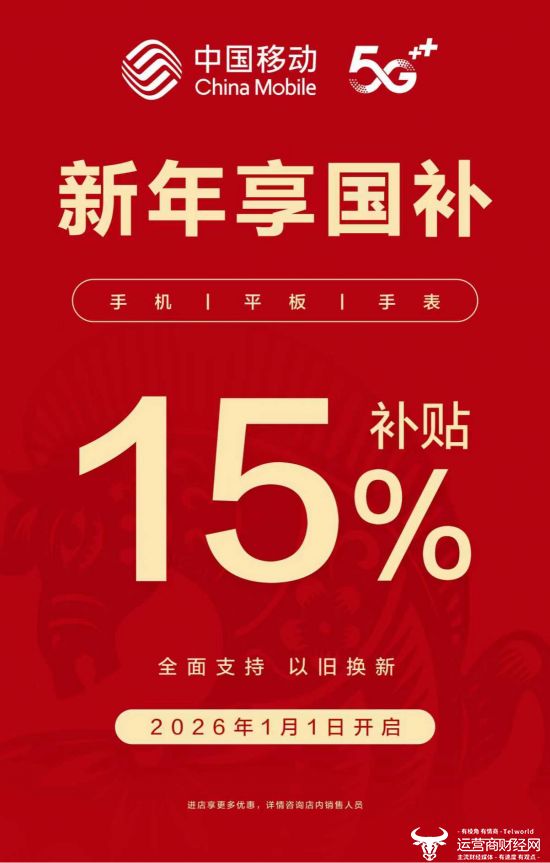
Core Viewpoint - The recent announcement by the National Development and Reform Commission and the Ministry of Finance confirms the continuation of subsidy policies for the "Two New" initiative, signaling strong support for consumer upgrades [1] Group 1: Policy and Support Measures - The notification outlines the support scope, subsidy standards, and work requirements for the "Two New" policy by 2026, emphasizing the need to enhance consumption convenience in rural areas [1] - Measures include increasing offline business entities in rural areas and guiding online channels to focus on these regions [1] Group 2: Company Response - Beijing Mobile has quickly responded to the national policy by launching substantial consumer incentives, including a dual benefit program combining device purchase discounts with national subsidies [1] - The "Save and Buy" program allows users to participate by committing to a 24-month contract with monthly spending between 238 to 598 yuan, offering discounts up to 2600 yuan based on spending tiers [1] Group 3: Product and Discount Details - The implementation of mobile contract discounts combined with national subsidies allows consumers to receive an additional 15% subsidy on the final price, with a maximum product subsidy of 500 yuan [2] - For example, the popular model vivo S50, priced at 3299 yuan, can offer total discounts of up to 1939.85 yuan when participating in the "Save and Buy" program [2] Group 4: Market Context and Future Plans - The launch of these discount activities aligns with the growing demand for digital products as the consumer market continues to recover [4] - Beijing Mobile aims to enhance service processes, diversify product offerings, and upgrade discount activities to further stimulate regional consumption vitality [4]
2025年浙江以旧换新销售额逾3000亿元
Xin Hua Wang· 2026-01-01 01:16
Core Insights - The province's consumer goods trade-in program is projected to achieve over 300 billion yuan in sales by 2025, benefiting approximately 19 million people and promoting green, intelligent, and low-carbon products [1][2] Group 1: Policy Implementation - In 2026, the province will continue and optimize the consumer goods trade-in policy, focusing on upgrading consumption and improving livelihoods [1] - The policy will target high-demand sectors such as automobiles, home appliances, and 3C digital products, with a specific emphasis on popular items like air conditioners, refrigerators, and televisions [1] Group 2: Green and Intelligent Products - The 2026 policy will expand subsidies to include emerging fields like smart terminals, including AI glasses, to foster new consumption growth points and accelerate the adoption of green and intelligent products [1] Group 3: Support for Rural Areas and Offline Entities - The policy will enhance support for offline entities and rural areas, promoting balanced development between online and offline channels [2] - Initiatives like "new energy vehicles to the countryside" and "home appliances to the countryside" will continue to ensure rural residents benefit equally from policy advantages [2] Group 4: Funding and Implementation Stability - National subsidy funds will be allocated on a monthly basis to ensure stable and orderly implementation of the policy, avoiding fluctuations [2]
仪式感热潮折射文旅消费转向
Xin Lang Cai Jing· 2025-12-31 23:12
Core Insights - The article emphasizes the importance of creating emotionally resonant and personalized experiences in the tourism industry, particularly through the concept of "ceremony" as a driving force for cultural and tourism consumption [1][5]. Group 1: Understanding the Concept of Ceremony - The concept of "ceremony" transcends mere time marking and has become a significant driver of cultural tourism consumption, reshaping the value logic on both supply and demand sides [1]. - Ceremony is defined as the transformation of abstract time concepts into tangible emotional experiences, providing psychological comfort through collective resonance or personal reflection [1][2]. - The emotional value provided by ceremony is the core competitive advantage that distinguishes it from ordinary tourism products, fulfilling not only the basic need to "see the scenery" but also the spiritual pursuit of "finding resonance" [1][2]. Group 2: Evolving Role of Tourists - Tourists are increasingly becoming co-creators of their ceremonial experiences rather than passive recipients, engaging in activities that reflect their personal narratives [2]. - The personalization of ceremonial experiences allows tourists to transition from being mere observers to active participants, enhancing the emotional significance of these experiences [2][3]. - This shift indicates a broader trend in tourism consumption moving from standardized products to emotionally and personally tailored experiences [2]. Group 3: Strategic Upgrades for the Tourism Industry - The industry should focus on building an open ecosystem of experiences, offering modular products and customizable elements that allow tourists to create their own unique experiences [3]. - Establishing cross-industry value networks is essential, encouraging collaboration with sectors like technology, entertainment, and retail to enhance the immersive and interactive aspects of ceremonies [3][4]. - A commitment to sustainable value orientation is crucial, ensuring that emotional resonance and value recognition take precedence over superficial trends and high traffic [4][5]. Group 4: Innovation and Authenticity - The industry must avoid homogenization by deeply exploring local cultural elements and integrating traditional customs with modern aesthetics to maintain uniqueness [5]. - Respecting genuine emotional needs of tourists is vital, as superficial experiences lacking emotional logic will ultimately be rejected by the market [5]. - The competition in the future of cultural tourism will fundamentally revolve around emotional value, necessitating the creation of warm, meaningful, and personalized ceremonial products to truly engage consumers [5].
重新定义“跨年饭”
Xin Lang Cai Jing· 2025-12-31 23:12
Core Viewpoint - The "New Year's Eve Dinner" has evolved into a micro-celebration that integrates social, emotional, and cultural experiences, reflecting a shift in consumer demand from resource acquisition to experiential enjoyment [1] Group 1: Characteristics of "New Year's Eve Dinner" Consumption - The rise of scene-based consumption emphasizes experiential value over the product itself, with consumers willing to pay a premium for immersive experiences that include visual, auditory, and emotional elements [2] - Localized and nearby consumption trends are increasing, with "micro-vacations" becoming the norm as consumers seek to celebrate New Year's Eve in familiar environments while discovering new experiences [2] - There is a growing demand for cultural recognition and deep participation, moving from superficial experiences to emotional resonance and knowledge acquisition, as seen in themed dining experiences that reflect local history and culture [3] Group 2: Industry Response to "New Year's Eve Dinner" Trends - The industry should focus on refined operations to meet diverse consumer needs, offering targeted packages for different demographics such as couples, families, and seniors [4] - Cultural empowerment should be deepened to create unique regional dining experiences that tell local stories and reflect cultural heritage, enhancing the appeal of "New Year's Eve Dinner" [4] - Promoting industry collaboration is essential to build a comprehensive consumption ecosystem, integrating dining with shopping, transportation, accommodation, and entertainment to enhance consumer convenience and experience [5]