
以旧换新政策

Search documents
前4个月南京规上工业增加值同比增长6.2%
Shang Hai Zheng Quan Bao· 2025-05-26 11:53
Economic Overview - Nanjing's economy has shown stable growth in the first four months of 2025, building on a strong start in the first quarter [1] - Key economic indicators reflect the city's commitment to economic development and project promotion [1] Industrial Performance - The industrial added value in Nanjing increased by 6.2% year-on-year from January to April, improving by 0.9 percentage points compared to the same period last year and by 3.0 percentage points compared to the entire previous year [1] - Manufacturing added value grew by 6.8%, with the automotive manufacturing sector experiencing a significant increase of 29.3% year-on-year due to the export of new energy vehicles [1] - The electrical machinery and pharmaceutical industries also saw substantial growth, with increases of 19.8% and 15.9% respectively, driven by new lithium battery models and mass production of new drugs [1] Fixed Asset Investment - Fixed asset investment in Nanjing decreased by 5.9% year-on-year in the first four months, but the decline was narrowed by 1.3 percentage points compared to the first quarter [1] - Manufacturing investment rose by 10.1%, contributing 36.2% to the overall investment growth [1] - Investment in equipment and tools increased by 18.2% year-on-year, while high-tech industry investment grew by 13.2%, with high-tech manufacturing investment surging by 26.9% [1] Consumer Market - The total retail sales of social consumer goods in Nanjing reached 294.46 billion yuan, marking a year-on-year growth of 5.9%, which is an increase of 2.5 percentage points compared to the same period last year and 1.6 percentage points compared to the previous year [2] - The "old-for-new" policy has boosted retail sales in various categories, with home appliances and audio-visual equipment, cultural and office supplies, communication equipment, and automotive goods seeing year-on-year growth of 15.9%, 38.1%, 37.8%, and 10.3% respectively [2] Price Trends - Consumer prices in Nanjing decreased by 0.4% year-on-year in the first four months, with specific categories such as clothing, education, culture, entertainment, and healthcare seeing slight increases [2] - The industrial producer price index fell by 1.9% year-on-year, while the purchasing price index for industrial producers decreased by 2.5% [2]
以旧换新政策杠杆效应明显,汽车销量正从“量变”到“质变”
3 6 Ke· 2025-05-26 10:15
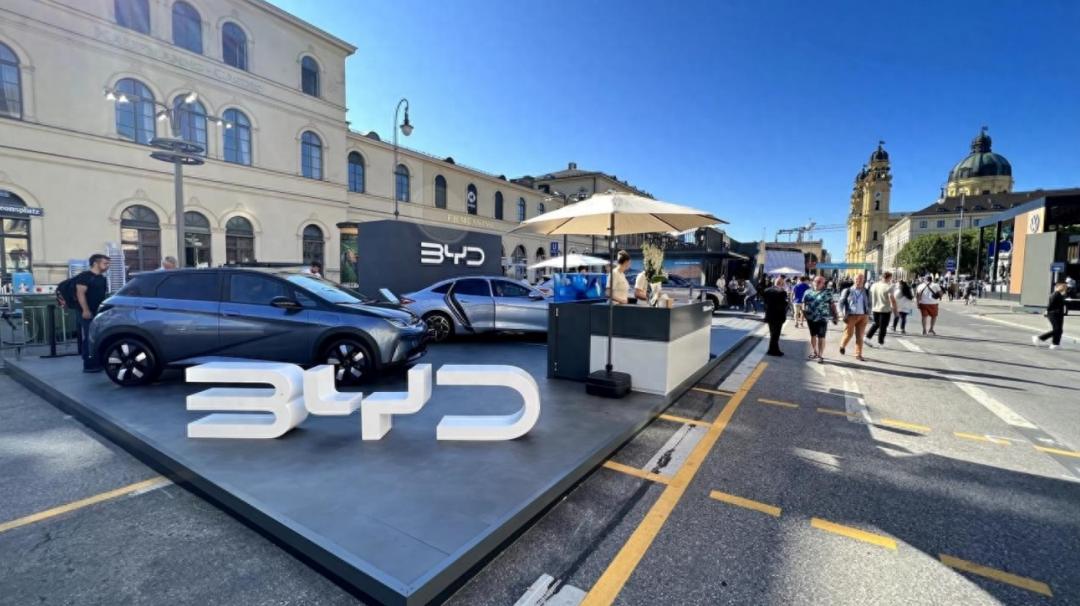
Group 1 - The "old-for-new" policy has significantly boosted consumption, with over 10 million subsidy applications and a consumption increase of nearly 8% in early 2025 [1][2] - The penetration rate of new energy vehicles (NEVs) in the replacement market has surpassed 50%, indicating a clear shift from traditional fuel vehicles to NEVs [1][2] - The policy has activated the stock market and accelerated the replacement of fuel vehicles with NEVs through a dual-track system of scrapping and replacing [2][3] Group 2 - The market is experiencing a reshuffle, with traditional fuel vehicle manufacturers facing production capacity pressures while leading NEV brands gain market share through technological advantages [3] - The acceptance of NEVs by consumers is shifting from policy-driven to value recognition, driven by technological advancements and innovative business models [4] - The price range of NEVs is rapidly descending into the mainstream market, with models priced between 100,000 to 200,000 yuan now accounting for over 60% of the market [4] Group 3 - Chinese automotive exports have increased by 28% in early 2025, with companies like Tesla and BYD expanding their market share in Southeast Asia and Europe [5] - Globalization presents challenges due to trade barriers, prompting companies to build localized production and compliance capabilities [7] - The end of the new energy vehicle purchase tax exemption in 2026 raises concerns about maintaining high growth in the market, with some companies already facing profit pressure [8]


以旧换新 成经济新引擎
Guo Ji Jin Rong Bao· 2025-05-26 09:52
Group 1 - The core viewpoint of the articles emphasizes that the "old-for-new" policy is significantly boosting China's consumer market, with over 100 million appliances purchased under this initiative since its implementation in August 2024 [1][2] - The policy is contributing to a 5.8% year-on-year growth in the wholesale and retail sector, with a value added of 3.3 trillion yuan in the first quarter, highlighting its role as a key driver of GDP growth [1] - The "old-for-new" policy not only expands market size but also optimizes the consumption structure, leading to qualitative upgrades in the consumer market [1][3] Group 2 - The digital and intelligent transformation in the home appliance market is being accelerated by the "old-for-new" policy, with retail sales of communication equipment rising by 26.9% year-on-year and smart home product penetration exceeding 60% [2] - The integration of AI technologies into home appliances marks a shift from "pseudo-intelligence" to genuine functional enhancement, driving growth in the industry [2] - The policy is fostering a complete recycling and utilization system for home appliances, establishing a recovery network covering 2,800 counties and creating 100,000 jobs in the reverse logistics sector [3] Group 3 - The "old-for-new" policy is crucial for promoting sustainable economic and ecological development, addressing challenges in the circular economy, and enhancing resource recycling systems [3] - In 2024, the recovery of waste home appliances is expected to exceed 630,000 tons, with a projected total recovery of 200 million units this year, significantly reducing carbon emissions [3] - The policy is transforming China from a "world factory" to a "global resource recycling center," improving the self-sufficiency of critical mineral resources [3] Group 4 - The "old-for-new" policy transcends short-term economic stimulus, serving as a new driving force for China's economic transformation and a window into the quality of economic development [4] - It showcases the unique advantages of China's large-scale market and reflects the foresight of policy design, stabilizing economic growth while injecting new momentum into industrial transformation [4] - This practice of reform based on public demand, driven by technological innovation and guided by green transformation, provides a vivid example for Chinese modernization and offers valuable insights for sustainable development in other developing countries [4]
江苏前四个月工业成绩单亮眼
Zhong Guo Chan Ye Jing Ji Xin Xi Wang· 2025-05-26 00:41
Industrial Performance - Jiangsu's industrial economy showed strong performance from January to April, with a year-on-year increase of 8.1% in industrial added value for large-scale industries [1] - In April, the industrial added value for large-scale industries grew by 8%, with significant growth in equipment manufacturing (10.9%), high-tech manufacturing (12.9%), and core digital product manufacturing (11.4%) [1] - Key industries such as computer, communication, and other electronic equipment manufacturing, electrical machinery and equipment manufacturing, and automobile manufacturing saw growth rates of 14.7%, 11.5%, and 11.6% respectively [1] Investment Trends - Fixed asset investment in Jiangsu decreased by 0.2% from January to April, but infrastructure investment increased by 10.9% and manufacturing investment rose by 4.7% [1] - Investment in the purchase of large-scale equipment and tools increased by 11.1% year-on-year during the same period [1] Consumer Market Insights - The total retail sales of social consumer goods in Jiangsu reached 15,991.9 billion yuan, marking a year-on-year growth of 5.5% from January to April [2] - The "old-for-new" policy boosted retail sales in April, with household appliances and audio-visual equipment sales increasing by 13.2% and automotive sales by 9.1%; new energy vehicle sales surged by 59.7% [2] - Year-on-year sales growth in wholesale and retail sectors was 8.5% and 11.3% respectively, while accommodation and catering sectors saw increases of 6.6% and 9.3% [2] Price Trends - In the industrial producer price sector, both the producer's ex-factory prices and purchase prices decreased by 2.5% and 2.3% respectively from January to April [2] - In April, the ex-factory prices and purchase prices fell by 2.8% and 2.7% year-on-year [2]
A股第一!2400亿巨头涨停
天天基金网· 2025-05-23 12:20
Core Viewpoint - The article discusses the recent performance of the A-share market, highlighting the decline of major indices while certain sectors like automotive and pharmaceuticals showed resilience and growth potential [1][8]. Group 1: Automotive Sector - The automotive sector, led by the stock of Saiers, saw significant gains, with Saiers closing at 145.87 yuan, just shy of its historical high of 148.59 yuan [4]. - The overall automotive sector was buoyed by positive sales data, with a reported 93.2 million retail sales of passenger vehicles from May 1 to May 18, marking a 12% year-on-year increase [6]. - The Ministry of Commerce reported that as of May 11, 2025, the number of applications for vehicle trade-in subsidies reached 3.225 million, indicating strong consumer demand [6][7]. Group 2: Pharmaceutical Sector - The pharmaceutical sector also performed well, with significant gains in medical services and chemical pharmaceuticals, highlighted by stocks like Yiyuan and Zhongsheng Pharmaceuticals reaching their daily limits [9]. - The listing of Heng Rui Pharmaceutical on the Hong Kong Stock Exchange saw its stock price surge by 25.2%, positively impacting the overall pharmaceutical market [9]. - The innovative drug market in China is projected to exceed 750 billion yuan by 2025, with an annual growth rate of 18%, indicating strong future potential for investment in this sector [9][10]. Group 3: Market Outlook - The overall market is expected to maintain a steady upward trend, supported by economic recovery and favorable policies, with a focus on structural opportunities [11]. - Analysts predict that the automotive sector will benefit from the trade-in policy, with a forecasted wholesale growth rate of 31% for new energy passenger vehicles [7]. - The market is characterized by a preference for small and micro-cap stocks, which have shown resilience and growth potential amid a stable economic environment [11].

以旧换新政策带动广东4月家具建材零售增速创新高
Nan Fang Du Shi Bao· 2025-05-23 11:55
Core Insights - Guangdong's consumer market is showing significant recovery, driven by the successful implementation of the trade-in policy, leading to record retail growth in furniture and building materials [1][6] Retail Performance - In April, Guangdong's total retail sales of consumer goods increased by 4.9% year-on-year, with a 0.5 percentage point improvement from the first quarter [3] - Retail sales of household appliances and audio-visual equipment, furniture, and building materials surged by 86.9%, 123.5%, and 156.9% respectively, marking historic highs for furniture and building materials [3][6] - Nationally, retail sales of household appliances and furniture grew by 38.8% and 26.9% respectively in April, while building materials saw a monthly increase of 9.7% [3] Online Consumption and New Business Models - From January to April, Guangdong's manufacturing sector grew by 4.1%, with notable increases in computer and communication equipment (7.1%), automotive manufacturing (7.8%), and general equipment (10%) [4] - Online retail through public networks saw a year-on-year increase of 20%, with April's growth reaching 31.9%, indicating a strong shift towards online shopping [5] Trade-in Policy Impact - The trade-in policy in Guangdong has significantly boosted retail growth in home furnishings and building materials, with 2024 sales reaching 153.45 billion yuan, benefiting over 11.28 million consumers [6] - The policy has been expanded for 2025 to include smart home products and aging-friendly renovations, with substantial subsidies for vehicle trade-ins and home appliance upgrades [6] - Retail sales for home appliances, furniture, and building materials in the first four months of 2025 grew by 44%, 60.6%, and 29.2% respectively, far exceeding national averages [6]
新能源车ETF基金(516660)早盘涨1.68%,比亚迪股价再创历史新高,4月欧洲纯电车销量首次超越特斯拉
2 1 Shi Ji Jing Ji Bao Dao· 2025-05-23 04:19
Group 1 - The core viewpoint highlights that BYD has surpassed Tesla in electric vehicle sales in Europe for the first time, marking a significant shift in the market dynamics [1] - BYD's electric vehicle registration sales in April reached 7,231 units, representing a 169% year-on-year increase, positioning the company among the top ten electric vehicle brands [1] - In contrast, Tesla's registration sales plummeted by 49%, resulting in a drop in its market ranking [1] Group 2 - Zhongtai Securities expresses optimism for investment opportunities in the automotive and smart driving sectors, indicating limited adjustments during the off-season in Q1 2025 [2] - The report suggests that the upcoming vehicle replacement policy is expected to support the automotive sector, with a strong likelihood of order reversals in the near future [2] - Guotai Haitong Securities notes that advancements in autonomous driving technologies, such as NOA and Robotaxi, are beginning to yield financial returns, benefiting companies with strong model capabilities and innovative components [2]
林云松:以旧换新撬动行业新机遇 智能化家装引领行业未来
Sou Hu Cai Jing· 2025-05-23 01:35
新华网北京5月23日电(聂静)5月21日,新华网与东方雨虹联合主办的《焕新了家装》第二季启动 发布会暨2025家装领军企业巡礼在北京举办。尚层装饰集团创始人、董事长林云松在接受采访时表示, 智能家装正逐渐从高端消费转变为家庭必备,会像手机和新能源车的智能功能一样普及。 "以旧换新政策不仅直接刺激消费,更与行业技术积累形成共振,推动家装行业迎来新一轮的发展 机遇。"林云松表示,过去20年新建的住宅,按照装修周期,已进入更新换代阶段。同时,随着居住时 间的推移以及材料技术的发展,家装行业也迎来了从量变到质变的关键时期。"无论是行业自身发展的 需求,还是人们对美好生活的向往,亦或是产品更新和技术积累,都促使以旧换新政策成为推动家装行 业前进的有力抓手。" 在林云松看来,智能化是家装行业未来明确的发展趋势。他以人们生活中的"人、车、家"场景为 例,当下手机已成为人们不可或缺的智能工具,新能源车在交通领域的智能化程度也不断提升。而家庭 作为重要的生活场景,必然会从传统空间向智能空间转变。他认为,随着AI技术的进步,智能家装将 真正实现为人们服务,不再是过去那种徒有其表的"伪智能"。 除智能化外,林云松认为家装行业还将呈 ...

国补激活换新消费潮 两轮车产业驶入量价齐升“快车道”
Zheng Quan Shi Bao· 2025-05-22 17:29
Core Insights - The two-wheeler market in Beijing is experiencing a significant increase in customer traffic, driven by national subsidy policies that encourage consumers to trade in old vehicles for new ones, resulting in a net cost of around 1000 yuan for new bikes priced at approximately 2000 yuan [1][2][3] - Major two-wheeler manufacturers are optimistic about the market outlook for the year, with expectations of increased sales and production capacity due to improved supply and demand dynamics [1][5] - The implementation of new national standards has accelerated the elimination of less competitive manufacturers, leading to an overall optimization of supply in the industry [1][8] Market Dynamics - The "Five One" holiday period saw a remarkable increase in sales for companies like Niu Electric, with a 120% year-on-year increase in sales and a nearly 80% increase in customer traffic [2][3] - The most popular models are priced between 1800 to 2200 yuan, with some models already sold out, indicating strong demand [3] - The national subsidy program provides 500 to 650 yuan for new purchases, with additional incentives for trading in old lithium-ion battery bikes, further stimulating consumer interest [3][4] Future Projections - The two-wheeler market is expected to see a double-digit growth in sales by 2025, driven by both new demand from delivery services and the replacement of older models [5][9] - The cumulative number of old bikes traded in and new ones purchased since the launch of the subsidy program has reached 532.3 million, indicating a successful policy impact [5] - Companies are ramping up production capabilities, with Niu Electric expecting to produce between 1.3 million to 1.6 million units this year, reflecting a growth of 40% to 70% [7][8] Supply Chain and Product Development - The new national standards set to be implemented in 2025 will enhance product quality and safety, leading to a more competitive market landscape [8][9] - Companies are focusing on smart features and digital upgrades in their products, aligning with consumer preferences for enhanced functionality [9] - The industry is witnessing a shift towards intelligent and green manufacturing, with companies like Aima and Niu Electric actively expanding their product lines and production bases [6][7][9]
京东集团-SW:京东集团25Q1点评:业绩继续超预期,关注新业务进展-20250522
Orient Securities· 2025-05-22 13:25
Investment Rating - The report maintains a "Buy" rating for JD Group [4][11] Core Views - JD Group's Q1 2025 performance exceeded expectations, with revenue of 3010.8 billion yuan, a year-on-year increase of 15.8%, and adjusted net profit of 127.6 billion yuan, up 43.4% year-on-year [8] - The company has adjusted its revenue forecasts for 2025-2027 to 12832/13637/14266 billion yuan, reflecting an increase in product revenue growth [3][11] - The adjusted net profit forecasts for the same period are 433/489/518 billion yuan, with a decrease due to increased investment in the food delivery business [3][11] Financial Performance Summary - Q1 2025 revenue breakdown: - Product revenue reached 2423.1 billion yuan, up 16.2% year-on-year - Service revenue was 587.7 billion yuan, up 14.0% year-on-year [8] - JD Retail's Q1 2025 revenue was 2638.5 billion yuan, with an operating profit margin of 4.87% [8] - JD Logistics reported Q1 2025 revenue of 469.7 billion yuan, with an operating profit margin of 0.31% [8] - New business revenue in Q1 2025 was 57.5 billion yuan, with an operating loss of 13.3 billion yuan due to increased investment [8] Shareholder Returns - In Q1 2025, JD Group repurchased approximately 80.7 million shares for about 1.5 billion USD, representing 2.8% of the total shares outstanding as of the end of 2024 [8]
