
反内卷政策

Search documents
光控资本:本轮A股慢牛行情的根基并未动摇
Sou Hu Cai Jing· 2025-11-04 04:58
Group 1 - The A-share market showed a rebound on Monday, with all three major indices turning positive, indicating a potential recovery phase despite previous declines [3] - Market risk appetite has decreased, reflected in reduced trading volume and a shift towards undervalued stocks, particularly in the context of the recent performance of profit and micro-cap indices [1][3] - The technology sector has undergone adjustments, and while other sectors have shown activity, there is a lack of a new leading theme to drive the market, suggesting cautious sentiment among investors regarding high valuations [1][3] Group 2 - The Federal Reserve's member Waller indicated that further interest rate cuts may be necessary in December due to potential job growth slowdowns, which could influence market dynamics [3] - The upcoming November period is critical for policy effectiveness and fourth-quarter earnings verification, with the "14th Five-Year Plan" focusing on high-quality development and technological self-reliance, potentially supporting market sentiment [3] - The market is expected to continue its slow bull trend, with the possibility of the A-share index challenging the 4000-point mark, although individual stock performance will require close monitoring [3]


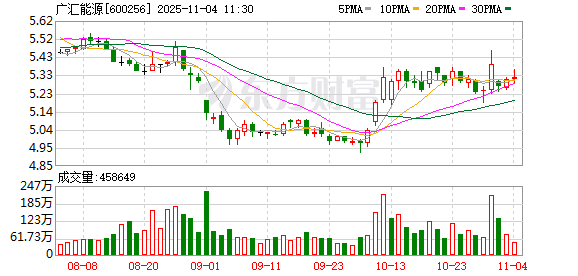
煤炭行业度“寒冬” 广汇能源迎底部反转机遇
Zheng Quan Shi Bao Wang· 2025-11-04 03:49
Core Viewpoint - The coal sector in A-share listed companies has confirmed a cyclical bottom, with supply-demand dynamics showing signs of reversal, leading to a release of downward risks [2][4]. Group 1: Financial Performance - In Q3 2025, the SW coal sector reported revenues of 297.9 billion yuan, a year-on-year decline of 16.5%, and a net profit attributable to shareholders of 27.6 billion yuan, down 30.3% year-on-year [2]. - Guanghui Energy's Q3 2025 report showed revenues of 22.53 billion yuan and a net profit of 1.012 billion yuan, impacted by declining sales prices of main products, but cash flow from operating activities increased by 6.14% year-on-year to 4.315 billion yuan [2][3]. - The company's Q3 sales gross margin was 16.35%, up 3.41 percentage points from Q2, marking the best performance for the third quarter in three years [3]. Group 2: Production and Market Dynamics - Guanghui Energy's coal production in the first three quarters reached 38.68 million tons, a year-on-year increase of 78.64%, while coal sales were 40.03 million tons, up 39.92% [6]. - The overall coal production in the country showed a decline, with 13 out of 23 coal-producing provinces reporting a year-on-year decrease [5][6]. - The company is focusing on enhancing the quality of coal production and has established a "coal-chemical-oil" production model, with significant growth in the production and sales of high-quality coal and coal tar products [6]. Group 3: Market Outlook - The upcoming winter is expected to be colder due to the La Niña phenomenon, which may increase coal demand for heating, as evidenced by a rise in daily coal consumption by power generation companies [7][8]. - Analysts predict that coal prices are likely to rise in Q4 2025 due to tight supply and strong demand, with a potential recovery in coal prices expected in 2026 [7][8]. - Guanghui Energy is adjusting its sales strategy to focus on local consumption and expanding its market reach beyond regional boundaries, which is expected to enhance profitability [8].

开盘:三大指数集体低开 贵金属板块跌幅居前
Xin Lang Cai Jing· 2025-11-04 02:12
Market Overview - The three major indices opened lower, with the Shanghai Composite Index at 3973.46 points, down 0.08%, the Shenzhen Component Index at 13373.55 points, down 0.23%, and the ChiNext Index at 3190.40 points, down 0.20% [1] International Relations - Chinese Premier Li Qiang and Russian Prime Minister Mishustin held the 30th regular meeting, emphasizing mutual support and cooperation in various fields to strengthen the comprehensive strategic partnership [1] - The Chinese Foreign Ministry reiterated the importance of implementing the consensus reached between the leaders of China and the U.S. to stabilize economic cooperation [1] Export Control and Tourism - The Chinese Ministry of Commerce held constructive talks with the European Commission regarding export controls, aiming to stabilize supply chains [2] - China has decided to resume group tours for its citizens to Canada, considering the demand and local tourism conditions [2] - A unilateral visa exemption policy for 45 countries, including France and Germany, has been extended until December 31, 2026 [2] Corporate Developments - TSMC announced a price increase of approximately 3%-5% for advanced processes below 5nm starting January 2026 [3] - Strongray Technology plans to invest 70 million yuan to acquire a 35% stake in a liquid cooling company that supplies NVIDIA [3] - Aters stated that due to oversupply in the upstream polysilicon sector, there are no plans for self-built or acquired polysilicon production lines [3] Stock Market Movements - Stocks such as *ST Gaohong received a delisting decision, while TCL Technology's restructuring plan was not approved by creditors [4] - The U.S. stock market showed mixed results, with the Nasdaq up 0.46% and the Dow down 0.48% [4] Economic Indicators - The U.S. Treasury Department estimated a borrowing of $569 billion for the fourth quarter, a decrease of $21 billion from previous estimates [6] - Federal Reserve officials indicated a willingness to consider further interest rate cuts in December [5]
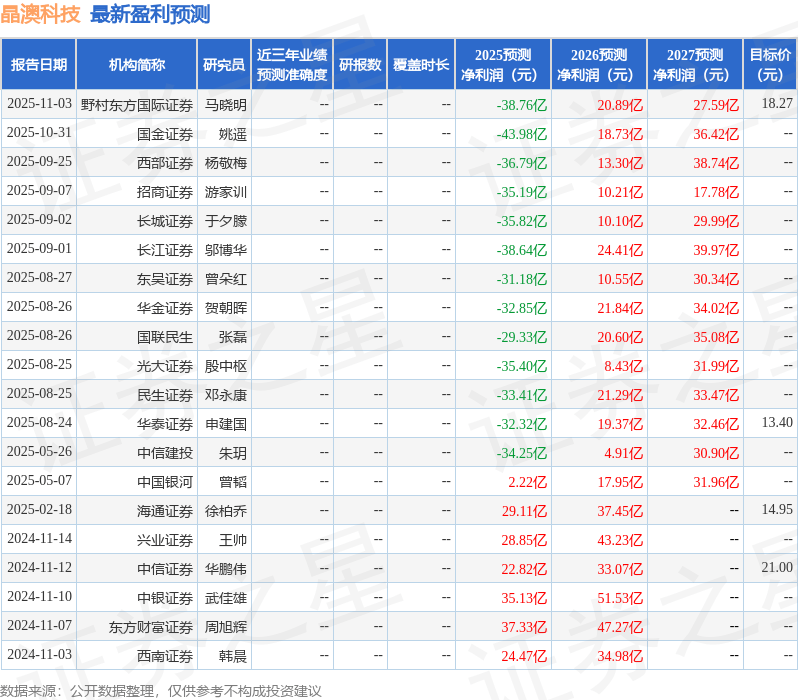
晶澳科技:11月3日召开业绩说明会,泰信基金、东方证券等多家机构参与
Sou Hu Cai Jing· 2025-11-04 01:15
Core Viewpoint - The company anticipates a global demand growth in the solar energy sector, with specific projections for both domestic and international markets, while also addressing its strategic plans for energy storage and product efficiency improvements [2][3][4][5][6]. Market Demand Projections - The company predicts that global new installations will range between 580 to 600 GW in 2025, with a slight decrease in growth rate compared to previous years. For the Chinese market, new installations are expected to be around 310 GW this year and between 270 to 300 GW next year. The overseas markets, particularly Europe, are expected to see stable growth, while regions like Asia-Pacific and Africa may experience accelerated growth [2]. Energy Storage Strategy - The company has already begun shipping energy storage products this year, covering residential, commercial, and large-scale storage solutions. It has established its own design and pre-sales teams and is adopting a light-asset operational model while leveraging its existing sales channels for market expansion [3]. Product Efficiency Goals - The company aims to achieve an efficiency ceiling of 650 to 670W for its Topcon technology, indicating significant potential for future improvements while balancing product economics [4]. Component Pricing Trends - In response to the ongoing anti-competitive policies, the company has adjusted its pricing strategy, leading to a recent upward trend in component prices in the domestic market. The overseas market, particularly in the Middle East and Europe, is also showing support for price increases. Although some long-term projects are still being fulfilled at lower prices, the overall trend indicates a rise in component prices, with expectations for a recovery in prices as market demand increases in the second quarter of next year [5]. High-Power Product Launch - The company has launched its latest product, DeepBlue 0, and is observing a price premium for high-power products. As production capacity is gradually released next year, the price premium is expected to increase further [6]. Financial Performance Overview - For the first three quarters of 2025, the company reported a main revenue of 36.809 billion yuan, a year-on-year decrease of 32.27%. The net profit attributable to shareholders was -3.553 billion yuan, down 633.54% year-on-year. The third quarter alone saw a revenue of 12.904 billion yuan, a decline of 24.05% year-on-year, with a net profit of -973 million yuan, down 349.58% year-on-year. The company’s debt ratio stands at 77.9% [7]. Analyst Ratings - In the past 90 days, 12 institutions have provided ratings for the stock, with 8 buy ratings and 4 hold ratings. The average target price set by analysts is 13.4 yuan [8].


TCL科技(000100):显示α强化,光伏β改善
Changjiang Securities· 2025-11-03 23:30
Investment Rating - The investment rating for the company is "Buy" and is maintained [8]. Core Insights - The company reported a revenue of 1359.43 billion yuan for Q3 2025, representing a year-on-year growth of 10.50% - The net profit attributable to shareholders reached 30.47 billion yuan, a significant increase of 99.75% year-on-year - The net profit excluding non-recurring items was 24.29 billion yuan, showing a remarkable growth of 233.33% year-on-year - Operating cash flow was 338.37 billion yuan, up by 53.80% year-on-year - The display business achieved growth rates surpassing the industry average, driven by the T9 and T11 projects - The photovoltaic business is expected to reduce losses rapidly due to improved industry competition under the "anti-involution" policy [2][6][12]. Financial Performance Summary - In Q3 2025, the company achieved a revenue of 503.83 billion yuan, a year-on-year increase of 17.71% - The net profit attributable to shareholders was 11.63 billion yuan, up 119.44% year-on-year - The net profit excluding non-recurring items was 8.70 billion yuan, reflecting a growth of 412.11% year-on-year - The gross margin was 11.66%, an increase of 0.21 percentage points year-on-year, while the net margin improved by 4.07 percentage points year-on-year to 0.89% - The display business saw cumulative revenue of 780.1 billion yuan for the first three quarters, with a year-on-year growth of 17.5% and a net profit of 61 billion yuan, up 53.5% year-on-year - The company’s market share in large-size TV LCD increased by 5 percentage points to 25% following the acquisition of LG's Guangzhou line [12][19]. Business Segment Insights - The photovoltaic segment reported sales revenue of 160.1 billion yuan for the first three quarters, with a quarter-on-quarter improvement of 22% in Q3 - The company is focusing on increasing the proportion of high-efficiency and high-value-added products while reducing silicon costs through supply chain management and material capability enhancements - Non-silicon costs have decreased by over 40% since the beginning of the year, contributing to improved profitability in the photovoltaic sector [12][19]. Future Outlook - The company has no large investment plans aside from the ongoing printed OLED project, which is expected to lead to better free cash flow and performance in the future - EPS forecasts for 2025-2027 are projected at 0.20, 0.33, and 0.48 yuan, with corresponding PE ratios of 21.18, 13.02, and 9.03 [12][19].

港股概念追踪 | 冷冬来袭叠加政策抑制超产 看好煤价进一步上行(附概念股)
智通财经网· 2025-11-03 23:27
Core Viewpoint - The coal market in China is experiencing a price increase due to low port inventories, seasonal demand, and regulatory constraints on production, leading to improved performance expectations for coal companies [1][2][3] Group 1: Market Conditions - Coal port inventories have dropped to a three-year low, prompting price increases at production sites, with Qinhuangdao port prices stabilizing at 770 yuan/ton [1] - The onset of winter and significant temperature drops in northern China have initiated the seasonal demand for coal, with early heating measures already in place in several regions [1] - The "anti-involution" policy and upcoming safety inspections are expected to further constrain coal supply, reinforcing price stability and potential increases [1][2] Group 2: Price Trends - According to Zhongtai Securities, coal prices are expected to maintain a steady upward trend due to the heating season and enhanced safety production checks [2] - The sample power plants' coal inventory has decreased by 222 million tons year-on-year, while port inventories have dropped by 245 million tons, indicating a tight supply situation [2] - The shipping volume for the first four weeks of October was 20.34 million tons, down 10.8% month-on-month and 40.1% year-on-year, reflecting production constraints [2] Group 3: Company Performance - In Q3, the coal sector reported revenues of 297.9 billion yuan, a year-on-year decline of 16.5% but a quarter-on-quarter increase of 1.5%, with net profits improving by 14.1% from Q2 [3] - China Shenhua's Q3 coal production reached 86 million tons, a year-on-year increase of 2.3%, while sales volume was 112 million tons, down 3.5% year-on-year [2][3] - Yancoal Australia reported a 9% year-on-year decline in coal production for Q3, while sales volume increased by 3% [2] Group 4: Company Insights - China Shenhua holds significant coal reserves, with a total of 3.44 billion tons and a production capacity of 327 million tons for 2024, positioning it as a leader in the industry [4] - China Coal Energy ranks third in coal resource reserves among listed companies, with a production capacity of 165 million tons and ongoing projects expected to enhance output [5] - Yancoal plans to produce 155-160 million tons of coal by 2025, with ongoing projects expected to add nearly 50 million tons of capacity [5]

从M1、M2到资产配置——四季度M1同比的拆解预测
一瑜中的· 2025-11-03 16:04
Core Viewpoints - The static forecast indicates that the old-caliber M1 is expected to decline from 6.2% in September to around 3.4% by the end of the year, while M2 is projected to decrease from 8.4% in September to approximately 8.0% by year-end, both remaining higher than the end of 2024 [2] - The analysis framework for M1 and M2 growth involves understanding the components of M1 as part of M2, with M1 being derived from M2 minus other currencies [7][17] Group 1: M2 Growth Factors - M2 growth is influenced by five main factors: corporate leverage, household leverage, foreign exchange derivation, government leverage, and other factors [8][20] - The forecast for M2 growth indicates a decline of 900 billion, with M2 expected to decrease to around 8.0% by year-end due to factors such as reduced government leverage and a decline in corporate loans [8][22][28] Group 2: M1 Growth Analysis - The old-caliber M1 is expected to decline by 1.6 trillion year-on-year, with a forecasted drop to 3.4% by year-end, influenced by factors such as a decrease in household deposits and a stable level of non-bank deposits [9][10][52] - The analysis of other currencies shows that household deposits are expected to decrease by 620 billion, while non-bank deposits are projected to increase by 1.9 trillion [46][47] Group 3: Impacts on Capital Markets - Changes in M1 are seen as leading indicators for price improvements, with M1 growth typically preceding changes in PPI and industrial product inventory by three to four quarters [54] - Non-bank deposits are closely linked to trading volumes in the financial market, with higher non-bank deposits correlating with increased trading activity [55] - The relationship between corporate and household deposits can predict corporate profits and ten-year treasury yields approximately one year in advance [57] Group 4: Potential Scenarios for M1 Changes - Several scenarios for potential M1 changes in Q4 are proposed, including increased corporate loans and infrastructure investment, which could lead to upward pressure on M1 and M2 [63] - Another scenario suggests that a decrease in M2 and household deposits, alongside an increase in corporate deposits, could indicate improved economic cycles and profitability [64]

显微镜下的中国经济(2025年第41期):制造业PMI和工业企业效益数据中的反内卷政策效应
CMS· 2025-11-03 14:46
Economic Performance - In September, industrial enterprises' profits increased by 21.6% year-on-year, marking the highest level since December 2023[2] - The revenue growth rate for industrial enterprises in September was 2.7%, accelerating by 0.8 percentage points from August[3] - High-tech manufacturing profits grew by 26.8% in September, contributing 6.1 percentage points to the overall profit growth of industrial enterprises[2] Policy Impact - The "anti-involution" policy has led to improved revenue and profit levels for industrial enterprises, with a notable reduction in price wars[3] - The manufacturing PMI for October was 49%, down 0.8 percentage points from the previous month, indicating contraction in several key indices[3] Production and Capacity Utilization - The average operating rate for asphalt enterprises rose to 31.15%, up 0.4 percentage points week-on-week, with a year-on-year increase of 9.8%[8] - The capacity utilization rate for steel mills was 85.21%, up 0.18 percentage points week-on-week, but down 1.6% year-on-year[42] Price Trends - The average price of cement in East China remained stable at 438 RMB/ton, while in Southwest China, it increased by 23 RMB/ton to 516 RMB/ton[100] - The price of rebar increased by 39.4 RMB/ton to 3265.8 RMB/ton, reflecting upward pressure in the steel market[109] Risks and Outlook - Potential risks include geopolitical tensions, domestic policy implementation falling short of expectations, and global economic downturns impacting industrial growth[3]
调研速递|晶澳科技接待高盛等13家机构 前三季度出货51.96GW 组件价格有望明年二季度回升
Xin Lang Cai Jing· 2025-11-03 13:48
Core Viewpoint - JA Solar Technology Co., Ltd. reported a narrowing loss in Q3 2025, maintaining a strong market position in terms of shipment volume despite a decline in revenue and net profit compared to the previous year [2][3]. Group 1: Financial Performance - For the first three quarters of 2025, the company achieved a revenue of 36.809 billion yuan, a decrease of 32.27% year-on-year; the net profit attributable to shareholders was -3.553 billion yuan [2]. - In Q3 alone, the company reported a revenue of 12.904 billion yuan, down 24.05% year-on-year, with a net profit of -973 million yuan, indicating a trend of reduced losses compared to Q2 [2]. - As of the end of Q3, total assets were 105.38 billion yuan, and net assets attributable to shareholders were 23.174 billion yuan [2]. Group 2: Market Demand and Trends - The company anticipates global new installations to be between 580-600 GW in 2025, with the Chinese market expected to see around 310 GW of new installations this year and 270-300 GW next year [3]. - The European market is expected to maintain stable growth, while the Asia-Pacific and African regions are projected to accelerate, becoming significant growth drivers [3]. Group 3: Storage Business Development - The company has achieved significant progress in its storage business, with products covering residential, commercial, and large-scale storage applications [4]. - A dedicated design and pre-sales team has been established, and strategic partnerships are being pursued to enhance business development in the storage sector [4]. Group 4: Pricing and Market Conditions - The company noted improvements in component pricing, with a trend of price increases observed in the domestic market and a better understanding of price hikes among overseas clients, particularly in the Middle East and Europe [5]. - Despite some pressure on prices due to seasonal demand fluctuations, a recovery in component prices is expected by Q2 of next year as market demand rebounds [5]. Group 5: Product Innovation and Capacity Upgrade - The newly launched DeepBlue 5.0 product has shown a price premium in forward orders, with expectations for further price advantages as production capacity is fully released next year [6]. - By the end of this year, approximately one-third of the company's production capacity will be upgraded, with potential for efficiency improvements across all production lines [6].
建信期货股指月报-20251103
Jian Xin Qi Huo· 2025-11-03 11:57
Report Information - Report Title: Index Monthly Report [1] - Date: November 3, 2025 [2] - Researchers: Nie Jiayi, Huang Wenxin, He Zhuoqiao [3] Report Industry Investment Rating - Not provided in the given content Core Viewpoints - In October, the new round of Sino-US game became the main factor affecting the market. The overall A-share market oscillated. After the Sino-US leaders' meeting in Busan, South Korea, although the negotiation results sent positive signals, the market weakened after the positive news landed due to over - inflated market expectations. The Fed cut interest rates in October, but the post - meeting statement was slightly hawkish, and the probability of a December rate cut declined. The economic data in September showed increased fundamental pressure, and policies were needed to boost the economy. With the easing of the external environment and the "15th Five - Year Plan" injecting new policy expectations into the market, the stock index is expected to continue its medium - to long - term strong trend after short - term shock consolidation at the key pressure level of 4,000 points on the Shanghai Composite Index. The market style should still focus on the dumbbell strategy, with balanced allocation of CSI 300 and CSI 500 [6]. Summary by Directory 1. Market Review 1.1 Market行情回顾 - Since the beginning of the year, the A - share market has shown a trend of "short - term correction followed by a strong run, and a rebound after a sharp decline due to external shocks". Before the Spring Festival, the market was cautious due to uncertainties after the new US president took office. After the Spring Festival, the technology sector led the market under the influence of positive news. In late March, the market corrected again due to approaching the annual report disclosure period. After the US announced "reciprocal tariffs" in April, the A - share market broke through the support level. Then, with factors such as "national team" funds and better - than - expected Sino - US tariff negotiations, the index rebounded. After the "anti - involution" policy and the trillion - level infrastructure project of the Yajiang Hydropower Station, relevant concept sectors rotated and rose. After the "9·3 Parade", the market became cautious, and the index consolidated at a high level [8]. - In October, the Sino - US game affected the market. The overall A - share market oscillated. After the US softened its stance, the Shanghai Composite Index broke through 4,000 points. After the negotiation results in Malaysia and the leaders' meeting in South Korea were finalized, the market became cautious again, and the index slightly corrected. In October, the Wind All - A Index slightly declined by 0.03%. Among the major broad - based indices, the Shanghai Composite Index rose 1.85%, the Shenzhen Component Index fell 1.10%, the ChiNext Index fell 1.56%, and the small and medium - cap index fell 1.15%. In terms of market style, the stable and financial sectors led the rise, while the growth sector led the decline [9]. 1.2 Industry Sector Situation - In October, among the CSI 300 sub - industries, the energy, utilities, and materials sectors led the rise, with increases of 9.50%, 4.35%, and 3.48% respectively, while the pharmaceutical, information, and real estate sectors led the decline, with decreases of 7.28%, 3.93%, and 3.80% respectively. Among the CSI 500 sub - industries, the utilities, energy, and raw materials sectors led the rise, with increases of 7.85%, 4.06%, and 2.46% respectively, while the real estate, communication, and optional consumption sectors led the decline, with decreases of 11.24%, 5.11%, and 4.94% respectively. At the first - level industry level, the coal, steel, and non - ferrous metal sectors led the rise, with increases of 10.02%, 5.16%, and 5.00% respectively, while the media, beauty care, and automobile sectors declined, with decreases of 6.04%, 3.84%, and 3.58% respectively [15]. 1.3 Valuation Comparison - As of October 31, the rolling price - to - earnings ratios of the CSI 300, SSE 50, CSI 500, and CSI 1000 were 14.1146, 11.7732, 33.3983, and 47.5311 times respectively, changing by - 0.3007, - 0.0916, - 2.4316, and - 0.9139 compared with the beginning of the month, and were at the 83.66%, 87.82%, 79.06%, and 76.34% percentile levels in the past ten years respectively [25]. 2. Futures Indicator Analysis 2.1 Transaction and Position Analysis - In October, the trading volume of stock index futures decreased. The average daily trading volumes of IF, IH, IC, and IM were 13.61, 6.33, 15.42, and 24.38 million lots respectively, decreasing by 1.93, 0.24, 0.63, and 3.98 million lots compared with the previous month. The positions of stock index futures mainly decreased. The average daily positions of IF, IH, IC, and IM were 26.75, 9.80, 25.44, and 35.98 million lots respectively, changing by - 0.77, - 0.35, 0.15, and - 1.76 million lots compared with the previous month [26]. 2.2 Basis Analysis - As of October 31, the basis discounts of the CSI 300, CSI 500, and CSI 1000 main contracts narrowed, increasing by 13.43, 33.37, and 30.29 respectively compared with the end of September to - 9.27, - 88.60, and - 138.47. The basis premium of the SSE 50 main contract widened, increasing by 3.58 to 3.65 compared with the end of September. In terms of the annualized basis rate, as of October 31, the annualized basis rate of the CSI 300 main contract was - 1.47%, increasing by 1.17 percentage points compared with the end of September; the annualized basis rate of the SSE 50 main contract was 0.89%, increasing by 1.01 percentage points compared with the end of September; the annualized basis rate of the CSI 500 main contract was - 8.88%, decreasing by 1.86 percentage points compared with the end of September; the annualized basis rate of the CSI 1000 main contract was - 13.55%, decreasing by 4.80 percentage points compared with the end of September. Overall, the discount of the IF main contract narrowed, the IH main contract changed from a discount to a premium, and the discounts of the IC and IM main contracts widened [28]. 2.3 Cross - Variety Spread Analysis - In October, large - cap blue - chip stocks performed relatively better. As of October 31, the CSI 300/SSE 50 ratio was 1.5410, at the 95.00% historical percentile level, decreasing by 0.0117 compared with the end of September; the CSI 1000/CSI 500 ratio was 1.0240, at the 29.40% historical percentile level, increasing by 0.0020 compared with the end of September; the CSI 300/CSI 1000 ratio was 0.6182, at the 38.10% historical percentile level, increasing by 0.0056 compared with the end of September; the SSE 50/CSI 1000 ratio was 0.4012, at the 30.80% historical percentile level, increasing by 0.0066 compared with the end of September [43]. 3. Macroeconomic Tracking 3.1 Sino - US New Round of Tariff Game, Leaders' Meeting as Market Sentiment Turning Point - Before the end of September, the Sino - US trade situation was generally easing, and a preliminary agreement was reached on the TikTok issue. In early October, the game between the two sides escalated unexpectedly. The US announced a series of measures, and China counterattacked. In the middle of the month, the US attitude softened, and the domestic capital market sentiment reversed. At the end of the month, the Sino - US leaders met in Busan, South Korea, and reached consensus on multiple issues. However, the market weakened after the positive news landed [44][45][49]. 3.2 Fed's Interest Rate Cut in October, Post - Meeting Statement Slightly Hawkish - On October 30, the Fed cut the federal funds rate target range by 25 basis points to 3.75% - 4.00%, which was in line with market expectations. Fed Chairman Powell said that the December interest rate cut path was not preset, and the market interpreted it as hawkish. The probability of a December rate cut declined, and gold and US stocks oscillated lower in the short term [50]. 3.3 Macroeconomic Data Analysis: Economic Slowdown in Q3, Widening Gap between Domestic and External Demand in September, Policy Boost Needed - In Q3, GDP grew by 4.8% year - on - year, 0.4 percentage points lower than in Q2, indicating increased economic growth pressure. From the perspective of the production method, the year - on - year growth rates of the primary, secondary, and tertiary industries were 4.0%, 4.2%, and 5.4% respectively. From the perspective of the expenditure method, the contributions of final consumption expenditure, capital formation, and net exports to the economy in Q3 were 56.6%, 18.9%, and 24.5% respectively. In September, the gap between domestic and external demand widened further, and the cumulative investment growth rate turned negative. The domestic demand slowed down, while the external demand accelerated. The growth rate of fixed - asset investment turned negative, and the decline in real estate investment continued to expand [51][52]. 3.4 Liquidity Analysis: Margin Trading Balance Continuously Breaking Through, Slowdown in Household Deposit Transfer in September, Possibly Affected by Market Volatility - In October, the new social financing scale was 3.53 trillion yuan, 233.9 billion yuan less than the same period last year. The growth rate of social financing stock was 8.70%. The new RMB loans were 1608.1 billion yuan, 366.1 billion yuan less than the same period last year. M1 increased by 7.2% year - on - year, and M2 increased by 8.4% year - on - year. In the stock market, margin trading funds continued to drive the market up in October, but the growth rate slowed down. As of October 30, the A - share margin trading balance was 2499.048 billion yuan, an increase of 104.932 billion yuan compared with the end of September, with the increment decreasing by 62.457 billion yuan compared with the previous month. The proportion of A - share margin trading purchases in the total market turnover was 11.45% as of October 30, a decrease of 0.38 percentage points compared with the end of September, at the 97.65% percentile level in the past ten years. Since September, market volatility has intensified, leading to a slowdown in household deposit transfer [63][72]. 4. Market Outlook and Trading Strategies - Externally, after the Sino - US leaders' meeting in Busan, South Korea, although the negotiation results were positive, the market weakened after the positive news landed. Domestically, the economic data in September showed increased fundamental pressure, and policies were needed to boost the economy. The "15th Five - Year Plan" provided policy guidance for the future market style. In terms of liquidity, the margin trading balance continued to break through historical highs and was currently oscillating at a high level. Future Fed rate cuts may bring new liquidity, but the slowdown in household deposit transfer needs further observation. Overall, with the easing of the external environment and the new policy expectations injected by the "15th Five - Year Plan", the stock index is expected to continue its medium - to long - term strong trend after short - term shock consolidation at the key pressure level of 4,000 points on the Shanghai Composite Index. The market style should still focus on the dumbbell strategy, with balanced allocation of CSI 300 and CSI 500 [73]