低利率

Search documents
多家中小银行下调存款利率,如何面对低利率的机遇与挑战?| 封面专题
清华金融评论· 2025-08-22 09:42
Core Viewpoint - The article discusses the recent trend of declining deposit interest rates in various regions of China, highlighting the implications of a low interest rate environment on the banking sector and the broader economy [3][5][6]. Summary by Sections Deposit Rate Adjustments - Several village banks in regions such as Zhejiang, Guizhou, and Jilin have announced reductions in deposit interest rates, with decreases ranging from 10 to 20 basis points [3]. - For instance, Jilin Longtan Huayi Village Bank adjusted its interest rates for various deposit types, including a reduction of the annual interest rate for demand deposits from 0.20% to 0.15% and for 1-day notice deposits from 0.65% to 0.55% [3]. - Similarly, other banks like Jilin Baishan Hunjiang Hengtai Village Bank and Shengzhou Ruifeng Village Bank have also lowered their rates for different term deposits, with reductions of 10 to 20 basis points [5]. Current Interest Rate Trends - As of July 2025, the average interest rates for various term deposits have shown a downward trend, with the 3-month rate at 0.943% and the 1-year rate at 1.278%, reflecting a decrease compared to the previous month [6]. - The article suggests that the decline in deposit rates is not a short-term trend but may become a long-term norm due to structural and cyclical factors affecting the economy [6][9]. Low Interest Rate Environment - The low interest rate scenario is attributed to both structural constraints, such as declining potential economic growth and demographic changes, and cyclical factors like output and inflation gaps [7][9]. - The article emphasizes that the current low interest rates may persist for an extended period, influenced by global trends and domestic economic conditions [9]. Financial Sector Response - The financial sector is encouraged to focus on five key areas: technology finance, green finance, inclusive finance, pension finance, and digital finance, to adapt to the low interest rate environment [8]. - The article highlights the need for banks to enhance their financial services and product offerings to meet the evolving demands of the economy [8][14]. Challenges and Opportunities - The low interest rate environment presents both challenges and opportunities for various financial institutions, including the need for banks to innovate in asset-liability management and risk control [11][14]. - The article discusses the importance of policy coordination and the need for financial institutions to adapt to the changing landscape to ensure sustainable growth [12][14].


国泰海通“研究天团”最新观点:3700点不是年内高点 未来行情仍会持续扩散
智通财经网· 2025-08-20 02:56
Core Viewpoint - The current market is not at its peak for the year, and the Chinese stock market is likely to reach new highs in the second half of the year [2][4][6]. Group 1: Market Dynamics - The rise in the Chinese stock market this year is driven not by immediate improvements in the fundamentals but by a shift in investor sentiment, supported by factors such as accelerated economic transformation, systematic decline in risk-free interest rates, and frequent capital market reforms [2][6][10]. - Historical adjustments in the Hong Kong and A-share markets have been significant, with maximum declines exceeding 60%, comparable to Japan's lost decade, yet China's economic performance remains stronger [3][7][12]. Group 2: Investment Opportunities - Key investment opportunities in the future are expected to emerge in financial sectors and high-dividend stocks, including brokers, banks, insurance, and infrastructure operators [3][8][19]. - The focus on long-term logical assets, particularly those with stable and monopolistic positions, is crucial for investors in 2025 [10][19]. Group 3: Global Trade and Supply Chain - The trend of global trade indicates a decline in direct economic connections between China and the U.S., while indirect connections remain active, making exports and overseas expansion vital [3][12][14]. - The difficulty for other economies to quickly replace Chinese manufacturing capabilities has been highlighted, suggesting that U.S. policies may need to adjust due to internal pressures [12][13]. Group 4: Economic Policy and Market Sentiment - The Chinese market has adequately priced in risks and pessimistic expectations over the past few years, with a belief that more proactive economic policies will emerge by 2025 [8][19]. - The ongoing decline in domestic interest rates is expected to persist, influencing asset valuation and investment strategies [15][17]. Group 5: Wealth Management and Asset Allocation - Wealth management strategies should prioritize capital preservation in the current low-interest environment, with a focus on equities and high-dividend assets as attractive options [16][18]. - The changing landscape of capital markets, driven by reforms and regulatory measures, is enhancing the investability of the Chinese stock market [10][19].

如何看待上证3700点后的市场机会
淡水泉投资· 2025-08-19 10:10
Core Viewpoint - The A-share market has shown significant changes since July, with the Shanghai Composite Index breaking through key levels and reaching a nearly ten-year high, leading to discussions about potential market opportunities and risks [1][2]. Market Performance and Industry Contribution - The Shanghai Composite Index rose from 2789 points at the end of January 2024 to 3728 points by August 18, 2025, marking a cumulative increase of 34%. This rise was primarily driven by a few sectors, notably large financials and electronics, with banks and non-bank financials contributing 11% to the index's increase, accounting for 34% of the total contribution [2][4]. - A structural divergence is evident in the market, with low-volatility assets like banks being major winners, while sectors such as electric equipment and basic chemicals have seen declines exceeding 30% [4]. Current Market Valuation and Opportunities - Despite the overall high valuation of the Shanghai Composite Index and CSI 300, there remains a structural differentiation in valuations across sectors. Some sectors, such as electric equipment and food and beverage, are experiencing valuation contractions, while others have seen their valuations rise due to declining profitability [8][11]. - The market is witnessing a shift from valuation-driven pricing to profit-driven pricing as economic recovery stabilizes and corporate earnings improve [8]. Market Sentiment and Trends - The proportion of financing buy-ins in the A-share market has increased, indicating heightened market sentiment, which is typically associated with periods of market uptrends [15]. - Two key trends are supporting market momentum: low interest rates and a shift in household financial behavior towards equity markets. The decline in 10-year government bond yields has prompted institutional investors to seek higher returns, leading to a reallocation towards growth sectors [18][20]. - The number of new individual investor accounts has surged, with 1.96 million new accounts opened in July, reflecting a 71% year-on-year increase, indicating a recovery in market sentiment [20]. Structural Growth Opportunities - The current market focus is shifting towards structural growth opportunities, supported by favorable policies, liquidity, and the emergence of a wealth effect from the stock market [23].

低利率+股债波动:理财公司如何应对?
Zhong Guo Jing Ying Bao· 2025-08-18 15:04
Core Viewpoint - The average annualized yield of wealth management products in China's banking sector has decreased to 2.12% in the first half of 2025, down from 2.65% in 2024, indicating a significant decline in returns amid a low-interest-rate environment [1] Group 1: Industry Trends - The asset management industry is transitioning from a reliance on single assets to a diversified asset allocation strategy due to low interest rates and an asset shortage [2] - Financial intermediaries, such as banks, are encouraged to transform by enhancing financial services, developing asset management businesses, strengthening asset trading, and promoting comprehensive operations [1][2] - The current asset management market is characterized by a large scale but relatively single asset categories, which limits depth and diversification [3] Group 2: Product Development - Wealth management companies are focusing on combination management and asset allocation strategies to navigate the challenges posed by low yields [1][2] - "Fixed income plus" products are becoming a key competitive tool for banks, allowing for increased yield flexibility while maintaining stability [5][6] - The introduction of rights-containing products is seen as a potential second growth curve for wealth management firms, complementing traditional fixed income products [4][5] Group 3: Strategic Recommendations - The asset management industry should enhance core capabilities by developing equity investment systems and exploring alternative asset allocations like REITs [4] - There is a need for structural reforms in key areas such as client expansion in the wealth management market and optimizing incentive mechanisms for public funds [4] - Companies are advised to leverage technology for smart investment advisory services, providing customized asset allocation plans based on client risk preferences and return objectives [6]
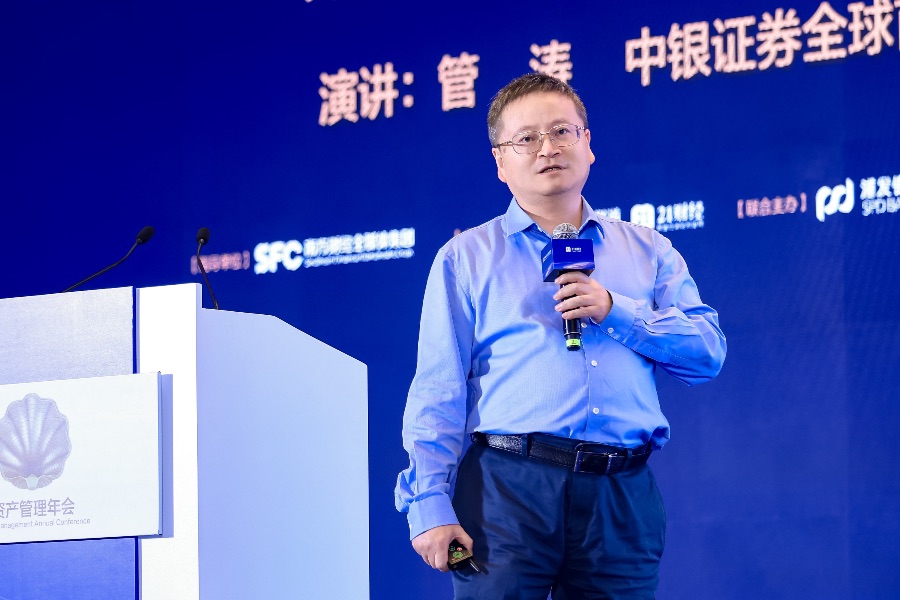
中银证券管涛:低利率时代为资本市场高质量发展创造条件
2 1 Shi Ji Jing Ji Bao Dao· 2025-08-18 06:45
Group 1 - The current low interest rate environment in China creates conditions for high-quality development of the capital market while also raising higher demands [1][4] - The transmission effect of low interest rates to the capital market is not as expected, with stock financing not increasing correspondingly despite falling interest rates [3][4] - The capital market plays a crucial role in supporting economic transformation, wealth growth, and the construction of a financial power [1][3] Group 2 - The policy environment is continuously nurturing the capital market, with clear signals released from recent policies aimed at enhancing the attractiveness and inclusiveness of the domestic capital market [3][4] - The low interest rate environment allows the capital market to promote a virtuous cycle among industries, technology, and capital, which is essential for technological self-reliance [4][5] - The changing supply-demand relationship in the real estate market presents a historic opportunity for the capital market, emphasizing the potential for long-term investment returns [4][5] Group 3 - Asset management institutions face significant challenges in effectively allocating assets and achieving good returns for investors, especially in the context of the current market environment [5] - The certainty of asset valuation recovery in China tests both individual investors' long-term investment philosophy and asset management institutions' asset allocation capabilities [5]

速来,压箱底培训!
一瑜中的· 2025-08-15 15:31
Core Viewpoint - The article promotes a series of macroeconomic training sessions organized by Huachuang Macro, scheduled from August 20 to September 6, focusing on various aspects of the economy and financial markets [1][5]. Summary by Sections Training Series Overview - The training sessions will occur daily at 15:30, covering a range of topics related to macroeconomic insights and financial analysis [5][6]. Session Topics and Speakers - **Session 1 (Aug 20)**: Insights into macro "big" directions - Five major concerns, presented by Zhang Yu, Deputy Director of Huachuang Research Institute [8]. - **Session 2 (Aug 21)**: Examination of the "new" economic structure - Ten structural changes, led by Lu Yinbo, Deputy Head of Huachuang Macro Group [8]. - **Session 3 (Aug 22)**: Analysis of deposit migration trends - Three key directions regarding deposits, by Wen Ruoyu, Senior Analyst at Huachuang Macro [8]. - **Session 4 (Aug 25)**: Navigating low interest rate challenges - Optimal solutions in a low-rate environment, presented by Yin Wenqing, Senior Analyst [8]. - **Session 5 (Aug 26)**: Discussion on fiscal "clever" correlations - Ten experiential rules, led by Gao Tuo, Senior Analyst [8]. - **Session 6 (Aug 27)**: Clarifying local fiscal and tax accounts - Local fiscal mechanisms, presented by Yuan Lingling, Assistant Analyst [8]. - **Session 7 (Aug 28)**: Tracking subtle policy changes - Policy observation guide [8]. - **Session 8 (Aug 29)**: Analysis of the US political landscape - Insights into the Democratic and Republican parties, by Fu Chunsheng, Analyst [10]. - **Session 9 (Sep 1)**: Comprehensive export analysis - Multi-dimensional export scanning, led by Xia Xue, Assistant Analyst [10]. - **Session 10 (Sep 2)**: Understanding new dynamics in supply-side reforms - New directions in supply-side reforms, presented by Lu Yinbo [10]. - **Session 11 (Sep 3)**: Logical performance of assets - Review of supply-side reform outcomes, by Fu Chunsheng [10]. - **Session 12 (Sep 4)**: Monitoring exchange rate trends - In-depth exchange rate analysis, led by Xia Xue [10]. - **Session 13 (Sep 5)**: Understanding the reconstruction of order - Strategic multi-gold insights, presented by Li Xingyu, Analyst [10]. - **Session 14 (Sep 6)**: Final session details not specified [12].

应对低利率:机遇与挑战 | 新刊亮相
清华金融评论· 2025-08-08 08:54
Core Viewpoint - The article discusses the challenges and opportunities presented by the ongoing trend of low interest rates in China, emphasizing the need for coordinated fiscal and monetary policies to enhance macroeconomic governance capabilities [3][10][11]. Summary by Sections Low Interest Rate Environment - China's interest rates have been declining due to multiple domestic and international factors, including structural issues like technological stagnation and demographic changes, as well as cyclical factors such as output and inflation gaps [3][10]. - The current low interest rate trend is expected to persist for a considerable period, influenced by both structural and cyclical factors, alongside a global trend of declining interest rates [10][11]. Policy Recommendations - It is essential to implement extraordinary counter-cyclical adjustment policies, focusing on more proactive fiscal policies and moderately loose monetary policies, drawing lessons from the macroeconomic policies of developed countries post-2008 financial crisis [5][9]. - The relationship between fiscal and monetary policies should be one of mutual support rather than conflict, enhancing policy coordination to improve macroeconomic governance [9][11]. Financial Sector Adaptation - Financial institutions must adapt to the changing economic landscape characterized by low interest rates, which affects the behavior of economic entities, leading to reduced credit demand and a shift towards low-risk assets [6][10]. - There is a need for financial institutions to provide better financial products and services to meet societal financial demands while guiding financial needs effectively [6][11]. Focus Areas for Financial Reform - The article highlights the importance of focusing on five key areas of financial reform: technology finance, green finance, inclusive finance, pension finance, and digital finance, to support high-quality economic development [7][12]. - Technological advancement is crucial for improving overall productivity and asset returns, necessitating a collaborative approach among different types of financial institutions to provide comprehensive financial services to technology enterprises and innovative projects [7][12]. Risk Management and Structural Reform - Addressing the challenges posed by low interest rates requires structural reforms to prevent financial risks, emphasizing the need for a robust financial supply-side structural reform [12]. - The article suggests that the financial sector should learn from international experiences to enhance its resilience and adaptability in the face of ongoing interest rate changes [12].

下半年配什么?理财公司看好这两类资产
Zhong Guo Zheng Quan Bao· 2025-08-08 07:20
Core Viewpoint - The traditional asset allocation logic of the banking wealth management industry is facing challenges due to a low interest rate environment and increased volatility, prompting a shift towards diversified strategies and alternative assets [1][2]. Group 1: Market Environment - The current market is characterized by "low interest rates and high volatility," with a general decline in asset yields. As of May 20, the 1-year and 5-year LPR have decreased by 10 basis points, and the 10-year government bond yield is fluctuating between 1.6% and 1.7% [2]. - The volatility in the asset sector is increasing, complicating asset allocation strategies [2]. Group 2: Strategic Shifts - Financial institutions are transitioning from single asset investments to diversified strategies, focusing on major asset allocation to broaden income sources. The emphasis for the second half of the year will be on alternative and equity assets [1][2]. - Companies like Xinyin Wealth Management are adopting a core strategy of major asset allocation, with a focus on enhancing returns through diversified fixed income and equity assets, while controlling risks [2][3]. Group 3: Asset Class Outlook - Industry insiders are optimistic about the performance of alternative and equity assets in the second half of the year. A balanced allocation of stocks, bonds, and gold is seen as advantageous, with expectations of continued upward movement in asset prices due to low inflation and ample liquidity [3][4]. - Specific sectors such as technology and dividend strategies are expected to remain advantageous, with new consumption driven by policy potentially becoming a source of excess returns [4].
朝闻国盛:规范生态环境保护责任制,无废城市建设迎新机遇
GOLDEN SUN SECURITIES· 2025-08-05 00:50
Group 1: Environmental Protection Industry - The report emphasizes the acceleration of the construction of "waste-free cities" and the establishment of ecological environment protection responsibility systems, which are expected to create new opportunities for the environmental protection industry [10] - The implementation of the "Regulations on the Ecological Environment Protection Responsibility System for Local Party and Government Leaders" mandates the integration of ecological protection into development planning, enhancing supervision and accountability [10] - The report suggests focusing on sectors such as ecological restoration, environmental monitoring, and green technology applications, with specific recommendations for companies like Huicheng Environmental Protection and Hongcheng Environment [10] Group 2: Coal Industry - China Shenhua (601088.SH) is initiating a large-scale asset acquisition, planning to purchase coal, coal power, and coal chemical assets from the State Energy Group, which will enhance its resource reserves and operational capabilities [11] - The transaction involves thirteen restructuring targets, indicating a strategic move to optimize resource allocation and improve investor returns [11] - The report projects that China Shenhua will achieve net profits of 50.3 billion, 53.2 billion, and 55.9 billion yuan from 2025 to 2027, maintaining a "buy" rating based on a PE ratio of 14.8, 14.0, and 13.4 times respectively [12] Group 3: Communication Industry - The report highlights that Shijia Photonics (688313.SH) achieved a revenue of 993 million yuan in the first half of 2025, marking a year-on-year growth of 121.1%, with a significant increase in net profit [14] - The company is positioned well within the optical communication sector, benefiting from the ongoing technological advancements and increasing demand for optical devices [15] - Future profit forecasts for Shijia Photonics are set at 457 million, 710 million, and 993 million yuan for 2025, 2026, and 2027, respectively, with a maintained "buy" rating [15] Group 4: Retail Industry - The retail sector is experiencing a stable fundamental environment, with leading companies like Yonghui Supermarket and Chongqing Department Store expected to benefit from recent policy implementations [8] - The report identifies several key players in the new consumption landscape, including Gu Ming and Cha Bai Dao, which are anticipated to see growth due to favorable market conditions [8] - The tourism sector remains robust, with companies such as Xiangyuan Cultural Tourism and Songcheng Performing Arts highlighted as potential beneficiaries of the ongoing recovery [8] Group 5: Home Appliance Industry - Ninebot (689009.SH) reported strong performance in its two-wheeled vehicle segment, with a revenue increase of 27.6% in Q2 2025 [16] - The company is expanding its product matrix, including electric scooters and all-terrain vehicles, which are expected to drive future growth [16] - Profit forecasts for Ninebot indicate a net profit of 1.85 billion, 2.73 billion, and 3.64 billion yuan from 2025 to 2027, with a maintained "overweight" rating [16]


特朗普将宣布两项任命银价上涨
Jin Tou Wang· 2025-08-04 06:47
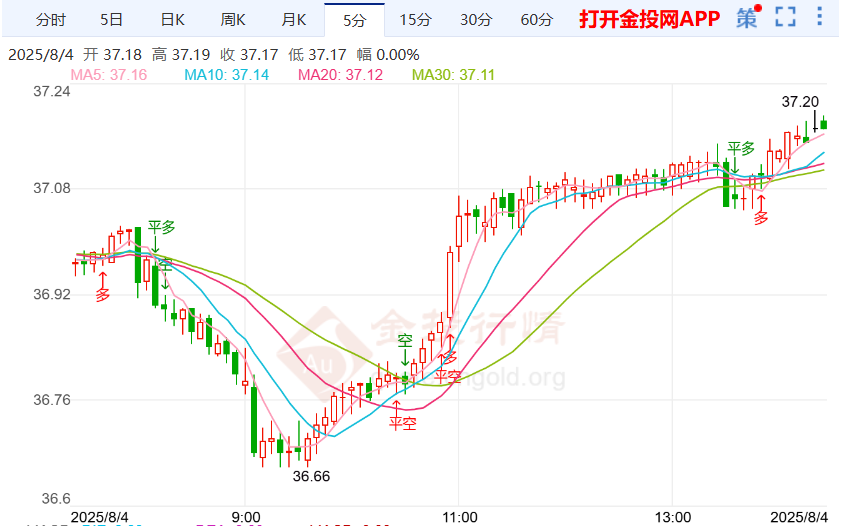
今日周一(8月4日)欧盘时段,国际白银目前交投于37.11一线上方,今日开盘于36.99美元/盎司,截至发稿,国际白银暂 报37.19美元/盎司,上涨0.45%,最高触及37.20美元/盎司,最低下探36.66美元/盎司,目前来看,国际白银盘内短线偏 向看涨走势。 【要闻速递】 美国总统特朗普(Donald Trump)表示,他将在几天内宣布新的美联储理事和劳工统计局局长。美国彭博社称,在全球经 济增长轨迹令人担忧的背景下,这两项任命可能会影响他的经济议程。 特朗普周日(8月3日)在新泽西州贝德明斯特度周末返回白宫途中对记者发表了上述言论。他因不断抨击美联储以及在数 据显示就业增长疲软后解雇劳工统计局局长埃里卡·麦肯塔弗(Erika McEntarfer)而受到批评——这些举动被视为破坏了通 常被视为不受政治影响的机构。 就美联储理事而言,总统表示,他已经"心仪几位人选",此前库格勒(Adriana Kugler)上周五宣布将辞去美联储理事职 位,而该职位原定明年1月到期。库格勒的离职为特朗普提供了一个比预期更早的机会,让他可以任命一位更符合其低 利率偏好的理事。 【最新国际白银行情解析】 国际白银上周收长阴 ...