电动化

Search documents
21深度|比亚迪闯关:守擂之年 下一个增长点是什么?
2 1 Shi Ji Jing Ji Bao Dao· 2026-03-03 23:23
Core Insights - BYD is facing increasing competition and challenges in maintaining its market share, particularly in the entry-level electric vehicle segment, as competitors like Geely and Wuling ramp up their offerings [3][16] - The company is undergoing strategic adjustments, focusing on product innovation and marketing to better align with consumer demands and market dynamics [19][20] - BYD's technological advancements, such as the DM-i technology and blade battery, have been pivotal in its growth, but the company must continue to innovate to stay ahead of competitors [5][9][24] Sales Performance - In early 2026, BYD's sales were impacted by seasonal factors, with January and February sales dropping to 210,000 and 190,200 units, representing year-on-year declines of 30% and 41.1% respectively [2] - Geely's sales in the same period were 270,000 and 206,000 units, indicating a competitive threat to BYD's market position [2][13] - BYD's Dolphin and Seagull models are facing pressure from new entrants in the market, particularly as Geely's Star Wish model has shown significant growth [18] Product Strategy - BYD is focusing on launching new models to reclaim market share in the under 200,000 yuan electric vehicle segment, which is seen as a critical area for growth [3][16] - The company is also adjusting its pricing strategy, with the Qin PLUS DM-i's price dropping significantly over the years to maintain competitiveness [6] - The introduction of the Super e-platform is part of BYD's strategy to innovate and meet evolving consumer needs, with expectations for new technology releases by 2026 [4][20] Technological Innovation - BYD's DM-i technology has set a new standard in fuel efficiency, with a thermal efficiency of 43.04% and a fuel consumption of 3.8L per 100 km, outperforming many competitors [5] - The blade battery technology has allowed BYD to maintain a competitive edge in the electric vehicle market by offering lower costs and longer ranges [8][9] - The company is aware of the rapid pace of technological advancement in the industry and is committed to continuous innovation to avoid losing its competitive advantage [14][20] Market Dynamics - The competitive landscape is shifting, with traditional automakers like Toyota and Honda lagging in electric vehicle adoption, allowing BYD to capture significant market share [9][11] - The overall market for electric vehicles is expanding, with projections indicating continued growth in exports and international sales for Chinese automakers, including BYD [26] - BYD's overseas sales have surpassed domestic sales for the first time, indicating a strategic shift towards international markets [24] Brand Positioning - BYD is working to enhance its brand perception and emotional connection with consumers, moving beyond technical specifications to focus on user experience [19] - The company is also exploring high-end market segments with new brands like Tengshi and Fangchengbao, aiming to establish a presence in the luxury vehicle market [21][22] - The success of Fangchengbao, particularly with its Titanium series, highlights BYD's ability to adapt its product offerings to meet specific consumer needs [22]


21深度|比亚迪闯关:守擂之年,下一个增长点是什么?
2 1 Shi Ji Jing Ji Bao Dao· 2026-03-03 23:17
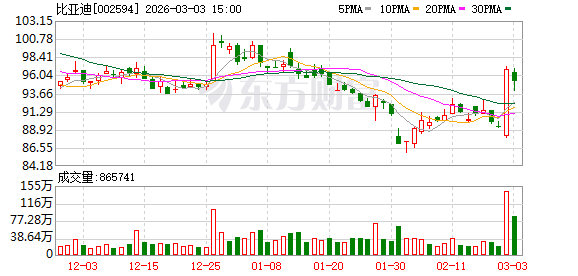
Core Insights - BYD is facing increasing competition and challenges in maintaining its market share, particularly in the 10-20 million yuan segment, as competitors like Geely and Wuling ramp up their efforts in the electric vehicle market [2][13] - The company is undergoing a strategic shift from aggressive market share acquisition to focusing on building barriers to protect its existing market position [1][3] - BYD's success has been largely driven by its competitive pricing and technological innovations, but it now needs to adapt to changing consumer demands and market dynamics [8][11] Sales Performance - In January and February 2026, BYD's sales were 210,000 and 190,200 units, representing year-on-year declines of 30% and 41.1% respectively [1] - Geely's sales during the same period were 270,000 and 206,000 units, indicating a competitive threat to BYD's market position [1] Product Strategy - BYD is focusing on launching new models to regain market share in the under 200,000 yuan electric vehicle segment, which is seen as crucial for its future growth [2][13] - The company has implemented a pricing strategy that includes reducing the starting price of models like the Qin PLUS DM-i, which has seen significant price cuts since its launch [6][4] Technological Innovation - BYD's technological advancements, such as the DM-i technology and blade battery, have allowed it to maintain a competitive edge in the electric vehicle market [4][7] - The company is aware of the rapid pace of technological change and the need to continuously innovate to stay ahead of competitors [11][12] Market Dynamics - The automotive market is experiencing a shift, with increasing competition from both established players and new entrants, making it essential for BYD to adapt its strategies [8][9] - The company is also focusing on expanding its presence in international markets, with overseas sales surpassing domestic sales for the first time in early 2026 [20][21] Brand Positioning - BYD is working on enhancing its brand image and marketing strategies to appeal to a broader audience, particularly in the high-end market segment [14][17] - The introduction of new brands like Fangcheng Leopard aims to fill gaps in the market and target specific consumer demographics [17][19]
最穷的发达国家,一分钟下线一辆车
汽车商业评论· 2026-03-03 23:04
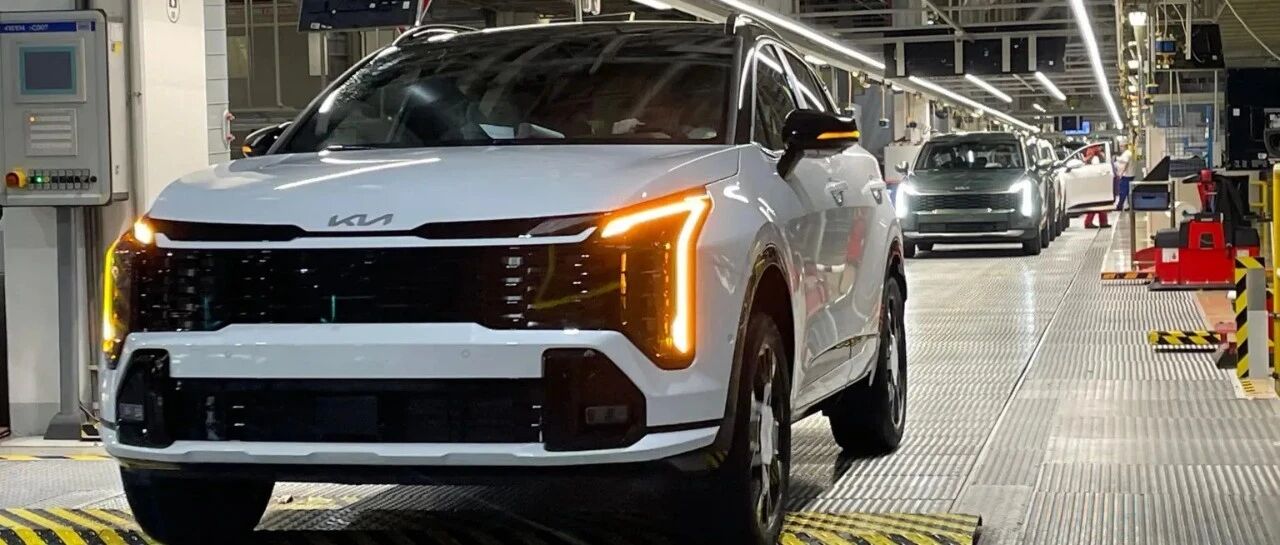
Core Viewpoint - Slovakia has emerged as the world's leading car manufacturer in terms of per capita production, with a projected output of approximately 993,000 vehicles in 2024 and a rebound to about 1.07 million in 2025, despite its overall production being lower than other countries [4][5]. Group 1: Production Capacity and Workforce - Kia's factory in Zilina has an annual production capacity of 350,000 vehicles and employs around 3,700 people, with a cumulative investment of approximately €2.5 billion from 2004 to 2024 [7]. - The average monthly salary at the Kia factory is €2,400, significantly higher than Slovakia's overall average monthly salary of about €1,400 in 2023 [9][10]. - Slovakia's automotive industry directly employs about 170,000 people, contributing approximately 10.4% to the GDP and accounting for about 46.5% of industrial production revenue in 2023 [17]. Group 2: Competitive Advantages - Slovakia's labor costs are about 60% of those in Western Europe, maintaining competitiveness despite rising wages [9]. - The country benefits from a strong local supply chain with over 365 local suppliers and a favorable geographic location that connects it to a market of approximately 740 million consumers within a 2,000 km radius [13]. - Slovakia's low-carbon electricity share is around 85%, with nuclear power accounting for about 63% and hydropower for about 14%, making it easier for locally produced electric vehicles to meet subsidy conditions in various markets [14]. Group 3: Industry Development and Challenges - The automotive industry in Slovakia has seen significant foreign investment since the Velvet Revolution in 1989, with major manufacturers like Volkswagen, Stellantis, Jaguar Land Rover, and Kia establishing operations [17]. - The planned establishment of a new electric vehicle factory by Volvo in Kosice, with a projected annual capacity of 250,000 vehicles, highlights the potential impact of new projects on production and employment dynamics in the country [18]. - As the industry faces pressures from rising costs and the transition to electric vehicles, the ability to retain competitive advantages will be crucial for Slovakia's automotive sector [17].

2025年全球及中国叉车行业研究:身智能赋能,叉车行业加速升级
Tou Bao Yan Jiu Yuan· 2026-03-03 12:36
Investment Rating - The report indicates a positive investment outlook for the forklift industry, driven by advancements in electric and intelligent technologies, with a projected annual growth rate of 5% for the global market and 5.9% for the Chinese market from 2025 to 2030 [2][26][29]. Core Insights - The forklift industry is undergoing a significant transformation towards automation and intelligence, spurred by labor shortages and the need for cost reduction. AI technology is evolving forklifts from mere transportation tools to intelligent decision-making terminals [2]. - The Chinese forklift market is expected to grow from 1.52 million units in 2007 to 1.286 million units by 2024, maintaining its position as the largest market globally. Domestic brands are capturing 80% of the market share due to their competitive pricing and technological advancements [2][15]. - The report highlights three main upgrade paths for the forklift industry: electrification, automation, and intelligence, focusing on the differentiated technological strategies of leading companies [2][3]. Summary by Sections Market Overview - The global forklift market is closely tied to economic activity, with sales growth rates approximately 1.6 times that of GDP growth. Asia is the largest market due to its manufacturing sector, while Europe focuses on automation upgrades [11][13]. Chinese Market Dynamics - The Chinese forklift market is projected to reach 1.81 million units by 2030, with an electrification rate increasing from 74% to 96%. The market is driven by e-commerce logistics and industrial land cost pressures [29][32]. Technological Advancements - The AGV/AMR market is experiencing rapid growth, with a 12.5-fold increase in six years, driven by the need for automation in logistics. The penetration rate is expected to reach 18% by 2024, with average prices dropping significantly [4][35]. Competitive Landscape - Domestic forklift manufacturers benefit from advanced battery technology and cost advantages, with prices significantly lower than international brands. This competitive edge allows for quicker market responses and greater market share [20][22]. Future Projections - The report forecasts that the global forklift market will grow to 2.96 million units by 2030, with significant contributions from Europe and Asia. The market is expected to transition from high growth to maturity, with a focus on electric warehouse equipment [26][52].
2025年全球及中国叉车行业研究:具身智能赋能,叉车行业加速升级(精华版)
Tou Bao Yan Jiu Yuan· 2026-03-03 12:24
Investment Rating - The report indicates a positive investment outlook for the forklift industry, highlighting significant growth potential driven by automation and electrification trends [2][26]. Core Insights - The global forklift industry is experiencing a transformative upgrade period fueled by embodied intelligence, with labor shortages and cost reduction demands accelerating the shift towards automation and AI integration [2]. - China's forklift market is projected to grow from 1.52 million units in 2007 to 1.286 million units by 2024, maintaining its position as the largest market globally [15][17]. - The report emphasizes the dual drive of electrification and intelligence, with domestic brands capturing 80% of the market due to competitive pricing and advanced technology adoption [2][20]. Summary by Sections Electrification and Automation - The forklift industry is undergoing a dual transformation towards electrification and automation, with a projected annual growth rate of 5% for the global market, reaching 2.96 million units by 2030 [26]. - In China, the electrification rate is expected to rise to 96% by 2030, with electric warehouse equipment accounting for 68% of the market [29][32]. Technological Advancements - The AGV/AMR market is expanding rapidly, driven by a doubling of logistics volume and advancements in laser navigation technology, transitioning from optional to essential in smart logistics [3][35]. - Leading companies are building technological barriers through acquisitions and in-house development, demonstrating a successful transition from technology exploration to large-scale application [3][40]. Market Dynamics - The report notes that the demand for forklifts is closely tied to economic activity, with sales growth historically outpacing GDP growth by approximately 1.6 times [11][13]. - The Chinese forklift market is characterized by a strong domestic supply chain and competitive pricing, with local brands offering products at one-third the price of international competitors [20][22]. Future Projections - The report forecasts that the sales of unmanned forklifts will grow at an annual rate of 19%, reaching 70,000 units by 2030, as the market transitions from high growth to maturity [52]. - The price of unmanned forklifts is expected to stabilize at around 135,000 yuan, driven by domestic component production and technological advancements [52].
万里扬20260227
2026-03-01 17:22
Company and Industry Summary Company Overview - The company is engaged in the manufacturing of transmission systems, focusing on manual gearboxes for light trucks, heavy-duty truck gearboxes, agricultural machinery transmissions, and electric vehicle reducers. [2][3] Key Business Segments 1. Micro Truck Manual Gearbox - The micro truck manual gearbox business is stable and leads the domestic market, benefiting from the slight electrification trend, which is expected to optimize product structure and provide stable cash flow. [2] 2. Heavy-Duty Truck Gearbox - Heavy-duty truck gearboxes are a core growth driver, with mass production expected in 2025. The company aims for a 30% market share within five years, anticipating breakeven in 2026 and accelerated growth in 2027. [2][6] 3. Agricultural Machinery Transmission - The agricultural machinery transmission business focuses on medium to large horsepower products and CVT products, with a target market share of 20%-30% in China by 2026. [2][8] 4. New Energy Passenger Vehicle Reducers - Revenue from new energy passenger vehicle reducers doubled year-on-year in the first half of the year, with a mid-term goal of achieving a 20%-30% market share in five years. [2][9] 5. DCT Products for Fuel Vehicles - The company plans to introduce DCT products in 2026, primarily targeting export demand for fuel vehicles, with a production capacity of approximately 300,000 units per year by 2028. [2][10] 6. Robotics Business - The robotics business focuses on precision transmission technology, with plans to establish a subsidiary in 2025 and a production capacity of 450,000 units. [4][12] 7. Energy Storage Business - The energy storage business is centered on investment, construction, operation, and maintenance of energy storage power stations, with a revenue of 130 million yuan and a net profit of over 30 million yuan in the first half of 2025. [4][14] Growth Strategies and Market Position - The company has transitioned from traditional gearbox manufacturing to a multi-dimensional business structure, including transmission and drive systems, robotics components, and energy storage. [3] - The company expects to double its revenue in the next three years, aiming to reach a revenue level of 10 billion yuan. [3] Market Dynamics - The domestic heavy-duty truck market is approximately 1 million units, with growth driven by policy updates and export demand. [6] - The agricultural machinery market is about 500,000 units, with a growing trend towards larger machinery. [8] - The new energy vehicle market is experiencing strong demand, with the company positioned to capitalize on this trend. [9] Financial Performance and Projections - The company anticipates breakeven for the heavy-duty truck gearbox business in 2026, with significant profit contributions expected in 2027. [6] - The energy storage business has shown strong financial performance, with profits exceeding the company's average levels. [14] Customer Relationships and Collaborations - The company collaborates with major clients such as Foton, Dongfeng, and FAW in the heavy-duty truck sector, and with Geely, Dongfeng, Chery, and Wuling in the new energy vehicle sector. [6][9] - The company is also exploring international markets, particularly in Europe, Central Asia, the Middle East, South America, and Southeast Asia. [2][10] Conclusion - The company is well-positioned in the transmission and energy storage markets, with a clear strategy for growth and expansion into new segments. The focus on electrification and automation trends presents significant opportunities for future revenue growth. [3][4]

广汽集团欲重返产销200万辆,如何做到?
Di Yi Cai Jing Zi Xun· 2026-02-28 08:09
Core Viewpoint - GAC Group aims to achieve a vehicle production and sales target of 2 million units in 2026, with a focus on improving operational efficiency and returning to profitability after a challenging 2025 [1] Group 1: 2025 Performance and Financial Outlook - In 2025, GAC Group achieved a total sales volume of 1.8135 million vehicles, with nearly 130,000 units exported under its own brands [1] - The company anticipates a net loss attributable to shareholders of the parent company between 8 billion to 9 billion yuan for 2025, and a net loss excluding non-recurring items between 8.9 billion to 9.9 billion yuan [1] Group 2: Strategic Initiatives and Transformation - GAC Group has established a "2+3+X" long-term transformation framework, completing the first phase of foundational tasks and gradually implementing the IPD product development system [1] - The company is focusing on three major tasks: stabilizing joint ventures, strengthening its own brands, and expanding its ecosystem, which aligns with its "14th Five-Year Plan" [2] Group 3: Sales Performance and Market Strategy - In January 2026, GAC Group's vehicle sales reached 116,600 units, marking an 18.47% year-on-year increase, with self-owned brand sales nearly reaching 50,000 units, up 87.58% [2] - The company plans to enhance its joint venture brands, particularly GAC Toyota and GAC Honda, while pushing for deeper integration of electric and intelligent technologies in its self-owned brands [2] Group 4: Focus on New Brands and Overseas Expansion - GAC Group is concentrating on the "Qijing" brand, a high-end smart electric vehicle brand co-created with Huawei, with plans to launch two new models in 2026 [3] - The company aims to significantly expand its overseas market presence, targeting a sales volume of 200,000 units abroad by optimizing channel structures and localizing production [3]

全球车企销量榜前十生变 3家中企位次抬升
Zheng Quan Ri Bao· 2026-02-27 16:20
销量"稳中有升"的直接支撑,来自于新能源渗透率提升带来的结构性增量。中国汽车工业协会数据显 示,2025年,我国汽车产销量分别为3453.1万辆和3440万辆,同比分别增长10.4%和9.4%;新能源汽车 产销量超过1600万辆,国内新车销量占比超过50%。在此背景下,中国头部车企在电动化产品供给、价 格带覆盖与智能化体验上的优势更容易转化为销量兑现。以比亚迪为例,其全年销量中纯电动车型销量 达225.67万辆,同比增长27.86%,并首次超越特斯拉成为全球纯电销冠。 海外市场的贡献同样关键。资料显示,2025年,比亚迪海外销量达到105万辆,同比增长145%;上汽海 外市场销量为107.1万辆,同比增长3.1%。车企"出海"正从单一的出口扩张,走向渠道体系、品牌运营 与本地化能力的综合比拼。业内观点认为,销量位次的提升不仅反映产品竞争力,也反映出企业对不同 地区法规、用户偏好与供应链协同的适配能力。 随着2月26日Stellantis集团(斯特兰蒂斯集团)发布财报,2025年全球车企销量排行终于出炉。丰田仍 以逾千万辆的销售规模稳居第一,大众、现代汽车、通用汽车继续占据前四,Stellantis位列第五的格 ...

徐工机械(000425):中国工程机械龙头,矿机成套打开第二增长曲线
Soochow Securities· 2026-02-27 11:11
Investment Rating - The report assigns a "Buy" rating for XCMG Machinery (徐工机械) as a first coverage [1]. Core Views - XCMG Machinery is recognized as a leading player in the Chinese construction machinery industry, leveraging mixed ownership reform, globalization, and diversification to drive performance growth [7][13]. - The company has successfully transitioned from a local state-owned enterprise to a globally competitive modern listed company, maintaining a leading position in traditional sectors while expanding into emerging strategic areas such as aerial work machinery and mining machinery [7][13]. - The report highlights the expected recovery in both domestic and international markets, with a focus on the resurgence of overseas industry demand [7][43]. - Mining machinery is identified as a second growth curve for the company, with advancements in electrification and globalization creating competitive advantages [7][43]. Summary by Sections 1. Company Overview - XCMG Machinery has evolved into a global leader in the construction machinery sector, with a comprehensive product range including cranes, earth-moving machinery, and concrete machinery [13][15]. - The company has a clear ownership structure that combines state control with market-driven mechanisms, enhancing operational vitality [29]. 2. Market Dynamics - The construction machinery industry is entering a new cycle, with exports becoming a core growth driver, expected to account for 50% of total sales by 2025 [43][47]. - Domestic excavator demand is projected to grow significantly, with an expected average annual increase of over 20% from 2025 to 2028 [7][50]. 3. Financial Performance - The report forecasts XCMG's total revenue to reach 134.84 billion yuan by 2027, with a compound annual growth rate (CAGR) of approximately 13.64% from 2025 to 2027 [1]. - The net profit attributable to shareholders is expected to grow from 70 billion yuan in 2025 to 119 billion yuan in 2027, reflecting strong earnings potential [1]. 4. Competitive Advantages - XCMG's mining machinery segment is positioned as a new growth point, with a focus on high-margin aftermarket services and a complete solution approach [7][43]. - The company is advancing in electrification, achieving a closed-loop supply chain for battery systems, which enhances its market penetration in new energy products [7][43].

德系车企三巨头掌门人随德国总理访华
Xin Lang Cai Jing· 2026-02-27 10:30
Core Insights - The visit of German Chancellor Merz to China included key executives from major German automotive companies, highlighting the importance of the Chinese market for their global strategies [2][11] - Executives emphasized that neglecting the Chinese market could result in missed global growth opportunities, with China being redefined as a core innovation center rather than just a sales market [3][4][12] Group 1: Market Context - The German automotive industry employs approximately 780,000 to 800,000 people, accounting for over 12% of total employment, making it a critical sector for the German economy [3] - In 2025, Mercedes-Benz's sales in China are projected to drop to 575,000 units, a 19% decline, while BMW's sales are expected to fall by 12.5% to 625,500 units, and Volkswagen's deliveries are anticipated to decrease by about 8% to over 2.69 million units [3][13] Group 2: Strategic Shifts - The executives' statements during their visit indicate a shift in the perception of the Chinese market, with terms like "innovation source" becoming more prevalent alongside the traditional "largest single market" description [3][4][14] - BMW and CATL signed an agreement to collaborate on reducing carbon footprints in the battery supply chain, while Mercedes-Benz deepened its partnership with Momenta to enhance smart driving technologies [4][5][14] Group 3: Investment and Collaboration - BMW has invested over 120 billion yuan in its Shenyang production base and established multiple R&D centers in China, while Mercedes-Benz has invested over 100 billion yuan in partnerships since 2014 [6][16] - The collaborations with Chinese tech companies signify a transition from a one-way technology transfer model to a dual-directional technology integration approach [7][18] Group 4: Future Outlook - The partnerships aim to leverage China's rapid technological advancements in electric and intelligent vehicles, with German companies recognizing the necessity to adapt to "Chinese speed" to maintain global competitiveness [7][18] - The integration of German engineering standards with Chinese technological innovations is seen as crucial for the future success of German automakers in the evolving automotive landscape [19]