
第一性原理

Search documents
25 岁,他想做 AI 时代的微信丨100 个 AI 创业者
晚点LatePost· 2025-12-17 14:39
Core Insights - The article discusses the journey of Chen Chunyu, a young entrepreneur aiming to create a next-generation communication tool, highlighting his resilience and innovative approach in addressing communication challenges, particularly in cross-language interactions [4][5][12]. Group 1: Entrepreneurial Journey - Chen Chunyu, a 25-year-old dropout from Tsinghua University, has faced numerous failures in his entrepreneurial endeavors but has garnered support from top investors due to his vision [4][5]. - His initial product, Riffo, unexpectedly gained traction, achieving 200,000 uses in a month and securing over 50 B2B client intentions, which helped restore his team's confidence [5][6]. - Despite the success of Riffo, Chen chose to pivot back to his original goal of developing a communication tool, focusing on integrating AI features into a messaging platform [5][9]. Group 2: Product Development Focus - The newly launched product, Intent, aims to address the inadequacies of existing translation tools within messaging apps, particularly for underrepresented languages and dialects [8][9]. - Chen identified a significant market gap, noting that existing giants like WeChat and WhatsApp overlook the needs of millions of immigrants and cross-cultural relationships [8][9]. - Intent's first version prioritized translation functionality, discarding unnecessary features to ensure a streamlined user experience [9][10]. Group 3: Unique Approach to Product Management - Chen adopts a non-traditional approach to product management, emphasizing the importance of understanding user behavior and needs over conventional metrics like A/B testing [10][11]. - He employs immersive user research methods, including living with users to observe their communication habits, which informs the product's development [11][12]. - Chen believes that being a CEO is a means to an end, allowing him to mobilize resources and talent to enhance product development, with the ultimate goal of improving human communication [10][12][14]. Group 4: Market Opportunity and Vision - The article highlights the structural opportunity in the communication software market, which has seen little innovation over the past decade, despite the growing demand for improved tools [12][14]. - Chen's vision extends beyond mere messaging; he aims to create a comprehensive information converter that enhances communication across various contexts [9][10]. - The article concludes with Chen's belief that the lack of competition in the messaging space presents a unique opportunity for innovation, positioning Intent as a potential game-changer in the industry [15].


昂瑞微钱永学:以射频“芯”力,筑数字时代连接之基
Shang Hai Zheng Quan Bao· 2025-12-15 19:19
Core Viewpoint - The company, Angrui Micro, aims to become a world-class chip manufacturer in the RF and analog fields, focusing on technological innovation and long-term growth strategies as it prepares for its IPO on the STAR Market in December 2025 [2][9]. Group 1: Company Background and Development - Angrui Micro was founded in 2012 and is positioned in the RF front-end chip market, which is crucial for precise communication in smart devices [2]. - The company has evolved from facing intense competition in the 2G market to becoming a key player in the 5G high-integration module supply chain [3][4]. - The founder, Qian Yongxue, emphasizes the importance of patience and strategic determination in achieving technological breakthroughs [3]. Group 2: Technological Innovations - The company achieved a significant technological breakthrough by using an innovative CMOS architecture, allowing a single chip to perform the functions of three to four traditional chips, which helped reduce costs for Chinese smartphone manufacturers [3]. - Angrui Micro has developed a 5G high-integration module, L-PAMiD, which has been mass-produced and integrated into flagship devices of major brands [4]. Group 3: Market Opportunities and Growth Strategies - The company is expanding into new growth areas such as satellite communication and vehicle networking, leveraging its core RF technology [6]. - Angrui Micro has developed satellite communication solutions applicable to various devices and has entered the supply chain of major automotive brands with its vehicle-grade RF chips [6][7]. - The company is also exploring opportunities in AI and Bluetooth technology, aiming to meet the high demands of low power consumption and high integration in emerging markets [7]. Group 4: IPO and Future Plans - The company plans to raise approximately 2 billion yuan through its IPO, focusing on R&D and industrial upgrades for 5G RF front-end chips and SoC development [8]. - Angrui Micro aims to enhance its product offerings in response to market demands for satellite communication and the trend towards thinner mobile devices [8]. - The company is committed to a long-term strategy, focusing on solid technological foundations and prudent acquisition strategies to expand its business boundaries [9].

Space X的护城河
美股IPO· 2025-12-15 00:24
Core Insights - The core argument of the article is that SpaceX's competitive advantage is not based on a single technological breakthrough but rather on a deep integration of cost, manufacturing, and customer relationships, creating a self-reinforcing business model [1][4][19]. Cost Barrier - SpaceX's primary competitive edge lies in its unparalleled rocket reusability, which has transformed space launch from a "custom craft" to an "industrial standard" [5][7]. - The marginal launch cost of SpaceX's Falcon 9 has been reduced to approximately $15 million, compared to NASA's Space Shuttle cost of about $54,500 per kilogram, representing a nearly 20-fold decrease [7][12]. - The report highlights that the manufacturing cost of a new Falcon 9 rocket is around $50 million, with the first stage being recoverable, while the marginal cost of reusing a rocket drops significantly [12][14]. Manufacturing Barrier - SpaceX employs a vertical integration strategy, achieving an 80% self-manufacturing rate, which allows for high iteration speed and cost control [14][16]. - The decision to use 304L stainless steel for the Starship project, instead of expensive carbon fiber, significantly reduces material costs and enhances manufacturing efficiency [16][17]. Customer Barrier - SpaceX has established a deep strategic symbiosis with the U.S. government, particularly NASA and the Department of Defense (DoD), which provides substantial funding for its core R&D [19][20]. - The relationship with NASA has evolved into a dependency, with SpaceX being the sole provider for certain missions, such as transporting astronauts to the International Space Station [19][21]. - SpaceX's role has expanded from a launch service provider to a core contractor for national security, with significant contracts for military satellite launches and intelligence operations [20][23].
Space X的护城河
Hua Er Jie Jian Wen· 2025-12-14 10:57
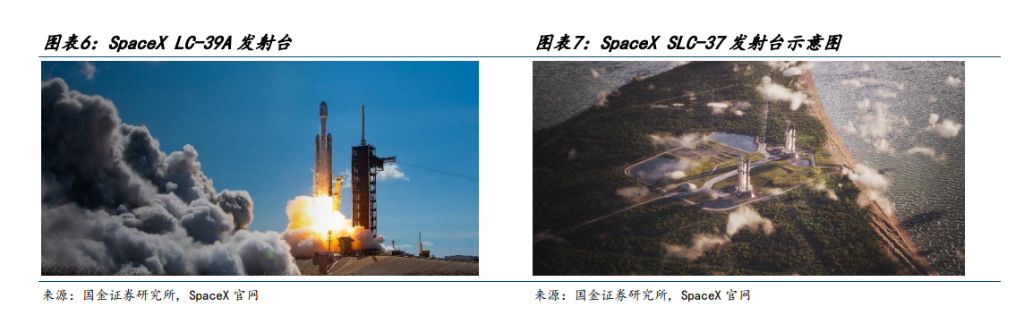
Core Insights - The report from Guojin Securities reveals that SpaceX has transformed from a traditional aerospace manufacturer into a "monopolist in space logistics and infrastructure" by applying first principles to its operations [1] Cost Barriers: Unmatched Reusability Economics - SpaceX's core competitive advantage lies in its unique rocket reusability technology, which has ended the "cost-plus era" in the aerospace industry [5] - The report highlights that before SpaceX's rise, the global launch market was dominated by state-owned enterprises following a "cost-plus" contract model, which lacked cost control incentives [5] - NASA's Space Shuttle had a cost of approximately $54,500 per kilogram to low Earth orbit, while SpaceX's Falcon 9 has reduced this to about $2,720 per kilogram, representing a nearly 20-fold decrease [5] Business Model: Self-Reinforcing Commercial Loop - SpaceX has built a powerful "self-reinforcing commercial loop" by leveraging the unmatched launch cost advantage of Falcon 9 to create the world's largest space communication network, Starlink [2] - The cash flow generated from Falcon 9 and Starlink supports the ambitious Starship project, presenting investors with a unique combination of "cash flow + high growth + high optionality" [2] Manufacturing Barriers: Vertical Integration in the Assembly Line Era - SpaceX achieves a high self-manufacturing rate of 80%, producing most components in-house, which contrasts sharply with traditional aerospace contractors who primarily focus on system integration [14] - This vertical integration strategy, while initially costly, leads to high iteration speed and cost control, transitioning rocket manufacturing from a "workshop" to an "assembly line" model [14] Material Innovation: Disruptive Decisions - The report emphasizes SpaceX's decision to use 304L stainless steel for Starship instead of expensive carbon fiber, which significantly reduces material costs and allows for rapid iteration in manufacturing [16] - Stainless steel costs about $4 per kilogram compared to carbon fiber's $135 per kilogram, making it a more economical choice with excellent thermal properties [17] Customer Barriers: Strategic Symbiosis with the U.S. Government - SpaceX has developed a deep strategic symbiosis with the U.S. government, particularly NASA and the Department of Defense (DoD), which are not only major customers but also early funders of its technology [19] - This relationship has created a strong barrier, with long-term, high-value contracts providing substantial subsidies for SpaceX's core R&D, especially for Starship [19] - SpaceX's role has evolved from a launch service provider to a core contractor for national security, with the military transitioning to distributed low Earth orbit satellite constellations that only SpaceX can deploy efficiently [20] Financial Contracts: Key Milestones - The report outlines significant contracts that have shaped SpaceX's financial landscape, including: - COTS (Commercial Orbital Transportation Services) contract worth $278 million, which was crucial for SpaceX's survival [21] - CRS-1 (Commercial Resupply Services) contract valued at $1.6 billion, establishing a stable cash flow source [21] - CCtCap (Commercial Crew Transportation) contract worth $2.6 billion, marking a significant profit source [21] - HLS (Human Landing System) contract valued at $2.9 billion, funding Starship's development for lunar missions [21]
一度“濒死”的SpaceX,何以剑指史上最大IPO?
财联社· 2025-12-13 08:38
Core Viewpoint - SpaceX is planning to go public in mid-2026, aiming to raise over $30 billion, with a target valuation of $1.5 trillion, potentially making it the largest IPO in history [2][3]. Group 1: Financial Health and IPO Plans - SpaceX has maintained positive cash flow for years and conducts regular stock buybacks to provide liquidity to employees and investors [3]. - The anticipated fundraising will exceed Saudi Aramco's previous record of $29 billion, indicating strong investor confidence [3]. Group 2: Vision and Technological Innovation - Elon Musk's vision of Mars colonization drives SpaceX's operations, requiring significant resources and innovative technologies [6][7]. - The estimated cost to establish a Mars settlement is around $1 trillion, necessitating approximately 10,000 Starship launches [6]. Group 3: Cost Reduction and Competitive Advantage - SpaceX has significantly reduced rocket manufacturing costs through innovations like reusable rocket technology, achieving a marginal launch cost of nearly $15 million [9]. - The company has created a self-reinforcing business model, leveraging its low launch costs to build the largest satellite communication network, Starlink, which generates substantial cash flow for further projects [9].
为什么,光努力,不够用了?
3 6 Ke· 2025-12-12 00:44
Group 1 - The core idea of the article emphasizes the importance of philosophical thinking in navigating the uncertainties of the modern business environment, particularly in the context of AI technology and global economic transformation [1][34] - The article discusses the need for leaders to cultivate both internal stability and external intelligence, drawing from Eastern and Western philosophical traditions [3][4] - The Stoic principle of the "control dichotomy" is highlighted as a crucial mental tool for leaders to focus on what they can control and accept what they cannot [5][8] Group 2 - The article critiques traditional business analysis tools like Porter's Five Forces and SWOT analysis, arguing that they are insufficient in the face of the current "VUCA" (Volatility, Uncertainty, Complexity, Ambiguity) environment [15][16] - It stresses the necessity for businesses to redefine their strategic purpose by asking "Why" rather than just focusing on "What" and "How" [18][19] - The article identifies four core functions of philosophical thinking in business: defining fundamental questions, examining underlying assumptions, providing ethical guidance, and facilitating paradigm shifts [20][22][23] Group 3 - The article presents a "trinity" decision-making model that integrates intuition, emotion, and rationality, emphasizing the need for a holistic approach in complex business decisions [26][29] - It underscores the importance of returning to genuine human experiences in business, suggesting that decisions should enhance the well-being of employees and customers [30] - The article concludes that in an uncertain world, leaders must cultivate a strong inner self and foundational thinking abilities, which philosophy can provide [34]
估值10万亿,史上最大IPO要来了,SpaceX公布上市计划
3 6 Ke· 2025-12-11 12:21
Group 1 - SpaceX plans to go public with an estimated valuation of approximately $1.5 trillion, aiming to raise over $30 billion, which would make it the largest IPO in history [1] - The valuation is supported by SpaceX's advancements in the Starship and Starlink projects, as well as its ability to secure global cellular network spectrum [1] - Elon Musk's vision includes making humanity a multi-planetary species, with SpaceX's mission extending beyond commercial success to address existential risks [28][30] Group 2 - Musk's approach combines grand visions with practical business strategies, demonstrating a unique ability to align ambitious dreams with successful commercial outcomes [3] - The concept of reusable rockets revolutionized the space industry, shifting the perception of rockets from single-use to a transportation model akin to airplanes [5][7] - SpaceX's initial focus on government contracts, particularly with NASA, provided a crucial revenue stream that aligned with its long-term goals [13] Group 3 - The cost of launching payloads has drastically decreased, with SpaceX's Falcon 9 costing around $3,000 per kilogram compared to NASA's $50,000 per kilogram [26] - SpaceX's Starlink project aims to create a satellite network for global internet coverage, with projected revenues exceeding $100 billion by 2035 [38] - Musk's ultimate goal is to facilitate human colonization of Mars, with plans for a fleet of Starships capable of transporting large numbers of people [41][44]
估值10万亿,史上最大IPO要来了!SpaceX公布上市计划
混沌学园· 2025-12-11 11:58
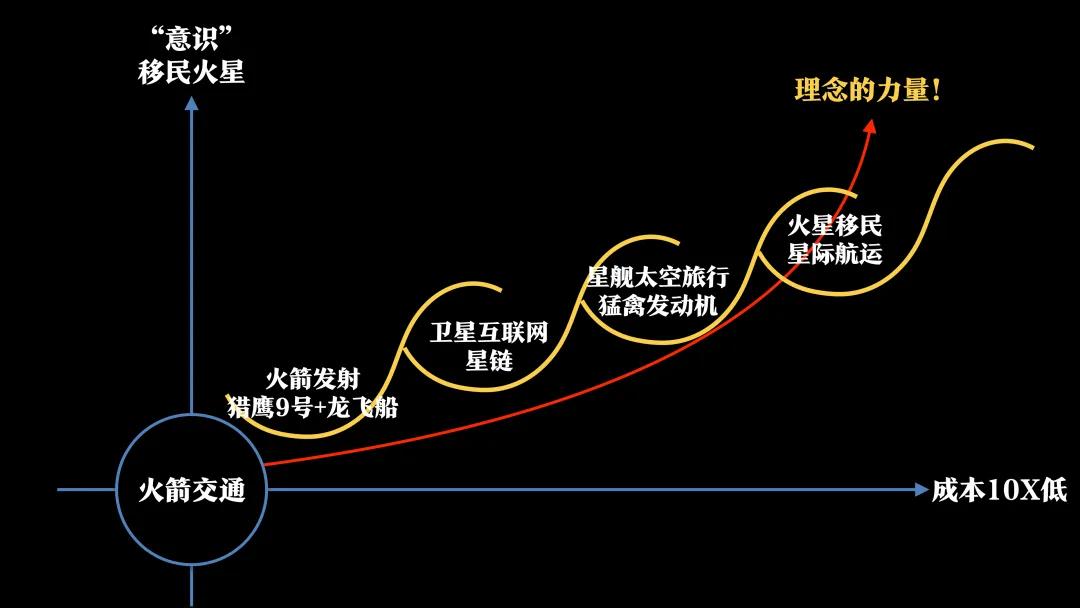
Core Viewpoint - SpaceX is planning an IPO with an estimated valuation of approximately $1.5 trillion, aiming to raise over $30 billion, which would make it the largest IPO in history [1][2]. Group 1: SpaceX's Valuation and Market Potential - The valuation of SpaceX is supported not only by its rocket technology but also by its role in building infrastructure for human access to low Earth orbit [3]. - Musk emphasizes that the growth in valuation depends on the progress of the Starship and Starlink projects, as well as the ability to acquire global cellular network spectrum, which will significantly expand the target market [4]. Group 2: Musk's Business Philosophy and Innovation - Musk's approach combines grand dreams with pragmatic business strategies, allowing for successful commercialization of ambitious visions [8]. - The concept of "innovation three stages" is introduced, highlighting the importance of action, cognition, and ideology in driving progress [9][10]. Group 3: Value Modeling and Cost Reduction - SpaceX's value modeling focuses on transforming the perception of rockets from disposable to reusable, which fundamentally changes their utility [12][14]. - Musk's goal is to reduce rocket costs by a factor of ten, utilizing the "idiot index" to identify optimization opportunities in manufacturing processes [27][39]. Group 4: SpaceX's Business Strategy and Client Relationships - SpaceX's initial strategy involved securing contracts with NASA, which provided a stable revenue stream while aligning with its long-term goals [21][23]. - The company adopted a fixed-price contract model with NASA, incentivizing cost reduction and efficiency [25]. Group 5: SpaceX's Growth Curves - The first growth curve involves rocket launches and space transportation, with significant milestones achieved in collaboration with NASA [53]. - The second growth curve is represented by the Starlink internet project, which has the potential for substantial revenue generation, further supporting Musk's vision for Mars colonization [55][60]. - The third growth curve is the development of the Starship fleet, aimed at facilitating human travel to Mars and beyond, with ambitious plans for regular interplanetary flights [62][65]. Group 6: Musk's Vision for Humanity - Musk's ultimate goal is to make humanity a multi-planetary species, with plans to establish a self-sustaining community on Mars [65]. - He believes that the journey to Mars is not just a commercial venture but a critical step for the survival of human civilization [48][50].
前大疆首席科学家带领公司冲刺IPO,他要改变“大家不愿意做”的行业|36氪专访
3 6 Ke· 2025-12-11 03:23
Core Insights - The company, Fengjiang Intelligent, is a young player in the agricultural robotics market, ranking among the top five globally, with a market share of 16.9% in agricultural navigation kits, and is third in total agricultural robot shipments [3] - Despite its achievements, the company faces significant financial pressure, with cumulative losses of 2.162 billion yuan as of June 30, 2025, primarily due to non-operating projects [3] - The company has diversified its revenue streams, with agricultural income accounting for 73.3% and construction and property management rising from 1.8% to 13.1% [3] Financial Performance - In the first half of 2025, the company's revenue reached 358 million yuan, a nearly 50% year-on-year increase, with overseas markets, particularly Europe, contributing significantly [4] - The company has achieved an adjusted profit of 14 million yuan after excluding non-operating items in the first half of 2025 [3] Market Position and Strategy - The company aims to address the challenges in agriculture by providing cost-effective solutions that enhance productivity, rather than focusing solely on high-tech innovations [7][18] - The shift from fully autonomous machines to semi-automated solutions reflects the company's understanding of market needs and the limitations of farmers' purchasing power [10][12] - The company emphasizes the importance of simplicity in product design, ensuring that even less tech-savvy users can operate their machines effectively [26] Industry Insights - The agricultural sector is experiencing a demographic shift, with an aging workforce and declining interest from younger generations, which may lead to increased land consolidation and modernization in the future [9] - The company recognizes the need for innovation in agriculture to meet the demands of a growing global population, emphasizing the importance of practical solutions over advanced technology [7][18] Customer-Centric Approach - The company prioritizes direct engagement with customers to identify their needs and challenges, which informs product development and iteration [21][22] - The CEO's hands-on approach in the field, including troubleshooting and product adjustments, highlights the company's commitment to customer satisfaction and product reliability [22][29]
国金证券:拥抱千帆星座基建爆发期 锁定高壁垒组件卖水人
智通财经网· 2025-12-11 00:06
Core Insights - The core investment logic for China's commercial aerospace sector is to embrace the explosive growth of satellite constellation infrastructure and focus on high-barrier component suppliers, similar to SpaceX's position from 2018 to 2020 [1] - SpaceX is not a traditional aerospace manufacturer but a monopolist in space logistics and infrastructure, applying first principles to disrupt conventional beliefs about rocket costs and usage [1] Cost Barriers - SpaceX has achieved unmatched reusability economics, reducing marginal launch costs to nearly $15 million, with gross margins reaching around 68% after five reuse missions [2] - This cost structure provides SpaceX with pricing power against traditional aerospace giants like Boeing and Lockheed Martin, creating a scale effect barrier that competitors cannot replicate [2] Manufacturing Barriers - SpaceX has vertically integrated over 80% of its production, including engines, structures, and software, leading to high iteration speed and cost control [2] - This integration allows SpaceX to update spacecraft at a consumer electronics pace, transitioning rocket manufacturing to an assembly line model [2] Customer Barriers - SpaceX has developed a deep strategic symbiosis with the U.S. government, transforming its relationship from a simple contractor to a strategic partner [2] - Long-term, high-value contracts with NASA and the Department of Defense provide substantial subsidies for SpaceX's core R&D, particularly for Starship [2] Growth Curves - SpaceX's value should not be compared to traditional military contractors but viewed as a combination of three distinct business life cycles: 1. Launch services as a cash cow with high market share and profitability [3] 2. Starlink's exponential growth, transitioning from B2B manufacturing to C2C service with recurring revenue characteristics [3] 3. Starship as a disruptive option for future space economy infrastructure, unlocking potential trillion-dollar markets [3]
