自动驾驶

Search documents
现代汽车自研自动驾驶系统评分垫底 或转向英伟达方案
Xi Niu Cai Jing· 2026-01-30 08:28
据韩媒The Elec 1月27日报道,现代汽车自主研发的端到端自动驾驶系统Atria AI在近期内部评估中表现不佳,评分仅25分(满分100分),远低于行业竞争 对手。 报道称,现代汽车新任自动驾驶负责人Minwoo Park使用Waymo Open Dataset等标准数据集进行横向测试。结果显示,特斯拉系统得分约90分,Mobileye和 Momenta约50分,而现代Atria AI仅得25分,成熟度被认定为"相当不足"。 此次评估结果凸显了传统汽车制造商在自动驾驶核心技术上面临的挑战。若现代最终转向英伟达方案,将标志着其自动驾驶战略的重大调整,并可能进一步 强化英伟达在汽车AI计算领域的主导地位。 现代汽车正考虑放弃继续推进该自研技术,转而采用英伟达的Alpamayo自动驾驶方案。业内分析认为,Minwoo Park可能保留Atria AI作为部分算法基础,同 时推动产品线全面采用英伟达的技术与基础设施,以平衡研发预算与技术风险。 ...


【快讯】每日快讯(2026年1月30日)
乘联分会· 2026-01-30 08:28
Domestic News - The State Council has issued a plan to promote innovation in the automotive circulation and consumption sector, focusing on the development of the automotive aftermarket and supporting pilot projects in selected cities [4] - As of now, 25 key automotive chips have completed certification reviews, with a cumulative installation volume exceeding 20 million units, helping vehicle manufacturers reduce selection and verification costs by approximately 40% [5] - The Ministry of Transport announced measures to ensure charging demand for new energy vehicles during the Spring Festival, including the installation of 71,500 charging guns in highway service areas by the end of 2025 [6] - By 2028, Yunnan aims to develop its new energy battery and phosphorus industries into new trillion-yuan industries, with a focus on high-value utilization of phosphorus resources [8] - Volkswagen China has successfully delivered its regional control electronic architecture (CEA) designed for the Chinese market, with plans to launch five new models based on this architecture in 2026 [9][10] - GWM has launched the WEY G9 Hi4 PHEV in Malaysia, marking a significant step in its new energy strategy for the ASEAN market [11] - Black Sesame Intelligence has signed a strategic cooperation agreement with Baidu's autonomous driving service platform, focusing on the development of autonomous driving technology [13] International News - Canada and South Korea have signed a memorandum of understanding to enhance cooperation in the automotive sector, including traditional vehicles, electric vehicles, battery manufacturing, and hydrogen commercial vehicles [15] - Tesla has received approval to test its fully autonomous driving system across Sweden, which will help improve the technology's performance in real-world conditions [16] - Vietnam's automobile imports are projected to grow by 18.6% in 2025, with a total of 205,630 vehicles imported, reflecting an increase in high-value models [17] - NVIDIA and Mercedes-Benz are advancing their plans to launch autonomous taxi services in major cities globally, with Uber joining the collaboration [19] Commercial Vehicles - Zhejiang Yuantong New Energy and GAC Group have signed a strategic cooperation agreement to promote the intelligent transformation of commercial vehicles [20] - Dongfeng Liuzhou and Guilin University of Electronic Technology have made significant breakthroughs in key technologies for medium and heavy commercial vehicle control chassis [21] - Chery Commercial Vehicles has established its European headquarters in Liverpool, UK, marking its first headquarters project in Europe [22] - China National Heavy Duty Truck Corporation's market value has surpassed 100 billion HKD, indicating a significant milestone in the commercial vehicle industry's valuation [24]



自动驾驶挺进L3,改变之下车企要闯几道关?
Xin Jing Bao· 2026-01-30 08:26
Core Viewpoint - The approval of L3 level vehicles marks a new phase in China's automotive industry, emphasizing the transition from L2 auxiliary driving to L3 conditional autonomous driving, which brings significant changes in risk management and responsibility allocation [1][2]. Group 1: Technical Challenges - Key technical challenges in transitioning from L2 to L3 include system reliability, enhanced functional safety, human-machine takeover boundaries, and refined operational design domain management [2]. - The essence of moving to L3 is the shift in responsibility from the driver to the system, necessitating robust risk control mechanisms [2][3]. - The need for higher levels of functional safety in L3 systems requires both hardware and software to incorporate safety redundancy designs [2][3]. Group 2: Safety Assurance - Safety for L3 vehicles cannot rely on a single entity; it requires a combination of technical reliability, regulatory standards, and insurance resources to address low-probability issues [3]. - The safety framework for L3 must encompass a full chain from technical error prevention to regulatory constraints and emergency support [3][4]. Group 3: Insurance Challenges - The introduction of L3 vehicles presents challenges for insurance, including pricing, data barriers, and the need for innovative insurance products that cover both the system and the driver [5][6]. - The complexity of determining liability in L3 accidents necessitates advanced models for pricing and responsibility assessment, as well as the development of composite insurance products [6][7]. - The lack of standardized insurance products for L3 vehicles, combined with the ambiguity in legal responsibility, complicates the widespread adoption of L3 insurance [7][8]. Group 4: Industry Impact and Trends - The approval of L3 vehicles is expected to accelerate the commercialization of autonomous driving, with significant impacts on industry standards and user experience [9][10]. - Collaboration across policy, standards, and industry chains is essential for sustainable development in the autonomous driving sector [10]. - The potential for automakers to offer proprietary insurance products is emerging, leveraging real-time driving data for precise pricing and safety improvements [11].
Robotaxi 系列深度(一):千亿星辰,商业竞速
Changjiang Securities· 2026-01-30 08:24
联合研究丨行业深度 [Table_Title] Robotaxi 系列深度(一):千亿星辰,商业竞速 %% %% %% %% research.95579.com 1 丨证券研究报告丨 报告要点 请阅读最后评级说明和重要声明 2 / 25 %% %% %% %% research.95579.com 2 [Table_Summary] Robotaxi 具有理论上更高的行驶安全性、更低的运营成本以及具有运营/体验的优势,从传统出 租车/网约车向 Robotaxi 发展是 AI 发展的重要应用。当前行业的加速发展,是政策许可+技术 发展+商业化推动的共振结果。预计 2030 年国内 Robotaxi 保有量有望达到约 52 万辆,共享出 行车队渗透率约 10%,市场空间约 902 亿元。商业化落地验证是短中期跟踪 Robotaxi 行业的 核心主线,行业焦点从车内无安全员运营转向关注实现单车经济效益的能力。核心关注在城市 牌照拓展、车辆规模扩张及综合运营效率方面表现突出的行业参与者。 分析师及联系人 [Table_Author] 高伊楠 韩轶超 宗建树 SAC:S0490517060001 SAC:S04905 ...
伯镭科技,递交IPO招股书,拟赴香港上市,中信证券、中信建投国际联席保荐
Sou Hu Cai Jing· 2026-01-30 08:13
Core Viewpoint - Shanghai Boonray Intelligent Technology Co., Ltd. (Boonray Technology) is preparing for an IPO on the Hong Kong Stock Exchange, focusing on autonomous mining truck solutions and aiming to transform the industry through an integrated strategy of "automation + electrification" [1][2]. Business Overview - Boonray Technology, established in 2015, is a leading provider of autonomous mining truck solutions, emphasizing a strategy that integrates automation and electrification to drive industry transformation [2]. - The company has developed three synergistic business segments: Intelligent Vehicles, Intelligent Mining, and Intelligent Transportation [4]. Intelligent Vehicles - The Intelligent Vehicles segment focuses on the sales of fully electric autonomous mining trucks used in enclosed environments, which has been the largest revenue source for the company [5]. - Boonray Technology is the only supplier in the industry with its own production facilities and is the exclusive provider of integrated charging and swapping solutions for mining trucks [5]. - The company has achieved mass production of autonomous mining trucks and has secured orders for over a thousand units from leading mining service companies [5]. - By 2024, Boonray Technology is projected to be the largest global provider of electric autonomous mining trucks by shipment volume and revenue [5]. Intelligent Mining - The Intelligent Mining segment positions the company as a total contractor for smart mining solutions, offering an integrated solution covering the entire mining operation process from loading to transportation and energy replenishment [8]. - The company provides a comprehensive smart mining management platform, remote control systems for mining equipment, and intelligent charging and swapping systems [8]. Intelligent Transportation - The Intelligent Transportation segment offers unmanned transportation services for mining operations, relying on a self-invested and operated integrated system [9]. - Boonray Technology has established the first fully automated mining project in the industry, which has been operating safely 24/7 for nearly four years and has achieved unit-level profitability [9]. Financial Performance - For the fiscal years 2023, 2024, and the first nine months of 2025, Boonray Technology reported revenues of RMB 69.57 million, RMB 170.84 million, and RMB 315.21 million, respectively, with corresponding net losses of RMB 32.48 million, RMB 60.99 million, and RMB 58.67 million [15][16]. Shareholder Structure - Prior to the IPO, the largest shareholder group, led by Mr. Hu Xinyi and Dr. Yang Yang, collectively holds approximately 34.07% of the shares [11][12]. Management Team - The board of directors consists of 8 members, including 3 executive directors: Mr. Hu Xinyi (Chairman and CEO), Dr. Yang Yang (CTO), and Mr. Zhan Zhiyong (Vice President) [14].

特斯拉向AI企业转型
日经中文网· 2026-01-30 08:00
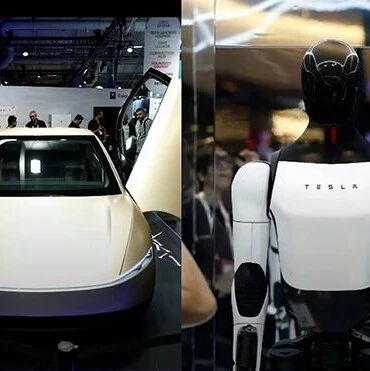
Core Viewpoint - Tesla is transitioning from a pure electric vehicle (EV) manufacturer to an artificial intelligence (AI) company, marking a significant shift in its business strategy by phasing out high-end EV production and focusing on humanoid robots and AI technologies [2][6][8]. Group 1: Business Transformation - Tesla will gradually end the production of its high-end models, the Model S and Model X, which have seen declining sales compared to the Model Y [6][8]. - The company plans to start producing humanoid robots, known as "Optimus," at its Fremont factory by the end of 2026, with a long-term goal of producing 1 million units annually [6][8]. - Tesla has committed to investing $2 billion in xAI, a company founded by Elon Musk, to accelerate the development of AI models for applications in autonomous taxis and factory automation [6][7]. Group 2: Financial Performance - Tesla's net profit for Q4 of FY2025 was $840 million, a 61% year-over-year decline, marking the fifth consecutive quarter of profit reduction [8]. - The total sales for FY2025 reached $94.827 billion, a 3% decrease compared to the previous year, representing the first annual sales decline since the company's IPO [8]. Group 3: Market Strategy and Competition - The shift in Tesla's operational philosophy from "sustainable prosperity" to "astonishing prosperity" reflects a new focus on leveraging advanced AI technologies to create a resource-abundant society [8]. - Tesla aims to expand its autonomous taxi service to seven cities in the U.S. by mid-2026, with expectations that by the end of 2026, 25% to 50% of U.S. regions will have fully autonomous vehicles [8]. - The company faces strong competition in the humanoid robot sector, particularly from over 150 companies in China, which Musk identifies as Tesla's most formidable competitors in this field [9].
朱西产:安全是智能汽车的起点,也是自动驾驶的终极考验
Bei Ke Cai Jing· 2026-01-30 07:58
Core Viewpoint - Safety remains the most important topic in the automotive industry and is the starting point for smart vehicles and the ultimate test for autonomous driving [1] Group 1: Autonomous Driving Levels and Regulations - The global automotive automation level classification is consistent, ranging from L0 to L5, with L2 being entry-level assisted driving and L3, L4, and L5 classified as autonomous driving [3] - In December 2025, the Ministry of Industry and Information Technology announced that Changan Automobile and BAIC Jihe received the first batch of L3 conditional autonomous driving vehicle permits in China [3] - The penetration rate of vehicles with L2 combined driving assistance functions is expected to reach 66.1% by the end of 2025 [4] Group 2: Limitations of OTA Upgrades - It is not feasible to upgrade L2 vehicles to L3 through OTA (Over-The-Air) updates due to hardware limitations [4] - The electronic architecture of L2 vehicles does not meet the safety and computational requirements for L3 autonomous driving [4] Group 3: Role of AI in Smart Vehicles - AI is driving the revolution in automotive intelligence and is considered the "soul" of smart electric vehicles, with electric vehicles serving as the foundational platform [5] - The use of language models in smart cockpits and the integration of deep learning models in intelligent driving are becoming common [6] - By 2026, visual language models and world models are expected to be significant trends in intelligent driving [6] Group 4: Safety Challenges in Autonomous Driving - Key safety issues remain unresolved in autonomous driving, which is a major reason for its lack of realization [8] - Unknown risks during the operation of combined assistance driving systems include dangerous takeovers due to misidentification of targets and emergency system misactivations [9] - The requirements for safety in autonomous driving have expanded to include cybersecurity, functional safety, and expected functional safety [9] Group 5: Future of Smart Vehicles - The development of smart vehicles has reached a crossroads, with L2 intelligent assisted driving improving vehicles, L3 autonomous driving potentially revolutionizing them, and L4 driverless technology transforming mobility [10] - There is an expectation for L3 vehicles to achieve stable operation at full speed on highways, including speeds of 0-120 km/h and above [10]
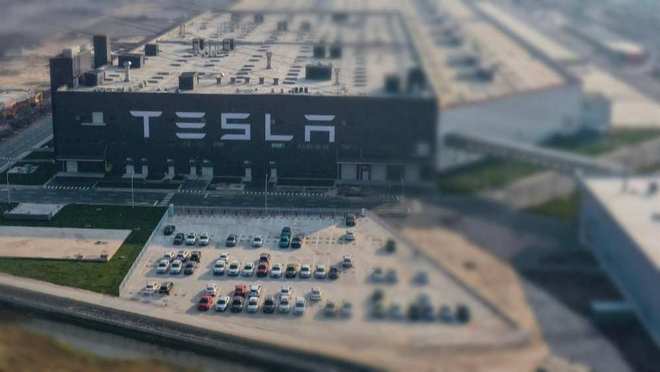
特斯拉要变了!建100GW光伏产能,不再追求汽车规模
2 1 Shi Ji Jing Ji Bao Dao· 2026-01-30 07:52
Core Viewpoint - Tesla's recent financial report highlights a shift in focus from traditional automotive manufacturing to a broader strategy encompassing autonomous driving, robotics, and energy solutions [3][4]. Financial Performance - In Q4 2025, Tesla reported revenues of $94.827 billion and a net profit of $3.794 billion, representing year-over-year declines of 2.93% and 46.50% respectively [3]. - The company delivered approximately 1.636 million electric vehicles (EVs) globally, with a production of about 1.655 million EVs, marking a record high in the Asia-Pacific market [3]. Business Developments - Tesla's Shanghai Gigafactory delivered 851,000 EVs in 2025, accounting for 52% of total global deliveries [3]. - The company achieved a record energy storage installation of 46.7 GWh, a year-over-year increase of 48.7% [3]. - Plans for the Shanghai Super Energy Factory include an annual production capacity of 10,000 Megapacks, with 2,000 units already produced by the end of 2025 [3]. Strategic Shift - CEO Elon Musk indicated a strategic pivot towards AI and robotics, aiming to create a "prosperous world" rather than merely increasing vehicle sales [4]. - Tesla's capital expenditure for 2026 is projected to exceed $20 billion, with significant investments in transforming production lines for humanoid robots and enhancing AI training capabilities [4]. Energy Initiatives - Tesla aims to achieve 100 GW of solar panel production capacity, which will support AI data centers and enhance grid capacity through solar and storage systems [6]. - The company plans to start production of Megapack 3 and Megablock at its Houston energy factory in 2026 [5]. Market Reactions - Following Tesla's strategic announcements and investment plans, some investment banks have expressed caution, with Morgan Stanley and Goldman Sachs lowering their target prices for Tesla shares [6].
上汽集团(600104.SH):AI4S主要应用在智能驾驶与自动驾驶研发过程中
Ge Long Hui· 2026-01-30 07:40
Group 1 - The core viewpoint of the article is that SAIC Motor Corporation (600104.SH) is utilizing AI4S primarily in the research and development processes of intelligent driving and autonomous driving [1]

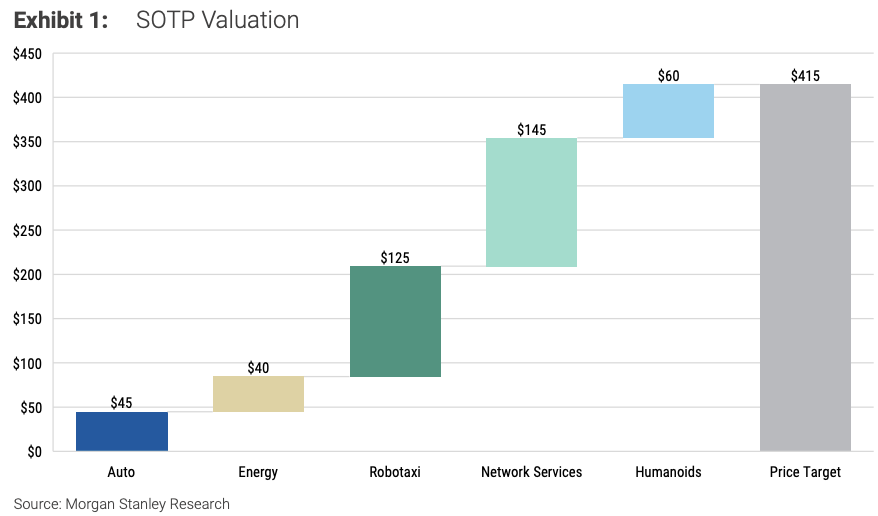
大摩下调特斯拉目标价:“烧钱”模式将影响短期利润,自由现金流恐“由正转负”
Hua Er Jie Jian Wen· 2026-01-30 07:15
Core Insights - Tesla is transitioning from an electric vehicle manufacturer to a leader in physical AI, requiring significant capital expenditure, with projections for 2026 exceeding $20 billion, far above the market expectation of $11 billion [1][2] - Morgan Stanley has adjusted Tesla's target price from $425 to $415, maintaining a "hold" rating due to concerns over the company's future capital expenditures [1][6] - The anticipated cash burn for Tesla in 2026 is projected at $8.1 billion, a significant increase from a previous estimate of $1.3 billion [2] Financial Forecast Adjustments - Capital expenditure expectations have risen sharply from $13 billion to $21 billion, primarily to support infrastructure for physical AI [2] - Free cash flow is expected to turn negative, with a forecasted cash burn of $8.1 billion in 2026 and $500 million in 2027, only returning to positive in 2028 [2] - Operating expenses are projected to rise to 14.5% of sales in 2026, up from 13% in 2025, reflecting substantial investments in growth and AI projects [2] Strategic Transition - CEO Elon Musk announced the cessation of Model X and S production, reallocating resources to the production of Optimus humanoid robots, with an annual capacity target of 1 million units [3] - Tesla's Robotaxi initiative is progressing well, with over 500 vehicles currently operating in the San Francisco Bay Area, exceeding earlier expectations [3] - Plans are in place to launch Robotaxi services in seven additional cities in the first half of 2026 [3] AI Investment - Tesla has committed $2 billion to xAI to accelerate its physical AI market strategy, with the integration of the Grok chatbot into Tesla vehicles enhancing management capabilities for future autonomous fleets [4] - The company is exploring the establishment of a domestic chip manufacturing facility to mitigate potential supply chain constraints [4] Energy Business Outlook - The energy segment is expected to grow significantly in 2026, driven by the introduction of Megapack 3 and Megablock, although profit margins may face pressure from increased tariffs and competition [5] - Tesla plans to establish solar manufacturing capacity of approximately 100 gigawatts annually, indicating a long-term commitment to renewable energy [5] Valuation Adjustments - Morgan Stanley's target price adjustment reflects anticipated declines in adjusted EBITDA for 2026 and 2027, alongside increased cash consumption due to capital expenditures [6][9] - The base case target price of $415 implies a 50x EBITDA valuation for 2030, consistent with previous models, while bull and bear case scenarios have also been revised [9]