
以旧换新

Search documents
"以旧换新"政策进阶,浙江等地如何破题内需增量?
2 1 Shi Ji Jing Ji Bao Dao· 2025-07-25 12:38
Group 1 - The core viewpoint of the articles highlights the positive impact of the "old-for-new" consumption policy on driving retail sales and stimulating economic growth in China, particularly in Zhejiang province [1][9] - In the first half of the year, retail sales of consumer goods reached 1.6 trillion yuan, with significant year-on-year growth in various categories such as home appliances and communication equipment, contributing to a 5% increase in total retail sales [1][9] - The expansion of the "old-for-new" program in Zhejiang includes a wider range of products, now covering 85 categories, including smart home devices and electric bicycles, with increased subsidy limits [6][7] Group 2 - The Ministry of Finance plans to accelerate the implementation of policies to boost consumption, focusing on enhancing the consumer environment and supporting key cities in promoting new consumption models [2] - The "old-for-new" initiative has been extended to various community and enterprise settings, with over 500 events planned across 11 cities in Zhejiang to promote the program [8] - The growth in retail sales in Zhejiang was particularly strong in the second quarter, with a 6% increase, marking the highest growth rate since last year [9][10] Group 3 - The introduction of subsidies for 3C digital products, including smartphones and smartwatches, is expected to further stimulate consumer spending in these categories [6] - The government has increased the subsidy rate for electric bicycles from 20% to 40%, with a cap raised from 500 yuan to 1200 yuan, indicating a strong focus on promoting green transportation [7] - The integration of cultural and sports events into consumption strategies has shown potential for driving additional consumer spending, with significant attendance at events in Zhejiang [10][11]

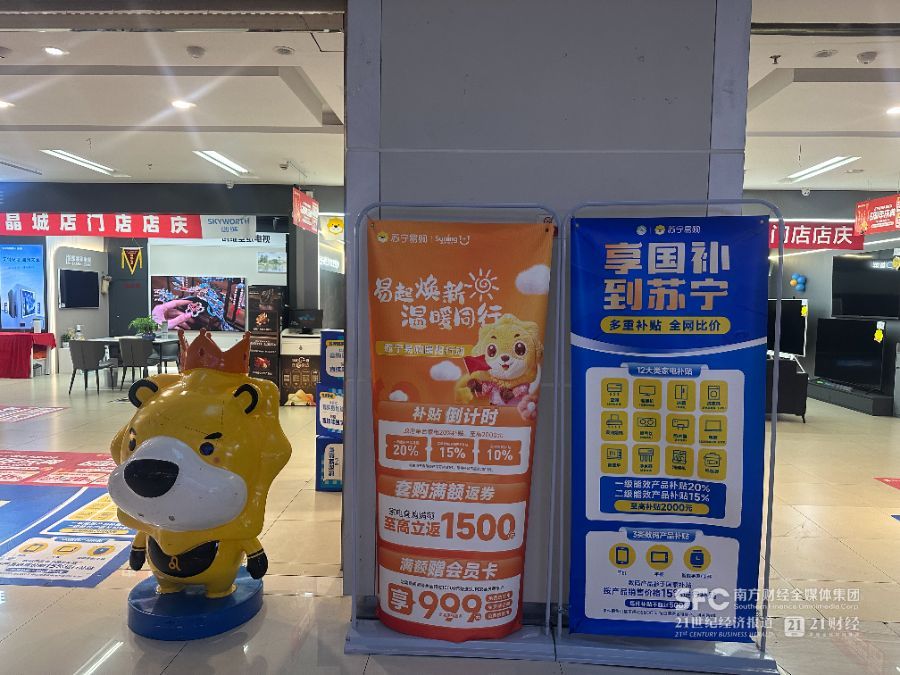
西安以旧换新“账本”:39亿补贴如何撬动362亿消费?
2 1 Shi Ji Jing Ji Bao Dao· 2025-07-25 11:15
Core Viewpoint - A consumption cycle driven by policy is accelerating in Xi'an, particularly in the areas of new energy vehicles and home appliances, supported by government subsidies and local initiatives [1][5][6]. Group 1: Policy and Implementation - The Xi'an government has issued a plan to promote consumption through a combination of central and local subsidies, with a focus on replacing old vehicles with new energy ones [1][5]. - As of June 23, 2023, the old-for-new subsidy program has benefited 534.3 million consumers, with a total subsidy of 39.1 billion yuan, driving consumption of 362 billion yuan [1][7]. - The subsidy policy has expanded the categories eligible for replacement, increasing from "8+N" to "12+N" categories, including new products like smartphones and smartwatches [5][6]. Group 2: Consumer Behavior and Market Trends - Consumers are increasingly opting to replace old fuel vehicles with new energy vehicles, driven by both necessity and government incentives [2][3]. - The demand for home appliances has surged, with air conditioning sales reportedly increasing by 150% year-on-year in Xi'an, attributed to the high temperatures and subsidy programs [3][7]. - The overall retail sales of communication equipment have increased by 78.2%, while new energy vehicles have seen a growth of 36.3% in the first half of the year [7]. Group 3: Economic Impact and Industry Response - The old-for-new policy is expected to have a significant ripple effect on local manufacturing and the circular economy, particularly benefiting the automotive industry in Xi'an, which includes major players like BYD and Geely [8]. - The production of new energy vehicles in Xi'an has reached over 1 million units, marking a significant milestone for local manufacturing capabilities [8]. - The policy is seen as a catalyst for enhancing the entire supply chain, from product design to manufacturing and sales, as it lowers consumer barriers and stimulates demand for new products [8][9].
工程机械行业|农机空间广阔,正底部复苏
野村东方国际证券· 2025-07-25 06:05
Group 1: Industry Growth Potential - The global agricultural machinery market is expected to continue its moderate growth, driven by the mechanization of agriculture in the Asia-Pacific region, particularly in China [2] - The Asia-Pacific region holds the largest share of the global agricultural machinery market, with significant development potential due to its large population and expanding agricultural mechanization needs [2] - China's agricultural machinery market is projected to reach 585.7 billion yuan in 2023, reflecting a year-on-year growth of 4%, with a compound annual growth rate (CAGR) of 7.0% from 2018 to 2022, outpacing the global CAGR by 1.5 percentage points [2] Group 2: Mechanization Rate and Labor Dynamics - China's comprehensive mechanization rate for farming has steadily increased to 74% in 2023, up from 31% in 2000, although the mechanization rates for sowing and harvesting remain significantly lower [3][7] - The mechanization rates for major crops like wheat are high, but economic crops such as rapeseed and potatoes have much lower mechanization rates of 66% and 53%, respectively [3][7] - Labor shortages and rising labor costs are accelerating the shift towards mechanization, as the aging population and urban migration lead to a decrease in rural labor availability [7] Group 3: Policy and Subsidy Impact - Government subsidies have significantly stimulated demand for agricultural machinery, with a notable increase in financial support from 0.8 million yuan in 2004 to 23.8 billion yuan in 2014 [13] - The transition to the "National IV" emission standards has increased production costs and affected market demand, but this impact is expected to diminish in the coming years [14] - The introduction of new policies to support equipment upgrades and replacements is anticipated to further boost the agricultural machinery market [17] Group 4: Price Correlation and Export Growth - There is a strong positive correlation between grain prices and agricultural machinery sales, as rising grain prices enhance farmers' purchasing power [15][18] - Agricultural machinery exports have rebounded significantly in 2024, with a year-on-year growth of 38% in Q1 2025, driven by stabilizing international grain prices and increased competitiveness [19][24] - The average export price of tractors has been on the rise, reflecting a growing share of high-powered tractors in exports, indicating improvements in the industry’s competitive position [24]
政银联动打造县域消费“风景线”
Sou Hu Cai Jing· 2025-07-25 04:26
Core Viewpoint - The article emphasizes the collaboration between local government and financial institutions, particularly the JiuRong Rural Commercial Bank, to stimulate consumption and enhance domestic demand through innovative financial services and community engagement [1]. Group 1: Financial Support for Consumption - JiuRong Rural Commercial Bank actively collaborates with local government departments to create a consumption ecosystem that benefits citizens, focusing on rural revitalization and consumer needs [2]. - The bank organized a "New Year Goods Fair" in collaboration with local authorities, attracting 93 vendors and generating a transaction amount of 1.5 million yuan during the event [2]. - The bank has issued 6,000 consumption coupons during promotional activities, resulting in 8,039 transactions [2]. Group 2: Night Economy and Cultural Tourism - The bank is involved in promoting the night economy by creating the "Ge Xian Night Tour" brand, which aligns with government initiatives to enhance nighttime consumption [3]. - During the "May Day" event, the bank facilitated 30,000 transactions and issued 8,000 consumption coupons, achieving a 97% redemption rate [3]. Group 3: Trade-in Programs - The bank has launched initiatives to support the "trade-in" policy, enhancing market vitality and consumer lifestyles through various financial products [4]. - Since May, the bank has issued 5 million yuan in consumption coupons, benefiting over 35,000 citizens and stimulating over 10 million yuan in consumption [4]. Group 4: Consumer Financing Solutions - JiuRong Rural Commercial Bank focuses on consumer installment plans, catering to various consumer needs such as home decoration and vehicle purchases [5][6]. - As of June, the bank issued 42 auto installment loans totaling 4.76 million yuan and 12 home renovation loans totaling 1.6 million yuan [6]. Group 5: Government-Bank Collaboration - The bank emphasizes the importance of clear division of roles and complementary advantages in government-bank cooperation to enhance market activity [7]. - The bank has established a regular communication mechanism with local government to ensure efficient policy implementation and resource allocation [9]. Group 6: Digital Empowerment and Service Expansion - The bank collaborates with local data companies to create a comprehensive digital platform for public services, addressing issues like data silos and service accessibility [10]. - The bank is exploring new financial service models in emerging consumption areas such as digital consumption and green consumption [10]. Group 7: Focus on Rural and County-Level Markets - The bank aims to enhance consumption in rural areas by designing targeted promotional activities and financial products that cater to local needs [11]. - The bank promotes a merchant alliance model to provide flexible financial support across various sectors, including home appliances and education [11].
上半年安徽省地区生产总值达25723亿元 同比增长5.6%
Zhong Guo Chan Ye Jing Ji Xin Xi Wang· 2025-07-24 22:13
Economic Overview - Anhui Province's GDP reached 25,723 billion yuan in the first half of the year, with a year-on-year growth of 5.6% at constant prices [1] - The province's industrial added value for large-scale enterprises grew by 8.4%, maintaining above 8% for 18 consecutive months [1] - The province's economic performance is characterized by a solid foundation, accelerated momentum, and strong support [1] Consumption Trends - Retail sales of consumer goods in Anhui totaled 12,051 billion yuan, with a year-on-year increase of 5.5% [2] - The "old-for-new" policy contributed significantly to consumption growth, with subsidies totaling 8 billion yuan and consumption vouchers of 620 million yuan, leading to an 11.2% increase in retail sales of related goods [2] - The penetration rate of new energy vehicles reached 49.1%, indicating a shift towards green and intelligent consumption [2] Trade and Export Performance - Anhui's total goods import and export volume reached 4,585.4 billion yuan, a year-on-year increase of 15.2% [2] - Exports amounted to 3,098.5 billion yuan, growing by 15.4%, with mechanical and electrical products seeing an 18.5% increase [2] - The export of "new three items" including lithium-ion batteries, photovoltaic products, and electric vehicles reached 371.3 billion yuan, marking a 67.8% increase [2]
【乘联分会论坛】7月狭义乘用车零售预计185.0万辆,新能源预计101万辆
乘联分会· 2025-07-24 13:58
Core Viewpoint - The automotive market in June experienced strong growth driven by the "two new" policies, with retail sales of narrow passenger vehicles reaching 2.083 million units, a year-on-year increase of 18.2% and a month-on-month increase of 7.5% [1] Group 1: June Market Review - The retail sales of new energy vehicles in June reached 1.111 million units, showing a year-on-year growth of 29.9% and a month-on-month growth of 8.2%, with a penetration rate rising to 53.3% [1] Group 2: July Market Outlook - The July automotive market is expected to maintain stable year-on-year growth, driven by the "trade-in and scrapping" policies, despite some demand being pulled forward due to June's sales surge [2] Group 3: Manufacturer Sales Trends - Retail targets for leading manufacturers are projected to grow by 6% year-on-year in July, with an estimated total retail market for narrow passenger vehicles around 1.85 million units, a year-on-year increase of 7.6% but a month-on-month decrease of 11.2% [3] Group 4: Weekly Sales Trends - The first week of July saw a normal seasonal decline in sales, with daily retail averaging 39,700 units, a year-on-year increase of 1.2% but a month-on-month decrease of 5.8% [4] - The second week showed a recovery with daily retail reaching 47,500 units, a year-on-year increase of 11.3% [4] - The third week recorded daily retail of 58,200 units, a year-on-year increase of 16.8% [4] - The fourth week is expected to see daily sales of 68,100 units, a year-on-year increase of 7.6% [4] - Overall, July's retail market is estimated to reach around 1.85 million units [4] Group 5: Stable Operation in July - The automotive market is experiencing a typical seasonal decline due to the early release of consumer potential from June's sales push and the summer break for manufacturers [5] - The Ministry of Industry and Information Technology is working to regulate the competitive order in the new energy vehicle industry, aiming to shift from price wars to value competition focused on technology upgrades and service quality [5] - The overall market discount in early July stabilized around 25%, indicating a reduction in promotional intensity compared to late June [5] - The "trade-in and scrapping" policy continues to support market stability, although some regions face temporary pauses in subsidies due to early depletion of funds [5]

上半年24省份经济“中考”交卷:区域增速分化 动能加速向“新”
Zheng Quan Shi Bao· 2025-07-23 18:47
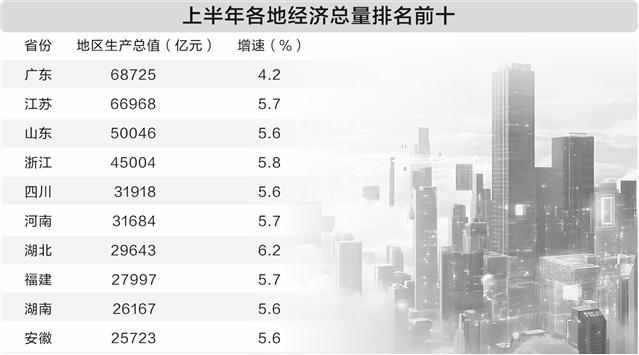
Economic Overview - The national GDP growth for the first half of 2025 is 5.3%, slightly above the previous year's 5.0%, indicating a stable economic performance [2] - Among the provinces that have reported, 19 achieved GDP growth at or above the national average, reflecting a generally positive economic trend across most regions [2] Regional Performance - Eastern provinces show steady growth, with Guangdong, Jiangsu, Shandong, and Zhejiang leading in economic output, recording GDPs of 6.87 trillion, 6.70 trillion, 5 trillion, and 4.5 trillion yuan respectively, with growth rates of 4.2%, 5.7%, 5.6%, and 5.8% [2][3] - Central provinces, except Shanxi, have GDP growth rates exceeding the national average, with Hubei at 6.2% and others like Henan, Hunan, and Anhui between 5.6% and 5.7% [2] - Western provinces exhibit significant disparities in growth, with Tibet at 7.2% and Qinghai at 4.0% [2] Economic Quality and Consumer Trends - The focus for 2025 includes boosting consumption and investment efficiency, with a notable shift towards "new" consumption patterns [4] - Policies promoting "old for new" exchanges have led to substantial increases in retail sales, particularly in electronics, with some provinces reporting over 30% growth [5] - High-tech industry investments in Beijing surged by 72.9%, with other provinces like Henan, Anhui, and Jiangxi also showing double-digit growth in high-tech manufacturing investments [6] Challenges and Future Outlook - Despite a resilient economic performance, challenges remain, particularly in real estate, foreign trade, consumption, and pricing [7] - Real estate investment has generally declined, with significant drops in provinces like Fujian, Liaoning, Jiangsu, and Anhui, indicating potential future supply shortages [7] - Local governments are addressing economic work with a focus on social needs, such as education and healthcare, while also supporting private and small businesses [8]
二季度经济数据点评:需求修复仍需政策加力
LIANCHU SECURITIES· 2025-07-23 12:57
GDP Performance - In Q2, China's GDP grew by 5.2% year-on-year, while nominal GDP growth was only 3.9%, indicating a mismatch between supply and demand[3] - The deflator index further expanded to -1.3%, highlighting weak price levels[3] Production Insights - Industrial value-added growth was 6.8% in June, with a Q2 average of 6.4%, driven by strong exports[14] - The service sector maintained stable growth, with a cumulative production index increase of 5.9%[14] Investment Trends - Fixed asset investment growth slowed to 2.8% in Q2, down 1.4 percentage points from Q1[22] - Infrastructure investment growth was 8.9%, while real estate investment saw a significant decline of -12.9% in June, with a cumulative decline of -11.2%[24] Consumption Patterns - Retail sales grew by 4.6% year-on-year in Q2, a decrease from Q1, with durable goods consumption supported by "old-for-new" policies[39] - Restaurant consumption weakened significantly, with June's growth plummeting to 0.9%[39] Outlook and Policy Recommendations - To meet the annual GDP target of 5%, a growth rate of at least 4.7% is required in the second half of the year[42] - Continued policy support is essential to boost domestic demand, particularly in real estate and manufacturing sectors[42] Risk Factors - Potential risks include domestic policy implementation falling short of expectations and unexpected changes in overseas policies[43]
消费逐季改善 内需成重要推动力
Sou Hu Cai Jing· 2025-07-23 07:48
Group 1 - The core viewpoint of the articles highlights the resilience and growth of the consumer market in Sichuan province during the first half of 2025, with a retail sales total of 1.42 trillion yuan, reflecting a year-on-year increase of 5.6% [1] - The "old-for-new" policy has significantly stimulated consumer spending, with retail sales of home appliances and audio-visual equipment increasing by 20.2% year-on-year, and communication equipment sales rising by 50.8% [2][4] - The automotive sector has seen a notable increase, with new energy vehicle sales growing by 23.1% year-on-year, and the "old-for-new" policy contributing over 44 billion yuan to new car consumption [4][5] Group 2 - Various promotional activities have been organized, with over 11,500 enterprises participating in more than 15,000 events, generating nearly 118.5 billion yuan in sales [6] - New consumption scenarios and experiences are being created, such as the "Panda Special Train" offering unique travel experiences, which has sold out all tickets by October, with 70% of passengers being inbound tourists [8][10] - The province is enhancing the shopping experience for tourists through initiatives like "immediate tax refund" trials and improving customs efficiency, which has led to a significant increase in the number of tax refund stores [10]
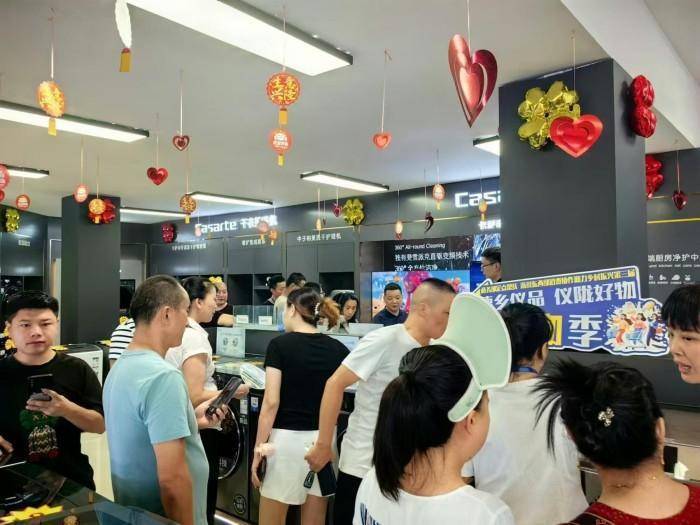
"贷"我焕新智能家电
Jin Rong Shi Bao· 2025-07-23 02:40
Group 1: Market Trends and Consumer Demand - The demand for smart toilets in China is increasing, driven by features such as heated seats and one-button calling, making them a necessity for many households [1] - The "old-for-new" policy, which includes bathroom fixtures by 2025, is expected to boost market consumption and encourage brands to launch corresponding subsidy plans [1] - The national policy encourages green consumption and elderly-friendly renovations, effectively stimulating market demand for smart toilets [2] Group 2: Company Innovations and Strategies - Jomoo Group is accelerating product innovation, launching health care toilets and barrier-free toilets for the elderly, while also enhancing service measures like "immediate delivery and installation" [1][2] - The company has established the world's first "green black-light factory" for smart toilets, utilizing advanced technologies such as robotics and AI to improve production efficiency by approximately 35% and reduce energy consumption by over 7% [2] - Financial institutions, particularly China Construction Bank, are providing significant support for Jomoo's digital transformation and funding needs, facilitating the company's ability to seize market opportunities [2][3] Group 3: Financial Support and Impact - Since the implementation of the "old-for-new" policy, China Construction Bank has provided nearly 3 billion yuan in financing support to Jomoo Group, including 210 million yuan in supply chain finance [3] - Financial institutions are responding quickly to the funding needs of various sectors, including telecommunications and home appliances, by offering innovative financing tools to alleviate short-term cash flow pressures [3]