自主可控

Search documents
A股奇迹日,自主可控乘风而起!稀土黄金大涨,有色龙头续刷新高,银行再走强,7.6亿资金进场512800
Xin Lang Ji Jin· 2025-10-13 11:53
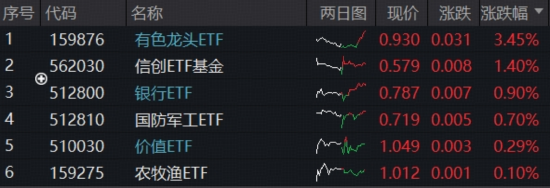
Market Overview - On October 13, the A-share market experienced a miraculous day, initially opening lower due to tariff uncertainties but later rebounding, with the Shanghai Composite Index closing down only 0.19% after a nearly 2% drop at the open [1] - A total of 1,682 stocks in the market rose, with a median decline of only 0.8% [1] Sector Performance - The Rare Earth sector saw a surge, with the Rare Earth Leading ETF (159876) experiencing a price increase of over 4.2% at one point, ultimately closing up 3.45% [2][5] - The domestic software sector also showed significant movement, with the Innovation ETF (562030) rising by 1.4% [3] - The Defense and Military sector outperformed, with the Defense ETF (512810) closing up 0.7%, driven by strong domestic demand and minimal impact from international trade disruptions [3][22] - The Banking sector demonstrated resilience, with the Bank ETF (512800) rising by 0.9% amid increased defensive positioning due to tariff uncertainties [3][14] Fund Flows and Investment Trends - The Rare Earth Leading ETF (159876) attracted significant capital, with a net inflow of 330 million units and a total of 2.58 billion yuan in the last three days [5][10] - The Bank ETF (512800) also saw substantial inflows, with a total of 7.63 billion yuan over the past three days, indicating strong investor interest [16][19] Regulatory Impact - The Ministry of Commerce's new regulations on rare earth exports have tightened controls, affecting the entire supply chain and potentially leading to price increases [7][12] - Analysts believe that the tightening of export controls will strengthen the supply side of the rare earth market, while demand is expected to remain robust due to seasonal factors [7][12] Earnings and Profitability - In the first half of 2025, over 91% of the 60 stocks in the China Nonferrous Metals Index reported profits, with notable increases in net profits for key players like Northern Rare Earth, which saw a staggering 1,951% increase [10][12] - The banking sector is expected to maintain stable profitability, with projected cash dividends exceeding 200 billion yuan from major state-owned banks, reflecting their strong earnings capacity [18][19] Future Outlook - The Rare Earth sector is anticipated to undergo a revaluation due to the supply-demand dynamics and regulatory changes, with analysts recommending strategic investments in this area [3][12] - The Defense and Military sector is expected to benefit from upcoming government plans and increased domestic orders, suggesting a positive outlook for the next few quarters [25][22]


国产化趋势明确!金融软件迎新催化,鸿蒙龙头逆市涨近4%,金融科技ETF(159851)日内上演V型反转
Xin Lang Ji Jin· 2025-10-13 11:46
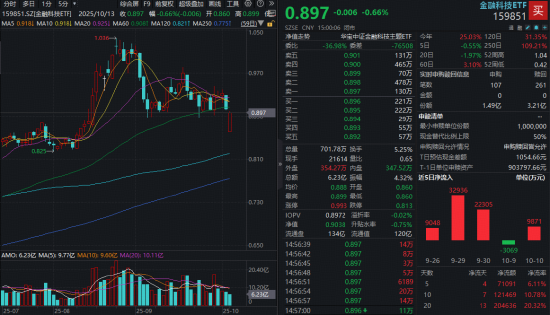
Group 1 - The A-share market experienced fluctuations but ultimately rebounded, with the financial technology sector showing resilience despite initial declines [1] - The financial technology ETF (159851) saw a significant drop of 4.76% at the opening but recovered to close with a minor decline of 0.66%, indicating a positive shift in market sentiment [1] - Recent capital inflows into the financial technology ETF exceeded 2 billion yuan over the past 20 days, highlighting strong investor interest [1] Group 2 - The U.S. plans to impose export controls on key software to China, prompting a push for self-sufficiency in technology within China, which is expected to boost the financial technology sector [3] - The financial technology sector is anticipated to benefit from the ongoing trend of replacing core systems, particularly in the financial industry, with a complete replacement of financial PCs expected by the end of 2023 [3] - The capital market's high activity levels are seen as a major support for investment opportunities in the financial technology sector, with brokerages expected to experience performance recovery [3] Group 3 - The financial IT sector combines financial and technological attributes, benefiting from increased market activity and improved institutional performance, which can enhance IT budgets [4] - The financial technology ETF (159851) and its associated funds are recommended for investment, aligning with the current trends of self-sufficiency and domestic substitution [4] - As of September 30, the financial technology ETF (159851) had a scale exceeding 12 billion yuan, with an average daily trading volume of over 1 billion yuan, leading in liquidity among similar ETFs [4]
全面爆发,新主线涌现!
Sou Hu Cai Jing· 2025-10-13 11:29
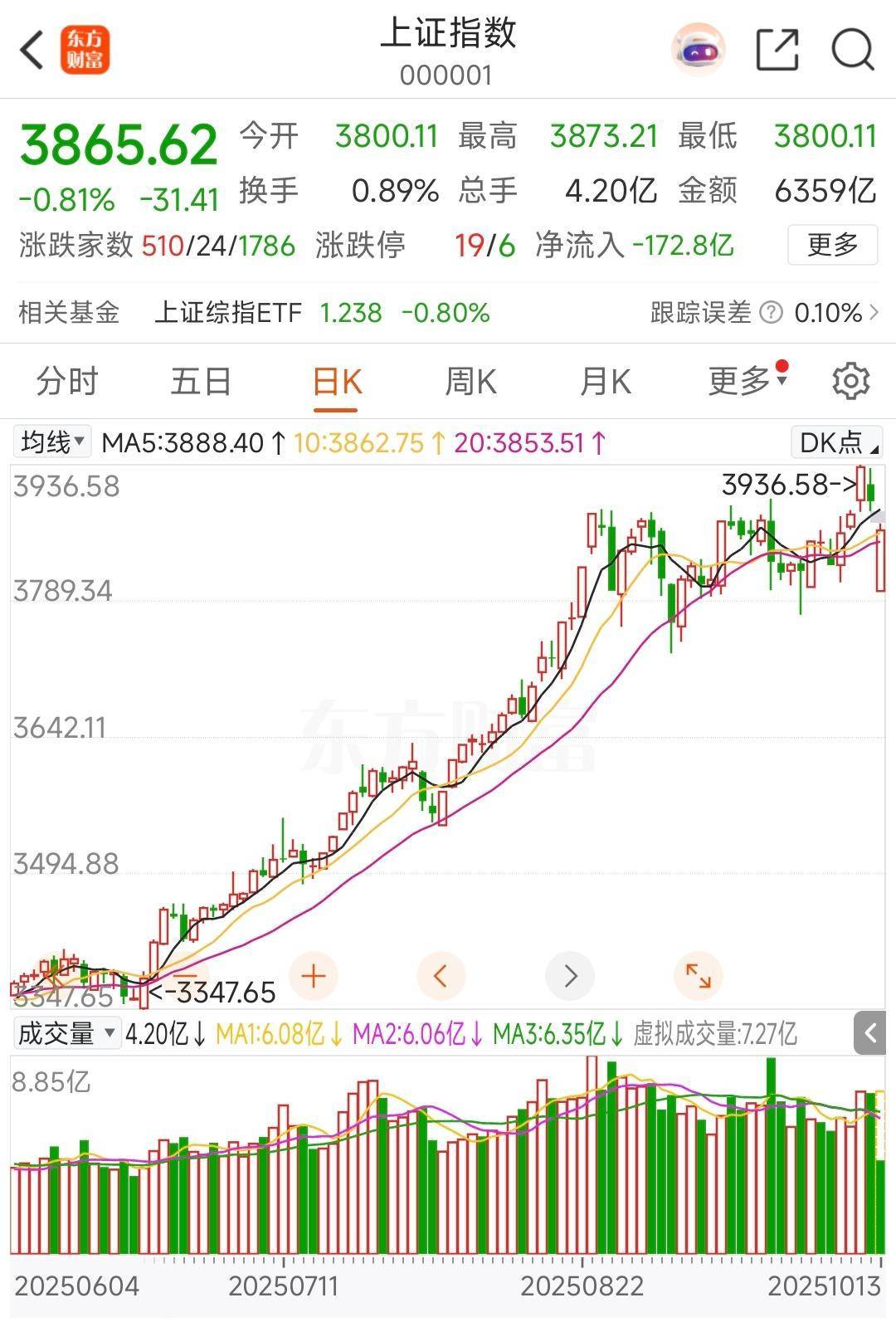
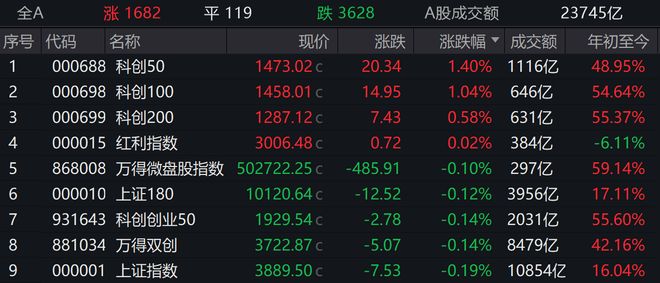
Core Viewpoint - The A-share market is experiencing a "structural differentiation and policy support" pattern, with self-sufficiency and resource sectors performing well, while the technology growth sector continues to adjust [1][2] Market Performance - A-share market shows significant differentiation, with the Shanghai Composite Index closing down 0.19% at 3889.50 points, while the Shenzhen Component and ChiNext Index fell by 0.93% and 1.11% respectively; the Sci-Tech 50 Index rose by 1.4%, indicating resilience in hard technology sectors [3] - The Hong Kong market faced increased volatility, with the Hang Seng Index down 1.52% at 25889.48 points and the Hang Seng Tech Index down 1.82% at 6145.51 points; southbound funds saw a net inflow of 198.04 million HKD, contrasting with foreign capital outflows [3] Industry Highlights and Driving Logic - The self-sufficiency and resource security theme is gaining momentum, with the rare earth permanent magnet sector experiencing a surge, and the price of concentrate rising by 37% to 26205 CNY/ton; policies on export controls and demand from the new energy vehicle sector are boosting valuations [4] - The semiconductor industry chain strengthened in the afternoon, with continued funding interest in EDA tools and lithography machines under the domestic substitution logic [4] - Precious metals and cyclical sectors are showing defensive attributes, with gold prices surpassing 4070 USD/ounce, and predictions of gold prices reaching 6000 USD next year enhancing the sector's investment value [4] Underperforming Sectors and Driving Logic - The consumer electronics and technology growth sectors are under pressure, with significant declines due to tariff rumors; the market is concerned about the performance pressure on high-valuation growth stocks [5] - The new energy and automotive supply chain show increasing divergence, with the photovoltaic index down 1.09% and automotive parts down 2.33%, reflecting concerns over sector congestion; however, solid-state battery segments are performing well [5] Investment Strategy Recommendations - The market is in a critical phase of "policy warming and third-quarter report verification," with three main lines for investment in the fourth quarter [6] - Focus on the technology growth sector, particularly in AI infrastructure and semiconductor equipment, as domestic production accelerates; solid-state battery equipment is benefiting from leading companies' expansion [7] - Capture opportunities in cyclical and resource sectors driven by "policy + supply-demand" dynamics, with precious metals providing a configuration window and rare earths expected to maintain price increases [7] - Emphasize policy-driven opportunities in high-end manufacturing and self-sufficiency sectors, while monitoring consumer sectors for potential rotation opportunities [7]
三大股指大幅低开 黄金坑机会来了?
Sou Hu Cai Jing· 2025-10-13 11:05
Market Overview - The three major stock indices opened significantly lower, with the ChiNext Index dropping over 4% due to concerns over U.S.-China trade tensions and the U.S. government shutdown [1] - Last week, U.S. stocks experienced a sharp decline, particularly in technology stocks, raising fears among investors about a potential repeat of the April 7 market crash in A-shares [1] Historical Context - On April 7, A-shares faced extreme volatility, with the Shanghai Composite Index plunging 7.34% and the ChiNext Index falling 12.5%, primarily triggered by U.S. tariff policies escalating the global trade war [2] - Current market analysts believe that the impact of trade tensions on A-shares is less severe than in April, citing a decrease in the degree of expectation shock and the establishment of market stabilization policies [2] Market Sentiment and Predictions - Analysts from Galaxy Securities suggest that while short-term volatility may increase due to external uncertainties and profit-taking pressures, the core factors driving the current market trend remain unchanged, with liquidity expected to continue improving [2] - The current market dynamics indicate that the short-term drop is largely a result of heightened global risk aversion, but the long-term outlook for A-shares remains positive, especially with the "14th Five-Year Plan" in focus [2] Investment Opportunities - According to Guotai Junan Securities, the current external shocks present a good opportunity to increase investments in the Chinese market, as the boundaries of trade risks are clearer now compared to April [2] - Analysts from招商证券 believe that despite the inevitability of short-term adjustments, the market shows resilience, and there is a significant possibility for indices to reach new highs post-adjustment, suggesting that this could be an opportunity to optimize investment structures [3] - Recommended sectors for investment include military, semiconductor, software autonomy, new consumption, and non-ferrous metals, focusing on areas with relatively low positions and marginal improvements [3]
A股市场9月份持续走强 头部私募迎来明显佳绩
Zheng Quan Ri Bao Wang· 2025-10-13 10:47
Core Insights - The A-share market showed strong performance in September, with major indices rising and several leading private equity firms achieving significant excess returns [1] - The investment strategy of the company has been focused on sectors such as technology, new consumption, and new energy, demonstrating strong stock selection capabilities [1] - The market sentiment shifted positively towards the end of the month, leading to a resurgence in major indices after a period of consolidation [1] Group 1 - The company reported that its products significantly outperformed benchmark indices in September, driven by strong performance in key sectors [1] - Structural opportunities emerged in various sectors, including AI computing power, energy storage, new consumption represented by gaming, and self-controlled electronic fields [1] - The current market environment, characterized by ample liquidity and high risk appetite, allows fundamentally strong companies to achieve reasonable valuations [1] Group 2 - In September, the company took profits on some holdings that had significantly appreciated, optimizing its portfolio structure [2] - The portfolio now includes leading companies in the electronic sector with high growth certainty, as well as strong pharmaceutical companies with R&D and cost advantages [2] - The current investment direction remains focused on technology, advanced manufacturing, broad consumption, and undervalued cyclical sectors, covering leading companies in media, power equipment, pharmaceuticals, and electronics [2]
硬科技支撑“硬行情” 科创50、100、200三指数皆逆势走强
Zhong Guo Jing Ying Bao· 2025-10-13 10:34
Core Viewpoint - The strong performance of the Sci-Tech Innovation Board (科创板) indices reflects the market's positive sentiment towards "hard technology," indicating sustained confidence from investors in this emerging sector [1][4][9]. Group 1: Index Performance - On October 13, the Sci-Tech 50, 100, and 200 indices rose by 1.40%, 1.04%, and 0.58% respectively, ranking among the top performers in the market [2][3]. - Since the beginning of the year, the Sci-Tech 50, 100, and 200 indices have increased by 48.95%, 54.64%, and 55.37%, respectively, leading all indices in terms of growth [1][4]. Group 2: Market Dynamics - Despite a general decline in major indices, the Sci-Tech indices showed resilience, primarily driven by strong performances in the semiconductor and software sectors, which align with national strategies for self-sufficiency [3][4]. - The semiconductor sector is experiencing upward momentum due to the storage chip cycle and accelerated domestic substitution processes, leading to significant gains for leading companies [4][5]. Group 3: Investment Trends - The ongoing strength of the Sci-Tech indices is attributed to a confluence of factors including the explosion of AI demand, recovery in semiconductor market conditions, and continuous policy support [5][9]. - The market narrative has shifted from traditional consumer blue-chip stocks to a focus on technological innovation, indicating a transformation in investment philosophy [5][9]. Group 4: R&D and Innovation - The Sci-Tech Board has demonstrated a robust commitment to R&D, with total R&D expenditures exceeding 84.1 billion yuan in the first half of 2025, which is 2.8 times the net profit, showcasing a high density of innovation [7][8]. - Recent breakthroughs in various sectors, including semiconductors and biomedicine, highlight the board's focus on hard technology, with several companies achieving significant advancements [6][7]. Group 5: Future Outlook - Experts predict that technology innovation will remain a central theme in the A-share market, supported by ongoing economic transformation and strategic planning for the next five years [9][10]. - The upcoming "15th Five-Year Plan" is expected to further emphasize the strategic importance of new productive forces, particularly in technology sectors [10].

智能制造行业周报:自主可控大势已定,看好平台型半导体设备供应商-20251013
Shanghai Aijian Securities· 2025-10-13 09:30
Investment Rating - The report rates the mechanical equipment industry as "Outperform" compared to the market [3][5]. Core Insights - The mechanical equipment sector has shown resilience, with a slight decline of 0.26% compared to the 0.51% drop in the CSI 300 index during the week of October 6-10, 2025 [3][11]. - The semiconductor equipment market is shifting focus from individual equipment breakthroughs to providing comprehensive solutions for advanced processes, with significant growth expected in the 300mm wafer fab equipment spending, projected to exceed $100 billion in 2025, marking a 7% increase [6]. - The humanoid robot market is accelerating commercialization, with advancements in AI and modular design aimed at reducing costs and enhancing production feasibility [6]. - The controlled nuclear fusion sector is transitioning from experimental validation to engineering, with key equipment demand expected to rise as core systems are installed [6]. Summary by Sections Industry Performance - The mechanical equipment sector ranked 19th out of 31 in the Shenwan industry rankings, with the best-performing sub-sector being rail transit equipment, which increased by 2.81% [3][11]. - The overall PE-TTM valuation for the mechanical equipment sector is 38.2x, with the highest valuations in robotics (196.9x) and other automation (157.4x) [19][20]. Investment Recommendations - Focus on platform semiconductor equipment manufacturers that are expanding their product lines and integrating processes to benefit from the trend of shortened customer validation cycles and enhanced procurement [5]. - Attention is recommended for leading robot manufacturers that are reducing costs and expanding channels, particularly core component suppliers [5]. - In the nuclear fusion industry, investment should target companies with clear performance delivery and established customer integration, as they are likely to maintain advantages in future project phases [5]. Key Industry Data - The manufacturing PMI for September was reported at 49.8, indicating contraction [27]. - The PPI for all industrial products in August showed a year-on-year decline of 2.9% [27].
红利低波ETF(512890)逆势走强!60个交易日吸金近13亿 机构:短期盯高股息 中期看TMT
Xin Lang Ji Jin· 2025-10-13 09:21
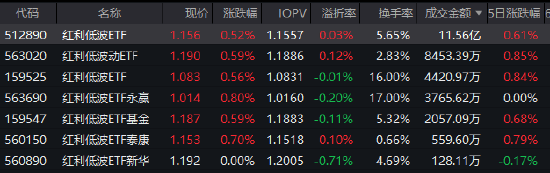
Core Viewpoint - The market experienced a collective decline in the three major stock indices on October 13, while the Science and Technology Innovation 50 index rose by over 1%. The Dividend Low Volatility ETF (512890) showed resilience, increasing by 0.52% despite the overall market downturn [1]. Fund Performance - The Dividend Low Volatility ETF (512890) had a closing price of 1.156, with a 5-day increase of 0.61% and a total trading volume of 1.156 billion CNY [2]. - Over the past five trading days, the ETF saw a net inflow of 158 million CNY, which increased to 346 million CNY over the last ten days, and reached a total net inflow of 1.299 billion CNY over the last sixty days, indicating strong investor interest [2][3]. Market Outlook - Huaxi Securities suggests that the market impact this month will be less severe than the "April 7 incident," with "turning points and opportunities" being key themes for October [4]. - The industry allocation is expected to favor sectors such as dividends, agriculture, military, and rare earths, while Everbright Securities indicates that the market may enter a phase of wide fluctuations due to multiple factors [4]. Investment Strategy - The Dividend Low Volatility ETF (512890) has achieved a cumulative return of 129.76% since its inception in December 2018, outperforming its benchmark and ranking 82nd among 502 similar products [4]. - The fund has consistently delivered positive returns for six consecutive years from 2019 to 2024, making it one of the few A-share market ETFs to achieve "annual positive returns" [4]. - Experts recommend that investors consider the Dividend Low Volatility ETF as a core component for stable returns in their asset allocation, suggesting a dollar-cost averaging approach to mitigate short-term volatility risks [4].
中美关税博弈再起,看好自主可控、内需基建及高景气细分方向
East Money Securities· 2025-10-13 08:37
Investment Rating - The report maintains a "stronger than the market" investment rating for the construction decoration industry [3]. Core Viewpoints - The report highlights the renewed US-China tariff conflict, emphasizing the potential benefits for domestic infrastructure and high-demand segments [14]. - It notes an increase in special bond net financing, with significant rapid deployment of special treasury funds, which supports investment stability [15]. Summary by Sections Investment Recommendations - Three main investment lines are recommended for the second half of 2025: 1. **Main Line One**: Focus on state-owned enterprises benefiting from national key projects, including low-valuation central enterprises and high-demand local state-owned enterprises. Recommended companies include China Railway Construction, China Railway, China Chemical, China Energy Engineering, China Communications Construction, and China State Construction. Attention is also drawn to China Power Construction and China Metallurgical Group [2]. 2. **Main Line Two**: Target high-demand segments driven by major strategic projects, with recommendations for companies like Gaozheng Minexplosion, Tiejian Heavy Industry, China Railway Industry, Yipuli, and Zhongyan Dadi, while keeping an eye on Tibet Tianlu and Wuxin Tunnel Equipment [2]. 3. **Main Line Three**: Invest in sectors empowered by AI, robotics, and semiconductors, recommending companies such as Roman Co., Hongrun Construction, Zhi Te New Materials, Honglu Steel Structure, and Metro Design [2][18]. Market Performance - The construction decoration index rose by 3.62% in the last week, outperforming the overall A-share index by 2.73 percentage points. Notable performers included Guan Zhong Ecological (+96.1%), Xinjiang Jiaojian (+28.9%), and Huajian Group (+25.4%) [13][26]. Financing and Policy Support - As of October 11, 2025, special bonds had a cumulative net financing of 3.19 trillion yuan, surpassing the same period in 2022 and significantly higher than 2023 and 2024. The issuance of special bonds has reached 84% of the annual target [15][17]. - The report indicates that the government is likely to enhance domestic demand stabilization policies in response to external demand fluctuations, benefiting infrastructure and water conservancy sectors [14]. Company Dynamics - Key company updates include significant project wins for China Railway Construction and China State Construction, with total contract values of 630 billion yuan and 62.2 billion yuan, respectively [34].






关税引发波动自主可控是必须,科创半导体ETF鹏华(589020)涨超2%
Sou Hu Cai Jing· 2025-10-13 07:06
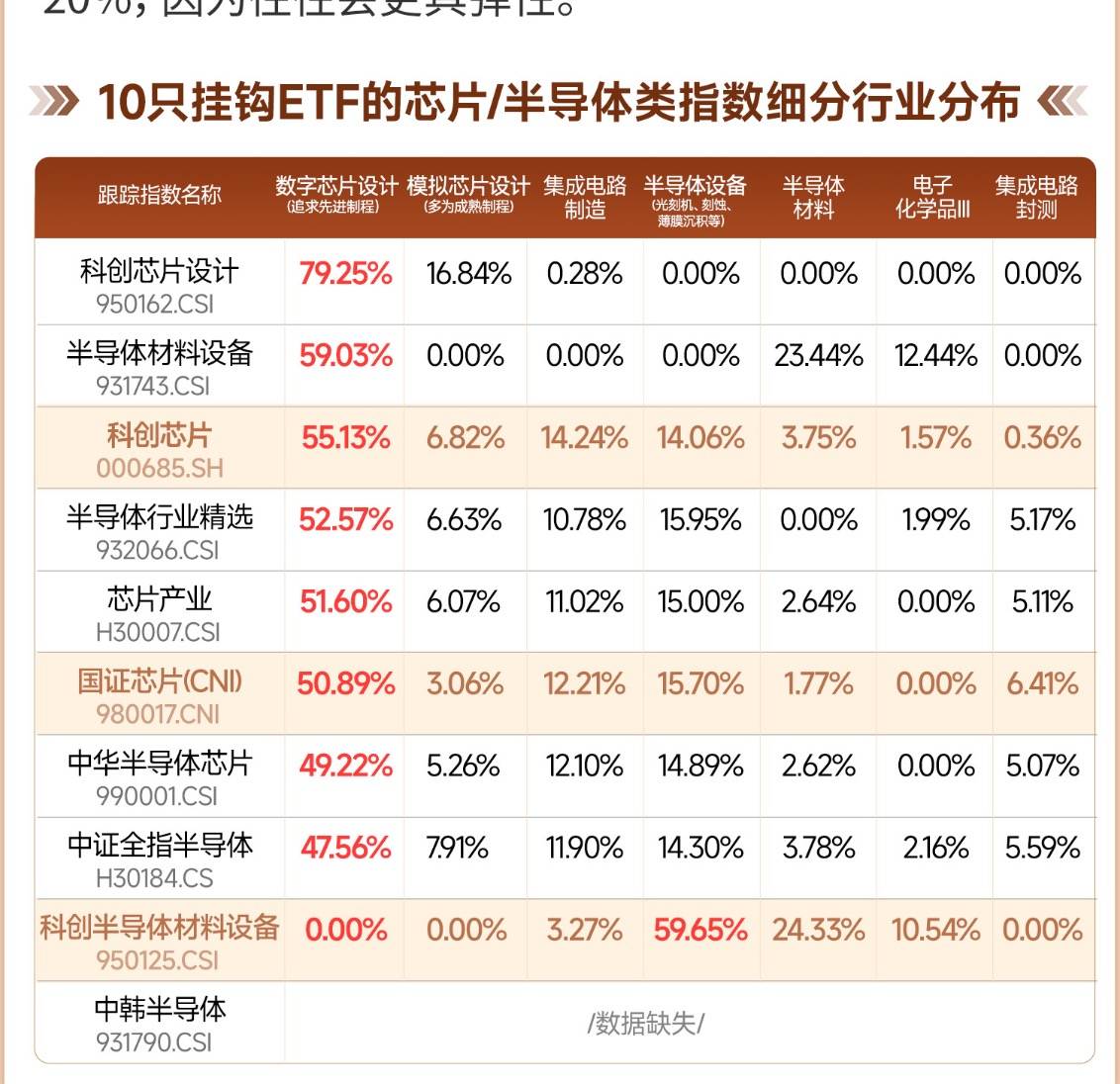
Core Insights - The intensifying great power competition has led to the U.S. imposing core technology restrictions on China, which has resulted in China gaining a temporary "strategic initiative" through measures like rare earth jurisdiction and antitrust investigations against core enterprises [1] - Despite expectations of pressure on AI and domestic sectors due to prior price increases, the strong industrial trend of self-sufficiency combined with the AI wave remains the best investment direction [1] - Future observations will focus on breakthroughs in core semiconductor segments and marginal changes in the domestic AI industry supply and demand [1] Industry Updates - The 2025 Bay Area Semiconductor Chip Exhibition will be held from October 15 to 17 in Shenzhen, with local semiconductor company Xinkailai confirmed to participate, promising "unexpected surprises" [1] - The U.S. has further escalated restrictions on the domestic semiconductor supply chain, which benefits self-sufficiency [1] - Optimistic and clear long-term capacity planning for advanced processes and storage lines in China, particularly in advanced logic capacity, is expected to drive core incremental growth in domestic expansion [1] - The orderly expansion of some production lines in the second half of the year is anticipated to boost orders for equipment manufacturers and improve sector sentiment [1] Market Performance - As of October 13, 2025, the Shanghai Stock Exchange Sci-Tech Innovation Board Semiconductor Materials and Equipment Index (950125) rose by 2.49%, with notable increases in component stocks such as Fuchuang Precision (up 9.19%) and Hu Silicon Industry (up 9.02%) [2] - The Penghua Sci-Tech Semiconductor ETF (589020) increased by 2.06%, reflecting the overall performance of semiconductor materials and equipment companies on the Sci-Tech Innovation Board [2] Index Composition - As of September 30, 2025, the top ten weighted stocks in the Shanghai Stock Exchange Sci-Tech Innovation Board Semiconductor Materials and Equipment Index (950125) accounted for 74.36% of the index, including companies like Zhongwei Company and Huahai Qingke [3]