
人民币汇率升值

Search documents
人民币对美元中间价创14个月新高 经济稳中向好支持汇率走强
Jing Ji Ri Bao· 2025-12-25 23:27
Core Viewpoint - The recent appreciation of the Renminbi (RMB) against the US dollar is attributed to a combination of external pressures easing, internal economic resilience, precise policy adjustments, and shifting market expectations [1][2]. Group 1: Factors Influencing RMB Appreciation - The direct driving force behind the recent RMB appreciation is the changing environment of the US dollar, particularly due to the Federal Reserve's ongoing interest rate cuts, which are expected to suppress the long-term outlook for the dollar and provide external appreciation space for the RMB [1]. - China's economic resilience and attractiveness serve as solid fundamental support for the RMB, especially with marginal improvements in economic data and rising policy expectations, which bolster the RMB exchange rate [1]. - The trade surplus of China exceeded $1 trillion for the first time in the first eleven months of the year, and the strong performance of the Chinese capital market has attracted continuous foreign investment, increasing the buying power of the RMB [1]. Group 2: Market Reactions and Predictions - The recent strengthening of the RMB is driven by two main factors: enhanced expectations of Federal Reserve interest rate cuts leading to a decline in the US dollar index, which has dropped approximately 2.0% since late November, and the strong resilience of the Chinese economy amid complex external conditions [2]. - As the year-end approaches, there is an increase in corporate demand for currency settlement, which is contributing to the seasonal strengthening of the RMB. The sustained appreciation of the RMB may accelerate the release of previously accumulated settlement demand [2]. - Experts suggest that the RMB's continued appreciation will enhance the attractiveness of the domestic capital market to foreign investors, directly increasing foreign exchange earnings [2]. Group 3: Recommendations for Enterprises - Export enterprises may experience reduced exchange profits due to RMB appreciation, while import enterprises will see a decrease in costs. It is advised that foreign trade companies do not bet on a unilateral RMB exchange rate trend but instead focus on their core business and utilize foreign exchange derivatives to manage exchange rate risk [3]. - Despite the recent strengthening of the RMB, it is expected that the exchange rate will continue to fluctuate around the 7.0 level, with a low probability of rapid unilateral appreciation. Companies, especially those with foreign business, should actively build systematic exchange rate risk management capabilities [3]. - The Central Economic Work Conference emphasizes maintaining the RMB exchange rate's basic stability at a reasonable and balanced level, reflecting a policy orientation to prevent both excessive depreciation and appreciation of the exchange rate [3].
人民币对美元中间价创14个月新高—— 经济稳中向好支持汇率走强
Jing Ji Ri Bao· 2025-12-25 22:03
Core Viewpoint - The recent appreciation of the Renminbi (RMB) against the US dollar is attributed to a combination of external pressures easing, internal economic resilience, precise policy adjustments, and shifting market expectations [1][2]. Group 1: External Factors - The primary driver for the recent strengthening of the RMB is the changing environment of the US dollar, particularly due to the Federal Reserve's ongoing interest rate cuts, which have suppressed the long-term outlook for the dollar [1][2]. - The US dollar index has decreased by approximately 2.0% since late November, reflecting the impact of enhanced expectations for Federal Reserve rate cuts [2]. Group 2: Internal Economic Resilience - China's economy has demonstrated strong resilience, with significant improvements in economic data and rising policy expectations, which provide solid fundamental support for the RMB [1][2]. - China's trade surplus exceeded $1 trillion for the first 11 months of the year, and the performance of the Chinese capital market has attracted continuous foreign investment, increasing demand for the RMB [1]. Group 3: Market Dynamics - As the year-end approaches, there is an increase in corporate demand for currency settlement, which is contributing to the seasonal strengthening of the RMB [2]. - The appreciation of the RMB is expected to enhance the attractiveness of the domestic capital market to foreign investors, directly increasing foreign exchange earnings [2]. Group 4: Expert Opinions and Recommendations - Experts suggest that export enterprises should not rely solely on a one-sided view of the RMB exchange rate and should utilize foreign exchange derivatives to manage currency risk effectively [3]. - The Central Economic Work Conference emphasizes maintaining the RMB exchange rate at a reasonable and balanced level, indicating a policy orientation to prevent excessive appreciation or depreciation of the currency [3].
人民币汇率破7重返6时代,你的资产将如何变动?
Sou Hu Cai Jing· 2025-12-25 16:25
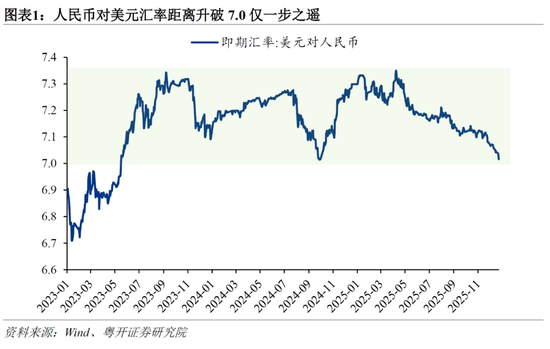
企业出口高增的结汇需求在年底集中释放,而美联储一再降息推动的美元走弱趋势,共同将人民币重新推回6时代。 2025年12月25日,离岸人民币对美元即时汇率升破7.0大关。自今年4月触及低点7.3498后,人民币呈现"先抑后扬、震荡走升"的趋势,最终在年末重返"6时 代"。 从宏观经济角度看,这一变化不仅是中国经济超市场预期与美元走弱交织共振的结果,更将直接影响到每个人的投资决策和资产配置。 01 汇率破局 人民币对美元中间价报7.0392,较前一交易日上调79个基点。这一关键心理关口的突破,标志着自2024年9月以来人民币首次回到7以下水平。 回顾2025年全年,人民币汇率走出了一条明显的V型轨迹。Wind资讯数据显示,在岸人民币对美元汇率从4月9日的年内最低点7.3498开始震荡上行。 截至5月底已上涨1.48%,随后持续走强直至突破7.0关口。与此同时,美元指数从年初的109高位一路下滑,年内累计下跌超过8%,目前已回落至100以内。 截至2025年第一季度,外资仅持有A股市值的3.4%,这限制了资金流入带来的实质提振作用。 02 升值动力 此次人民币汇率升值的背后,是国内经济韧性与外部环境变化共同作用的结 ...

人民币兑美元升破7.0关口 资产配置策略怎么调?
Zhong Guo Jing Ying Bao· 2025-12-25 15:07
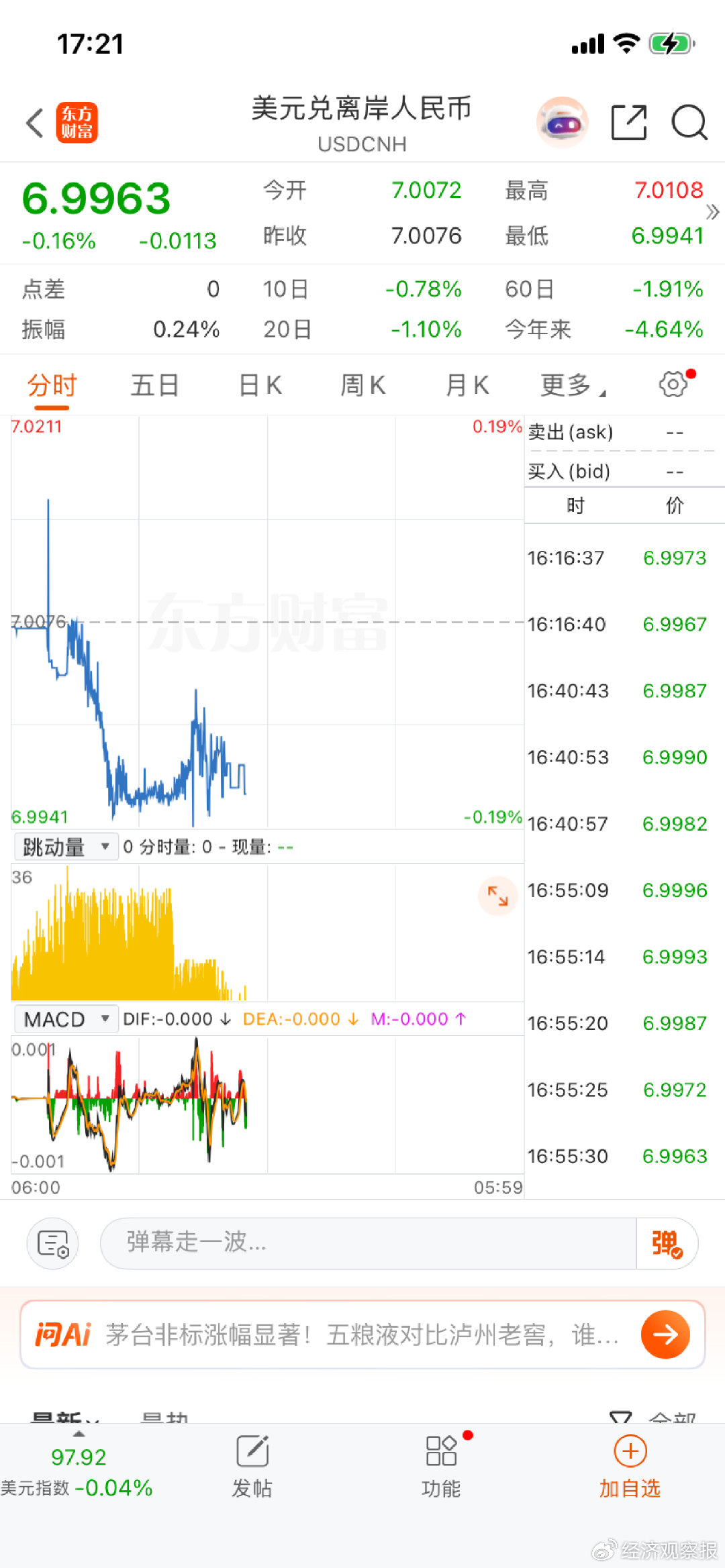
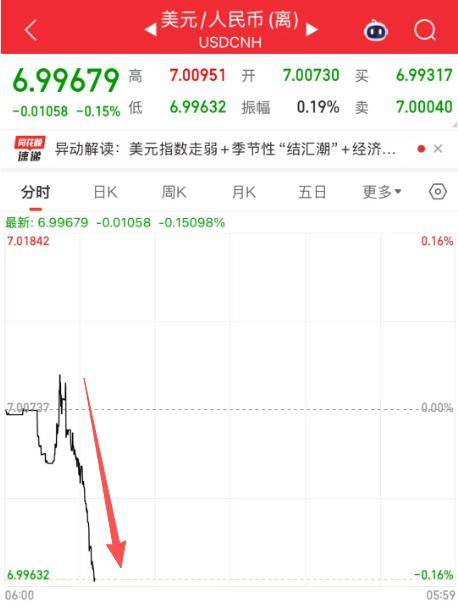
临近年末,人民币汇率持续走强。12月25日,离岸人民币兑美元升破7.0这一关键心理关口,最高触及 6.996,这也是自2024年9月以来的首次突破。 南华期货在最新研报中指出,这标志着人民币在经历了较长时间在7上方运行后,重新展现出强劲的升 值动能。尽管在触及6区间后有所回调,但当日整体的强势走势清晰地表明,市场对人民币的信心正在 增强。 对于本轮人民币汇率升值破7的原因,市场人士普遍分析认为,是内外因素共振的结果。 (文章来源:中国经营报) 不过,国贸期货在研报中进一步分析指出,目前,即期汇率已经强于中间价,两者差距还在不断走扩, 未来或面临回归修正。待季节性因素消退后,人民币升值动能或走弱。未来人民币汇率的走势需重点关 注两个方面:一是国内股市短期修复行情以及年初配置抢跑下对于外资流入的吸引。二是关注中间价的 政策指引信号。 总体来看,朱振鑫认为,人民币升值是一个中期趋势,从2024年开始可能持续2—3年。 薛洪言也表示,尽管市场情绪偏向乐观,但考虑到政策层面强调汇率稳定,且国际经济环境仍存在不确 定性,人民币短期内虽可能维持偏强,但更大概率会呈现双向波动的格局,出现单边快速升值的可能性 较低。 随着人民 ...
人民币汇率创15个月新高,双向波动或是常态
第一财经· 2025-12-25 14:02
Core Viewpoint - The offshore RMB against the USD has broken the "7" mark for the first time since October 2024, reaching a high of 6.9985, indicating a significant appreciation trend driven by a weakening USD and stable Chinese economic fundamentals [3][4]. Group 1: RMB Exchange Rate Dynamics - The recent appreciation of the RMB is primarily attributed to the weakening of the USD, which has seen a decline of about 3% since late November [4]. - China's trade surplus for the first 11 months of 2025 reached $1.0758 trillion, providing a solid foundation for the RMB's strength [4]. - The increase in corporate demand for currency settlement at year-end has contributed to the seasonal strengthening of the RMB, although this "settlement tide" is not the main driver of the current appreciation [4][5]. Group 2: Future Outlook on RMB Exchange Rate - Experts caution against expecting a new cycle of sustained RMB appreciation, suggesting that the exchange rate will likely exhibit two-way fluctuations rather than a unilateral trend [7][11]. - The future trajectory of the USD is uncertain, with predictions of a potential rebound after a period of decline, which could diminish the RMB's appreciation momentum [7][8]. - The complexity of China's external economic environment, including trade relations and potential retaliatory measures from other countries, adds uncertainty to the RMB's future [9][10]. Group 3: Impact on Enterprises - The appreciation of the RMB presents both opportunities and challenges for businesses, benefiting capital markets and importers while posing risks for exporters [15][16]. - Exporters are experiencing exchange rate losses due to the RMB's rapid appreciation, affecting their international price competitiveness and order flow [16]. - Companies are advised to adopt systematic risk management strategies to mitigate the impacts of exchange rate fluctuations, focusing on maintaining a neutral stance on currency risk [17].
人民币重返6时代 你的钱袋子和生意账本正在被重写
Xin Lang Cai Jing· 2025-12-25 12:40
Core Viewpoint - The offshore RMB against the US dollar has officially broken the "7" threshold, closing at 6.9973, marking the first time since October 2024. This appreciation is seen as a potential return to the "6 era" for the RMB, impacting macroeconomic indicators and directly affecting consumer costs and corporate profits [1][9]. Exchange Rate Dynamics - The RMB's rise above the 7.0 mark is attributed to multiple factors, including the weakening of the US dollar, which has seen a decline since the Federal Reserve's interest rate cut announcement on December 11. The dollar index has fallen below the 100 mark, with expectations of further rate cuts by the Fed in 2026 [5][14]. - Seasonal financial operations are also a driving force, as companies typically engage in currency conversion at year-end to enhance financial statements or meet funding needs, contributing to the RMB's strength [5][14]. - Market sentiment plays a crucial role, as breaking through key psychological levels can reinforce appreciation expectations and attract more trading activity [5][14]. Impact on Capital Markets and Trade - The appreciation of the RMB is viewed positively in the financial markets, increasing the attractiveness of domestic capital markets to foreign investment due to enhanced currency exchange gains [6][15]. - However, for export-oriented companies that rely on foreign currency settlements, the RMB's appreciation compresses their exchange profits, while importers benefit from reduced costs [6][16]. - Despite the RMB's strength against the dollar, it has depreciated against a basket of other currencies, indicating that the recent appreciation may not significantly affect overall export competitiveness [6][16]. Policy and External Environment - Future outlooks for the RMB focus on policy guidance and external conditions. The UBS Wealth Management CIO office notes that regional currencies have varied performances, with the RMB being strictly managed and influenced by external factors such as political instability in Japan [7][17]. - Looking ahead to 2026, there is potential for further appreciation of the RMB, supported by the People's Bank of China's gradual guidance towards a stronger currency and possible trade agreements between China and the US before the midterm elections [8][17]. - The divergence in global monetary policies, with the Fed having cut rates by 1.75 percentage points since September, contrasts with the PBOC's modest rate cut of 0.4 percentage points, providing a supportive backdrop for the RMB [8][17].
粤开证券:人民币汇率持续升值的原因、影响及展望
Xin Lang Cai Jing· 2025-12-25 12:23
Group 1 - The core viewpoint of the article is that the Chinese yuan (RMB) against the US dollar is expected to strengthen significantly by 2025, driven by multiple factors, despite a slight depreciation against a basket of currencies [1][2][3] - As of December 25, the offshore RMB exchange rate against the US dollar has surpassed 7.0, with the onshore rate close to breaking the same level [1][3] - The RMB against the US dollar has appreciated by 4% as of December 24, while the US dollar index has decreased by 9.7%, indicating that the depreciation of the dollar is a primary reason for the RMB's appreciation [1][2][3] Group 2 - The appreciation of the RMB against the US dollar is driven by four main forces: the weakening of the US dollar index, the strengthening of the Chinese stock market, increased demand for currency settlement by export enterprises, and the People's Bank of China's (PBOC) guidance for a reasonable and orderly appreciation of the RMB [1][2][3] - The weakening US dollar index has been influenced by market expectations of a slowing US economy and potential interest rate cuts by the Federal Reserve, leading to a decline from around 110 points at the beginning of the year to approximately 96 points [6][25] - The Chinese stock market has shown strength, with the A-share market experiencing a "technology revaluation bull market," which has increased the attractiveness of RMB-denominated assets [7][26] Group 3 - Concerns exist regarding the potential negative impact of the RMB's appreciation against the US dollar on Chinese exports; however, the actual effective exchange rate of the RMB against a basket of currencies is more critical in determining export performance [2][12][22] - The nominal effective exchange rate of the RMB is expected to decline in 2025, while low domestic prices and high overseas inflation will keep the actual effective exchange rate at historical lows, enhancing the price competitiveness of Chinese exports [12][14][36] - The RMB's appreciation has both positive and negative effects; it can improve international balance of payments and reduce trade friction, while also increasing import costs for enterprises [23][32] Group 4 - The RMB against the US dollar is projected to maintain a strong trend into 2026, with 6.8 being a potential key level, although some risk of correction may exist [3][38] - The market anticipates that the US economy will face challenges, leading to a continued weakening of the dollar index, while the Chinese economy is expected to recover, supporting the RMB's appreciation [38][39] - Export enterprises are advised not to rely solely on RMB exchange rate trends but to focus on their core business and utilize foreign exchange hedging strategies to mitigate risks [3][39]
人民币汇率持续升值:原因、影响及展望
和讯· 2025-12-25 10:08
Core Viewpoint - The article discusses the recent appreciation of the Renminbi (RMB) against the US dollar and its implications for China's economy, particularly focusing on the factors driving this trend and its potential impact on exports and international trade [5][6][17]. Group 1: Factors Driving RMB Appreciation - The RMB has appreciated significantly against the US dollar, particularly since late November 2025, with the offshore RMB rate surpassing 7.0 on December 25, 2025 [5][8]. - Four main forces are driving the appreciation of the RMB against the US dollar: 1. The weakening of the US dollar index, which has declined by 9.7% [5]. 2. The strengthening of the Chinese stock market, increasing the attractiveness of RMB-denominated assets [10][12]. 3. Increased demand for currency conversion by export enterprises as the RMB appreciates, creating a positive feedback loop [12][13]. 4. The People's Bank of China (PBOC) guiding the RMB to appreciate in an orderly manner to maintain stability against a basket of currencies [13]. Group 2: Impact on Exports - Concerns exist that the appreciation of the RMB against the US dollar may negatively affect Chinese exports; however, the actual effective exchange rate against a basket of currencies is more critical [6][20]. - The appreciation of the RMB can lead to reduced income for export enterprises and pressure on profit margins, but the nominal effective exchange rate remains favorable due to low domestic prices and high overseas inflation [17][20]. - The article emphasizes that the real effective exchange rate, which accounts for inflation differences, is crucial for understanding the competitiveness of Chinese goods in international markets [20][21]. Group 3: Future Outlook - The RMB is expected to maintain a strong position against the US dollar in 2026, with 6.8 being a potential key level, although some risks of correction may arise [7][22]. - The article suggests that the RMB's appreciation is appropriate given its current level is below the reasonable equilibrium, but warns against excessive appreciation that could disrupt businesses and financial markets [24][25].
刚刚!人民币汇率正式破7,五大影响
Sou Hu Cai Jing· 2025-12-25 09:13
Core Viewpoint - The offshore RMB has strengthened significantly, breaking the 7.0 mark against the USD for the first time in 2024, reaching a high of 6.9968, marking a notable recovery since May 2023 [1][3]. Group 1: RMB Exchange Rate Movement - The RMB exchange rate has returned below 7 after two years and seven months, with the last occurrence being in May 2023 [3]. - Since April 2023, the RMB has entered a strong appreciation phase, allowing 1 million RMB to now exchange for 14.29 million USD, an increase of 8,322 USD compared to earlier this year [5]. Group 2: Factors Driving RMB Strength - The RMB's appreciation is attributed to multiple factors, including the weakening US economy, rising debt risks, and the Federal Reserve's interest rate cuts initiated in September and December [9]. - China's trade surplus has exceeded 1 trillion USD for the first time in history, indicating strong economic performance despite external pressures [11]. Group 3: Implications of RMB Appreciation - The appreciation of the RMB means it is worth more, making overseas spending cheaper for Chinese citizens, particularly for education and travel [12]. - For foreign buyers, RMB-denominated goods have become more expensive, while USD-denominated goods are cheaper for Chinese consumers [12]. - The capital market may see increased attractiveness due to RMB appreciation, potentially leading to capital inflows and foreign investment in the Chinese market [12]. Group 4: Impact on Monetary Policy - The current RMB exchange rate allows for more flexibility in monetary policy, potentially paving the way for interest rate cuts that were previously delayed to stabilize the exchange rate [15].
粤开宏观:人民币汇率持续升值:原因、影响及展望
Yuekai Securities· 2025-12-25 08:12
Exchange Rate Trends - The RMB to USD exchange rate appreciated by 4% in 2025, while the USD index fell by 9.7%, indicating that the depreciation of the USD is a primary driver of the RMB's strength against the USD[2] - As of December 25, 2025, the offshore RMB to USD exchange rate broke 7.0, with the onshore rate close to the same threshold[10] Factors Driving RMB Appreciation - Four main factors are driving the RMB's appreciation against the USD: the weakening USD index, a strong Chinese stock market, increased demand for currency settlement by export enterprises, and the People's Bank of China's (PBOC) guidance for a reasonable appreciation of the RMB against the USD[2] - The PBOC has utilized a counter-cyclical factor to stabilize the RMB against a basket of currencies, leading to a controlled appreciation against the USD[14] Impact on Exports - Concerns exist that the RMB's appreciation against the USD may negatively impact Chinese exports; however, the actual effective exchange rate against a basket of currencies is more critical for export performance[3] - Despite the nominal appreciation of the RMB against the USD, the nominal effective exchange rate has decreased by 3.5%, indicating a competitive pricing advantage for Chinese goods in international markets[2] Future Outlook - The RMB is expected to maintain a strong trend against the USD in 2026, with 6.8 identified as a potential key level, although there may be risks of short-term corrections[4] - Export enterprises are advised to focus on their core business and utilize foreign exchange hedging strategies to mitigate risks associated with exchange rate fluctuations[4] Risks - Potential risks include unexpected external shocks and an accelerated appreciation of the RMB beyond expectations, which could impact corporate operations and financial markets[5]