
关税

Search documents
贝森特力推沃什听证会,关键议员回话“不放行”!
Xin Lang Cai Jing· 2026-02-13 23:20
美国财长贝森特周五表示,尽管有位关键参议员对提名持保留态度,参议院金融委员会已同意推进对总 统特朗普提名沃什接任美联储主席的确认听证会。 贝森特于周五在CNBC上提到,他周二会见了一群共和党参议员,并已就启动前美联储理事沃什 (Kevin Warsh)的听证会达成协议。 负责审查美联储提名人选的参议院银行业委员会成员蒂利斯(Thom Tillis)此前誓言,在司法部对美联 储总部25亿美元翻修工程的调查结束前,他将阻挠美联储的任何任命。 贝森特指出:"蒂利斯希望推迟银行业委员会的任何表决,从而阻止提名进入参议院全体投票阶段。"但 他同时强调:"我认为启动听证会至关重要,且我们已达成了相关协议。鲍威尔主席的任期将于5月中旬 届满,任何关心美联储诚信与独立性的人士都希望看到凯文·沃什能确保连续性。" 关于指控的疑问 本周早些时候,蒂利斯拒绝了一项建议,即由参议院银行业委员会对鲍威尔关于翻修项目的证词进行独 立调查,以取代司法部的调查。 贝森特本人拒绝就司法部的案件发表评论,但他提醒道,尽管美联储已收到传票,但"这并不意味着一 定会提起诉讼"。他还提到,参议院银行业委员会主席、共和党人斯科特(Tim Scott)曾 ...
Europe's Exports to U.S. Rose Despite Tariffs, as Imports From China Jumped
WSJ· 2026-02-13 10:47
Core Insights - The EU's exports to the U.S. remained stable last year despite the tariffs imposed by the Trump administration [1] - Increased duties led Chinese businesses to seek new customers within the EU [1] Summary by Categories Trade Dynamics - EU exports to the U.S. were resilient in the face of tariffs [1] - Chinese companies are adapting to the tariff environment by targeting the EU market for new business opportunities [1]


盛诺集团发盈警 预期2025年公司股东应占溢利降至不低于5500万港元
Zhi Tong Cai Jing· 2026-02-13 09:04
盛诺集团(01418)公布,该集团预期于2025年财政年度取得除税后溢利不低于8000万港元,而截至2024 年12月31日止年度的除税后溢利约为1.626亿港元。该集团预期于2025年财政年度取得公司股东应占年 内溢利不低于5500万港元,而截至2024年12月31日止年度的股东应占年内溢利约为1.38亿港元。此乃主 要归因于(i)对出口至美国的产品徵收及持续施加关税及(ii)年内汇率波动对集团整体财务表现造成负面 影响。 ...
又要TACO?传特朗普拟削减钢铝制品关税 以应对通胀及选情压力
智通财经网· 2026-02-13 08:27
去年夏天,特朗普对进口钢铁和铝制品征收了高达50%的关税,并将这些税收扩大到包括洗衣机、烤箱 在内的多种金属制品。该举措对美国其他主要贸易伙伴造成严重冲击,包括加拿大、欧盟、墨西哥和韩 国。所谓"衍生产品"(即含有钢铁或铝的产品)也被纳入征税清单使得企业在识别其从海外采购商品中所 含金属比例时面临艰巨任务。 智通财经APP获悉,为应对日益严峻的通胀压力并挽救中期选举前的选民支持率,据知情人士透露,特 朗普政府计划缩减部分钢铁和铝制品关税。这些关税在加剧美国消费者"可负担性危机"的同时,也令企 业在计算成本时面临困难。知情人士表示,美国贸易代表办公室正努力解决去年商务部仓促推进美国总 统特朗普关税议程所引发的复杂问题。这位知情人士称,白宫已向企业传达正在酝酿调整方案,但具体 细节和时间安排仍不明确。 此外,放松钢铝制品关税也被视为简化当前复杂游说机制的一部分。自加关税以来,美国企业可以通 过"纳入程序"游说政府,将竞争对手的相关进口产品列入加税范围。美国商务部通常会批准这些以"国 家安全风险"为由的申请,涉及商品甚至包括自行车零部件等。 本周,特朗普对美国进口商品征收的关税在国会以及国会预算办公室和纽约联邦储备 ...
关税压美消费者黄金TD1100岌岌可危
Jin Tou Wang· 2026-02-13 03:11
税收基金会测算,2025年美家庭年均多支出1000美元(2026年1300美元),有效关税税率达9.9%(1946年 来最高)。其警告:特朗普"大而美法案"减税效益将被关税负面影响完全抵消。 【最新黄金t+d行情解析】 当前黄金Au(t+d)延续震荡格局,日线级别RSI指标处于中性区域,短期动能偏弱但未脱离多头趋势。关 键支撑位在1090元/克附近,若失守可能测试1070元/克防线;上方压力位分散于1130-1150元/克区间,突 破需放量配合。近期市场受美联储政策预期压制,但地缘风险与央行购金需求提供底部支撑。操作上, 建议区间交易为主,1100元/克附近轻仓试多,止损设为5元/克,关注3月议息会议前后的方向选择。 美联储理事斯蒂芬米兰周四在达拉斯联储活动上重申降息呼吁,称当前货币政策过紧威胁经济增长,而 特朗普政府减税本应支撑扩张。作为美联储内部最积极宽松派之一,他质疑通胀风险("极低住房通胀可 抵消其他领域上涨"),主张以宽松政策支撑劳动力市场,尤其在经济供给扩张快于需求时。去年三次会 议他均呼吁更大降息幅度,今年1月更以10:2投票中唯一反对维持利率的一员投下反对票。 但达拉斯联储主席洛根反对进一步降 ...
美联储理事米兰:预计关税每年将带来近4,000亿美元的收入。
Sou Hu Cai Jing· 2026-02-13 00:57
美联储理事米兰:预计关税每年将带来近4,000亿美元的收入。 来源:滚动播报 ...
NewMarket (NEU) - 2025 Q4 - Earnings Call Transcript
2026-02-12 21:02
Financial Data and Key Metrics Changes - Pre-tax income for Q4 2025 was $113 million, down from $134 million in Q4 2024, with full-year pre-tax income at $561 million compared to $584 million in 2024, reflecting a decline of 4% [3] - Net income for Q4 2025 was $81 million, or $8.65 per share, compared to $111 million, or $11.56 per share in Q4 2024; full-year net income was $419 million, or $44.44 per share, down from $462 million, or $48.22 per share in 2024 [3][4] Business Line Data and Key Metrics Changes - Petroleum Additives sales for Q4 2025 were $585 million, down from $626 million in Q4 2024; operating profit for this segment was $107 million, compared to $136 million in the same period last year [4][5] - For the full year, Petroleum Additives sales were $2.5 billion, down from $2.6 billion in 2024, with operating profit at $520 million compared to $592 million in 2024 [6] - Specialty Materials sales for Q4 2025 were $49 million, up from $27 million in Q4 2024, with operating profit increasing to $7 million from about $2 million [7][8] - Full-year Specialty Materials sales were $182 million, compared to $141 million in 2024, with operating profit rising to $47 million from $17 million [9] Market Data and Key Metrics Changes - Shipments in the Petroleum Additives segment declined by 6% in Q4 2025 and 4.9% for the full year, attributed to market softness and strategic decisions to manage profitability [5][6] Company Strategy and Development Direction - The company is focused on investing in technology, optimizing inventory levels, and improving portfolio profitability, with a commitment of approximately $1 billion towards expanding capacity in the Specialty Materials segment [9][10] - The company aims to promote long-term value for shareholders and customers, emphasizing a safety-first culture, customer-focused solutions, and technology-driven products [11] Management's Comments on Operating Environment and Future Outlook - Management noted challenges from ongoing inflation, tariffs, and market softness impacting shipments, but expressed confidence in the strength of the petroleum additives and specialty materials segments [6][10] - The company generated solid cash flows in 2025, allowing for shareholder returns through share repurchases and dividends, while also reducing total debt by $88 million [10] Other Important Information - The effective tax rate increased in 2025 compared to 2024, significantly impacting net income and EPS [4] - The company reported a net debt to EBITDA ratio of 1.1 times as of December 31, 2025, slightly down from 1.2 at the end of 2024 [10] Q&A Session Summary - No specific questions or answers were provided in the content, indicating that the conference call concluded without a Q&A segment [12]

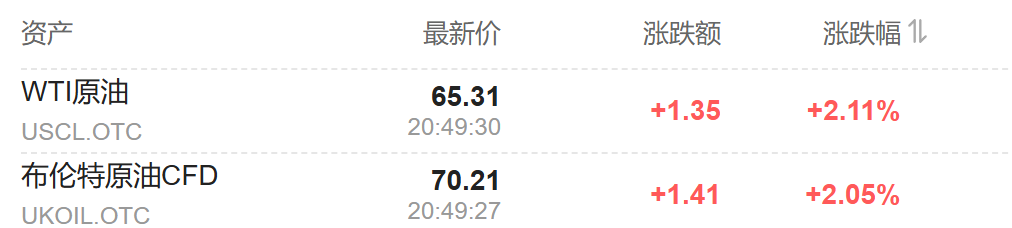
油价日内涨超2%,报道:特朗普私下考虑退出《美墨加协定》
Hua Er Jie Jian Wen· 2026-02-11 13:04
Core Viewpoint - The potential withdrawal of the United States from the US-Mexico-Canada Agreement (USMCA) is being evaluated by President Trump, creating significant uncertainty in the ongoing negotiations among the three countries, which cover approximately $2 trillion in trade and services [1][2]. Group 1: Negotiation Dynamics - The current negotiation landscape is becoming increasingly complex, with bilateral talks taking place, and Mexico being described as "quite pragmatic," while discussions with Canada are more challenging [2][4]. - The mandatory review deadline of July 1 is approaching, which could lead to either a 16-year extension of the agreement or trigger a ten-year annual review mechanism until 2036 if no consensus is reached [4]. - Trump has pressured both Canada and Mexico for concessions beyond trade, including issues related to immigration and national defense, indicating a preference for bilateral agreements [4][5]. Group 2: Economic Implications - Any move to exit the agreement could destabilize one of the world's largest trade relationships, potentially leading to the re-establishment of tariff barriers and increased inflationary pressures [2][6]. - The U.S. Chamber of Commerce and lawmakers are likely to oppose any withdrawal, as higher tariffs could exacerbate inflation and affordability issues, particularly sensitive ahead of the midterm elections [6]. Group 3: Trump's Negotiation Strategy - Trump's inquiries to advisors about the potential exit reflect his negotiation style, which often uses threats as leverage to secure better deals rather than indicating a definitive intention to withdraw [7]. - Despite previously being a negotiator for the agreement, Trump's views on North American trade relations have shifted, leading to unpredictability in his approach [7].
特朗普私下“琢磨”退出美墨加协定,北美贸易战云密布
Jin Shi Shu Ju· 2026-02-11 12:40
知情人士透露,美国总统特朗普私下正在考虑退出北美贸易协定,这给美加墨三国关键的重新谈判增添 了更多不确定性。 据描述内部讨论的匿名人士称,特朗普曾问助手为什么他不应该退出该协议——这是他在第一任期内签 署的——尽管他并未直接通过信号表明他一定会这样做。 一位白宫官员在被问及这些讨论时,称特朗普是最终决策者,且总是为美国人民寻求更好的交易。该官 员表示,在特朗普正式宣布之前,关于潜在行动的讨论都属于毫无根据的猜测。 美国贸易代表格里尔办公室的一位官员表示,照单全收2019年的条款不符合国家利益,政府打算保留特 朗普的选择权,并谈判解决已确定的问题。 两名官员都要求匿名,并拒绝直接回应特朗普是否在考虑退出该贸易协定。格里尔周二表示,政府将与 墨西哥和加拿大分别举行会谈,并指出与加拿大的贸易关系更为紧张。他没有说明特朗普是否会批准延 期。 《美墨加协定》(USMCA)定于7月1日进行强制审查及可能的延期,这一过程曾被视为例行公事,但 现已演变为一场有争议的谈判。特朗普要求加拿大和墨西哥做出额外的贸易让步,并施压他们解决移 民、贩毒和国防等无关问题。 上述官员表示,如果能达成包含行业利益相关者意见的解决方案,格里尔将 ...
Honda Motor(HMC) - 2026 Q3 - Earnings Call Transcript
2026-02-10 09:00
Financial Data and Key Metrics Changes - The operating profit for the third quarter was JPY 591.5 billion, achieving record high unit sales, operating profit, and operating margin [2][4] - Operating cash flow after R&D adjustment was JPY 1,855.8 billion, consistent with the same period last year [3] - The forecast for operating profit for the fiscal year ending March 2026 remains at JPY 550 billion, with profit for the year unchanged at JPY 300 billion [5][10] Business Segment Data and Key Metrics Changes - Motorcycle operations achieved a profit of JPY 446.5 billion, up by JPY 44.8 billion year-on-year, driven by solid sales in India and Brazil [8] - Automobile operations reported losses of JPY 166.4 billion, down by JPY 569 billion year-on-year, primarily due to semiconductor supply shortages and one-time EV-related expenses [8][9] - Power products business sold 2.507 million units, with incremental sales in Europe but a decline in Asia [6] Market Data and Key Metrics Changes - Cumulative global unit sales for motorcycles reached 16.44 million units, with significant increases in India, Pakistan, and Brazil [6] - Automobile unit sales were 2.561 million, reflecting a decline mainly in Asia, particularly China [6] - The forecast for motorcycle sales is maintained at 21.3 million units, while automobile sales remain at 3.34 million units [4][10] Company Strategy and Development Direction - The company aims to enhance its competitive strength by reviewing strategies in response to stagnated EV market growth and intensified competition from emerging OEMs [12][14] - Plans include settling losses related to EVs in North America and launching next-generation hybrid systems [14][15] - The company emphasizes a balanced business portfolio across motorcycles and finance to maintain cash flow and a sound balance sheet [15] Management Comments on Operating Environment and Future Outlook - Management acknowledged challenges such as the stagnation of the EV market, protectionism, and supply chain risks [12][14] - The company expects profit growth due to yen depreciation but recognizes the need for incentives in the competitive Asian automobile market [3][12] - Future strategies will be communicated in the upcoming fiscal year, focusing on product features and cost competitiveness [14] Other Important Information - The forecast for full-year dividends is set at 70 JPY per share, unchanged from previous forecasts [5] - The company plans to cancel 747 million treasury stocks as part of its shareholder return strategy [5] Q&A Session Summary Question: Full year outlook and automobile profitability - Management indicated that the fourth quarter may incur higher expenses but expects positive impacts from tariffs and motorcycle sales in Vietnam [20][21] - Concerns about BEV profitability and potential expenses related to negotiations with GM were raised [21][26] Question: EV market trends and mid-term strategies - Management acknowledged the need to revisit EV strategies due to negative demand environments and competition from local manufacturers in China [30][31] Question: Semiconductor supply issues - Management confirmed that they are taking steps to prevent future semiconductor shortages and are closely monitoring supply chain risks [32][39] Question: Tariff impacts and automobile sales strategies - Management explained the reduction in tariff impacts and outlined strategies to improve sales in North America and Japan, focusing on hybrid models [41][43] Question: Rare earth metals supply concerns - Management acknowledged reliance on China for rare earth metals and discussed strategies for securing inventory and applying for export permissions [47][50]
