
关税威胁

Search documents
与马克龙“交锋” 特朗普夸耀“战绩”
Yang Shi Xin Wen· 2025-12-23 08:40
Core Viewpoint - The article discusses a confrontation between U.S. President Trump and French President Emmanuel Macron regarding drug prices, where Trump allegedly used the threat of tariffs to compel Macron to agree to raise drug prices in France [2][3]. Group 1: Drug Pricing Dynamics - Trump claims that he pressured Macron to increase drug prices in France, asserting that European countries have lower drug prices, which leads to higher prices in the U.S. market [3]. - The confrontation involved Trump threatening a 25% tariff on all goods sold from France to the U.S. if Macron did not comply with the request to raise drug prices [2]. Group 2: International Trade Relations - The exchange highlights the use of tariffs as a negotiating tool in international relations, particularly in the context of pharmaceutical pricing [2][3]. - Trump's approach reflects a broader strategy of leveraging trade policies to influence foreign governments on domestic pricing issues [3].

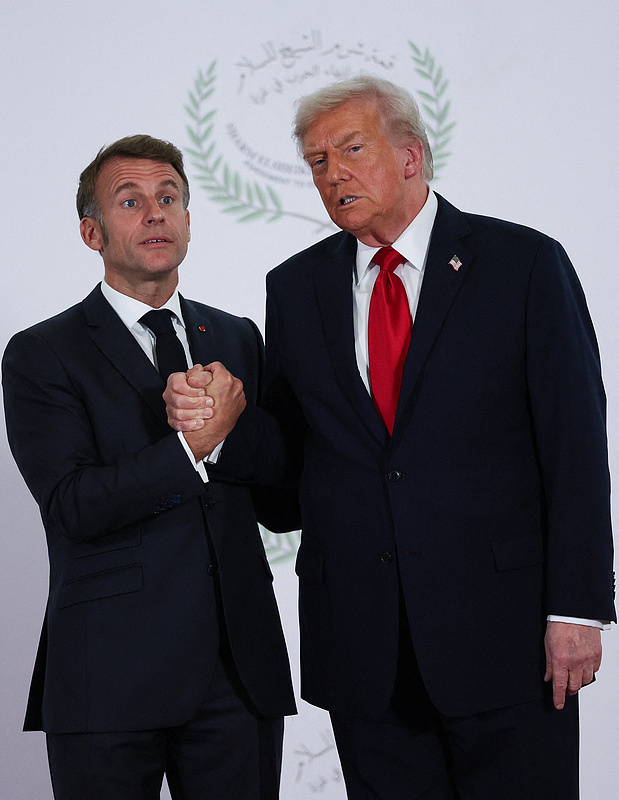
结束访华才2天,马克龙立马就变脸:若中国不进口欧洲东西,或对华加税?中方不吃这一套!
Sou Hu Cai Jing· 2025-12-10 06:10
Group 1 - Macron's visit to China initially showcased cooperation in nuclear energy and renewable sectors, but his tone shifted to a hardline stance upon returning to France, criticizing the trade deficit and threatening tariffs [1] - France's trade deficit with China reached $10.6 billion in the first ten months of 2025, surpassing the total for 2024, highlighting the imbalance in trade where China exports high-value products while France mainly exports traditional goods [1][2] - A report from CEPII indicates that Chinese manufacturing is surpassing Europe in high-end sectors, placing European industry on the brink of crisis [1] Group 2 - Macron's political pressure stems from domestic manufacturing decline and high unemployment, leading him to adopt a tough stance on China to appease voters and assert influence within the EU [2] - The notion of "trade imbalance" is contested, with data showing that nearly 40% of exports from European companies in China return to Europe, indicating that the profits are primarily retained by European firms [2] - The EU's trade policy requires consensus among its 27 member states, and Germany, with a trade volume with China exceeding $200 billion, may oppose Macron's tariff threats, complicating the situation [4][5] Group 3 - Previous attempts by the EU to impose tariffs on Chinese electric vehicles demonstrated that tariffs do not resolve structural issues, as China's complete industrial chain and technological strength are not easily undermined by trade protection measures [7] - Macron's linkage of European technology export restrictions to China's rare earth exports is viewed as flawed logic, as these resources are essential for Europe's industrial upgrades [7]
刚拿到好处就变脸,马克龙威胁:若中国不降逆差,欧洲可能加关税
Sou Hu Cai Jing· 2025-12-08 11:50
Group 1 - Macron's visit to China from December 3 to 5 resulted in significant economic cooperation, including a €16 billion procurement agreement between COMAC and Airbus, and an increase in France's electric vehicle import quota from 50,000 to 120,000 units annually [3][5] - The EU's trade deficit with China is projected to reach a record high, surpassing that with the US, with China's trade surplus with the EU expected to surge to $310 billion from October 2024 to October 2025 [8][10] - Since 2019, China's trade surplus with the EU has nearly doubled, while its trade surplus with the US has contracted due to tariff policies, indicating a structural shift in trade dynamics [8][10] Group 2 - Goldman Sachs has raised its GDP growth forecast for China from 2025 to 2027, warning that China's strong export-driven growth may come at the expense of other high-tech producers in Europe [12] - Macron's threats of tariffs on Chinese goods reflect internal EU divisions, particularly with Germany, which has a high dependency on China and has seen a 9% decline in exports to China since 2019 [14][21] - Germany's manufacturing jobs have decreased by nearly 7% since 2019, with about 500,000 industrial jobs lost, partly due to competitive pressures from China [16]
四天过去,中美仍未签约,美财长告知中国,美国准备加征关税
Sou Hu Cai Jing· 2025-11-04 18:12
Core Viewpoint - The ongoing U.S.-China trade negotiations are marked by a mix of cooperation and tension, with U.S. Treasury Secretary's threats of tariffs on China highlighting the complexities of the relationship [3][4][18]. Group 1: Trade Negotiations Progress - Recent discussions in Kuala Lumpur have led to significant agreements, including the cancellation of a 10% tariff on Chinese goods and a one-year suspension of certain investigations into China's maritime and logistics sectors [4][5]. - U.S. Secretary of the Treasury expressed confidence that a trade agreement could be finalized soon, with China expected to purchase 25 million tons of U.S. soybeans by the end of the year [4][5]. - Despite these advancements, U.S. Trade Representative's comments indicate that core issues in U.S.-China relations remain unresolved, suggesting a dual approach of negotiation and pressure [4][5][18]. Group 2: Tariff Strategy - The U.S. is continuing to leverage tariffs as a tool against China, with Secretary of the Treasury indicating a desire to rally allies to impose similar tariffs [5][10]. - The U.S. has implemented various tariffs on imports, including a 25% tariff on steel and aluminum, and a 25% tariff on certain automotive products [11][12][13][16]. - This pattern of tariff imposition reflects a broader strategy of unilateralism and pressure to gain leverage in trade negotiations [16]. Group 3: Rare Earth Elements - The focus on China's rare earth export controls is significant, as these materials are crucial for advanced industries, including defense and technology [7][8]. - The U.S. is attempting to reduce its reliance on Chinese rare earths while simultaneously seeking to establish alliances for mining and refining these critical materials [10][9]. - The complexity of developing a domestic supply chain for rare earths is acknowledged, with estimates suggesting it could take 5 to 10 years to achieve significant production capabilities [10]. Group 4: Future of U.S.-China Relations - The ongoing trade tensions are characterized by a "talk and hit" strategy, where the U.S. seeks to maintain pressure while negotiating [16][19]. - The outcome of U.S.-China relations will depend on both parties' commitment to principles of equality, respect, and mutual benefit [19][20].

中美贸易谈判结束:我国稀土管制延期,准备采购美国大豆,美国承诺对中国不加关税
Sou Hu Cai Jing· 2025-10-27 11:49
Core Points - The recent US-China trade negotiations in Malaysia resulted in a preliminary framework agreement, with China agreeing to delay restrictions on rare earth exports by one year and committing to purchase a certain amount of US soybeans, while the US promised not to impose a 100% tariff on China [1][3][5] Group 1: Negotiation Outcomes - The US Treasury Secretary, Behnam, announced a "very successful negotiation framework," indicating a perceived victory for the US, while China's representative emphasized the firm stance of China in protecting its interests [1][3] - The agreement includes a one-year postponement of China's rare earth export restrictions, which is seen as a strategic move to provide both sides with a buffer period, avoiding immediate escalation of tensions [1][3][7] - The US's abandonment of the 100% tariff threat reflects its deep reliance on China's rare earth materials, as China controls over 85% of global rare earth processing capacity [3][5] Group 2: Strategic Implications - The postponement of rare earth restrictions is not a relinquishment of rights by China but rather a strategic maneuver that maintains leverage over the US, allowing for adjustments in response to any US violations of the agreement [7] - The negotiations highlight a shift in the US's approach, moving from a high-pressure stance to one of "equality and respect," indicating recognition of China's countermeasures [5] - Despite the framework agreement, structural contradictions between the two countries suggest that the trade conflict is far from over, with ongoing issues such as TikTok ownership remaining contentious [7]

德商银行:外汇市场对关税威胁显现“钝感” 降息预期受制于通胀压力
Sou Hu Cai Jing· 2025-10-23 15:08
Core Viewpoint - The foreign exchange market currently shows indifference to the new round of tariff threats from the United States, which may indicate a desensitization to tariff measures or that the impacts have been fully priced in [1] Group 1: Tariff Impact - Tariffs are continuing to push up inflation expectations in the U.S., making it difficult for the market to further price in the Federal Reserve's rate cut potential [1] - Other countries' rate cut expectations have stabilized, contrasting with the U.S. situation [1] Group 2: Trade Data - Current trade data shows only a slight impact from tariffs, but this does not imply that tariffs have no effect; the impact may simply take longer to manifest [1]
特朗普再度放了100%关税大招,反而证明美国战略博弈工具的缺乏
Sou Hu Cai Jing· 2025-10-20 03:41
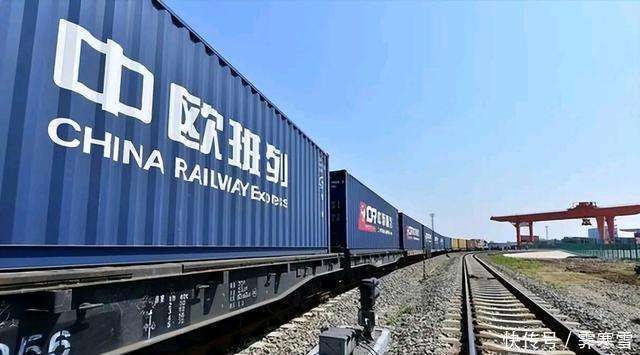
Group 1 - The core viewpoint is that Trump's decision to impose an additional 100% tariff on all Chinese goods reflects emotional responses and indicates a lack of effective strategies in the U.S.-China trade conflict [1] - The U.S. has limited options to counter China's recent export controls on rare earths, which complicates U.S. efforts to rebuild its rare earth supply chain [1][3] - The U.S. has historically engaged in trade bullying without facing significant pushback, but China's strong countermeasures have disrupted the U.S.'s previous advantages [3] Group 2 - The U.S. continues to rely on traditional methods to exert pressure on China, particularly in high-tech industries and geopolitical issues like Taiwan, despite the ineffectiveness of these strategies [4] - Recent actions, such as Poland halting the operation of the China-Europe Railway, suggest U.S. influence in attempts to disrupt China's trade routes [4] - The U.S. lacks confidence in its ability to militarily confront China in the Pacific, and its trade tactics have lost their effectiveness [5] Group 3 - As military options become less viable, the U.S. may need to reassess its approach to China and consider a more rational policy focused on peaceful coexistence [7]
美国500%关税威胁难撼中国!中俄合作立法告破分化图谋
Sou Hu Cai Jing· 2025-10-19 19:07
Group 1 - The U.S. Treasury Secretary proposed a potential 500% tariff on Chinese purchases of Russian oil, indicating a political strategy to leverage economic measures in the context of the Ukraine crisis [1][6][20] - Economic logic suggests that tariffs above a certain threshold, such as 100%, significantly diminish the profitability of goods, making higher tariffs like 500% or 7000% more symbolic than practical [3][10][20] - The U.S. is using the tariff threat as a negotiating tool ahead of upcoming trade talks with China, reflecting a pattern of linking geopolitical issues with economic leverage [6][17][20] Group 2 - European countries are experiencing rising energy prices and inflation due to the Ukraine conflict, leading to a potential "de-industrialization" as companies relocate to the U.S. for lower energy costs [7][8][17] - Russia has legally formalized its strategic partnership with China, indicating a commitment to mutual cooperation that complicates U.S. efforts to drive a wedge between the two nations [9][18][20] - The interdependence of U.S. and Chinese markets is highlighted by the complexities of trade relationships, where high tariffs can lead to supply chain shifts and market adjustments [10][12][19] Group 3 - The impact of tariffs extends through various supply chain stages, ultimately affecting consumer prices and contributing to inflation, as seen in the U.S. market for Chinese goods [15][16][20] - The U.S. tariff threats have historically faced pushback from domestic businesses and consumers, indicating a limit to how much pressure can be applied without economic repercussions [6][16][20] - The dynamics of global trade are shifting, with China diversifying its market relationships and reducing reliance on the U.S. dollar for transactions, which may mitigate the impact of U.S. sanctions [10][12][19]

板块观点汇总品种:中期结构短期结构原油小时周期策略-20251015
Tian Fu Qi Huo· 2025-10-15 13:16
Report Industry Investment Rating - Not provided in the content Core Viewpoints of the Report - The downward trend in the energy and chemical sector remains clear, and short positions entered before August/September should be held [1] - The short - term decline in the crude oil market is mainly driven by macro factors, while the long - term decline is due to the supply - increase and demand - decrease pressure from the OPEC+ production increase and the fourth - quarter demand off - season [2] - For most products in the energy and chemical sector, both macro and fundamental factors are driving the prices down, with the exception of some products that may have short - term technical rebounds [1] Summary by Relevant Catalogs Crude Oil - Logic: The sharp drop on Friday night was due to Trump's new tariff threat, with short - term trading driven by macro factors. Fundamentally, there is pressure from increased supply and decreased demand. Technical rebounds, if any, may be limited [2] - Technical Analysis: The daily - level shows a medium - term downward structure, and the hourly - level shows a short - term downward structure. The strategy is to hold short positions [2] Benzene Ethylene (EB) - Logic: Macro factors put pressure on the market, and the fundamental situation is bearish due to high supply, high inventory, and low downstream demand [5] - Technical Analysis: The hourly - level shows a short - term downward structure. The strategy is to hold the remaining short positions and pay attention to contract roll - over [5] Rubber - Logic: Macro factors accelerate the decline, and the fundamental situation is bearish due to the sharp decline in downstream demand and the high probability of increased supply [7] - Technical Analysis: The daily - level shows a medium - term downward structure, and the hourly - level shows a short - term downward structure. The strategy is to hold short positions [7] Synthetic Rubber (BR Rubber) - Logic: The main driver is the downward pressure on the cost side of butadiene. Macro factors also have a short - term bearish impact [9] - Technical Analysis: The daily - level shows a medium - term downward structure, and the hourly - level shows a short - term downward structure. The strategy is to hold short positions [12] PX - Logic: The supply - demand situation is slightly weakening, and the main driver is the cost side of crude oil [14] - Technical Analysis: The hourly - level shows a short - term downward structure. The strategy is to hold newly covered short positions [14] PTA - Logic: The supply - demand situation is slightly weakening, and the main driver is the cost side of crude oil [18] - Technical Analysis: The hourly - level shows a short - term downward structure. The strategy is to hold short positions entered last night [18] PP - Logic: Macro factors bring pressure, and the high - supply pattern remains unchanged. The improvement in supply - demand is not realized. Attention should be paid to the cost - collapse logic [20] - Technical Analysis: The hourly - level shows a short - term downward structure. After taking profit before the holiday, there is no good entry point, so it is recommended to wait and see [20] Methanol - Logic: Macro factors have some pressure, and there is high inventory pressure at ports. Attention should be paid to the seasonal decline in Iranian methanol plant operation. It can be used as a long - position hedge [24] - Technical Analysis: The daily - level shows a medium - term and short - term downward structure. The strategy is to hold the remaining short positions cautiously and use 2350 as the final stop - profit point. It can be used as a long - position after breaking through the pressure [24] PVC - Logic: Macro factors have a bearish impact, and the supply - demand situation is weak due to high supply, high inventory, and low demand [27] - Technical Analysis: The daily - level shows a medium - term downward structure, and the hourly - level shows a short - term downward structure. The strategy is to hold short positions [28] Ethylene Glycol (EG) - Logic: Macro factors are bearish, and the supply - demand situation is weak due to increased supply and low demand [29] - Technical Analysis: The daily - level shows a medium - term downward structure, and the hourly - level shows a short - term downward structure. The strategy is to hold short positions [31] Plastic - Logic: The supply - demand situation changes little, and attention should be paid to the cost - collapse logic [33] - Technical Analysis: The daily - level shows a medium - term downward structure, and the hourly - level shows a short - term downward structure. The strategy is to hold the remaining short positions [33] Soda Ash - Logic: The high - supply and high - inventory pattern is intensifying, and the demand is not expected to improve. The downward pressure on the market remains [37] - Technical Analysis: The hourly - level shows a short - term downward structure. The strategy is to hold the remaining short positions [37] Caustic Soda - Logic: There is an expectation of supply reduction due to plant maintenance, and the downstream demand is recovering. The current valuation is low, so it is not advisable to short [39] - Technical Analysis: The hourly - level shows a short - term downward structure. After taking profit before the holiday, there is no good entry point, so it is recommended to wait and see [39]
"风暴"结束了吗?动荡中哪些方向赢面大?
Hu Xiu· 2025-10-13 11:23
Group 1 - The article discusses whether the U.S. tariff storm is completely over, indicating that recent tensions between the U.S. and China may not escalate further, as both sides seem to prefer a resolution [3] - The market's response to the easing tensions is noted, with the Shanghai Composite Index only slightly down by 0.19% and the ChiNext Index down by 1.1%, suggesting a limited impact on A-shares [3] - The article suggests a potential shift in investor sentiment towards a more desensitized view of tariff threats, which could lead to reduced market volatility in the coming weeks [3] Group 2 - The article highlights that October's market focus may shift towards core and long-term factors, as external disturbances weaken and the resilience of A-shares strengthens [3]