渠道变革

Search documents
飞科电器(603868)2025年三季报点评:期待公司经营逐步改善
Xin Lang Cai Jing· 2025-10-30 00:30
Core Viewpoint - The company reported a decline in revenue and net profit for Q3 2025, indicating increased competition in the personal care small appliance market, particularly in traditional segments like shavers and hair dryers [1][2]. Financial Performance - For Q3 2025, the company achieved revenue of 30.40 billion yuan, down 8.5% year-over-year (YoY), and a net profit attributable to shareholders of 4.6 billion yuan, down 1.61% YoY [1]. - Adjusted figures for Q3 2025 show revenue of 9.24 billion yuan, down 7.75% YoY, and a net profit of 1.4 billion yuan, down 8.76% YoY [1]. Market Competition - The personal care small appliance market is facing intensified competition, particularly in shavers and hair dryers, leading to revenue pressure for the company [2]. - Online sales data for Q3 2025 indicates that the domestic market for shavers and hair dryers saw growth, but the company's sales in these categories declined significantly [2]. Gross Margin Analysis - The overall gross margin for the company was 57.1%, an increase of 1.1 percentage points YoY, but the adjusted gross margin for Q3 2025 was 56.1%, a decrease of 0.8 percentage points YoY [2]. - The decline in gross margin is attributed to increased industry competition and revenue decline [2]. Cost Structure and R&D Investment - The company optimized its cost structure, resulting in a net profit margin of 15.0% for Q1-3 2025, up 1.0 percentage points YoY, while the adjusted net profit margin for Q3 2025 was 14.7%, down 0.2 percentage points YoY [3]. - The company has increased its R&D investment to enhance product innovation and technology upgrades to address future competition [3]. Investment Outlook - As a leading player in the domestic personal care small appliance market, the company has shown significant progress in channel transformation and product innovation [4]. - Despite recent weak monitoring data and ongoing industry competition, the company is expected to maintain growth, with projected EPS for 2025, 2026, and 2027 at 1.37, 1.57, and 1.77 yuan, respectively [4]. - The target price has been adjusted to 38.0 yuan, maintaining a "recommended" rating based on DCF valuation [4].

休闲零食赛道:从渠道变革到10亿级大单品之路
Di Yi Cai Jing· 2025-10-27 06:49
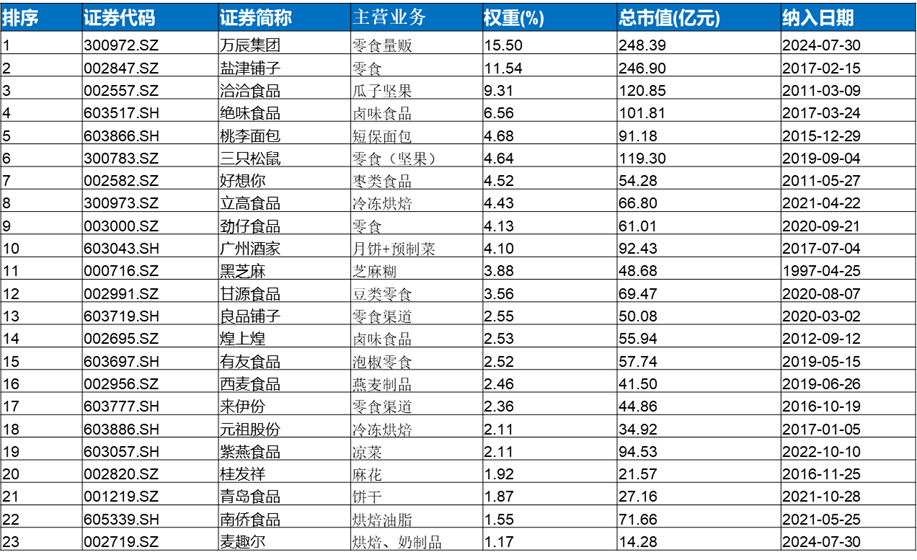
Overview of the Snack Food Sector - The A-share snack food sector has 23 companies, with Wancheng Group leading at a weight of 15.5% and a total market value of 24.8 billion [1][2] - The top 20 companies in the snack food sector have a combined market value of approximately 150 billion, significantly lower than the liquor sector, where Kweichow Moutai alone exceeds 2 trillion [2] Industry Characteristics - Snack foods are inherently less addictive compared to alcoholic beverages, and brands are still in the early stages of consumer recognition [3][5] - The snack food industry is characterized by high dependence on distribution channels, with traditional supermarkets shrinking at an annual rate of 8% [6][9] - The snack food sector has a market size exceeding 1 trillion, but the top ten companies only hold about 20% market share, much lower than the liquor and dairy sectors [7] Market Challenges - The snack food index has underperformed the overall consumer index from 2021 to 2024 due to three main pressures: shrinking traditional retail channels, low margins in bulk sales, and a price war leading to reduced profits [9][13] - The average price drop in the snack food industry reached 12% in 2023, with a corresponding 5% increase in sales volume, resulting in a profit squeeze [13] - Online price transparency has intensified competition, with leading companies experiencing a decline in online gross margins by 8-10 percentage points [13] Company Types and Performance - Domestic snack companies can be categorized into channel-based and product-based companies, with the former relying heavily on distribution channels and the latter focusing on product differentiation [14][16] - Product-based companies like Salted Fish and Jin Zai Food have shown faster growth, while channel-based companies like Liangpin Shop and Lai Yi Fen have faced significant declines [17] Case Studies - Three squirrels have seen a revenue rebound starting in Q4 2023, with Douyin channel revenue reaching 2.188 billion in 2024, a year-on-year increase of 81.7% [21] - However, they face challenges such as high traffic costs and low offline distribution margins, with a gross margin of only 15-18% [24] - Salted Fish's "Big Demon King" single product achieved over 100 million in monthly sales in March 2025, indicating successful product differentiation [42] Future Outlook - Channel-based companies should focus on cost-effective branding, while product-based companies should aim for super single products in niche categories [49] - The competition will increasingly involve both comprehensive snack brands and channel brands, necessitating a strong brand identity to withstand competition from private label products [49]

7年5次换掌门人,陈华接任张德芹执掌茅台
Bei Ke Cai Jing· 2025-10-25 12:45
Core Viewpoint - The leadership change at Kweichow Moutai, with Chen Hua appointed as the new Party Secretary, marks the fifth leadership transition in over seven years, amid challenges in the liquor industry such as slowing growth, high inventory, and price inversion [1][8]. Group 1: Leadership Transition - Chen Hua has been appointed as the new Party Secretary of Kweichow Moutai, replacing Zhang Deqin, who served for a year and a half [1]. - Zhang Deqin's tenure included the launch of new products and initiatives aimed at channel transformation and digital marketing, keeping Moutai relevant in the industry [1][2]. - The leadership change is seen as a significant moment for Moutai, reflecting a broader trend of local talent being promoted within the company [3]. Group 2: Challenges Faced by the New Leadership - The new leadership faces significant challenges, including stabilizing prices, finding new customer segments, and adapting to new consumption trends in a slowing market [1][6]. - Moutai's flagship product, Feitian Moutai, has seen a decline in market price, dropping below 1800 yuan per bottle, which poses a challenge for maintaining profitability [6][7]. - The strategic product Moutai 1935 has also shifted from a premium to a mid-range price point, indicating broader market pressures [7]. Group 3: Initiatives During Zhang Deqin's Tenure - Zhang Deqin implemented several price stabilization measures, including halting the release of certain product formats and adjusting sales strategies to maintain market prices [3][4]. - The company has focused on digital transformation, enhancing online and offline channel collaboration, and introducing new purchasing models on the iMoutai platform [4][5]. - Initiatives such as the "three transformations" (customer, scenario, and service) were introduced to adapt to changing market dynamics [5]. Group 4: Financial Performance - For the fiscal year 2024, Kweichow Moutai reported total revenue of 1741.44 billion yuan, a year-on-year increase of 15.66%, and a net profit of 862.28 billion yuan, up 15.38% [6]. - In the first half of 2025, the company achieved revenue of 910.94 billion yuan, reflecting a growth of 9.16% compared to the previous year [6]. - Despite industry-wide slowdowns, Moutai's performance remains resilient, showcasing its ability to navigate challenges [6].

白酒双十一迎来“冷静期”?线上大促线下观望
Nan Fang Du Shi Bao· 2025-10-24 13:18
Core Insights - The annual Double Eleven shopping festival has begun, but the liquor industry is experiencing a "cooling period" with mixed price movements across online and offline channels [2][12] - High-end liquor prices have remained stable despite promotional activities, while some mid-to-high-end products are seeing slight price declines [2][12] Price Trends - In the Greater Bay Area, online platforms are using subsidies to lower high-end liquor prices, while offline channels are mostly observing the market [2][12] - In Guangzhou, over half of the sampled products saw price increases, with high-end products like Wuliangye and Guojiao 1573 experiencing minor price hikes [3][4] - Conversely, some products, including Moutai, saw price reductions due to adjustments by instant retail platforms [4][6] Regional Variations - In Shenzhen, liquor prices showed stability, with some products like Moutai and Guojiao 1573 experiencing slight declines, while others like Wuliangye saw price increases [5][6] - In Foshan, liquor prices remained stable, with Moutai showing a slight increase, while other products experienced minor fluctuations [8][9] - Dongguan reported significant price drops for Moutai, with online channels driving the decline, while mid-range products displayed mixed price movements [10][11] Market Dynamics - The Double Eleven promotions have intensified price competition among high-end liquors, with leading brands like Moutai facing downward pressure on prices [12] - The cautious attitude of distributors towards seasonal sales is reflected in the limited follow-up promotions in offline channels [12] - Despite overall pressure, some brands like Fenjiu and Xijiu have shown resilience with slight price increases, indicating consumer demand for specific products [12]





大单品策略成效渐显,洽洽食品三季度业绩稳步前进
Bei Jing Shang Bao· 2025-10-24 12:51
Core Viewpoint - The Chinese snack food industry is undergoing significant transformation driven by consumer upgrades and heightened health awareness, with Qiaqia Food (002557.SZ) demonstrating resilience in its transition strategy while maintaining its core values. Financial Performance - In Q3 2023, Qiaqia achieved a revenue of 1.749 billion yuan and a net profit attributable to shareholders of 79.36 million yuan, with a net profit of 71.44 million yuan after excluding non-recurring gains and losses [1] - As of September 30, 2023, the company reported a total revenue of 4.501 billion yuan and a net profit of 168 million yuan, with a net profit of 115 million yuan after adjustments [1] Product Innovation and Market Strategy - Qiaqia is focusing on new product launches, including konjac, cilantro melon seeds, mixed nuts, organic walnut kernels, and Yunnan walnut milk, which are rapidly growing and establishing new growth drivers [1] - The company has introduced the "Konjac Princess - Konjac Layered Stomach" as a key product in the healthy snack segment, utilizing traditional techniques and innovative cutting methods to appeal to health-conscious consumers [9][11] - Qiaqia's digital platform now covers 560,000 retail points, with online sales growing over 24% year-on-year, reflecting a shift towards digital management and new retail channels [8] Quality and Production Innovation - Qiaqia maintains a strong focus on its core products, sunflower seeds and nuts, with over 60% of revenue from sunflower seeds in the first half of 2025, showcasing stability in its core business [2] - The company has invested over 1 billion yuan in smart manufacturing, achieving a production efficiency increase of over 30% through advanced technologies like blockchain traceability and multi-material mixed packaging systems [3][4] Brand Development and Consumer Engagement - Qiaqia is enhancing its brand appeal through various consumer engagement initiatives, such as music festivals and competitions, aimed at connecting with younger audiences [4] - The company has adopted a "transparent factory" model, recognized as a national green factory and smart manufacturing pilot, which serves as a unique brand asset [4] Market Expansion and Future Outlook - Qiaqia is targeting Southeast Asia as a key growth area, focusing on markets like Thailand, Indonesia, and Vietnam, while also exploring potential in the Middle East and Europe [15] - The company aims to balance innovation in channels and products with a commitment to quality and corporate culture, positioning itself for sustainable growth in the evolving snack food industry [16]

从非遗传承人到港股敲钟人,八马茶业王文礼,困在“茶叶商”标签里
Sou Hu Cai Jing· 2025-10-23 15:16
Core Viewpoint - Eight Horse Tea Industry has finally initiated its IPO process after a decade-long journey, planning to issue 9 million H-shares and aiming for a listing on the Hong Kong Stock Exchange on October 28, 2025, with support from Huatai International, Agricultural Bank of China International, and Tianfeng International [1] Industry Challenges - The path to listing for Chinese tea companies has been fraught with difficulties, as the tea business is deeply rooted in tradition, making it hard to standardize and scale, which are essential for capital market acceptance [2][3] - The fundamental contradiction in the Chinese tea industry lies in the pursuit of standardization while dealing with non-standard products, leading to skepticism about growth potential and scalability [3][4] Company Overview - Eight Horse Tea has established a vast network with 3,716 stores, of which over 90% are franchise stores, indicating a reliance on a franchise model for rapid expansion [6][7] - The franchise model has contributed to impressive growth, with franchise revenue increasing from 69% in 2022 to 75% in the first three quarters of 2024 [7] Profitability Concerns - The gross profit margin for franchise channels is significantly lower at 46%, compared to 78.2% for direct sales, raising concerns about overall profitability as the franchise model may erode profit margins [9] - The reliance on franchisees for growth poses risks, as any market saturation or franchisee financial difficulties could jeopardize the company's performance [9][10] Market Dynamics - The tea industry is facing a downturn, with seven out of nine listed tea companies reporting revenue declines in the first half of the year, while Eight Horse's revenue slightly decreased from 1.11 billion to 1.06 billion yuan [13] - The average annual spending of direct store members has also dropped by 13.6% from 2,860.4 yuan to 2,469.6 yuan between 2020 and 2024, indicating weakening consumer purchasing power [13] Strategic Adjustments - Eight Horse is exploring diversification beyond tea products, aiming to expand into related categories such as tea utensils and snacks, although tea sales still dominate its revenue [15][21] - The company is enhancing its online presence, with online channels contributing 35.4% of total revenue, while also creating flagship stores to provide unique customer experiences [18] Brand Perception - The brand is deeply associated with traditional tea, which may hinder its efforts to attract younger consumers and diversify its offerings [21][22] - The challenge lies in balancing the brand's traditional identity with the need for modernization and expansion into new markets [24][25]

年销10亿后,「莫小仙」王正齐说要换种活法
36氪未来消费· 2025-10-22 15:00
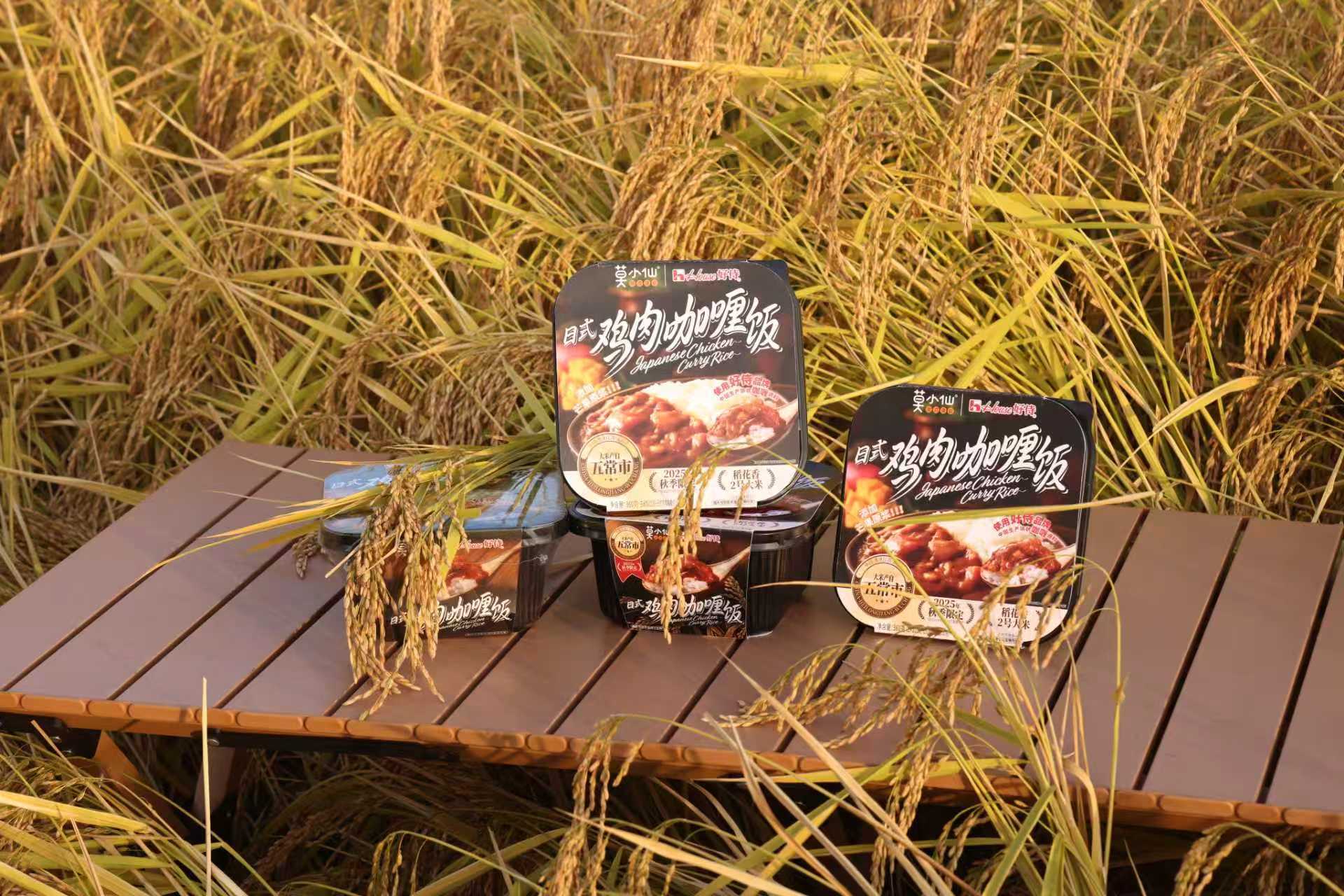
Core Insights - The article discusses the transformation of the Chinese retail landscape, emphasizing the shift from channel-driven growth to product-driven strategies for brands like Mo Xiaoxian [4][5][11]. Group 1: Company Transformation - Mo Xiaoxian, a fast-food brand established in 2017, has experienced significant growth, achieving over 1 billion yuan in sales by 2022, driven by e-commerce and offline channels [4][5]. - The founder, Wang Zhengqi, has shifted focus from sales to product development, indicating a new phase in the company's strategy as the retail environment evolves towards a quality-driven market [4][5][11]. - The recent launch of a curry product line, developed in collaboration with the Japanese company House Foods, marks a strategic pivot towards creating differentiated products [9][10][11]. Group 2: Market Dynamics - The retail environment in China is undergoing profound changes, with a consensus among industry players that profit maximization is essential, leading to the closure of unprofitable channels [5][15]. - The fragmentation of the retail channel system is evident, with various players targeting specific consumer segments, making competition more intense and necessitating a focus on unique product offerings [15][19]. - The acceptance of curry flavors in China is increasing, with over 2 million posts on Xiaohongshu discussing curry, indicating a growing consumer interest that Mo Xiaoxian aims to capitalize on [9][10]. Group 3: Product Development and Strategy - The development of the curry product line took over nine months, highlighting the company's commitment to quality and consumer experience [11][12]. - Wang Zhengqi emphasizes the need for differentiation and cost leadership in product development, aiming to create unique offerings that resonate with consumers [12][19]. - The company plans to explore more global flavors and traditional Chinese culinary elements, indicating a broader strategy for product diversification [12][19].
食品饮料行业渠道变革专题(二):从中美人货场变迁,看我国渠道变革机遇-财通证券
Sou Hu Cai Jing· 2025-10-22 13:13
Group 1 - The core viewpoint of the article is that the food and beverage industry in China is undergoing significant channel transformation, influenced by the differences in the development paths of retail channels in China and the United States [1][19]. - The U.S. retail sector has experienced a complete evolution through stages of incubation, rapid expansion, differentiation, and internet impact, leading to a strong brand positioning and private label barrier, with private label sales accounting for 18% in 2020 [1][19]. - In contrast, China's retail sector has a shorter development history, skipping the differentiation phase and directly entering the internet impact phase, currently facing homogenization and online diversion pressures, with private label sales only at 4.3% in 2020 [1][19]. Group 2 - The Chinese retail channel has entered a phase of stock competition, with traditional hypermarkets seeing a decline in traffic, while new formats like membership stores, hard discount stores, regional boutique supermarkets, and instant retail are emerging [2][3]. - Sam's Club has distinguished itself with a strategy focused on "operation as king, customer first, and extreme efficiency," targeting the middle-class demographic with a narrow SKU strategy and a private label share exceeding 30% [2][3]. - Aldi, with its hard discount model, has a private label share of over 90%, leveraging localized supply chains and ready-to-eat meal offerings to create differentiation [2][3]. Group 3 - The core logic of channel transformation is shifting from "product-centric" to "customer-centric," with competition focusing on brand recognition and user relationship building [3][11]. - Channels that can develop private labels, select products accurately, and maintain efficient supply chains will gain a competitive edge [3][11]. - This transformation presents structural opportunities for upstream suppliers, particularly in customized categories like baked goods and ready-to-eat meals, benefiting companies with strong R&D capabilities [3][11]. Group 4 - The report indicates that the food and beverage channel in China is experiencing deep changes in efficiency improvement and brand recognition construction, with innovative companies likely to benefit from industry transformation [3][11]. - The report highlights the importance of customized product development and service capabilities for upstream suppliers, particularly in categories like ready-to-eat meals, which are central to this channel transformation [11][12]. - Companies with strong R&D capabilities are expected to respond accurately to channel demands, with brands like New Dairy, West Wheat, and Youyou Foods likely to accelerate growth through channel traffic [3][11].


应对车市变局,宝马、丰田、福特齐掀渠道革命
Hua Xia Shi Bao· 2025-10-22 06:36
Core Viewpoint - Traditional automotive giants such as BMW, Toyota, and Ford are undergoing significant channel transformations to adapt to changing market dynamics and competition from domestic brands [1][2][3] Group 1: Channel Transformation Trends - BMW plans to abandon the traditional dealership model by 2027, shifting to a direct sales approach that emphasizes control over the sales process [2][3] - Toyota is implementing a "single city, single store" strategy, consolidating its dealerships to enhance efficiency and reduce costs while maintaining dual-brand service [2][3] - Ford has established a wholly-owned sales service company in Shanghai to unify its sales channels, aiming to maximize efficiency and reduce internal conflicts among dealers [3] Group 2: Market Impact and Consumer Experience - The channel transformations are improving consumer experiences by allowing customers to view multiple vehicle types in a single location, thus eliminating the need to visit multiple dealerships [4] - Ford's channel integration has led to increased profitability for dealers by offering a wider range of vehicles, enhancing customer attraction and retention [4] Group 3: Industry-Wide Characteristics - The industry is moving towards a "light asset, heavy operation" model, with companies like Lincoln reducing store sizes and investment requirements significantly [5] - Companies are adopting a "fill-in layout" strategy, adjusting dealership numbers based on regional market conditions to optimize resource allocation [5] - The traditional 4S dealership model is being re-evaluated, with a focus on sales and after-sales services rather than the previous all-in-one approach [5] Group 4: Strategic Recommendations - Manufacturers are encouraged to enhance product competitiveness through technological innovation and to explore new channel models for better collaboration with dealers [6] - Dealers should adapt to channel changes by improving service capabilities and operational efficiency, including staff training and expanding business areas like used car sales and automotive finance [6]


年销10亿后,「莫小仙」王正齐说要换种活法
3 6 Ke· 2025-10-22 02:21
Core Insights - The company "Mo Xiaoxian" is transitioning from a sales-driven model to a product-driven approach in response to changes in the retail environment and consumer preferences [1][2][8] - The introduction of a new curry product line, developed in collaboration with the Japanese company "Hao Shi," marks a strategic shift for Mo Xiaoxian, aiming to capture a unique market opportunity in the fast-food sector [4][5][9] Group 1: Company Strategy - Mo Xiaoxian's founder, Wang Zhengqi, emphasizes the need for product innovation as the retail landscape evolves, moving away from reliance on channel expansion [1][2] - The company has undergone significant restructuring, focusing on product development and quality, with a dedicated team for creating new offerings [8][10] - The new curry series, including products like "Japanese Chicken Curry Udon" and "Japanese Black Chocolate Beef Curry Udon," aims to meet the growing consumer interest in curry flavors [5][4] Group 2: Market Trends - The acceptance of curry flavors in China is increasing, with over 2 million posts on social media platform Xiaohongshu highlighting its popularity among younger consumers [4] - The retail channel landscape is becoming fragmented, with various players targeting different consumer segments, leading to increased competition and a shift in focus towards product differentiation [10][11] - The company recognizes the importance of collaborating with top-tier suppliers and leveraging unique product attributes to stand out in a crowded market [5][9] Group 3: Operational Changes - Mo Xiaoxian has invested in building its own factory, which began operations in 2024, to enhance control over product quality and production processes [13] - The company is restructuring its management, with Wang Zhengqi shifting his focus from sales to product development, spending 70% of his time with the product team [10][15] - The goal is to create differentiated products that provide value to distributors and consumers, addressing the challenges posed by evolving retail dynamics [15][14]