
算力基建

Search documents
【立方早知道】世界首富盘中易主/A股现280亿收购/11连板大牛股再次停牌核查
Sou Hu Cai Jing· 2025-09-11 01:25
Group 1 - Larry Ellison briefly surpassed Elon Musk to become the world's richest person with a net worth of $393 billion, before Musk reclaimed the title by the end of the trading day [1] - Oracle's stock price fluctuated significantly, impacting Ellison's net worth and the overall billionaire rankings [1] Group 2 - Dongyangguang announced a significant acquisition plan involving a total investment of 35 billion yuan and 40 billion yuan to increase its stake in Dongshu Yihua [3] - The acquisition will facilitate the purchase of 100% equity in Qinhuai Data for 28 billion yuan through its subsidiary [3] Group 3 - ST Huayang faced penalties for disclosure violations, with fines totaling 7.5 million yuan for the chairman and 2 million yuan for the secretary [5] - The company failed to disclose non-operational fund occupation by its controlling shareholder, amounting to 182 million yuan, and inflated profits in annual reports for 2021 and 2022 [5] Group 4 - The National Development and Reform Commission emphasized the need for new policy financial tools to stimulate investment and consumption [7] - Measures to enhance market vitality and support infrastructure projects were highlighted, including the promotion of major nuclear power projects [7] Group 5 - A meeting was held by the Ministry of Industry and Information Technology with major companies to discuss the "14th Five-Year Plan" and address challenges in industrial development [9][10] - Key topics included enhancing core technology, improving supply chain resilience, and promoting overseas expansion [10] Group 6 - Shun'an Environment plans to invest 5 billion yuan in a smart manufacturing headquarters project, which will be executed in two phases [15] - The project aims to develop core components for refrigeration and thermal management in electric vehicles [15] Group 7 - BYD executives purchased over 50 million yuan worth of shares, indicating confidence in the company's future [16] - A total of 48.82 million shares were acquired by senior management and core personnel during the specified period [16] Group 8 - Tianpu Co. experienced a significant stock price increase of 185.29% over a period of 11 consecutive trading days, leading to a halt for investigation [18] - The company warned investors about potential risks associated with rapid price fluctuations and high valuation metrics [18] Group 9 - Shoukai Co. is seeking perpetual bond financing of up to 3 billion yuan to address its short-term debt of 18.57 billion yuan [20] - The financing will not fully cover the company's upcoming debt obligations [20] Group 10 - NIO announced plans to issue 181.8 million Class A ordinary shares to fund core technology development for smart electric vehicles [21] - The proceeds will also support the expansion of battery swapping and charging networks [21] Group 11 - Baiyin Nonferrous received a notice of investigation from the China Securities Regulatory Commission for suspected information disclosure violations [25] - The company is now under formal investigation [25] Group 12 - Goldwind Technology signed an investment agreement worth 18.92 billion yuan for a wind power hydrogen project in Inner Mongolia [27] - The project aims to produce green hydrogen and methanol, with a significant portion of electricity generated for this purpose [27] Group 13 - Dajin Heavy Industry secured a long-term manufacturing order worth 1.25 billion yuan for offshore wind power structures [28] - The agreement includes a commitment for up to 400,000 tons of manufacturing capacity through 2030 [28] Group 14 - Zhujiang Co. plans to sell several stock assets, expecting gains to exceed 50% of last year's net profit [29] - The sale includes shares in various companies, with the timing and specifics still uncertain [29]





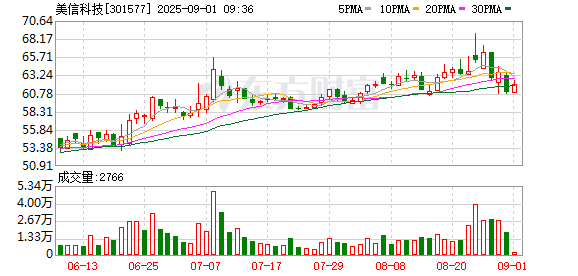
美信科技:公司功率类磁性元器件以及部分高端网络变压器产品可应用在算力服务器中
Mei Ri Jing Ji Xin Wen· 2025-09-01 01:35
Group 1 - The core viewpoint of the article highlights the active development of computing power infrastructure and the relevant products from the company that can be applied in computing servers [2][3] - The company, Meixin Technology (301577.SZ), stated that its power magnetic components and certain high-end network transformer products are applicable in computing servers [2]
A股:11亿王者级肉签上市连续大涨,资金狂欢,股民收意外惊喜!
Sou Hu Cai Jing· 2025-08-31 02:41
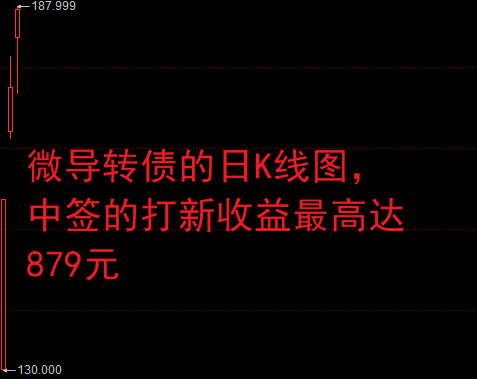
Group 1 - The core point of the article highlights the remarkable performance of the "Micro Guide Convertible Bond," which saw a significant price surge upon its debut, reaching a peak of 157.30 yuan, marking a record high for first-day trading of convertible bonds [1] - The bond's price continued to rise over the next three trading days, reaching 187.546 yuan, providing investors with substantial returns, with a maximum price of 879 yuan, showcasing its attractiveness as a new investment opportunity [1][3] - The price increase of the Micro Guide Convertible Bond is closely linked to the strong performance of its underlying stock, Micro Guide Nano, which has outperformed many other stocks in the market during the same period [3] Group 2 - The A-share market is experiencing a surge in technology stocks, particularly in sectors like computing power and semiconductors, with many stocks doubling in price within a month, indicating a strong influx of capital into the technology sector [5] - This market trend reflects a structural divergence, where a small number of stocks are thriving while the majority remain stagnant or decline, highlighting the concentration of investment in specific sectors [7] - Investors are advised to be cautious of potential valuation bubbles and rotation risks, emphasizing the importance of recognizing the structural nature of the market while pursuing investment opportunities [8]
AI基建驱动光模块市场高增长 上市公司加速技术迭代
Zheng Quan Ri Bao Wang· 2025-08-27 13:13
Core Viewpoint - The optical module industry is experiencing significant growth driven by the rapid development of AI and the increasing demand for computing infrastructure, as evidenced by the strong performance of several listed companies in the sector [1][2]. Industry Growth Momentum - The optical module companies that have disclosed their 2025 semi-annual reports show impressive revenue growth: - Zhongji Xuchuang achieved revenue of 14.789 billion yuan, a year-on-year increase of 36.95%, and a net profit of 3.995 billion yuan, up 69.4% [2]. - Xinyi Sheng reported revenue of 10.437 billion yuan, a staggering growth of 282.64%, with a net profit of 3.942 billion yuan, up 355.68% [2]. - Tianfu Communication recorded revenue of 2.456 billion yuan, a growth of 57.84%, and a net profit of 899 million yuan, up 37.46% [2]. - The growth is attributed to increased capital expenditure from key end customers in the computing infrastructure sector, leading to a significant demand for high-end optical modules like 800G [2]. Technological Advancements - The optical module market is primarily divided into data communication and telecommunications, with the data communication sector being the main growth driver [4]. - The demand for high-end optical products is accelerating due to the requirements of AI model training and inference, which necessitate greater network bandwidth [4]. - Companies are focusing on dual-track strategies to enhance production capacity and expedite the transition to 1.6T optical modules [4]. R&D Investments - Leading companies are increasing their R&D investments to enhance their technological capabilities: - Zhongji Xuchuang's R&D expenditure reached 586 million yuan, a growth of 11.12%, focusing on optimizing 800G and 1.6T optical module performance [5]. - Xinyi Sheng's R&D investment was 334 million yuan, a significant increase of 157.56%, with a rising sales proportion of high-speed optical modules [5]. - Huagong Technology invested 461 million yuan in R&D, up 19%, emphasizing innovation and key technology breakthroughs [5]. Market Outlook - The global market for Ethernet optical modules in cloud data centers is expected to continue growing, with projections indicating sales will exceed 30 billion USD by 2030, and nearly 20 billion USD specifically for AI clusters [3]. - Companies in the optical module sector are well-positioned to capitalize on the ongoing market demand and technological advancements, potentially leading to substantial market returns [3].


重仓AI算力的基金赢麻了!26只“翻倍基”诞生!
Sou Hu Cai Jing· 2025-08-21 08:04
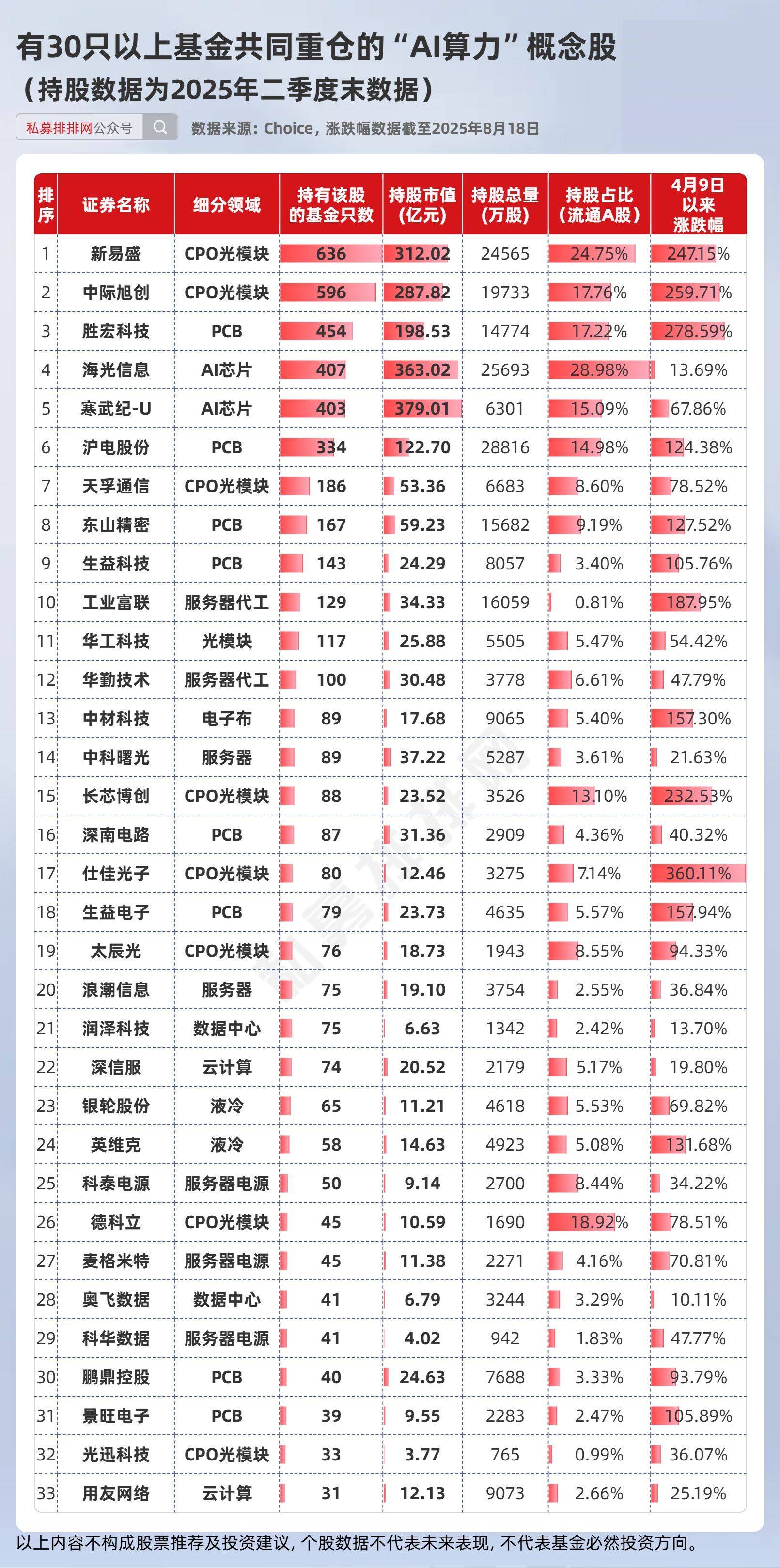
Core Viewpoint - The AI computing power sector is experiencing significant growth, driven by increasing demand and substantial investments from major tech companies, leading to a surge in related stocks and funds [1][2][6]. Group 1: Market Performance - Industrial Fulian's stock hit a historical high, with a market capitalization exceeding 970 billion yuan, approaching the "trillion" market cap club [1]. - A-shares related to AI computing power have seen a rapid increase in value, with several stocks, including Industrial Fulian and New Yisheng, achieving record highs [1]. - As of August 18, multiple AI computing power stocks have doubled in value since April 9, indicating strong market momentum [6][10]. Group 2: Investment Trends - Major tech companies are ramping up investments in computing power infrastructure, with Meta planning to build the world's largest data center cluster and OpenAI seeking to raise substantial funds for data center construction [2][3]. - Capital expenditures for major firms like Amazon, Microsoft, and Meta have significantly increased, with Amazon's Q2 capital expenditure reaching $31.4 billion, a 90% year-on-year increase [4][5]. - The AI computing power sector is expected to maintain strong growth in capital expenditures, driven by rising demand for data centers, servers, and optical modules [5]. Group 3: Fund Performance - A total of 12 AI computing power stocks are heavily held by over a hundred funds, with significant investments in stocks like New Yisheng and Zhongji Xuchuang [6][7]. - Funds that have invested in AI computing power stocks have reported impressive returns, with 26 funds achieving over 100% returns since April 9 [10]. - Specific funds, such as Zhonghang Fund's "Zhonghang Opportunity Leading Mixed Fund," have shown exceptional performance, with returns exceeding 145% since April 9 [15].

浙江交科(002061.SZ):未参与算力基建业务
Ge Long Hui· 2025-08-21 07:33
Group 1 - The company, Zhejiang Jiaokao (002061.SZ), stated on the investor interaction platform that it has not participated in the computing power infrastructure business [1]

A股TTM、全动态估值全景扫描:A股估值扩张,通信行业领涨
Western Securities· 2025-08-16 12:20
Core Insights - The overall valuation of A-shares has expanded this week, with the communication industry leading the gains. The opening of the channel for computing chips from the US to China, combined with the continuous development of downstream AI models and applications, has kept the computing and its upstream communication equipment in high demand, resulting in a significant rise in the communication equipment sector. The current historical percentile of the full dynamic PE for the communication equipment secondary industry has reached 79.8%, indicating a high level [1][8]. Valuation Overview - The overall PE (TTM) of A-shares increased from 20.68 times last week to 21.08 times this week, while the PB (LF) rose from 1.69 times to 1.74 times [10]. - The overall full dynamic PE of key A-share companies increased from 13.66 times to 13.90 times this week [12]. Sector Valuation Details - The PE (TTM) of the ChiNext board rose from 68.20 times to 71.57 times, while the PB (LF) increased from 3.83 times to 4.04 times [19]. - The PE (TTM) of the Sci-Tech Innovation board increased from 215.04 times to 227.55 times, and the PB (LF) rose from 3.79 times to 4.65 times [25]. - The relative PE (TTM) for computing infrastructure, excluding operators/resource categories, increased from 4.54 times to 4.87 times, and the relative PB (LF) rose from 2.84 times to 4.09 times [27]. Industry Valuation Levels - From a static PE (TTM) perspective, industries such as consumer discretionary and consumer staples are overvalued, while essential consumer and resource sectors are undervalued. In primary industries, computer, textile and apparel, and construction materials are overvalued, while steel and real estate are undervalued [2]. - In terms of PB (LF), consumer discretionary and resource sectors are overvalued, while essential consumer sectors are undervalued. In primary industries, automotive and electronics are relatively high, while construction decoration, agriculture, forestry, animal husbandry, and construction materials are undervalued [2]. - The full dynamic PE indicates that consumer discretionary and financial services are relatively high, while essential consumer and resource sectors are undervalued. In primary industries, real estate and computers are relatively high, while food and beverage and social services are undervalued [2]. Comparative Analysis - Current industries such as communication, non-ferrous metals, oil and petrochemicals, public utilities, and agriculture exhibit characteristics of low valuation and high profitability [2]. - Industries like construction materials, power equipment, non-ferrous metals, basic chemicals, media, and automotive show both low valuation and high performance growth [2]. Market Comparison - The A-share non-financial ERP decreased from 1.33% last week to 1.20% this week, and the equity-debt yield spread fell from 0.11% to 0.00% [3][67]. - The full dynamic ERP for key non-financial A-share companies decreased from 3.77% to 3.57% [71].
国泰海通 · 晨报0813|海外科技、国别研究
国泰海通证券研究· 2025-08-12 14:20
Group 1: AI Industry Trends - The AI industry is accelerating due to the resonance between hardware and application sides, with significant investments in computing infrastructure and talent acquisition by major players like Meta [4] - Meta is investing several hundred billion dollars to build large data centers, including the Prometheus supercomputer cluster in Ohio with a power of 1 GW, set to be operational by 2026, and the Hyperion supercomputer cluster in Louisiana targeting 5 GW by the end of 2027 [4] - Nvidia is resuming sales of the H20 GPU in China, which is expected to eliminate uncertainties in domestic CSP major's Capex and drive the upward trend in computing infrastructure construction [5] Group 2: Economic Trends in Southeast Asia - Vietnam's production growth rate was 8.5% in July, with an average of 11% over the past six months, largely driven by continuous high export growth of 17.7% [11] - Indonesia's GDP growth rate for Q2 was 5.1%, reflecting improvements from investments and foreign trade, while Thailand's CPI fell to -0.7%, indicating a deflationary trend [11] - The U.S. has signed trade agreements with several Southeast Asian countries, reducing tariffs significantly, which may enhance trade relations and economic growth in the region [11] Group 3: Industry Policies - Indonesia is accelerating local production of electric vehicles and adjusting cryptocurrency transaction tax rates, while Thailand is strengthening green manufacturing standards [12] - Vietnam is decentralizing some economic management approval powers and increasing tax incentives for key sectors [12]

中金 | AI进化论(12):高端PCB需求跃迁,算力基座价值重构
中金点睛· 2025-08-11 23:49
Core Viewpoint - The demand for AI computing power is driving a significant increase in both volume and price in the PCB market, with expectations for the AI PCB market to reach $5.6 billion in 2025 and $10 billion in 2026 [2][8]. Demand Side - AI-driven computing infrastructure and smart device innovations are expected to boost the global PCB market value to $73.57 billion in 2024, representing a year-on-year growth of 5.8% [5][7]. - The demand for AI servers and GPUs/ASICs is projected to provide new momentum for long-term growth in the PCB market, with a forecasted compound annual growth rate (CAGR) of 4.8% from 2025 to 2029, reaching $94.7 billion by 2029 [5][8]. - The penetration rate of AI servers is expected to reach 15% by 2026, with shipments projected to exceed 2.1 million units [7]. Supply Side - PCB manufacturers are accelerating capacity expansion, with a total investment of approximately 32 billion yuan announced by seven listed companies for PCB capacity expansion [2][35]. - Despite the acceleration in capacity expansion, the efficiency of capacity release is expected to lag behind the growth rate of AI demand, leading to a sustained supply-demand gap in the medium term [2][35]. Technological Innovations - Continuous iterations in technology are anticipated, with a focus on reducing dielectric constant (dk) and dielectric loss (df) to overcome transmission bottlenecks [4][52]. - The integration of advanced materials and new processes, such as CoWoP and substrate-like PCBs, is expected to drive further growth in the PCB market [4][52]. Market Dynamics - The global PCB market is heavily concentrated in Asia, with China leading in market share. The Asian PCB market is projected to reach $67.9 billion in 2024, accounting for 93.1% of the global market [35][38]. - The demand for high-layer and HDI PCBs is increasing due to the requirements of AI servers, which typically have more than 20 layers and require ultra-low loss materials [35][42]. CCL Market - The CCL (Copper Clad Laminate) market is also experiencing high demand, with the global market expected to reach $15.08 billion in 2024. Major suppliers include companies like Kingboard and Shengyi Technology [37][40]. - The leading CCL manufacturers are expanding their production capacity to meet the rising demand driven by AI infrastructure [40][41].
三大事件齐发,有望推动金价趋势上行
Mei Ri Jing Ji Xin Wen· 2025-08-06 00:59
Group 1 - The liquidity in the stock market remains abundant, which is favorable for the sustained slow bull market of A-shares [1] - Since June 23, the A-share market has shown a clear characteristic of "rotating upward and low-level replenishment," with better sustainability of the profit-making effect [1] - The financing balance of A-shares has risen to around 2 trillion, accounting for 2.3% of the circulating market value, reflecting a broad source of incremental funds [1] Group 2 - The demand for AI servers has widened the supply-demand gap for high-end PCBs, leading the industry into a new round of innovative expansion cycle [2] - This round of PCB capital expenditure expansion cycle is expected to start in Q4 2024 and may last for about two years, with the potential for an extended boom due to infrastructure demand [2] - There is a growing trend of monthly acceleration in PCB capital expenditure by the second half of 2025, indicating a possibility of continuous upward revision of industry orders [2] Group 3 - Three major events in early August are expected to drive the upward trend of gold prices [3] - The July non-farm employment data was lower than expected, leading to downward revisions of previous months' data, which raises concerns about economic strength [3] - The resignation of a key Federal Reserve official and political interference in labor statistics have cast doubt on the credibility of future economic data and the independence of monetary policy, reinforcing the long-term bullish logic for gold [3]


