
红利

Search documents
招商证券:港股市场先抑后扬 聚焦四进攻+两底仓
智通财经网· 2025-10-17 07:58
Core Viewpoint - The Hong Kong stock market is expected to experience a "first decline, then rise" trend in the fourth quarter, with short-term fluctuations due to a lack of incremental positive factors, but potential upward support from easing tariff issues, new economic policies, and expectations of U.S. Federal Reserve interest rate cuts [1][2] Group 1: Market Outlook - Short-term fluctuations in the Hong Kong stock market are anticipated due to a lack of new positive factors [1] - Marginal positive factors expected to accumulate include: 1) Continuous innovation breakthroughs in China's technology sector; 2) Low probability of high tariffs being implemented, leading to potential easing of China-U.S. tariff issues; 3) Discussions on the "15th Five-Year Plan" at the Fourth Plenary Session, boosting risk appetite; 4) Ongoing strengthening of expectations for U.S. Federal Reserve interest rate cuts [1] - In the medium to long term, a "dual easing" policy from China and the U.S. is expected to drive continuous capital inflow, improving fundamentals and profit expectations, leading to a slow bull trend in the Hong Kong stock market [1] Group 2: Investment Focus - The "four offensive" sectors include: 1) Non-ferrous metals driven by U.S. dollar depreciation, low interest rates, and liquidity; 2) Technology stocks benefiting from rapid advancements in AI and high demand in new industries; 3) Power sector focusing on themes like controllable nuclear fusion and equipment exports; 4) Insurance sector with improved equity investment returns due to rising stock markets [2] - The "two bottom warehouse" strategy is suitable for long-term investment and risk aversion, focusing on: 1) "Dilemma reversal" strategy in essential consumption sectors showing initial supply-demand turning points; 2) High dividend strategy with a stable dividend yield of 6.29% in the Hang Seng High Dividend Yield Index, driven by increasing demand for "fixed income+" products [2]

不出意外,A股会复制2014年行情了
Sou Hu Cai Jing· 2025-10-16 12:00
Group 1 - The current market is characterized as an epic bull market, with expectations for the Shanghai Composite Index to double, but many investors may not feel its effects due to misalignment with market strategies [1] - Many investors are experiencing losses not because of a bear market, but due to a misunderstanding of the bull market dynamics and their own portfolio logic [3] - The current bull market is likely to be a comprehensive one, driven by sector rotation rather than broad-based increases, with two main themes: dividends and technology [3] Group 2 - A potential replication of the 2014 market trend is anticipated, with expectations of a significant rise in the fourth quarter, which could lead to a 10-15% increase in the Shanghai Composite Index [5] - The rise of heavyweight stocks such as banks, insurance, and energy could significantly boost the index, even if many individual stocks decline [5] - The Shanghai Composite Index has already surpassed its 2021 high, while the CSI 300 Index has also seen substantial gains, indicating a selective market performance [5] Group 3 - The outlook for the market remains optimistic, particularly for the index, with the potential for significant upward movement if heavyweight assets rally [7] - The ability of investors to benefit from the market rally depends on their holdings in key sectors like banking, insurance, and energy [7]


招商证券国际:港股边际利好积聚 AI与有色共舞
智通财经网· 2025-10-15 09:13
Core Viewpoint - The market is expected to experience a "first dip, then rise" pattern in Q4, with potential for upward movement driven by accumulating marginal positive factors [1][3] Market Factors - The marginal positive factors supporting the Hong Kong stock market include basic economic conditions, policy developments, liquidity, and valuation [2] - Despite a slowing macroeconomic environment in China, the new economy, particularly technology, shows strong growth with a reported profit growth rate of 31.7% in the first half of the year [2] - The U.S.-China tariff situation is anticipated to be a short-term disturbance, with a likelihood of easing tensions in the future [2] - The upcoming Fourth Plenary Session of the Communist Party is expected to introduce new policies that will enhance fiscal and monetary effectiveness, particularly in technology innovation and domestic demand [2] Liquidity and Interest Rates - U.S. inflation is stabilizing, leading to expectations of "preventive rate cuts" by the Federal Reserve, with predictions of two rate cuts in Q4 and three in the following year [2] - The inflow of foreign capital into the Hong Kong market is expected to continue, supported by the anticipated easing of U.S. monetary policy [2] Market Style - The market style is characterized by a balance between large-cap and small-cap stocks, with a relative preference for growth stocks due to the current liquidity conditions [4] Investment Strategy - The recommended investment strategy includes "four offensive sectors" (metals, technology, electricity, insurance) and "two defensive positions" (turnaround stocks, dividend stocks) [5] - The offensive sectors focus on resilient varieties, with specific attention to the AI industry and its potential for growth [5] - Defensive positions are aimed at long-term investments and risk mitigation, particularly in essential consumer goods and high-dividend stocks [6]
大盘或在当前位置进行“换挡”,低费率的自由现金流ETF(159201)布局价值凸显
Mei Ri Jing Ji Xin Wen· 2025-10-15 04:03
Core Insights - A-shares opened higher on October 15, with the Shanghai Composite Index up 0.06%, the Shenzhen Component Index up 0.19%, and the ChiNext Index up 0.29% [1] - The Guozheng Free Cash Flow Index experienced a slight increase of approximately 0.25%, with leading stocks including Qin'an Co., Shenhuo Co., and Jihong Co. [1] - The largest free cash flow ETF (159201) followed the index's upward trend, highlighting the value of strategic positioning [1] Industry Trends - According to a report from Zheshang Securities, there are clear signs of a resurgence in the financial and cyclical sectors, while the technology sector has weakened [1] - External news influences suggest that the market may be shifting focus towards large financials, cyclical stocks, and dividend-paying stocks [1] Investment Strategy - The free cash flow ETF (159201) focuses on industry leaders with abundant free cash flow, covering sectors such as non-ferrous metals, automotive, oil and petrochemicals, and power equipment, which are characterized by high barriers to entry [1] - The ETF's diversified industry coverage effectively mitigates risks associated with single industry volatility, making it a favorable choice for core portfolio allocation [1] - The fund management annual fee is 0.15%, and the custody annual fee is 0.05%, both of which are the lowest in the market [1]
A股开盘速递 | A股集体高开 培育钻石、有色金属、稀土永磁等板块涨幅居前
智通财经网· 2025-10-15 02:36
Core Viewpoint - The A-share market shows a collective rise in major indices, with the Shanghai Composite Index up by 0.06% and the ChiNext Index up by 0.29%, driven by sectors such as cultivated diamonds, non-ferrous metals, and rare earth permanent magnets [1] Institutional Outlook Zheshang Securities - External shocks do not alter the bullish strategy; market rotation may lead to style changes, focusing on large financials and dividend stocks [1] - After two weeks of market performance, large financials and cyclical sectors show significant rise, while technology style weakens [1] - The recommendation is to maintain a systematic "slow bull" mindset, taking advantage of any "buying opportunities" from external shocks, and to increase allocation during dips [1] - For industry allocation, absolute return funds should focus on large financials, real estate, state-owned infrastructure, and dividend stocks; relative return styles should monitor the upward trend of the innovation index and key moving averages for operational guidance [1] Dongfang Securities - Short-term index fluctuations are intensifying, but the main trend remains upward, with a core focus on large technology [1] - The current market adjustment is viewed as part of the consolidation since late August, with future upward movement expected [1] - From an allocation perspective, the core position of the large technology sector remains unchanged, with continued interest in self-controlled sectors and cyclical sectors with good prospects [1]


红利低波ETF(512890)逆势走强!60个交易日吸金近13亿 机构:短期盯高股息 中期看TMT
Xin Lang Ji Jin· 2025-10-13 09:21
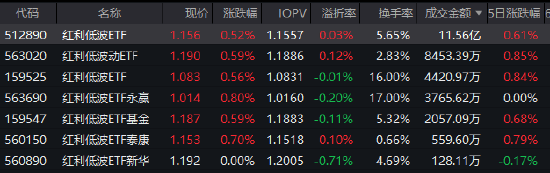
Core Viewpoint - The market experienced a collective decline in the three major stock indices on October 13, while the Science and Technology Innovation 50 index rose by over 1%. The Dividend Low Volatility ETF (512890) showed resilience, increasing by 0.52% despite the overall market downturn [1]. Fund Performance - The Dividend Low Volatility ETF (512890) had a closing price of 1.156, with a 5-day increase of 0.61% and a total trading volume of 1.156 billion CNY [2]. - Over the past five trading days, the ETF saw a net inflow of 158 million CNY, which increased to 346 million CNY over the last ten days, and reached a total net inflow of 1.299 billion CNY over the last sixty days, indicating strong investor interest [2][3]. Market Outlook - Huaxi Securities suggests that the market impact this month will be less severe than the "April 7 incident," with "turning points and opportunities" being key themes for October [4]. - The industry allocation is expected to favor sectors such as dividends, agriculture, military, and rare earths, while Everbright Securities indicates that the market may enter a phase of wide fluctuations due to multiple factors [4]. Investment Strategy - The Dividend Low Volatility ETF (512890) has achieved a cumulative return of 129.76% since its inception in December 2018, outperforming its benchmark and ranking 82nd among 502 similar products [4]. - The fund has consistently delivered positive returns for six consecutive years from 2019 to 2024, making it one of the few A-share market ETFs to achieve "annual positive returns" [4]. - Experts recommend that investors consider the Dividend Low Volatility ETF as a core component for stable returns in their asset allocation, suggesting a dollar-cost averaging approach to mitigate short-term volatility risks [4].
A股市场运行周报第62期:上证突破但遇波折,战略看慢牛、战术盯金融-20251011
ZHESHANG SECURITIES· 2025-10-11 07:33
Core Insights - The report indicates that the Shanghai Composite Index broke through 3900 points but faced a pullback, leading to increased market volatility. The outlook remains optimistic for a systematic "slow bull" market, with potential adjustments viewed as opportunities for increased allocation [1][4][58] - The report suggests a strategic focus on large financials, real estate, and infrastructure sectors, while tactical operations should monitor the performance of the ChiNext Index and key moving averages [1][5][59] Market Overview - The major indices experienced fluctuations, with the Shanghai Composite Index showing a slight increase of 0.37% over the week, while the ChiNext Index and the STAR Market saw declines of 3.86% and 2.85% respectively [12][56] - The report highlights a significant rise in cyclical sectors, with non-ferrous metals up by 4.35%, and coal and electricity sectors also performing well. Conversely, technology sectors showed weakness, with declines in media, electronics, and communications [15][57] Market Sentiment and Capital Flow - The average daily trading volume in the Shanghai and Shenzhen markets increased to 2.59 trillion yuan, indicating heightened market activity. The margin trading balance also continued to rise, reaching 2.44 trillion yuan [24][29] - The report notes that the stock ETF saw a net inflow of 10.4 billion yuan, with the securities ETF leading in inflows, while the medical ETF experienced the largest outflow [31][39] Future Market Outlook - The report anticipates that if the ChiNext Index does not recover its upward trend in the short term, it may undergo a weekly level consolidation. The Shanghai Composite Index, having formed a five-wave structure, is expected to continue its upward trajectory unless external shocks disrupt this trend [4][58] - The report emphasizes the importance of monitoring the performance of key sectors, particularly large financials and cyclical stocks, as the market may shift focus away from technology [58][59]
盈米小帮投顾团队-第13次信号发车
老徐抓AI趋势· 2025-10-11 07:04
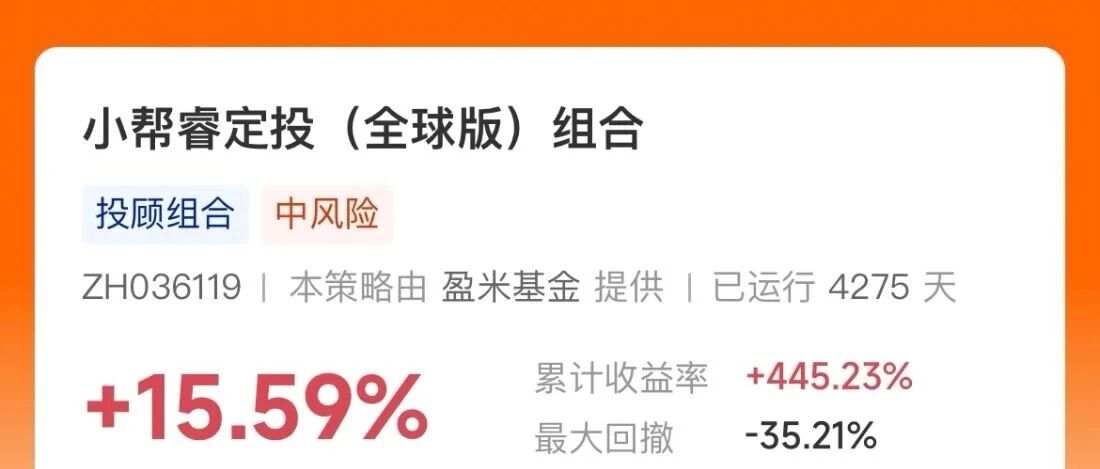
Market Overview - The last trading week of September showed a continuation of the "strong stocks, weak bonds" structure, with stocks performing well while bonds remained under pressure [1][3] - Gold emerged as a standout asset during the holiday period, indicating a risk-on sentiment in the market [1][3] Weekly Performance Review - A-shares, represented by the CSI 300, increased by 2.15%, while the Hang Seng Index rose by 1.06%. The NASDAQ 100, however, experienced a decline of 0.60% [2] - The overall bond market continued to decline, but U.S. Treasuries saw a slight rebound after a period of decline [3] Investment Strategies - The "Rui Ding Tou Global Version" has achieved positive returns for three consecutive years, with the potential to exceed 15% this year. Investors who started regular investments last year have seen cumulative returns of over 10% [4][7] - The strategy focuses on global multi-asset allocation, emphasizing high-quality sectors such as AI, technology, and renewable energy [7] Risk-Adjusted Investment Options - The "Lazy Balanced" strategy, suitable for risk-averse investors, has shown a modest increase of 0.05% in the past week, with a year-to-date return of nearly 11% [9][12] - This strategy incorporates more bond assets, resulting in lower volatility and a more stable performance compared to the Rui Ding Tou Global Version [12] Future Outlook - The market is expected to continue its slow bull trend post-holiday, supported by positive economic indicators and policy expectations [16] - The current investment strategies are designed to maintain a balanced risk profile, allowing for adjustments based on market conditions [18]
科技大跌,要转到红利防守吗?标普红利ETF逆市劲涨1.2%,港股互联网ETF(513770)宽幅溢价,买盘资金强势
Xin Lang Ji Jin· 2025-10-10 11:51
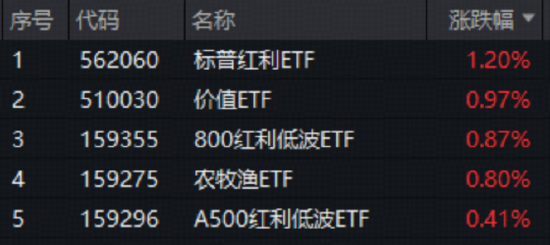
Market Overview - A-shares experienced a collective pullback on October 10, with the ChiNext and STAR Market showing larger adjustments compared to other indices [1] - High-dividend stocks, such as the S&P Dividend ETF, rose by 1.2%, while sectors like batteries, semiconductors, and non-ferrous metals faced declines [1][2] Sector Performance - The agricultural sector, particularly the first agricultural ETF, saw a maximum intraday increase of 1.5% and closed up by 0.8%, indicating potential turning points in the pig cycle [1][4] - The technology sector faced significant declines, with the AI-focused STAR Market ETF dropping by 4.75%, suggesting a potential short-term impact on investor sentiment [1][3] Investment Insights - Analysts suggest that the coal sector may see a rebound due to increased winter heating demand, with potential price increases if supply constraints are enforced [3] - The agricultural sector is viewed positively due to recent policy signals aimed at reducing production capacity, which could lead to long-term price increases for pork [6][8] ETF Highlights - The agricultural ETF (159275) recorded a net subscription of 52 million units, reflecting strong investor interest [4] - The Hong Kong Internet ETF (513770) experienced a price drop of 3.41%, but maintained a premium, indicating active buying interest despite market volatility [9][14] Geopolitical and Economic Factors - The easing of geopolitical tensions, such as the approval of a ceasefire in Gaza, has led to a decrease in safe-haven demand, impacting gold prices negatively [2][11] - The market is also influenced by the Federal Reserve's cautious stance on interest rate adjustments, contributing to short-term uncertainties [12][13] Future Outlook - Analysts expect the pig farming industry to undergo capacity reduction, which could enhance long-term profitability for leading companies in the sector [7][8] - The overall sentiment in the market remains cautious, with expectations of continued volatility but potential for recovery in the long term [12][13]
X @Yuyue
Yuyue· 2025-10-04 21:06
Market Trend - The essence of income issues lies in the dividends of economic upturns [1] - Income is directly correlated with market conditions; current income levels are a result of a favorable market where many participants are profitable [1] Industry Dynamics - The financial well-being of project teams, venture capitalists (VCs), exchanges, and retail investors contributes to the perception of wealth among Key Opinion Leaders (KOLs) [1] - Discussions about income should consider the cyclical nature of the market [1]