美元信用弱化

Search documents
黄金突破历史新高,普通人如何抓住避险资产投资机会?
Sou Hu Cai Jing· 2025-09-25 02:39
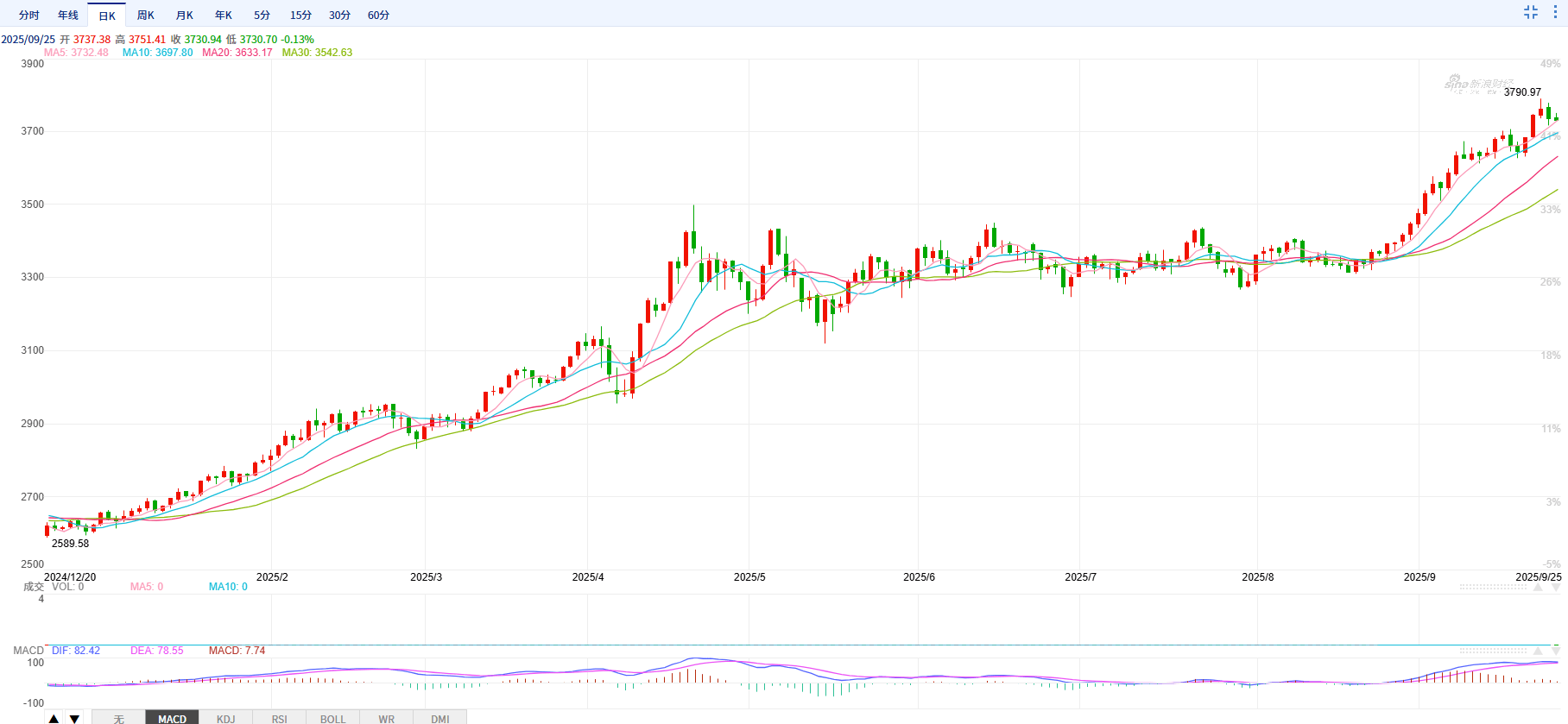
Core Viewpoint - The recent surge in international gold prices, surpassing $3,790 per ounce, is driven by three key factors: expectations of Federal Reserve interest rate cuts, escalating geopolitical conflicts, and weakening dollar credibility [1][3][4]. Group 1: Factors Driving Gold Prices - **Federal Reserve Rate Cut Expectations**: Since August 2025, U.S. inflation data has eased, leading to a market expectation of over 90% for a rate cut in September. Historically, gold performs strongly during rate cut cycles. Concerns over potential manipulation of Fed policies have also led to a loss of confidence in the dollar, driving funds towards gold as a safe haven [4]. - **Geopolitical Conflicts**: The ongoing Russia-Ukraine conflict and heightened tensions in the Middle East, along with uncertainties surrounding U.S. election policies, have directly contributed to the rise in gold prices [5]. - **Weakening Dollar Credibility**: The U.S. national debt has exceeded $37 trillion, significantly surpassing market expectations. Central banks globally are increasing their gold reserves, with China's central bank having added gold for ten consecutive months, marking a shift where gold's share in reserves has surpassed that of the euro [7]. Group 2: Investment Options for Individuals - **Gold ETFs**: These have low entry barriers and high liquidity, such as the Huaan Gold ETF (code 518880), which is directly linked to the Shanghai Gold Exchange's AU99.99 spot contracts. The advantages include a minimum investment of 1 gram and low transaction fees of 0.04%, with T+0 trading support. However, short-term price fluctuations can be influenced by market sentiment [10]. - **Physical Gold**: Suitable for long-term holding, options include bank gold bars, gold accumulation plans, and branded gold jewelry. It's important to note that jewelry often carries a high premium (approximately 15% processing fee), and recovery may involve discounts. Accumulation gold is recommended for dollar-cost averaging [12]. - **Gold Stocks**: These offer high volatility and potential for significant returns, represented by companies like Western Gold and Huayu Mining. However, they are subject to broader market performance and company-specific factors, leading to greater price fluctuations compared to gold itself [14]. Group 3: Investment Strategy Recommendations - **Avoiding High Prices**: Current gold prices are at historical highs, and short-term corrections may occur due to Federal Reserve policy changes or easing geopolitical tensions. For instance, gold prices fell from $3,500 to $3,120 in April 2024, a decline of 11% [17]. - **Gradual Investment**: Implementing a dollar-cost averaging strategy through regular investments in gold ETFs or accumulation gold can help smooth out purchase costs, such as investing $500 monthly [18]. - **Dynamic Adjustments**: If gold prices exceed $4,000, partial profit-taking may be advisable while maintaining a core position. It is recommended to limit gold allocation to 5%-10% of total household assets rather than making concentrated bets [19].

金价飙到 3674 美元还能冲?3大推力托底,但这2个坑踩了必亏!
Sou Hu Cai Jing· 2025-09-18 13:27
Core Viewpoint - The price of gold has surged to nearly $3,700 per ounce, marking an increase of almost 40% from last year, driven by several key factors including expectations of interest rate cuts by the Federal Reserve, weakening confidence in the US dollar, and ongoing geopolitical risks [1][3][21]. Group 1: Factors Driving Gold Prices - The primary driver of rising gold prices is the expectation of interest rate cuts by the Federal Reserve, which reduces the opportunity cost of holding non-yielding assets like gold [5][7]. - Weak US employment data has led to a consensus that a rate cut is imminent, causing the US dollar index to weaken and the yield on 10-year Treasury bonds to drop to a five-month low of below 4.1% [7][9]. - The declining confidence in the US dollar is evident, with its share in global foreign exchange reserves dropping from 71% in 2000 to 58% currently, prompting investors to seek alternatives like gold [9]. - Geopolitical risks, particularly in the Middle East and Europe, have increased demand for gold as a safe-haven asset during times of uncertainty [9][11]. - Central banks globally have been significant buyers of gold, purchasing 1,045 tons in 2024 and 483 tons in the first half of 2025, indicating strong institutional support for gold [11]. Group 2: Risks and Considerations - Despite the bullish outlook from institutions like UBS and Goldman Sachs, potential risks include a resurgence of inflation, which could lead to unexpected interest rate hikes by the Federal Reserve, negatively impacting gold prices [11][13]. - High gold prices may deter consumer demand for gold jewelry, which accounts for approximately 40% of total gold demand, potentially affecting overall market dynamics [13][15]. - The strength of the US dollar remains a variable; if the US economy improves, the dollar may strengthen, putting downward pressure on gold prices [15]. Group 3: Investment Strategies - Investors are advised to view gold as a long-term asset for risk hedging rather than a quick profit tool, suggesting a holding period of at least 3-5 years [17][19]. - It is recommended to invest in physical gold (like bars or coins) or gold ETFs, which track the spot price of gold and offer liquidity without the high costs associated with gold jewelry [19][21]. - A strategy of dollar-cost averaging is suggested, where investments are made in increments to mitigate the impact of price volatility [19][21].
降息周期中黄金价格上涨的底层逻辑
Sou Hu Cai Jing· 2025-09-16 02:27
Group 1 - The core driving factors for the rise in gold prices during a rate cut cycle are multifaceted, involving economic, financial, and market psychology dimensions [2] - The decline in real interest rates is a key driver for gold valuation, as lower nominal rates reduce the opportunity cost of holding gold, which is a non-yielding asset [3][4] - The classic cost of carry model indicates that gold prices have an inverse relationship with real interest rates, leading to increased marginal demand for gold when real rates fall below a certain threshold [3] Group 2 - The weakening of the dollar's credit during a rate cut cycle typically results in a depreciating dollar index, which directly boosts gold prices due to the pricing effect [4][5] - Emerging market central banks may diversify their reserves by increasing gold holdings to reduce the proportion of USD in their foreign exchange reserves, reflecting a trend of "de-dollarization" [6] Group 3 - Market behavior is reinforced by both speculative and hedging demands, with hedge funds often positioning for long positions in gold futures ahead of rate cut expectations [7] - Increased volatility can trigger algorithmic buying strategies, further driving up gold prices [8] - Concerns about economic downturns lead to preemptive hedging in gold allocations, as rate cuts are often seen as a response to potential recessions [9] Group 4 - The long-term structural support for gold is influenced by financial repression effects, where low interest rates may lead to government debt expansion and concerns about currency devaluation [11] - The global scale of negative yield bonds has surpassed $18 trillion, enhancing the relative attractiveness of gold as a zero-yield asset [12] Group 5 - Historical data shows that in six rate cut cycles since 1970, gold prices have increased by 12%-35% in five instances, with the exception being during the 2007 financial crisis when liquidity issues led to asset sell-offs [13]
【广发宏观团队】年初以来大类资产在定价什么
郭磊宏观茶座· 2025-09-14 08:16
Group 1 - The performance of major asset classes since the beginning of 2025 has been led by precious metals, with COMEX gold rising by 38.8% and COMEX silver by 45.8% [1] - Emerging market stocks have also performed well, with the MSCI Emerging Markets Index up 19.7% and the Vietnam VN30 Index up 38.7% [1] - The technology sector has seen significant gains, with the NASDAQ rising by 14.7% and the Philadelphia Semiconductor Index increasing by 20.5% [1] Group 2 - The weakening of the US dollar credit and the "soft decoupling" of asset classes are key themes driving asset performance [2] - Geopolitical factors are reshaping global supply chains, leading to a "backup" of supply and increased value for key metals and resources [2] - A new wave of technological revolution, particularly in renewable energy and artificial intelligence, is creating new demand for non-ferrous metals [3] Group 3 - The expectation of US interest rate cuts has led to a rise in global stock markets, with Chinese technology assets leading the gains [4] - The G7 long-term bond yields have decreased, and the US dollar has weakened against most currencies, supporting the performance of commodities like gold and silver [5] - The recent performance of gold has shown a strong correlation with external markets, with London gold prices rising by 1.6% to $3,651 per ounce [6] Group 4 - The Chinese stock market has seen a return of high growth narratives, particularly in technology and real estate sectors, with the overall A-share index rising by 2.12% [12] - The automotive industry is projected to achieve stable growth, with a target of approximately 3% year-on-year growth in sales by 2025 [26] - The electric power equipment industry has set a target for an average revenue growth rate of around 6% from 2025 to 2026 [24] Group 5 - The recent economic data indicates a recovery in both actual and nominal GDP, with September's actual GDP growth estimated at around 4.76% [17] - The PPI is expected to show a slight recovery due to low base effects, with projections indicating a monthly decline of around -0.13% [19] - The liquidity environment is being closely monitored, with the central bank increasing base currency injections to stabilize market fluctuations [20]

矿业ETF(561330)、有色60ETF(159881)大涨超3%,机构:美联储降息预期提振有色板块
Sou Hu Cai Jing· 2025-09-12 02:55
Group 1 - The article highlights a positive outlook for copper, aluminum, and precious metals due to supply constraints and resilient domestic demand, with expectations for rising metal prices [1] - For copper, the anticipated interest rate cut by the Federal Reserve in September is expected to enhance its financial attributes, while supply-side constraints and a restructuring of the supply chain are likely to boost overseas demand [1] - Aluminum production capacity has reached its ceiling, indicating potential long-term value in the sector [1] Group 2 - Precious metals are expected to benefit from the nearing interest rate cuts, with gold prices anticipated to rise amid geopolitical risks and declining currency credit [1] - Global central banks are increasing their gold purchases, with China's central bank buying gold for nine consecutive months, reflecting a growing appetite for gold as an asset [1] - The article suggests that investors without stock accounts may consider specific ETFs related to non-ferrous metals and mining themes [1]
关注黄金基金ETF(518800)投资机会,降息预期与美元信用弱化共塑配置机遇
Sou Hu Cai Jing· 2025-08-19 02:32
Group 1 - The core viewpoint indicates that short-term drivers for gold are not yet evident, but a strong oscillation in gold prices is expected, with COMEX gold futures down 2.21% to $3381.7 per ounce as of August 15 [1] - SPDR Gold ETF holdings increased by 0.6% to 965.36 tons, reflecting a growing interest in gold as a safe-haven asset amid macroeconomic uncertainties [1] - The expectation of interest rate cuts is anticipated to be a key driver for gold prices, with a long-term view suggesting that the central price of gold will continue to rise due to ongoing macroeconomic uncertainties and the weakening of the US dollar's credibility since Trump's administration [1] Group 2 - The gold fund ETF (518800) tracks the SGE Gold 9999 index, which represents the trading price of high-purity physical gold in China, providing a transparent and efficient price reference for investors [1] - Investors without stock accounts can consider the Guotai Gold ETF Link A (000218) and Guotai Gold ETF Link C (004253) as alternative investment options [2]
黄金狂飙背后的逻辑与机遇:普通人如何理性参与这场财富盛宴?
Sou Hu Cai Jing· 2025-08-08 07:18
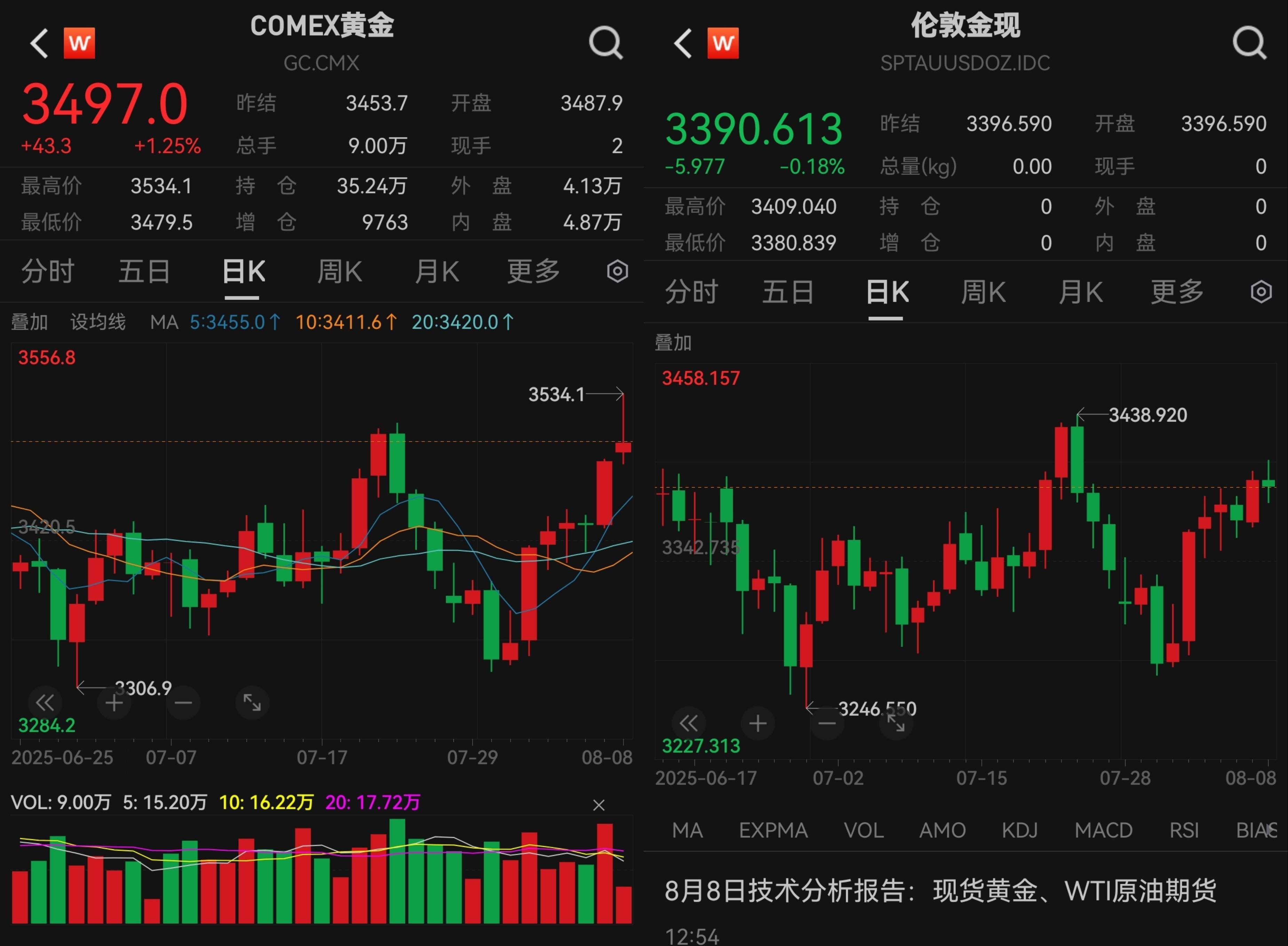
Core Viewpoint - The international gold price has shown a strong upward trend, with significant increases in both London and COMEX markets, indicating heightened investor interest and market volatility [1][5]. Market Performance - As of August 8, the London spot gold price reached a high of $3409.04 per ounce, while COMEX gold peaked at $3534.10 per ounce [1]. - The COMEX gold price closed at $3497.0, reflecting a daily increase of $43.3 or 1.25% [2]. Market Trends - The gold market has experienced a surge, with prices surpassing $3370 per ounce and domestic gold jewelry prices exceeding 1000 yuan per gram, marking historical highs [5]. - Despite recent fluctuations, gold prices have shown resilience, rebounding quickly after sharp declines [5]. Volatility and Risk Factors - Short-term volatility has increased due to geopolitical conflicts and changes in Federal Reserve policy expectations, with daily price swings reaching 3%-5% [8]. - Geopolitical risks have become a norm, with ongoing conflicts driving demand for gold as a safe-haven asset [11]. Long-term Outlook - Over the past two years, gold prices have risen by over 87%, with forecasts suggesting potential prices between $3500 and $3700 per ounce in the next 12 months [9]. - The weakening of the US dollar and expectations of interest rate cuts by the Federal Reserve have contributed to a favorable environment for gold investment [12]. Supply and Demand Dynamics - Supply constraints are evident, particularly due to power crises in South Africa affecting gold production, with global proven reserves expected to last approximately 20 years [13]. - Industrial demand for high-purity gold is projected to grow by 30% in 2025, driven by applications in semiconductors and photovoltaics [14]. Investment Strategies - Physical gold remains a preferred choice for value preservation, with investment bars and coins offering lower premiums for long-term holding [15]. - Gold ETFs provide a flexible and liquid investment option suitable for short-term trading [17]. - For small investors, paper gold and accumulation gold products allow for minimal investment starting from 1 gram [18]. Portfolio Diversification - Gold is recommended to constitute 5%-15% of an investment portfolio to hedge against volatility in equity and bond markets [19]. - Caution is advised regarding leveraged products like gold futures, which carry higher risks for ordinary investors [20]. Conclusion - The gold market in 2025 reflects broader geopolitical and monetary system changes, serving as a tool for individuals to combat inflation and protect wealth [21].
央行连续9个月增持黄金!年内超661亿元资金净流入黄金ETF、黄金ETF基金
Ge Long Hui· 2025-08-08 03:30
Group 1 - The People's Bank of China has increased its gold reserves for nine consecutive months, reflecting a global trend of central banks increasing gold holdings [1] - In 2024, global central banks purchased a total of 1136 tons of gold, marking the second-highest annual purchase on record [1] - The share of US dollars in global central bank foreign exchange reserves has decreased from 73% in 2001 to 54% in Q1 2025, while the share of gold has increased from 8.7% to 18.3% during the same period [1] Group 2 - In Q2 2025, global gold demand reached 1249 tons, a 3% year-on-year increase, with a value increase of 45% to $132 billion, setting a historical record [1] - Major central banks and sovereign funds leading gold purchases include the central banks of Poland, Azerbaijan, Turkey, Kazakhstan, and China [1] - The pace of gold purchases by central banks has slowed, with a 21% year-on-year decrease in growth rate, although total purchases remain high [1] Group 3 - Despite fluctuations in gold prices, market sentiment remains optimistic, with institutions raising their price targets for gold [2] - Citigroup has revised its three-month gold price forecast from $3300 to $3500 per ounce, adjusting the trading range to $3300-$3600 [2] - In H1 2025, global gold ETF demand reached 397 tons, the highest since 2020, with significant inflows from Asia [2] Group 4 - In the A-share market, over 66.1 billion yuan has flowed into gold ETFs this year, with notable inflows into Huazhang Gold ETF, Bosera Gold ETF, and E Fund Gold ETF [2] - A report from China Merchants Securities indicates that while gold has investment value, short-term upward momentum is weak, suggesting a focus on structural opportunities rather than broad bets on gold price increases [2]
金价,又大涨!
Sou Hu Cai Jing· 2025-08-05 07:08
Core Viewpoint - The recent rise in gold prices is driven by multiple factors, including weak U.S. employment data, internal policy disagreements within the Federal Reserve, and heightened geopolitical and trade risks [1][2][3]. Group 1: Gold Price Trends - As of August 5, spot gold reached $3,380.77 per ounce, continuing an upward trend over several trading days [1]. - Year-to-date, gold prices have increased significantly, with London gold and COMEX gold showing annual gains of 28.14% and 29.34%, respectively [1]. - The recent fluctuations in gold prices are attributed to a cooling market, with volatility and turnover rates decreasing since April [1]. Group 2: Economic Indicators - The U.S. non-farm payroll data for July showed only 73,000 new jobs added, significantly below the expected 110,000, indicating a cooling labor market [2]. - The Federal Reserve's internal policy disagreements have intensified, with some members advocating for immediate rate cuts, breaking a long-standing tradition of unanimous votes [2]. Group 3: Geopolitical and Trade Risks - The Trump administration's recent imposition of tariffs ranging from 10% to 41% on multiple countries has increased global trade uncertainty [2]. - Ongoing geopolitical tensions, particularly in the Middle East, have further heightened market demand for safe-haven assets like gold [2]. Group 4: Institutional Perspectives - Citigroup has revised its gold price forecast, raising the target price for the next three months from $3,300 to $3,500 per ounce, reflecting a shift in outlook due to worsening economic conditions and inflation concerns [2]. - The World Gold Council reported a 3% year-on-year increase in global gold demand in Q2 2025, driven by strong investment demand, despite a slowdown in central bank purchases [8]. Group 5: Long-term Outlook - Central bank gold purchases continue to provide a support base for gold prices, with 95% of surveyed central banks expecting to increase their gold reserves in the next 12 months [8]. - The People's Bank of China reported a gold reserve of 73.9 million ounces (approximately 2,298.55 tons) as of June 2025, marking a continuous increase over the past eight months [8].
交易逻辑大逆转!黄金还能再涨?花旗罕见“空翻多”,有色龙头ETF(159876)劲涨1.74%,紫金矿业拉升3%
Xin Lang Ji Jin· 2025-08-04 11:53
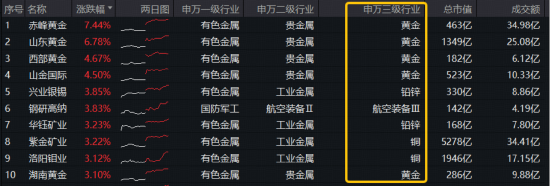
Core Viewpoint - The expectation of a Federal Reserve interest rate cut has increased due to disappointing non-farm payroll data, leading to a surge in gold prices, with COMEX gold futures surpassing $3,400 [1][4]. Group 1: Market Performance - On August 4, A-share gold stocks were catalyzed by rising gold prices, with five gold industry stocks among the top ten gainers in the CSI Nonferrous Metals Index [1]. - Notable performers included Chifeng Jilong Gold Mining Co., which rose over 7%, and Shandong Gold Mining Co., which increased by more than 6% [1][2]. - The CSI Nonferrous Metals Index has seen a year-to-date increase of 24.91%, making it the top-performing sector among 31 first-level industries [6]. Group 2: Investment Opportunities - Citigroup has shifted its stance to a bullish outlook on gold, predicting that gold prices may rise due to a weakening dollar and concerns over inflation related to tariffs [4]. - The long-term trend of global central banks increasing gold holdings remains unchanged, supporting a bullish outlook for gold prices [4]. - The copper market is expected to see price increases due to limited supply and resilient demand, while rare earth prices are anticipated to rise as exports gradually open up [4][6]. Group 3: ETF and Fund Activity - The nonferrous metal sector ETF (159876) has experienced a price increase of 1.74% and has seen a net subscription of 600,000 units, indicating investor confidence in the sector [2]. - The ETF has received a total net inflow of 3.09 million yuan over the past three trading days, suggesting a growing interest in the sector [2]. Group 4: Policy and Economic Drivers - The Ministry of Industry and Information Technology plans to introduce a growth stabilization plan for key industries, including nonferrous metals, which is seen as a continuation of the supply-side reform initiated in 2016 [6]. - As of July 31, 22 out of 27 companies in the CSI Nonferrous Metals Index that disclosed mid-year earnings forecasts expect profitability, indicating strong operational resilience [6].