量化宽松(QE)

Search documents
美联储三连降息白忙活!企业不敢投百姓不敢花,美国要陷僵局?
Sou Hu Cai Jing· 2025-12-16 10:08
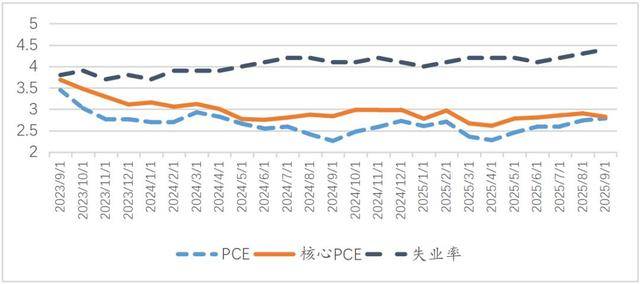
Group 1 - The Federal Reserve announced a third interest rate cut of 25 basis points, bringing the federal funds rate to a range of 3.5%-3.75% since September [1] - Despite the rate cut, the 10-year U.S. Treasury yield increased from 4.09% to 4.18% in December, contrary to the typical expectation that rate cuts would lower yields [2] - The job market is under significant pressure, with a loss of 32,000 private sector jobs in November and an increase in the unemployment rate from 4.0% at the beginning of the year to 4.4% by September, surpassing the long-term sustainable level of 4.2% [4] Group 2 - Core PCE, the inflation indicator favored by the Federal Reserve, decreased slightly from 2.83% in September to 2.8% in November, while the "super core inflation" related to service industries remains high at 3.3% [6] - The U.S. national debt has surpassed $38 trillion, with interest payments projected to reach $1.4 trillion in 2025, equating to $2 million in interest every minute [9] - A 1% rate cut could save nearly $400 billion in interest payments, highlighting the financial implications of interest rate decisions [11] Group 3 - The internal division within the Federal Reserve regarding the rate cut was evident, with a 9-3 vote, indicating significant disagreement on the approach to monetary policy [14] - The rise of AI in the economy presents both opportunities and risks, potentially leading to job losses while also driving investment [16] - Market expectations for inflation remain high, with the implied inflation rate for 10-year Treasury Inflation-Protected Securities (TIPS) above 2% since 2021, currently around 2.26% [18] Group 4 - The Federal Reserve's recent actions, including the purchase of $40 billion in short-term Treasury bonds, suggest a reliance on additional liquidity measures, which some analysts view as a form of "quasi-quantitative easing" [20] - There is a growing concern that if inflation rebounds, the Federal Reserve may be forced to reverse course and raise interest rates, leading to potential volatility in stock and bond markets [20] - The overall economic policy appears to be reactive rather than proactive, with the potential for future interest rate changes to create significant market disruptions [22]

美联储下一任主席生变!沃什的政策主张:降息+缩表
华尔街见闻· 2025-12-16 04:49
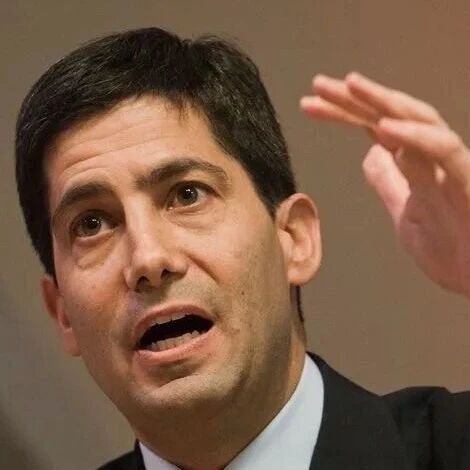
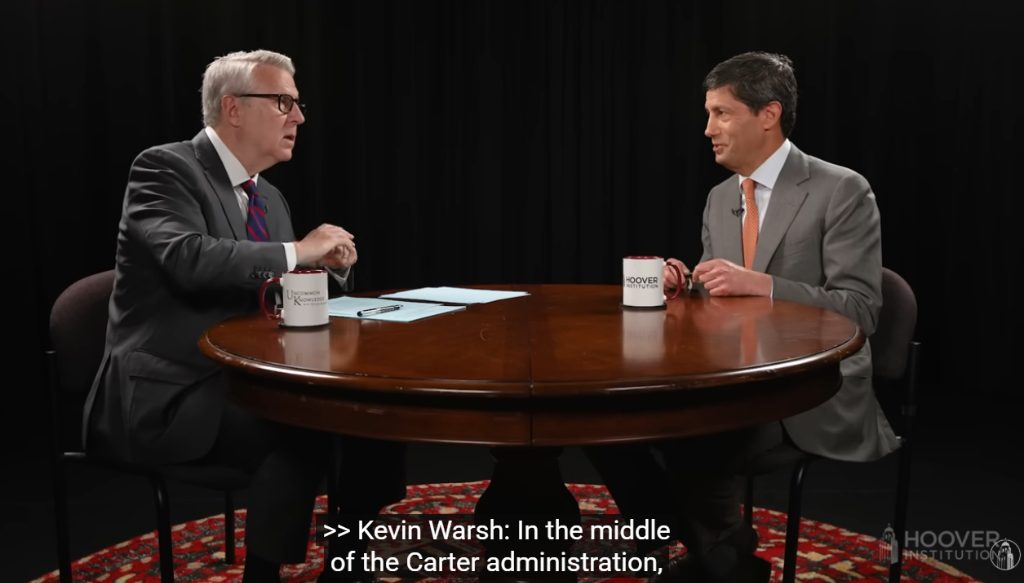
Core Viewpoint - The article discusses the potential candidacy of Kevin Warsh for the position of Federal Reserve Chairman, highlighting the shift in market sentiment and the implications of his policy proposals, particularly the combination of interest rate cuts and balance sheet reduction [1][2][3]. Group 1: Candidate Dynamics - Kevin Hassett, initially seen as a frontrunner for the Federal Reserve Chairman position, faces resistance from Trump's allies, leading to a decline in his market odds from over 80% to 51% [2]. - Kevin Warsh's odds have significantly increased from approximately 11% to 44% following Trump's endorsement [2]. Group 2: Policy Proposals - Deutsche Bank's analysis indicates that if Warsh is elected, he would advocate for a unique policy approach of "simultaneous rate cuts and balance sheet reduction" [3][4]. - The feasibility of this approach hinges on regulatory reforms that would lower banks' reserve requirements, which is currently uncertain [4]. Group 3: Warsh's Background and Critique of Fed Policies - Warsh, a lawyer with extensive experience in both public and private sectors, served as a Federal Reserve Governor from 2006 to 2011 during the global financial crisis [6][7]. - He has been a vocal critic of the Fed's aggressive balance sheet policies over the past 15 years, arguing that quantitative easing (QE) has deviated from the central bank's core responsibilities [8][12]. Group 4: Recent Policy Outlook - Despite advocating for lower interest rates, Deutsche Bank suggests that Warsh is not structurally dovish, having previously held more hawkish views during his tenure at the Fed [22][23]. - Warsh's recent statements indicate a potential support for lowering policy rates, but this may come at the cost of reducing the Fed's balance sheet size, contingent on regulatory reforms [24][25]. Group 5: Market Implications - The article emphasizes that regardless of who is chosen as the next Fed Chairman, the market will likely test the new leader's independence and credibility in achieving inflation targets [26]. - Investors should prepare for a gradual policy adjustment process rather than an immediate shift in Fed policy following the new Chairman's appointment [28].
最能体现沃什政策主张的一场采访:通胀是美联储的一种选择
美股IPO· 2025-12-16 03:52
Group 1 - The core argument presented by Warsh is that inflation is a choice made by the Federal Reserve, not a result of external factors like supply chains or geopolitical issues. He emphasizes that the central bank has the power to control price levels [1][6][30] - Warsh criticizes the complacency of the Federal Reserve during the "Great Moderation" period, arguing that the belief that inflation was dead led to an excessively large balance sheet that contributed to current inflation issues [1][7][32] - He advocates for a "restoration" of the Federal Reserve rather than a complete overhaul, suggesting that reforms should focus on reducing the balance sheet to create space for lower interest rates [2][7][10] Group 2 - Warsh proposes a practical monetary policy approach, emphasizing the need for the Federal Reserve and the Treasury to clearly define their roles, with the Fed managing interest rates and the Treasury handling fiscal accounts [2][10] - He expresses strong opposition to the continuation of quantitative easing (QE) during stable economic periods, arguing that it fosters asset bubbles and undermines the original agreement to exit from crisis measures [8][11][60] - Warsh believes that the Federal Reserve has overstepped its boundaries, transitioning from a "lender of last resort" to an omnipresent "first intervener," which he argues must be curtailed [9][64] Group 3 - He highlights the dangers of the Federal Reserve's actions encouraging excessive fiscal spending by the government, leading to a significant increase in national debt [11][63] - Despite his criticisms, Warsh remains optimistic about the U.S. economy, predicting a productivity boom driven by AI and deregulation, similar to the economic growth seen in the 1980s [12][64] - Warsh asserts that the Federal Reserve has deviated from its core mission of maintaining price stability, which he describes as an "institutional drift" that necessitates reform to regain credibility [13][66]

美联储下一任主席生变!沃什的政策主张:降息+缩表
美股IPO· 2025-12-16 03:52
Core Viewpoint - The article discusses the potential implications of Kevin Warsh's candidacy for the Federal Reserve Chair, highlighting his unique policy stance of "parallel rate cuts and balance sheet reduction" and the challenges this poses in the current regulatory environment [1][6][22]. Group 1: Warsh's Candidacy and Policy Stance - Warsh is seen as a leading candidate for the Federal Reserve Chair, alongside Kevin Hassett, amid concerns about Hassett's close ties to President Trump [3][5]. - Deutsche Bank analyzes that if Warsh is elected, he would support interest rate cuts while also advocating for a reduction in the balance sheet [6][22]. - The feasibility of implementing "parallel rate cuts and balance sheet reduction" hinges on regulatory reforms that lower banks' reserve requirements, which is currently uncertain [7][25]. Group 2: Warsh's Background and Critique of Fed Policies - Warsh has a legal background and extensive experience in both public and private sectors, having served as a Federal Reserve Governor from 2006 to 2011 during the global financial crisis [9][10]. - He has been critical of the Fed's aggressive balance sheet policies over the past 15 years, arguing that quantitative easing (QE) has deviated from the central bank's core responsibilities [11][15]. - Warsh believes that continued QE could lead to inflation and financial stability risks, and he has expressed concerns about the Fed's involvement in fiscal policy matters [15][16]. Group 3: Future Policy Implications - Despite advocating for lower interest rates, Deutsche Bank notes that Warsh is structurally not dovish, particularly regarding balance sheet issues [22]. - The article suggests that the new Fed Chair will face pressure to maintain independence amid Trump's calls for significant rate cuts, which may complicate the credibility of their policy commitments [8][26]. - Investors should prepare for a gradual policy adjustment process rather than an immediate shift in Fed policy following the new Chair's appointment [27][28].
最能体现沃什政策主张的一场采访:通胀是美联储的一种选择
Hua Er Jie Jian Wen· 2025-12-16 03:29
Core Viewpoint - Kevin Warsh, a potential successor to the Federal Reserve Chair, criticizes the current Fed's policies and suggests significant reforms to address inflation, which he claims is a result of poor policy choices rather than external factors [1][5][20]. Group 1: Warsh's Critique of the Federal Reserve - Warsh argues that inflation is a choice made by the Federal Reserve, emphasizing that the central bank has the power to control price levels [5][20]. - He criticizes the Fed's complacency during the "Great Moderation" period, suggesting that the failure to reduce the balance sheet led to the current inflation crisis [1][5]. - Warsh believes that the Fed has deviated from its core mission of maintaining price stability and has engaged in excessive monetary interventions [5][20]. Group 2: Proposed Reforms - Warsh advocates for a "restoration" of the Federal Reserve rather than a complete overhaul, suggesting that the existing framework should be preserved while correcting past mistakes [2][5]. - He proposes reducing the Fed's balance sheet, which currently stands at $7 trillion, to create room for lower nominal interest rates [2][5]. - Warsh emphasizes the need for a clear division of responsibilities between the Federal Reserve and the Treasury, arguing that both should focus on their respective roles without overstepping boundaries [2][5]. Group 3: Economic Outlook - Despite his criticisms, Warsh expresses optimism about the U.S. economy, predicting a productivity boom driven by AI, similar to the economic growth seen during the Reagan era [2][5]. - He believes that rational policy adjustments can lead to significant resilience in the U.S. economy [2][5].
美联储RMP+美财政部美债发行管理≈ QE?
Hua Er Jie Jian Wen· 2025-12-15 06:40
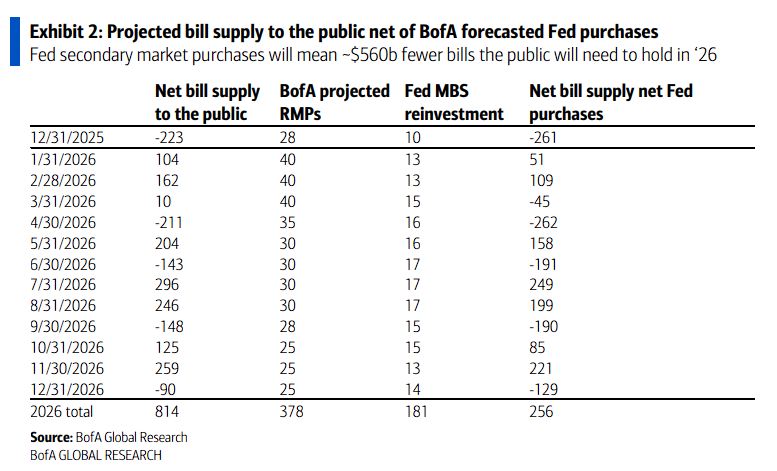
Core Viewpoint - The Federal Reserve's newly launched Reserve Management Purchases (RMPs) plan, in conjunction with the U.S. Treasury's bond issuance strategy adjustments, is creating a market effect similar to quantitative easing (QE) [1] Group 1: RMPs and Market Effects - The RMPs plan, while not traditional QE, allows the Treasury to increase short-term Treasury bill issuance and reduce the supply of medium- to long-term bonds [1][2] - Bank of America (BofA) projects that by 2026, the Federal Reserve will purchase a total of $560 billion in Treasury bills through RMPs and MBS reinvestments, while the Treasury plans to issue an additional $500 billion in short-term bills and reduce medium- to long-term bond issuance by $600 billion [1][2] Group 2: Treasury Issuance Adjustments - The Treasury is expected to issue $500 billion more in short-term bills in 2026 compared to 2025, while reducing medium- to long-term bond issuance by $600 billion [3][4] - This significant shift in supply structure aims to address the large amount of medium- to long-term bonds maturing in 2026 and the increased Treasury buyback operations [4] Group 3: Impact on Treasury Yields - The Treasury has indicated its intention to maintain stable long-term bond auction sizes in the coming quarters, focusing on increasing short-term Treasury bill issuance to meet financing needs [5] - BofA's scenario analysis suggests that a higher issuance of Treasury bills could lead to a net easing effect of 20-30 basis points on the 10-year Treasury yield [5][6] Group 4: Investment Opportunities - BofA recommends investors focus on three trading opportunities: 1. Going long on front-end swap spreads, currently at negative 18 basis points, with risks stemming from unexpected fiscal deficits [8] 2. Going long on 5-year real yields, currently at 103 basis points, supported by a historically accommodative financial environment [8] 3. Selling the volatility spread between 1-year and 10-year rates, currently at 2 basis points, with risks from rising uncertainty in Fed policy [8]

如何理解美联储重启扩表?
一瑜中的· 2025-12-13 14:55
Core Viewpoint - The Federal Reserve announced the initiation of the Reserve Management Purchases (RMP) tool starting December 12, with a plan to purchase $40 billion of short-term Treasury securities in the first month, maintaining a high level of purchases in subsequent months. This RMP is expected to inject approximately $150 billion in reserves into the market, lasting until Q2 2026, primarily focusing on ultra-short-term Treasury securities [2][5][25]. Group 1: Actions by the Federal Reserve - The RMP is a significant highlight of the December FOMC meeting, aimed at maintaining adequate reserve levels and addressing seasonal fluctuations in the Treasury General Account (TGA) [5][6]. - The RMP will primarily purchase short-term Treasury securities, with 75% of purchases targeting securities with maturities of 1-4 months [25][26]. - The RMP is expected to last at least until Q2 2026, with a target reserve balance of around $3 trillion, requiring an injection of approximately $150 billion in reserves [6][28]. Group 2: Economic Implications of RMP - The RMP is expected to improve short-term liquidity, benefiting the stock market by facilitating "loose trading" conditions. However, it is not equivalent to quantitative easing (QE) and may have limited effects on long-term interest rates and financing costs for the real economy [7][35]. - The RMP's operational scale is designed to counteract seasonal liquidity pressures, particularly during tax payment periods, which can tighten market liquidity [6][29]. Group 3: Current Liquidity Conditions - The current reserve levels are slightly below the reasonable range, with the reserve balance to nominal GDP ratio at 9.5% and the reserve balance to total bank assets ratio at 11.8% [8][45]. - Maintaining adequate reserve levels is crucial for the effective implementation of the Federal Reserve's "floor system" monetary policy framework, which relies on sufficient reserves to control market interest rates [9][51]. - The liquidity conditions are tighter than desired, but the situation is better than during the previous QT phase, reducing the risk of a liquidity crisis [41][60].

美国新一轮QE开启,2026有哪些搞钱渠道?
Sou Hu Cai Jing· 2025-12-12 10:35
12月11日,美联储降息尘埃落地,美联储FOMC会议公布降息25bp至3.5%-3.75%的利率水平,并发布新一期联储官员预测和利率点阵图,点阵图指引2026年 降息幅度仍然维持25bp。 此次会议,除了降息外,更引人关注的是美联储扩表的消息,本次会议宣布开始扩表,增加短债的购买,根据纽约联储的披露,本月的购买计划为约400亿 美元。本次的扩表为技术性扩表RMP(Reserve Management Purchases),鲍威尔强调,本次扩表的唯一目的是在较长时间内维持充足的储备金供应,以缓 解货币市场压力,不代表货币政策倾向的变化。 2022年6月1日至今,美联储缩表已持续了大约3年半的时间,此次重启扩表与以往有何不同,年关将至,扩表又将如何影响资本市场,投资者们又该如何安 排2026年的投资布局呢? 技术性扩表,力度有限 "扩表"(资产负债表扩张)是中央银行(如美联储、中国人民银行)通过购买金融资产向经济体系注入流动性的货币政策操作,通常通过量化宽松 QE 实 施。简单来说,就是央行"印钱"买资产,让市场上钱变多。2008年金融危机以来,美联储共实施了四轮大规模的扩表。 2008年11月至2010年3月的 ...

如何理解美联储重启扩表?
Huachuang Securities· 2025-12-12 04:28
Group 1: Federal Reserve Actions - The Federal Reserve announced the restart of the Reserve Management Purchases (RMP) tool, starting December 12, with an initial plan to purchase $40 billion in short-term Treasury securities in the first month[2] - The RMP is expected to inject approximately $150 billion in reserves into the market, continuing until Q2 2026[4] - The purchase structure will focus on ultra-short-term Treasury securities, with 75% of purchases planned for maturities of 1-4 months[4] Group 2: Economic Implications - The RMP aims to improve short-term liquidity, benefiting the U.S. stock market's "loose trading" environment[5] - However, RMP is not equivalent to quantitative easing (QE) and is expected to have limited effects on long-term interest rates and the cost of financing for the real economy[5] - The RMP's operational scale may need to be adjusted based on seasonal fluctuations in the Treasury General Account (TGA) and overall liquidity demands[4] Group 3: Current Liquidity Conditions - The current reserve levels are slightly below the reasonable range, with reserves to nominal GDP ratio at 9.5% and reserves to total bank assets at 11.8%[7] - The reasonable reserve balance is estimated to be around $3 trillion, indicating a need for the RMP to maintain adequate liquidity levels[22] - Compared to the end of QT-1, the current reserve levels are more ample, as they were 6.4% and 7.9% respectively at that time[7] Group 4: Market Indicators - The effective federal funds rate (EFFR) and the secured overnight financing rate (SOFR) have shown signs of liquidity tightening, with SOFR recently exceeding the interest on excess reserves (IOER) for consecutive weeks[8] - The EFFR-IOER spread has been narrowing, indicating a potential liquidity shortage in the banking system, although the situation is better than in 2019[9]
美联储降息并重启QE,每月接盘400亿美元美债!新一轮放水期来了
Sou Hu Cai Jing· 2025-12-12 01:37
Group 1 - The Federal Reserve's decision to lower the federal funds rate by 25 basis points aligns with market expectations, but there are notable internal divisions among voting members regarding future monetary policy directions [1] - Among the 12 voting members, 9, including Chairman Powell, supported the 25 basis point cut, while one member proposed a more aggressive 50 basis point cut, and two members opposed any rate cut at this stage [1] - There is significant disagreement among Federal Reserve officials regarding the interest rate path for 2025, indicating future policy uncertainty [1] Group 2 - The upcoming initiation of a bond purchasing program by the Federal Reserve signals a strong easing stance, commonly referred to as quantitative easing (QE), which directly injects liquidity into the financial market [2][4] - The Federal Reserve plans to purchase $40 billion in short-term U.S. Treasury securities starting December 12, which will provide liquidity to the market [5] - Unlike ordinary market participants, the Federal Reserve injects "new money" into the system when purchasing financial assets, which can significantly amplify the money supply through the money multiplier effect [7][9] Group 3 - Historical data shows that the last round of quantitative easing, which began in March 2020 and ended in early 2022, led to substantial increases in stock indices, with the Dow Jones rising 58% and the Nasdaq increasing by 85% during that period [9] - The previous round of QE was followed by a period of high inflation, with monthly CPI growth exceeding 9%, highlighting the potential inflationary risks associated with such monetary policies [11] - The Federal Reserve's current decision to purchase $40 billion in Treasury securities is seen as a response to a less optimistic economic outlook, with GDP growth projected at 1.7% for the year [12][13] Group 4 - The influence of former President Trump on the Federal Reserve's decisions is notable, as he has indicated intentions to nominate a loyalist to replace Chairman Powell, which could lead to more aggressive easing measures in the future [14]