
A股市场

Search documents
A股的牛来了,又走了?
Hu Xiu· 2025-06-26 12:59
Group 1 - The recent surge in A-shares is primarily driven by the approval of a "virtual asset trading license" by Guotai Junan International, allowing direct trading of cryptocurrencies on their platform, which has significantly boosted market confidence [1] - The market experienced a sharp decline after the initial surge, highlighting the challenges of timing short-term market movements despite a generally positive long-term outlook for value investors [1][2] - Economic data has shown resilience despite initial pessimism following the US-China trade conflict, with export figures remaining strong and consumer policies supporting stability [4][5] Group 2 - The current economic environment is characterized by a downward trend in fundamentals, yet there are structural opportunities in certain sectors, particularly in technology, which is seen as a growth driver [6][7] - The concept of technological advancement is emphasized as a key factor in economic growth, with significant breakthroughs in areas like artificial intelligence and nuclear fusion indicating a potential for recovery and prosperity [8] - The market is experiencing a rotation phenomenon, where sector performance varies significantly, reflecting a shift from a bear market to a bull market, with indices showing upward movement amidst this rotation [9][10] Group 3 - Financial stocks have played a crucial role in driving the index above key resistance levels, supported by a macro backdrop of declining interest rates, while technology stocks are also showing signs of recovery [11] - The current market environment is described as both optimistic and challenging for investors, with the need for a disciplined approach to avoid the pitfalls of chasing trends during periods of volatility [11]
股指期货日报:内外利好,股指延续上涨-20250625
Nan Hua Qi Huo· 2025-06-25 09:46
股指日报 股指期货日报 2025年6月25日 王梦颖(Z0015429)、廖臣悦 (F03120676) 投资咨询业务资格:证监许可【2011】1290号 内外利好,股指延续上涨 市场回顾 今日股指放量上涨,以沪深300指数为例,收盘上涨1.44%。从资金面来看,两市成交额上涨1881.59亿元。 期指均放量上涨。 重要资讯 1. 央行等六部门联合印发《关于金融支持提振和扩大消费的指导意见》,从支持增强消费能力、扩大消费领 域金融供给、挖掘释放居民消费潜力、促进提升消费供给效能、优化消费环境和政策支撑保障等六个方面提 出19项重点举措。《意见》明确,设立服务消费与养老再贷款,额度5000亿元。健全投资和融资相协调的资 本市场功能,推动中长期资金入市,促进资本市场稳定发展。 2. 以色列和伊朗同意全面停火!伊朗最高国家安全委员会发表声明,宣布与"以色列及其支持者"停火。 核心观点 昨日收盘后央行等六部门联合印发《关于金融支持提振和扩大消费的指导意见》,文件中明确设立额度5000 亿元的服务消费与养老再贷款。再加上以色列和伊朗同意全面停火。内外双重利好下今日股指再度放量大 涨。从期指算术平均基差来看,各期指均贴水 ...

局势突变!A股这次能突破3400吗?
Sou Hu Cai Jing· 2025-06-24 02:26
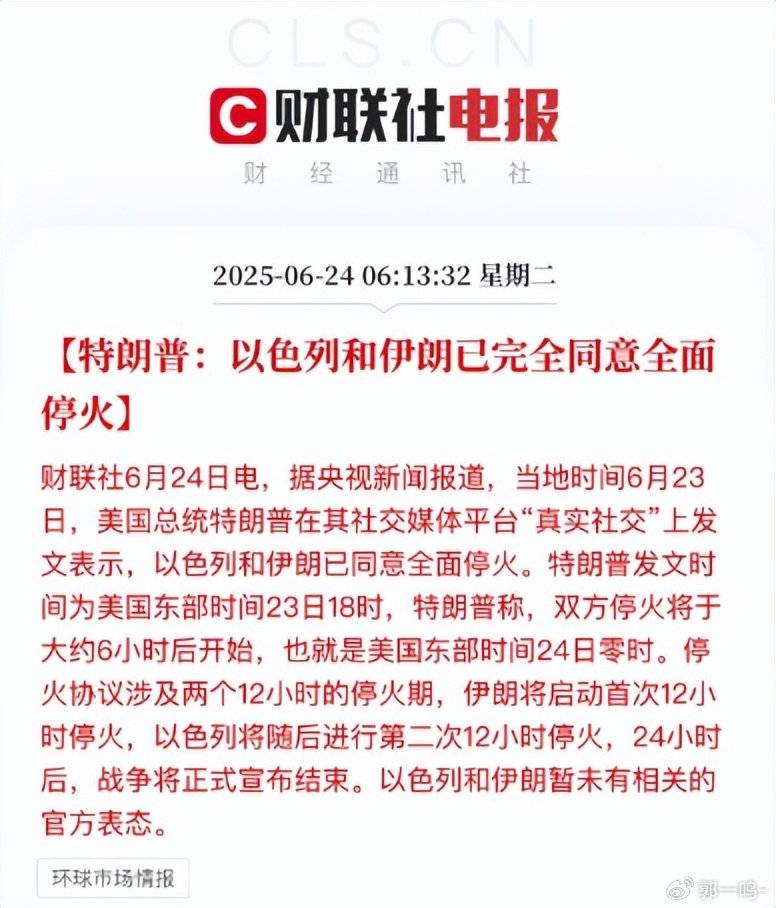
据CCTV国际时讯援引路透社报道,一名伊朗高级官员向路透社证实,伊朗已接受卡塔尔参与调解、美国提出的与以色列停火方案。就在早些时 候,美国总统特朗普宣布以色列和伊朗将分阶段全面停火。这个消息一出,在全球市场或将激起千层浪,对A股也势必产生深远影响。 2、避险资产也将面临回调压力。黄金、军工等冲突受益板块此前因市场恐慌情绪被推高,随着局势缓和,获利资金或加速离场。投资者需警惕前 期涨幅过高的避险个股出现技术性回调风险; 简单说,如果伊以真的停火,短期或有以下影响: 1、中东作为全球能源核心枢纽,其局势变化直接牵动大宗商品市场与全球供应链神经。若伊以停火落地,最直接的影响将体现在能源领域。霍尔 木兹海峡封锁风险大幅降低,国际油价短期暴涨预期随之消退。对A股而言,航空、交运等成本敏感型行业将率先受益,尤其是燃油成本下降直 接转化为企业利润,有望推动相关板块估值修复; 3、从更宏观的视角看,全球供应链有望迎来修复。此前因地缘冲突引发的运输中断、成本攀升等问题,将逐步得到缓解,A 股出口导向型企业的 经营压力随之减轻。同时,北向资金因避险情绪产生的大幅波动也将趋于平稳,为市场注入稳定性。 据中国基金报消息,美联储理事克 ...

A股开盘,上证指数跌0.04%,深证成指涨0.26%,创业板指涨0.35%。
news flash· 2025-06-24 01:30
A股开盘,上证指数跌0.04%,深证成指涨0.26%,创业板指涨0.35%。 ...

看好A股!近六成百亿私募满仓
2 1 Shi Ji Jing Ji Bao Dao· 2025-06-23 12:48
Group 1 - The average position of billion-level private equity funds has reached 80.15%, significantly higher than the overall level of 74.25% [1][4] - Nearly 60% of billion-level private equity funds are operating at full positions, indicating a strong bullish signal [1][5] - In contrast, the average position of small and medium-sized private equity funds has decreased, with those in the 10-20 billion range dropping from 74.47% to 68.57% [2][5] Group 2 - The decline in average positions among small and medium-sized private equity funds is the main reason for the overall decrease in stock private equity positions [2] - Factors contributing to the high positions of large private equity funds include recognition of overall market valuation, long-term economic outlook, and the ability to identify structural opportunities [6][10] - Large private equity funds are more inclined to maintain high positions due to their strong capital and professional research teams, reflecting a positive outlook on future market conditions [5][6] Group 3 - Recent market conditions have led to a cautious risk appetite, with average daily trading volume in A-shares declining from 1.4 trillion to 1.2 trillion [8] - Despite the cautious sentiment, various funds are still flowing in, including foreign capital and increased issuance of equity funds [8] - Some private equity institutions believe that while there are no significant systemic opportunities, there are still structural highlights in the market [9]
市场分析:软件半导体领涨,A股震荡上行
Zhongyuan Securities· 2025-06-23 11:37
Market Overview - On June 23, the A-share market opened lower but rose slightly, with the Shanghai Composite Index finding support around 3348 points and closing at 3381.58 points, up 0.65%[4][9]. - The Shenzhen Component Index closed at 10,048.39 points, up 0.43%, while the ChiNext Index rose by 0.39%[10][9]. - Total trading volume for both markets reached 11,471 billion yuan, above the median of the past three years[4][17]. Sector Performance - Strong performers included banking, software development, semiconductors, and energy metals, while sectors like liquor, aviation, engineering machinery, and electricity showed weaker performance[4][9]. - Over 80% of stocks in the two markets rose, with notable gains in energy metals, shipping ports, and software development[9]. Valuation and Investment Strategy - The average P/E ratios for the Shanghai Composite and ChiNext are 13.85 times and 36.04 times, respectively, indicating a suitable environment for medium to long-term investments[4][17]. - The report suggests focusing on investment opportunities in software development, semiconductors, banking, and chemical pharmaceuticals in the short term[4][17]. Economic Context - China's economy continues to show moderate recovery, driven by consumption and investment, with long-term capital inflows increasing and ETF sizes growing steadily[4][17]. - The Federal Reserve maintained interest rates in June, but uncertainty remains regarding future rate cuts, which could significantly boost global risk appetite[4][17]. Risks - Potential risks include unexpected overseas economic downturns, domestic policy changes, and geopolitical tensions affecting global trade and energy supplies[5][4].
宏信证券一周市场回顾(2025.06.16—2025.06.20)
Hongxin Security· 2025-06-23 08:47
Market Performance - The Shanghai Composite Index fell by 0.51%, closing at 3359.90 points[1] - The Shenzhen Component Index decreased by 1.16%, ending at 10005.03 points[1] - The ChiNext Index dropped by 1.66%, closing at 2009.89 points[1] Sector Performance - The banking sector showed a gain of 2.63%, while the communication sector increased by 1.58%[3] - The beauty and personal care sector declined by 5.86%, and the textile and apparel sector fell by 5.12%[3] - The pharmaceutical and biological sector decreased by 4.35%[3] Margin Trading - The total margin trading balance reached 18124.82 billion yuan, a decrease of 0.23% from the previous week[15] - Margin trading balance accounted for 2.29% of the A-share market's circulating market value, an increase of 0.58%[15] - The total margin trading transaction volume was 5202.05 billion yuan, down by 11.73% from the previous week[16] Industry Trends - The top five industries with increased margin trading balances were pharmaceuticals (1.375 billion yuan), mining (0.405 billion yuan), and commercial trade (0.300 billion yuan)[22] - The top five industries with decreased margin trading balances included non-ferrous metals (-1.959 billion yuan) and electronics (-1.314 billion yuan)[22]
A股开盘,上证指数跌0.31%,深证成指跌0.55%,创业板指跌0.64%。
news flash· 2025-06-23 01:30
A股开盘,上证指数跌0.31%,深证成指跌0.55%,创业板指跌0.64%。 ...
市场或有反复,但预计大盘仍保持震荡调整态势
Hua Lian Qi Huo· 2025-06-22 12:08
Report Industry Investment Rating No information provided. Core View of the Report The market may fluctuate, but the broader market is expected to maintain a volatile adjustment trend. With the realization of positive factors and the reality of weak fundamentals, and facing pressure above 3400 points, there is insufficient momentum for further upward movement. It is recommended for short - term trading. Hold short positions in IM2507 and long positions in MO2509 - P - 5600 [11]. Summary by Related Catalogs 1. Fundamental View - **Market Performance**: Last week, the broader market first rose and then fell, with a slight adjustment. The four major indices fluctuated and adjusted, and small and medium - cap stock indices declined more. All style indices fell, with the growth - style index having the largest decline. Most Shenwan industries fell, with textile and apparel, medicine, non - ferrous metals, and tourism sectors leading the decline. Only the banking, communication, and electronics industries rose [6][8][14]. - **Economic Data**: In May 2025, the manufacturing PMI was 49.5%, up 0.5 percentage points from the previous month; the non - manufacturing PMI was 50.3%, down 0.1 percentage points from the previous month. After Sino - US negotiations, tariffs will be reduced within 90 days, and the PMI rebounded. In terms of sub - items, production and demand recovered in May, with production up 0.9%, new orders up 0.6%, and new export orders up 2.8%. Most other indices also increased, while the inventory of finished products decreased continuously by 0.8%. In terms of prices, the ex - factory price and the purchase price of major raw materials continued to decline [8]. - **Policy**: The Politburo set the tone for the real estate market to stop falling and stabilize, boosting the capital market. The central bank created two new monetary policy tools, cut the reserve requirement ratio, and lowered interest rates to reduce the stock mortgage rate. The CSRC proposed mergers, acquisitions, and market value management to enhance market activity. The implementation plan for promoting the entry of long - term funds into the market was officially released, which is expected to add 800 billion yuan of long - term funds to the A - share market annually [8]. - **Earnings**: In terms of revenue, the revenue growth rates of the ChiNext, ChiNext, and CSI 500 indices increased, while those of the CSI 1000, SSE Composite Index, SSE 50, and CSI 300 indices declined. In terms of net profit attributable to the parent, except for the SSE Composite Index, the net profit growth rates of the ChiNext, Shenzhen Component Index, CSI 1000, SSE 50, CSI 500, and CSI 300 indices all increased significantly. Although the performance of the entire A - share market shows signs of stabilization, the 30% increase in tariffs imposed by the US since the second quarter may affect the fundamentals of the A - share market, and the A - share performance may bottom out again [8]. - **Valuation**: The valuation of the SSE Composite Index is 14.6431, at the 68.72 percentile since 2010. The valuation of the ChiNext is relatively low [9][65]. - **Funding**: From April 7 to June 20, 2025, the ETF scale increased by 138.3 billion yuan, with an increase of 12.9 billion yuan last week, which was the first increase after continuous reductions since May. In terms of margin trading, there was a net inflow of 274.8 billion yuan in 2024; as of June 12, 2025, there was a net outflow of 44.9 billion yuan in 2025, and a net inflow of 2 billion yuan in the first five trading days. At the end of 2024, the assets of the national team and insurance funds showed a net increase, while the assets of the Shanghai - Hong Kong and Shenzhen - Hong Kong Stock Connect showed a net decrease. Specifically, the assets of Central Huijin and insurance funds increased [9]. 2. Strategy View and Outlook - **Market Outlook**: The broader market showed a weak and volatile trend last Friday, with a brief rebound in the morning. The performance of the four major indices was divergent, with large - cap stock indices rising and small and medium - cap stock indices falling. The ratio of rising to falling stocks in individual sectors rebounded from a low level by 0.43. After two consecutive days of adjustment, the Hong Kong stock market rebounded, and market sentiment may have improved. Sino - US negotiations achieved important progress, and the positive factors in mid - May were realized. With the implementation of reserve requirement ratio cuts and interest rate cuts, subsequent policies may enter a wait - and - see period, and the focus of the market may shift to the domestic fundamentals. From the recent CPI and PPI data, CPI and PPI continued to decline more than expected, and the problem of domestic over - capacity is still significant. In addition, the negative impact of the additional tariffs imposed this year on the fundamentals may gradually emerge. Technically, after continuous volatile climbs, the short - term technical indicators are under pressure. The broader market, CSI 500, and CSI 1000 indices showed divergence structures in the minute - level sequences, and the broader market faced pressure when continuously attacking 3400 points. Technically, it may face adjustment. In summary, with the realization of positive factors and the weak reality, and facing pressure above 3400 points, there is insufficient momentum for further upward movement. It is expected that the broader market will continue to maintain a volatile adjustment, and the market may fluctuate. It is recommended for short - term trading [11]. - **Operation Suggestion**: Hold short positions in IM2507 and long positions in MO2509 - P - 5600 [11]. 3. Index and Industry Trend Review - **Index Performance**: Last week, the broader market first rose and then fell, with a slight adjustment. The four major indices fluctuated and adjusted, and small and medium - cap stock indices declined more [6][14]. - **Style and Industry Index**: All style indices fell last week, with the growth - style index having the largest decline. Most Shenwan industries fell, with textile and apparel, medicine, non - ferrous metals, and tourism sectors leading the decline. Only the banking, communication, and electronics industries rose [8][16]. 4. Main Contract and Basis Trend - **Index Adjustment**: The four major indices fluctuated and adjusted, with small and medium - cap stock indices having more adjustments. On Friday, due to delivery, the basis narrowed and there was a premium [19]. - **Arbitrage Relationship**: In terms of arbitrage among main contracts, IC/IF and IC/IH may decline again after a downward rebound, IH/IF stabilizes after a volatile adjustment, and IM/IF and IM/IH continue to decline after a downward rebound [24]. 5. Policy and Economy - **PMI Data**: In May 2025, the manufacturing PMI was 49.5%, up 0.5 percentage points from the previous month; the non - manufacturing PMI was 50.3%, down 0.1 percentage points from the previous month. After Sino - US negotiations, tariffs will be reduced within 90 days, and the PMI rebounded. In terms of sub - items, production and demand recovered in May, with production up 0.9%, new orders up 0.6%, and new export orders up 2.8%. Most other indices also increased, while the inventory of finished products decreased continuously by 0.8%. In terms of prices, the ex - factory price and the purchase price of major raw materials continued to decline [8][28]. - **PPI and Inventory Cycle**: Generally, PPI leads the inventory cycle (ranging from 1 month to 1 year, with an average of about half a year). PPI bottomed out and rebounded in June 2023, weakened after two months, and has seen a continuous narrowing of the decline since March 2024, with the decline widening again since July and narrowing again until March 2025, and then widening for three consecutive months. In April, the revenue of industrial enterprises fell back to 3.2%, and the inventory fell by 3.9% in March. In the past two years, inventory and revenue have shown a steady recovery, in the stage of active inventory replenishment. With the decline of PPI again, it is expected to enter the stage of passive inventory replenishment [30]. - **Social Financing and Credit**: In May 2025, the year - on - year increase in social financing continued to be 224.6 billion yuan, with government bonds increasing by 236.7 billion yuan, and the increase significantly narrowed. The year - on - year increase in credit was 330 billion yuan less, mainly due to a 210 - billion - yuan decrease in corporate loans, including a 23 - billion - yuan increase in short - term loans and a 17 - billion - yuan decrease in medium - and long - term loans [32]. - **Medium - and Long - Term Credit Growth**: The medium - and long - term credit growth rate has been falling for 24 consecutive months to 6.78% as of May 2025, hitting a new low since 2011 [7][35]. - **Policy on Long - Term Funds**: The implementation plan for promoting the entry of long - term funds into the market aims to increase the investment scale and proportion of long - term funds in A - shares. For public funds, it is clear that the market value of A - shares held by public funds should increase by at least 10% annually in the next three years. For commercial insurance funds, large - scale state - owned insurance companies are expected to invest 30% of their newly added premiums in A - shares annually starting from 2025, which means adding at least several hundred billion yuan of long - term funds to A - shares annually. The second - batch pilot program for long - term stock investment of insurance funds will be implemented in the first half of 2025, with a scale of no less than 100 billion yuan, and will be gradually expanded later. The implementation plan also extends the assessment cycle, aiming to improve the stability of long - term fund investment behavior [37]. - **Other Policies**: The Politburo set the tone for the real estate market to stop falling and stabilize, boost the capital market, and promote the entry of long - term funds. The central bank created new monetary policy tools, including a securities, funds, and insurance companies swap facility with an initial scale of 500 billion yuan, and a stock repurchase and increase loan with an initial scale of 300 billion yuan. There were also reserve requirement ratio cuts, interest rate cuts, and measures to support the real estate market and the real economy, such as increasing the quota of re - loans for scientific and technological innovation and technical transformation, setting up a "service consumption and elderly care re - loan", and creating a risk - sharing tool for scientific and technological innovation bonds [38][39][41]. 6. Revenue and Net Profit of Each Index - **Annual Report**: Except for the CSI 500, the year - on - year growth rates of the operating revenues of each index in the 2024 annual report declined. In terms of net profit attributable to the parent, the year - on - year growth of the SSE 50 index continued, the CSI 300 index had a slight increase, and the CSI 500, ChiNext, and Shenzhen Component Indexes declined to varying degrees [50]. - **First - Quarter Report**: In terms of revenue, the revenue growth rates of the Shenzhen Component Index, ChiNext, and CSI 500 indices increased, while those of the CSI 1000, SSE Composite Index, SSE 50, and CSI 300 indices declined. In terms of net profit attributable to the parent, the net profit growth rates of the ChiNext, Shenzhen Component Index, CSI 1000, SSE 50, CSI 500, CSI 300, and SSE Composite Indexes all increased significantly [56]. - **Performance Outlook**: Although the performance of the entire A - share market shows signs of stabilization, the 30% increase in tariffs imposed by the US since the second quarter may affect the fundamentals of the A - share market, and the A - share performance may bottom out again [60]. 7. Valuation - **SSE Composite Index Valuation**: The valuation of the SSE Composite Index is 14.6431, at the 68.72 percentile since 2010 [9][65]. - **Valuation of Each Index**: The report provides the PE percentiles of each index from 2010 to June 2025, showing that the ChiNext has a relatively low valuation [66]. 8. Funding - **ETF Scale**: From April 7 to June 20, 2025, the ETF scale increased by 138.3 billion yuan, with an increase of 12.9 billion yuan last week, which was the first increase after continuous reductions since May [69]. - **Margin Trading**: There was a net inflow of 274.8 billion yuan in margin trading in 2024; as of June 12, 2025, there was a net outflow of 44.9 billion yuan in 2025, and a net inflow of 2 billion yuan in the first five trading days [76]. - **Primary Market Financing**: As of last weekend, the IPO financing in 2023 was 356.5 billion yuan, 67.3 billion yuan in 2024, and 37.1 billion yuan in 2025 [79]. - **ETF Share and Scale**: In the week from June 13 to June 20, 2025, the ETF share increased by 29.252 billion shares (+0.83%), reaching 3556.49 billion shares; the total scale decreased by 37.137 billion yuan (-0.77%), to 4812.054 billion yuan [82]. - **Secondary Market Shareholder Transactions**: Last week, major shareholders in the secondary market continued to have a net reduction of 3.58 billion yuan [85]. - **Restricted - Share Unlocking**: The unlocking volume from March to June is not large [88].
中国银河证券:下半年A股整体将呈现震荡向上的行情特征
news flash· 2025-06-22 09:25
Core Viewpoint - China Galaxy Securities predicts that the A-share market will exhibit a fluctuating upward trend in the second half of 2025, supported by favorable valuation levels and policy measures aimed at increasing long-term capital inflow [1] Group 1: Market Valuation and Trends - Current A-share valuations are at a historical medium level and are relatively low compared to overseas mature markets, indicating a high investment cost-performance ratio due to risk premiums and dividend yields [1] - The overall market is expected to show a fluctuating upward trend in the second half of 2025, although attention should be paid to uncertainties from overseas and the pace of domestic economic recovery [1] Group 2: Policy and Capital Inflow - Policies are being implemented to encourage long-term capital to enter the market, alongside the expansion of equity public funds and supportive policy tools, which are likely to maintain a stable and improving capital environment for A-shares [1] Group 3: Sector Focus - Technology innovation is identified as the core driver for the new supply-side reform in A-shares, with the TMT sector experiencing a decrease in crowding and a recovery in first-quarter activity, leading to accelerated capital expenditure in specific sub-industries [1] - Investment opportunities are suggested in areas such as AI computing power, AI applications, embodied intelligence, and innovative pharmaceuticals [1] - Defensive assets like dividend stocks are highlighted for their protective attributes, with state-owned enterprises offering high dividend yields aligning well with medium to long-term capital allocation needs [1]
