货币政策
Search documents
把“促进物价合理回升”作为货币政策重要考量
Jing Ji Ri Bao· 2026-01-21 22:25
Core Viewpoint - The 2025 Central Economic Work Conference emphasizes "promoting reasonable price recovery" alongside "economic stable growth" as a key consideration for monetary policy, marking a significant shift in focus [1]. Group 1: Monetary Policy Considerations - The increasing importance of price stability in monetary policy has been evident, with a shift from focusing solely on economic growth in 2022 to incorporating price considerations in 2023 and 2024 [1]. - The 2025 conference explicitly positions "economic stable growth" and "reasonable price recovery" as intertwined goals for monetary policy, providing guidance for navigating the current macroeconomic landscape [1]. Group 2: Impact on Corporate Profitability - Anchoring on "promoting reasonable price recovery" can help widen corporate profit margins, which is essential for enhancing corporate earnings and supporting resident income growth [2]. - Persistent low prices can harm consumers in the long run by compressing corporate profits, leading to increased competition and potential market exits, which may reduce wage income and employment opportunities [2]. Group 3: Financing Costs and Investment Willingness - Maintaining reasonable price levels can lower actual financing costs and debt burdens, thereby enhancing corporate investment and consumer spending willingness [3]. - Historical examples, such as the Great Depression, illustrate that low price levels can hinder effective monetary policy, emphasizing the need for a focus on price recovery to achieve stable growth [3]. Group 4: Market Confidence and Economic Momentum - Promoting reasonable price recovery can bolster market confidence, which is crucial for sustaining and expanding economic growth [4]. - In a "strong supply, weak demand" environment, improving price levels can enhance business expectations and consumer confidence, creating a positive feedback loop that stimulates demand [4]. Group 5: Challenges in Implementation - The implementation of monetary policy aimed at price recovery must carefully consider the meaning of "reasonable," avoiding the pursuit of inflation while ensuring a balanced approach [5]. - The multifaceted causes of low price growth, including external factors like trade protectionism and internal issues like aging population and income distribution, require coordinated efforts between monetary and fiscal policies to effectively address structural barriers [5].
焦点访谈|稳中求进、提质增效 经济“活水”这样浇灌美好生活
Yang Shi Wang· 2026-01-21 13:35
Core Viewpoint - The focus is on the implementation of the "14th Five-Year Plan" starting in 2026, emphasizing high-quality development and the support of the real economy through monetary policy measures [1][2]. Monetary Policy - The People's Bank of China (PBOC) will continue to implement a moderately loose monetary policy to support stable economic growth and high-quality development, ensuring a favorable financial environment for the "14th Five-Year Plan" [2]. - The PBOC has a rich toolbox of monetary policy instruments, including traditional tools like reserve requirement ratio (RRR) cuts and interest rate reductions, as well as structural monetary policy tools [2][3]. - There is still room for further RRR and interest rate cuts in 2026, with the current average RRR at 6.3% and a stabilized net interest margin of 1.42% observed since 2025 [3]. Structural Support - The PBOC aims to optimize the design and management of structural monetary policy tools to enhance support for key areas such as domestic demand expansion, technological innovation, and small and micro enterprises [5]. - Specific measures include a dedicated 500 billion yuan for consumer and elderly care loans, increasing the technology innovation loan quota to 1.2 trillion yuan, and raising the agricultural and small enterprise loan quotas to 4.35 trillion yuan [5]. Financial Stability - The PBOC emphasizes the importance of maintaining financial market stability to support high-quality development of the real economy, including managing expectations and stabilizing the RMB exchange rate [9]. - A comprehensive macro-prudential management system will be established to address the interconnections between macroeconomic operations and financial risks [7]. Urban Development - In 2026, urban renewal projects will be initiated, focusing on improving living conditions and environments, with a commitment to high-quality urban development [11]. - The Ministry of Housing and Urban-Rural Development will implement city-specific strategies to address urgent community issues, such as parking and aging infrastructure [13]. Real Estate Market - The real estate market will be stabilized through precise policies tailored to individual cities, supporting reasonable financing needs of real estate companies and addressing housing demands [15][16]. - The focus will be on enhancing the quality of housing through better standards, designs, materials, and maintenance, transitioning from new construction to the renovation of existing properties [15][16].
【环球财经】土耳其央行:短期通胀或有波动 中期仍将回落
Xin Hua Cai Jing· 2026-01-21 12:08
与此同时,食品价格仍存在不确定性。他表示,食品通胀在2025年下半年再度波动,且不排除在2026年 初阶段性反弹的可能性。但在市场情绪改善以及企业和消费者行为逐步调整的带动下,总体通胀仍将延 续回落态势。 在经济形势方面,他指出,2025年下半年汇率保持相对稳定,通过汇率传导渠道对抑制通胀形成支撑; 同时,信贷和融资条件趋紧,抑制了内需扩张。但劳动力市场潜在压力有所上升,产能利用率降至 74.5%,劳动力闲置率升至29.4%。 (文章来源:新华财经) 新华财经伊斯坦布尔1月21日电 土耳其央行行长法提赫·卡拉汉近日公开表示,今年前两个月通胀走势可 能存在一定的上行风险,但在服务业价格黏性缓解等因素支撑下,2026年通胀有望总体保持下行趋势。 土耳其央行将坚持紧缩的货币政策立场,直至实现价格稳定目标。 法提赫·卡拉汉称,土耳其2025年全年通胀率为30.9%,通胀回落趋势已在各主要消费类别中逐步显现。 其中,服务业对通胀降温发挥了关键作用,这主要得益于私立学校收费上限的实施以及租金上涨持续放 缓,推动结构性价格黏性下降。土耳其央行数据显示,多项核心通胀指标已降至2021年9月以来最低水 平,经季调后的月度涨幅普 ...
张帆:何为宏观经济学?
Xin Lang Cai Jing· 2026-01-21 11:18
Core Insights - The lecture provides an overview of macroeconomics, emphasizing its importance in understanding overall economic performance and its implications for businesses and personal finance [3][7]. Group 1: Structure of Economics - Economics is broadly divided into microeconomics, macroeconomics, and econometrics, with macroeconomics encompassing various sub-disciplines such as monetary economics and international finance [4]. - Macroeconomic education is tiered into introductory, intermediate, and advanced levels, with intermediate macroeconomics being the most commonly taught at the undergraduate level [4][5]. Group 2: Importance of Macroeconomics - Macroeconomics studies the overall economic performance, focusing on long-term growth and short-term fluctuations, which are critical for businesses and investors [5][7]. - Understanding macroeconomic variables is essential for making informed decisions in business management and personal finance, as economic conditions directly impact individual livelihoods [7][8]. Group 3: Key Issues in Macroeconomics - Long-term economic growth is a primary focus, measured by Gross Domestic Product (GDP), which represents the total market value of all final goods and services produced [8][10]. - Short-term economic fluctuations, particularly unemployment and inflation, are also crucial areas of study, with policies aimed at stabilizing these fluctuations being vital for economic health [12][14]. Group 4: Policy Responses - Fiscal policy, involving government spending and taxation, and monetary policy, which adjusts the money supply and interest rates, are the main tools for addressing economic fluctuations [15][16]. - The effectiveness of these policies can vary based on the economic context, with debates surrounding the role of government intervention in the economy [18]. Group 5: Monetary Economics - The study of money is integral to macroeconomics, with the quantity theory of money positing that inflation is driven by excessive money supply [19][20]. - High inflation can lead to significant economic costs, including increased transaction costs and inefficiencies in the economy [21]. Group 6: Open Economy Considerations - Macroeconomics also examines open economies, focusing on exchange rates and their impact on national income and economic policies [22][23]. - The choice between fixed and floating exchange rate systems can significantly influence a country's economic stability and growth prospects [22]. Group 7: Research Methods in Macroeconomics - The aggregate supply-aggregate demand model is a fundamental analytical framework in macroeconomics, helping to understand the relationship between overall output and price levels [25][27]. - Other models, such as the IS-LM model and DSGE models, are also utilized to analyze economic phenomena and policy effects [33][34]. Group 8: Learning Macroeconomics - Mastery of macroeconomics requires understanding key models and engaging in practical applications, such as simulations or real-world business operations [36]. - Recommended textbooks include works by Mankiw and Romer, which provide comprehensive coverage of macroeconomic principles [37][38].
如何理解当前物价回升?
GOLDEN SUN SECURITIES· 2026-01-21 09:19
Group 1: Report Industry Investment Rating - No relevant content provided Group 2: Core Viewpoints of the Report - The recent price increase is structural and unlikely to have a trend - setting impact on interest rates. The central bank may keep monetary policy stable or make minor adjustments, and the bond market may recover after a short - term shock [5][16][35] Group 3: Summary Based on Related Content 1. Current Price Situation - In December 2025, CPI increased by 0.1 percentage points year - on - year to 0.8%, rising for 4 consecutive months to the highest level since March 2023. PPI's year - on - year decline narrowed, and its month - on - month figure was at or above zero for 5 consecutive months, reaching the highest level since September 2024 [1][8] 2. Structural Characteristics of Price Increase - **CPI**: Gold price increases have continuously pushed up CPI. The year - on - year growth rate of other supplies and services in CPI rose from 3% - 5% in 2024 to 5% - 17% in 2025, contributing 0.5 percentage points to the year - on - year CPI growth rate in December 2025. In the past two months, vegetable prices have also had a short - term impact, with the contribution to CPI year - on - year growth rising from about - 0.3% to 0.3% and 0.4% in November and December [2][9] - **PPI**: It is mainly driven by the non - ferrous metals industry. From August to December 2025, the cumulative month - on - month increases in PPI of non - ferrous metal mining and dressing and non - ferrous metal smelting and rolling processing industries were 14.9% and 8.7% respectively [2][9] 3. Impact of Price Increase on Interest Rates - **Lack of Impact on Corporate Profit and Financing Demand**: Although PPI has improved, corporate profits have not improved. In November 2025, the total profit of industrial enterprises decreased by about 13% year - on - year, so it is difficult to drive up corporate financing demand [3][17] - **Limited Monetary Policy Response**: The central bank's monetary policy has limited ability to regulate input - driven and industry - concentrated price increases. Referring to the situation of pork prices in 2019, the central bank may not respond significantly [4][17] 4. Historical Cases of Limited Impact of Structural Price Increase on Interest Rates - **2019 Pork Price Case**: In the second half of 2019, pork prices significantly pushed up CPI, but the central bank did not tighten monetary policy. Instead, it kept interest rates stable and even cut the MLF rate by 5bps in November 2019 [4][17] - **2021 Coal Price Case**: In 2021, coal prices soared due to supply - side factors, and PPI rose significantly. The central bank regarded it as a short - term cost shock, maintained normal monetary policy, and did not significantly raise the interest rate center [24][26]
债市日报:1月21日
Xin Hua Cai Jing· 2026-01-21 08:00
【行情跟踪】 国债期货收盘多数上涨,30年期主力合约涨0.75%报112.25,10年期主力合约涨0.03%报108.2,5年期主 力合约涨0.01%报105.88,2年期主力合约跌0.01%报102.43。 银行间主要利率债收益率普遍下行,超长债表现更优。截至发稿,10年期国开债"25国开15"收益率下行 0.75BP报1.942%,10年期国债"25附息国债16"收益率下行0.35BP报1.8305%,30年期国债"25超长特别国 债06"收益率下行2.1BPs报2.256%。 中证转债指数收盘上涨0.90%,报522.95点,成交金额889.92亿元。天创转债、大中转债、永吉转债、 浙矿转债、凯众转债涨幅居前,分别涨20.00%、12.87%、10.78%、10.56%、8.12%。嘉美转债、风语转 债、众和转债、亿纬转债、神通转债跌幅居前,分别跌4.52%、2.01%、1.48%、1.37%、1.24%。 新华财经北京1月21日电债市周三(1月21日)延续偏暖,午后超长端期限券显著走强,其他期限品种表 现基本持稳,国债期货主力多数收涨,银行间现券收益率多数下行0.5BP,30年期收益率稍早一度回落 超 ...
股债跷跷板下,国债期货全线收涨
Hua Tai Qi Huo· 2026-01-21 05:27
Report Industry Investment Rating - No relevant content provided Core Viewpoints - Affected by the stock market, the Political Bureau meeting signaled loose monetary policy, the LPR remained unchanged, and the Fed's interest - rate cut expectation continued while the uncertainty of global trade increased the uncertainty of foreign capital inflows. Overall, the bond market oscillates between stable growth and loose expectations, and short - term attention should be paid to the policy signals at the end of the month [3] Summary by Related Catalogs I. Interest Rate Pricing Tracking Indicators - Price indicators: China's monthly CPI had a 0.20% month - on - month increase and 0.80% year - on - year increase, while the monthly PPI had a 0.20% month - on - month increase and - 1.90% year - on - year decrease [8] - Monthly economic indicators: The social financing scale was 442.12 trillion yuan, with a month - on - month increase of 2.05 trillion yuan and a growth rate of 0.47%; M2 year - on - year was 8.50%, with a month - on - month increase of 0.50% and a growth rate of 6.25%; the manufacturing PMI was 50.10%, with a month - on - month increase of 0.90% and a growth rate of 1.83% [9] - Daily economic indicators: The US dollar index was 98.55, with a month - on - month decrease of 0.49 and a decline rate of 0.49%; the offshore US dollar to RMB exchange rate was 6.9551, with a month - on - month increase of 0.001 and a growth rate of 0.02%; SHIBOR 7 - day was 1.48, with a month - on - month increase of 0.02 and a growth rate of 1.09%; DR007 was 1.49, with a month - on - month increase of 0.02 and a growth rate of 1.19%; R007 was 1.68, with a month - on - month increase of 0.17 and a growth rate of 11.44%; the 3 - month AAA - rated inter - bank certificate of deposit was 1.60, with a month - on - month increase of 0.00 and a growth rate of 0.13%; the AA - AAA credit spread (1Y) was 0.09, with a month - on - month increase of 0.00 and a growth rate of 0.13% [10] II. Overview of the Treasury Bond and Treasury Bond Futures Market - Relevant charts include the closing price trend of the main continuous contracts of treasury bond futures, the price change rates of various treasury bond futures varieties, the trend of the settled funds of various treasury bond futures varieties, the position - holding ratio of various treasury bond futures varieties, the net position - holding ratio of the top 20 of various treasury bond futures varieties, the long - short position - holding ratio of the top 20 of various treasury bond futures varieties, the spread between China Development Bank bonds and treasury bonds, and the issuance of treasury bonds [11][14][17][20] III. Overview of the Money Market Liquidity - Relevant charts include the trend of Shibor rates, the trend of the maturity yields of AAA - rated inter - bank certificates of deposit, the transaction statistics of inter - bank pledged repurchase, and the issuance of local government bonds [27][28] IV. Spread Overview - Relevant charts include the inter - term spread trend of various treasury bond futures varieties, the spread between the spot - bond term spread and the futures cross - variety spread (4*TS - T), (2*TS - TF), (2*TF - T), (3*T - TL), and (2*TS - 3*TF + T) [32][36][37] V. Two - Year Treasury Bond Futures - Relevant charts include the implied interest rate and the treasury bond maturity yield of the main contract of two - year treasury bond futures, the IRR of the TS main contract and the funding rate, and the three - year basis trend and net basis trend of the TS main contract [39][43][48] VI. Five - Year Treasury Bond Futures - Relevant charts include the implied interest rate and the treasury bond maturity yield of the main contract of five - year treasury bond futures, the IRR of the TF main contract and the funding rate, and the three - year basis trend and net basis trend of the TF main contract [49][54] VII. Ten - Year Treasury Bond Futures - Relevant charts include the implied yield and the treasury bond maturity yield of the main contract of ten - year treasury bond futures, the IRR of the T main contract and the funding rate, and the three - year basis trend and net basis trend of the T main contract [55][56] VIII. Thirty - Year Treasury Bond Futures - Relevant charts include the implied yield and the treasury bond maturity yield of the main contract of thirty - year treasury bond futures, the IRR of the TL main contract and the funding rate, and the three - year basis trend and net basis trend of the TL main contract [61][67]
连平:2026年我国有望实现5.0%左右增长
Guo Ji Jin Rong Bao· 2026-01-21 03:56
Core Viewpoint - The 2026 macroeconomic financial outlook report indicates a moderate global economic slowdown, with growth expected to be around 2.7% to 3.1%, reflecting a "low-speed but stable" characteristic [1] Group 1: Economic Growth Projections - Global geopolitical risks are anticipated to enter a "high volatility period," while the China-US economic relationship may experience a phase of easing [1] - China's fiscal deficit rate is projected to reach 4.0% to 4.2%, with a deficit scale increasing to 6 trillion to 6.25 trillion yuan [1] - The expected growth target for China's economy in 2026 is likely to remain around 5% [2] Group 2: Investment and Consumption - Export growth in China is expected to maintain a rate of 3% to 4%, contributing 20% to overall economic growth, which translates to a 1 percentage point increase in GDP [2] - Fixed asset investment (excluding rural households) is projected to grow by 2.0%, contributing 25% to economic growth and adding 1.25 percentage points to GDP [2] - Social retail sales are expected to grow by around 4%, with consumption contributing approximately 55% to economic growth, an increase of 3 percentage points from 2025 [2] Group 3: Policy Recommendations - Recommendations for enhancing macroeconomic policy include increasing fiscal and credit support for service consumption and exploring an "external capital industry chain empowerment plan" [3] - Emphasis on stimulating private enterprises to engage in technological innovation and addressing local fiscal difficulties is highlighted [3] - The report suggests measures for real estate market regulation and promoting a moderate appreciation of the yuan to support industrial restructuring and financial openness [3]
白银再度跌下94美元 鲍威尔是否“留任”猜测四起
Jin Tou Wang· 2026-01-21 03:24
Group 1 - Current spot silver trading is at $93.57 per ounce, down 1.06% from the opening price of $94.64, with a daily high of $95.48 and a low of $93.48, indicating a bearish short-term trend [1] - The silver market is focusing on the $92.5-$93 range, where bullish momentum is strong, aiming for the $100 mark; however, if it falls below this range, caution is advised regarding bullish risks [3] Group 2 - Trump has been vocal in attempting to influence Federal Reserve decisions, criticizing Chairman Powell and suggesting presidential involvement in interest rate discussions, which may lead to Powell's continued tenure [2] - Current predictions indicate a 70% probability that Powell will not leave his position before August 2026, suggesting that if Trump nominates a replacement, it could lead to Powell's immediate or short-term departure [2]
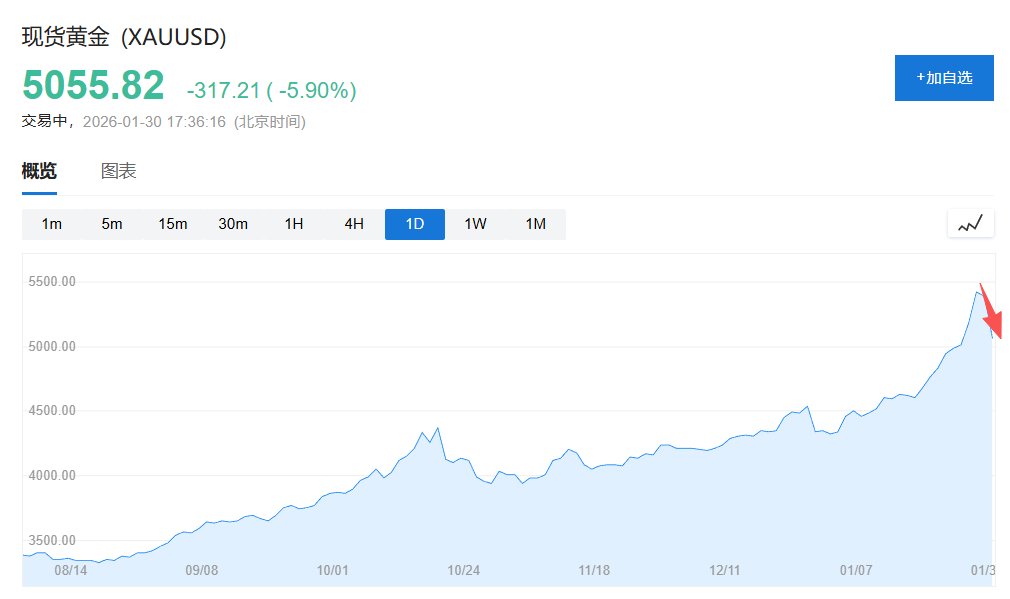
万腾Vatee:避险需求上升,黄金涨至4780美元新高
Sou Hu Cai Jing· 2026-01-21 03:15
Group 1 - The situation in Greenland has heightened demand for gold, pushing prices to a historic high of $4,780 per ounce, reflecting increasing global economic uncertainty [1] - President Donald Trump's firm stance on acquiring Greenland has intensified geopolitical risk concerns, leading to increased demand for safe-haven assets like gold [3] - The potential for increased tariffs on European countries has further escalated market uncertainty, driving investors towards gold [3] Group 2 - The collapse of the Japanese government bond market has raised concerns about the fiscal health of major economies, prompting investors to seek refuge in gold [4] - A shift towards "devaluation trades" has become a mainstream strategy, with investors reallocating assets to gold as a hard currency amid rising currency devaluation risks [5] - Investors are closely monitoring the upcoming U.S. PCE inflation report, which could significantly influence future Federal Reserve interest rate policies and, consequently, gold prices [6]