
自动驾驶

Search documents
汽车行业周报:政策托底静待反弹,关注海外电动化-20260126
Guoyuan Securities· 2026-01-26 05:43
Investment Rating - The report maintains a "Recommended" investment rating for the automotive industry [6] Core Insights - The automotive market is currently experiencing significant negative growth, with retail sales of passenger vehicles down 28% year-on-year for the first half of January 2026, and wholesale sales down 35% [1][19] - There is an expectation for policy support to stimulate a rebound in the market, particularly focusing on the impact of domestic policies and overseas electric vehicle (EV) opportunities [2][4] - Recent international policies favoring electric vehicles, such as Canada's reduction of import tariffs on Chinese EVs and Germany's new subsidy program for electric vehicle purchases, are seen as positive developments for the industry [3][44][45] Summary by Sections Market Performance - From January 1 to 18, 2026, the national retail sales of passenger vehicles reached 679,000 units, a decrease of 28% compared to the same period last year, while wholesale sales totaled 740,000 units, down 35% year-on-year [1][19] - In the same period, the retail sales of new energy vehicles (NEVs) were 312,000 units, reflecting a 16% decline year-on-year, with wholesale sales at 348,000 units, down 23% [1][19] Policy Developments - Canada announced it will import 49,000 Chinese electric vehicles and significantly reduce tariffs from 100% to 6.1%, which is expected to enhance trade opportunities for Chinese manufacturers [3][40] - Germany's new subsidy program offers up to €6,000 for families purchasing electric vehicles, applicable to various types of electric cars, and is open to all manufacturers, including Chinese brands [3][44][45] - The UK government has introduced a substantial subsidy plan for electric trucks, with a total budget of £318 million, aimed at promoting the adoption of electric commercial vehicles [3][48] Investment Opportunities - The report suggests focusing on the potential recovery of the automotive market driven by domestic policy support and the favorable international environment for Chinese NEVs [4] - The emergence of financial incentives and low-interest financing options in the market is expected to stimulate consumer demand and enhance brand loyalty [36][39]
B+轮融资刷新 AI 行业记录!这家大模型公司凭啥融这么多钱?
佩妮Penny的世界· 2026-01-26 04:05
Core Viewpoint - The article discusses the current landscape of domestic AI companies, particularly focusing on the potential of the company "阶跃星辰" (Step O) in the AI and hardware integration space, highlighting its recent funding success and strategic positioning in the market [1][3][4]. Group 1: Company Overview - Currently, there are four notable domestic AI companies: 智谱 (Zhipu), Minimax, 月之暗面 (Moon's Dark Side), and 阶跃星辰 (Step O) [1]. - 阶跃星辰 has recently secured over 5 billion RMB in B+ round financing, marking the highest single financing record in the large model sector over the past 12 months [1][3]. - The company is perceived as a low-profile player, focusing on technology and industry rather than consumer-facing marketing [5]. Group 2: Investment Landscape - The investment landscape for 阶跃星辰 includes notable backers such as Tencent and Qiming Venture Partners, indicating strong support from both internet giants and professional financial investors [4]. - The funding round attracted a diverse range of investors, including industry leaders like 华勤技术 (Huaqin Technology) and state-owned enterprises, showcasing a blend of market-driven and state-backed investment [4]. Group 3: Industry Trends - The article emphasizes the shift towards "Physical AI," which integrates AI capabilities with physical hardware, as a significant trend in the industry [8][10]. - The focus on AI-enhanced hardware, particularly in smartphones and vehicles, is highlighted as a key area for growth, with predictions of substantial market expansion in AI-enabled devices [13][15]. Group 4: Business Model and Market Position - 阶跃星辰 aims to create a comprehensive AI + terminal solution, positioning itself similarly to Tesla's approach, targeting a multi-billion dollar market opportunity [7][15]. - The company has established partnerships with over 60% of domestic smartphone manufacturers, indicating a strong market presence and integration of its AI models into various devices [15][23]. - The business model is based on a combination of one-time engineering fees and API consumption, aligning incentives for both 阶跃星辰 and its partners to enhance user experience [23]. Group 5: Team and Leadership - 阶跃星辰's leadership team includes experienced professionals from major tech companies, enhancing its capability in AI and product development [24][27]. - The CEO, a former global vice president at Microsoft, brings significant expertise in natural language processing and product management, which is crucial for the company's growth [24]. - The team’s focus on Physical AI and deep integration with hardware sets 阶跃星辰 apart from other AI companies, positioning it as a leader in the domestic market [27][28].

华安鑫创:公司南通工厂已实现天通卫星通信模组的规模化量产
Ge Long Hui· 2026-01-26 03:57
Core Viewpoint - Huazhong Xinchuan (300928.SZ) has achieved large-scale production of Tiantong satellite communication modules at its Nantong factory, targeting consumer markets such as vehicle communication and low-altitude communication [1] Group 1: Product Development - The Tiantong satellite communication module provides integrated solutions for smart transportation, ocean shipping, and low-altitude economy [1] - The company is exploring opportunities in emerging fields, including commercial aerospace and satellite navigation, to enhance product value across different application scenarios [1] Group 2: Business Progress - The company is making orderly progress in its autonomous driving and intelligent driving assistance business, with updates to be disclosed in future company announcements [1]
马斯克确认Cybercab将于4月量产,原型车已展开冬季测试
Sou Hu Cai Jing· 2026-01-26 03:24
凤凰网科技讯 1月26日,马斯克在X平台回帖,再次确认特斯拉旗下自动驾驶无人出租车Cybercab将于 今年4月量产,目前原型车已在美国阿拉斯加展开冬季测试。值得注意的是,测试中的Cybercab配备了 雪地轮胎。 据了解,Cybercab定位为双座无人驾驶车型,整车设计中不设方向盘和踏板等人工操控装置。 马斯克此前曾提醒,Cybercab的量产初期进度会相当缓慢,这是因为"新车型的产能爬坡通常呈S型曲 线,初期产量往往受限于大量全新零部件和制造工艺"。 来源:凤凰网科技 ...


曹操出行:计划投放10万辆完全定制Robotaxi,在全球范围展开商业化运营
Xin Lang Cai Jing· 2026-01-26 03:03
Core Insights - Cao Cao Mobility aims to deploy 100,000 fully customized Robotaxis globally by 2030, positioning itself as a key player in the Robotaxi commercialization landscape [1][3] Group 1: Business Foundations - The first major advantage lies in the vehicle hardware capabilities, with customized models like Fengye 80V and Cao Cao 60 designed to reduce total cost of ownership (TCO) and improve operational efficiency, achieving over a 30% reduction in total ownership costs compared to typical electric ride-hailing vehicles, with a cost per kilometer as low as approximately 0.47 yuan [1][3] Group 2: Service System Integration - The second advantage is the integrated service system, with Cao Cao Mobility having established 448 battery swap stations and 133 authorized maintenance outlets, providing benefits such as a 60-second battery swap and reduced maintenance time and costs, which can be upgraded for future Robotaxi fleets [2][4] Group 3: Operational Network - The third advantage is the operational network, having expanded to 163 cities and completed over 1.9 billion rides in ten years, earning the title of "Best Service Reputation" in multiple independent surveys [2][4] - In the first half of 2025, Cao Cao Mobility reported revenue of 9.456 billion yuan, a year-on-year increase of 53.5%, with a gross margin of 8.4%, up 1.4 percentage points year-on-year [2][4] - The company achieved a net cash inflow from operating activities of 325 million yuan, a significant year-on-year increase of 164.6%, indicating enhanced self-sustainability [2][4] - Daily order volume reached 2.108 million, a 50.6% increase year-on-year, with an average order value (AOV) rising to 28.9 yuan, and average monthly active users at 38.1 million, up 57.4% year-on-year [2][4]

百度:2025 年第四季度前瞻:核心业务符合预期,价值释放为关注重点
2026-01-26 02:50
Summary of Baidu, Inc. 4Q25 Preview and Key Insights Company Overview - **Company**: Baidu, Inc. - **Industry**: Internet Services - **Market Cap**: US$51.5 billion - **12-Month Rating**: Buy - **Price Target**: US$180.00 Core Business Performance - **Core Ads Revenue**: Expected to narrow its year-over-year decline to 6.2% in 4Q25, recovering sequentially due to AI search transformation and growth in AI-native marketing services [2][4] - **Cloud Segment**: Anticipated growth to decelerate to low-teens percentage, with AI Cloud Infrastructure projected to deliver over 30% revenue growth in 2025 [2] - **Total Core Revenue**: Forecasted to recover sequentially in 4Q25, with a year-over-year decline narrowing [2] Financial Estimates - **Core Non-GAAP Operating Profit**: Revised down by 6.7% to Rmb2.7 billion for 4Q25 due to operating deleverage, implying a recovery in operating margin to 10.5% [4][10] - **Revenue Estimates**: Total net revenue for 4Q25 estimated at Rmb32.5 billion, reflecting a 4.8% year-over-year decline [10] - **Earnings Per Share (EPS)**: Expected diluted EPS for 4Q25 is Rmb53.21, a slight decrease from previous estimates [8] Strategic Developments - **Kunlunxin Chip**: Seen as a key growth driver, with potential upside not fully priced in, attributed to its performance advantages in the domestic AI chip market [2] - **Apollo Go**: Expected to sustain strong growth in rides and expand internationally, with recent developments including a full driverless testing permit in Dubai and commercial operations in Abu Dhabi [3] Shareholder Returns - **Share Buybacks**: Management committed to clearer communication regarding share buyback plans and execution progress, considering alternatives to enhance shareholder returns [3] Valuation Insights - **Price Target Methodology**: SOTP-based valuation assumes a 5x PE for Core ads, 3x P/S for Cloud, and specific valuations for Apollo Go and Kunlunxin [5][11] - **Valuation Breakdown**: Total valuation estimated at US$61.4 billion, translating to a price per share of US$180 [11] Risks and Challenges - **Competitive Landscape**: Evolving competition and execution risks in new business areas [15] - **Regulatory Environment**: Potential regulatory challenges impacting operations and growth [15] Market Performance - **Stock Performance**: Baidu's share price increased by 14% year-to-date, outperforming the KWEB index [2] - **Trading Metrics**: Average daily volume of 3.46 million shares, with a free float of 72% [7] Conclusion Baidu, Inc. is positioned for a recovery in its core advertising revenue and continued growth in its cloud segment, driven by AI initiatives. The company is actively pursuing international expansion in autonomous driving and is committed to enhancing shareholder returns through strategic buybacks. However, it faces risks from competition and regulatory pressures that could impact its future performance.
F5 ADSP赋能智能汽车释放AI潜能
Zhong Guo Qi Che Bao Wang· 2026-01-26 02:44
Core Insights - The automotive industry is undergoing a transformation towards "software-defined, data-driven" models, driven by AI technology, which presents both opportunities and challenges [1][6][10] - F5 has launched the Application Delivery and Security Platform (ADSP) to address the complexities of hybrid multi-cloud architectures and enhance AI capabilities for automotive enterprises [1][11] AI-Driven Digital Transformation - The shift to "software-defined vehicles" is expected to be a key driver of digital transformation in the automotive sector by 2026, with software accounting for 60% of the overall vehicle value [6] - Automotive companies are increasing investments in software development and adopting new business models such as software subscriptions and feature payments [6][10] Data and Computational Demands - The rise of autonomous driving and the integration of large models in vehicles are leading to exponential growth in data and computational needs, with L3 autonomous vehicles generating 4 to 10 TB of data daily [6][10] - The processing of this data requires real-time transmission, storage, and training, pushing the scale of training data from terabytes to petabytes [6][10] Infrastructure and Security Challenges - The integration of vehicle-to-everything (V2X) communication necessitates stringent latency requirements, driving upgrades in infrastructure for real-time data transmission [7][10] - F5's ADSP platform addresses challenges related to data throughput, new security threats, and multi-cloud deployment, enhancing business continuity for automotive companies [11][18] F5's Strategic Positioning - F5 has seen significant growth in its automotive business, with a projected increase of over 100% in 2025, and is focusing on expanding resources and forming specialized teams for the automotive sector [19][23] - The company aims to leverage its local expertise in China to support global automotive technology advancements and explore cutting-edge fields such as embodied intelligence [22][23] Future Directions - F5 plans to advance AI technology applications in smart driving and aims to achieve substantial progress in this area within the year [22][23] - The company is positioned as a "super gateway" for smart vehicles, optimizing and securing data interactions to facilitate the implementation of next-generation digital engines in the automotive industry [23]

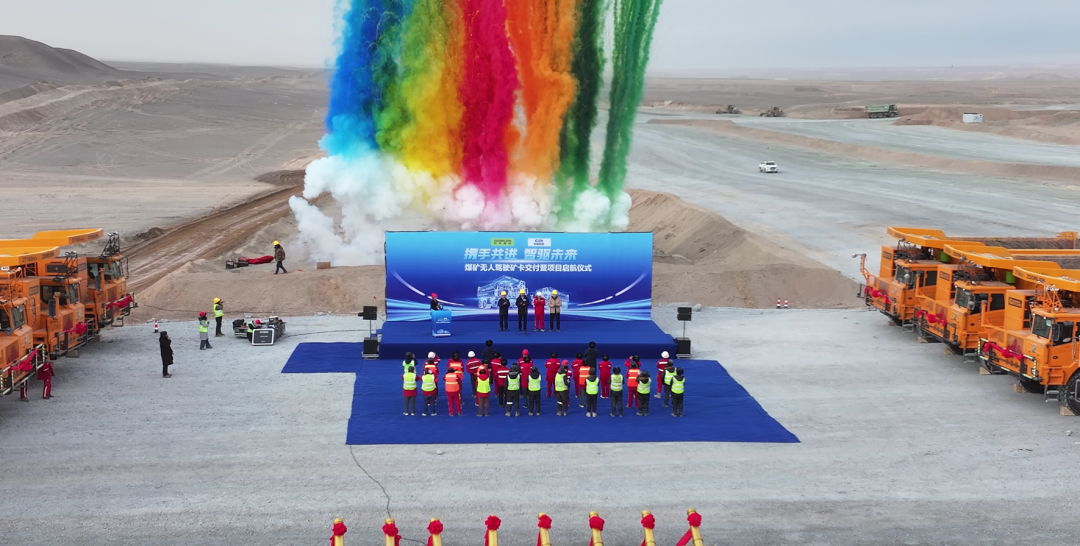
单矿120台+!希迪智驾(03881)无人矿卡批量交付落地
智通财经网· 2026-01-26 02:19
Core Insights - The delivery of 40 autonomous mining trucks equipped with Hidi Intelligent Driving's self-developed system marks a significant milestone in the large-scale implementation of autonomous technology in smart mining [1][3] - This project is crucial for the "Xinjiang Coal Transportation" strategy, emphasizing the importance of advanced technology and system stability in extreme operational environments [3] Group 1 - The autonomous mining trucks have been successfully deployed in a harsh environment, demonstrating the reliability and maturity of Hidi Intelligent Driving's technology [1][5] - The ZT160HEV hybrid mining trucks are integrated with Hidi's autonomous driving system and are now operational for continuous 24-hour efficient work [3][5] - Hidi Intelligent Driving has addressed extreme cold challenges by upgrading hardware with low-temperature sensors and custom heating modules, ensuring stable operation at temperatures as low as -30°C [7] Group 2 - The company has implemented a multi-redundant perception solution that combines LiDAR, millimeter-wave radar, and visual sensors, along with a self-developed dust filtering algorithm to enhance environmental recognition in dusty conditions [7][9] - Hidi's autonomous driving system features a cluster scheduling system that optimizes the driving routes of each truck based on real-time conditions, significantly improving transportation efficiency and reducing labor costs and safety risks [9] - The successful deployment of large-scale autonomous operations in the mining sector is a key step towards advancing traditional mining into a safer, more efficient, and low-carbon intelligent era [9]
金元证券每日晨报-20260126
Jinyuan Securities· 2026-01-26 02:10
Core Insights - The report highlights significant advancements in the autonomous driving industry, marking a transition from technology validation to large-scale implementation driven by policy support, technological breakthroughs, and commercial trials [15]. Group 1: Market Overview - The report provides a summary of major market indices, indicating mixed performance across global markets, with the US Dow Jones down by 0.58% and the S&P 500 slightly up by 0.03% [11]. - In the Asia-Pacific region, the Hong Kong Hang Seng Index rose by 0.45%, while the Nikkei 225 increased by 0.92% [11]. Group 2: International News - The potential announcement of a new Federal Reserve Chair by President Trump is noted, with Rick Rieder emerging as a leading candidate [10]. - A significant increase in South Korean bookings for travel to China is reported, with a year-on-year growth of 87.8% [10]. Group 3: Domestic News - China's total import and export value is projected to exceed 45 trillion yuan in 2025, maintaining its status as the world's largest goods trading nation [12]. - Beijing's economic and social development goals for 2026 include a GDP growth target of around 5% and a public budget revenue growth of about 4% [12]. Group 4: Important Announcements - Hunan Gold plans to acquire 100% stakes in Golden Tianyue and Central South Smelting [14]. - Deleja intends to invest 5 billion yuan in a project for manufacturing wind turbine gearboxes [14]. Group 5: Research Recommendations - The report emphasizes the importance of monitoring six dimensions in the autonomous driving sector: core technology barriers, mass production progress, market competition positioning, growth and certainty of performance, domestic substitution potential, and key event catalysts [15]. - The report notes that the L3 autonomous driving pilot has officially launched, accelerating the commercial closure and driving the industry towards a critical phase of large-scale implementation [15].
闰土股份归母净利连续两年高增 双轮驱动投资沐曦股份等大赚3.3亿
Chang Jiang Shang Bao· 2026-01-26 00:50
Core Viewpoint - Runtao Co., Ltd. (002440.SZ) is expected to achieve significant growth in its 2025 performance, driven by both its main business and investment activities, with projected net profit ranging from 600 million to 700 million yuan, representing a year-on-year increase of approximately 181.05% to 227.89% [1][2] Group 1: Main Business Performance - The main business of Runtao Co., Ltd. includes the research, production, and sales of textile dyes, printing and dyeing auxiliaries, and chemical raw materials, with a focus on dyes and auxiliaries [2] - After a decline in 2022 and 2023, the company's main business began to recover in 2024, achieving an operating income of 5.695 billion yuan, a year-on-year increase of 1.91%, and a net profit of 213 million yuan, a year-on-year increase of 366.42% [2] - In the first three quarters of 2025, the company reported a significant improvement in profitability, with operating income of 4.163 billion yuan, a year-on-year increase of 2.25%, and a net profit of 225 million yuan, a year-on-year surge of 49.10% [2] Group 2: Investment Contributions - The explosive growth of the investment business has been a key driver for Runtao Co., Ltd.'s performance in 2025, with tax-pre profit investment income estimated at around 330 million yuan, accounting for 55% of the lower limit of the projected net profit [4] - The company has been proactive in cross-industry investment since 2019, establishing an investment system through its wholly-owned subsidiary, Runtao Jinheng, with over 300 million yuan invested in multiple industry funds focusing on emerging fields such as artificial intelligence and semiconductors [4] - The investment in Muxi Co., a leading company in the high-performance general GPU sector, has been highlighted as a successful case, contributing significantly to the company's core earnings [4][5] Group 3: Market Trends and Future Outlook - The dye industry is experiencing a differentiation pattern in 2025, characterized by pressure on traditional categories and premium pricing for high-end products, which Runtao Co., Ltd. is navigating through vertical integration and optimized capacity layout [2][3] - The company's gross margin has shown an upward trend over the past three years, with a gross margin of 18.98% in the first three quarters of 2025, compared to 15.78% in 2023 and 17.41% in 2024 [3] - The stock price of Runtao Co., Ltd. has seen a significant increase since 2026, with a cumulative rise of 20.69% over five trading days from January 19 to 23 [6]
