
劳动力市场

Search documents
通胀与就业博弈加剧,华尔街激辩美联储“下一步”
Jin Shi Shu Ju· 2026-01-26 06:03
美国总统特朗普的关税政策继续搅动着经济。面对二战前以来未曾见过的政策选择,经济学家们的展望 持谨慎态度。 "他们等待降息的时间越长,从经济角度证明进一步宽松必要性的门槛就越高,"富国银行高级经济学家 Sarah House表示。 虽然共识仍是最终会进一步降息,但一些经济学家开始对此表示怀疑。 摩根大通首席美国经济学家Michael Feroli预测,美联储全年都将按兵不动。他说,美联储的下一步行 动将在2027年下半年进行加息。 美联储官员将从周二开始举行为期两天的会议,并于周三东部时间下午2点(北京时间周四3点)宣布决 定。美联储主席鲍威尔将在半小时后举行新闻发布会。美联储从去年9月开始在连续三次会议上将基准 利率下调了75个基点,至3.5%-3.75%的区间。 尽管通胀率仍远高于美联储2%的目标,但大多数美联储官员支持去年的宽松政策,因为劳动力市场看 起来很疲软。官员们希望降低通胀,但不想以经济衰退为高昂代价。 美联储官员已经明确表示,他们打算本周保持基准利率不变,这让经济学家们开始讨论一个更大的问题 ——美联储将在场外观望多久? 对进一步快速降息的预期正在消退,市场预计直到7月才会有动作,但等待六个月也 ...
美国上周首次申请失业救济人数基本持平 低于市场预期
Xin Lang Cai Jing· 2026-01-22 13:49
Core Viewpoint - The U.S. labor market remains stable as initial jobless claims show little change, indicating a continued low level of layoffs, which supports the labor market [1][2]. Summary by Categories Initial Jobless Claims - For the week ending January 17, the seasonally adjusted initial jobless claims totaled 200,000, an increase of 1,000 from the previous week, and below the Dow Jones estimate of 208,000 [1][2]. - The four-week moving average of initial claims was 201,500, marking the lowest level since January 13, 2024 [1][2]. Continuing Jobless Claims - The number of continuing jobless claims slightly decreased to 1.85 million, down by 26,000 from the previous week, while the FactSet consensus estimate was 1.89 million [1][2].
程实:AI让传统经济信号失灵,货币政策亟须前瞻布局
Di Yi Cai Jing· 2026-01-20 11:09
Group 1 - The traditional labor market frameworks, namely the Phillips Curve and the Beveridge Curve, are facing systematic challenges as labor market dynamics in developed economies, particularly the U.S., deviate from historical patterns [2][4] - The Phillips Curve is flattening, indicating a weaker relationship between unemployment rates and inflation, as AI alters the labor supply dynamics and reduces the sensitivity of wage growth to labor market tightness [4][5] - The Beveridge Curve is shifting outward, reflecting a structural mismatch in the labor market where high vacancy rates do not correspond to lower unemployment, primarily due to AI's impact on middle-skill jobs [5][6] Group 2 - AI's influence on the labor market is primarily task-based rather than job-based, leading to a reduction in marginal labor demand for tasks that AI can perform more efficiently [3][4] - The introduction of AI has resulted in a significant increase in the elasticity of effective labor supply, meaning that a decrease in unemployment does not necessarily indicate a tightening labor market [4][5] - The wage formation mechanism is becoming more stratified, with non-replaceable tasks commanding wage premiums while replaceable tasks face downward pressure, thus diminishing the average wage's sensitivity to labor market conditions [5][6] Group 3 - The efficiency of wage growth in transmitting inflation signals is weakening, as AI enhances labor productivity without a corresponding increase in employment levels, leading to a potential overestimation of inflation persistence when relying solely on wage data [6][7] - Unemployment rates are responding more slowly to economic changes, necessitating a shift in monetary policy focus to potential risks before significant labor market deterioration occurs [6][7] - Future monetary policy may adopt a forward-looking risk management approach, allowing for preemptive easing measures even before core employment indicators show clear signs of weakness [7]
美联储动态监测-1 月维持利率不变,对前景的分歧减少-Federal Reserve Monitor-Fed Speak this Week On hold in Jan, fewer divisions on the outlook
2026-01-19 02:29
Summary of Federal Reserve Monitor Conference Call Industry Overview - The conference call primarily discusses the Federal Reserve's monetary policy outlook and economic conditions in North America, focusing on growth, inflation, and the labor market. Key Points Economic Growth - Fed officials expect above-trend GDP growth in 2026, driven by fiscal tailwinds, easing financial conditions, and increased AI-related investments. Williams projects growth between 2.25% and 2.75% [7] - Bowman notes that real GDP growth exceeded 2% in the previous year, supported by strong business investment, particularly in high-tech AI [14] - Schmid reports a 4.3% growth in Q3 2025, with strong consumption and IT-related capital expenditures [14] Inflation - There is a consensus that inflation will peak in early 2026, with Williams estimating tariffs contributing 50 basis points to current inflation rates of approximately 2.75% [8][15] - Bowman suggests that core PCE inflation is near 2% when excluding tariff effects, while Schmid expresses caution about inflation persistence [8][15] - Musalem indicates inflation is closer to 3% than the 2% target but expects it to converge towards 2% as tariff effects fade [16] Labor Market - The labor market has cooled but remains stable, with an unemployment rate of 4.4% in December, down from 4.6% in November. Payroll gains have slowed, and job growth is concentrated in specific industries [9] - Officials describe a "low hire/low fire" environment, with concerns about labor supply dynamics affected by reduced immigration [9][18] - Kashkari notes a sideways labor market with few layoffs and limited hiring, complicating trend estimates for payroll growth [19] Monetary Policy Outlook - The Fed is expected to remain on hold in January, with potential rate cuts anticipated in June and September if inflation decreases [5][10] - There is an ongoing debate among committee members regarding the neutral rate of interest and the timing of further adjustments [6][10] - Some officials, like Miran, advocate for significant rate cuts if deregulation leads to higher potential growth [20][21] Other Important Topics - Fed officials discussed the importance of central bank independence amid heightened political scrutiny [11][22] - Housing market challenges are attributed to supply constraints and affordability issues, with some recent firming in house prices noted [23][24] - Productivity growth is seen as a potential upside risk, with AI adoption contributing to disinflation [26][27] - Concerns about data quality persist due to disruptions from the 2025 government shutdown, affecting the collection of official data [30] AI's Impact on Labor Market - AI adoption is linked to higher productivity and disinflation, with firms reassessing staffing needs in light of AI capabilities [31][32] - Kashkari observes that while AI has not led to widespread layoffs, it has resulted in more cautious hiring practices [32][33] This summary encapsulates the key insights from the Federal Reserve Monitor conference call, highlighting the economic outlook, inflation expectations, labor market conditions, and the implications for monetary policy.
费城联储主席声援鲍威尔
Sou Hu Cai Jing· 2026-01-16 10:42
Core Viewpoint - Anna Paulson, President of the Philadelphia Federal Reserve Bank, publicly supports Jerome Powell's leadership amid ongoing political pressure and controversy surrounding the Federal Reserve [1][4]. Group 1: Support for Powell - Paulson emphasizes the importance of strong leadership at the Federal Reserve, stating that it benefits the American public [5]. - She aligns with other Federal Reserve officials who have also endorsed Powell's integrity and leadership [5]. - Powell is currently facing a criminal investigation related to a renovation project at the Federal Reserve's Washington headquarters, which Paulson supports him on [3][4]. Group 2: Monetary Policy and Interest Rates - Paulson indicates a cautious but clear stance on monetary policy, supporting recent interest rate cuts while suggesting that further cuts are not urgent [6]. - She believes the current interest rate level is "sufficiently high" and slightly above the neutral rate, which does not stimulate or suppress economic growth [6]. - Paulson anticipates significant progress in reducing inflation towards the Federal Reserve's 2% target by the end of the year, but is open to supporting small rate cuts later if inflation data continues to show easing [6][7]. Group 3: Labor Market Insights - Paulson expresses concern about the risks in the labor market, noting that 95% of private sector job growth last year was concentrated in healthcare and social assistance, which is not indicative of a healthy economy [8]. - She warns that signs of a rapid deterioration in the labor market would be closely monitored, as historical trends suggest labor market signals often dominate economic indicators [8]. - Paulson observes that companies are now more cautious in their pricing strategies, focusing on maintaining market share rather than aggressively raising prices [8].
有色商品日报(2026年1月16日)-20260116
Guang Da Qi Huo· 2026-01-16 05:11
1. Report Industry Investment Rating - No relevant content provided. 2. Core Views of the Report Copper - Overnight, both domestic and international copper prices initially declined and then rebounded, with losses in domestic refined copper imports persisting. The US labor market remains resilient, and a Fed official said there's no reason to cut interest rates. China's central bank cut the interest rates of various structural monetary policy tools by 0.25 percentage points. LME copper inventories decreased by 500 tons, Comex inventories increased by 4,653 tons, SHFE copper warrants increased by 13,378 tons, and BC copper increased by 2,098 tons. As copper prices rose again, downstream procurement became more cautious, and the export window is gradually opening. Trump said he would not impose tariffs on key minerals like copper. The high - level instability of copper prices is evident, and there is a divergence between foreign capital's bullish sentiment and the industrial situation [1]. Aluminum - Overnight, alumina, Shanghai aluminum, and aluminum alloy all trended weakly. Spot alumina prices fell, and the spot discount of aluminum ingots widened. Alumina producers have high ore reserves, and costs are under pressure. With the end of environmental controls and increased production, along with imports, inventories are accumulating. The processing end of the photovoltaic industry may maintain resilience, and the pressure on aluminum ingot inventory accumulation has eased slightly. Aluminum prices continue to be high, and the spot discount is narrowing [1][2]. Nickel - Overnight, LME nickel fell 1.04% and Shanghai nickel fell 0.24%. LME and SHFE nickel inventories increased. Indonesia plans to reduce its nickel ore production target in 2026, which may lead to a global primary nickel supply - demand gap and stimulate nickel price increases. The first - level nickel production has increased significantly, and hedging demand may put pressure on prices. Short - term, it is advisable to look for buying opportunities near the cost line [2]. 3. Summary by Relevant Catalogs Research Views - **Copper**: The US labor market data is strong, and China's central bank cut interest rates. Inventory changes vary in different markets. High copper prices make downstream procurement cautious, and the export window is opening. Trump's statement on tariffs and external risks affect copper prices, with a divergence between market sentiment and the industrial situation [1]. - **Aluminum**: Futures and spot prices of aluminum - related products are weak. Alumina costs are under pressure, inventories are accumulating, and the processing end may maintain resilience, with aluminum prices remaining high and the discount narrowing [1][2]. - **Nickel**: Nickel prices declined overnight, inventories increased. Indonesia's production cut plan may drive up prices, while increased production and hedging demand pose challenges [2]. Daily Data Monitoring - **Copper**: On January 15, 2026, the price of flat - water copper decreased by 1,325 yuan/ton compared to the previous day. LME inventories decreased by 500 tons, SHFE warrants increased by 13,378 tons, and social inventories increased by 20,000 tons. The active - contract import loss widened by 1,070 yuan/ton [3]. - **Lead**: The average price of 1 lead increased by 130 yuan/ton. LME inventories decreased by 3,800 tons, and SHFE inventories increased by 2,107 tons. The active - contract import profit increased by 140 yuan/ton [3]. - **Aluminum**: The Wuxi and Nanhai aluminum prices decreased by 470 yuan/ton. LME inventories decreased by 2,000 tons, SHFE inventories increased by 14,010 tons, and electrolytic aluminum social inventories increased by 16,000 tons. The active - contract import loss widened by 280 yuan/ton [4]. - **Nickel**: The price of Jinchuan nickel increased by 3,350 yuan/ton. LME inventories increased by 624 tons, SHFE inventories increased by 1,700 tons, and social inventories increased by 2,126 tons. The active - contract import profit increased by 6,230 yuan/ton [4]. - **Zinc**: The main - contract settlement price increased by 1.8%. LME inventories decreased by 25 tons, SHFE inventories increased by 793 tons, and social inventories decreased by 5,000 tons. The active - contract import loss turned to zero [6]. - **Tin**: The main - contract settlement price increased by 8.3%. LME inventories decreased by 5 tons, SHFE inventories decreased by 1,001 tons. The active - contract import loss turned to zero [6]. Chart Analysis - **Spot Premium**: Charts show the historical trends of spot premiums for copper, aluminum, nickel, zinc, lead, and tin from 2019 - 2026 [11]. - **SHFE Near - Far Month Spread**: Charts display the historical trends of the near - far month spreads for copper, aluminum, nickel, zinc, lead, and tin from 2021 - 2026 [12]. - **LME Inventory**: Charts present the historical trends of LME inventories for copper, aluminum, nickel, zinc, lead, and tin from 2019 - 2026 [18]. - **SHFE Inventory**: Charts show the historical trends of SHFE inventories for copper, aluminum, nickel, zinc, lead, and tin from 2019 - 2026 [24]. - **Social Inventory**: Charts display the historical trends of social inventories for copper, aluminum, nickel, zinc, stainless steel, and 300 - series from 2019 - 2026 [30]. - **Smelting Profit**: Charts present the historical trends of copper concentrate index, rough copper processing fee, aluminum smelting profit, nickel - iron smelting cost, zinc smelting profit, and stainless - steel 304 smelting profit margin from 2019 - 2026 [37]. Team Introduction - The team includes Zhan Dapeng, the director of non - ferrous research at Everbright Futures Research Institute, with extensive experience and many honors; Wang Heng, a researcher focusing on aluminum and silicon; and Zhu Xi, a researcher focusing on lithium and nickel, both with significant achievements and media exposure [44][45].
光大期货0116黄金点评:地缘风险回落,不确定性支撑黄金价格
Xin Lang Cai Jing· 2026-01-16 02:44
Core Viewpoint - The geopolitical tensions, particularly regarding Iran, continue to influence market dynamics, with gold prices showing resilience despite fluctuations in futures contracts [2][6]. Economic Data - As of January 10, the number of initial jobless claims in the U.S. dropped to 198,000, significantly lower than the market expectation of 215,000 and the previous value of 208,000, indicating a robust labor market [2][6]. - The U.S. government is expected to announce the new Federal Reserve chair in the coming weeks, with the Kansas City Fed president stating there is currently no justification for interest rate cuts, as such actions could hinder inflation control and negatively impact the labor market [2][6]. Geopolitical Context - Despite NATO countries deploying military personnel to Greenland, the U.S. government maintains that this does not interfere with Trump's objectives regarding Greenland [2][6]. - The situation in Iran remains tense, with the White House closely monitoring developments and keeping all options open, including discussions between Trump and Israeli Prime Minister Netanyahu [2][6].


“新美联储通讯社”:鲍威尔意外成为“民间英雄”,今年票委力挺
华尔街见闻· 2026-01-16 01:42
Core Viewpoint - Federal Reserve Chairman Jerome Powell has unexpectedly become a "folk hero," with public admiration for his leadership capabilities, as noted by financial journalist Nick Timiraos [1][3]. Group 1: Leadership and Perception - Philadelphia Fed President Anna Paulson expressed that many, including herself, are impressed by Powell's leadership, highlighting his effectiveness as a chairman [3]. - Paulson emphasized the importance of creating an environment conducive to beneficial decision-making for both the institution and the economy, which Powell has successfully fostered [3]. Group 2: Interest Rate Decisions - Paulson aligns with the mainstream view among market participants and officials that there is no need for an immediate rate cut, having supported recent reductions in the short-term benchmark rate to a range of 3.5%-3.75% [4]. - She anticipates substantial progress in inflation returning to the Fed's 2% target by year-end, but is open to maintaining current rates during the upcoming January meeting [5]. Group 3: Economic Indicators and Labor Market - Paulson is particularly focused on the upcoming January price data, as it may reflect significant price adjustments by businesses at the start of the year [5]. - She noted that the current labor market risks slightly outweigh the risks of persistent inflation, with a significant portion of job growth concentrated in the healthcare and social assistance sector [6]. Group 4: Inflation Outlook - Compared to some colleagues, Paulson has less concern about inflation, observing signs that last year's price increases may recede this year, as businesses are more cautious about raising prices [7]. - She highlighted that companies are now more focused on maintaining market share rather than aggressively increasing prices, indicating a more prudent approach to pricing strategies [7].

美联储官员Schmid:为抑制通胀 政策应保持一定程度紧缩性
Xin Lang Cai Jing· 2026-01-15 19:35
Core Viewpoint - Kansas City Federal Reserve Bank President Jeff Schmid advocates for maintaining interest rates at a level that continues to exert pressure on the economy to further cool inflation [1][5]. Group 1: Monetary Policy - Schmid emphasizes the need for a moderately restrictive monetary policy due to persistent inflationary pressures [1][5]. - He suggests that a degree of cooling in the labor market may be necessary to prevent a deterioration in inflation outlook [3][7]. - The current target range for the federal funds rate is between 3.5% and 3.75%, which is near the so-called neutral level [3][7]. Group 2: Economic Outlook - Schmid expresses concern that further rate cuts may not stimulate hiring, as the labor market is expected to show weakness in 2025, driven by structural factors [3][7]. - He warns that strong economic growth could elevate inflation, and doubts about achieving the 2% inflation target could lead to more lasting impacts from rate cuts [3][7]. Group 3: Federal Reserve Structure - Schmid discusses the independence and decentralized structure of the Federal Reserve, which allows for diverse perspectives on monetary policy [4][8]. - He notes that the Federal Reserve has faced increasing scrutiny from the Trump administration, with some officials advocating for a reassessment of certain elements of the Federal Reserve Bank system [3][7].
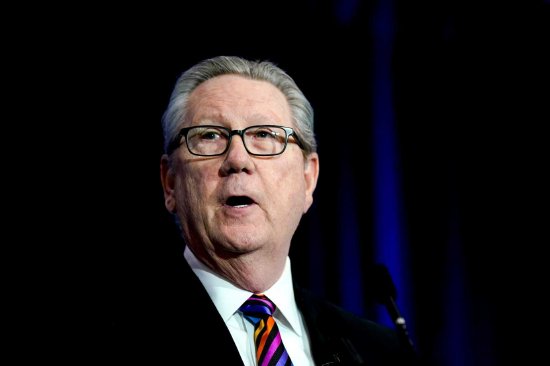
美联储官员施密德:认为目前几无理由降息
Sou Hu Cai Jing· 2026-01-15 18:39
Group 1 - The core viewpoint is that there is currently little reason for the Federal Reserve to lower interest rates, as the existing policy stance does not appear overly restrictive [1] - Lowering interest rates could hinder the progress of controlling inflation and would not benefit the labor market [1]