经济放缓

Search documents
经济学家:美国上月个人支出和收入走低,经济或已陷入技术性衰退
news flash· 2025-06-27 13:42
Core Viewpoint - The article highlights a concerning trend in the U.S. economy, indicating that personal income and spending have declined, suggesting a potential technical recession [1] Economic Indicators - Personal income was expected to grow by approximately 0.3%, but instead, it has shown negative growth [1] - Personal spending figures are also disappointing, reflecting a negative growth trend [1] Economic Outlook - The decline in personal income and spending raises the likelihood of an economic slowdown in the second quarter, potentially leading to negative economic activity [1] - Aside from the core PCE data being slightly above expectations, there were no other surprises in inflation, indicating a broader economic weakness [1] - Overall signs point to a weakening economy, with the possibility that it has already entered a technical recession [1]
美联储巴尔:关税也可能导致经济放缓,失业率上升。货币政策处于有利位置,美联储将观望经济形势如何发展。
news flash· 2025-06-24 20:08
Core Viewpoint - The Federal Reserve's Barr stated that tariffs could potentially lead to economic slowdown and increased unemployment, indicating that monetary policy is currently in a favorable position while the Fed observes economic developments [1] Group 1 - Tariffs may contribute to economic slowdown [1] - Potential rise in unemployment due to tariffs [1] - Federal Reserve is in a favorable position regarding monetary policy [1]
张尧浠:美联储暗示年内2次降息、金价回踩支撑仍是看涨机会
Sou Hu Cai Jing· 2025-06-19 00:21
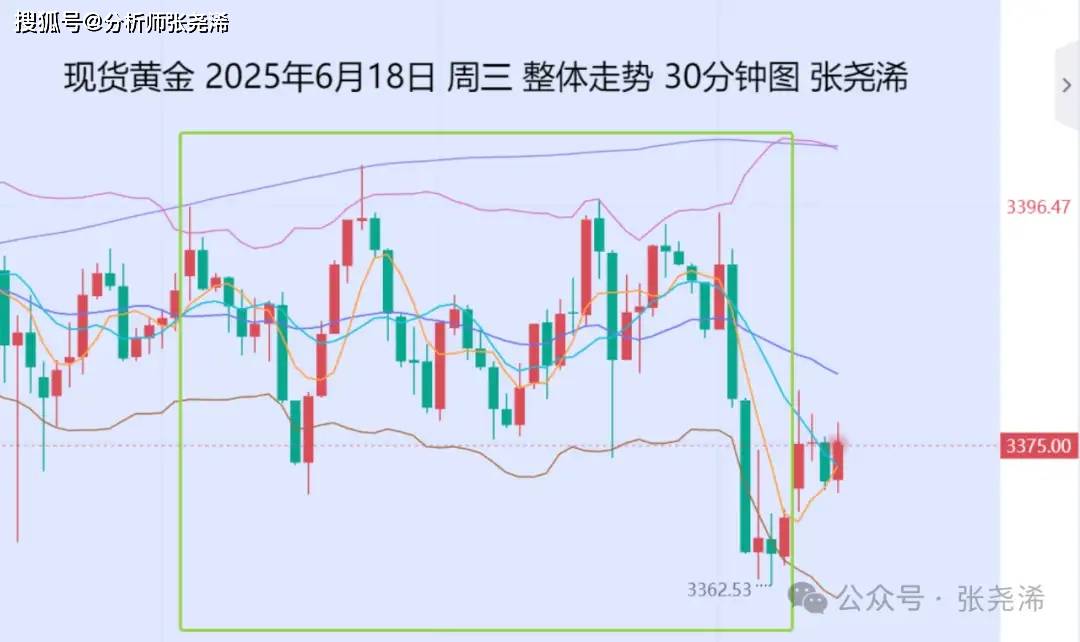
Core Viewpoint - The article discusses the potential for gold prices to rise due to expectations of interest rate cuts by the Federal Reserve, despite recent fluctuations in gold prices and external geopolitical factors [1][7][9]. Market Performance - On June 18, gold opened at $3,390.09 per ounce, fluctuated within a $37.16 range, and closed at $3,369.20, marking a decline of $21.49 or 0.63% [1]. - The dollar index showed a slight increase, which negatively impacted gold prices, while gold faced resistance from the 5-day moving average and support from the 10-day moving average [3][5]. Economic Indicators - The Federal Reserve maintained interest rates for the fourth consecutive time, indicating a potential slowdown in rate cuts, while also projecting high inflation in the coming months [3][7]. - Recent U.S. CPI and retail data showed unexpected declines, reinforcing signals of economic slowdown and increasing expectations for rate cuts [7][9]. Geopolitical Factors - Tensions between the U.S. and Iran, along with Trump's insistence on rate cuts, have contributed to a mixed market sentiment, affecting gold prices [3][8]. - The reduction in geopolitical risks has led to a more stable outlook, although concerns about trade tariffs and fiscal deficits persist [9]. Technical Analysis - The monthly chart indicates that gold prices have been supported by the 5-month moving average since the beginning of the bull market, suggesting a continued bullish trend despite recent price corrections [11]. - Weekly and daily charts show that gold remains above key moving averages, indicating potential for further upward movement, with targets set at $3,500 and $3,545 [13][15]. Future Outlook - The overall sentiment suggests that gold prices may continue to rise, with potential to exceed $4,000 in the next year, driven by economic uncertainties and ongoing geopolitical tensions [9].

银价飙升至13年新高 美元走强限制黄金涨幅
Jin Tou Wang· 2025-06-18 03:12
Core Insights - The geopolitical tensions between Iran and Israel have increased demand for safe-haven assets, yet a strong US dollar has limited the price increase of gold [1][2] - Spot gold rose by 0.14% to $3389.49 per ounce, while spot silver surged to a 13-year high, increasing by 2.32% to $37.13 per ounce [1][2] Economic Indicators - May retail sales data showed a larger-than-expected decline of 0.9% month-on-month, marking the largest drop in four months, indicating consumer caution amid trade uncertainties and tariff pressures [3] - Revenue from automobile and parts dealers fell by 3.5%, while gas station revenue decreased by 2.0%, and service sector indicators also showed a downturn [3] - Core retail sales increased by 0.4%, suggesting that consumer spending is still supported by robust wages, but overall economic slowdown signals cannot be ignored [3] Market Analysis - Michael Pearce, Deputy Chief Economist at Oxford Economics, noted that tariffs have distorted the timing of commodity purchases, and the risk of economic slowdown is increasing in the second half of the year [3] - Typically, economic uncertainty benefits gold prices; however, the strong performance of the dollar has constrained the potential for gold price increases [3]
从机票到客房,美国旅游消费萎缩敲响经济警钟
Di Yi Cai Jing· 2025-06-16 03:05
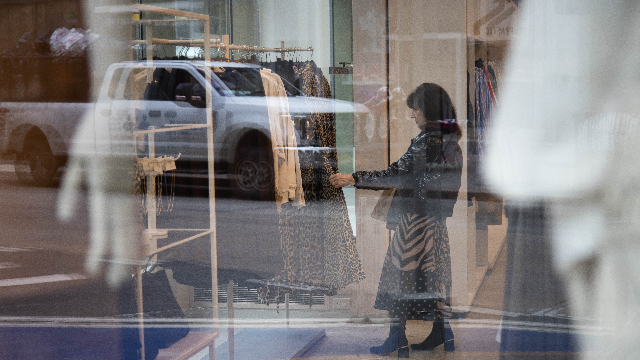
Core Insights - Travel spending in the U.S. is declining, indicating potential early warning signs of an economic slowdown [1][3][4] - Consumer confidence has sharply decreased since the beginning of the year, leading to reduced travel expenditures across all income groups [1][3] - The airline industry is experiencing significant declines in ticket sales, particularly in the economy class, due to economic uncertainty [3][4] Group 1: Travel Spending Trends - U.S. airline travel spending fell by 11% year-on-year in May [3] - Accommodation spending decreased by approximately 2.5% year-on-year, while airline spending dropped by 6% [3] - Low-income groups have shown a notable contraction in travel spending, with significant reductions in ticket purchases following the announcement of tariffs [3][4] Group 2: Airline Industry Impact - Major U.S. airlines have seen stock declines, with American Airlines and JetBlue down over 40% [4] - Airlines have withdrawn their full-year earnings forecasts for 2025 due to economic uncertainties [4] - The current environment is expected to challenge key hotel industry metrics such as occupancy rates and average daily rates [4] Group 3: Consumer Behavior and Economic Indicators - The trend of cautious spending has extended to high-income groups, with a 7 percentage point drop in ticket spending growth for those earning over $150,000 [3] - The International Air Transport Association reported a 26.2% year-on-year drop in revenue passenger kilometers for North America, significantly higher than the global average decline of 4.2% [3] - Economic analysts suggest that current consumer fatigue may indicate future declines in booking volumes [4] Group 4: International Travel and Perception - A report predicts a 9% decrease in international visitors to the U.S. this year, with a projected reduction of $8.5 billion in spending [6] - Negative perceptions of U.S. trade and immigration policies are impacting potential tourists' decisions [6] - American tourists are also reducing long-haul travel plans, with a 7% decrease in those planning to visit Europe this summer [6] Group 5: Economic Outlook - Analysts predict that tariff increases will significantly lower U.S. economic growth rates in 2025 [7] - Rising tariffs are expected to suppress consumer purchasing power and stock market performance [7] - The depletion of pandemic-era savings and rising delinquency rates on loans indicate potential challenges for consumer spending [7]
美股新高下的冰火对决!甲骨文暴涨波音大跌,帮主郑重解盘市场密码
Sou Hu Cai Jing· 2025-06-12 23:53
最后说说黄金,现货黄金涨超0.9%,一度逼近3400美元。在贸易摩擦和地缘政治风险加剧的情况下,黄金的避险属性再次凸显。机构预测,2025年黄金 价格可能在3000-3300美元之间波动,长期来看还是有上涨空间的。 再看看波音,真是屋漏偏逢连夜雨。印度航空的波音787空难事件,让波音股价大跌近5%。这不仅是短期的股价波动,更可能影响到波音未来的订单和声 誉。毕竟,航空安全是头等大事,消费者和航空公司的信任一旦受损,可不是那么容易恢复的。 中概股这边,整体表现有点分化。纳斯达克中国金龙指数跌了0.41%,但房多多和金山云却逆势上涨。小鹏汽车、蔚来这些新能源车企跌幅较大,可能和 市场对国内新能源汽车竞争加剧的担忧有关。不过,长期来看,中国的科技和新能源行业还是很有潜力的,像高瓴这样的机构最近都在加仓中概股,说 明他们对这些行业的未来还是很有信心的。 美元指数昨天跌了0.72%,这和特朗普威胁要对贸易伙伴加征关税有关。关税政策不仅影响贸易,还会影响市场对美元资产的信心。不过,离岸人民币倒 是涨了251点,这说明国际市场对人民币的信心在增强,也反映出中国经济的韧性。 国债市场昨天表现不错,尤其是长期国债。这可能是因为 ...






野村证券:日本经济不太可能陷入衰退
news flash· 2025-06-10 08:34
Core Viewpoint - Nomura Securities analysts, led by Kyohei Morita, believe that Japan's economy is unlikely to fall into recession despite potential economic slowdowns caused by U.S. tariffs [1] Economic Outlook - Japan's economy is primarily driven by the service sector, which is expected to benefit from new stimulus measures through supplementary budgets [1] - Corporate investments in software and efforts to address labor shortages are anticipated to support Japan's economic growth [1] Risks and Challenges - The analysts caution that tariffs may exert "downward pressure" on Japan's economy from July to September [1] Monetary Policy - The Bank of Japan is expected to begin raising interest rates in January 2026, as indicated by the central bank's governor, Kazuo Ueda, who emphasized readiness to continue rate hikes if the underlying inflation rate approaches the 2% target [1]
Chartbook 第1期 | 一文全览:关税对美国经济的影响(申万宏观·赵伟团队)
申万宏源宏观· 2025-06-10 03:59
Core Viewpoint - The main contradiction in the US economy for the second half of the year revolves around tariff data, with a short-term focus on the direction of inflation [2]. Tariff Status and Economic Effects - After the May 12 US-China agreement, global trade uncertainty has decreased but remains at historically high levels, with the average US import tariff rate around 16% and China's rate at 27%. The suspension periods for US tariffs on China will end on July 9 and August 12 [2]. - The sectors with the highest US import tariffs as of the end of May include clothing and metals, with slow progress in tariff negotiations with other economies [2]. - The economic effects of tariffs on inflation and growth are expected to manifest over time. A surge in US container bookings indicates a new round of "import grabbing," but this may be hindered by inventory accumulation and weakening domestic demand as tariff suspensions approach [2]. - Tariffs have already begun to exert upward pressure on US inflation, although the effect is not yet significant. A potential inflationary period may occur in Q3 and Q4 [2]. - Indicators such as manufacturing PMI, capital expenditure willingness, and real estate sales suggest weaker private investment, while consumer purchasing intentions have declined despite a temporary boost in household income [2]. - Employment data, including unemployment claims, show signs of deterioration, raising concerns about rising unemployment rates [2]. Dynamic Economic Impact - The impact of tariffs on the economy may shift from "stagflation" to "slowdown," depending on how tariff conflicts evolve. In the next 1-2 quarters, the market may grapple with issues of stagnation versus inflation and whether to expect a slowdown or recession [3]. - By Q4 of this year, if the rate of price increases slows while economic downturns persist, the main contradictions in economic fundamentals, asset classes, and policies may transition from "stagflation" to "slowdown," with the possibility of "recession panic" [3]. Global Trade Predictions - The United Nations has revised its predictions for global trade growth rates, with a forecast of 1.5% growth in trade volume for Q2 2025, driven primarily by industrial production data [4][5]. Sector-Specific Tariff Data - As of May 2025, the highest effective import tariff rates in the US are in the textile and clothing manufacturing sectors, reaching 52.8% and 52.6%, respectively. In contrast, sectors like oil, coal, and chemicals have significantly lower tariff rates [6]. Retail Price Trends - Since March, US retail prices have increased significantly, reflecting retailers' proactive price hikes following tariff impositions. However, prices for goods from Mexico have been declining since April, indicating expectations surrounding tariff negotiations [11][12]. - A survey by the Richmond Fed indicated that 72% of surveyed companies have taken action in response to tariffs, with a majority planning to raise prices [14][15]. Investment Implications - The impact of tariffs on US investment is expected to be more pronounced than on consumer spending, as the proportion of private investment reliant on imports is significantly higher (38%) compared to consumer spending (9%) [16].