
适度宽松货币政策

Search documents
锚定金融强国建设目标 不断提升金融服务实体经济高质量发展质效
Jin Rong Shi Bao· 2026-01-26 00:51
Core Viewpoint - The People's Bank of China (PBOC) aims to implement a moderately loose monetary policy to support stable economic growth and the smooth operation of financial markets, aligning with the goals set by the Central Committee and the State Council for building a financial powerhouse by 2025 [1][2]. Monetary Policy Implementation - In 2025, the PBOC will continue to implement moderately loose monetary policies, with social financing expected to grow by 8.3% year-on-year and broad money supply increasing by 8.5%, both significantly above nominal GDP growth [2]. - The average interest rate for newly issued corporate loans and personal housing loans is approximately 3.1% [2]. - The PBOC will maintain a flexible approach to policy implementation, utilizing tools such as reserve requirement ratio (RRR) cuts and interest rate reductions to ensure liquidity remains ample [3]. Structural Policy Adjustments - The PBOC has optimized structural monetary policy tools, reducing interest rates on various tools by 0.25 percentage points and increasing the quotas for rural and small enterprise loans by 500 billion yuan to 4.35 trillion yuan [4]. - New measures include a dedicated 1 trillion yuan re-loan for private enterprises and an increase in the quota for technology innovation and technical transformation re-loans to 1.2 trillion yuan [4]. Financial Market Stability - The exchange rate of the renminbi against a basket of currencies remains stable, and the bond market is developing healthily, with 10-year government bond yields stabilizing around 1.8% to 1.9% [3]. - The PBOC emphasizes maintaining a stable financial market and managing expectations to keep the renminbi at a reasonable equilibrium level [4]. Macro-Prudential Management - The PBOC is focused on building a robust macro-prudential management system that covers the relationship between macroeconomic operations and financial risks, as well as key areas of financial markets and activities [7][9]. - Key initiatives include enhancing the monitoring and assessment of systemic financial risks and expanding the coverage of macro-prudential management to include new areas such as non-bank financial institutions and internet finance [9]. International Financial Cooperation - The PBOC is committed to deepening financial cooperation and governance reforms on a global scale, promoting multilateralism, and opposing unilateralism and protectionism [10][11]. - Efforts include enhancing the internationalization of the renminbi and supporting the construction of the Shanghai International Financial Center [10]. Support for Key Sectors - The PBOC plans to enhance financial support for expanding domestic demand, technological innovation, and small and micro enterprises, with specific measures such as a 500 billion yuan re-loan for consumer services and elderly care [12][13]. - Additional support for technology innovation includes increasing the re-loan quota for technology innovation and technical transformation to 1.2 trillion yuan and merging risk-sharing tools for technology innovation and private enterprises [13].
投顾周刊:央行行长表示2026年降准降息有空间
Sou Hu Cai Jing· 2026-01-25 00:46
Monetary Policy - The central bank will implement a moderately loose monetary policy in 2026, with room for rate cuts and reserve requirement ratio reductions. The focus will be on maintaining ample liquidity and managing expectations for the RMB exchange rate [1] - The central bank aims to support the stable development of the capital market through specific monetary policy tools [1] Fund Management - Multiple funds have announced fee reductions to lower investment costs for investors. For instance, 华夏基金 reduced the management fee of its financial technology ETF from 0.50% to 0.15% [1] - 天弘基金 also announced a reduction in management and custody fees for its mixed fund from 0.7% and 0.15% to 0.3% and 0.05% respectively [1] Banking Sector - The interest rates on large time deposits from local small and medium-sized banks have fallen below 2% due to ongoing declines in deposit rates [2] - Recent reports from several banks indicate that their wealth management business is experiencing a decline in the scale of funds raised compared to the scale of maturing products [2] Real Estate Market - The second-hand housing market has shown signs of recovery at the beginning of 2026, particularly in first-tier and strong second-tier cities, with a notable decrease in the number of listings in Shanghai [2] Fiscal and Financial Policies - A comprehensive policy package has been introduced to promote domestic demand, including a 500 billion yuan special guarantee plan for private investment and interest subsidies for loans to small and micro enterprises [3] Global Market Trends - Concerns over the Greenland crisis and fiscal pressures have triggered a global bond market sell-off, with significant increases in yields for long-term bonds in Japan and the U.S. [3] - The CEO of NVIDIA highlighted that AI has initiated the largest infrastructure buildout in human history, requiring substantial investments and skilled labor [4]

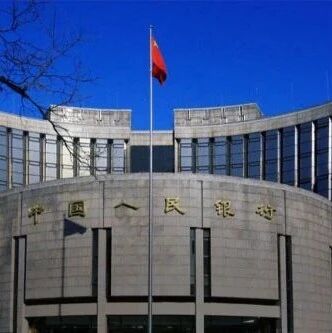
投顾周刊:央行行长表示2026年降准降息有空间
Wind万得· 2026-01-24 22:24
Monetary Policy - The central bank will implement a moderately loose monetary policy in 2026, with room for rate cuts and reserve requirement ratio reductions. The focus will be on maintaining ample liquidity and managing expectations for the RMB exchange rate [2][5]. Fund Management - Multiple funds have announced fee reductions to lower investment costs for investors. For instance, 华夏基金 reduced the management fee of its financial technology ETF from 0.50% to 0.15% and the custody fee from 0.1% to 0.05% [2][5]. Banking Sector - The interest rates on large time deposits from local small and medium-sized banks have fallen below 2%. It is predicted that the maturity scale of time deposits over one year will be around 50 trillion yuan in 2026 [3][5]. - The wealth management business of small and medium-sized banks is experiencing changes, with reports indicating that the scale of raised funds is lower than that of maturing funds [3][5]. Real Estate Market - The second-hand housing market in several regions continues to show a "tail-up trend" at the beginning of 2026, with notable recovery in transaction volumes in major cities like Beijing, Shanghai, and Shenzhen [3][5]. Fiscal and Financial Policies - A package of policies promoting domestic demand through fiscal and financial collaboration has been introduced, including a 500 billion yuan special guarantee plan for private investment and interest subsidies for loans to small and micro enterprises [5][6]. Global Market Trends - Concerns over the Greenland crisis and fiscal pressures have triggered a global bond market sell-off, with significant increases in yields for long-term bonds in Japan and the U.S. [6][6]. - NVIDIA's CEO highlighted that AI has initiated the largest infrastructure buildout in human history, requiring substantial investments and resources [6][6].




增速快于全国0.7个百分点,2025年末山东省社会融资规模达25.9万亿元
Qi Lu Wan Bao· 2026-01-23 15:27
Core Viewpoint - The People's Bank of China Shandong Branch reported stable growth in financial metrics for 2025, with significant increases in social financing, loans, and deposits, indicating a positive monetary environment for economic development in Shandong province [1][2]. Financial Metrics - As of December 2025, Shandong's social financing scale reached 25.9 trillion yuan, with year-on-year growth of 9.0%, outpacing the national average by 0.7 percentage points [1][2]. - The balance of domestic and foreign currency loans was 16.3 trillion yuan, growing by 8.2%, and the balance of deposits was 19.0 trillion yuan, increasing by 9.1%, both exceeding national growth rates [1][2]. Financing Costs - Financing costs have shown a slight decrease, with the average interest rate for new corporate loans at 3.57%, down by 0.19 percentage points year-on-year, marking a historical low [2]. - The average interest rate for new personal housing loans was 3.05%, with a minor decrease of 0.01 percentage points year-on-year [2]. Loan Coverage - The number of enterprises receiving loans increased to 310,000 by December, up by 33,000 from the beginning of the year, reflecting an expanded loan coverage [3]. Credit Structure - The loan balance for enterprises reached 10.9 trillion yuan, with a year-on-year growth of 12.6%, significantly higher than the overall loan growth rate [4]. - In 2025, the increase in enterprise loans amounted to 1.2 trillion yuan, which is 773.5 billion yuan more than the previous year, setting a historical record for the same period [4]. Support for High-Quality Transformation - The implementation of structural monetary policy tools led to over 190 billion yuan in loans aimed at technological innovation and carbon reduction [5]. - By November, loans in the "Five Major Articles" sector reached 6.7 trillion yuan, growing by 15.6% year-on-year, accounting for 78.9% of the total loan increase [5]. Investment Expansion - Loans for fixed assets and infrastructure reached 4.2 trillion yuan and 4.9 trillion yuan, respectively, with year-on-year growth rates of 10.2% and 14.0%, both exceeding the overall loan growth rate [5]. Consumption Promotion - The balance of medium- and long-term consumer loans, excluding personal housing loans, was 448.03 billion yuan, with a year-on-year increase of 10.9% [6]. - Loans in the wholesale and retail sectors, as well as accommodation and catering, saw significant growth rates of 21.1% and 19.9%, respectively [6]. Foreign Trade and Investment - The implementation of trade facilitation policies resulted in a 35% year-on-year increase in pilot business transactions, totaling 93.3 billion yuan [6]. - Cross-border RMB transactions reached 1.5 trillion yuan from January to November, growing by 16.2% year-on-year, with RMB accounting for 40.5% of total cross-border transactions [6]. Future Outlook - The People's Bank of China Shandong Branch plans to continue supporting green, low-carbon, and high-quality development while enhancing financial services for the real economy [7].
中国人民银行党委书记、行长潘功胜接受记者采访
券商中国· 2026-01-23 09:02
Core Viewpoint - The article emphasizes the importance of financial support for the real economy and the implementation of a moderately loose monetary policy by the People's Bank of China (PBOC) to ensure stable economic growth and a smooth financial market [1][2]. Summary by Sections Financial Support Achievements - In 2025, social financing scale increased by 8.3% year-on-year, and broad money supply grew by 8.5%, both significantly higher than nominal GDP growth [2]. - The average interest rate for newly issued corporate loans and personal housing loans was approximately 3.1% [2]. - Loans in technology, green, inclusive, elderly care, and digital sectors maintained double-digit growth, outpacing overall loan growth [2]. - The bond market saw the issuance of technology innovation bonds totaling 1.8 trillion yuan [2]. - The RMB exchange rate remained stable against a basket of currencies, and the 10-year government bond yield stabilized around 1.8% to 1.9% [2]. Monetary Policy Implementation - The PBOC plans to continue implementing moderately loose monetary policy in 2026, focusing on promoting stable economic growth and reasonable price recovery [2][5]. - The PBOC will utilize various monetary policy tools flexibly to maintain ample liquidity and ensure that the growth of social financing and money supply aligns with economic growth and price level expectations [3][4]. Structural Policy Adjustments - The PBOC aims to optimize the design and management of structural monetary policy tools, focusing on key strategic areas and weak links [4]. - Recent adjustments include lowering the interest rates of various structural monetary policy tools by 0.25 percentage points and increasing the quotas for agricultural and small enterprise loans [4][12]. - The PBOC has set up a 1 trillion yuan re-lending facility specifically for private enterprises and combined the technology innovation and private enterprise bond risk-sharing tools [4][12]. Macro-Prudential Management - The PBOC is focused on building a comprehensive macro-prudential management system that covers the relationship between macroeconomic operations and financial risks, key areas of financial markets, and the spillover effects of international economic and financial market risks [8][9]. - Key tasks include enhancing monitoring and assessment of systemic financial risks and expanding the coverage of macro-prudential management to new areas such as internet finance [8][9]. International Financial Cooperation - The PBOC is committed to deepening financial cooperation and governance reforms on a global scale, promoting a fair and inclusive global financial governance system [10][11]. - Initiatives include enhancing the cross-border payment system for the RMB and actively participating in international financial governance and cooperation [10][11]. Support for Key Sectors - The PBOC will enhance support for expanding domestic demand, technological innovation, and small and micro enterprises, with specific measures to improve financial services in these areas [11][12]. - A dedicated 500 billion yuan re-lending facility for consumer services and elderly care has been established, alongside increased quotas for technology innovation loans [12].
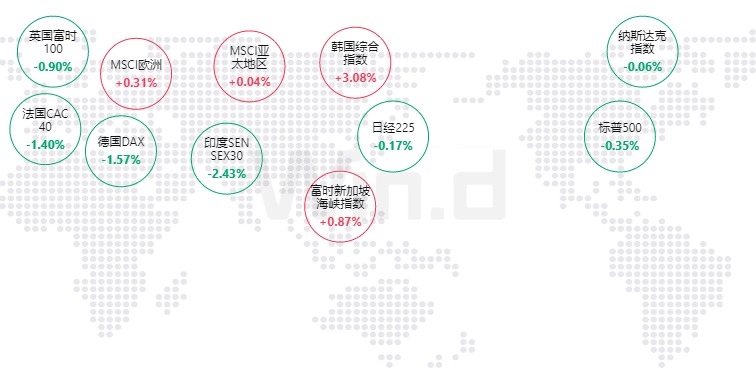
博时市场点评1月23日:两市横盘拉锯,三大指数收涨
Xin Lang Cai Jing· 2026-01-23 08:20
Group 1: Economic Policy and Market Impact - The Ministry of Civil Affairs and the Ministry of Finance announced a new subsidy program for elderly individuals with moderate to severe disabilities, effective from January 1, 2026, aimed at boosting consumption in the elderly care sector [1] - The People's Bank of China (PBOC) will continue to implement a moderately loose monetary policy, indicating that there is still room for interest rate cuts and reserve requirement ratio reductions [2][8] - The PBOC announced a 900 billion yuan medium-term lending facility (MLF) operation to maintain liquidity in the banking system, resulting in a net injection of 700 billion yuan [2][9] Group 2: Investment and Sectoral Focus - The first batch of 936 billion yuan in special long-term bonds has been allocated to support large-scale equipment upgrades across various sectors, expected to drive total investment exceeding 460 billion yuan [9] - The focus on "two new" sectors (new technologies and new industries) aims to stabilize investment and promote industrial upgrades and improvements in people's livelihoods [9] Group 3: Market Performance - On January 23, the A-share market saw all three major indices rise, with the Shanghai Composite Index closing at 4136.16 points, up 0.33% [10] - The market turnover reached 31,183.59 billion yuan, indicating increased trading activity compared to the previous day [11] - The balance of margin financing and securities lending rose to 27,249.13 billion yuan, reflecting a positive sentiment in the market [11]
格林大华期货早盘提示:钢材-20260123
Ge Lin Qi Huo· 2026-01-23 02:52
1. Report Industry Investment Rating - The investment rating for the steel industry is "volatile" [1] 2. Core View of the Report - The report analyzes the steel market, including market trends, important information, market logic, and trading strategies. It points out that the supply and inventory of five major steel products have changed, and the consumer structure of building materials and plates is consistent. Near the end of the year, the downstream winter storage willingness is average, and the winter storage volume has decreased compared with last year. The report suggests short - term long - position attempts with limited upside potential and setting stop - losses [1] 3. Summary According to the Directory 3.1 Market Review - On Thursday, rebar and hot - rolled coils closed higher, and they also closed higher in the night session [1] 3.2 Important Information - In December 2025, the output of new energy vehicles was 1.791 million, a year - on - year increase of 8.7%; from January to December, the output was 16.524 million, a year - on - year increase of 25.1% [1] - In December 2025, China's raw coal output was 437.035 million tons, a year - on - year decrease of 1.0%; from January to December, the cumulative output was 4.831782 billion tons, a year - on - year increase of 1.2%. From January to December 2025, the cumulative year - on - year growth rates of raw coal output in Shanxi, Inner Mongolia, and Shaanxi were 2.1%, - 1.0%, and 2.9% respectively [1] - On January 22, 2026, the latest data from the National Bureau of Statistics showed that in December 2025, China's excavator output was 37,305 units, a year - on - year increase of 20.8%. In 2025, China's excavator output was 379,643 units, a year - on - year increase of 16.6% [1] - Central Bank Governor Pan Gongsheng said that in 2026, the People's Bank of China will continue to implement a moderately loose monetary policy, taking promoting stable economic growth and reasonable price recovery as important considerations for monetary policy. There is still some room for reserve requirement ratio cuts and interest rate cuts this year [1] - This week, the supply of five major steel products was 8.1959 million tons, a week - on - week increase of 0.38 thousand tons; the total inventory of five major steel products was 12.5708 million tons, a week - on - week increase of 10.07 thousand tons, an increase of 0.8%; the weekly consumption of five major products was 8.0952 million tons, among which the consumption of building materials decreased by 0.8% week - on - week, and the consumption of plates decreased by 2.6% week - on - week [1] 3.3 Market Logic - This week, the supply of five major steel products was 8.1959 million tons, remaining flat week - on - week. The product structure of steel output has changed, with an increase in building materials production and a decrease in plate and coil production. The total inventory of five major steel products increased by 10.07 thousand tons week - on - week, an increase of 0.8%. The total inventory of five major products has rebounded, and the inventory changes of building materials and plates are different. Building materials are accumulating inventory (14.87 thousand tons), and plates are reducing inventory (4.8 thousand tons). In terms of consumption, the weekly consumption of five major products is 8.0952 million tons, with the consumption of building materials decreasing by 0.8% week - on - week and the consumption of plates decreasing by 2.6% week - on - week. The consumption structure of building materials and plates in the five major products is consistent. Near the end of the year, steel mills' winter storage policies are being released one after another. The downstream winter storage willingness is average, with a cautious attitude, and the winter storage volume has decreased compared with last year. The current market winter storage psychological price is concentrated at 3000 - 3100 yuan/ton, which is relatively close to the current spot price level [1] 3.4 Trading Strategy - Try short - term long positions, expecting limited upside potential, and set stop - losses. The support level for the rebar main contract is 3050, and the resistance level is 3200 [1]
新华财经早报:1月23日
Zhong Guo Jin Rong Xin Xi Wang· 2026-01-23 00:11
Group 1: Personal Consumption Loan Policy - Six major banks in China have announced the implementation of the latest fiscal interest subsidy policy for personal consumption loans, optimizing related services [5][16] - The policy's implementation period has been extended to December 31, 2026, and the support scope has been expanded to include credit card bill installment services [5][16] - The subsidy standards have been improved by removing the upper limit of 500 yuan for single consumption interest subsidies and the cumulative limit of 1,000 yuan for each borrower at one institution [5][16] Group 2: Food Safety Standards - The State Council's Food Safety Office is seeking public opinions on national standards for prepared dishes and related terminology and classification [5][16] Group 3: Pharmaceutical Retail Industry - A new policy document aimed at promoting high-quality development in the pharmaceutical retail industry has been released, focusing on enhancing professional services and health promotion [5][16] Group 4: International Gold Prices - International gold prices have surged, with spot gold and February futures exceeding $4,900, marking a new historical high [8][19] Group 5: Market Monitoring - The "Inclusive Finance - Prosperity Index" for December 2025 reached 49.48 points, indicating effective financial support and a recovery in market supply and demand [17]

继续维护好金融市场平稳运行 支持资本市场稳定发展
Zheng Quan Ri Bao· 2026-01-22 23:15
Core Viewpoint - The People's Bank of China (PBOC) will continue to implement a moderately loose monetary policy in 2026, focusing on promoting stable economic growth and reasonable price recovery as key considerations for monetary policy [1] Monetary Policy Tools - The PBOC plans to flexibly utilize various monetary policy tools such as reserve requirement ratio (RRR) cuts and interest rate reductions to maintain ample liquidity, aligning social financing scale and money supply growth with economic growth and price level expectations [1] - There is still room for further RRR and interest rate cuts this year [1] - A 0.25 percentage point reduction in the interest rates of various structural monetary policy tools has been implemented [2] Support for Key Sectors - The PBOC has established a dedicated 1 trillion yuan relending facility for private enterprises and merged the establishment of a risk-sharing tool for technology innovation and private enterprise bonds [2] - The relending quota for agricultural and small enterprises has been increased by 500 billion yuan to 4.35 trillion yuan, and the quota for technology innovation and technological transformation relending has been increased by 400 billion yuan to 1.2 trillion yuan [2] - The PBOC aims to expand the support areas of carbon reduction support tools and relending for consumer services and elderly care [2] Financial Market Stability - The PBOC emphasizes the importance of maintaining stable financial markets and managing expectations, ensuring the RMB exchange rate remains stable at a reasonable and balanced level [2] - There will be enhanced supervision and management of the bond market, foreign exchange market, money market, bill market, and gold market [2] Support for Domestic Demand and Innovation - Financial institutions are encouraged to support the expansion of domestic demand, technological innovation, and small and micro enterprises as part of a strategy to strengthen domestic circulation and promote high-quality development [2] - The PBOC will increase policy support and refine policy measures to enhance financial services for high-quality development of the real economy [3] Consumer and SME Support - A dedicated 500 billion yuan relending facility for consumer services and elderly care has been established to meet diverse financial needs in the consumption sector [3] - The PBOC will continue to enhance financing accessibility and convenience for small and micro enterprises, including increasing relending and rediscount quotas [3] Coordination with Other Departments - The PBOC will collaborate with various departments such as development and reform, commerce, industry and information technology, and science and technology to strengthen coordination and information sharing [4] - There will be an emphasis on improving internal incentive and constraint mechanisms within financial institutions to enhance the convenience, effectiveness, and coverage of financial services [4]
热卷日报:震荡整理-20260122
Guan Tong Qi Huo· 2026-01-22 11:08
1. Industry Investment Rating - Not provided in the report 2. Core Viewpoints - The current supply of hot-rolled coils is contracting while demand is resilient, with an overall tight balance between supply and demand. Pre-holiday winter stockpiling is an important support for current demand. Total social inventory is decreasing month-on-month, and the pressure on factory inventory is controllable. The overall inventory risk has marginally improved, but it is still relatively high year-on-year. Attention should be paid to the impact of the post-holiday resumption of work and production on supply and demand. The tight balance between supply and demand and inventory depletion support prices. In the future, attention should be paid to raw material costs and the strength of post-holiday demand recovery. From a technical perspective, pay attention to the support around the 30-day moving average, and maintain a cautiously bullish outlook [6] 3. Summary by Directory Market行情回顾 - **Futures price**: On Thursday, the open interest of the main hot-rolled coil futures contract increased by 4,160 lots, with a trading volume of 241,486 lots, a decrease compared to the previous trading day. The intraday low was 3,281 yuan, and the high was 3,296 yuan. The price fluctuated and stabilized during the day. From the perspective of the daily moving average, it briefly retraced to the support around the 30-day moving average and then rebounded. Attention should be paid to the pressure around the 10-day moving average. It closed at 3,287 yuan/ton, up 8 yuan or 0.24% [1] - **Spot price**: The price of hot-rolled coils in Shanghai, a major region, was reported at 3,280 yuan/ton, up 10 yuan from the previous trading day [2] - **Basis**: The basis between futures and spot was -7 yuan, with futures slightly at a premium to the spot [3] Fundamental Data - **Supply**: As of January 22, the weekly output of hot-rolled coils decreased by 29,500 tons month-on-month to 3.0541 million tons, and decreased by 172,300 tons year-on-year. The output decline month-on-month and a significant year-on-year decrease reflect that steel mills' capacity utilization has converged, possibly affected by maintenance schedules and profit fluctuations, which supports prices [4] - **Demand**: As of January 22, the weekly apparent consumption decreased by 42,000 tons month-on-month to 3.0996 million tons, and increased by 73,900 tons year-on-year. Although the demand decreased slightly month-on-month, it maintained year-on-year growth. Pre-holiday stockpiling supported demand, and overall demand showed strong resilience [4] - **Inventory**: As of January 22, the total inventory decreased by 45,500 tons month-on-month to 3.5778 million tons (social inventory decreased by 46,600 tons month-on-month, and steel mill inventory increased by 1,100 tons). Year-on-year, it increased by 212,700 tons (social inventory increased by 241,800 tons year-on-year, and steel mill inventory decreased by 29,100 tons year-on-year). The total inventory decreased month-on-month, and the inventory pressure was marginally relieved. The year-on-year increase indicates that the inventory accumulation rate this year is slightly faster than last year, but the overall risk is controllable [4] - **Policy**: The new regulations on the export license management of steel products will cause short-term fluctuations in exports, increase supply, and put pressure on prices. In the long term, it will promote industrial upgrading, structural optimization, and competitiveness improvement. The Central Economic Work Conference held in December proposed a proactive fiscal policy and a moderately loose monetary policy. Addressing involutionary competition in depth was listed as a key task for 2026, which is beneficial for prices and industry profitability. Efforts are being made to stabilize the real estate market and expand domestic demand [5] Market Driving Factor Analysis - **Bullish factors**: Decrease in supply output, expectation of the start of winter stockpiling demand, export rush, policy support ("14th Five-Year Plan", infrastructure investment), and strong iron ore as a furnace charge [6] - **Bearish factors**: Unexpected resumption of production by steel mills in January, seasonal weakening of demand, insufficient manufacturing orders, and inventory accumulation suppressing prices [6]