
宏观政策

Search documents
CPI同比结束四连降,内卷行业价格情况改善
Di Yi Cai Jing· 2025-07-09 14:38
Group 1: CPI and PPI Analysis - In June, the Consumer Price Index (CPI) turned positive with a year-on-year increase of 0.1%, ending four months of negative growth, primarily due to reduced external downward pressure and the effects of trade-in policies [1][3] - The Producer Price Index (PPI) continued to decline, with a year-on-year decrease of 3.6%, reflecting weak domestic investment demand and export pressures [1][3] - The core CPI, excluding food and energy, rose by 0.7%, marking a 14-month high, indicating that domestic demand is gradually driving price increases [6][7] Group 2: Economic Policy and Employment Measures - The State Council issued a notification to enhance employment support, focusing on stabilizing jobs, supporting enterprises, and promoting high-quality economic development [1][13] - The notification includes seven policy measures aimed at stabilizing employment, such as expanding loan support for job retention and increasing unemployment insurance refunds for small and medium-sized enterprises [13][14] - The average contribution rate of domestic demand to economic growth during the 14th Five-Year Plan period is projected to be 86.4%, highlighting the importance of effective demand expansion [2] Group 3: Industry-Specific Insights - The automotive and photovoltaic industries have shown positive price changes, with the prices of complete vehicles and new energy vehicles increasing by 0.5% and 0.3% respectively [12] - The prices of high-tech manufacturing sectors, such as integrated circuits and wearable devices, have also seen year-on-year increases, indicating a shift towards new economic drivers [11][12] - The construction and infrastructure sectors are facing challenges due to seasonal weather impacts and an oversupply of materials, contributing to a decline in PPI [10]

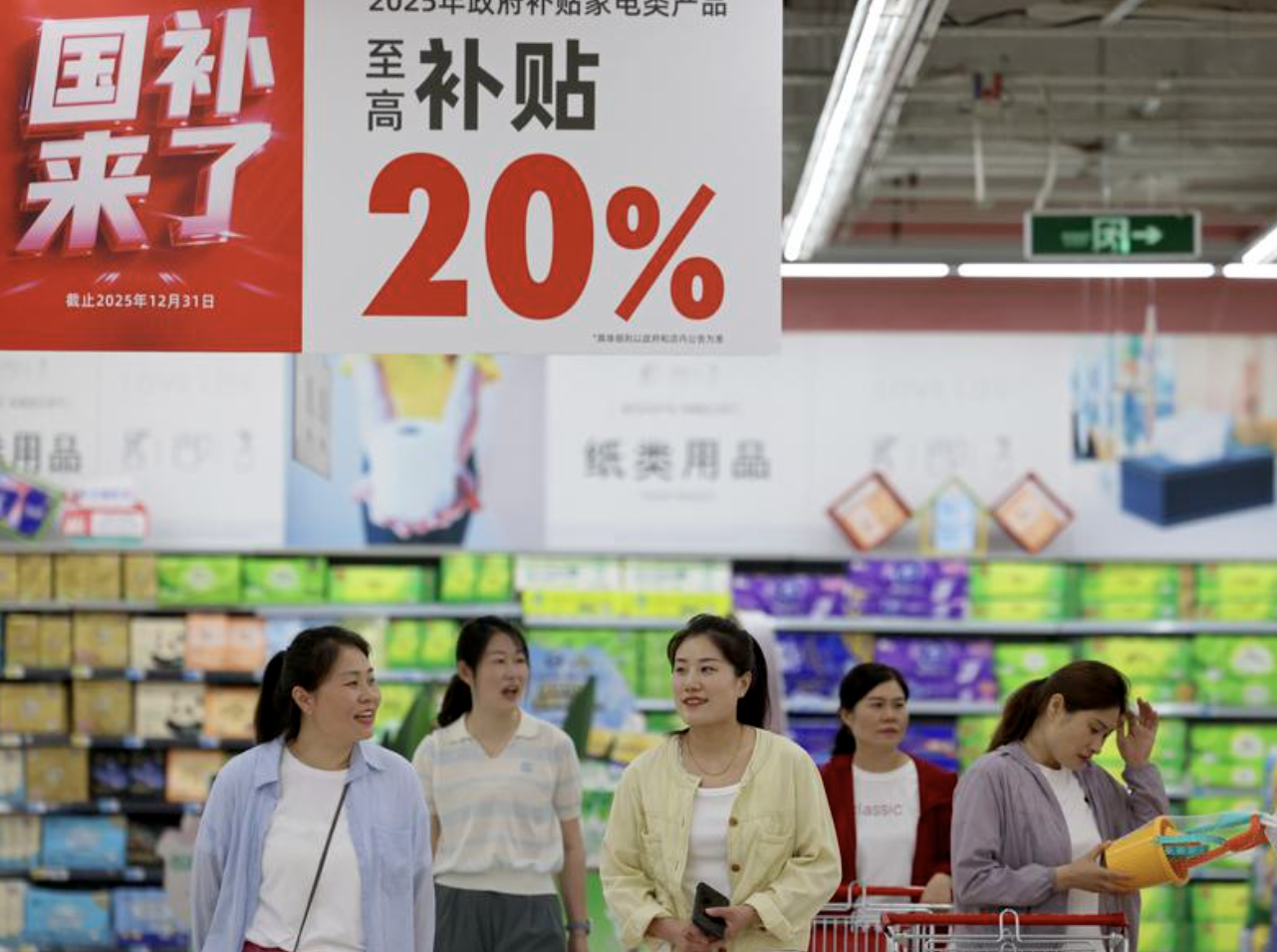
新华全媒+|CPI同比由降转升 部分行业价格呈企稳回升态势——透视6月份物价数据
Sou Hu Cai Jing· 2025-07-09 13:32
Group 1: CPI Trends - In June, the Consumer Price Index (CPI) turned from a decline to an increase of 0.1% year-on-year, while the month-on-month change decreased by 0.1%, narrowing the decline by 0.1 percentage points compared to the previous month [2] - The marginal improvement in CPI is attributed to the rebound in industrial consumer goods prices and the upward pressure on domestic refined oil prices due to external factors [2] - The core CPI, excluding food and energy, rose by 0.7% year-on-year in June, marking a 0.1 percentage point increase from the previous month, the highest in nearly 14 months [3] Group 2: PPI Trends - The Producer Price Index (PPI) decreased by 0.4% month-on-month in June, with the decline remaining consistent with the previous month, although some industry prices showed signs of stabilization and recovery [5] - The year-on-year decline in PPI expanded by 0.3 percentage points compared to the previous month, influenced by seasonal price declines in domestic raw materials and uncertainties in the international trade environment [5] - Certain sectors, such as the manufacturing of gasoline and new energy vehicles, saw a month-on-month price increase of 0.5% and 0.3%, respectively, with year-on-year declines narrowing by 1.9 and 0.4 percentage points [6] Group 3: Consumer Behavior and Policy Impact - The implementation of more proactive macro policies has led to continuous improvement in the economic climate for both manufacturing and non-manufacturing sectors, addressing supply-demand structural issues and boosting the development speed of certain consumer goods and equipment manufacturing industries [4] - The effects of consumption promotion policies have been evident, with prices of durable consumer goods, home textiles, and household appliances rising by 2.0%, 2.0%, and 1.0% year-on-year, respectively [3] - The transition of the consumption market from "scale expansion" to "quality enhancement" is expected to further improve service consumption in culture and sports, driving a rebound in consumer prices [6]
国家统计局:CPI由降转涨主要受工业消费品价格有所回升影响
news flash· 2025-07-09 01:37
国家统计局:6月份,CPI同比上涨0.1%,为连续下降4个月后转涨,CPI由降转涨主要受工业消费品价 格有所回升影响。 受环比下降及对比基数变动影响,6月PPI同比降幅比上月扩大0.3个百分点,但随着各项宏观政策加力 实施,部分行业供需关系有所改善,价格呈企稳回升态势。 ...
宝城期货股指期货早报-20250708
Bao Cheng Qi Huo· 2025-07-08 02:21
1. Report's Industry Investment Rating - There is no information about the industry investment rating provided in the report. 2. Core Viewpoints of the Report - For the IH2509 variety, the short - term view is "oscillation", the medium - term view is "rise", and the intraday view is "oscillation with a slight upward bias", with the core logic being that positive policy expectations provide strong support [1]. - For IF, IH, IC, and IM varieties, the intraday view is "oscillation with a slight upward bias", the medium - term view is "rise", and the reference view is "oscillation with a slight upward bias". The core logic is that recent stock market trading volume has decreased, indicating weakened market chasing sentiment and slower upward momentum of stock indices. The main logic for the stock index rebound is the need for favorable policies to stabilize economic demand and market expectations, and the market is waiting for policy implementation from the Politburo meeting in July. In the short term, stock indices will mainly oscillate within a range [5]. 3. Summaries Based on Related Catalogs 3.1 Variety Viewpoint Reference - Financial Futures Stock Index Sector - For the IH2509 variety, short - term: oscillation; medium - term: rise; intraday: oscillation with a slight upward bias; view reference: oscillation with a slight upward bias; core logic: policy - end positive expectations provide strong support [1]. 3.2 Main Variety Price Market Driving Logic - Financial Futures Stock Index Sector - Varieties: IF, IH, IC, IM. Intraday view: oscillation with a slight upward bias; medium - term view: rise; reference view: oscillation with a slight upward bias. Yesterday, each stock index oscillated narrowly. The total stock market trading volume was 1227 billion yuan, a decrease of 227.4 billion yuan from the previous day. The recent decline in trading volume reflects weakened market chasing sentiment and slower upward momentum of stock indices. The main logic for the stock index rebound is the need for favorable policies to stabilize economic demand and market expectations, and the market is waiting for policy implementation from the Politburo meeting in July. In the short term, stock indices will mainly oscillate within a range [5].
李强:中国有充足的资源和办法对冲外部不利影响
news flash· 2025-07-08 00:21
Core Viewpoint - China has sufficient resources and methods to counter external adverse impacts and is confident in its ability to promote sustained and healthy economic development [1] Group 1: Economic Strategy - The government is implementing more proactive macro policies and advancing the strategy to expand domestic demand [1] - Special actions to boost consumption are being initiated to leverage the large market of over 1.4 billion people, which will continue to release significant demand [1] Group 2: International Cooperation - China plans to introduce more measures for autonomous and unilateral opening, strictly adhering to WTO principles and market rules [1] - The country aims to continue sharing development opportunities with other nations, contributing positive energy to the world [1]
21社论丨用好用足政策空间,发挥内需稳经济作用
2 1 Shi Ji Jing Ji Bao Dao· 2025-07-07 22:41
Economic Overview - China's economy is showing resilience with a stable growth outlook, supported by proactive macro policies and a strong domestic demand [1][2] - Export growth in the first five months of the year was 6.0% in USD terms, surpassing last year's annual growth of 5.8% [1] - The contribution of net exports to GDP growth in Q1 was 38.9%, higher than last year's 30.3% [1] Domestic Demand and Consumption - Domestic consumption is improving, with retail sales growing by 5.0% year-on-year from January to May, compared to 3.5% for the entire previous year [2] - Key consumer sectors such as communication equipment, home appliances, and furniture saw growth rates exceeding 20% due to the "old-for-new" consumption policy [2] - Fixed asset investment also increased by 3.7% year-on-year in the same period, outpacing last year's 3.2% [2] Fiscal and Monetary Policy - Fiscal policy is becoming more proactive, with a record-high deficit ratio and significant expansion in special bonds and long-term special bonds [1][3] - The total fiscal space available for the second half of the year exceeds 7 trillion yuan, with ample room for supporting consumption, investment, and foreign trade [3] - Monetary policy is expected to remain flexible, focusing on the effectiveness of existing policies rather than further easing in the short term [2] Structural Reforms and Future Outlook - Economic pressures are manageable, providing a window for structural reforms, including the promotion of a unified national market and the exit of outdated production capacity [3] - The government aims to transition from a manufacturing powerhouse to a major consumer economy, with new policies such as annual childcare subsidies starting in 2025 [3] - Additional measures to boost consumption, including optimizing vacation systems and improving social security, are being actively implemented [3]
本周热点前瞻2025-07-07
Guo Tai Jun An Qi Huo· 2025-07-07 06:51
This Week's Key Focus - On July 7 at 16:00, the People's Bank of China will announce China's foreign exchange reserves and gold reserves for June [2][3] - On July 8, the Dalian Commodity Exchange will officially list and trade pure benzene futures and options [2][8] - On July 8, the US tariff suspension period expires [2][11] - On July 9 at 09:30, the National Bureau of Statistics will announce China's CPI and PPI for June [2][13] - On July 10 at 02:00, the Federal Reserve will release the minutes of its monetary policy meeting [2][16] - From July 10 - 17 at 16:00, the People's Bank of China will announce the financial statistics report, the incremental statistics report of social financing scale, and the stock statistics report of social financing scale for June [2][17] - On July 12 at 00:00, the US Department of Agriculture (USDA) will release the USDA monthly supply - demand report [2][21] This Week's Hotspot Preview July 7 - Expected June foreign exchange reserves are $3.3 trillion, compared to $3.285 trillion in May. Gold reserves in May were 73.83 million ounces [3] - The "Procedural Trading Management Implementation Rules" of the Shanghai, Shenzhen, and Beijing Stock Exchanges come into effect. The rules define high - frequency trading standards and make differentiated regulatory arrangements [4] - Expected Eurozone Sentix investor confidence index for July is 1.2, with a previous value of 0.2 [5] - Expected Eurozone retail sales monthly rate for May is - 0.5%, with a previous value of 0.1%; the annual rate is expected to be 1.4%, with a previous value of 2.3% [7] July 8 - Pure benzene futures will be listed for trading starting at 9:00 am, and pure benzene options starting at 21:00. The daily price limit for pure benzene futures is 7% of the previous trading day's settlement price, and 14% for new contracts on the first listing day. The contract margin is 8% of the contract value, and the option position limit is 2,000 lots [8] - Expected Australian cash rate on July 8 is 3.60%, with a previous value of 3.85%. The RBA governor will hold a monetary policy press conference [9] - Expected Eurozone Sentix investor confidence index for July is 0, with a previous value of 0.3 [10] - The US tariff suspension period expires [11] July 9 - The US EIA will release its monthly short - term energy outlook report, which may affect crude oil and related commodity futures prices [12] - Predicted June CPI year - on - year growth is 0%, compared to a decline of 0.1% previously; predicted June PPI year - on - year decline is 3.1%, compared to a decline of 3.3% previously. If the predictions hold, it will slightly boost commodity and stock index futures prices but slightly suppress treasury bond futures [13] - The US EIA will announce the change in crude oil inventories for the week ending July 4. A continued increase will suppress crude oil and related commodity futures prices [15] July 10 - The Federal Reserve will release the minutes of its monetary policy meeting, which may impact relevant futures prices [16] - Expected June M2 year - on - year growth is 8.2%, compared to 7.9% previously; expected new RMB loans in June are 2 trillion yuan, compared to 620 billion yuan previously; expected incremental social financing scale in June is 3.85 trillion yuan, compared to 2.287 trillion yuan previously. Higher values may boost commodity, stock index, and treasury bond futures [17] July 11 - The IEA will release its monthly crude oil market report, which may affect crude oil and related commodity futures prices [18] - The Ministry of Agriculture and Rural Affairs will release the monthly report on the supply - demand situation of agricultural products, which may impact relevant agricultural product futures prices [19] - Expected number of initial jobless claims in the US for the week ending July 5 is 235,000, compared to 233,000 previously. A slightly higher value may slightly boost non - ferrous metals, crude oil, and related commodity futures prices but slightly suppress gold and silver futures prices [20] July 12 - The USDA will release its monthly supply - demand report, which may impact relevant agricultural product futures prices [21]
国新国证期货早报-20250707
Guo Xin Guo Zheng Qi Huo· 2025-07-07 06:49
Report Summary 1. Market Performance on July 4, 2025 - A-share market: The Shanghai Composite Index rose 0.32% to 3472.32 points, the Shenzhen Component Index fell 0.25% to 10508.76 points, and the ChiNext Index dropped 0.36% to 2156.23 points. The trading volume of the two markets reached 1428.6 billion yuan, an increase of 118.8 billion yuan from the previous day [1]. - Index performance: The CSI 300 Index closed at 3982.20, up 14.13 [2]. 2. Futures Market Analysis 2.1. Coal Futures (Coke and Coking Coal) - Coke: The weighted index of coke adjusted downward, closing at 1438.7, down 6.3. Supply contracted as coke enterprises had small losses, low production enthusiasm, and reduced daily output. Demand had short - term support as iron - water production increased slightly. It was expected to run in a high - level oscillation [2]. - Coking coal: The weighted index of coking coal fluctuated and sorted, closing at 852.9 yuan, down 9.3. Domestic supply decreased due to safety supervision in Inner Mongolia and partial resumption in Shanxi. Import had inventory pressure. Demand was marginally better as blast - furnace iron - water production increased slightly while coke - enterprise开工 decreased [2]. 2.2. Sugar Futures (Zhengzhou Sugar) - The 2509 contract of Zhengzhou sugar had a narrow - range oscillation and a slight decline at night. In the 2024/2025 season, Guangxi's sugarcane planting area increased by 110,000 mu to 1.135 million mu, and sugar production increased by 283,600 tons to 6.465 million tons. Brazil's sugar exports in June were 3,361,831 tons, higher than 3,194,340 tons in the same period last year [2]. 2.3. Rubber Futures (Shanghai Rubber) - Shanghai rubber declined at night due to short - selling pressure. As of July 4, the natural rubber inventory in the Shanghai Futures Exchange was 212,772 tons, down 2148 tons, and the futures warehouse receipts were 188,850 tons, down 3110 tons. The 20 - number rubber inventory was 35,784 tons, up 1513 tons, and the futures warehouse receipts were 29,736 tons, up 2118 tons [3]. 2.4. Soybean Meal Futures - International market: The US soybean planting area in 2025 decreased by 4% year - on - year. The growth indicators were close to the previous year and the five - year average. Future weather in the US Midwest was favorable for growth, but potential weather factors might attract funds [3]. - Domestic market: On July 4, the main M2509 contract of soybean meal closed at 2954 yuan/ton, down 0.14%. Domestic oil mills had sufficient soybean supply, high operating rates, and large production. Inventory would increase, limiting price increases. It was expected to oscillate in the short term [3][4]. 2.5. Live Pig Futures - On July 4, the live pig futures rose slightly, with the main LH2509 contract closing at 14305 yuan/ton, down 0.45%. The terminal market was in the off - season, but early - month supply was tight due to scale farms' price - holding and farmers' reluctance to sell. As the price rose, the supply rhythm might recover. There was medium - term supply pressure in the third quarter [4]. 2.6. Cotton Futures - The main contract of Zhengzhou cotton closed at 13850 yuan/ton on Friday night. The minimum basis price of Xinjiang designated delivery warehouses was 430 yuan/ton. High temperatures of 35 - 40°C were expected in southern and eastern Xinjiang [4]. 2.7. Copper Futures (Shanghai Copper) - The price of Shanghai copper was affected by strong US non - farm data, a stronger US dollar, and rising non - US copper inventories. Supply pressure eased, but long - term supply was still tight. Demand was weak in domestic power infrastructure and home appliance procurement, but grid investment and new - energy demand provided some support. It was expected to oscillate in the short term [4]. 2.8. Log Futures - The 2509 contract of logs opened at 796, with a low of 791, a high of 798, and closed at 795, with a daily reduction of 154 lots. Spot prices in Shandong and Jiangsu were stable. Port inventory increased slightly, demand was weak, and the supply - demand relationship was stable [5]. 2.9. Steel Futures (Rebar) - The Central Financial and Economic Commission's meeting on July 1 was expected to improve the steel industry's supply - demand pattern, boosting the rebar futures price. Further price increases depended on substantial production cuts [5]. 2.10. Alumina Futures - The raw - material supply of alumina was relatively sufficient, with port inventory in the medium - high range. Guinea's supply decreased seasonally, and the price was stable. Domestic production capacity was high, and the futures price rebounded. Demand was stable as electrolytic - aluminum production capacity was capped [6]. 2.11. Aluminum Futures (Shanghai Aluminum) - Domestic production capacity was stable. Due to the off - season, downstream orders decreased, ingot production increased, and inventory accumulated slightly. Demand was weak as downstream buyers were cautious about high prices, but consumption expectations were positive due to policy support [6][7]. 2.12. Lithium Carbonate Futures - The price of battery - grade lithium carbonate increased. The spot price stopped falling and rebounded due to improved demand expectations in July and rigid - demand orders. However, supply was still strong, and the oversupply situation continued [7].
经济日报:我国宏观政策仍有进一步发力的空间
news flash· 2025-07-06 23:20
文章称,用好用足更加积极的财政政策和适度宽松的货币政策,持续用力、更加给力,推动已确定的各 项政策举措充分发挥红利。我国宏观政策仍有进一步发力的空间。面临外部环境更趋复杂严峻、国内需 求不足、风险隐患较多等困难和挑战,应提高宏观调控前瞻性、针对性、有效性,根据形势变化及时推 出增量储备政策,更好地巩固经济发展和社会稳定基本面。 ...
用好用足宏观政策释放红利
Jing Ji Ri Bao· 2025-07-06 21:43
当前经济稳定运行的压力犹存,需要加紧实施更加积极有为的宏观政策。通过增强宏观政策协调配合, 用好用足政策空间,充分释放政策效应,就可以更有效扩大国内需求、畅通经济循环、增强发展动能。 近日,财政部公布三季度将发行11只超长期特别国债,其中4只发行时间较原计划提前。此外,今年第 三批消费品以旧换新资金将在7月下达的消息也引起高度关注。一系列密集举措显示,宏观政策正在加 紧发力,为宏观经济运行提供更坚强支撑。 从总体看,今年宏观政策呈现"靠前发力"的特点。更加积极的财政政策方面,前5个月发行国债6.29万 亿元,同比增长38.5%;发行新增地方政府债券1.98万亿元,增长36.6%;全国一般公共预算支出增速达 4.2%,加强对惠民生、促消费、增后劲领域的投入,各项重点支出保持较高增幅。货币政策适度宽 松,强化逆周期调节,综合运用多种货币政策工具,为经济持续回升向好创造适宜的货币金融环境。 用好用足更加积极的财政政策和适度宽松的货币政策,持续用力、更加给力,推动已确定的各项政策举 措充分发挥红利。促进扩大内需方面,尽早发行和使用超长期特别国债、专项债券等,发挥财政资金引 导和带动效应,三季度部分超长期特别国债提前发 ...