全球资产重估

Search documents
油价影响显然被低估了
虎嗅APP· 2026-03-23 00:15
Group 1 - The core viewpoint of the article is that the ongoing Middle East conflict has transformed into a protracted war, leading to a significant increase in Brent crude oil prices, which have surpassed $100, impacting global economies and the U.S. political landscape [2][3]. - The financial markets have experienced a downturn, with East Asian stock markets plummeting and both U.S. and A-shares weakening, indicating a global re-evaluation of asset pricing driven by oil prices [3][4]. - The Trump administration is under pressure to lower oil prices, with the U.S. Department of Energy announcing the release of 172 million barrels from the Strategic Petroleum Reserve, marking one of the largest single releases in history [5][7]. Group 2 - The article discusses the potential formation of a "oil price control team" by the Trump administration, as Wall Street begins to suspect manipulative actions to curb rising oil prices [8]. - The military escort of oil tankers in the Strait of Hormuz by U.S. forces is seen as a temporary measure, with historical precedents suggesting that such military interventions may not guarantee safety for oil transport [9][11]. - The article emphasizes that the control of oil prices is crucial for maintaining the U.S. dollar's dominance, as any loss of influence over oil pricing could undermine the petrodollar system [12][14]. Group 3 - The potential for a gradual de-dollarization process is highlighted, with countries like Saudi Arabia possibly moving towards non-dollar transactions, which could significantly impact U.S. Treasury bonds and the overall financial system [18][19]. - The article suggests that Middle Eastern sovereign wealth funds are increasingly seeking investment opportunities outside of the U.S. dollar, indicating a shift in global capital flows [27]. - The ongoing energy crisis is prompting a reevaluation of investment strategies, with a focus on renewable energy sources as traditional energy becomes more expensive and unstable [29].


分论坛:宏观经济与政策|国泰海通“远望又新峰”2026春季策略会
国泰海通证券研究· 2026-03-19 07:22
Group 1 - The core viewpoint of the article emphasizes the significant restructuring of the international order and the comprehensive reassessment of global assets due to geopolitical tensions and economic policies [3][4]. - The article highlights the implications of the U.S. Supreme Court's decision against Trump's tariffs and the potential blockade crisis in the Strait of Hormuz following the U.S.-Israel joint attack on Iran [3][4]. - The conference aims to address how to navigate the evolving international situation, manage geopolitical risks, and optimize global asset allocation strategies [3][4]. Group 2 - The agenda includes discussions on the strategic reassessment of China's hard assets in light of the international order's restructuring [4]. - There will be a focus on the current trends in international geopolitical conflicts, associated risks, and the state of U.S.-China relations [4].

A股牛市尚能“饭否”?
经济观察报· 2026-03-17 16:26
Core Viewpoint - The recent performance of A-shares is under scrutiny as the market faces both internal and external challenges, raising concerns about whether the Shanghai Composite Index will hold above the 4000-point mark [2][12]. Group 1: A-share Market Performance - The current bull market in A-shares, which began in September 2024, is experiencing difficulties, with significant net redemptions in equity ETFs, particularly those held by institutions [2][8]. - The total share of equity ETFs in China has been declining since reaching a peak of 22,236.69 billion shares at the end of 2025, dropping to 20,977.90 billion shares by the end of February 2026 [2][9]. - The Shanghai Composite Index has struggled to maintain its position above 4000 points, recently closing at 4049.91 points after a 0.85% drop, indicating a potential test of the critical 4000-point level [2][12]. Group 2: Global Market Context - Global stock indices have faced a downturn, with significant declines observed in major markets such as South Korea (down 11.12%), Japan (down 8.67%), and France (down 7.51%) since the onset of geopolitical tensions in the Middle East [5][6]. - Despite the global downturn, the Shanghai Composite Index's decline of only 2.71% during the same period suggests a degree of independence in its performance, attributed to its relatively lower valuation compared to other global markets [5][6]. Group 3: Institutional Behavior - Recent reports indicate that institutional investors have begun to exit the market, with net redemptions in equity ETFs amounting to 10.62 billion yuan, reflecting a trend of profit-taking after substantial gains during the bull market [8][10]. - Regulatory changes, including increased margin requirements, have contributed to a more cautious approach among investors, leading to a reduction in leverage and a focus on stabilizing market conditions [10][11]. - The decline in equity ETF shares is seen as a strategic move by institutions to realize profits while adhering to regulatory guidance, rather than a sign of pessimism regarding the long-term outlook for A-shares [10][14]. Group 4: Future Outlook - Historical analysis shows that the Shanghai Composite Index has only successfully maintained a position above 4000 points on two occasions, both of which were followed by prolonged bear markets [12][13]. - However, experts believe that the current market conditions are more favorable for sustaining the index above 4000 points, citing the increasing importance of the capital market and the attractiveness of Chinese valuations amid global uncertainties [12][13]. - The recent profit-taking by institutions is viewed as a normal operational strategy rather than a negative sentiment towards the market's future, with many institutions remaining optimistic about A-shares [12][14].
首席经济学家眼中的2026年大类资产图景
Xin Lang Cai Jing· 2026-01-12 12:29
Core Viewpoint - The global macro environment is entering a critical phase, with a shift from a unipolar to a multipolar order, leading to a revaluation of assets, particularly focusing on gold, RMB assets, stocks, and emerging markets [3][16]. Group 1: Federal Reserve Policy Shift - The Federal Reserve's policy direction is a key variable for global asset pricing, with expectations of continued interest rate cuts in 2026 due to internal liquidity demands rather than fully controlled inflation [5][17]. - The probability of the Fed entering a new expansionary phase is increasing, which may lead to a downward trend in short-term rates while long-term inflation expectations remain elevated, resulting in a steepening yield curve [5][19]. - The correlation between the US dollar index and risk indicators has weakened, indicating a decline in the dollar's safe-haven status during risk events [5][19]. Group 2: Precious Metals Outlook - Gold is transitioning from a traditional safe-haven asset to a core anchor in the new asset pricing system, with expectations of significant price increases due to long-term upward trends and global liquidity indicators [7][21]. - Silver and certain base metals present elastic opportunities, as historical correlations with global liquidity suggest potential for structural market movements [7][21]. - Both gold and silver are viewed as important stabilizers in asset allocation, with no systemic basis for a downturn amid ongoing Fed rate cuts and a weakening dollar [7][21]. Group 3: Emerging Markets Revaluation - The transition to a multipolar order is reflected in unconventional market phenomena, such as the weakening of the dollar's safe-haven property and narrowing emerging market spreads, indicating a need for asset revaluation [9][23]. - Emerging markets have surpassed developed economies in manufacturing output, yet their asset valuations do not fully reflect this shift, suggesting significant long-term revaluation potential [9][23]. - The underrepresentation of the multipolar trend in asset prices presents future investment opportunities [9][10][23]. Group 4: RMB Assets and Stock Market - The RMB is expected to appreciate steadily in 2026, supported by the Fed's rate cuts and rising price levels in China, with potential for over 30% cumulative appreciation in the long term [11][24]. - The stock market outlook is positive, with expectations for A-shares to reach their peak in the second half of the year, driven by economic recovery and price increases [11][15][26].
首席经济学家眼中的2026年大类资产图景
第一财经· 2026-01-12 10:21
Core Viewpoint - The article discusses the insights from the "2026 China Chief Economist Forum Annual Meeting," highlighting the shift in global asset pricing logic and the focus on gold, RMB assets, stocks, and emerging markets as key investment areas amid a changing macroeconomic environment [3]. Group 1: Federal Reserve Policy - The Federal Reserve's policy direction is seen as a critical variable for global asset pricing, with expectations of continued interest rate cuts driven by the financial system's liquidity needs rather than controlled inflation [4]. - There is an increasing probability that the Federal Reserve will continue to cut rates and re-enter an expansionary balance sheet cycle in 2026, leading to a downward trend in short-term interest rates while long-term inflation expectations may not decline simultaneously, resulting in a steepening yield curve [6]. - The correlation between the US dollar index and risk indicators has weakened, indicating that the dollar's safe-haven status is no longer stable [6]. Group 2: Gold and Precious Metals - Gold is viewed as transitioning from a traditional safe-haven asset to a "core anchor" in the new asset pricing system, with expectations of a significant upward shift in its price center due to the restructuring of the global credit system [9]. - Silver and certain base metals are highlighted for their potential, as silver's historical correlation with global liquidity remains strong, suggesting that structural opportunities within precious metals may not yet be fully realized [9]. - Both gold and silver are considered important stabilizers in asset allocation, with no systemic basis for a decline in their prices amid ongoing rate cuts and a weakening dollar [9]. Group 3: Multi-Polar Order and Asset Repricing - The transition from a unipolar to a multipolar world order is reflected in unconventional market phenomena, such as the weakening of the dollar's safe-haven property and the narrowing of emerging market spreads [12]. - Emerging markets are increasingly significant in global manufacturing, trade, and economic growth, yet their asset valuations have not fully adjusted to reflect this change, indicating a long-term repricing opportunity [12][13]. Group 4: RMB Assets - There is a consensus among economists that the RMB is likely to appreciate steadily in 2026 due to the combined effects of the Federal Reserve's rate cuts and rising price levels in China, with potential for over 30% cumulative appreciation in the long term [15][16]. - The stock market is also viewed positively, with expectations that the A-share market may reach its peak in the second half of the year, driven by economic recovery and price increases [18].
机构看金市:12月10日
Xin Hua Cai Jing· 2025-12-10 04:31
Group 1: Market Trends and Analysis - The spot silver price has surpassed $60 per ounce, reaching a new high, driven by low supply elasticity, low inventory, strong ETF demand, and a strong willingness for physical delivery [1] - Concerns over tariff risks have led to significant silver shipments to the U.S., exacerbating liquidity tensions in the London market, while rising risk aversion has pushed silver prices to new highs [2] - The expectation of a 25 basis point rate cut by the Federal Reserve is priced in, with key focus on guidance for rate cuts in the first half of 2026 and the appointment of a new Fed chair [1][2] Group 2: Long-term Outlook for Precious Metals - Precious metals are expected to remain a long-term asset allocation choice due to the deterioration of the U.S. dollar credit system and global monetary system restructuring [2] - State Street anticipates gold prices will likely consolidate between $4,000 and $4,500 per ounce in 2026, despite a potential slowdown in price increases next year [3] - The ongoing global debt increase, persistent inflation, and rising long-term yields make gold an attractive hedge asset [3] Group 3: Short-term Price Dynamics - Silver prices are expected to experience a correction before reaching new highs, influenced by changing market dynamics and a decrease in demand from India post-festival season [3] - The one-month borrowing rate for silver in London has exceeded 6.5%, indicating tight supply expectations [2] - The gold-silver ratio is showing signs of slight overselling, suggesting potential volatility in silver prices while maintaining an optimistic outlook [3]
不一样的全球牛市
Shang Hai Zheng Quan Bao· 2025-11-04 19:09
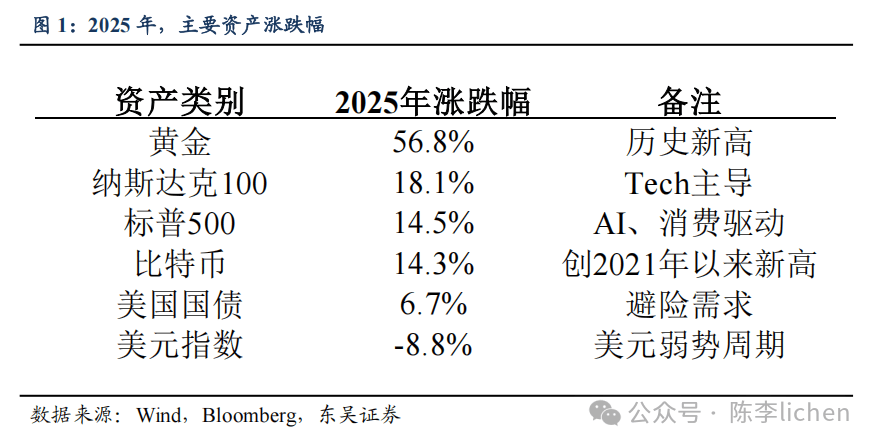
Core Viewpoint - Despite global economic slowdown and geopolitical uncertainties, various asset classes including stocks, bonds, gold, and cryptocurrencies have experienced a rare simultaneous rise in 2023, challenging traditional investment logic [2] Group 1: Global Liquidity and Monetary Policy - Global liquidity remains abundant, serving as a foundation for rising asset prices, with global M2 reaching $117.6 trillion as of August 2025, an increase of $9.37 trillion from the previous year [3] - Major economies like the US and EU are entering a rate-cutting cycle, which lowers risk-free rates and encourages capital flow into various assets [3] - The Federal Reserve has implemented its second rate cut of the year, with expectations of continued cuts into 2026, potentially lowering the federal funds rate target to between 3.00% and 3.25% [3] Group 2: Changes in Investment Logic and Risk Appetite - The weakening of dollar credit has led to a global asset reallocation, driving up asset prices, as the dollar index has fallen nearly 9% this year [4] - There is a simultaneous reduction in dollar exposure by global central banks and private sectors, with a significant increase in gold holdings [4] - The current market is characterized as a "credit transfer" phenomenon, driven by the erosion of confidence in the dollar's long-term purchasing power and political neutrality [4] Group 3: Technology Sector and Market Dynamics - The tech stock boom, catalyzed by AI transformations, has significantly boosted asset prices, with major tech companies contributing approximately 41% to the S&P 500 index's gains this year [4] - The concentration of investments in tech stocks has reached its highest level since the internet bubble, indicating a shift in market dynamics [4] Group 4: Market Sentiment and Future Outlook - Discussions around whether the current market represents an opportunity or a bubble are ongoing, with some analysts noting similarities to historical bubbles but asserting that the current rise is fundamentally driven [5] - The primary risk identified is the potential for earnings to fall short of expectations, which could lead to significant market corrections [5]
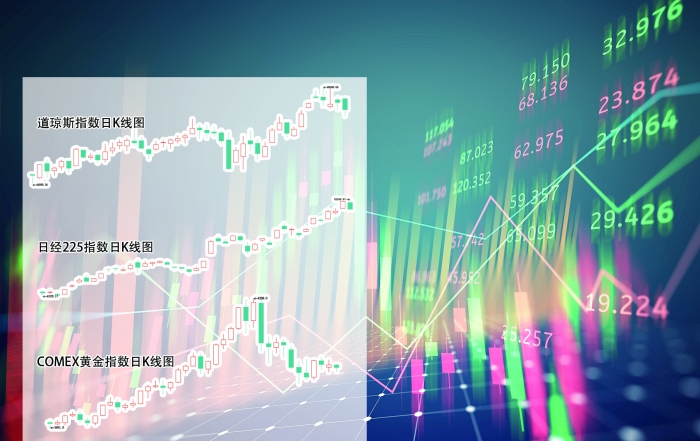
【黄金期货收评】黄金长期看涨逻辑未改 沪金上涨1.27%
Jin Tou Wang· 2025-10-31 09:39
Core Viewpoint - The gold market is experiencing upward pressure due to a combination of factors including expectations of further interest rate cuts by the Federal Reserve, rising geopolitical tensions, and increased demand for gold as a safe-haven asset [3][4]. Market Data - On October 31, the closing price of Shanghai gold futures was 921.92 yuan per gram, reflecting a daily increase of 1.27% with a trading volume of 395,964 lots and an open interest of 156,891 lots [1]. Fundamental News - The spot price of gold in Shanghai on October 31 was quoted at 916.60 yuan per gram, indicating a discount of 5.32 yuan per gram compared to the futures price [3]. - The expectation of further interest rate cuts by the Federal Reserve is fueled by recent weak employment reports, which have intensified the urgency for monetary easing [3]. - Heightened risk aversion due to factors such as U.S. debt expansion, de-dollarization, escalating geopolitical conflicts, and the reshaping of economic dynamics has increased the strategic value of gold as a hedge [3]. Institutional Perspectives - According to Heng Tai Futures, in the long term, non-U.S. assets are expected to outperform due to the deterioration of the U.S. credit system and the restructuring of the global monetary system. Gold remains a key asset for long-term allocation [5]. - In the short term, after a significant rise in gold prices, technical indicators suggest that the market is in an overbought condition, indicating a potential for a substantial pullback. Traders are advised to take partial profits on long positions [5].
全球牛市“幻象”背后,对美元信用质疑会持续吗
Di Yi Cai Jing· 2025-10-29 04:16
Core Viewpoint - The current global financial market is experiencing a unique phenomenon where almost all major assets are rising simultaneously despite economic slowdown and geopolitical tensions, indicating a global asset revaluation driven by a "credit crisis" related to the dollar's credibility rather than its status as a reserve currency [1][14]. Group 1: Asset Price Movements - From 2025 onwards, major stock market indices have risen, while bond yields in major economies have decreased, leading to an increase in bond values [2]. - The rise in asset prices is not due to accelerated global economic growth, as the IMF predicts a decline in global growth rates for 2025 compared to 2024 [2]. - The increase in asset prices is not a result of further global liquidity easing, as global M2 reached $113 trillion by July 2023, with marginal growth rates remaining stable [2][7]. - The rise in asset prices is not driven by a specific technology cycle, such as artificial intelligence, as traditional sectors like finance and real estate are also experiencing gains [12][13]. Group 2: Dollar Credibility Issues - The dollar is facing a credibility crisis stemming from political, financial, and fiscal dimensions, leading to a structural change in market trust regarding its long-term purchasing power and political neutrality [14][15]. - The political shift in the U.S. towards protectionism and unilateralism has raised doubts about America's commitment to maintaining global stability [16]. - The frequent use of the dollar payment system as a diplomatic tool has prompted countries to reassess their reliance on the dollar [16]. - The continuous growth of U.S. government debt has raised concerns about the long-term purchasing power of the dollar [16]. Group 3: Future Outlook for Dollar Credibility - The recovery of dollar credibility is not solely under U.S. control but depends on the evolution of the global political and economic landscape [17]. - Key factors for potential recovery include a return to policy certainty post-2026 U.S. midterm elections, sustained economic improvement, and robust monetary policy operations by the Federal Reserve [17][18]. - Improvements in the international environment and addressing deep structural issues, such as manufacturing return and debt control, are essential for the long-term restoration of dollar credibility [19][20].
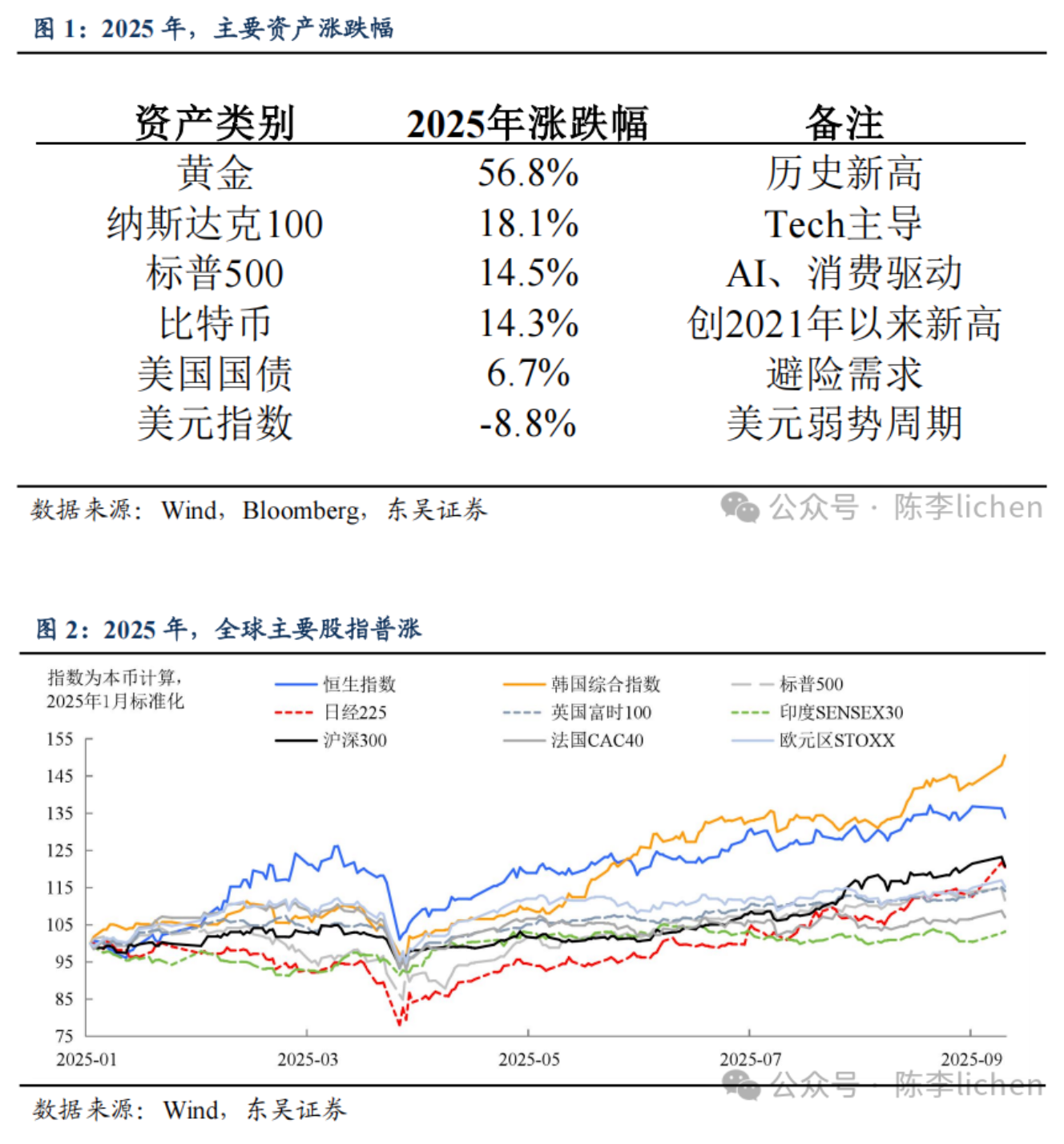
陈李:全球牛市幻象——信任的重新分配,对美元的信用质疑会持续吗?
Sou Hu Cai Jing· 2025-10-28 06:03
Core Viewpoint - The current global financial market is experiencing an unusual "comprehensive bull market," where major assets are rising in tandem despite economic slowdown and geopolitical tensions, driven by a reassessment of asset values due to weakening confidence in the dollar's long-term purchasing power and political neutrality [1]. Group 1: Global Asset Bull Market - Since 2025, major stock market indices have risen, with notable increases in European and Japanese markets, although these improvements alone do not fully explain the global asset price surge [2][9]. - Asset price increases are not driven by accelerated global economic growth, as the IMF predicts a decline in global growth rates for 2025 compared to 2024 [9]. - The rise in asset prices is not a result of further easing of global liquidity, as the marginal increase in global M2 has not significantly exceeded 2024 levels, despite a total M2 of $113 trillion by July 2025 [12][16]. Group 2: Factors Behind Asset Price Increases - The asset price increase is not primarily driven by a technology cycle, such as artificial intelligence, as traditional sectors like finance, consumption, and real estate are also experiencing gains [19][20]. - Geopolitical tensions have not eased; instead, they have intensified, with ongoing trade disputes and tariffs being implemented, contrasting with the rising asset prices [20]. Group 3: Dollar Credit Threats - The weakening dollar reflects structural changes in market confidence regarding its long-term credit and political neutrality, influenced by narrowing interest rate differentials and economic growth expectations [23][27]. - The dollar's decline is not due to actual economic weakness but rather a correction in growth expectations between the U.S. and Europe, with the latter benefiting from aggressive monetary policies [27][28]. - The dollar faces a trust crisis stemming from political, financial, and fiscal dimensions, including the U.S.'s unilateral actions and increasing national debt, which raise concerns about its long-term purchasing power [32][34]. Group 4: Future Outlook for Dollar Credit - The recovery of dollar credit will depend on the return of policy certainty, sustained economic improvement, and the robust operation of monetary policy [41][42][43]. - Changes in the international environment, such as underperformance of other major economies or easing geopolitical tensions, could enhance the dollar's attractiveness [44]. - Long-term improvements in structural issues, including manufacturing return and debt control, are necessary for the restoration of dollar credit [45]. Group 5: Investment Perspective - The current global bull market may represent a redistribution of trust rather than wealth creation, indicating a paradigm shift in investment logic where credit valuation becomes more critical than traditional economic growth metrics [46][47].