
灰犀牛事件

Search documents
华泰证券今日早参-20260311
HTSC· 2026-03-11 01:15
Group 1: Market Overview - The A-share market experienced significant fluctuations due to geopolitical disturbances, with capital outflows following a brief return after the holiday [2] - The financing balance remains high, with an average guarantee ratio above 290%, indicating potential market volatility [2] Group 2: Fixed Income Insights - The recent Middle East tensions have increased market volatility, with a focus on oil and high-dividend stocks as potential investment strategies [3] - The conflict is expected to evolve into either a "war of attrition" or a slight easing, impacting trading strategies and market sentiment [3] Group 3: Automotive Industry - The geopolitical situation, particularly the US-Israel-Iran conflict, is projected to suppress overall sales, with an estimated impact of around 300,000 vehicles in the Middle East market [4] - Despite potential declines in fuel vehicle demand, the growth of new energy vehicles is expected to partially offset these losses [4] Group 4: Export and Trade Data - In January-February 2026, exports increased by 21.8% year-on-year, significantly higher than the previous month's 6.6% [5] - The trade surplus reached $213.6 billion, reflecting a strong performance driven by seasonal factors [5] Group 5: Credit Bond Market - The behavior of institutional investors is closely linked to credit bond market performance, with expectations for a slight improvement in supply-demand dynamics in 2026 [7] - The report suggests a focus on short-term credit bonds for unstable institutions and opportunities arising from market adjustments [7] Group 6: Infrastructure Investment - The transition from "incremental" to "stock quality" investment in infrastructure is emphasized, with a focus on urban renewal and pipeline renovation as key investment opportunities [8] - Companies like China Liansu and Oriental Yuhong are recommended for their potential in this sector [8] Group 7: Chemical and Energy Sector - The geopolitical tensions have highlighted the resilience of China's energy and chemical supply chains, with an upward revision of Brent crude oil price forecasts to $78 per barrel for 2026 [10] - Companies with complete industrial chains, such as Sinopec and Hengli Petrochemical, are recommended for investment [10] Group 8: Steel Industry - The global steel supply-demand balance is expected to improve from 2025 to 2030, with a potential shift to a shortage by 2029 [11] - Domestic steel demand is stabilizing, with a significant reduction in reliance on real estate, suggesting a favorable outlook for leading steel companies [11] Group 9: Consumer Goods - The report highlights the growth potential of companies like Mingming Henmang in the snack retail sector, driven by innovative business models and efficient supply chains [13] - The company is projected to maintain a strong market position with a target price of HKD 535 [13] Group 10: Emerging Markets - Companies like Leshu Shi are positioned to benefit from growth opportunities in emerging markets, particularly in the hygiene products sector [15] - The report anticipates continued growth driven by market expansion and product diversification [15] Group 11: Lithium and Battery Materials - Tianqi Lithium is expected to benefit from tight supply conditions for lithium hexafluorophosphate (6F), with a strong outlook for revenue growth [20] - The company is maintaining a "buy" rating based on anticipated price increases and strong demand [20] Group 12: Travel and Tourism - Tuniu reported a strong performance in packaged travel products, with a year-on-year revenue increase of 35.3% [23] - The company is focusing on product differentiation and channel expansion to drive long-term growth [23]
中东动荡局势加剧,避险情绪驱动金银走强
Guang Fa Qi Huo· 2026-03-05 06:43
Report Industry Investment Rating - No relevant information provided Core Viewpoints - The intensification of the turmoil in the Middle East has led to a surge in risk aversion, driving up the prices of gold and silver. The conflict between the US and Iran has caused supply disruptions in energy and chemical products, and the prices of precious metals have strengthened due to risk aversion. [1] - The situation in the Middle East may become more chaotic, turning a "black swan" event into a "grey rhino" event, which will have a far - reaching impact on the global economy and put pressure on global economic growth. [2] - Depending on the development of the US - Iran conflict, there are three scenarios: optimistic, neutral, and pessimistic. The neutral and pessimistic scenarios may provide medium - to long - term support for precious metal prices. [5][6][7] - In terms of investment strategies, gold long positions should be held with a long - term view, and out - of - the - money call options can be sold to protect the long positions. For silver, attention should be paid to the support of the 20 - day moving average and the resistance of $100, and out - of - the money call options can be bought instead of futures long positions. [7] Summary by Related Catalogs Market Situation - Due to the breakdown of nuclear negotiations, the US launched a military strike against Iran and killed several important leaders including Supreme Leader Khamenei. Iran retaliated and closed the Strait of Hormuz. On Monday, the international gold price approached the $5400 mark, and the Shanghai gold main contract rose by more than 4%. The international silver price rose by 3% in the morning and then narrowed, while the Shanghai silver main contract rose by more than 8%. [1] Driving Analysis 1: Potential for Greater Chaos in the Middle East - After the death of Khamenei, Iran established a temporary leadership committee on March 1. The conservative forces led by Larijani still control the Islamic Revolutionary Guard Corps and are determined to counterattack. If the conflict drags on, it may turn from a "black swan" to a "grey rhino" event, affecting the US government's support rate and fiscal deficit, and causing chaos in the Middle East and global economic pressure. [2] Driving Analysis 2: Scenario Analysis of the US - Iran Conflict - **Optimistic Scenario**: If the US and Iran reach a strategic balance within one month, stop large - scale attacks, and resume shipping in the Strait of Hormuz and the Red Sea under the mediation of the United Nations and regional countries, the oil price will fall, and the risk - aversion demand will gradually weaken. [5] - **Neutral Scenario**: The US and Iran will form a low - intensity confrontation and long - term game. The US will maintain sanctions, and Iran will counter moderately. The Strait of Hormuz will be open under limited conditions, and the market will gradually incorporate the impact. [6] - **Pessimistic Scenario**: If the conflict escalates and spreads to a full - scale confrontation, the Strait of Hormuz and the Red Sea shipping will be blocked, leading to a global energy crisis and economic turmoil. [6] Impact on Precious Metals - The key to the US - Iran conflict lies in both sides finding the least - cost way to maximize benefits. The neutral and pessimistic scenarios may provide medium - to long - term support for precious metal prices. The scale of this conflict is larger than the previous two attacks, and the impact may be greater. In the short term, market fluctuations may be volatile. [7]
近期地缘变局详解及关联品种投资逻辑透视
Guo Tai Jun An Qi Huo· 2026-03-01 12:42
Report Industry Investment Rating - Not provided in the given content Core Viewpoints - Tensions in the Middle East, especially the intensifying conflict between the US and Iran, may lead to large - scale military conflicts, disrupting global oil and gas supplies and affecting international market prices and investment decisions [2] - The geopolitical risks have shifted from potential to real, significantly impacting the oil and gas markets. Conflicts in the Persian Gulf could disrupt the global energy supply chain, driving up oil prices and increasing investment uncertainty [2] - The ongoing geopolitical events may reshape the global energy supply chain, and investors should pay attention to the rise of alternative energy channels and their long - term impact on the market [4] Summary by Relevant Catalogs 1. Middle East Geopolitical Situation - The Middle East situation is tense, with the US - Iran conflict potentially leading to large - scale military conflicts that could disrupt global oil and gas supplies [2] - Geopolitical risks have become real, especially in the oil and gas market. A conflict in the Persian Gulf would impact the global energy supply chain and increase investment uncertainty [2] - There are different views on the future of the Iranian regime, increasing the uncertainty of the situation and potentially affecting investors' emotions and decisions [2] 2. Iran War Scenarios and Market Impact - Four scenarios of the Iran war are presented, each with different levels of instability and risks [3] - Iran faces the potential risk of a "gray rhino" event, with large - scale conflicts or changes expected in 2026, bringing great international uncertainty [3] - Iran may partially block the Strait of Hormuz in the short - term, but long - term blockage is less likely due to strong international responses [3] 3. International Energy Market and Supply Chain - The Russia - Ukraine conflict and potential Middle East wars may reshape the global energy supply chain. Investors should focus on alternative energy channels [4] - Geopolitical events may disrupt the chemical product supply chain, leading to potential supply cuts and price increases in the second quarter [4] 4. Geopolitical Dynamics for Investors to Monitor - Future geopolitical risks are concentrated in the Persian Gulf, Red Sea, and South China Sea, with the Taiwan issue having some uncertainty [5] - The escalation of the Iran situation may lead to larger - scale conflicts through its supporters, increasing regional turmoil [5] 5. Financial Market and Commodity Price Impact - Geopolitical lows can be seen as opportunities to allocate to the equity sector. A - shares and RMB assets have stronger strategic certainty than US stocks [6] - The demand for gold and other precious metals as a hedge has increased. Gold may open higher next week, and its central price is expected to rise [6] - For crude oil, short - term attention should be on the Strait of Hormuz. OPEC's production increase may have a greater impact on the far - month contracts [7] - For natural gas, the European TTF may have greater volatility due to relatively lower inventory [7] - For methanol, the price is expected to be strong in the short - term, with a potential "first up then down" pattern depending on geopolitical intensity [7] 6. Q&A - In the absence of ground troops, it's difficult to end the war in Iran through air strikes. The transition period after military strikes will be full of uncertainty [10] - Iran may partially block the Strait of Hormuz in the short - term, but long - term blockage is unlikely [10] - If the Iranian regime is weakened, its allies may cause more extensive regional conflicts [10] - The US military strikes on Iran are mainly for oil and national security economic interests [11] - Russia supports Iran, and the Middle East war may provide conditions for Russia in the Russia - Ukraine negotiation but also delay the resolution of the Russia - Ukraine war [12] - A hard - line government in Iran may lead to an increase in terrorism rather than large - scale military conflicts [12] - In the long - term, the US will focus on the Persian Gulf, Red Sea, and issues related to China such as in Northeast Asia, the Mediterranean, South China Sea, and Taiwan [13]

陈茂波:今年香港经济审慎乐观 高度警惕“黑天鹅”事件
智通财经网· 2026-01-15 12:01
Core Viewpoint - The Financial Secretary of Hong Kong, Paul Chan, expresses a cautiously optimistic outlook for Hong Kong's economy by 2026, citing positive development momentum despite increasing external risks [1] Economic Outlook - Hong Kong's economic development is showing good momentum, supported by a steady advancement of the mainland economy, solid fundamentals, a large market size, and ample policy space [1] - There is an expectation that consumer and investment sentiment will improve, aided by the general market anticipation of further interest rate cuts by the U.S. in 2026, which, although may not be substantial, are viewed positively for market prospects [1] Strategic Initiatives - Hong Kong aims to leverage its unique advantages of "internal and external connectivity" and its international characteristics as outlined in the "14th Five-Year Plan" [1] - The focus will be on enhancing the roles of "super connectors" and "super value creators," consolidating traditional advantageous industries and markets while exploring new markets and nurturing emerging industries [1] - Initiatives include improving listing systems, market structures, and trading mechanisms to make Hong Kong's stock market more international, positioning it as a preferred listing location for both mainland and overseas companies, including those from the Middle East and Southeast Asia [1]
美国这一次真的动手了,接下来怎么走?
大胡子说房· 2026-01-04 02:45
Group 1 - The core viewpoint of the article is that the recent military action by the United States in Venezuela is a significant geopolitical event that reflects a shift in U.S. foreign policy towards regional dominance and a direct challenge to China's influence in Latin America [3][18][20]. - The U.S. military operation mirrors the 1989 invasion of Panama, indicating a historical pattern of U.S. intervention in Latin America to secure its interests, particularly in oil [3][4][32]. - Venezuela holds the largest oil reserves globally, with 304.1 billion barrels, and over 85% of its oil exports are directed to China, with 60% of transactions settled in RMB, which poses a direct challenge to U.S. economic interests [8][9][10][11]. Group 2 - The U.S. action is part of a broader strategy to reassert its influence in the Western Hemisphere, as outlined in the latest National Security Strategy, which emphasizes regional hegemony over global leadership [20][21][22]. - The operation serves multiple purposes for the U.S., including bolstering Trump's political standing ahead of midterm elections and undermining China's long-term investments in Venezuela [26][28][29]. - The potential consequences of U.S. control over Venezuela's oil resources could lead to a significant shift in global energy dynamics, potentially creating a new energy supply hub in the Western Hemisphere [32][33]. Group 3 - The international response to the U.S. intervention is uncertain, with key players like Russia potentially increasing military presence in the region, which could escalate tensions further [31][34]. - The article raises concerns about the implications for smaller nations that oppose U.S. policies, suggesting that they may face similar interventions in the future [37][39]. - The event marks a turning point in international relations, questioning the principles of law and dialogue versus the return to power politics and military intervention [42][44].

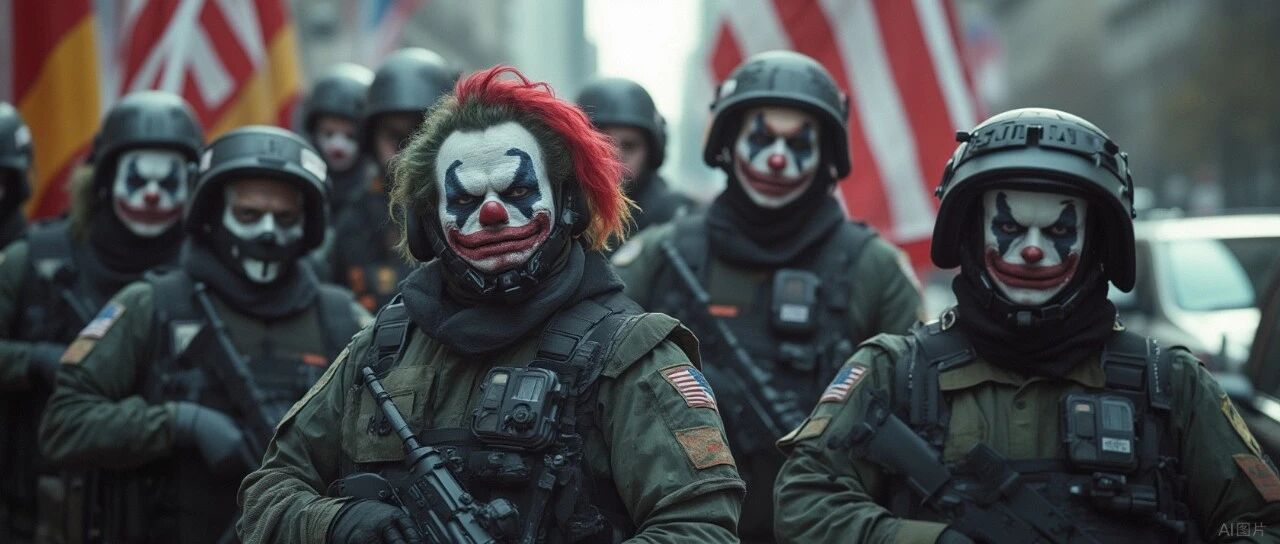
“十五五”时期或将面临哪些国际挑战?陈文玲:全球货币体系调整、美股泡沫等七大风险需警惕
Jin Rong Jie· 2025-12-26 06:57
Group 1 - The conference "Qihang·2025 Financial Annual Meeting" was held in Beijing, focusing on the theme of "New Starting Point, New Momentum, New Journey," with over 100 guests and more than 500 financial institutions and listed companies in attendance [1] - Chen Wenling, Deputy Director of the Academic Committee of the China International Economic Exchange Center, discussed potential international uncertainties, including "gray rhinos" and "black swans," that may impact China's economy and the global economy during the 2026 and "15th Five-Year" period [1] Group 2 - Seven major international risks were highlighted by Chen Wenling, including risks from economic bubbles in certain countries, significant adjustments in the global monetary system, uncertainties in China-U.S. relations, geopolitical tensions, structural changes in the global energy landscape, risks in the Japanese economy, and risks from extreme weather and public health events [3] - Specific risks related to the global monetary system adjustment were discussed, including potential over-tightening or over-easing by the Federal Reserve, the rapid expansion of virtual currencies, the accumulation of bubbles in the U.S. stock market, and the potential risks from financial derivatives [3] - The global trend of de-dollarization is noted, with 159 countries entering this wave, and the U.S. introducing stablecoins linked to the dollar to counteract this trend, indicating significant adjustments and changes in the international monetary system [3]

独家专访诺奖得主罗伯特·恩格尔:在不确定性时代解构风险
2 1 Shi Ji Jing Ji Bao Dao· 2025-12-22 23:57
Core Viewpoint - The next financial crisis may be triggered by inflation, particularly due to fluctuating tariff policies, which could lead to significant market downturns if inflation rates remain high [1][12]. Group 1: Inflation and Economic Policies - Tariffs are likely to cause inflation, and if inflation persists, the Federal Reserve may struggle to decide between raising or lowering interest rates, leading to a collapse in bond prices and a significant drop in the stock market [1][12]. - The year 2025 is expected to be tumultuous, with frequent changes in tariff policies and significant uncertainty in the financial markets, despite a strong market performance overall [3][4]. Group 2: Market Reactions and Asset Management - Despite various global risks, including geopolitical tensions and climate change, financial markets have remained robust, supported by factors such as optimism, Federal Reserve backing, and tax cuts [4]. - Investors may consider holding cash or other assets that are less sensitive to economic fluctuations as a buffer against unpredictable events [2][16]. Group 3: Gold and Currency Dynamics - The rise in gold prices is largely driven by central banks diversifying their reserves away from the dollar, indicating a potential shift in global currency reliance [5][6]. - The dollar may continue to depreciate, and there is speculation about the emergence of a multi-currency system, with currencies like the yuan or euro potentially gaining prominence [6]. Group 4: Climate Change and Regulatory Impact - The U.S. withdrawal from the Paris Agreement and subsequent deregulation efforts are seen as attempts to diminish the visibility of climate issues, which could have long-term implications for environmental policies and market stability [7]. Group 5: Systemic Risks and Financial Stability - Current assessments indicate that while systemic risks in the banking sector appear manageable, ongoing monitoring is essential, particularly regarding climate-related risks [8]. - The volatility of AI stocks raises concerns about potential bubbles, but the overall impact on the market may not mirror past crises like the internet bubble [9][10]. Group 6: Future Outlook and Political Influence - The upcoming midterm elections in the U.S. are expected to introduce market volatility as investors speculate on potential shifts in political power and their economic implications [18]. - The uncertainty surrounding current U.S. policies, particularly those affecting immigration and scientific research, poses risks to innovation and economic growth [18].
港股异动 | 港交所(00388)午前跌超4% 灰犀牛事件导致市场波动加大 港交所下月初将发布三季报
Zhi Tong Cai Jing· 2025-10-13 04:12
Core Viewpoint - Hong Kong Exchanges and Clearing Limited (HKEX) experienced a significant drop of over 4% in its stock price, attributed to increased market volatility caused by a "grey rhino" event, with expectations for its upcoming Q3 earnings report [1] Group 1: Market Conditions - HKEX's stock fell by 4.68%, trading at 423.8 HKD with a transaction volume of 36.23 billion HKD [1] - Huatai Securities reported that the "grey rhino" event has heightened market volatility, indicating that short-term capital and sentiment still have room for release, suggesting a phased approach to "TACO" trading [1] - Galaxy Securities noted that escalating US-China trade tensions have led to a decline in investor risk appetite, resulting in a valuation correction for Hong Kong stocks [1] Group 2: Future Outlook - UBS forecasts that HKEX will report a 43% year-on-year increase in quarterly revenue and a 53% rise in net profit, reaching 7.7 billion HKD and 4.8 billion HKD respectively, setting new records [1] - UBS's projections exceed market expectations by 8% and 11%, respectively, and have adjusted the average daily transaction volume forecasts for 2025 to 2027 upwards by 9% to 16% [1] - The target price for HKEX has been set at 485 HKD, with a "neutral" rating, reflecting adjustments in earnings per share forecasts upwards by 7% to 12% [1]

港交所午前跌超4% 灰犀牛事件导致市场波动加大 港交所下月初将发布三季报
Zhi Tong Cai Jing· 2025-10-13 04:01
Core Viewpoint - Hong Kong Stock Exchange (HKEX) shares fell over 4%, currently trading at 423.8 HKD with a transaction volume of 3.623 billion HKD, reflecting increased market volatility due to "gray rhino" events and escalating US-China trade tensions [1] Group 1: Market Analysis - Huatai Securities reported that market volatility has increased due to "gray rhino" events, indicating that short-term funds and sentiment still have room for release, suggesting a phased approach to "TACO" trading [1] - Galaxy Securities noted that the escalation of US-China trade tensions has led to a decrease in investor risk appetite, resulting in a valuation correction for Hong Kong stocks. However, domestic growth stabilization policies and medium to long-term measures to support the stock market are expected to gradually stabilize investor sentiment [1] - Overall, Hong Kong stock valuations are currently at a historically high level, with expectations of wide fluctuations in the market in the future [1] Group 2: Earnings Forecast - UBS forecasts that HKEX will announce its third-quarter results next month, predicting a year-on-year revenue and net profit growth of 43% and 53%, respectively, reaching 7.7 billion HKD and 4.8 billion HKD, setting new records [1] - UBS's forecasts are 8% and 11% higher than the general market expectations [1] - Due to market sentiment and increased participation from southbound funds, UBS has raised its average daily transaction volume forecasts for 2025 to 2027 by 9% to 16%, and adjusted its earnings per share forecast for HKEX upward by 7% to 12%, maintaining a target price of 485 HKD with a "neutral" rating [1]
美股暴跌,其实不是黑天鹅
Hu Xiu· 2025-10-11 08:15
Group 1 - The core viewpoint of the article is that the recent escalation of global trade tensions is not a "black swan" event but rather a "gray rhino" event, indicating a high probability risk that has been underestimated [2][6] - The U.S. economy has shown signs of weakness recently, and a resurgence of trade disputes could exacerbate inflation and impact the Federal Reserve's monetary policy [2][6] - The current political landscape in the U.S. suggests that trade tensions are likely to reignite, especially as the midterm elections approach [1][4] Group 2 - The article highlights that the U.S. administration's economic policies have primarily focused on tax cuts and fiscal subsidies, with limited success in reversing trade deficits or boosting manufacturing jobs [3][4] - The dynamics of global trade are shifting, with major trading partners, including China, taking more initiative in setting agendas, leading to a more complex economic landscape [5][6] - The article emphasizes that the previous perception of resolved trade issues was misleading, and the market may not easily dismiss the current tensions as it did in the past [6][4]