降息缩表

Search documents
春节,关税与AI
2026-02-25 04:14
Summary of Conference Call Notes Company/Industry Involved - The discussion revolves around the macroeconomic environment, particularly focusing on the Chinese market and its interactions with global markets, including the U.S. and Japan. Key Points and Arguments Macroeconomic Changes - The U.S. Supreme Court's decision to overturn Trump's tariffs based on the EPA has created a notable impact, although the overall market reaction has been muted due to prior expectations of such a ruling [1][7][11]. - The performance of major asset classes during the Spring Festival period showed that commodities, particularly oil and gold, performed relatively well, while the Hong Kong stock market, especially the Hang Seng Tech Index, lagged significantly [1][2][3]. Market Performance - The U.S. stock market, particularly small-cap stocks, has shown resilience, while tech stocks have struggled to regain their footing after recent adjustments [2][3]. - The Hong Kong market has been characterized by a significant underperformance of tech stocks, attributed to concerns over the differentiation between new and old technology companies [2][3]. Capital Flows - There has been a notable inflow of foreign capital into the Chinese market, particularly from the Asia-Pacific region, although this has not been reflected in the performance of the Hong Kong market [4][5]. - The inflow of foreign capital has been sustained for six consecutive weeks, indicating a growing preference for Chinese assets, despite a slowdown in the pace of inflows recently [4][5]. U.S. Tariff Policies - The recent changes in U.S. tariff policies, particularly the Supreme Court's ruling, have led to a slight decrease in the overall tariff rate, which is now approximately 13.4% [11][12]. - The implications of these tariff changes are complex, as they may lead to further negotiations and adjustments in trade policies, creating uncertainty in the market [9][12]. Economic Indicators - U.S. GDP growth for the fourth quarter was reported at an annualized rate of 1.4%, significantly lower than the previous quarter's 4.4%, influenced by government shutdowns and trade dynamics [17][18]. - The PCE data released showed slight inflationary pressures, but overall, inflation is not expected to pose a significant threat to the Federal Reserve's monetary policy [19][20]. Chinese Economic Outlook - The Chinese financial data indicates a mixed picture, with M1 growth reflecting a recovery in the capital market, but overall credit demand remains weak [24][25]. - Consumer spending during the Spring Festival showed moderate growth, with expectations for continued recovery, but structural issues in consumer spending power remain [26][27]. Future Considerations - The upcoming Two Sessions and the visit from Trump are anticipated to be critical events that could influence market dynamics and policy directions [28]. - The overall outlook for the Hong Kong market remains cautious, with expectations of a potential slowdown in the credit cycle in the second quarter of the year [25][29]. Other Important but Possibly Overlooked Content - The differentiation in performance between various sectors, particularly in technology, highlights the need for investors to focus on specific companies and their competitive positioning within the market [30][31]. - The discussion emphasizes the importance of understanding the underlying economic fundamentals rather than solely relying on capital flow data, which can be lagging indicators [6][19]. This summary encapsulates the key insights and data points from the conference call, providing a comprehensive overview of the current market landscape and future expectations.
关于双约束流动性控制体系和美元流动性的拐点
Ge Long Hui· 2026-02-24 06:20
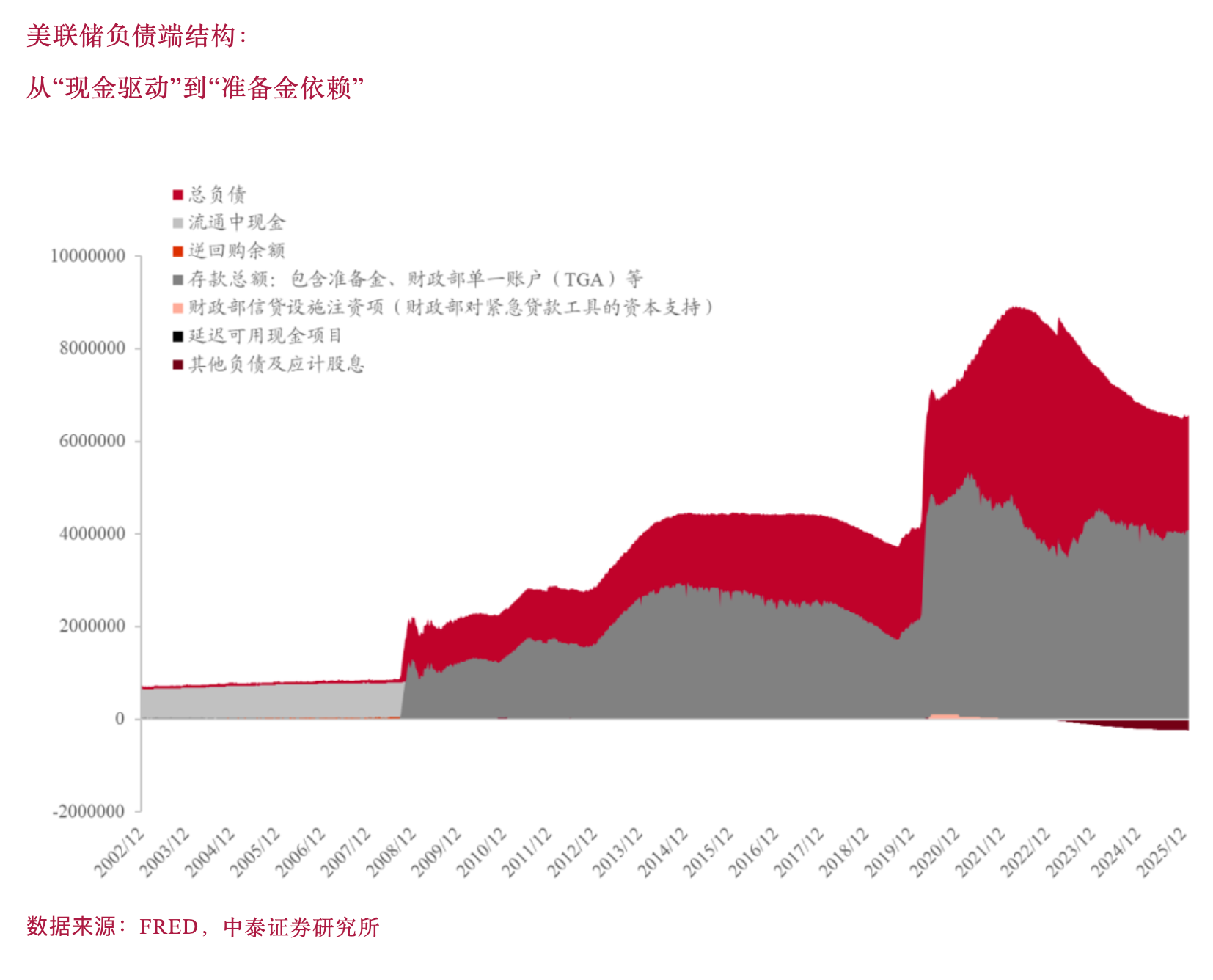
Core Viewpoint - The article discusses the dual constraint liquidity control system in the U.S., emphasizing that in this framework, raising interest rates while expanding the balance sheet is the most accommodative policy combination, whereas lowering interest rates while shrinking the balance sheet is the most stringent policy combination [9]. Group 1: Liquidity Indicators - The RRP account balance is viewed as a significant liquidity indicator, projected to drop to around $20 billion by Q4 2025, coinciding with a weakening of dollar liquidity [1][2]. - The correlation between the depletion of the RRP account and the weakening of dollar liquidity is highlighted, suggesting a complex relationship that warrants further exploration [2]. Group 2: Dual Constraint Liquidity Control System - The U.S. liquidity control system operates under two natural dimensions: quantity (represented by reserve size) and price (represented by interbank funding rates), which are often misunderstood as equivalent [3]. - The dual constraint system includes two boundaries: the Federal Reserve's balance sheet size and the federal funds rate, necessitating an additional variable, the RRP account, to balance conflicts between these constraints [3][4]. Group 3: Implications of the Dual Constraint System - In a dual constraint system, raising the federal funds rate can paradoxically lead to an increase in the RRP account balance, indicating a loosening of constraints, contrary to the single constraint system where tightening is expected [6][9]. - The article posits that the market's expectation of a Fed rate cut is misguided, as it simplifies the complex dual constraint system into a single constraint framework [7]. Group 4: Market Reactions and Future Outlook - The potential for a "rate cut and balance sheet reduction" scenario is explored, suggesting that such actions could lead to a significant contraction in the economy's demand for reserves, indicating a severe tightening [8]. - The article concludes that the RRP account balance effectively integrates both quantity and price constraints, reflecting the actual tightness of the system, with a liquidity turning point expected by Q4 2025 [10].
降息缩表并行,“沃什冲击”如何影响资本市场
Di Yi Cai Jing· 2026-02-11 06:27
Core Viewpoint - The nomination of Kevin Warsh as the next Federal Reserve Chairman by President Trump signals a significant shift in the Fed's communication style and its approach to interest rate cuts, potentially altering market expectations and reactions to monetary policy changes [1][2]. Group 1: Warsh's Monetary Policy Approach - Warsh is characterized as a "disciplinarian" who prioritizes the long-term consequences of financial conditions and the institutional costs of balance sheet expansion, showing a natural aversion to the normalization of unconventional tools like quantitative easing (QE) [2][3]. - He believes that the threshold for initiating QE will be significantly raised in response to general economic fluctuations, as he views QE as distorting asset prices and exacerbating wealth inequality [2][3]. - Warsh emphasizes that while interest rate cuts may be necessary, they do not equate to excessive monetary easing, suggesting that current rates could be 50-100 basis points above the neutral rate, which is around 3% [2][3]. Group 2: Impact of Balance Sheet Reduction - Warsh advocates for using balance sheet reduction to create room for interest rate cuts, arguing that inflation stems from fiscal deficit expansion and excessive monetary issuance rather than an overheated labor market [3][4]. - His approach suggests that the Fed's intervention threshold will be raised during market turbulence, contrasting with the current trend of the Fed acting as a market backstop [3][4]. - The transition to a framework focused on price adjustment rather than quantity support could lead to increased volatility in money markets, as banks will need to manage liquidity more actively without relying on the Fed's unlimited supply [6][7]. Group 3: Political Considerations and Market Reactions - Trump's choice of Warsh reflects a desire for a candidate who is loyal and willing to cut rates while also being credible enough to navigate Senate confirmation and maintain market confidence [8][9]. - Warsh's "hawkish reputation" is seen as a competitive advantage, as it reassures the market that any future rate cuts will be based on monetary discipline rather than political compromise [9][10]. - The upcoming midterm elections in 2026 create a political imperative for Warsh to align his actions with the administration's goals, particularly in managing inflation and living costs for voters [10][14]. Group 4: Future Market Implications - The midterm elections are expected to serve as a natural dividing line for policy pacing, with Warsh likely to adopt a gradual approach to reforms post-election, regardless of the election outcome [15][16]. - The Fed's communication style is anticipated to shift, with less frequent guidance and a reduction in the predictability of rate cuts, leading to increased market volatility and uncertainty [16][18]. - Overall, while the narrative of a weak dollar remains intact, the focus on fundamental performance in the stock market may increase, with a notable return to value sectors as high valuations and leverage are scrutinized [18].

中金:从货币理论看沃什“降息缩表”组合
Sou Hu Cai Jing· 2026-02-05 01:08
Core Viewpoint - The nomination of Kevin Warsh as the next Federal Reserve Chairman by President Trump raises market concerns about a significant shift in monetary policy, given Warsh's past criticisms of the Fed's practices and policies [1][2]. Summary by Sections Monetary Policy Perspective - Warsh's policy ideas emphasize that inflation is a policy choice, advocating for controlling money supply to manage inflation, aligning with monetarist views [1]. - He argues that the Fed's balance sheet has excessively expanded since the 2008 financial crisis, distorting markets, and suggests reducing the balance sheet to control inflation and create room for lower interest rates [1]. - Warsh criticizes the Fed's involvement in non-core issues like climate and inclusivity, advocating a return to its core responsibilities of price and financial stability [1]. - He calls for a reform in the relationship between the central bank and the Treasury, proposing a transfer of some balance sheet control to the Treasury [1]. Policy Contradictions - Warsh is viewed as a monetary policy "hawk," yet he has recently supported Trump's calls for accelerated interest rate cuts, creating a focus on the combination of rate cuts and balance sheet reduction, which appear contradictory [2]. - Market reactions indicate concerns over tightening effects, with declines in U.S. stocks and precious metals, and increases in the dollar and Treasury yields, reflecting investor anxiety about the implications of such a policy mix [2]. Monetary Theory Analysis - The discussion contrasts endogenous and exogenous money, highlighting that the Fed's focus on interest rates neglects the role of money supply [3][4]. - Endogenous money reflects economic activity, while exogenous money is driven by government actions, with the latter being crucial in understanding inflation dynamics [5][6]. - Warsh's proposed combination of rate cuts and balance sheet reduction may signify a shift back to reliance on endogenous money growth, emphasizing bank credit over fiscal monetary injections [7]. Economic and Financial Cycles - Historical patterns show that excessive expansion of exogenous money leads to inflation, while excessive endogenous money can result in financial crises, as seen in the 2008 subprime crisis [8][9]. - The U.S. has experienced three financial cycles since the 1980s, with the current cycle showing a more moderate expansion compared to previous periods [10]. - The balance between government and private sector debt is critical, as rapid government debt expansion can lead to inflation, while excessive private debt can result in asset bubbles [11]. Theoretical Frameworks - Warsh advocates for a "restoration" of monetary policy principles rather than a revolutionary change, reflecting historical cycles in economic thought [12][13]. - The shift towards a more significant role for fiscal policy and the independence of central banks has evolved since the 1980s, with current debates reflecting a return to some Keynesian principles [14][15]. - The implications of Warsh's policies could lead to increased financial cycles and reduced traditional economic cycle volatility, contingent on the successful implementation of his ideas [11][16]. Asset Liquidity and Market Implications - The importance of liquidity in asset allocation is emphasized, with cash as a preferred store of value due to its stability and liquidity [17][18]. - The interaction between fiscal expansion and quantitative easing (QE) influences risk asset prices through changes in demand and supply for safe assets [19][20]. - The potential outcomes of Warsh's proposed policies on risk assets are complex, with the possibility of adverse effects on valuations depending on existing market conditions and fiscal policy directions [21].
中金:从货币理论看沃什“降息缩表”组合
中金点睛· 2026-02-04 23:52
Core Viewpoint - The article discusses Kevin Warsh's nomination as the next Federal Reserve Chairman and the potential implications of his monetary policy stance, particularly his combination of interest rate cuts and balance sheet reduction, which may seem contradictory but reflects a unique policy approach [3][4]. Group 1: Warsh's Policy Proposals - Warsh criticizes the Federal Reserve for focusing solely on interest rates while neglecting the role of money supply, advocating for a return to monetary policy that emphasizes controlling inflation through managing the money supply [6][7]. - He argues that the Fed's balance sheet has excessively expanded since the 2008 financial crisis, distorting markets, and suggests that reducing the balance sheet could create room for lowering interest rates [3][4]. - Warsh calls for a reform in the relationship between the central bank and the government, proposing a clearer division of responsibilities, including transferring some control of the balance sheet to the Treasury [3]. Group 2: Monetary Theory Insights - The article contrasts endogenous and exogenous money, explaining that endogenous money reflects the internal dynamics of the economy, while exogenous money is driven by government actions, such as fiscal policy [5][8]. - It highlights that excessive expansion of exogenous money can lead to inflation, while excessive endogenous money can result in asset bubbles and financial crises, as seen in historical examples [10][11]. - Warsh's proposed combination of interest rate cuts and balance sheet reduction may aim to shift the economy back towards reliance on endogenous money growth, emphasizing bank credit over fiscal stimulus [9]. Group 3: Economic and Financial Cycles - The article discusses the distinction between economic cycles and financial cycles, noting that financial cycles tend to last longer and are influenced by credit expansion and asset prices [12][13]. - It points out that the U.S. has experienced three financial cycles over the past 50 years, with the most recent cycle beginning in 2013, characterized by moderate expansion compared to previous cycles [12]. - The article suggests that if Warsh's policies are successfully implemented, it could lead to a resurgence of financial cycles, potentially reducing the volatility of traditional economic cycles [13]. Group 4: Keynesian vs. New Keynesian Theories - Warsh advocates for a revival of traditional Keynesian principles, emphasizing the importance of government intervention in the economy, contrasting with the New Keynesian focus on market efficiency and monetary neutrality [15][16]. - The article argues that the New Keynesian framework has deviated from original Keynesian thought, which recognized the role of monetary fluctuations in causing economic instability [17][18]. - It suggests that the current economic environment may be witnessing a return to some aspects of post-World War II Keynesianism, with increased government involvement and a blurred line between monetary and fiscal policy [18][19]. Group 5: Implications of Warsh's Policies - The article raises questions about the feasibility of Warsh's proposed policies and their potential impact on market dynamics, particularly regarding risk asset valuations [20][23]. - It emphasizes the importance of liquidity in the economy and how changes in monetary policy can influence asset allocation and market stability [21][22]. - The article concludes that the success of Warsh's "interest rate cuts and balance sheet reduction" strategy will depend on various factors, including existing market valuations and the direction of fiscal policy [23].

黄金暴跌11%:美联储的“降息缩表”组合拳如何击碎多头美梦
Sou Hu Cai Jing· 2026-02-03 09:11
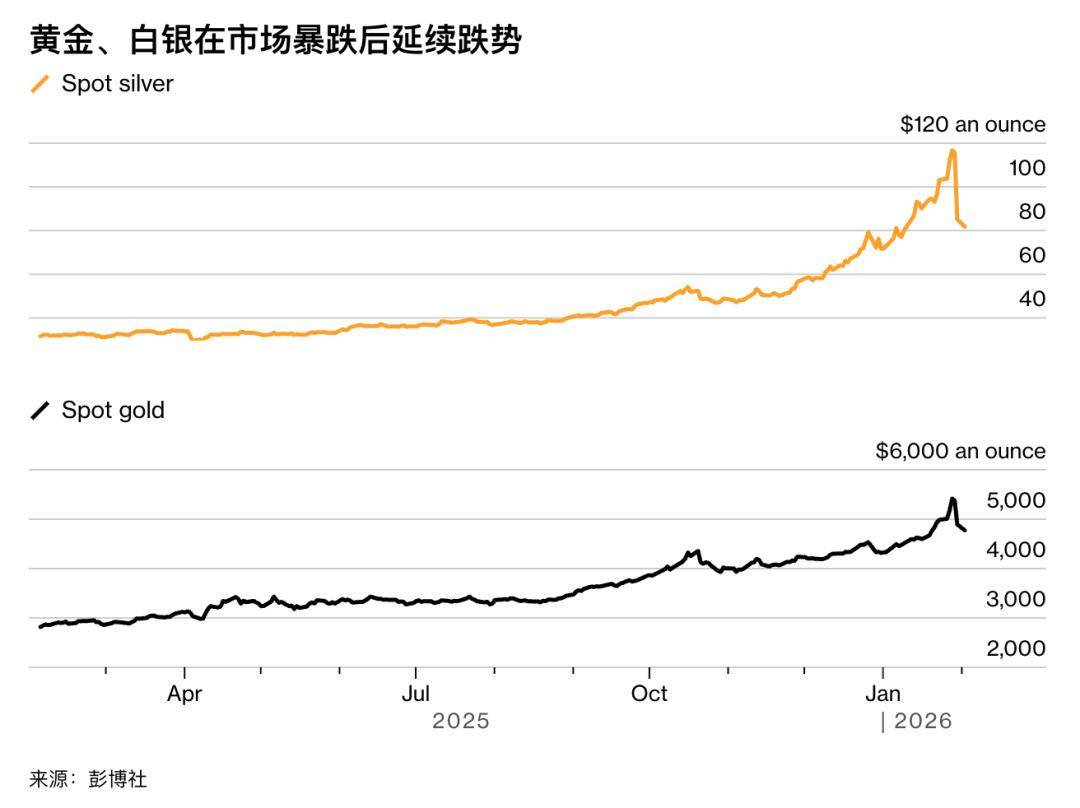
Core Insights - The gold market experienced extreme volatility in early 2026, with London gold prices crashing after reaching a historical high of $5,598, marking a 40-year record for single-day declines, dropping over 11% in just four days [1] - The market attributed the crash to the nomination of Kevin Warsh as Federal Reserve Chairman, which alleviated concerns about the Fed's independence, but deeper issues included adjustments in dollar credit expectations, profit-taking by speculators, and algorithmic trading [1] - The event highlighted the fragility of gold as a safe-haven asset, influenced by short-term policy expectations and speculative sentiment, while long-term factors remain tied to dollar credit and geopolitical dynamics [1] Group 1: Market Dynamics - The initial blame for the crash was placed on Warsh's hawkish stance, but the critical factor was his proposed combination of "rate cuts + balance sheet reduction," which acted as a precise stop-loss mechanism for the dollar credit crisis [2] - On January 30, institutional investors' gold holdings dropped by 23%, indicating an inevitable liquidation action against fiat currency credit [2] Group 2: Historical Context - The price curve of gold in early 2026 mirrored that of 2018 during Powell's tenure, both occurring during Fed leadership transitions and showing significant technical overbought conditions [4] - The uniqueness of the current situation lies in Warsh's plan rewriting the classic narrative of "dollar depreciation - gold appreciation" [4] Group 3: Market Forces - The gold market is currently influenced by three competing forces: long-term support from central bank gold purchases (with a net increase of 1,287 tons in 2025), technical selling pressure from speculative funds (with a reduction of 18% in COMEX gold futures open interest), and dollar revaluation due to Fed policies [5] - On January 30, these factors created a rare resonance, causing the VIX gold index to soar to 82.6, surpassing the peak during the 2020 pandemic [5] Group 4: Future Scenarios - Scenario one: If the Fed confirms "rate cuts and balance sheet reduction" in March, the dollar index may rise above 108, and gold could test the $4,200 support level, consistent with historical trends showing a 15% average suppression of gold prices during hawkish Fed cycles since 1994 [6] - Scenario two: An escalation in geopolitical conflicts could trigger turmoil in the petrodollar system, leading to a "crisis premium" for gold similar to 2020, although the current 15.8% share of gold in global central bank reserves may dampen volatility [6] - Scenario three: The most likely neutral path is a fluctuation within the $4,400 to $4,900 range, with current prices reflecting 72% of policy expectations but still having a potential 5-8% downside [6]
“降息缩表”的AI逻辑:读懂沃什,就读懂了美元为何偷家、金银为何闪崩
Sou Hu Cai Jing· 2026-02-03 01:34
Core Viewpoint - The article discusses the recent dramatic collapse of various asset classes, including silver, gold, and Bitcoin, highlighting the volatility and speculative nature of these "internet celebrity" assets, which have been driven by narratives rather than intrinsic value [1][4]. Group 1: Asset Market Reactions - Silver experienced its largest single-day drop in 40 years, while gold fell by 10% in one day, and Bitcoin also saw significant declines [4]. - The market's reaction to geopolitical tensions, particularly between the U.S. and Iran, has led to a speculative mindset among retail investors heavily invested in precious metals and commodities [4]. Group 2: Kevin Walsh's Nomination - The nomination of Kevin Walsh as the next Federal Reserve Chair triggered a significant market response, with the dollar rising sharply, marking its largest single-day increase since July [5]. - Walsh is characterized as a strong critic of the Federal Reserve and quantitative easing, advocating for interest rate cuts and balance sheet reduction [5][6]. Group 3: Economic Implications of Walsh's Policies - Walsh's proposed policies, including interest rate cuts and balance sheet reduction, could lead to stagflation, driven by high oil and housing prices, but he believes that AI will counteract this by creating deflationary pressures [6][7]. - His criticism of the Fed's pessimistic outlook on stagflation and the bloated balance sheet suggests a potential shift in monetary policy that could redirect capital from Wall Street to domestic manufacturing and the real economy [11][12]. Group 4: Political Context and Implications - The upcoming midterm elections in October are crucial for the Trump administration, with policies aimed at reducing housing costs and oil prices being essential to garner support from lower and middle-class voters [16]. - The situation in Venezuela, where oil revenues are being managed by Trump, is linked to the broader economic and political strategies being discussed, indicating a complex interplay between domestic policy and international events [17][18].
黄金牛市急刹车 700美元暴跌只是“获利了结”吗?
Jin Tou Wang· 2026-02-01 00:28
Core Viewpoint - The international spot gold price has experienced a significant drop of over 7%, leading to a wide range of fluctuations, with profit-taking being the primary reason for the sell-off, despite the strong dollar and uncertainty surrounding the new Federal Reserve chair nomination being cited as contributing factors [1][2]. Group 1: Market Reactions - The market reacted strongly to the nomination of Kevin Warsh as the next Federal Reserve chair, with a 95% probability of his nomination impacting precious metal prices [2]. - Warsh is viewed as a hawkish figure who may maintain the independence of the Federal Reserve, which could strengthen the dollar and negatively affect precious metals [2]. - The expectation that Warsh will implement a "rate cut and balance sheet reduction" policy has directly impacted precious metal prices, indicating a shift in government strategy to repair the asset-liability balance [2]. Group 2: Gold Price Analysis - Gold attempted to rebound in the morning but faced resistance near the 5450 level, leading to a continued decline, with prices dropping below the critical $5000 mark to a low of approximately $4940 [3]. - The lack of a typical bullish rally in the morning suggests a significant reduction in bullish sentiment, confirming the effectiveness of the previous night's drop [3]. - The overall trend for gold remains bearish unless it can break through resistance levels around 5150 and 5230-5240, which are crucial for any potential recovery [3]. Group 3: Technical Analysis - There are two gaps identified in the technical analysis that need to be addressed: the gap between 5000-4990 has already been breached, indicating a potential continuation of the downward trend [4]. - The second gap between 4630-4620 is seen as the last line of defense for extreme bullish sentiment; if this level is lost, it could signal a complete reversal in market sentiment and a deeper adjustment for gold [4].
特朗普:今晚官宣!他将是美联储新主席?市场押注其胜率飙至95%
Sou Hu Cai Jing· 2026-01-30 04:15
Group 1 - The nomination probability of Kevin Warsh for the position of Federal Reserve Chairman exceeds 80%, with reports indicating that the Trump administration is preparing to nominate him [2][6] - President Trump plans to announce the next Federal Reserve Chairman on the morning of the 30th, with Warsh being a highly respected candidate in the financial community [6][12] - The market prediction platform Polymarket shows a 95% probability of Warsh being nominated as the new Chairman [2] Group 2 - Warsh is known for his hawkish stance, which has led to a rise in the US dollar and US Treasury yields, while commodity prices, particularly precious metals, have seen declines [4] - If nominated, Warsh's policies may include a unique combination of "rate cuts and balance sheet reduction," contingent on regulatory reforms that lower banks' reserve requirements [11] - Warsh's experience spans academia, regulatory bodies, and the investment sector, providing him with a deep understanding of financial markets and monetary policy [9][10] Group 3 - Trump's long-standing criticism of Jerome Powell's leadership at the Federal Reserve highlights the tension between the administration and the central bank, with the new Chairman expected to influence future interest rate policies [7][12] - The potential appointment of Warsh could lead to significant adjustments in the Federal Reserve's policy framework, impacting global financial markets and economic outlook [13]

特朗普:今晚官宣!他将是美联储新主席?市场押注其胜率飙至95%
华尔街见闻· 2026-01-30 04:12
Core Viewpoint - The nomination of Kevin Warsh as the next Federal Reserve Chairman is highly anticipated, with a probability exceeding 80% according to reports, and it is expected that his leadership may usher in a "rate cut and balance sheet reduction" era [2][3]. Group 1: Nomination Process - President Trump plans to announce the next Federal Reserve Chairman on the morning of the 30th, with Warsh's nomination probability soaring to 95% [3]. - Trump has met with Warsh and is reportedly impressed, indicating that the final decision on the nomination is still pending [2][8]. - The selection process is being led by Treasury Secretary Mnuchin, who has submitted four final candidates to Trump, including Warsh, current Fed Governor Christopher Waller, BlackRock executive Rick Rieder, and NEC Director Kevin Hassett [8]. Group 2: Market Reactions - Warsh's hawkish reputation has led to a rapid increase in the value of the US dollar and bond yields, while commodity prices, particularly precious metals, have seen significant declines [5]. - Recent trading data shows a notable drop in gold and silver prices, with gold down by 3.36% and silver down by 4.52% [6]. Group 3: Warsh's Background and Policy Implications - Warsh has extensive experience across academia, regulatory bodies, and the investment sector, providing him with a deep understanding of financial markets and monetary policy [11]. - His tenure as a Fed Governor from 2006 to 2011 coincided with the global financial crisis, where he played a crucial role in communication between the Fed and the markets [12]. - Deutsche Bank predicts that if Warsh is appointed, his policy approach may involve a unique combination of "rate cuts and balance sheet reduction," contingent on regulatory reforms that lower banks' reserve requirements [11]. Group 4: Trump and the Fed's Relationship - The upcoming nomination is set to end the long-standing tension between Trump and current Fed Chairman Jerome Powell, whom Trump has criticized for not lowering rates quickly enough [9][14]. - Trump's ongoing focus on monetary policy is evident, as he stated that "interest rates are still falling," highlighting the importance of the new Chairman's influence on future rate policies [15]. Group 5: Potential Market Impact - If Warsh takes over the Fed, significant adjustments to the Fed's policy framework could be expected, potentially impacting global financial markets and economic outlooks profoundly [16].