美联储降息

Search documents
金价还在涨!见顶了吗?
Bei Jing Wan Bao· 2025-10-08 14:36
Core Viewpoint - International gold prices have recently reached a historic high, surpassing $4,000 per ounce, driven by increased global risk aversion and declining confidence in the US dollar [1][2][3] Group 1: Price Movements and Market Sentiment - On October 7, 2023, gold futures for December 2025 on the New York Commodity Exchange hit a record high of $4,014.60 per ounce, with prices reaching $4,072 per ounce on October 8 [1] - Year-to-date, international gold prices have increased by approximately 50%, making gold one of the best-performing major assets globally [1] - Analysts suggest that the "fear of missing out" sentiment among investors is stronger than profit-taking, contributing to continued buying pressure despite gold being overbought [1] Group 2: Factors Driving Demand - The rise in gold prices reflects a dual signal of increased global risk aversion and a decline in the credibility of the US dollar [2] - Ray Dalio, founder of Bridgewater Associates, recommends that investors allocate about 15% of their assets to gold, citing that debt instruments are no longer effective as a store of wealth [2] - Goldman Sachs has raised its 2026 gold price forecast from $4,300 to $4,900 per ounce, driven by strong demand from central banks and private sector diversification [2] - As of September 2023, China's gold reserves increased to 74.06 million ounces, marking the 11th consecutive month of gold accumulation by the central bank [2] Group 3: Economic and Geopolitical Influences - Multiple factors, including US government shutdowns, political instability in France, and ongoing geopolitical conflicts, have heightened the demand for gold as a safe-haven asset [3] - The weakening US dollar and increased fiscal uncertainty have made gold more attractive, as investors seek to mitigate risks [3] - The Federal Reserve's recent interest rate cuts and indications of continued monetary easing have diminished the appeal of dollar-denominated assets [3] - Central banks globally have resumed large-scale gold purchases, with a reported net increase of 15 tons in August 2023 [3] Group 4: Future Outlook - If the Federal Reserve continues to lower interest rates and geopolitical tensions persist, gold prices may continue to rise [5] - However, some analysts caution that the market may face short-term adjustments, with predictions of gold prices fluctuating between $3,800 and $4,100 per ounce for the remainder of the year [5] - Long-term forecasts remain bullish, with UBS projecting gold prices could reach $4,200, and Citigroup suggesting a potential challenge to the $5,000 mark if the Fed continues to cut rates in 2026 [5]
国际金价缘何再创历史新高
Xin Hua She· 2025-10-08 12:14
Group 1: Core Insights - International gold prices have recently reached a historic high, surpassing $4,000 per ounce, with a peak at $4,014.60 per ounce, reflecting a 50% increase this year, making gold one of the best-performing major assets globally [1][3] - The surge in gold prices is attributed to rising global risk aversion and declining confidence in the U.S. dollar, driven by factors such as U.S. government shutdowns, economic uncertainties in various countries, and ongoing geopolitical conflicts [3][4] - Analysts suggest that investors should allocate approximately 15% of their assets to gold, as it is viewed as a superior asset during downturns in other investment areas [1][3] Group 2: Market Dynamics - Goldman Sachs has raised its 2026 gold price forecast from $4,300 to $4,900, citing strong demand from central banks and private sector diversification [2] - Central banks are expected to purchase 80 tons and 70 tons of gold annually in the next two years, with emerging market central banks increasing their gold reserves to reduce reliance on the U.S. dollar [2][5] - The World Gold Council reported a net increase of 15 tons in gold reserves by central banks in August, and gold ETF holdings rose by 3.6 million ounces, marking a 17% increase year-to-date [3] Group 3: Future Outlook - Future gold price trends may continue to rise if the Federal Reserve lowers interest rates further, the U.S. dollar remains weak, and geopolitical tensions persist [4][5] - Some analysts warn of potential short-term corrections, with predictions of gold prices fluctuating between $3,800 and $4,100 per ounce for the remainder of the year [4] - Long-term forecasts remain bullish, with UBS predicting gold could reach $4,200 and Citigroup suggesting a challenge to the $5,000 mark if the Fed continues to lower rates in 2026 [5]
The Calm Before the Storm? 3 Top ETFs to Fortify Your Portfolio in Q4
ZACKS· 2025-10-02 13:20
Core Insights - The U.S. stock market appears calm with the VIX at around 16, but significant uncertainties remain [1][2] - Ongoing U.S. government shutdown risks and recent Federal Reserve interest rate cuts create a complex market environment [2] - Risk-averse investors may prefer ETFs over individual stocks to mitigate potential losses from company-specific issues [3][4] ETF Advantages - ETFs provide instant diversification, spreading risk across multiple stocks, which helps moderate volatility [5] - They combine diversification with liquidity and transparency, allowing for quick adjustments to market conditions [5] - Sector-specific ETFs enable cautious investors to engage in market gains while limiting exposure to individual company risks [6] Attractive Sectors for Q4 - The Technology sector remains appealing for capital appreciation despite challenges from high interest rates [7] - The Utilities sector offers stability and reliable dividends, making it a classic defensive investment [8] - Financial stocks may benefit from rate cuts, potentially enhancing lending activity and net interest margins [8] Top ETFs to Consider - **Technology Select Sector SPDR ETF (XLK)**: Focuses on tech industries with top holdings in Nvidia (14.86%), Microsoft (12.57%), and Apple (12.33%); gained 22.4% year-to-date [10][11] - **Utilities Select Sector SPDR ETF (XLU)**: Includes electric and water utilities with top holdings in NextEra Energy (11.58%) and The Southern Company (7.77%); surged 16.4% year-to-date [12][13] - **Financial Select Sector SPDR ETF (XLF)**: Covers financial services with top holdings in Berkshire Hathaway (11.92%), JP Morgan Chase (11.21%), and Visa (7.50%); increased 10.5% year-to-date [14]


华鑫证券-基础化工行业:合成氨、苯胺等涨幅居前,建议关注进口替代、纯内需、高股息等方向-250930
Xin Lang Cai Jing· 2025-09-30 11:31
Group 1 - The core viewpoint indicates that the chemical industry is experiencing mixed performance, with some products seeing price increases while others decline, influenced by external factors such as the Federal Reserve's interest rate cuts and geopolitical tensions [1][2] - Key products with significant price increases this week include synthetic ammonia (up 8.58%), lithium battery electrolyte (up 5.71%), and aniline (up 3.90%), while natural gas saw a notable decline of 7.90% [1][2] - The overall chemical industry remains weak, with varying performance across sub-sectors, largely due to past capacity expansions and weak demand, although some sectors like lubricants are performing better than expected [2] Group 2 - Investment opportunities are suggested in areas such as glyphosate, fertilizers, import substitution, domestic demand, and high-dividend assets [2] - Specific recommendations include focusing on the glyphosate sector, which is showing signs of recovery, and selecting companies with strong competitive positions and growth potential, such as Ruifeng New Materials and Baofeng Energy [2] - The report emphasizes the importance of domestic demand in the chemical industry, particularly for nitrogen and phosphate fertilizers, with companies like Hualu Hengsheng and China Heartlink Fertilizer being highlighted for their robust market positions [2]



Robinhood Stock Analysis: Rally to $150 With Overheated Signals
FinanceFeeds· 2025-09-30 10:58
Core Viewpoint - The Federal Reserve's interest rate cut is expected to have mixed effects on Robinhood Markets, potentially reducing income from idle cash while increasing trading activity from retail investors chasing volatility [1] Group 1: Market Performance and Valuation - Robinhood's stock is currently trading around $136.72, with a market value of $82.6 billion and a price-to-earnings multiple of approximately 46 times trailing earnings, a significant increase from sub-$10 lows two years ago [2] - The company's inclusion in the S&P 500 on September 22 has driven a nearly 16% spike in stock price, as passive funds are now required to hold the stock [3] Group 2: Financial Performance - In the second quarter, Robinhood reported a 45% year-on-year revenue increase to $989 million, with net income of $386 million and earnings per share of $0.42, surpassing Wall Street expectations [5] - The company has achieved seven consecutive GAAP-positive quarters, demonstrating consistent profitability and a shift from its previous reputation as a loss-making disruptor [4] Group 3: Business Model Innovations - Robinhood Gold, the paid membership tier, has over 3.5 million subscribers, providing higher yields on idle cash and lower margin rates, contributing to customer retention [6] - The launch of the Gold Card, offering cashback rewards, has attracted over 300,000 users, enhancing customer engagement within Robinhood's ecosystem [7] Group 4: New Market Opportunities - Robinhood has partnered with Kalshi to offer prediction markets, allowing users to trade contracts on various events, which has seen over four billion contracts traded historically, with two billion in the third quarter alone [8][9] - The company is expanding internationally, launching tokenized versions of over 400 U.S. stocks and ETFs in the EU, and preparing a fee-free Stocks & Shares ISA in the UK [12][13] Group 5: Competitive Positioning - Robinhood's assets under custody have increased to $279 billion, with funded accounts rising to 26.5 million, reflecting a 10% growth [16] - The company differentiates itself by being the most retail-friendly mobile ecosystem, focusing on customer engagement through multiple revenue streams [18] Group 6: Regulatory Environment - An SEC investigation into Robinhood Crypto was closed with no action, alleviating a significant regulatory risk [14] - However, the company faces ongoing scrutiny regarding its reliance on payment for order flow, which could be impacted by potential regulatory changes [15]


合成氨、苯胺等涨幅居前,建议关注进口替代、纯内需、高股息等方向
Huaxin Securities· 2025-09-30 10:56
Investment Rating - The report maintains a recommendation for investment in sectors focusing on domestic demand, high dividends, and import substitution [1][5][6] Core Viewpoints - The report highlights that the chemical industry is currently experiencing a mixed performance, with some products like synthetic ammonia and lithium battery electrolytes seeing price increases, while others like natural gas and sulfuric acid are declining [6][20] - The report suggests that the international oil price is expected to stabilize between $65 and $70 per barrel, influenced by geopolitical uncertainties and economic conditions [5][21] - The report emphasizes the importance of focusing on high-dividend stocks such as Sinopec, PetroChina, and CNOOC due to their asset quality and dividend yield [5][20] Summary by Sections Market Performance - The chemical industry has shown varied performance over the past month, with a 0.3% increase in the basic chemical sector compared to a 2.7% increase in the CSI 300 index [1] - Key products that saw price increases include synthetic ammonia (up 8.58%) and lithium battery electrolytes (up 5.71%), while natural gas saw a significant decline of 7.90% [6][20] Investment Suggestions - The report recommends focusing on sectors that are likely to enter a growth cycle, such as glyphosate, and emphasizes the importance of selecting stocks with strong competitive positions and growth potential [7][20] - Specific companies recommended include Jiangshan Chemical, Xingfa Group, and Yangnong Chemical, which are expected to benefit from the recovery in the glyphosate sector [7][20] - The report also highlights the resilience of domestic chemical fertilizer and pesticide sectors, suggesting companies like Hualu Hengsheng and Xin Yangfeng as potential investment opportunities [20] Price Trends - The report notes that while some chemical products are rebounding in price, the overall industry remains under pressure due to past capacity expansions and weak demand [6][20] - The report indicates that the PTA market is experiencing downward pressure, with prices declining due to weak demand from downstream polyester sectors [33][34] Key Companies and Earnings Forecast - The report lists several companies with strong earnings forecasts and investment ratings, including Xin Yangfeng, Senqilin, and Ruifeng New Materials, all rated as "Buy" [9][10][20]



贵金属狂欢!金银价格新高之后,投资者如何布局?
Sou Hu Cai Jing· 2025-09-30 10:11
Group 1 - The core viewpoint of the article highlights a significant surge in precious metals, particularly gold and silver, driven by multiple factors including macroeconomic changes and geopolitical tensions [1][2][5] - Gold prices recently surpassed $3897.7 per ounce, while silver reached $47.41 per ounce, with year-to-date increases of 46% and 60% respectively [1][19] - The Federal Reserve's decision to lower interest rates to a target range of 4.00% to 4.25% is expected to continue, with indications of potential further cuts, enhancing the appeal of non-yielding assets like gold and silver [3][4] Group 2 - The rising demand for safe-haven assets is evident as geopolitical uncertainties persist, with recent comments about potential government shutdowns in the U.S. increasing market anxiety [5][6] - Central banks globally, including the People's Bank of China, have been increasing their gold reserves, reflecting a long-term strategy of diversifying away from the U.S. dollar [11][13] - Despite high gold prices, global demand for gold reached 1249 tons in Q2 2025, a 3% year-on-year increase, with significant contributions from gold ETFs and bar/coin investments [19] Group 3 - Silver's price increase is attributed to its dual role as both a financial asset and an industrial metal, benefiting from both declining interest rates and rising industrial demand [21][23] - The gold-silver ratio indicates that silver is currently undervalued compared to gold, suggesting a potential for price correction and increased investment in silver [23][27] - The World Silver Association predicts a record supply-demand gap for silver in 2025, driven by the acceleration of global green energy transitions [26][28] Group 4 - The long-term outlook for precious metals remains positive, supported by ongoing central bank purchases, geopolitical risks, and structural supply-demand dynamics [28][30] - Investment strategies include balanced allocations in precious metals ETFs, aggressive positions in gold mining stocks, and direct investments in gold ETFs to mitigate volatility [31][32][33]
领峰贵金属双倍积分再暴击!美联储降息落地,黄金剑指4000大关?
Sou Hu Cai Jing· 2025-09-29 03:00
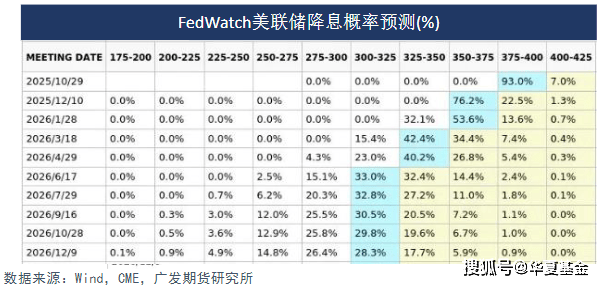
Group 1 - The Federal Reserve has officially initiated interest rate cuts, leading to increased market liquidity and a surge in gold prices, which have risen for four consecutive weeks and are hovering near historical highs, with a potential breakthrough of the 3700 mark [1] - The decision to cut rates is primarily driven by structural weaknesses in the job market, with the unemployment rate rising to 4.3% in August and non-farm payrolls increasing by only 22,000, significantly below the expected 150,000 [1] - Market expectations suggest that the Federal Reserve may implement three rate cuts this year, reinforcing strong support for gold prices, with a consensus that prices could reach 4000 USD by the end of the year [1] Group 2 - Current bullish momentum in gold suggests that any pullback may present a good entry opportunity, with a 91.9% probability of a 25 basis point rate cut by the Federal Reserve in October [2] - A promotional campaign by the company offers double points for trading gold and silver, incentivizing traders to participate in the market during this bullish phase [2][4] - The points earned from trading can be redeemed for bonuses, enhancing the trading experience and encouraging more transactions [4][5]

港股开盘 | 恒指高开0.74% 科网股反弹 京东健康(06618)涨超2%
智通财经网· 2025-09-29 01:56
Group 1 - The Hang Seng Index opened up 0.74%, with the Hang Seng Tech Index rising 0.67%, indicating a rebound in tech stocks, including JD Health and New Oriental, both up over 2% [1] - Huatai Securities reports that the recent rebound in Hong Kong tech stocks is driven by accelerated domestic AI developments, with the Hang Seng Tech Index rising nearly 20% since July [1] - CITIC Securities forecasts that Hong Kong stocks will see earnings stabilize and achieve positive growth in the first half of 2025, with revenue and profit growth rates recorded at 1.9% and 4.6% respectively as of September 15 [1] Group 2 - CITIC Securities estimates that the earnings growth rate for Hong Kong stocks will reach an inflection point in the second half of 2025, with sectors like materials, healthcare, and technology maintaining high growth [2] - The report from CITIC Jinpu indicates that the anticipated interest rate cuts by the Federal Reserve will directly benefit Hong Kong stocks, with a focus on sectors supported by strong liquidity and AI narratives [2] Group 3 - According to Guotai Junan, dividend assets are characterized by stable performance and sustainable cash flows, providing investors with consistent high dividend returns, with Hong Kong stocks offering better value compared to A-shares [3] - The average cash dividend ratio for Hong Kong stocks from 2017 to 2024 is 44%, higher than A-shares at 36%, and the dividend yield for the Hang Seng Composite Index is 2.9%, compared to 1.9% for the Wind All A Index [3] - Hong Kong's high dividend assets have a lower valuation level, with the Hang Seng High Dividend Yield Index PE and PB at 7.2x and 0.6x, respectively, lower than the corresponding figures for the CSI Dividend Total Return Index [3]

中金:中美信用周期或再迎拐点
中金点睛· 2025-09-29 01:45
Core Viewpoint - The article emphasizes the significance of the credit cycle in analyzing the macroeconomic trends and asset prices in China and the U.S., highlighting the divergence in their economic and monetary cycles since mid-2021. The credit cycle framework helps explain the resilience of U.S. growth and stock valuations under high interest rates, while China's growth and valuations face pressure under low interest rates from 2022 to 2024 [2][4]. Group 1: Credit Cycle Components - The credit cycle consists of three main components: new industrial trends represented by AI, government-led fiscal stimulus, and traditional private sector demand represented by real estate consumption and manufacturing. The effectiveness of the latter two components largely depends on the difference between investment returns and financing costs [2]. - The U.S. credit cycle may restart after the Federal Reserve's interest rate cuts, potentially leading to overheating risks, while China's credit cycle may experience fluctuations or weakness due to high base effects, necessitating increased policy support [4][6]. Group 2: Historical Context and Recent Developments - Since the fourth quarter of last year, both China and the U.S. have experienced turning points in their credit cycles. China's credit cycle has been recovering due to fiscal efforts and reduced private sector drag, while the U.S. has faced challenges leading to credit contraction [5][6]. - In China, significant fiscal stimulus has led to a notable increase in government spending, with a year-on-year growth of 8.9% in broad fiscal expenditure from January to August. The fiscal deficit pulse improved from 1.1% at the end of last year to a peak of 2% in June, before slightly retreating to 1.6% in August [6][8]. Group 3: U.S. Credit Cycle Challenges - The U.S. credit cycle has faced contraction due to various challenges, including reduced fiscal spending and concerns over AI investment sustainability. Despite initial fears, technology investments have accelerated since the second quarter, with capital expenditures of major tech firms increasing by 67% year-on-year [10][12]. - Government credit has contracted since the beginning of the year, with the fiscal pulse declining due to high base effects. The private sector's credit growth has also slowed, with private social financing growth dropping from 2.6% in March to 1.8% in August [15][17]. Group 4: Future Outlook for the U.S. Credit Cycle - Looking ahead, the U.S. credit cycle is expected to recover, driven by AI investments, fiscal spending, and a gradual recovery in traditional private demand. The new fiscal year starting in October is anticipated to see increased government spending, with an estimated $480 billion in new expenditures [24][26]. - Traditional demand is expected to improve following the Federal Reserve's interest rate cuts, with mortgage rates declining and new home sales reaching an annualized rate of 800,000 in August, the highest since January 2022 [30][32]. Group 5: Implications for China - China's credit cycle is likely to face challenges due to high base effects, with traditional private demand showing signs of slowing down. Retail sales growth has declined, and real estate sales remain weak, necessitating policy intervention to support the credit cycle [47][48]. - Fiscal policy will play a crucial role in influencing the overall credit cycle, but it may also face high base challenges. The broad fiscal expenditure growth rate has already shown signs of slowing down, which could impact the effectiveness of fiscal measures [57][58].