
美国加征关税

Search documents
有色金属周报(氧化铝与电解铝及铝合金):美国加征关税增大全球经济不确定性,传统消费淡季引导累库预期使铝价承压-20250804
Hong Yuan Qi Huo· 2025-08-04 07:49
Report Overview - Report Title: Non-ferrous Metals Weekly Report (Alumina, Electrolytic Aluminum, and Aluminum Alloys) - Report Date: August 4, 2025 - Research Team: Hongyuan Futures Metal Research Team 1. Report Industry Investment Rating - Not provided in the given content 2. Report's Core View - The US tariff hikes increase global economic uncertainty, and the traditional consumption off - season leads to inventory accumulation expectations, putting pressure on aluminum prices [1] - For alumina, although the cost is pushed up by the rising price of imported bauxite from Guinea, the supply - demand is expected to be loose, so the price may be cautiously weak - For electrolytic aluminum and aluminum alloys, the weak US job market raises the expectation of Fed rate cuts, but the traditional consumption off - season suppresses downstream demand, and prices may still have room to fall 3. Summary by Category Alumina - **Supply - demand situation**: Domestic bauxite supply is expected to be loose in August, with production and imports likely to increase. China's alumina production in August may increase month - on - month, and the surplus of alumina compared to electrolytic aluminum's operating capacity in July has expanded. Imports may decrease and exports may increase in August, and port inventories have decreased [3][18][27] - **Price and cost**: The price of imported bauxite from Guinea has risen, pushing up production costs. The average daily full production cost of Chinese alumina is about 2,880 yuan/ton. The price of alumina may be cautiously weak. It is recommended that investors hold previous short positions cautiously, paying attention to the support level around 3,000 - 3,100 and the resistance level around 3,500 - 3,800 [3][24] - **Investment strategy**: Hold previous short positions cautiously, pay attention to support and resistance levels [3] Electrolytic Aluminum - **Supply - demand situation**: Domestic electrolytic aluminum production in August may increase month - on - month due to the resumption and new production of some projects. Imports in August may also increase. The operating rate of downstream leading processing enterprises has declined, and the demand is weak [4][60] - **Price and cost**: The weak US job market raises the expectation of Fed rate cuts, but the traditional consumption off - season suppresses downstream demand. The price of Shanghai aluminum may still have room to fall. It is recommended that investors hold previous short positions cautiously, paying attention to the support level around 20,000 - 20,300 and the resistance level around 21,000 - 21,500 for Shanghai aluminum, and the support level around 2,300 - 2,500 and the resistance level around 2,700 - 2,800 for LME aluminum [4] - **Investment strategy**: Hold previous short positions cautiously, pay attention to support and resistance levels [4] Aluminum Alloys - **Supply - demand situation**: The production of domestic scrap aluminum in August may decrease, and imports may increase. The production of primary and recycled aluminum alloys in August may increase, and the raw material inventory of recycled aluminum alloy enterprises may increase while the finished product inventory may decrease. The import and export volume of unwrought aluminum alloys in August may decrease [6][71][84] - **Price and cost**: The weak US job market raises the expectation of Fed rate cuts, but domestic recycled aluminum alloy production is still in the red, and the traditional consumption off - season suppresses downstream demand. The price of aluminum alloys may still have room to fall. It is recommended that investors hold previous short positions cautiously, paying attention to the support level around 19,500 - 19,700 and the resistance level around 20,000 - 20,300 [6] - **Investment strategy**: Hold previous short positions cautiously, pay attention to support and resistance levels [6] Basis and Spread - **Alumina**: The basis and monthly spread are positive and basically within a reasonable range. It is recommended that investors hold previous long positions on the alumina basis cautiously [11] - **Electrolytic Aluminum**: The basis of Shanghai aluminum is positive and basically within a reasonable range, and the monthly spread is also positive and reasonable. It is recommended that investors wait and see for the arbitrage opportunities of the basis and monthly spread of Shanghai aluminum [39] - **Aluminum Alloys**: The basis and monthly spread of cast aluminum alloys are positive and basically within a reasonable range. It is recommended that investors wait and see for the arbitrage opportunities of the basis and monthly spread of cast aluminum alloys [67]


韩国股市领跌亚太,日元、韩元对美元跌破关键点位!“关税大限”倒计时,全球市场怎么走
Di Yi Cai Jing· 2025-08-01 03:45
Group 1: Market Reactions to Tariffs - The countdown to the "tariff deadline" has impacted stock indices, with major US indices declining and Asian indices opening lower [1] - The Nikkei 225 index fell by 1%, while the Korean Composite Index dropped over 2%, reaching a near 4% decline at one point [1] - The MSCI Asia-Pacific index (excluding Japan) decreased by 0.7%, with a cumulative drop of 1.8% for the week [1] Group 2: Japan's Economic Concerns - Japanese officials expressed concerns about the potential pressure on the economy due to US tariffs, with Finance Minister Taro Aso stating the need for analysis [3] - The Bank of Japan maintained its current interest rates but indicated the possibility of a rate hike later in the year [3] - Japan's government is closely monitoring the impact of US tariffs on exports and overall economic performance [3] Group 3: India's Tariff Situation - The US government announced a 25% tariff on Indian goods starting August 1, prompting India's Commerce Minister to assert the country's commitment to protecting its national interests [4] Group 4: South Korea's Tax Reforms - South Korea's government plans to increase capital gains tax, contributing to a significant drop in the Korean stock market, with the Composite Index falling nearly 4% [5][6] - The proposed tax reforms aim to raise an additional 82 trillion won (approximately $59 billion) over five years, marking the largest increase in recent years [5][6] - The reforms are intended to shift towards a new growth model, but experts warn that increased corporate taxes may burden companies already facing tariff pressures [6] Group 5: Currency Movements - The US dollar is set to record its first monthly increase of the year, with the dollar index rising by 2.5% to its highest level in two months [7] - The yen has depreciated significantly, with the dollar rising to 150.76 yen, marking a 5% increase in July, the largest monthly gain since December 2024 [8] - The depreciation of the yen raises concerns about import inflation in Japan, potentially impacting consumer spending and prompting the Bank of Japan to consider earlier rate hikes [8]

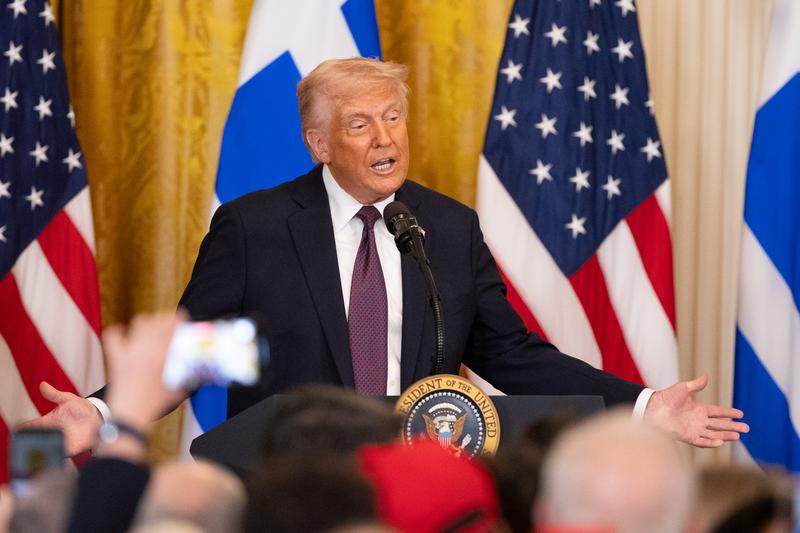
三菱汽车:由于美国加征关税,4月至6月季度需支付大量关税费用。
news flash· 2025-07-24 07:07
Core Viewpoint - Mitsubishi Motors is facing significant tariff expenses due to increased tariffs imposed by the United States during the April to June quarter [1] Group 1 - The company will incur substantial costs related to tariffs as a result of U.S. trade policies [1]
英国央行行长贝利:美国加征关税前的股权风险溢价水平若重现,看起来将是一个脆弱点。
news flash· 2025-07-22 09:49
Core Viewpoint - The Bank of England Governor Bailey indicated that if the equity risk premium levels seen before the U.S. imposed tariffs were to reappear, it would represent a vulnerability in the market [1] Group 1 - The reference to the equity risk premium suggests concerns about market stability and investor sentiment in the context of potential trade tensions [1] - The statement highlights the interconnectedness of global markets, particularly how U.S. trade policies can impact investor confidence in the UK [1]
美国通胀为何连续不及预期?
2025-07-21 00:32
Summary of Key Points from the Conference Call Industry Overview - The discussion primarily revolves around the **U.S. inflation** trends and the impact of **tariffs** on core inflation metrics. Core Insights and Arguments - **Inflation Performance**: U.S. inflation has consistently underperformed expectations since February, with June's CPI growth at **2.67%**, slightly above the expected **2.6%**. However, core CPI increased by only **0.23%**, below the anticipated **0.3%** [2][3] - **Tariff Impact**: Tariffs have a **lagging effect** and insufficient transmission on core inflation. The impact of tariffs imposed in April was only reflected in June data, with limited significance [4][5] - **Trade Chain Profitability**: Tariffs have eroded profit margins across the trade chain, affecting foreign manufacturers, traders, and U.S. consumers. The effective tax rate between China and the U.S. rose from **5.87% to nearly 20%** from April 2018 to September 2019, but much of this was absorbed by PPI and currency depreciation [5][6] - **Trade Responses**: U.S. traders have responded to tariff pressures by increasing imports ahead of tariffs and substituting imports from high-tariff countries with those from countries like Vietnam and Mexico [6][7] Additional Important Content - **Retail Data Insights**: Daily retail data indicates that prices for imported goods from China are rising, while those from Mexico are declining, largely due to zero-tariff benefits under the USMCA agreement, which accounts for approximately **12.2% to 12.3%** of U.S. imports [7][8] - **Core CPI Components**: Within core CPI, core goods prices are rising, but prices for housing services and non-housing core services are declining. This indicates a supply-driven increase in PCE price index, while demand remains weak [3][10] - **Monetary Policy Outlook**: The Federal Reserve's decision on interest rate cuts will depend on output and inflation gaps. Currently, the likelihood of rate cuts is low unless unemployment rises and inflation decreases significantly [12][13] - **Future Rate Cuts**: There is an expectation of at least three rate cuts in the upcoming year, particularly after the new Fed chair takes office in May 2026, contrary to market expectations of only two cuts [13] Conclusion - The U.S. inflation landscape is influenced by various factors, including tariffs, trade responses, and monetary policy decisions. The interplay between these elements will be crucial in shaping future economic conditions and investment opportunities.
医疗数智化转型+关税变局下的投资新机遇
2025-07-16 06:13
Summary of the Conference Call on the Hong Kong Medical Sector Industry Overview - The conference focused on the Hong Kong medical sector, highlighting its resilience amidst global tariff disputes and market volatility, particularly due to the impact of U.S. tariff policies on the market [1][3][5]. Key Points and Arguments 1. **Resilience of the Hong Kong Medical Sector**: Despite the turbulence caused by U.S. tariffs, the Hong Kong medical sector has shown strong resilience and has outperformed major indices like the Hang Seng Index [1][3]. 2. **Policy Support**: The Ministry of Industry and Information Technology, along with six other departments, released a five-year plan for the digital transformation of the pharmaceutical industry, emphasizing the integration of AI across the entire pharmaceutical value chain [1][7]. 3. **Investment Opportunities**: The current valuation of the Hong Kong medical index is at 24 times earnings, which is in the bottom 10% of its historical range, indicating a strong investment opportunity [6][10]. 4. **Impact of Tariffs**: The recent U.S. tariffs exempted pharmaceutical companies, suggesting that the medical sector is relatively insulated from tariff impacts compared to other industries [5][6]. 5. **AI Integration**: The integration of AI in medical applications is expected to drive significant growth and innovation within the sector, with AI being a key focus for future investments [12][16]. 6. **Long-term Growth Potential**: The medical sector is seen as a core industry in Hong Kong, second only to technology, with strong growth potential driven by domestic demand and supportive policies [10][11]. 7. **Internet Medical Services**: The internet medical sector is expected to grow significantly, with online pharmacies projected to capture a larger market share, currently at only 15% [20][21]. 8. **CHO Sector Growth**: The Contract Research Organization (CHO) sector is experiencing rapid growth due to China's engineering talent and infrastructure, which supports the development of innovative drugs [23][24]. 9. **Medical Device Innovation**: There is a strong emphasis on the innovation of high-end medical devices, supported by government policies aimed at enhancing the capabilities of the medical device industry [8][26]. Other Important Insights - **Market Dynamics**: The conference highlighted the importance of monitoring policy changes and market dynamics, particularly in relation to AI's role in transforming the medical sector [31][32]. - **ETF Investment Strategy**: The newly launched Hong Kong medical ETF is designed to track the medical sector's performance, providing investors with a diversified investment tool that focuses on high-growth areas such as internet medical services and medical devices [14][27]. - **Long-term Investment Approach**: Investors are encouraged to adopt a long-term perspective, focusing on the underlying growth potential of the medical sector while being mindful of short-term market fluctuations [31][32]. This summary encapsulates the key discussions and insights from the conference call regarding the Hong Kong medical sector, emphasizing its resilience, growth potential, and the impact of AI and policy support on future investments.
1秒钟,20%涨停!
Zhong Guo Ji Jin Bao· 2025-07-14 03:02
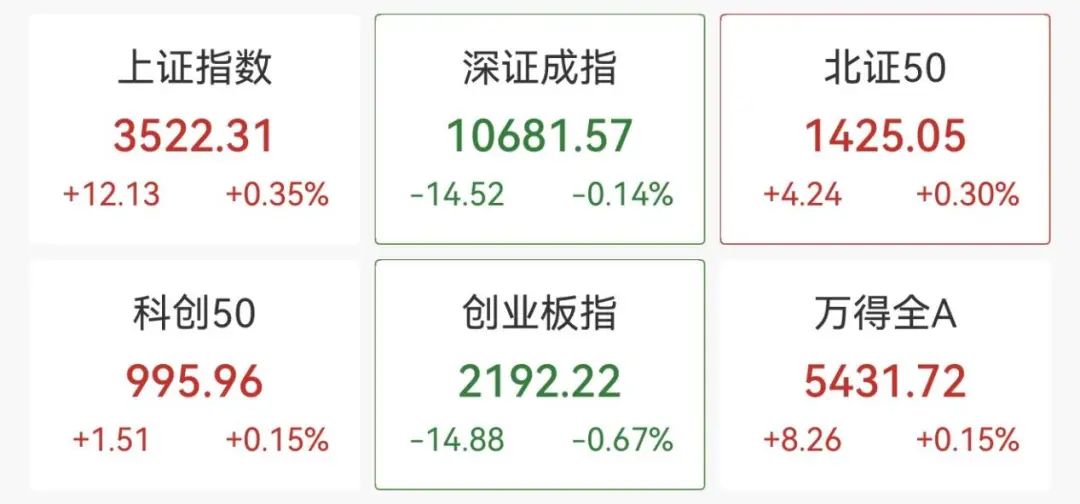
中国基金报记者李智 【导读】上纬新材开盘1秒钟直接封上涨停板,涨幅达20%;贵金属概念股震荡拉升,电力股集体走高 新的一周开始了,一起来看下最新的市场情况及资讯。 7月14日早盘,A股三大指数集体高开,随后震荡调整。截至发稿,沪指涨0.35%,深成指跌0.14%,创业板指跌0.67%。 板块上来看,贵金属概念股震荡拉升,电力股集体走高,多元金融、稳定币、房地产等板块震荡调整。 | | | Wind热门概念指数 | | | | | Wind中国行业指数 | | | | --- | --- | --- | --- | --- | --- | --- | --- | --- | --- | | PEEK材料 | 锂矿 | 火电 | 铜产业 | 宇树机器人 | 患金属 | 钢铁 | 石油天然气 | 电力 | 化纤行业 | | 5.06% | 3.71% | 2.95% | 2.42% | 2.12% | 1.98% | 1.37% | 1.30% | 1.28% | 1.14% | | 特高压 1.75% | 減速器 1.72% | 大基建央企 1.62% | 盐湖提锂 1.56% | 维生素 1.51% | 软饮料 ...
7月11日|财经简报 养老金上调 科技与医药企业业绩亮眼
Sou Hu Cai Jing· 2025-07-11 06:19
Group 1: Market Performance - The Shanghai Composite Index reached 3509.68 points, marking a 9-month high, but historical data shows that in the past 10 years, the index has not performed well after crossing this level [3] - Bank stocks, including Industrial and Commercial Bank of China and China Construction Bank, hit historical highs, while real estate stocks experienced a surge [4] Group 2: Company Performance - iFlytek expects a net profit increase of 30%-50% in the first half of the year, with its AI model X1 performing at an international top level and consumer business revenue doubling [5] - WuXi AppTec reported a 101.92% year-on-year increase in net profit, primarily due to gains from the sale of equity in an associate company, with adjusted net profit increasing by 44.43% [6] - Seres anticipates a net profit increase of 66.2%-96.98%, driven by significant growth in new energy vehicle sales [6] Group 3: Industry Trends - The price of polysilicon futures surpassed 40,000 yuan per ton, with N-type raw material prices increasing by 6.92% month-on-month, driven by leading companies' price support, although industry overcapacity remains a concern [7] - Rare earth prices have been raised by Northern Rare Earth and Baotou Steel, with the price for the third quarter set at 19,109 yuan per ton, influenced by "anti-involution" policies and recovering demand [7] Group 4: New Energy Vehicle Sales - From January to June, the production and sales of new energy vehicles increased by 41.4% and 40.3%, respectively, accounting for 44.3% of total new vehicle sales, supported by policy initiatives and market recovery [9]

美国关税引发的通胀有限
日经中文网· 2025-07-11 02:48
Core Viewpoint - The report from the White House Council of Economic Advisers indicates that even with tariff costs included, the prices of imported goods remain cheaper than before the tariffs were implemented [1][7]. Group 1: Tariff Impact on Prices - The U.S. Treasury Department reported that tariff revenue exceeded $22 billion in May, which is three times the average level expected for 2024 [3]. - The consumer price index (CPI) in May showed a slowdown in the month-on-month increase, with the core index rising only 0.1%, lower than the expected 0.3%, primarily due to declines in automobile and clothing prices [4]. - Japanese automakers have significantly reduced the prices of vehicles exported to the U.S., with a reported 17.7% drop from March to May, as a strategy to avoid raising local prices despite reduced profits [5][6]. Group 2: Economic Predictions and Reactions - The initial impact of tariffs has been less severe than expected, leading to a shift in the Federal Reserve's interest rate cut expectations from December to September [5]. - The White House report suggests that the theory of optimal tariffs is being validated, as higher tariffs have led to a decrease in the prices of imported goods due to reduced demand [7]. - President Trump has publicly stated that import prices are indeed declining, urging the Federal Reserve Chairman Jerome Powell to consider this in his monetary policy decisions [8]. Group 3: Future Considerations - There is a concern that the pressure for excessive cost-cutting in the automotive industry may spread to suppliers, potentially impacting the overall market [6]. - The trade deficit reached a historical high before the introduction of reciprocal tariffs, as businesses increased imports to avoid price hikes, indicating that the inflationary effects of tariffs may take longer to manifest [9].

渣打银行:大湾区企业当前营商表现仍具韧性 下半年展望趋审慎
智通财经网· 2025-07-09 11:14
Core Insights - The Standard Chartered Bank and the Hong Kong Trade Development Council released the latest GBA Business Sentiment Index, indicating that businesses in the Greater Bay Area remain resilient despite the impact of U.S. tariffs following the "Liberation Day" [1][2] - Approximately 75% to 80% of businesses in the Greater Bay Area reported negative impacts from U.S. tariffs, primarily due to delays in business plans and logistics disruptions [1][2] - The overall outlook for businesses has become more cautious, with the expectation index dropping from 54.3 in Q1 to 52.0 in Q2, marking the lowest level since Q4 2022, although still above the neutral level of 50 [2] Business Impact - 41% of respondents indicated they would delay business plans due to U.S. tariffs, while 35% reported severe disruptions in logistics or customs processes [2] - 30% of businesses experienced customer loss as clients shifted to markets less affected by tariffs, and 32% planned to increase domestic sales as a common response to the tariff impacts [2] - The uncertainty surrounding tariffs has accelerated order fulfillment and production in Q2, alongside advancements in artificial intelligence [2] Economic Outlook - The cautious sentiment among Greater Bay Area businesses is attributed to unclear overall business prospects, especially regarding trade policy developments after the expiration of tariff exemptions [2] - Hong Kong's economy showed steady expansion in Q1, highlighting the significant impact of international trade and tariff policies on the local economy [2] - The largest declines in the expectation sub-indices were seen in financing scale (-5.1 points), finished goods/service prices (-4.8 points), and production/sales (-2.6 points) [2]